 Lately, I’ve been all about homemade doughnuts (see here, here, and here). In that time, I have learned that a) homemade doughnuts are the best in the world, and b) they are easier than anyone would imagine. Seriously, if I can make a quality homemade doughnut, anyone can!
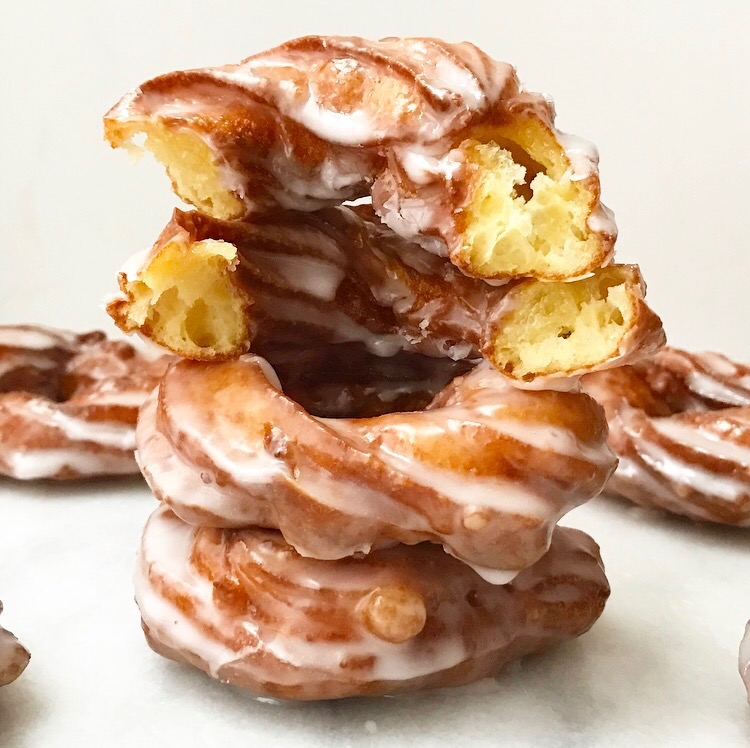
 Today, the obsession continues with homemade French Crullers, a.k.a. those light, fluffy, ridgy doughnuts you see behind every shop counter. While I was content with the Dunkin’ Donuts variation of this classic for years, I am now a homemade cruller convert. There’s no comparison between these and the mass-produced variety. The crispy piped ridges and airy middles are what my (current) doughnut dreams are made of.
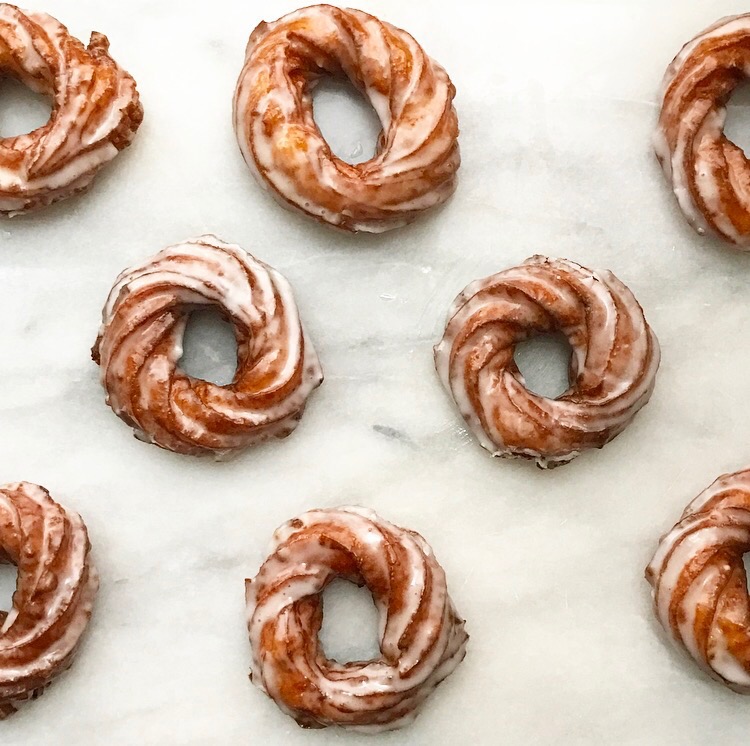 So, what makes these crullers so French? Well, it’s all in the dough. Where most doughnuts rely on yeast or baking powder to help them puff, French Crullers are made with a classic French pastry dough: pâte à choux. You might be familiar with it in eclairs, cheesy gougeres, or as the airy shell in cream puffs (more on those soon).
Pâte à choux (pronounced “pat-a-shoe”) is unusual. It contains no chemical leaveners, instead relying on trapped steam to help it puff. Don’t worry–it’s only got six ingredients and it’s simple to make.
Like Churros, pâte à choux starts on the stove. Bring some whole milk, butter, a touch of sugar, and some salt to a boil over medium heat. Then, stir in some bread flour (we need the higher gluten content that it provides). Next, cook out the excess moisture. Turn down the heat and cook, stirring constantly, until you have a ball of dough. You’ll know it’s ready when there is a thin veil of dough on the bottom of the pan.

Transfer the dough ball to a mixing bowl and mix it with an electric mixer for one minute. This allows the hot dough to release a lot of steam. Next, beat three room temperature eggs in a measuring cup. With the mixer running, slowly stream in the eggs. The dough will start to become richer and thicker as it mixes. Once all three eggs are incorporated, lift the beater out of the bowl. Does the dough hanging off create a v-shape? It probably won’t at this point. Beat another egg and add it little-by-little, checking frequently to see if that v-shape is there. It may take all or part of another egg (the fifth, in this case) to achieve the right consistency. There is no guaranteed amount of egg in pâte à choux. This past weekend, I had one batch that only required 3 1/2 eggs, while another required 4 1/2. It all depends on how much moisture was cooked out on the stove. Long story short, make sure to have extra eggs.
When your pâte à choux is ready, it will be sort of sticky and gluey and look like this.

Load it into a pastry bag fitted with a large star tip and pipe rings on individual squares of parchment. You could fry them immediately, but they’d likely lose their signature ridges. I like to let my piped doughnuts sit uncovered at room temperature for half an hour–this allows the dough to rest and a sort of skin to form, guaranteeing a classic ridged final product.


Next up, it’s time to fry. Heat a quart or two of frying fat (I used canola oil) to 350F. Carefully slip one cruller (still adhered to its parchment) into the oil. After a second or two, use tongs to remove the parchment from the oil. The doughnut will puff and turn deeply golden after 45 seconds or so. Flip it and continue to fry until it has a nice even color all over. Remove the doughnut from the oil and wait one minute. If it is properly cooked, it will stay intact–if not, it will collapse. Once you’re sure your first cruller is as it should be, continue frying the rest of them.

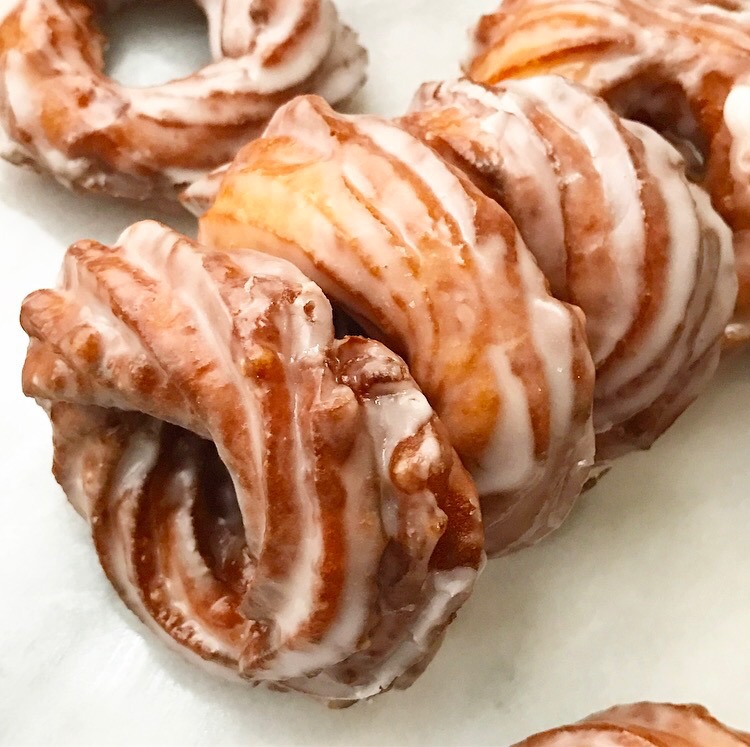 The last step is to give these beautiful doughnuts a dip in a classic glaze. Let it set for 20 minutes or so before eating two. French Crullers are lower in sugar and calories than most doughnuts. I’m not saying they’re health food (because they’re definitely not), but you shouldn’t feel too much guilt about having a third. I sure didn’t.
French Crullers
makes 12-16 doughnuts
1 cup whole milk
5 tablespoons unsalted butter
2 teaspoons granulated sugar
3/4 teaspoon fine sea salt
1 1/4 cup bread flour (I use King Arthur Bread Flour)
3 large eggs + 1-2 more, room temperature
1-2 quarts frying fat (I like shortening, safflower oil, or canola oil)
Glaze:
3 cups confectioners sugar
1 teaspoon pure vanilla extract
1 tablespoon light corn syrup (or mild honey)
4-5 tablespoons warm tap water
In a 4-quart saucepan, combine whole milk, butter, sugar, and salt. Bring to a full boil over medium heat, stirring frequently so that a skin does not form. Add bread flour all at once and stir in with a wooden spoon or silicone spatula. Reduce heat to low and continue to stir dough for 3-4 minutes, until a thin veil of dough covers the bottom of the pan. Remove dough to a large heat-proof mixing bowl.
Crack 3 large eggs into a liquid measuring cup and whisk with a fork until combined.
Use an electric mixer on low speed to beat the warm dough for 1 minute, until some steam has been released. Continue mixing while adding eggs in a thin stream, stopping occasionally to scrape down the bowl.
Once all three of the beaten eggs have been added, test the dough. Dip the end of the mixer into the dough and slowly pull upward. If the dough is sort of gluey and makes a V-shape, it’s ready. If not, beat another egg. Stream it in slowly–you may not need the whole egg. Check frequently to see if the dough is right. You may need part or all of a fifth egg.
Load dough into a piping bag (or gallon freezer bag) fitted with a large star tip. Cut a sheet of parchment into 16 3-4 inch squares. Lay squares on rimmed baking sheets. Pipe rings of dough onto squares. Let sit for 30 minutes at room temperature. Doughnuts may be frozen at this point, if desired.*
Position a rack over a rimmed baking sheet. Place near stove.
In a large, heavy-bottomed pot, heat frying fat until it reaches 350F. Slip one doughnut into the oil. After a second or two, it will detach from the parchment. Remove parchment with tongs. Continue to fry for 1-2 minutes, flipping when one side becomes deep golden brown. Remove to prepared rack. Wait one minute to make sure that the doughnut does not collapse (it will if it’s undercooked). Continue frying in batches of 1-2 doughnuts, until all have been cooked. Let doughnuts cool to room temperature.
Make the glaze. In a small mixing bowl, use a fork to whisk together confectioners sugar, vanilla, light corn syrup, and 4 tablespoons warm water until smooth and pourable. Add more water by the teaspoon, until the desired consistency is reached. Dip doughnuts one at a time, letting any excess glaze run back into the bowl. Place glazed doughnuts back on the rack. Glaze will set after 20 minutes.
French Crullers are best eaten the day they are made. If you must keep them overnight, leave them uncovered at room temperature.
Note:
To freeze piped crullers, lay them on a baking sheet and freeze until frozen. Transfer to a labeled freezer bag for up to a month. Let crullers thaw slightly while your oil is warming before proceeding with the recipe as written. They may take an extra minute to cook.
 e2 bakes brooklyn