Category Archives: Breakfast

Blueberry Sour Cream Scones

Blueberry Sour Cream Scones​

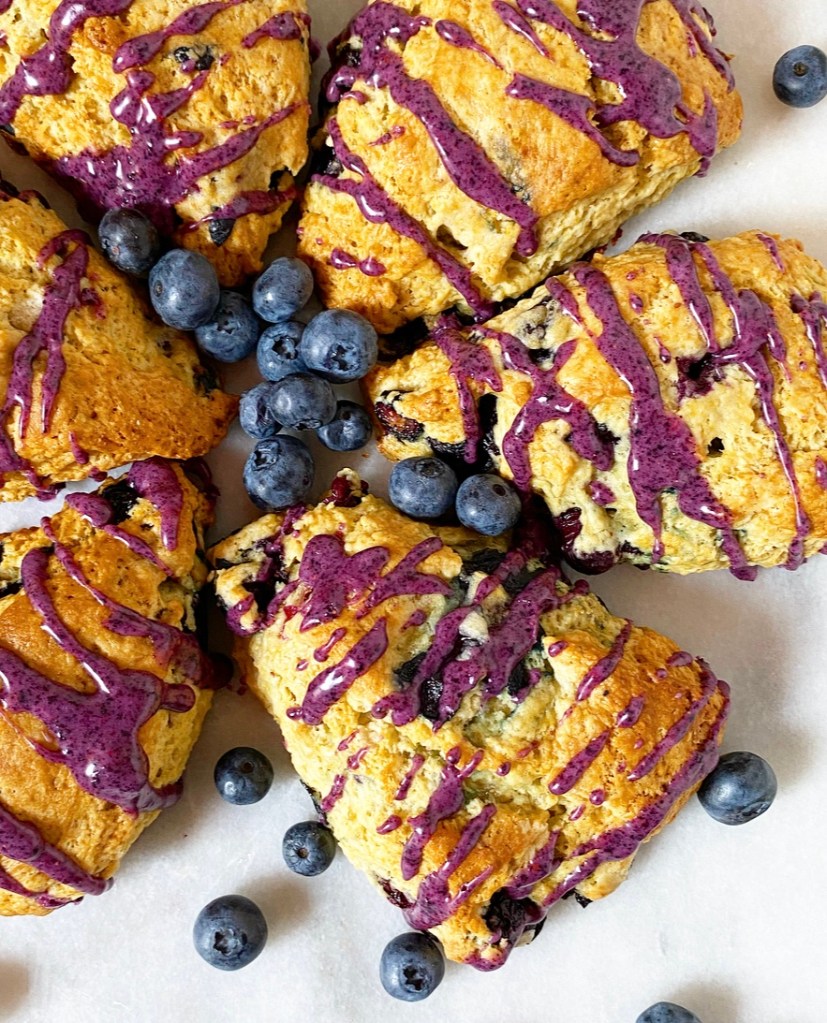
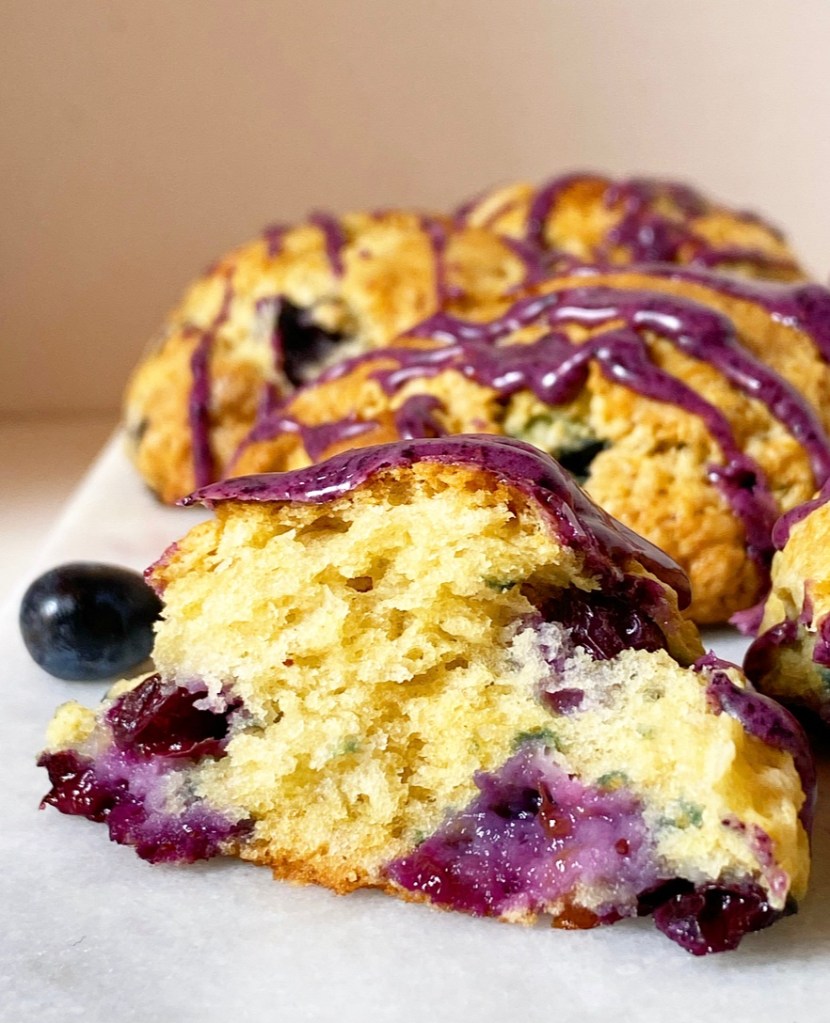
If you’re on the hunt for impossibly tender scones, look no further. Beneath these nubbly exteriors lie the softest, most buttery interiors. The secret? A hefty spoonful of sour cream.
Blueberry Sour Cream Scones​

Oh, yes. Where most scones are bound with heavy cream, half & half or just plain ol’ milk, these get their delicate decadence from thick, rich sour cream. Between its texture and natural acidity, its scone game simply cannot be beat.

For those concerned that sour cream’s tanginess might overwhelm the other flavors, rest assured that it does not. The acidity is neutralized with a bit of baking soda, ensuring that the end results have a smooth, buttery flavor to accompany their perfect texture.

You can bake this scone base by its lonesome, of course, but blueberries are at their best right now, so we’re tipping a full cup into the mix today. Blueberry Sour Cream Scones? Sign. me. up.
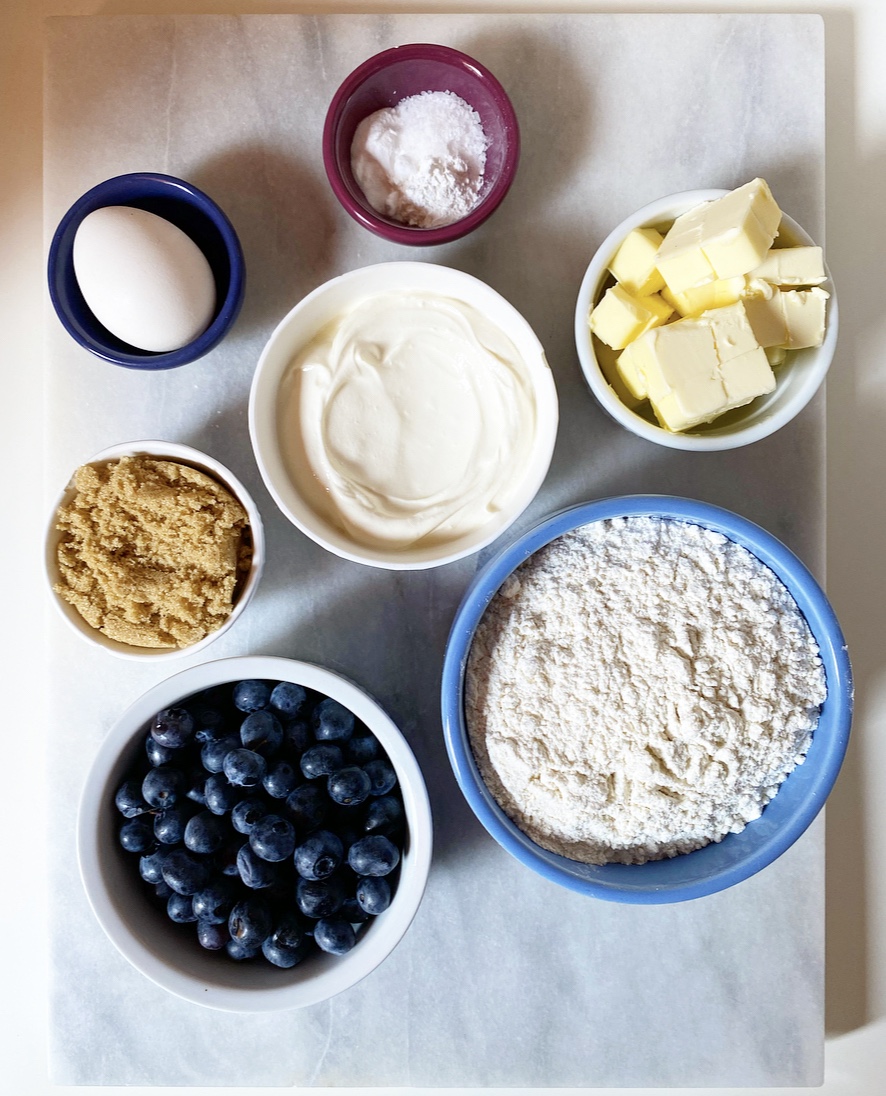
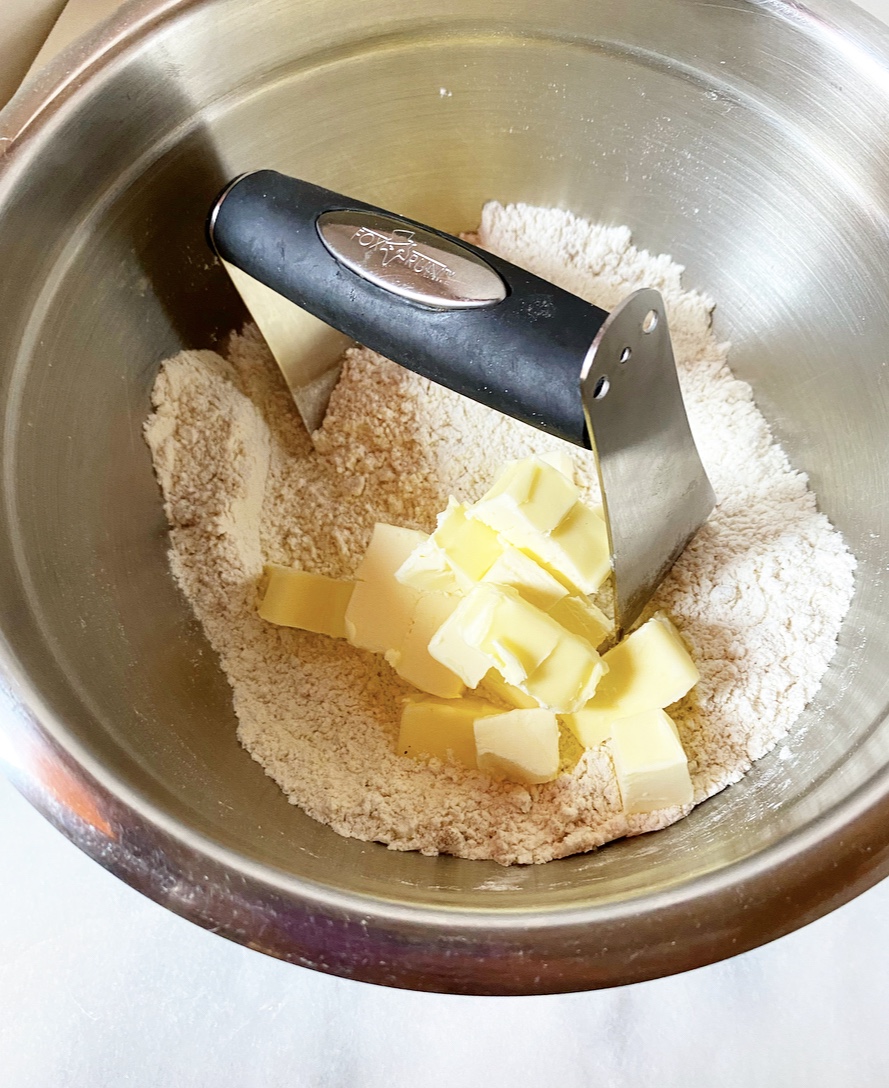
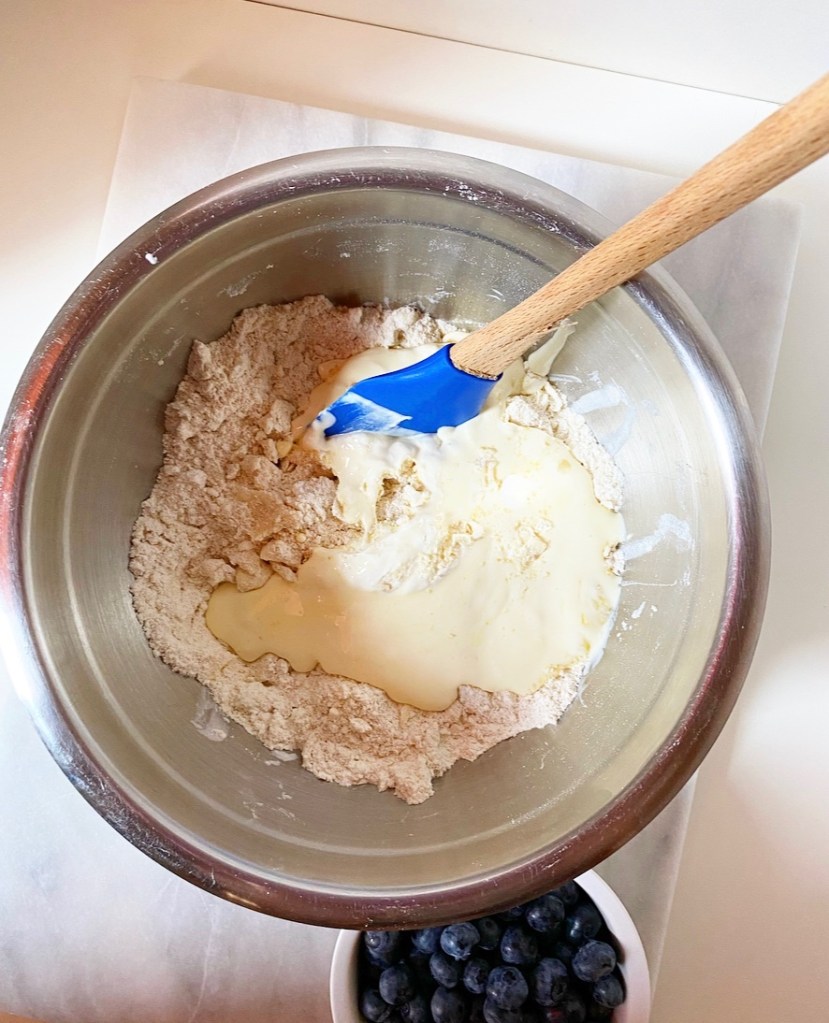
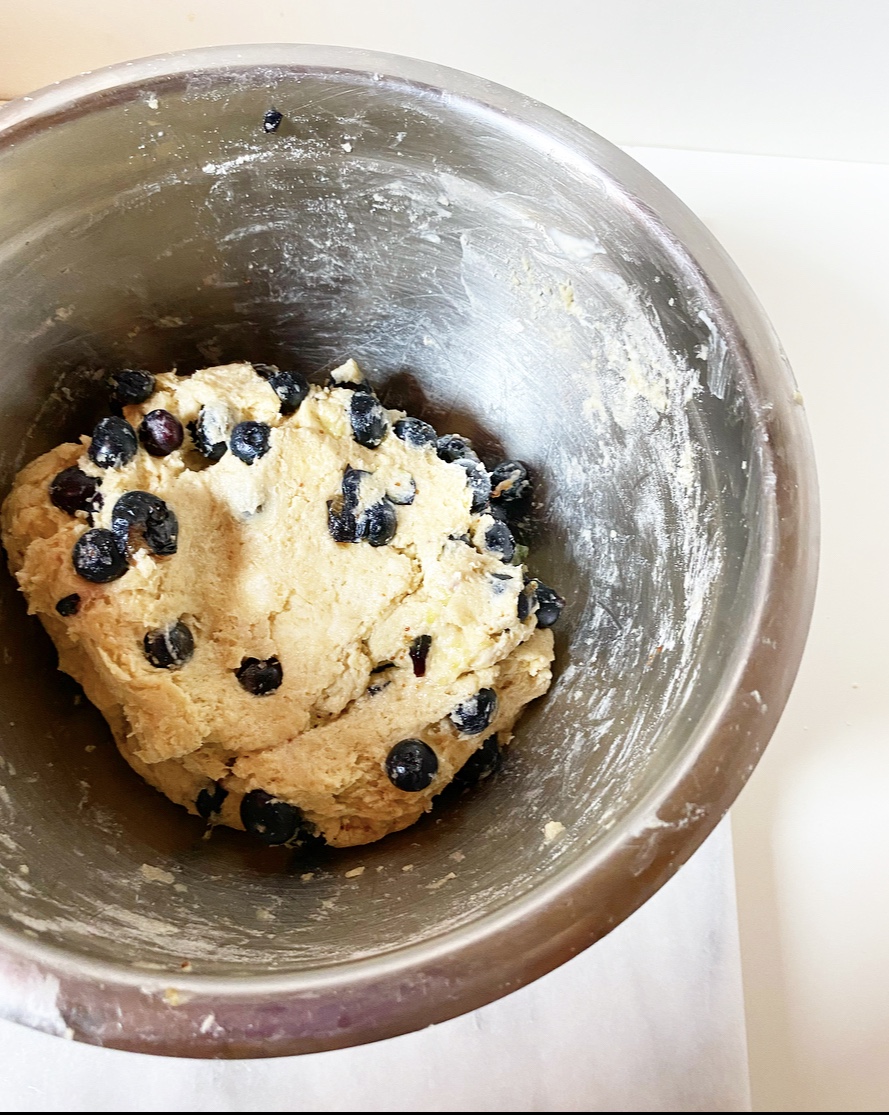
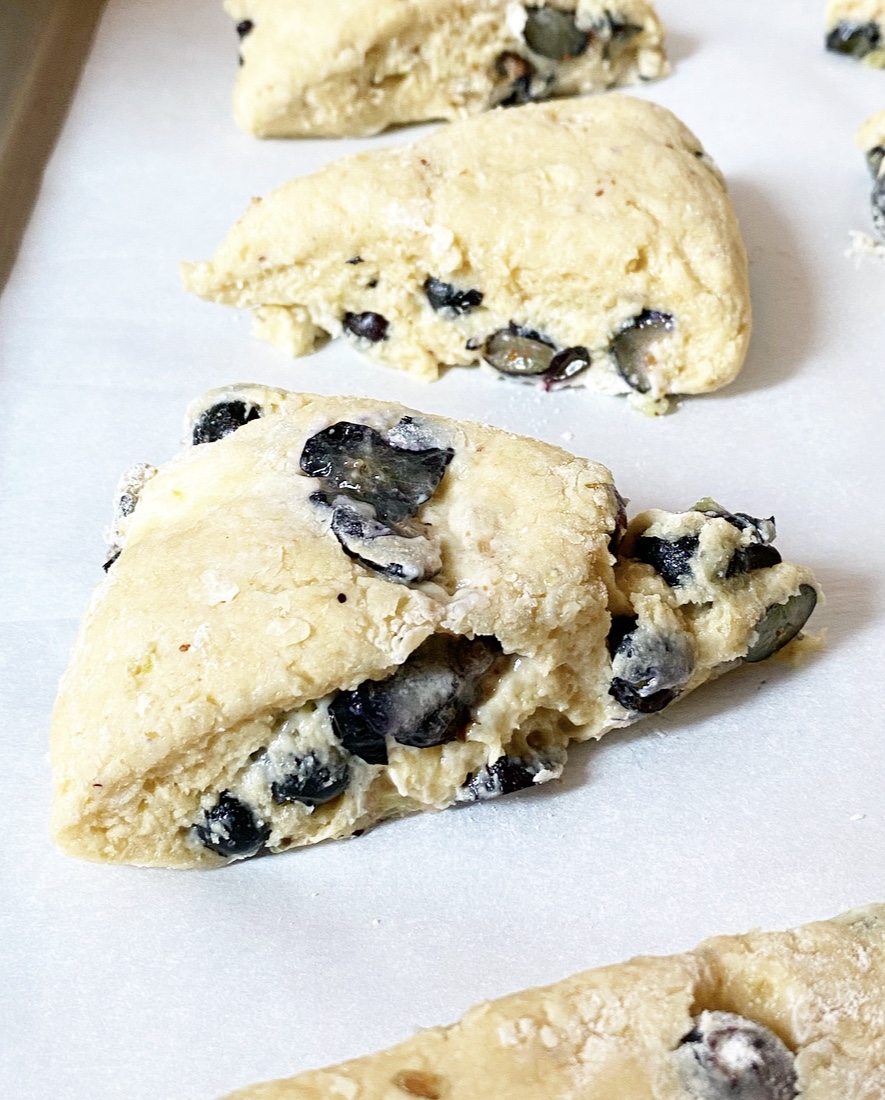
Blueberry Sour Cream Scones start just how any other scone recipe might—cutting butter into dry ingredients—but where the next step is usually to add heavy cream or half & half, these are bound with an egg and 1/2 cup of sour cream. The dough may simultaneously seem both too wet and too dry during mixing (weird and true), but it will come together. Once mixed, it’s filled with blueberries, formed into a disk and sliced into wedges before baking.
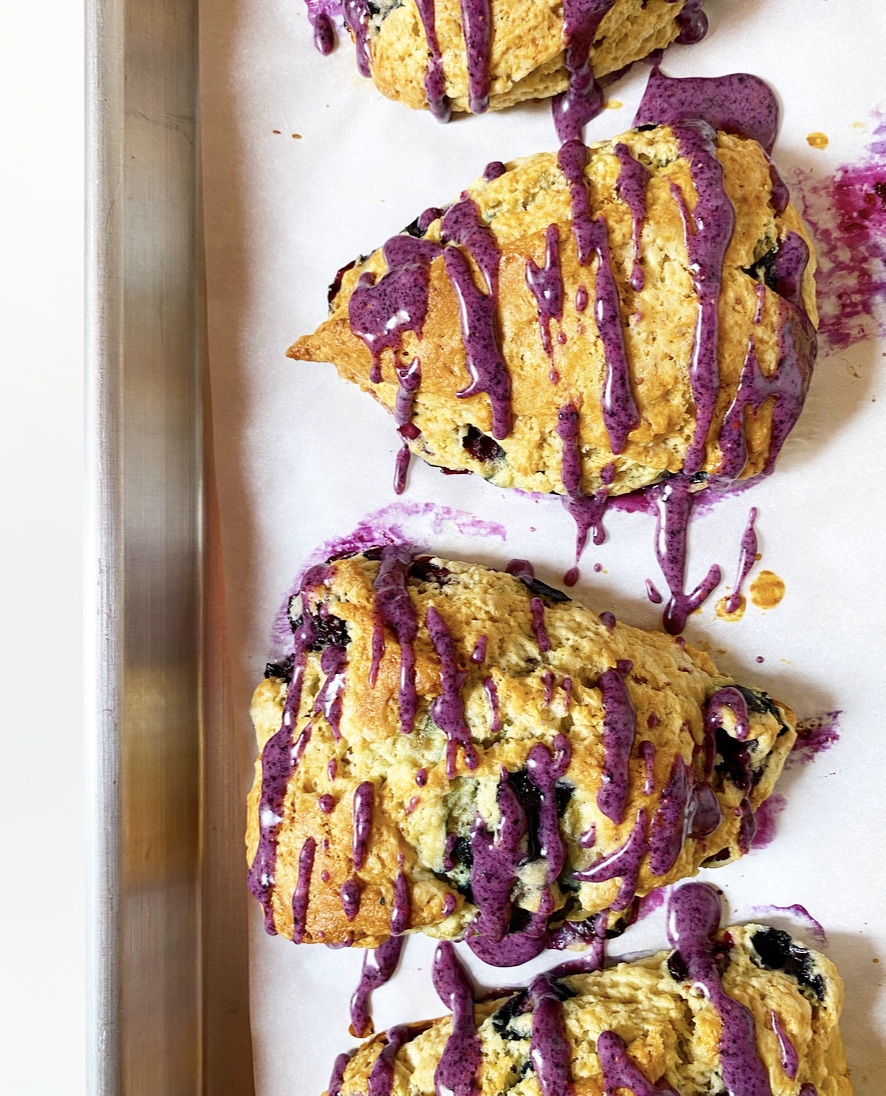
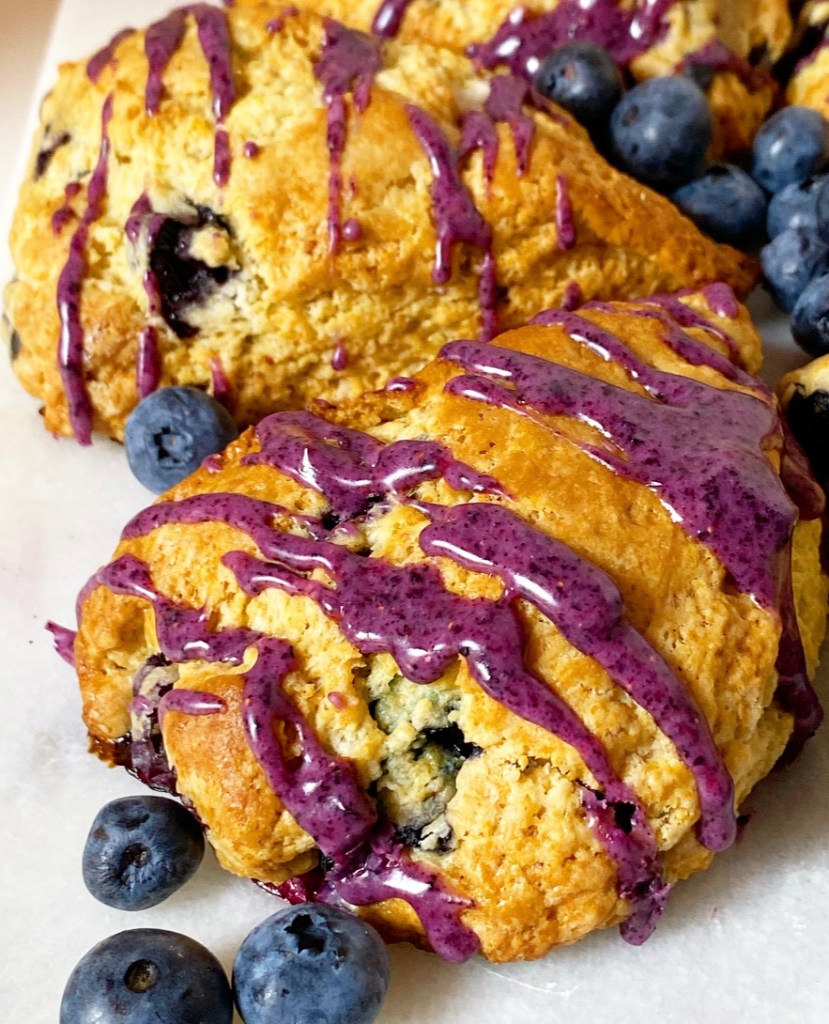
These scones bake up craggy and golden with juicy burst blueberries throughout. You may serve them as soon as you can handle them, but you can also wait a few more minutes and give them a drizzle with a quick blueberry glaze. You know, if you’re the kind of person who needs your Blueberry Sour Cream Scones to have a vibrant purple drizzle…which I very much am.
Blueberry Sour Cream Scones​
Blueberry Sour Cream Scones
makes 8 scones

1 large egg, cold
1/2 cup full-fat sour cream, very cold
1 teaspoon pure vanilla extract
1/3 cup light brown sugar, packed
2 cups all-purpose flour
2 teaspoons baking powder
1/2 teaspoon baking soda
1/2 teaspoon Kosher or sea salt
1/2 cup (1 stick) unsalted butter, very cold, cut into cubes
1 cup fresh blueberries
2 tablespoons milk of choice, heavy cream, or half & half

Glaze:
1 tablespoon pulverized freeze dried blueberries (about 2 heaping tablespoons whole)
1/2 cup confectioner’s sugar
pinch of Kosher or sea salt
3-4 teaspoons milk of choice

Make the scones. Place an oven rack in the center position. Preheat oven to 400F. Line a baking sheet with parchment. Set aside.

In a liquid measuring cup, use a fork to whisk together cold egg, sour cream, and vanilla. Refrigerate.

In a large mixing bowl, whisk together flour, light brown sugar, baking powder, baking soda, and salt. Add cold butter. Use a pastry blender or clean fingertips to cut the butter into the flour until the largest pieces are the size of small peas. Stir in sour cream mixture. Add blueberries and fold them in as gently as you can. Some will break; that’s just the nature of this.

Turn dough out onto a floured surface. Pat it to 1-inch thick circle. Use a large, sharp chef’s knife to slice circle into 8 wedges. Place scones at least 2 inches apart on prepared pan. Brush with milk, cream, or half-and-half. Bake 21-23 minutes, until puffed and golden.

Meanwhile, set a cooling rack over a piece of parchment paper. Let scones cool on the pan on a rack for a few minutes, before removing to the prepared rack.

When scones are cool enough to handle but still a little warm, make the icing. In a small mixing bowl, whisk together pulverized freeze dried blueberries, confectioners sugar, salt and 3 teaspoons milk. Add more milk by the 1/2 teaspoon until icing is thick, but pourable. Pour or drizzle icing over the scones as desired. Icing will set quickly, and eventually harden completely after a few hours.

Scones are best the day they are made, but will keep in an airtight container at room temperature for up to 2 days.
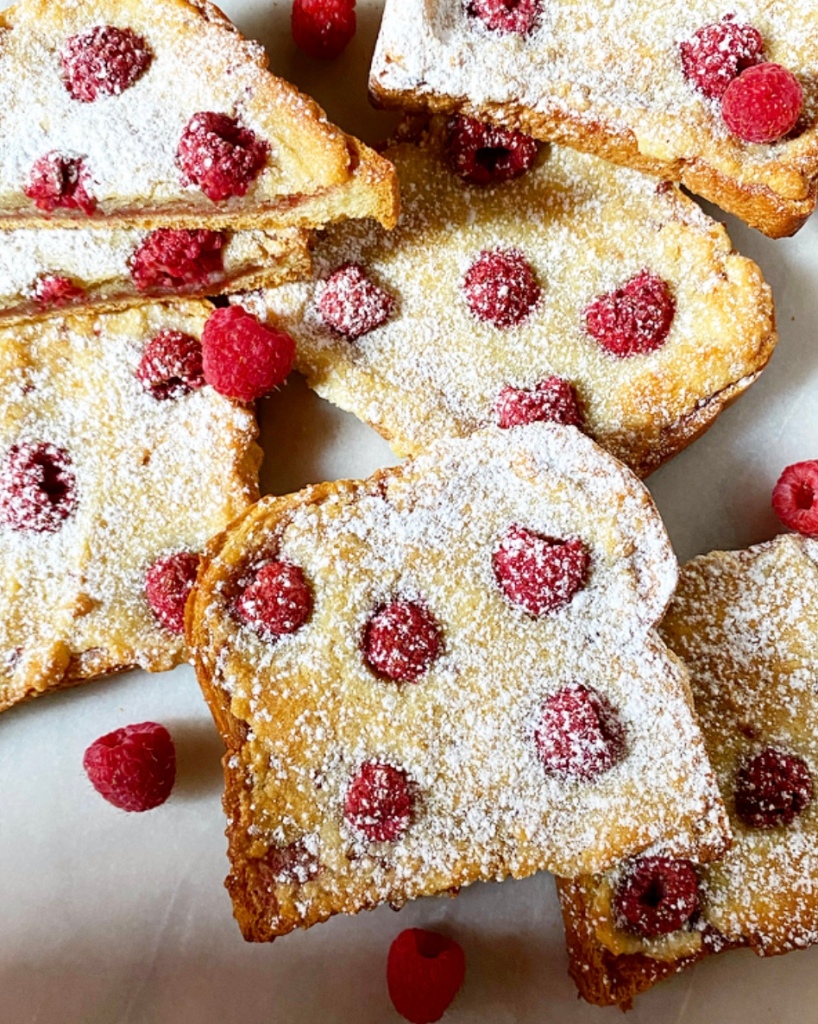
Double Raspberry Bostock {Brioche with Almonds}

Double Raspberry Bostock {Brioche with Almonds}​

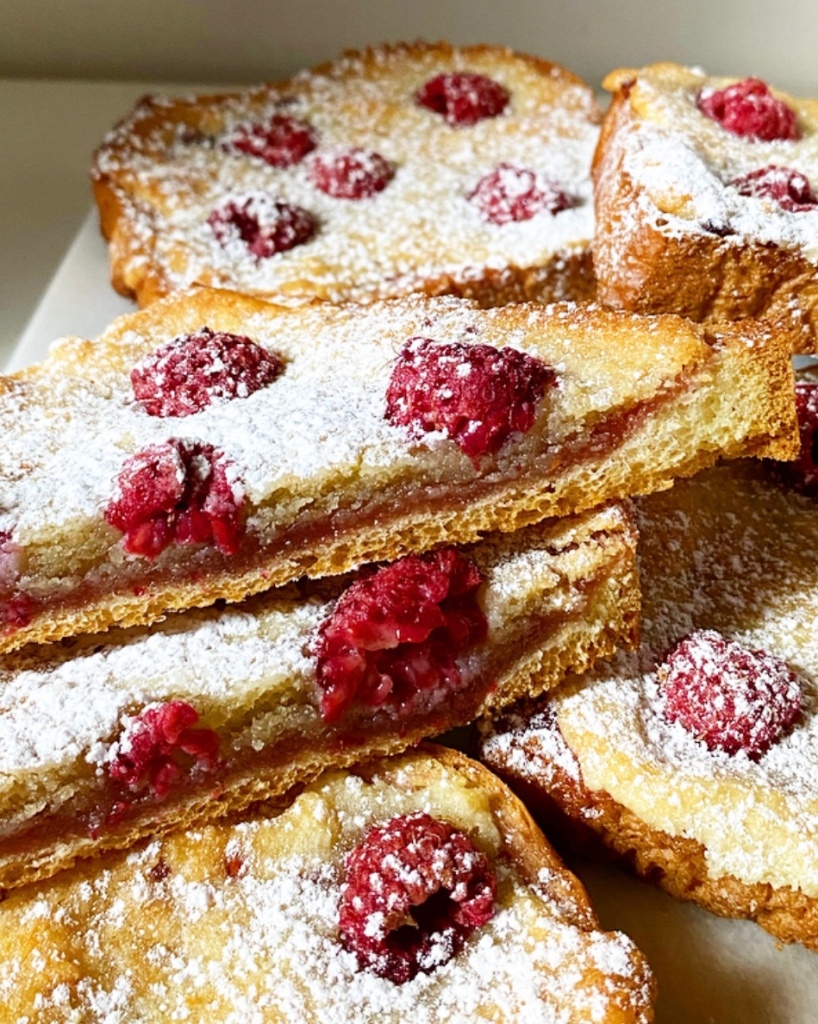
Welcome back to the summer of frangipane, where we find any and all excuses to put sweet almond pastry cream in things. A few weeks ago, I dropped spoonfuls of frangipane onto a puff pancake. This week, I’m keeping things a little more traditional with Double Raspberry Bostock.

Double Raspberry Bostock {Brioche with Almonds}​

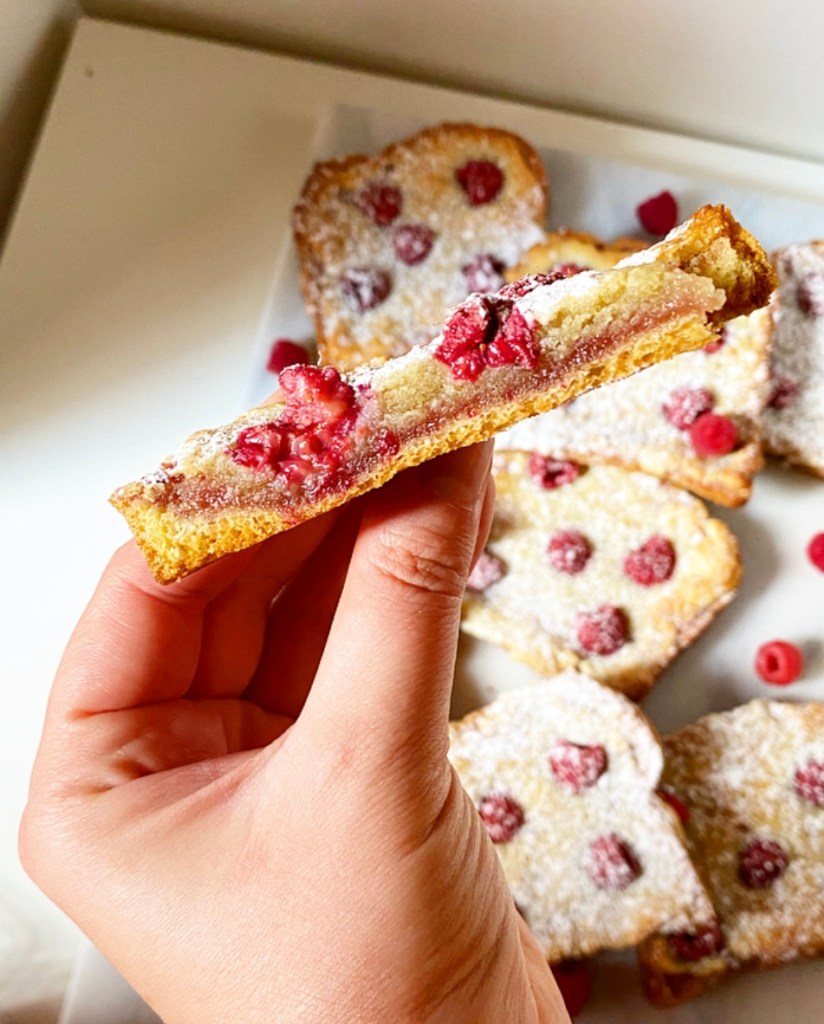
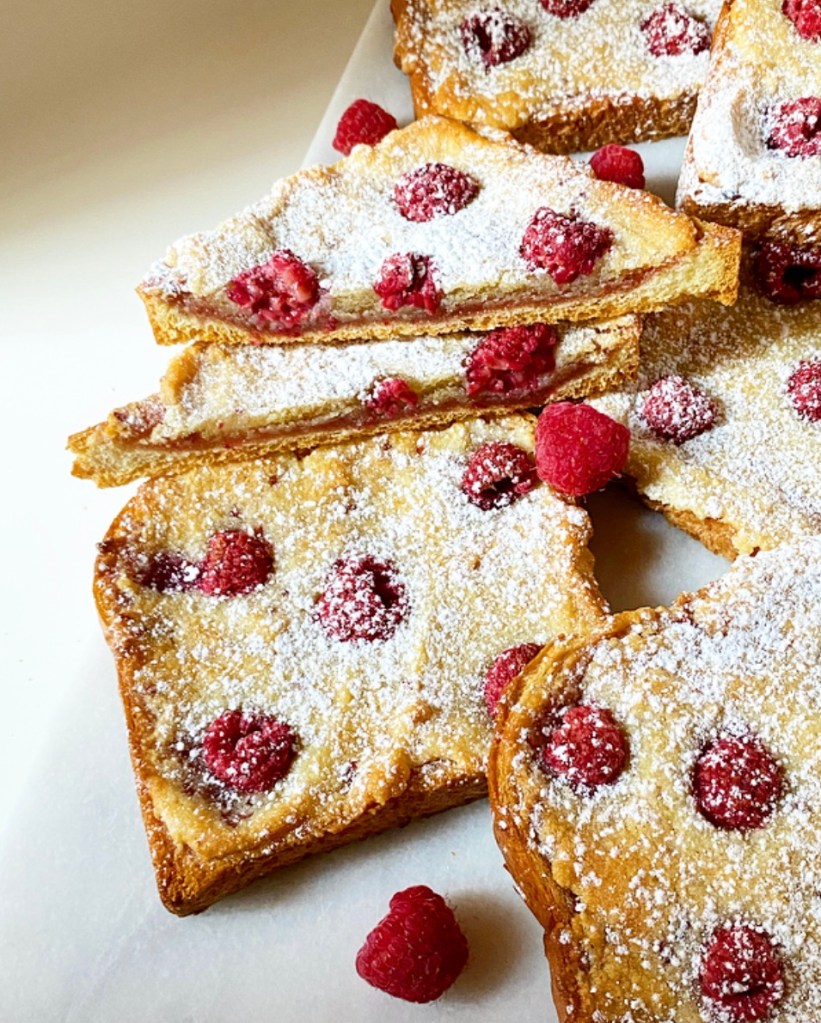
If you’ve never heard of Bostock, think of it as French toast’s glamorous pastry cousin—stale slices of rich brioche painted with simple syrup, topped with frangipane, and baked until brown. What a way to use up leftover bread! You can leave it plain or top it with fruit if that’s your jam. It’s definitely my jam, as evidenced by today’s recipe.

Double Raspberry Bostock {Brioche with Almonds}​

You see, where traditional Bostock is painted with simple syrup, Double Raspberry Bostock is painted with thinned raspberry preserves before being topped with frangipane and fresh raspberries. The tart nature of the berries cuts through the sweetness of the brioche and the frangipane and, well, it just works. It’s balanced, it’s berry, it’s delicious.

Double Raspberry Bostock {Brioche with Almonds}​

Oh, and it’s easy. Bostock is technically considered a pastry, even though it’s mostly just an excuse to use up old bread. Who doesn’t love a treat that helps prevent food waste?!

As you’ve likely realized, you can make Double Raspberry Bostock your own by using the fruit and preserves of your choice. Keep it all one flavor profile or mix and match. That’s the great luxury of making your own Bostock at home—you can my recipe and make it yours.

Double Raspberry Bostock {Brioche with Almonds}​
Double Raspberry Bostock {Brioche with Almonds}
makes 8 servings

Frangipane:
1 cup blanched almond flour or 4 ounces blanched almonds
1 tablespoon all-purpose flour
pinch of Kosher or sea salt
6 tablespoons granulated sugar
6 tablespoons unsalted butter, cold-ish room temperature, cut into cubes
1 large egg
1/2 teaspoon pure almond extract

Raspberry Preserves:
1/2 cup raspberry preserves
2 tablespoons water

For Assembly:
8 thick slices brioche, preferably a bit stale 1/2-1 6 oz package fresh raspberries
2-3 tablespoons sliced almonds (optional)
2 tablespoons confectioner’s sugar

Arrange a rack in the center of the oven. Preheat the oven to 350F. Line a rimmed sheet pan with parchment paper. Set aside.

Make the frangipane. In a food processor (or very good blender), pulse almond flour, all-purpose flour, salt and sugar together. Pulse in butter. Pour in egg and almond extract, and process until frangipane is a homogenous paste.

Thin the raspberry preserves. Use a fork to whisk jam and water together in a small microwave safe bowl. Warm in the microwave for 15 seconds, just so that it thins out even more. This step may also be done over a low flame on the stove.

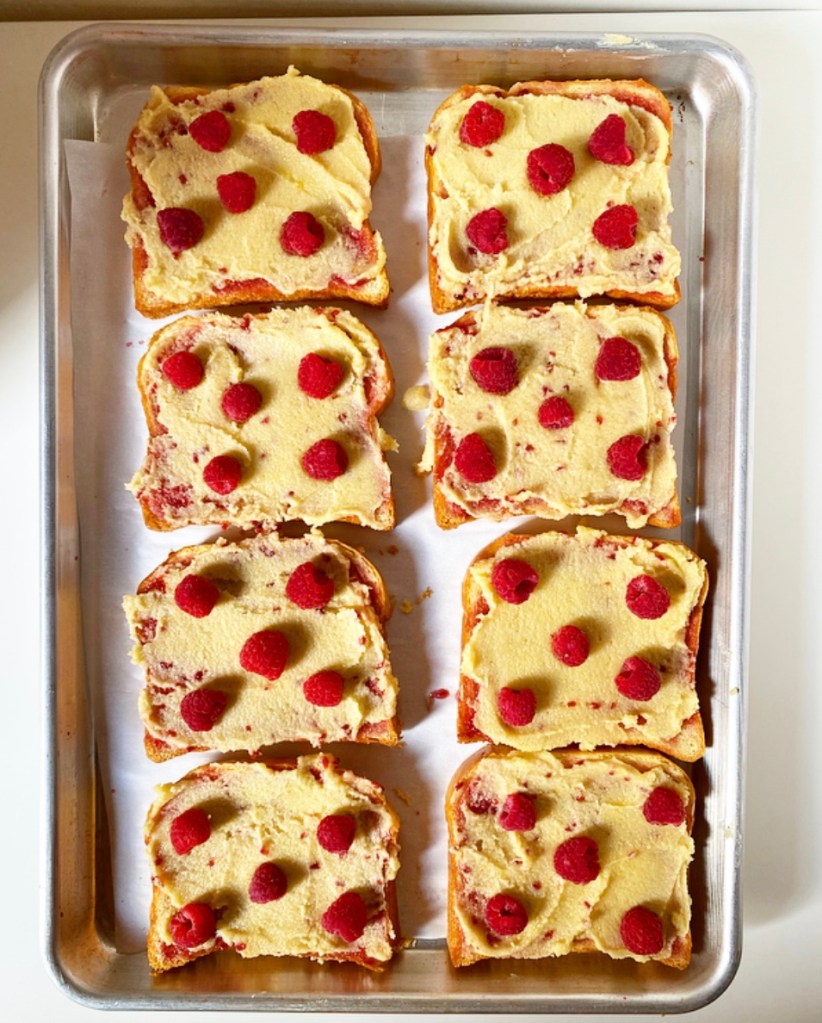
Place brioche slices in a single layer on the prepared pan. Brush each slice with the thinned preserves, making sure to use up all of it. Spread about 2 heaping tablespoons of frangipane over each slice of brioche, covering the entire top. Press in raspberries, then sprinkle on sliced almonds, if using (I skipped these).

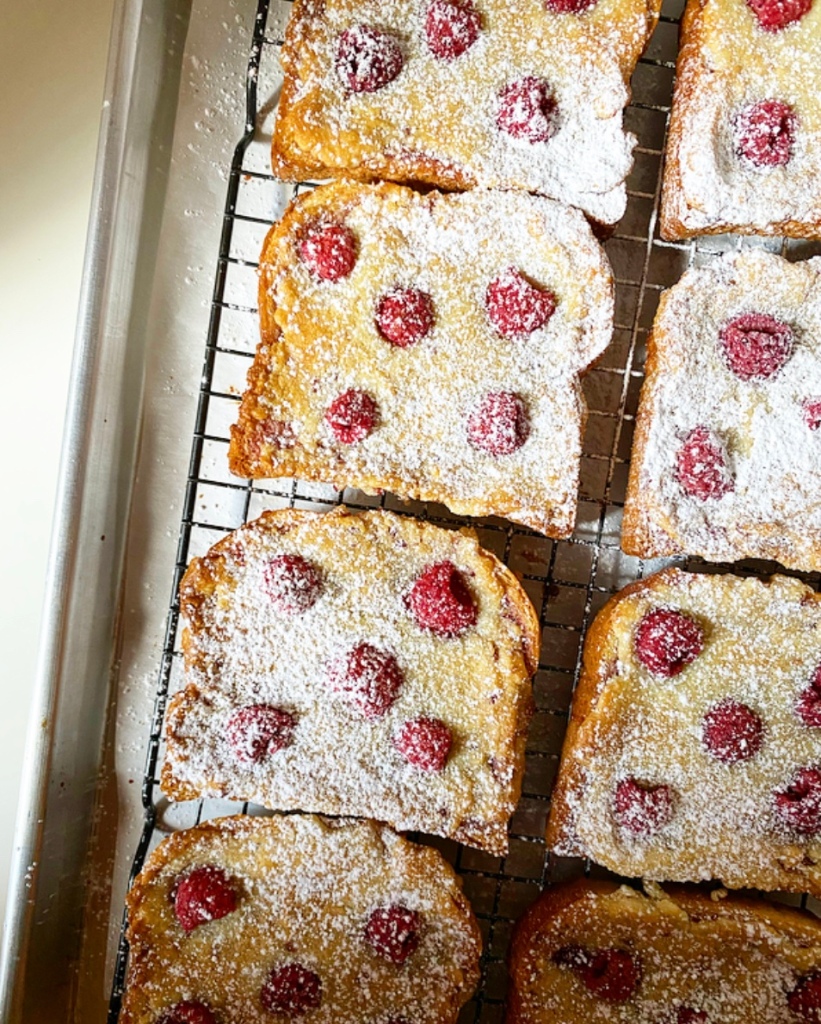
Bake Bostock for 25-30 minutes, until the frangipane as begun to brown in places. Let cool on a rack for at least 15 minutes before dusting with confectioner’s sugar and serving slightly warm or at room temperature.

Double Raspberry Bostock is best the day it’s made, but may be wrapped and kept in the refrigerator for a couple of days.

Frangipane & Rhubarb Puff Pancake {Dutch Baby}

Frangipane & Rhubarb Puff Pancake {Dutch Baby}​

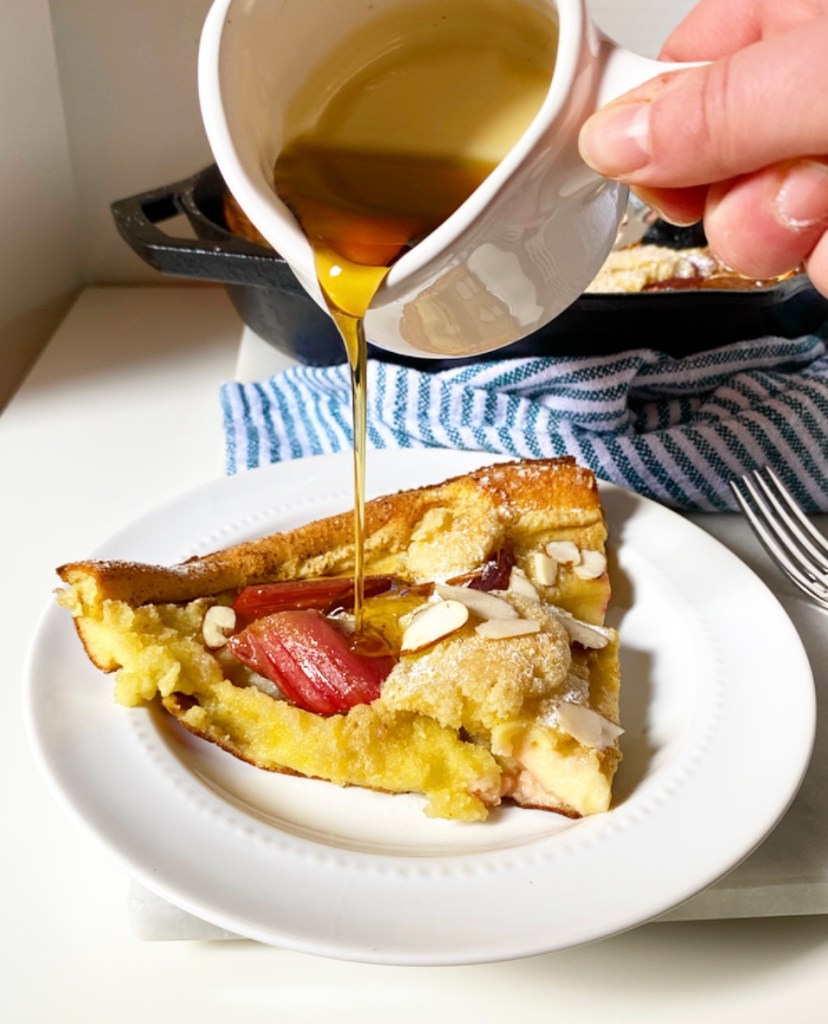
Let’s make this the summer of frangipane. I mean it! Frangipane in everything. Toast, pies, tarts, turnovers, croissants, pastries, French toast—everything. But let’s start with this Frangipane & Rhubarb Puff Pancake, okay? Okay. Glad that’s settled.

Frangipane & Rhubarb Puff Pancake {Dutch Baby}​

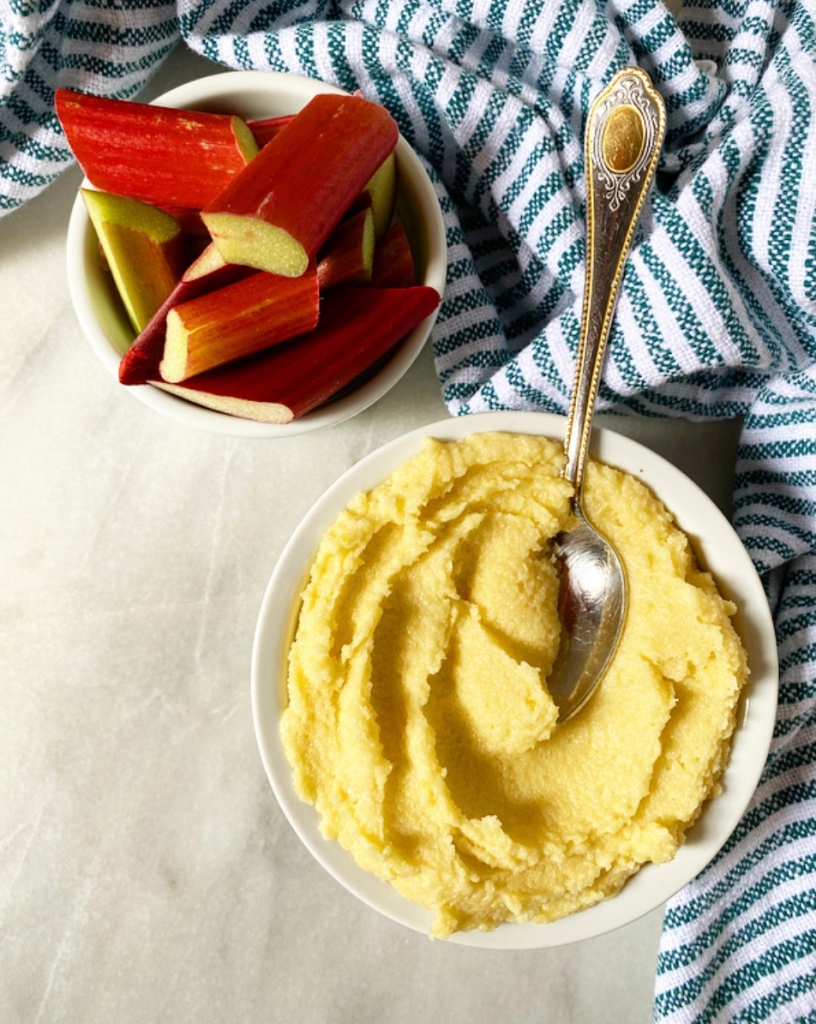
Now, if you’re over there going “WTF is frangipane and why won’t she shut up about it?” here’s a little explanation. Frangipane is almond pastry cream, the easiest pastry cream there is. Just blend together almond flour (or blanched almonds), all-purpose flour, sugar, butter, an egg, salt, and almond extract. Boom! Done! You have thick, creamy sweet almond frangipane at your disposal for any and all of your baking needs.

(I have a lot of baking needs.)

Frangipane & Rhubarb Puff Pancake {Dutch Baby}​

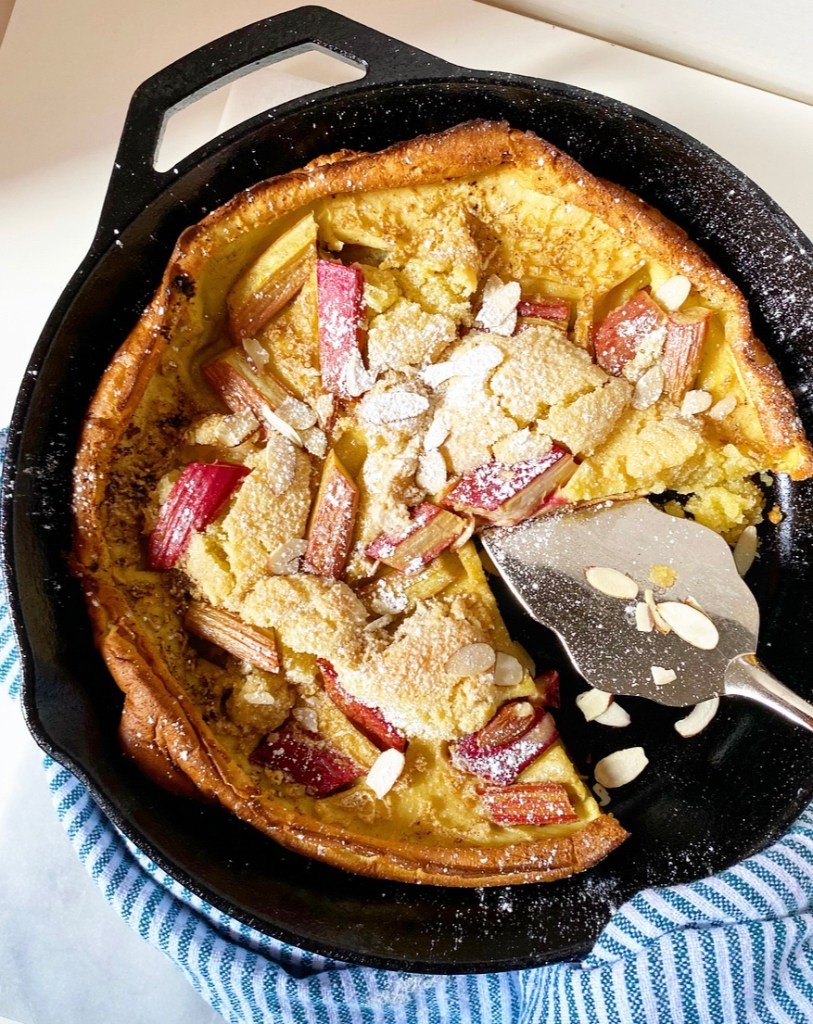
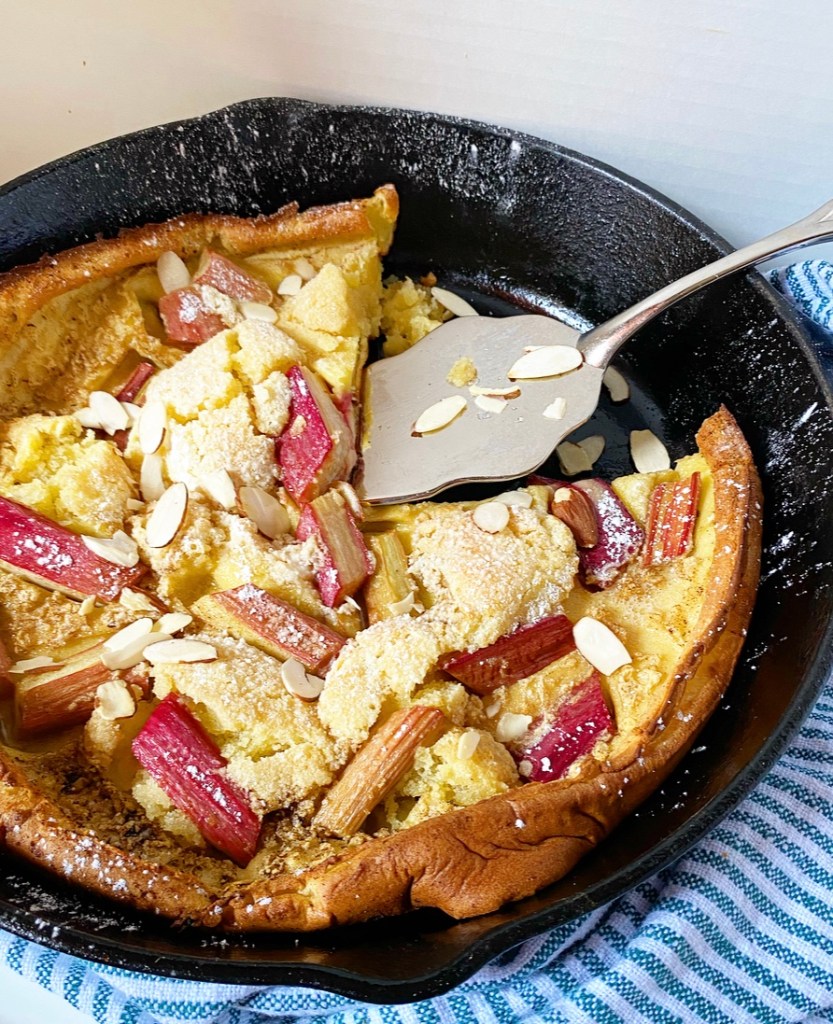
As detailed above, you can do many things with frangipane, but today we’re dropping spoonfuls haphazardly over the top of some eggy batter, scattering on little lengths of rhubarb and then baking it into a luxurious puff pancake. It’ll be tall and puffy (hence the name) when it comes out of the oven, but will quickly relax into something more rumpled and rustic, dotted with pockets of toasty almond cream and soft rhubarb. Find me a more flavorful sweet summer brunch. I’ll wait.

Frangipane & Rhubarb Puff Pancake {Dutch Baby}​

While rhubarb season is already waning, don’t fret! You can sub in any cherry, berry, or sliced stone fruit you love into this recipe with great success. Frangipane goes will just about everything. Watch out—I’m only getting started.

Frangipane & Rhubarb Puff Pancake {Dutch Baby}
makes 4-6 servings

1/2 recipe frangipane (recipe below)
2 thick or 3 thin stalks rhubarb
4 large eggs
1 cup milk (not skim or fat free)
2 teaspoons pure vanilla extract
1 cup all-purpose flour
3-4 tablespoons granulated sugar
1/2 teaspoon Kosher or sea salt
4 tablespoons butter (unsalted or salted)

Toppings (optional):
confectioner's sugar
lemon wedges
pure maple syrup
sliced almonds

Place a large ovenproof cast iron or stainless steel pan in a cold oven. Preheat oven to 400F.

Make frangipane according to recipe below. You will only need half for this recipe—set it in a space near the oven for easy access.

Trim off and discard rhubarb leaves (they are toxic). Wash and dry rhubarb stalks and slice into 1 1/2-2 inch lengths. If your rhubarb is thick, slice it in half for thinner pieces. Set in a space near the oven for easy access.

Make the puff pancake batter. In the bowl of a food processor or high-powered blender, combine eggs, milk, vanilla, flour, sugar, and salt. Process 30 seconds, or until no lumps remain. Let batter rest five minutes.

Once oven has reached 400F, remove the hot pan and add butter. Place pan back in the oven for 2 minutes, until butter has melted and begun browning. Remove pan from the oven, and swirl the butter so it coats the pan. Pour in batter.

Working very quickly, drop spoonfuls of frangipane and rhubarb over the top of the batter—don’t worry about specificity or creating a design, this should be done as quickly as you can without burning yourself. Bake 21-22 minutes, until puffed and golden. Do NOT open the oven door during baking.

Let pancake cool 2-5 minutes before slicing. Serve immediately with toppings of choice.
Frangipane {Almond Pastry Cream}
makes a heaping cup

1 cup blanched almond flour or 4 ounces blanched almonds
1 tablespoon all-purpose flour
pinch of Kosher or sea salt
6 tablespoons granulated sugar
6 tablespoons unsalted butter, cold-ish room temperature, cut into cubes
1 large egg
1/2 teaspoon pure almond extract

Make the frangipane. In a food processor (or very good blender), pulse almond flour, all-purpose flour, salt and sugar together. Pulse in butter. Pour in egg and almond extract, and process until frangipane is a homogenous paste.

Cinnamon Swirl Bread

Of all the myriad ways I describe myself and what I do, “bread baker” has consistently been pretty low on the list. I have gotten pretty good with cakes and cookies and even pie, but bread still isn’t an area of my expertise.

Cinnamon Swirl Bread

That said, I’ve been slowly getting into bread-making since the start of the pandemic. I didn’t jump on the sourdough starter train or anything (seemed like a huge waste of flour at the time), but I tinkered with no-knead recipes and have since posted two English muffin breads and a dreamy, decadent cheese bread. Today though, I’m tackling one of my favorite things in all of bread-dom, classic Cinnamon Swirl Bread.

Cinnamon Swirl Bread

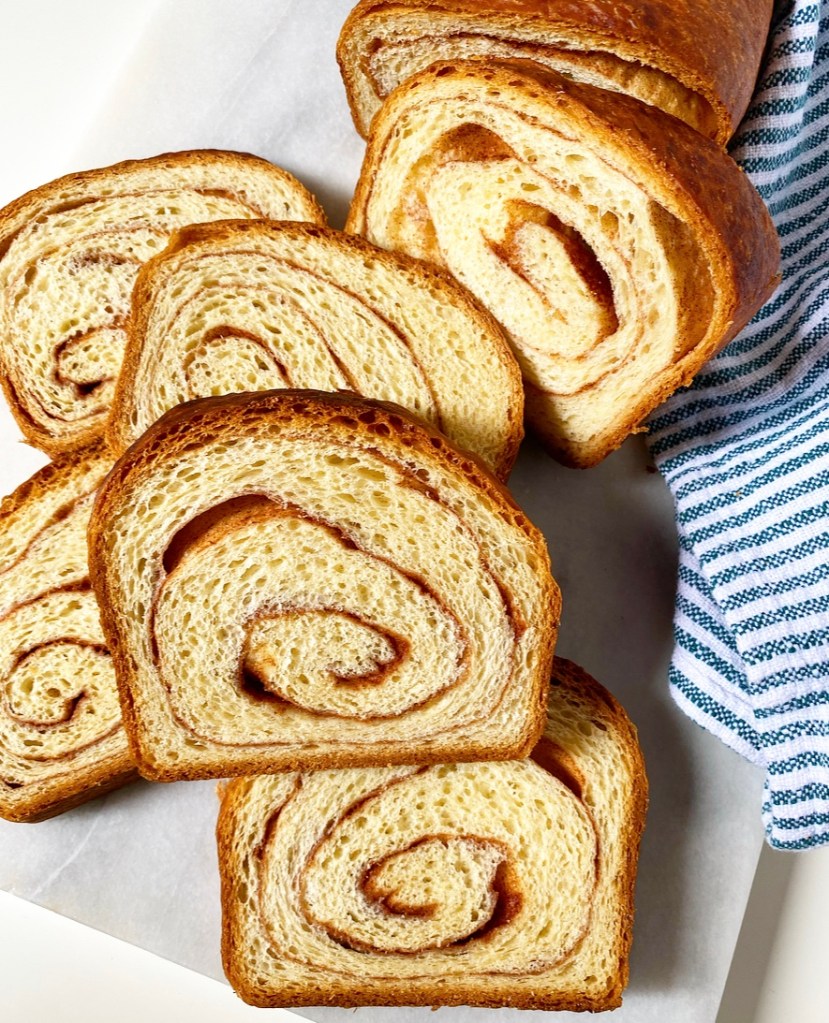
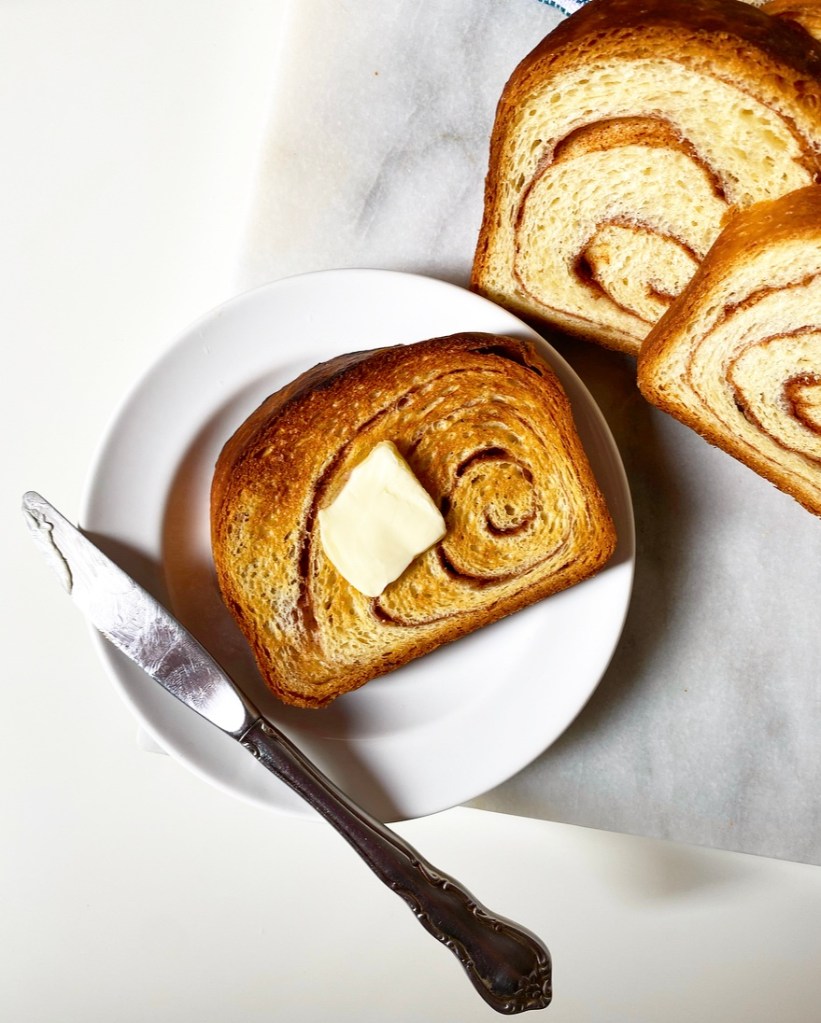
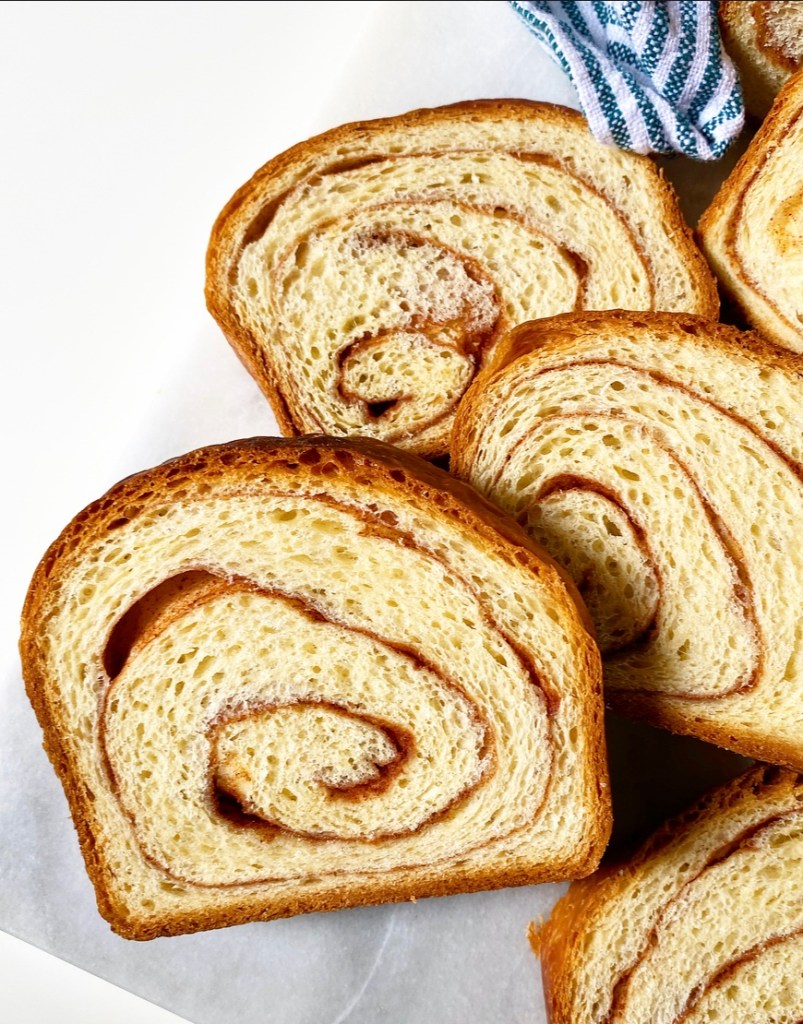
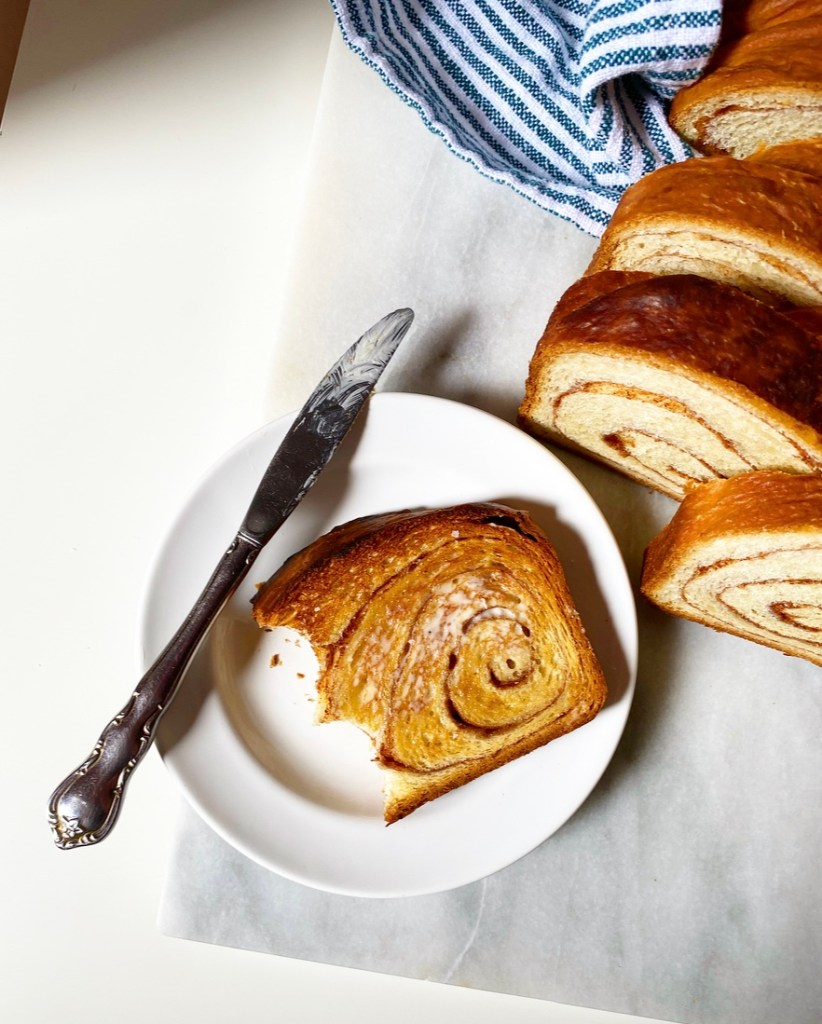
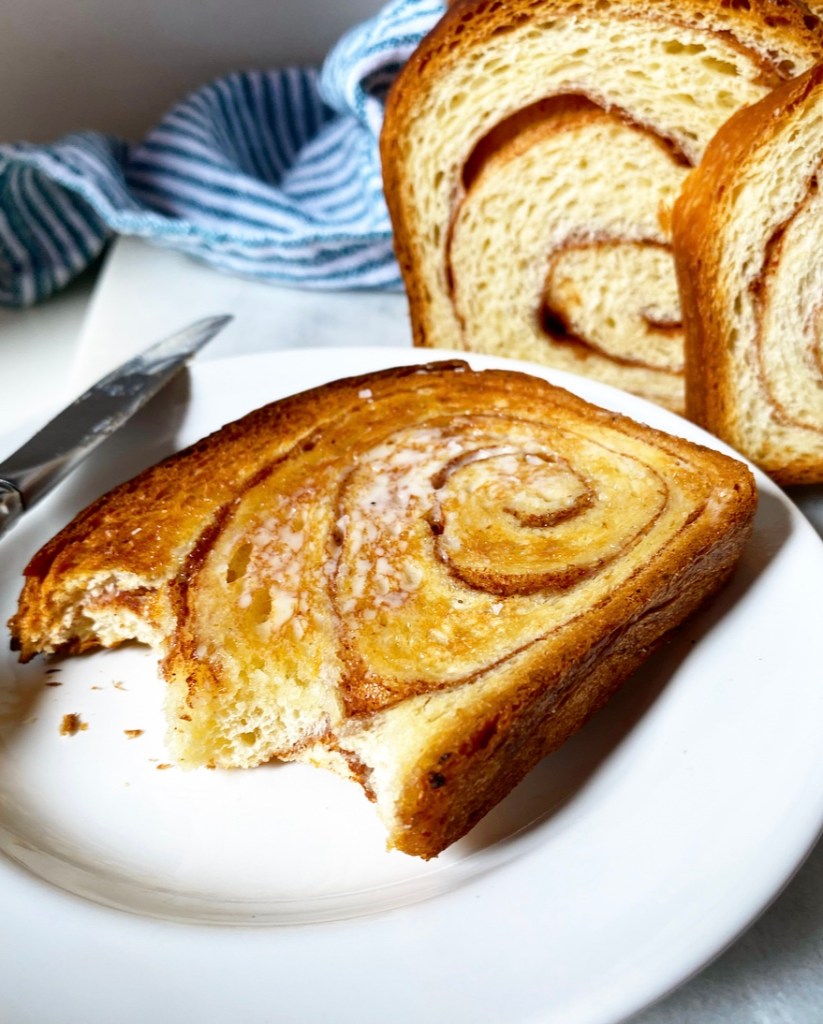
Oh yes, I have loved Cinnamon Swirl Bread as far back as I can remember. Paired with butter or peanut butter, it was my dad’s go-to “feed the kids” breakfast when I was little, and it’s one of my many go-to “feed yourself before your blood sugar drops further” meals at the ripe age of almost-37. A few weeks ago, I tried my hand at making Cinnamon Swirl Bread at home and it turned out so well! Soft, buttery, cinnamon-scented and perfect for toast.

Cinnamon Swirl Bread

Cinnamon Swirl Bread is super simple to make and can be put together in about 4 hours. That may seem like a lot, but with two rises and an hour of baking time, the active prep is a little more than 30 minutes.

The base recipe is exactly the same as the one I use for cheese bread—it’s soft and buttery, like a brioche. It comes together in minutes and is soft, pliable and so satisfying to knead. Let it rise once, then roll it out like you’re making cinnamon rolls and scatter it with cinnamon, sugar, and a little flour before rolling it up for a second rise. Flour in the filling may seem strange, but it lends some structure here so that the cinnamon swirl keeps its definition through the second rise and baking time. I can’t take credit for this brilliant tip—shout out to the fine folks at King Arthur Flour.

Cinnamon Swirl Bread

This bread needs nearly an hour in the oven, until it’s tall and deep brown and smells outrageously delicious. If you want a perfect swirl for toasting and all, you should probably let your Cinnamon Swirl Bread cool completely. I know that’s a big ask and you’re probably (justifiably) going to ignore it, but someone might revoke my newly-minted bread baker card if I don’t say it.

Cinnamon Swirl Bread

But for real, if you’re not at least tempted to tear into this like a wild animal, we might fundamentally misunderstand each other.

That’s okay, though. More Cinnamon Swirl Bread for the rest of us.

Cinnamon Swirl Bread
Cinnamon Roll Bread
makes one loaf

Dough:
2 3/4-3 cups all-purpose flour
2 tablespoons granulated sugar
1 packet (2 1/4 teaspoons) instant yeast
1 teaspoon fine sea salt
3 tablespoons unsalted butter
1 cup whole milk
1 large egg, room temperature

Filling:
1/3 cup granulated sugar
2 teaspoons ground cinnamon
1 teaspoon all-purpose flour

For Finishing:
2 tablespoons unsalted butter, melted

Make the dough. In a medium-large mixing bowl, whisk together 2 3/4 cups all-purpose flour, sugar, instant yeast, and salt. Set aside.

In a small saucepan over medium-low heat, melt butter and milk together until just warm to the touch, about 95-110 degrees.

Crack the egg into a small mixing bowl. Whisking constantly, add the butter/milk mixture in a thin stream until completely combined. Add mixture to the dry ingredients and fold together. A shaggy dough should form and be pulling away from the bowl. Gradually add flour in 2 tablespoon increments until the it pulls away a bit.

Turn dough onto a floured surface and knead 5-6 minutes, until smooth. Gather dough into a ball and place it in an oiled bowl, making sure to get a little oil on all sides. Stretch some plastic wrap over the top and allow dough to rise in a warm, draft-free environment for 45 minutes to 1 hour or until doubled in bulk.

In the meantime, heavily grease a 9x5-inch loaf pan with butter.

Mix the filling. In a small bowl, use a fork to whisk together sugar, cinnamon and flour. Set aside.

Flour a surface and a rolling pin. When the dough has risen, punch it down and turn it out onto the surface. Roll it out to an 11x14-inch rectangle (about 1/8-inch thick). Sprinkle the filling over the entire surface of the dough, leaving 1/2-inch bare on all sides. Starting from a short edge (an 11 inch edge), tightly roll the dough into a cylinder place it in the prepared pan. Cover pan loosely with plastic wrap. Let loaf rise in a warm, draft-free place for 45-60 minutes, or until it peaks over the top of the pan. If you poke it with your finger, the dent should remain.

Meanwhile, set an oven rack in the central position. Preheat oven to 350F.

When loaf has risen, remove and discard the plastic wrap. Bake loaf for 50-55 minutes, tenting the loaf with foil if it is getting too dark. Test for doneness with a skewer—if it meets any resistance or comes out with dough on it, bake in five minute increments until neither of those things happens. To test for doneness with a thermometer, insert the end into center. If it reads at 190F or above, it’s done.

When the bread is done, brush the entire top with melted butter. Let cool in the pan for 15 minutes before turning it onto a rack to cool completely.

Slice bread thickly and enjoy warm or room temperature, or use it for toast. Cover and refrigerate any leftovers for up to a week.

Lemon Morning Buns

Lemon Morning Buns

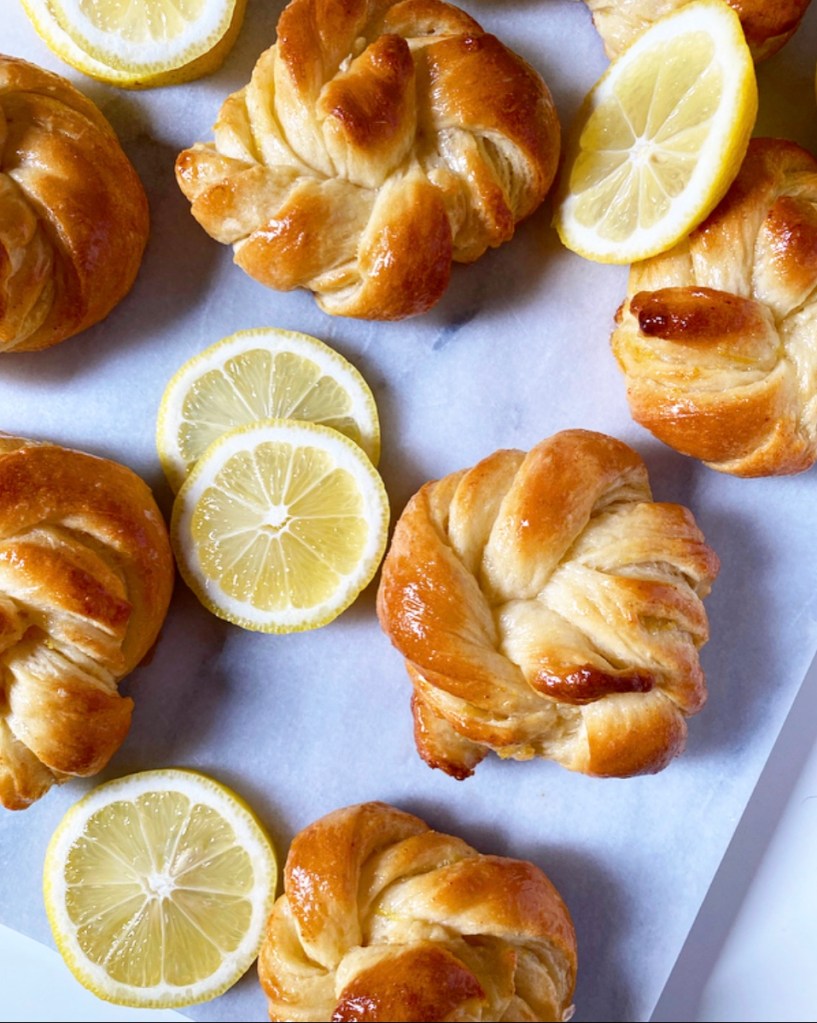
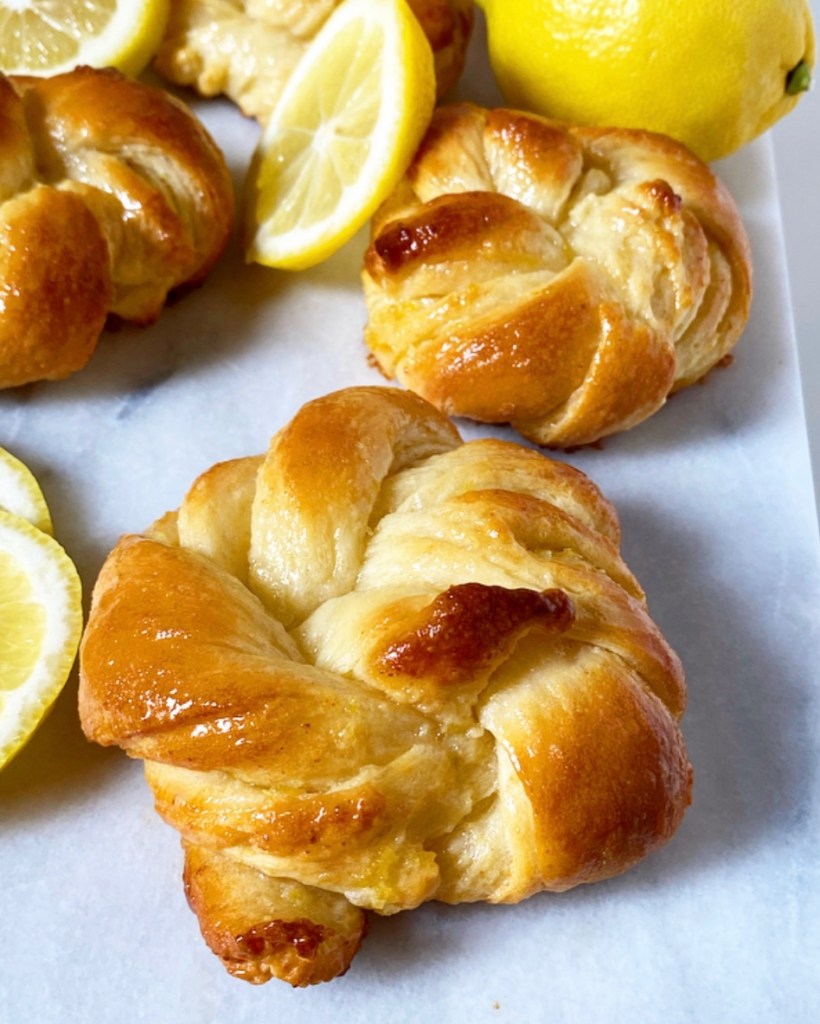
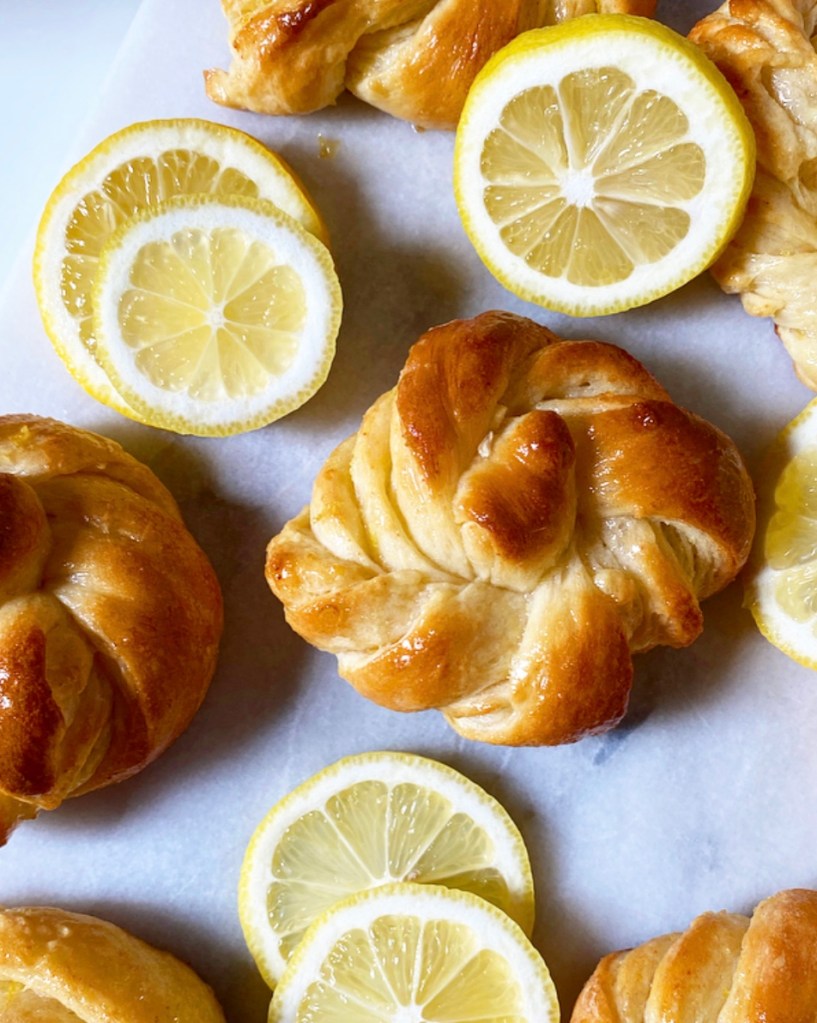
If you’re searching for a way to brighten up your weekend, look no further than these Lemon Morning Buns. They’re glossy, golden, gorgeous and swirled with fresh lemon flavor throughout.

Lemon Morning Buns

This is my third morning buns recipe, and there’s a reason I keep returning to them: I get a lot of bang for my baking buck. Though these twisty little guys look like they take some real skill, the truth is that if you can make cinnamon rolls and tie a knot, you can make morning buns.

I’ve posted detailed shaping tutorials previously and will link to them in the recipe below, but rest assured that these buns really are simple beginning to end. The entire recipe has just 8 ingredients with several being used in multiple places. The dough is enriched with butter, egg and whole milk, and is a pleasure to work with; it’s smooth and sticky and kneads like a dream. Let it rise for 45 minutes or so, then layer it with a lemon-sugar filling and twist it into knots. Let them rise a little more, then bake and brush with a lemon glaze, leaving them shiny and a little sticky. Oh, and bursting with buttery lemon flavor.

Lemon Morning Buns

These Lemon Morning Buns are a great way to put a little sunshine in your weekend. Between their fluffy texture and intense lemon flavor, they’re guaranteed to brighten your day.

Lemon Morning Buns
Lemon Morning Buns
makes 12 buns

Dough:
2 3/4-3 cups all-purpose flour
3 tablespoons granulated sugar
1 packet (2 1/4 teaspoons) instant yeast
1 teaspoon fine sea salt
3 tablespoons unsalted butter
1 cup whole milk
1 large egg, room temperature

Filling:
3 tablespoons granulated sugar
1 1/2 tablespoons fresh lemon zest
pinch of Kosher or sea salt
3 tablespoons unsalted butter, melted

Glaze:
1/3 cup fresh lemon juice (from about 1 1/2 medium lemons)
1/3 cup granulated sugar
1 tablespoon unsalted butter, cut into 4 pieces

Make the dough. In a medium-large mixing bowl, whisk together 2 3/4 cups all-purpose flour, sugar, instant yeast, and salt. Set aside.

In a small saucepan over medium-low heat, melt butter and milk together until just warm to the touch, about 95-110 degrees.

Crack the egg into a small mixing bowl. Whisking constantly, add the butter/milk mixture in a thin stream until completely combined. Add mixture to the dry ingredients and fold together. A shaggy dough should form and be pulling away from the bowl. Gradually add flour in 2 tablespoon increments until the it pulls away a bit.

Turn dough onto a floured surface and knead 5-6 minutes, until smooth. Gather dough into a ball and place it in an oiled bowl, making sure to get a little oil on all sides. Stretch some plastic wrap over the top and allow dough to rise in a warm, draft-free environment for 45 minutes to 1 hour or until doubled in bulk.

In the meantime, line two rimmed baking sheets with parchment. Set aside.

Make the filling. Combine sugar, lemon zest and salt in a small bowl. Rub together with your fingers to release the oils in the zest.

**Shaping photo tutorial here!**

Shape the buns. Return dough to floured surface. Flour a rolling pin and roll dough into an 18x12-inch rectangle. Brush dough with butter, leaving a 1/2-inch border on all sides.

Mentally divide the dough into thirds, like an unfolded letter. Place half the sugar mixture in the middle third of the dough—it’ll be a 12x6-inch section surrounded by two buttered sections of the same size.

Carefully grab one short side of the dough and fold it over the center, so that the dimensions are now 12x12-inches. Brush the top of the folded section with more butter and scatter on the remaining sugar mixture. Fold the other short side over the top so that the dimensions are 12x6-inches. Tap edges “closed” with your rolling pin.

Carefully lift and turn dough over so that the seam is against the floured surface. Roll the dough so that the dimensions are 14x8-inches.

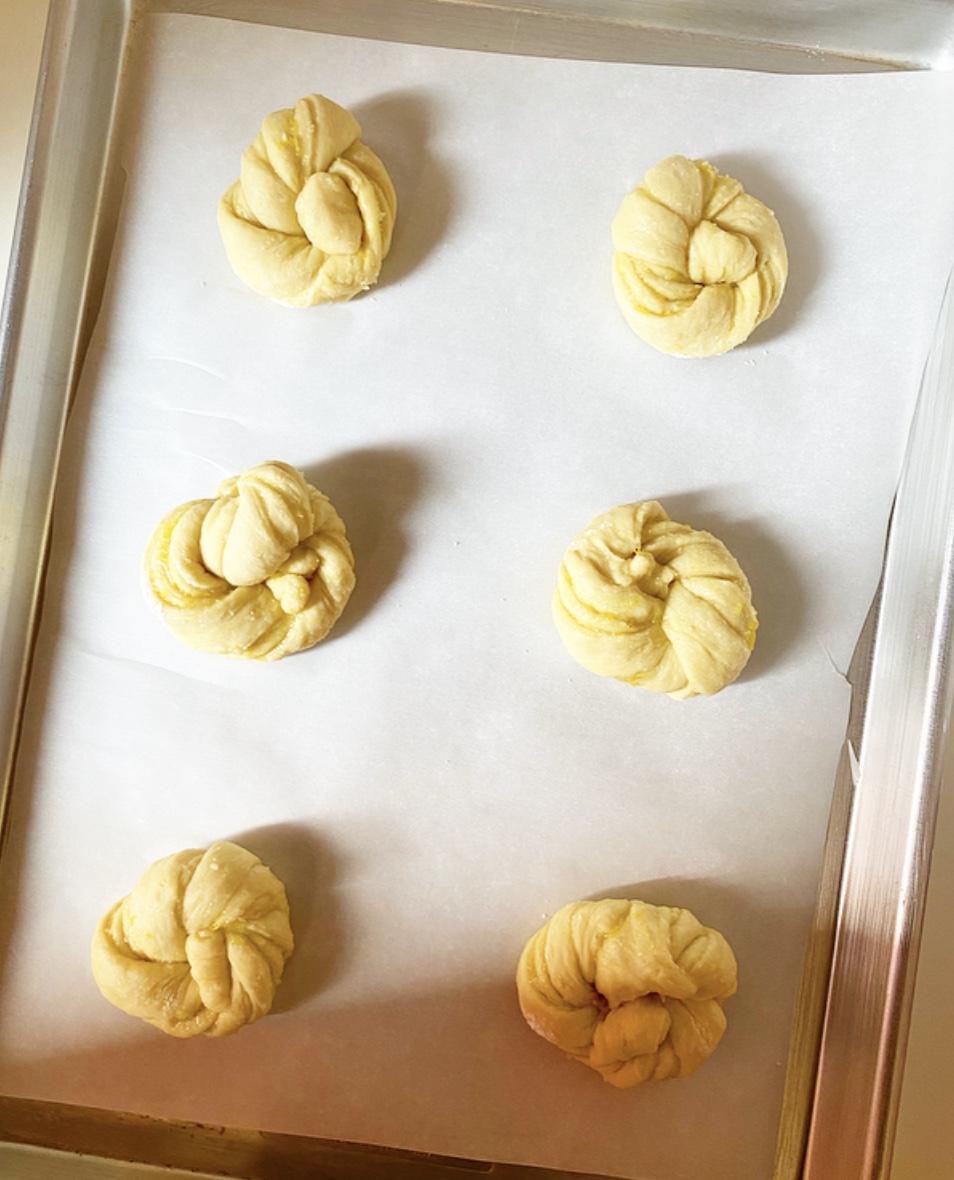
Use a large, sharp chef’s knife to trim the short edges of the dough by about 1/2-inch. Slice dough into 12 strips. Working with one strip at a time, twist the ends until you have a loosely-twisted rope of dough. Carefully bring ends toward one another until they cross over one another and create a small hole. Tuck ends into that hole. Place shaped buns on prepared pans, leaving about 6 inches of space between (I put 6 on a half-sheet sized pan).

Cover pans loosely with parchment or a clean tea towel and let rise in a warm, draft-free environment for another 25-30 minutes. Remove parchment/tea towel. The buns will not seem to have changed drastically, but if you poke one with your finger, the indentation should remain. If any ends have come loose, just nudge them back into the centers.

Place oven racks in the center positions. Preheat oven to 375F. Bake buns for 9 minutes. Rotate pans top-to-bottom and front-to-back. Bake another 8-9 minutes, or until golden brown.

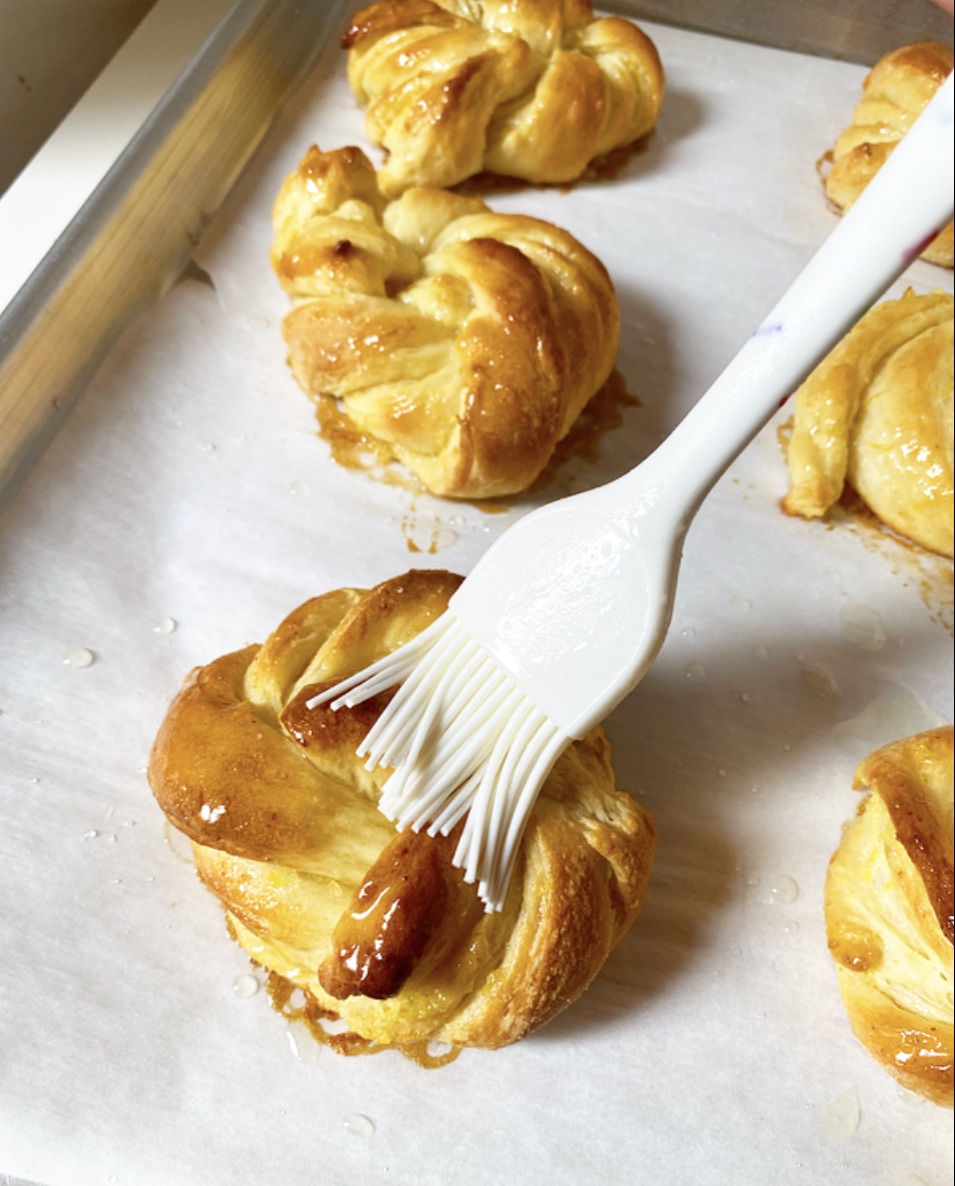
While Buns are baking, make the glaze. Combine lemon juice and sugar in a small saucepan over medium-low heat, stirring constantly until sugar dissolves (about 3-5 minutes). Remove from heat and stir in butter.

Brush warm buns with glaze. Let cool a few minutes before serving. Baked buns are best the day they are made, but will keep in an airtight container at room temperature for a day or so.