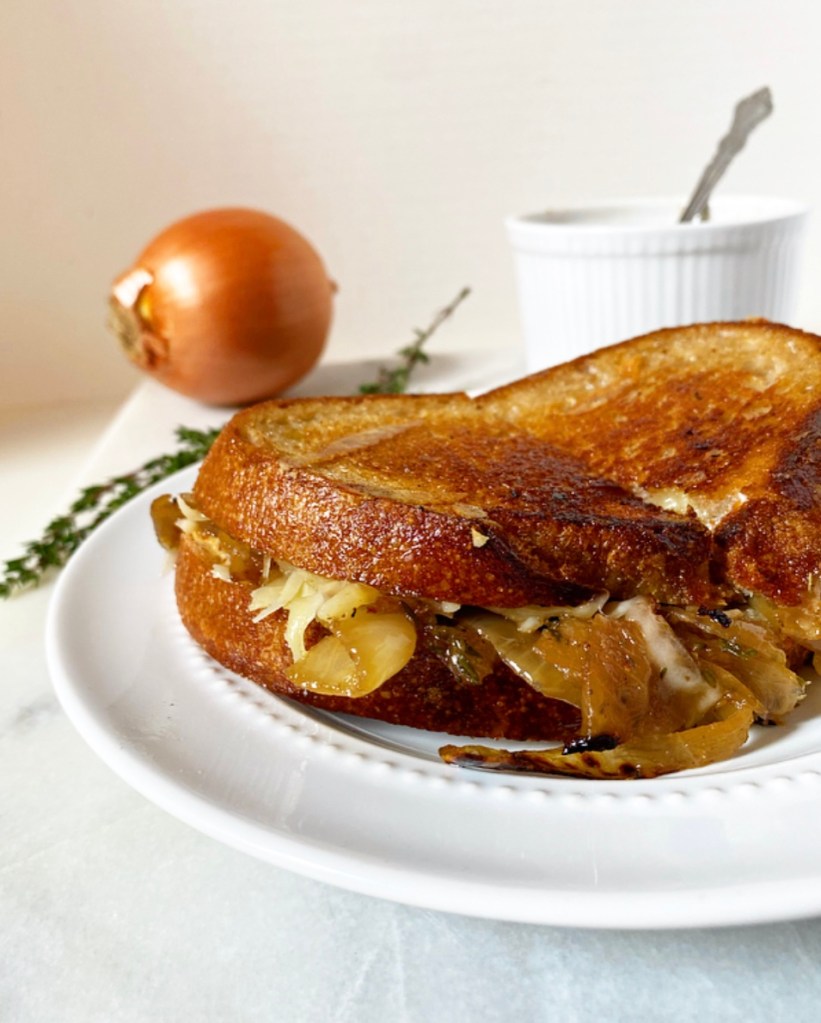
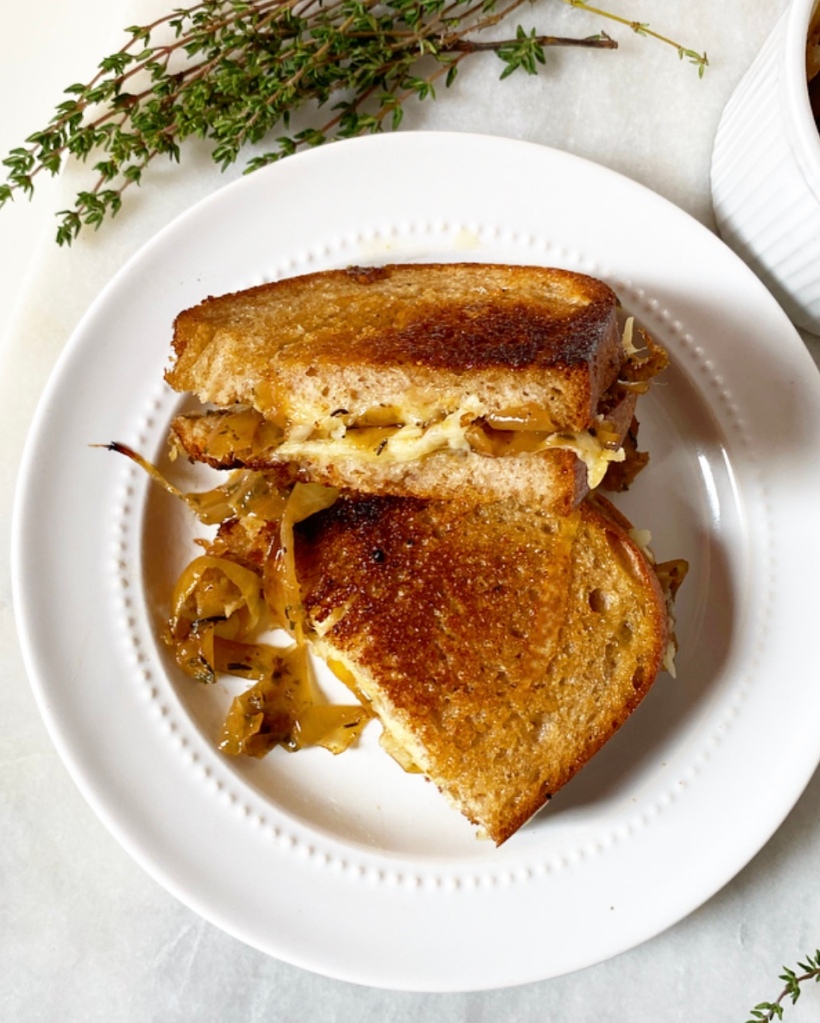
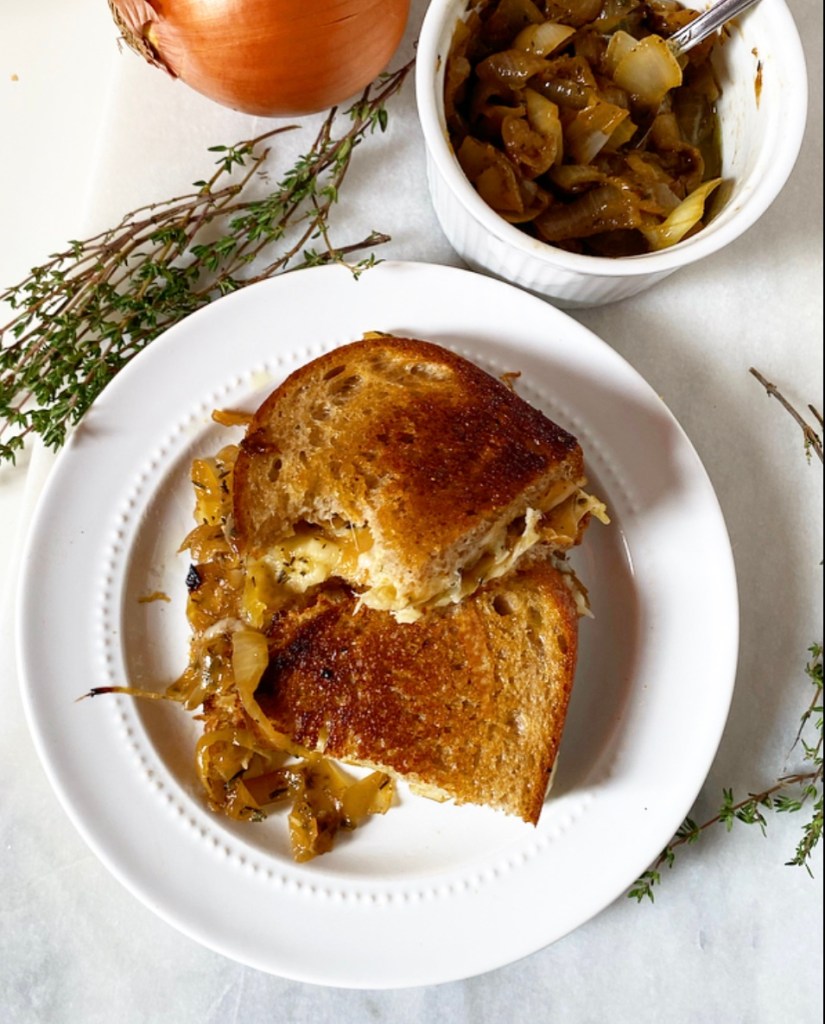
Caramelized Onions may have hit peak popularity in the 80s, but they’re always in style in my kitchen. They add depth and sweetness to any savory dish—an ideal quality when you’re planning a holiday meal.
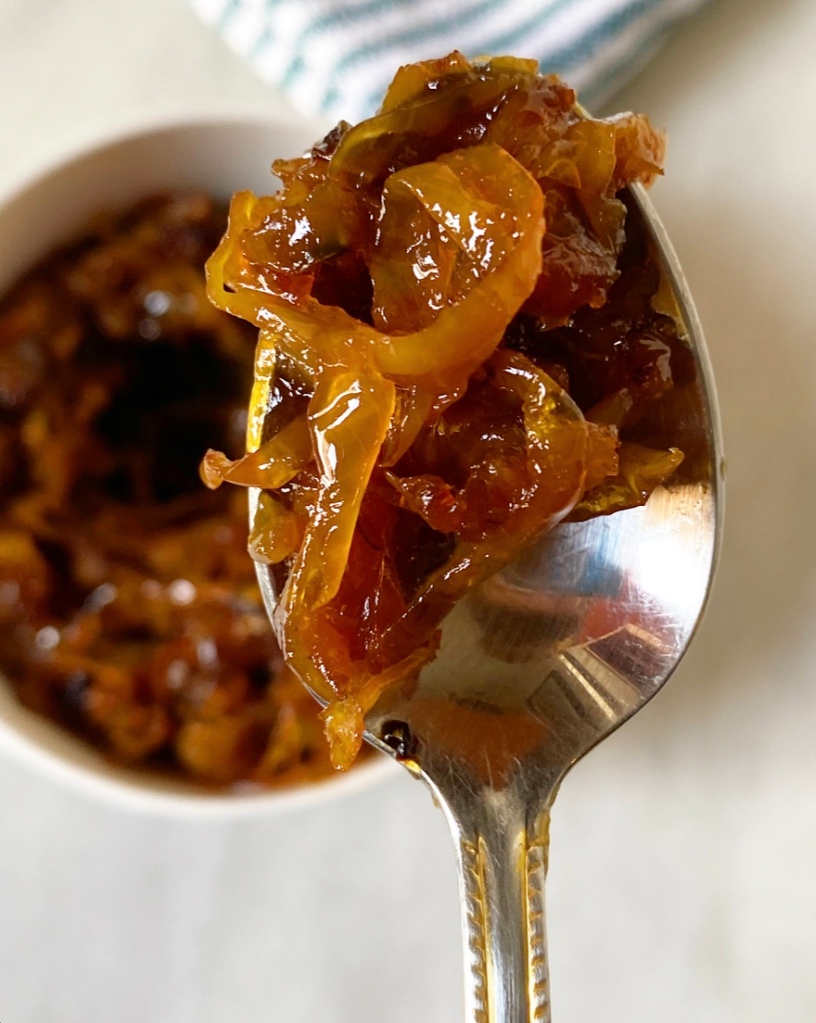
Need to jazz up your mashed potatoes? Add caramelized onions. Looking for a quick compound butter? Caramelized onions to the rescue. Want to change up your cheese plate? Four words: Caramelized Onion Baked Brie.
Truly, there’s no wrong way to use them. The problem is that caramelizing onions takes time and attention. If someone tells you that they can caramelize onions in fifteen minutes, they are lying—this is more of an hour spent over the stove kind of project. Or at least, it was.
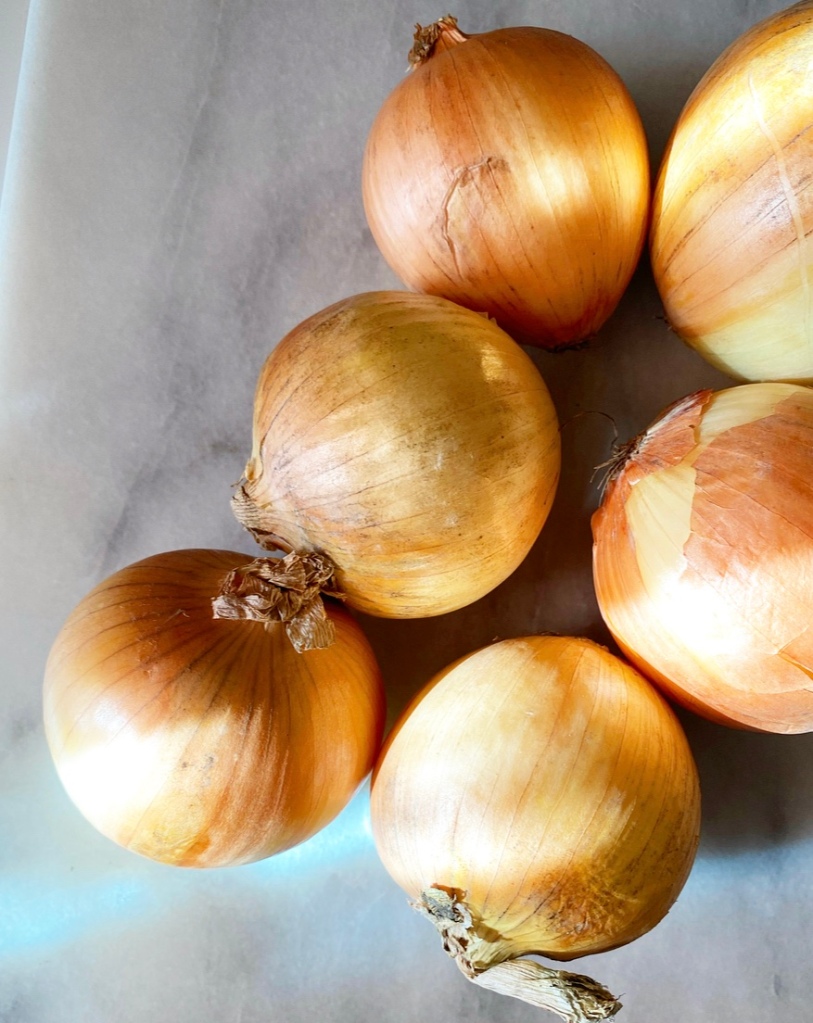
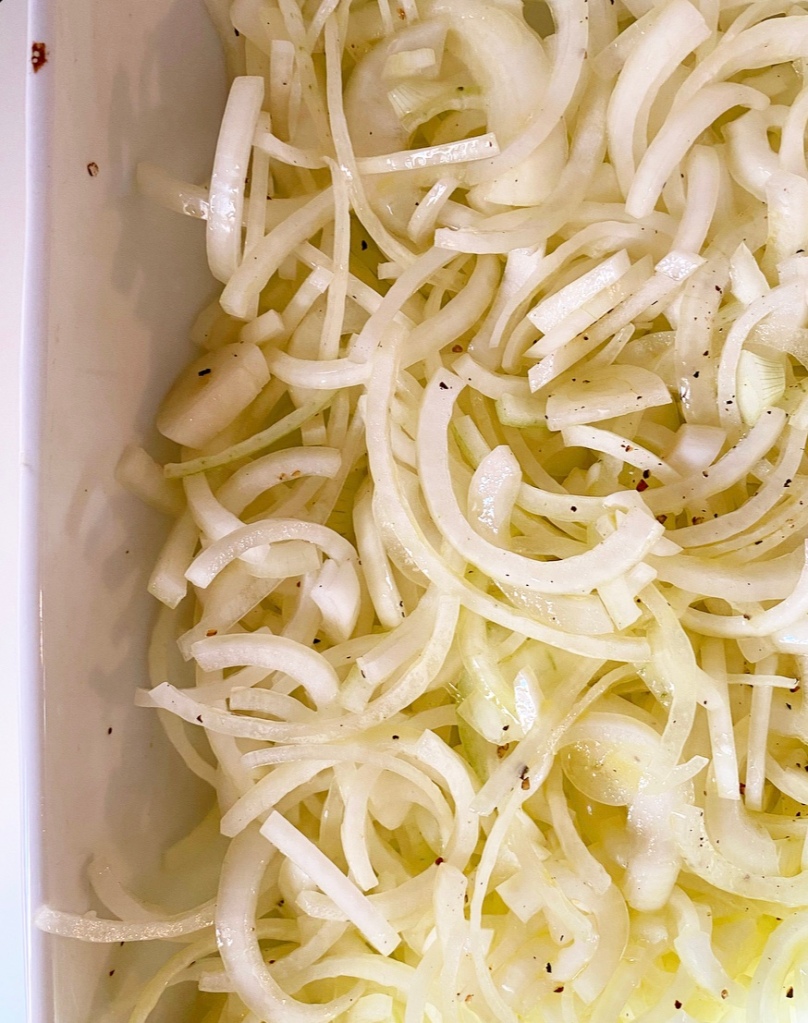
Nowadays, I’ve taken to caramelizing onions in the oven. It takes a while—a couple of hours at least—but it’s mostly inactive work time. If I’ve got the oven on for something, there’s a decent chance that I have a foil-wrapped casserole dish full of onions somewhere in there too, using up that heat. It’s a hack I use often, and it’s particularly perfect for a time of year when the oven is almost always on. Two birds and all.
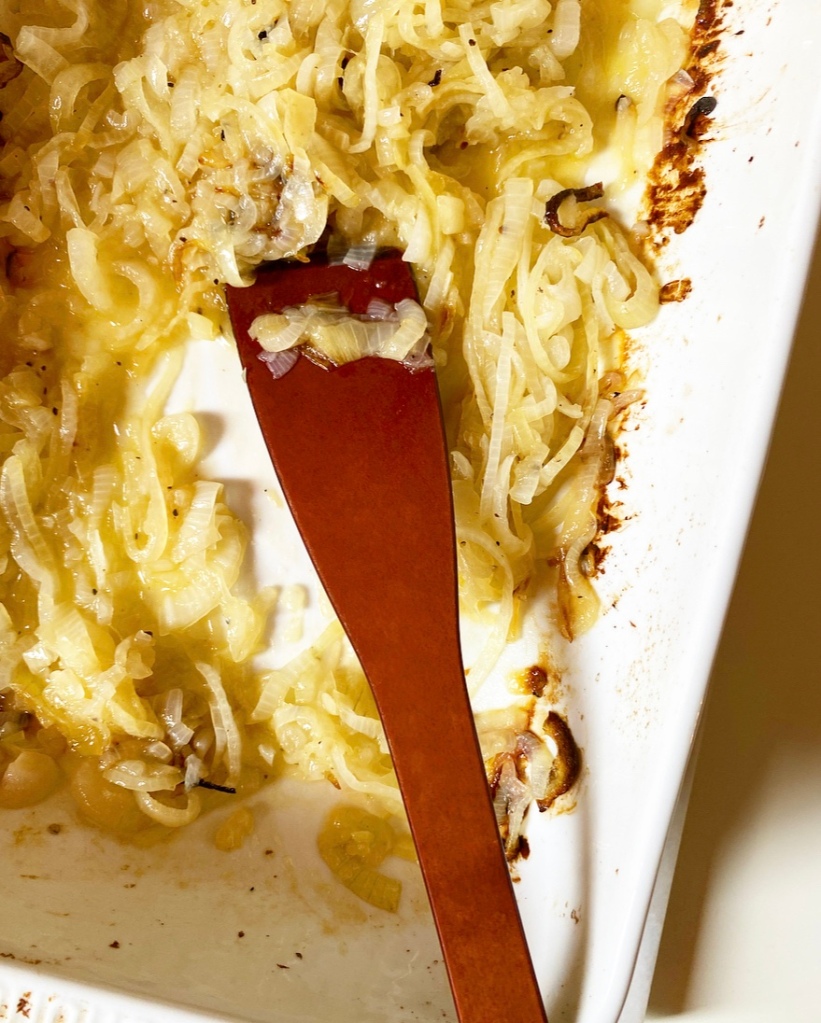
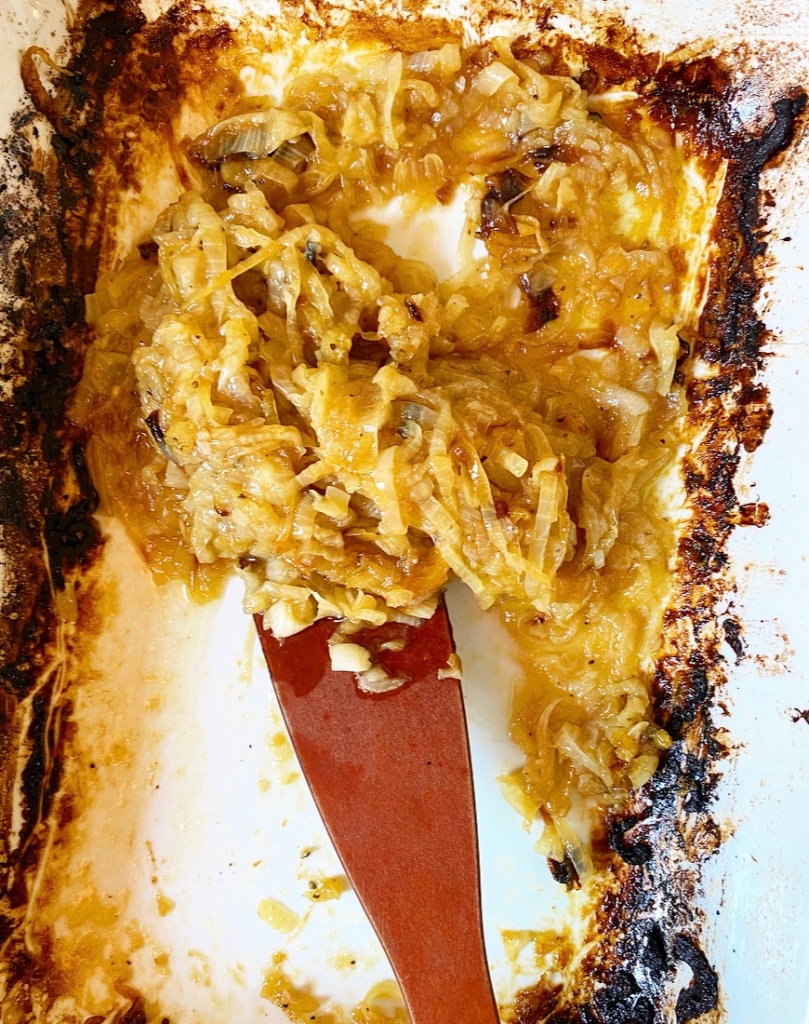
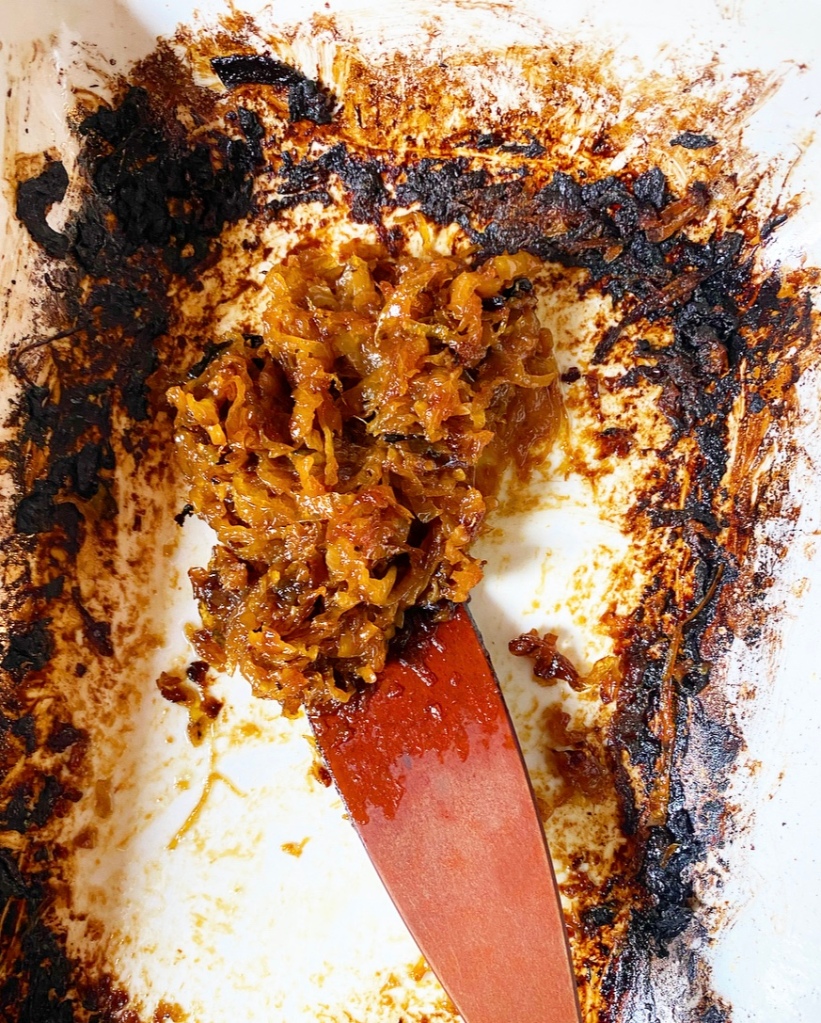
An added benefit to caramelizing onions in the oven is that you can make a ton at once. The onions pictured started as two full pounds, but cooked down to less than a cup all told. If you’ve got the oven space, there’s no reason not to start with four or even six pounds of onions. If you make too many for your intended project, you can easily freeze them for another day.
You know, like tomorrow…hint, hint.
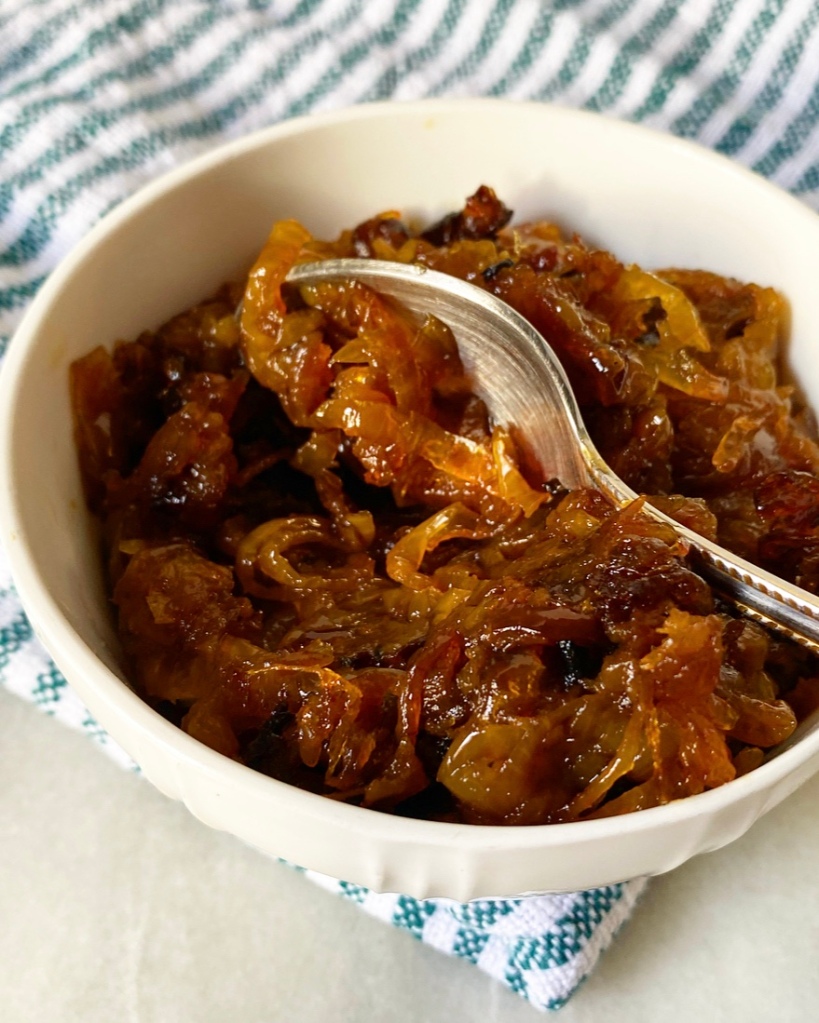
How to Caramelize Onions in the Oven
makes about 3/4 cup

2 pounds Spanish, white or red onions, sliced 1/4-1/8-inch thick
2 tablespoons olive oil
Kosher or sea salt, to taste (I like a heaping 1/4 teaspoon)
few grinds black pepper

Equipment:
9x13” casserole dish
aluminum foil
a stirring implement

Preheat the oven to 350F.

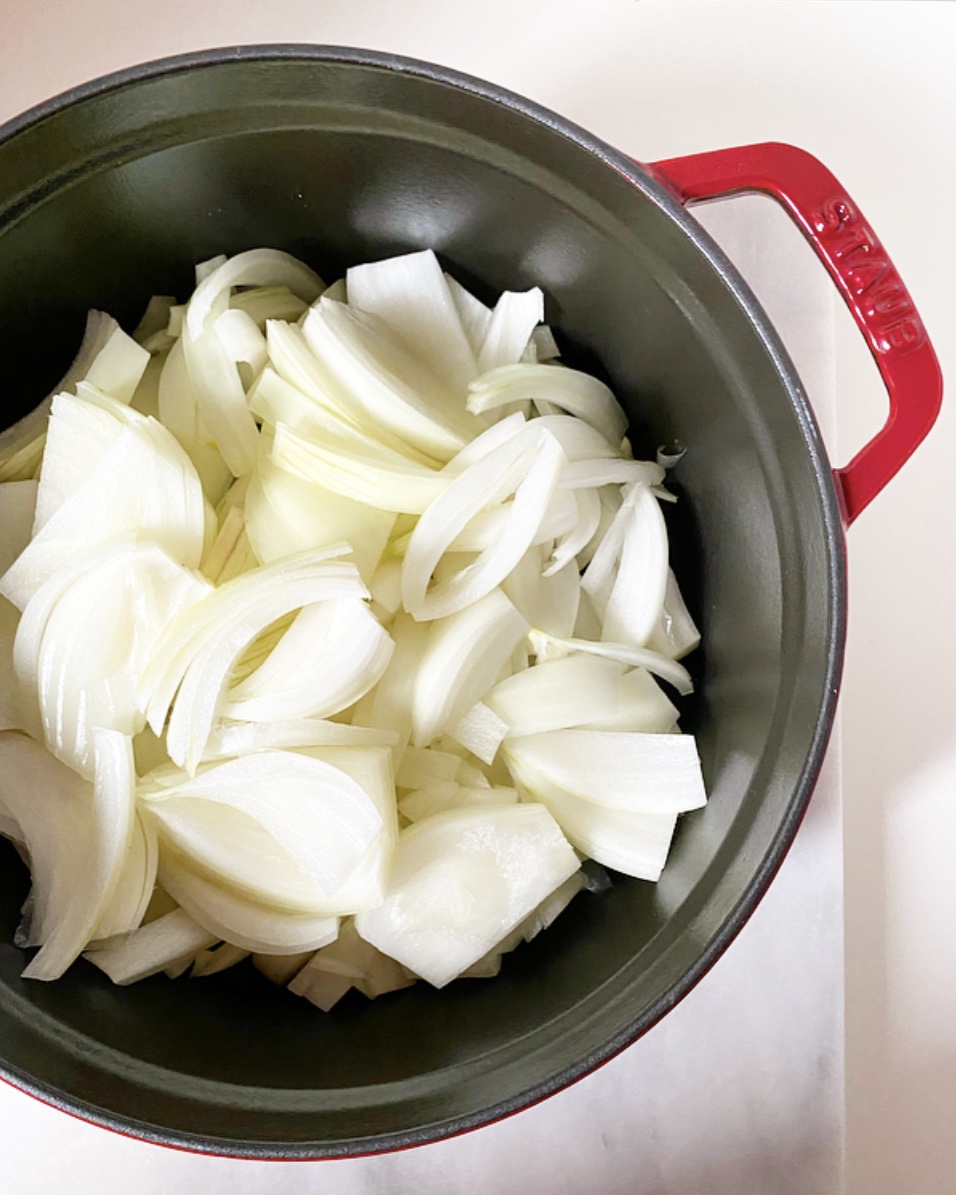
Place sliced onions in a 9x13-inch casserole dish. Add olive oil, salt and pepper, and toss to combine. Cover the pan with foil and bake for 1 hour.

Remove the pan from the oven, lift the foil, and stir the onions. They should be fully soft and translucent at this point, and starting to turn a very pale brown.

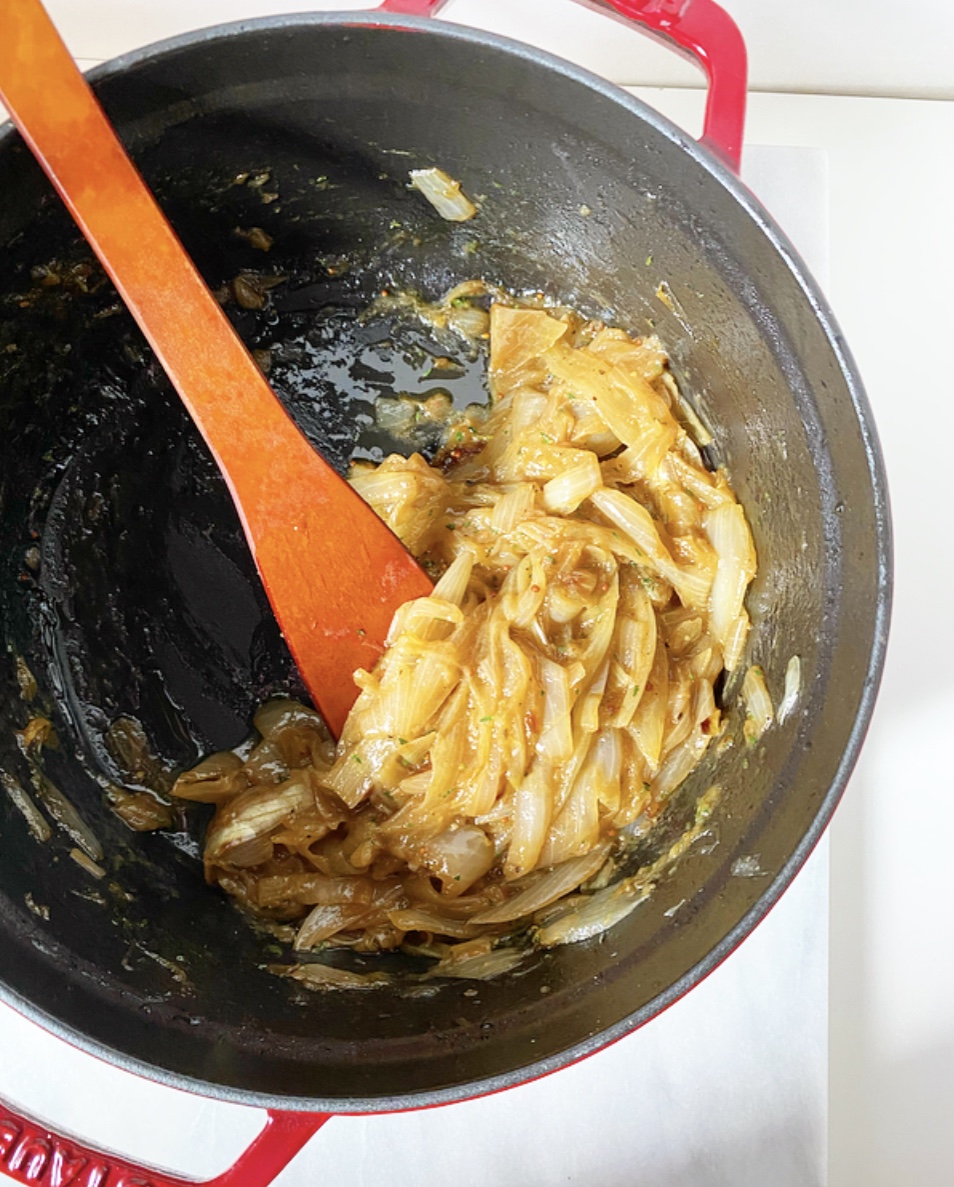
Cover the pan with foil again, then bake for another 30 minutes before stirring again. The onions should be turning darker at this point. If any of the edge pieces have burned, lift them out and discard. Some of the sugars in the onions may char at the edges of the pan—this is normal.

Cover the pan again and bake in 15-20 minute increments, stirring between, until your desired color and consistency has been reached. The onions pictured went about 2.5 hours.

Once your onions are to your liking, remove them from the oven and let cool. Use as desired. Leftovers may be refrigerated for a few days or frozen.
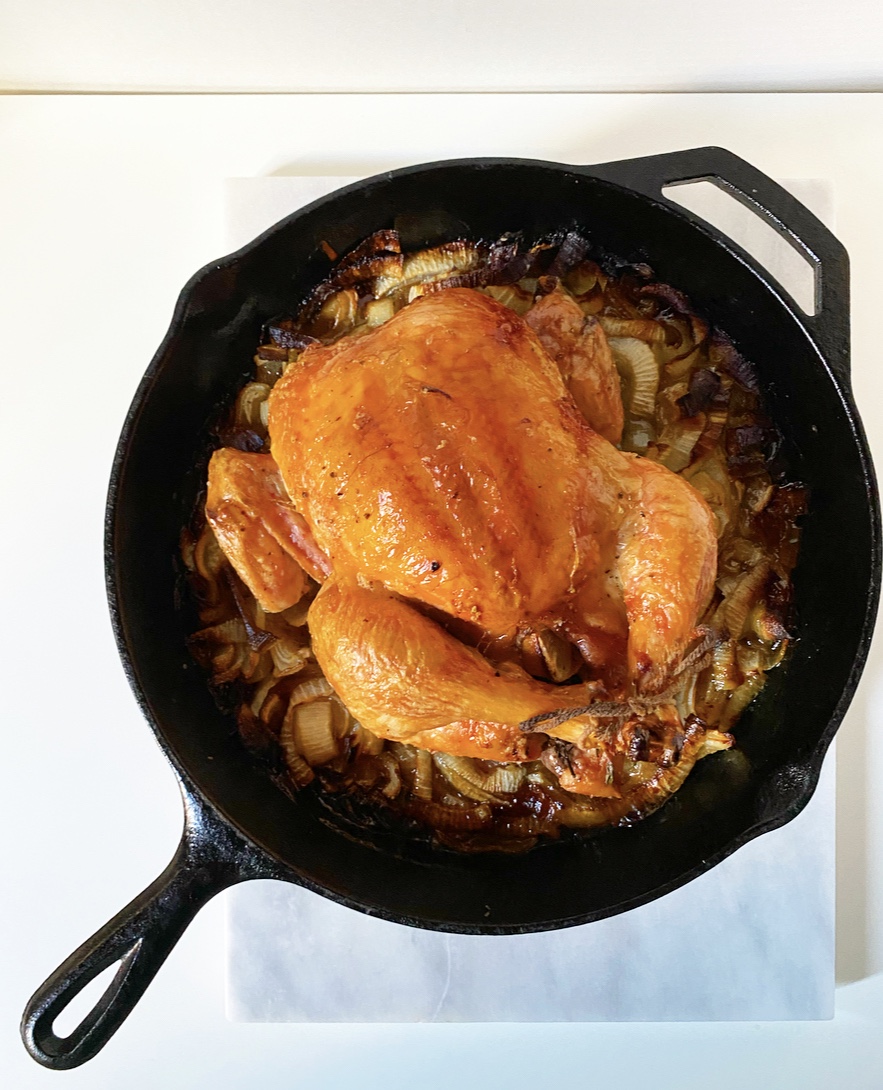 It has come to my attention that a shocking amount of my friends and acquaintances have never attempted to roast a chicken. In fact, some have admitted to being terrified of the process. Not intimidated. Terrified.
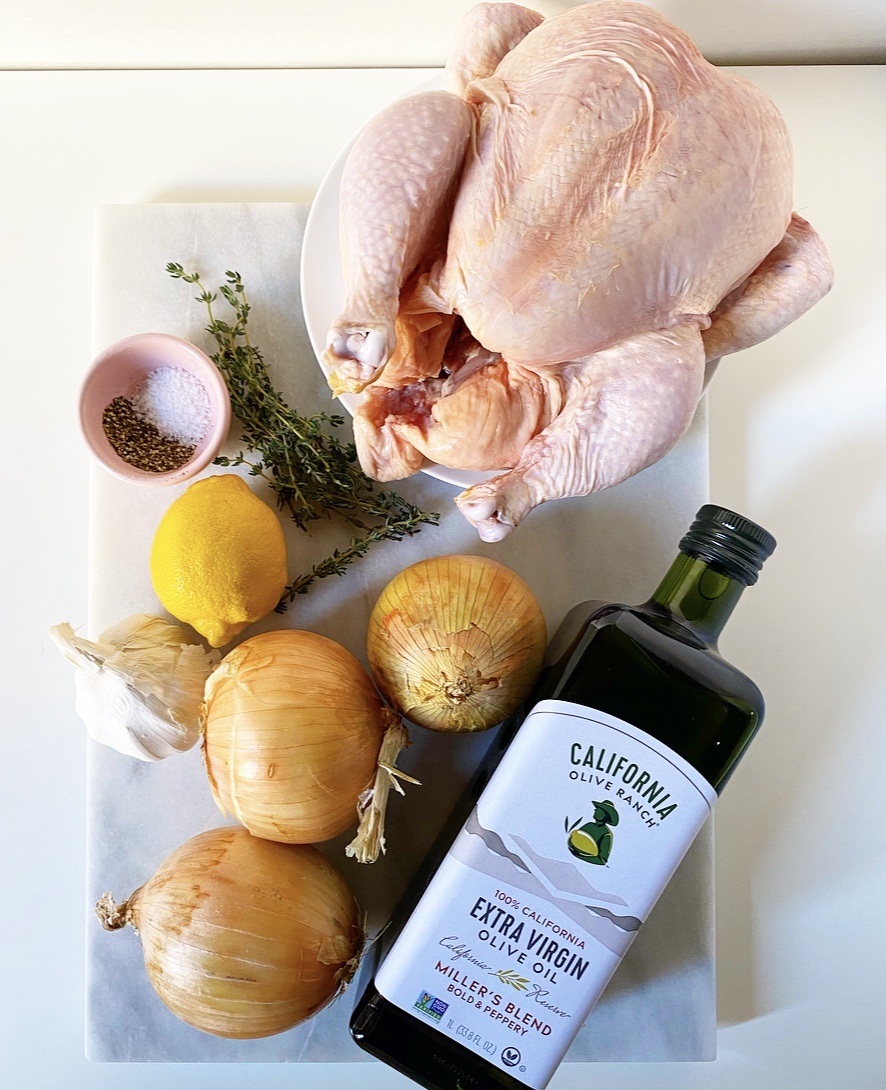
 Here’s everything you’ll need to make a quality roast chicken: salt and pepper, olive oil, garlic, thyme (or rosemary), a lemon, a lot of onions, and a whole chicken.
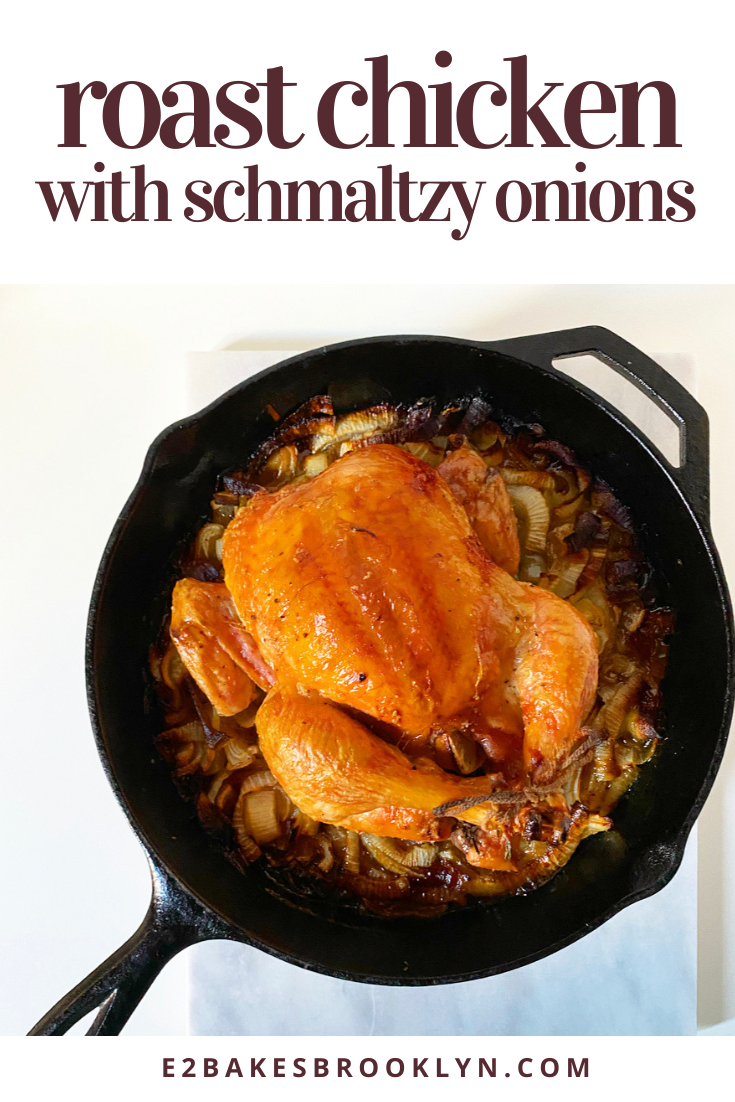
 First things first—slice up the onions and toss them together in the pan. You want your pan to be almost full of onions.
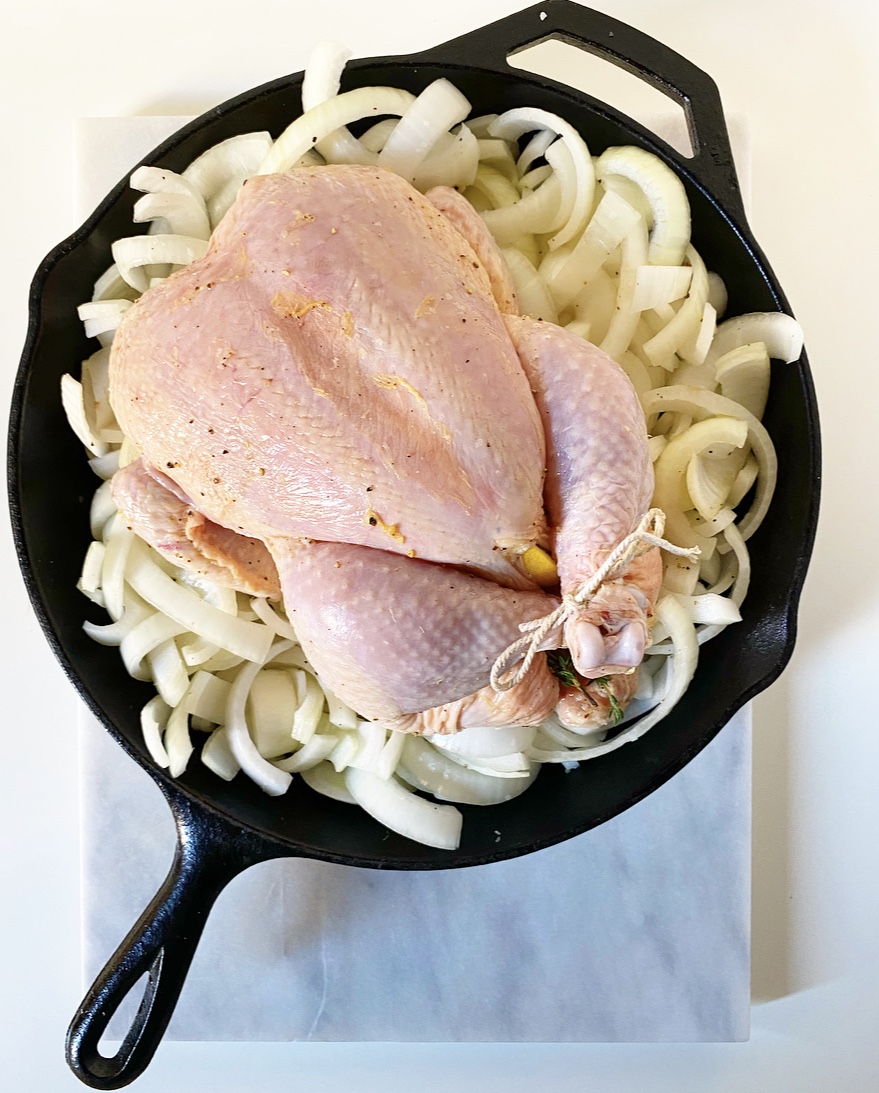 Stuff the lemon, garlic, and thyme in the cavity, and truss the legs (tie them together) if that’s your bag. Whether you choose to truss or not, the next step is to slide the chicken into a 450F oven. Yes, 450F. This initial burst of high heat helps the skin turn golden. As the cooking time moves on, the heat will be turned down to 400F. This keeps the chicken from burning or drying out throughout the long roasting time.
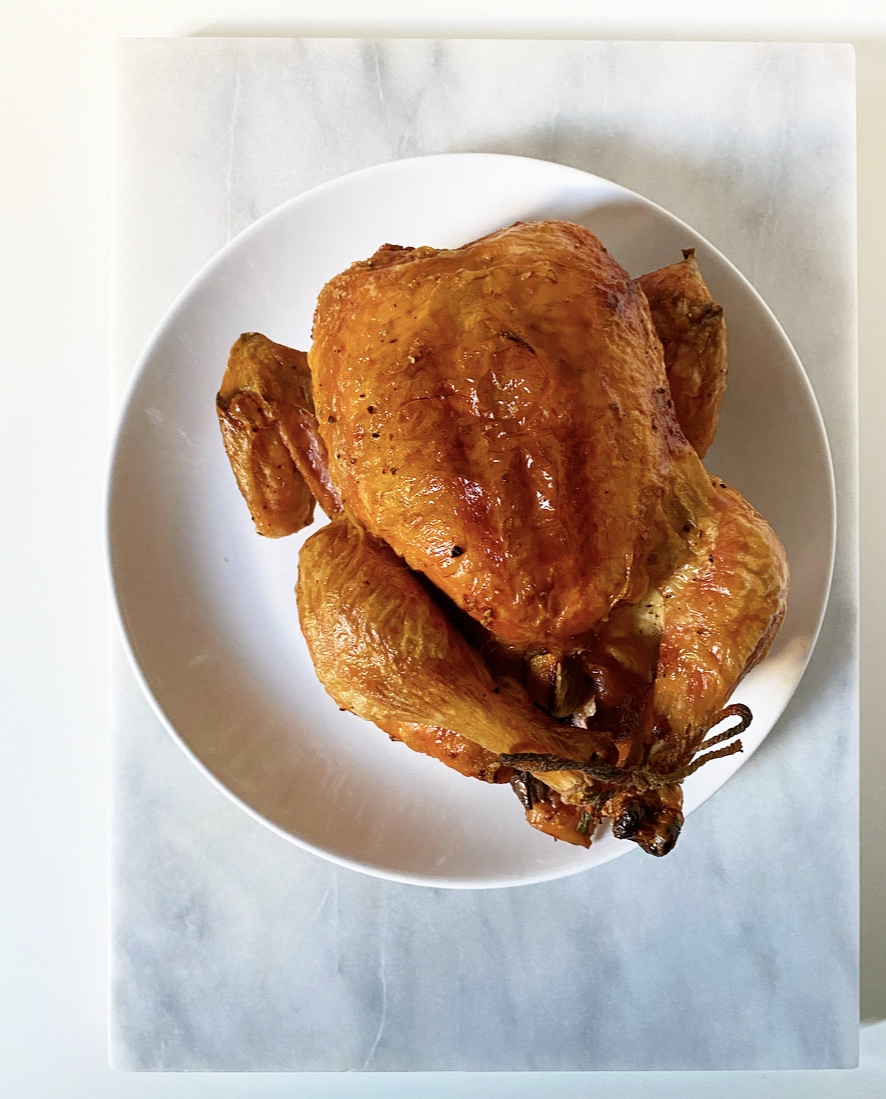 When you finally remove the chicken from the oven, it’ll be golden and beautiful. When I roast chickens, I nearly always get comments on how aesthetically pleasing they look.
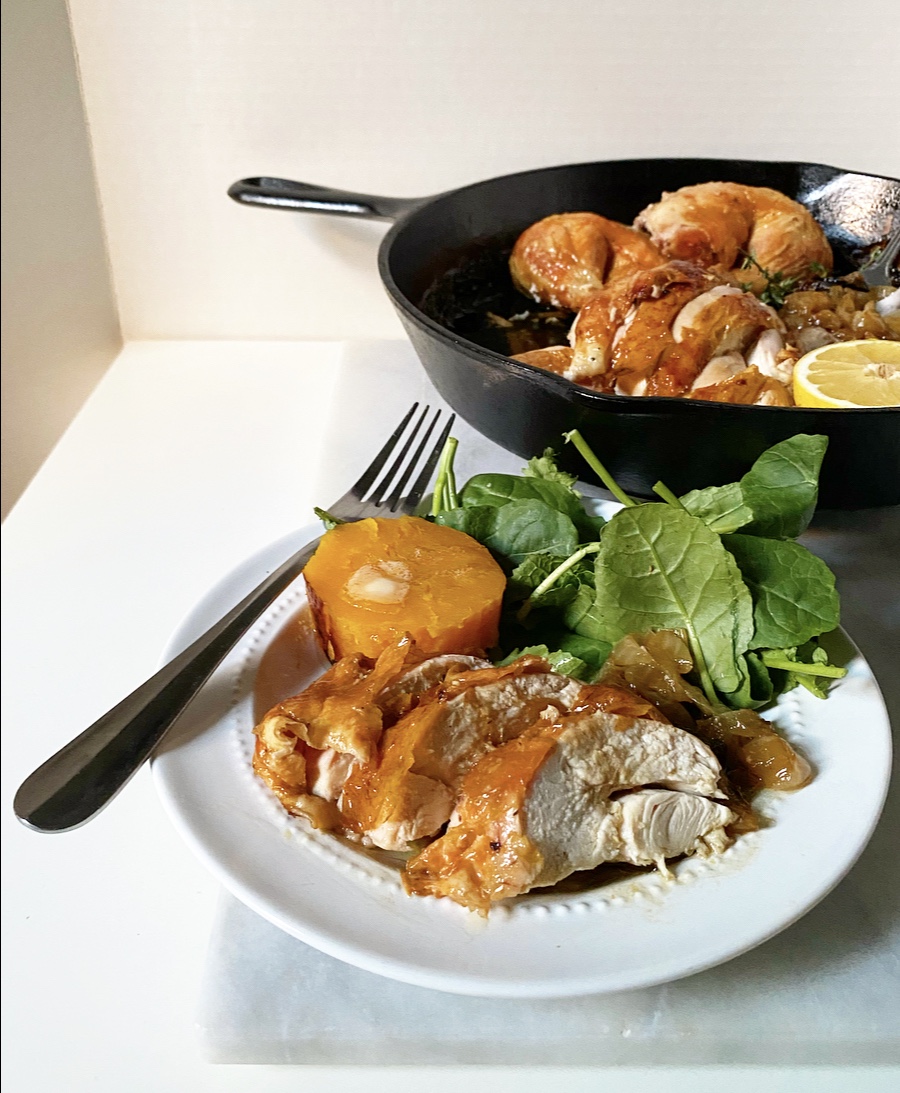
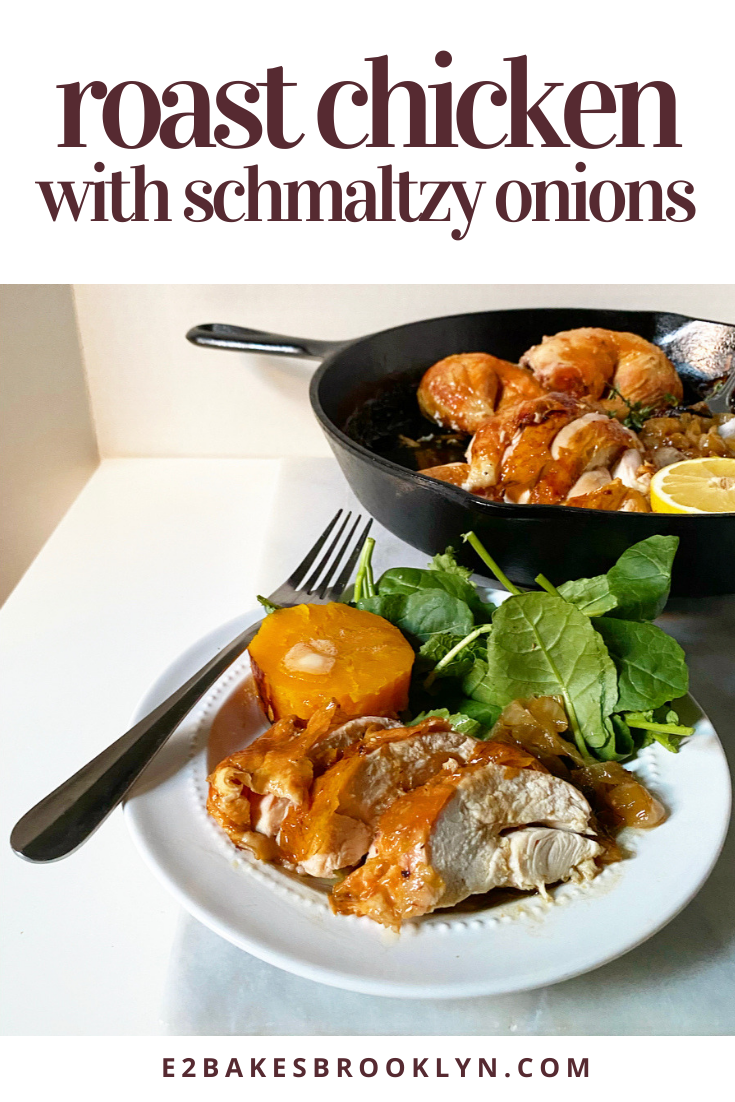
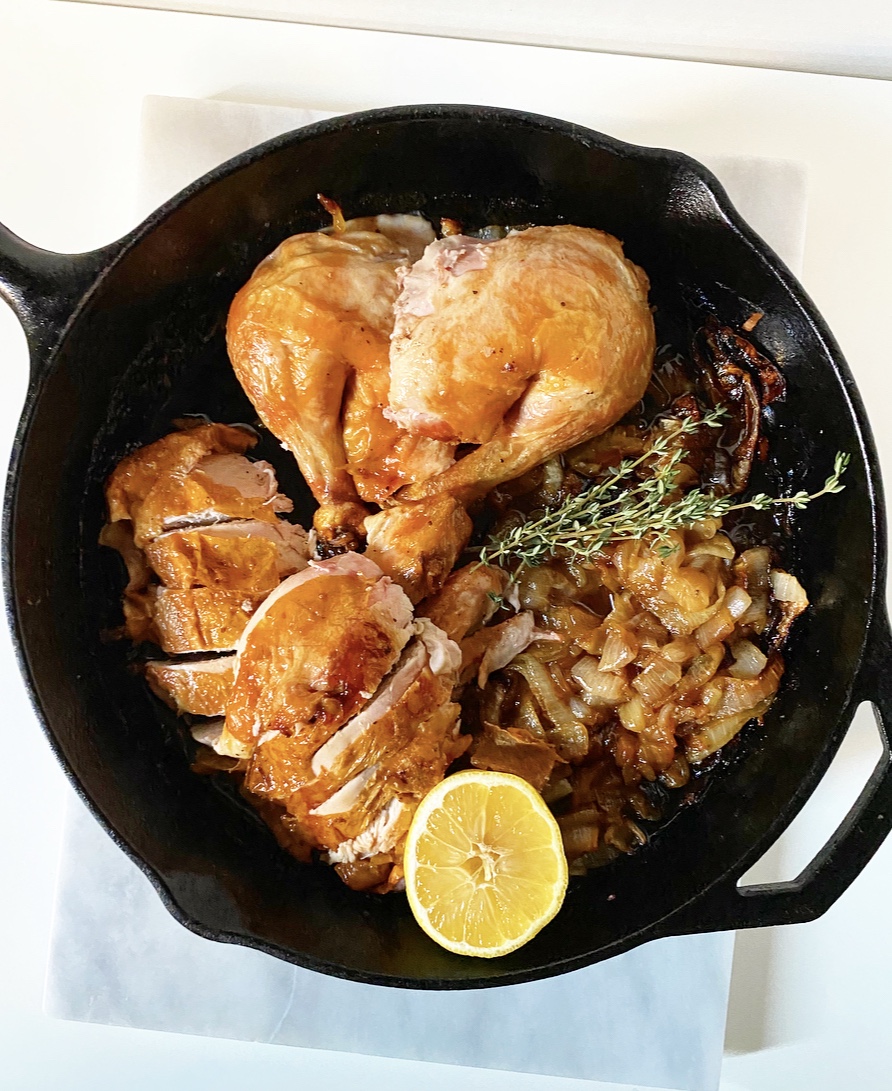 But who cares about looks—it’s all about flavor! And this chicken has plenty of it. The skin is crispy, the meat is moist, and everything is well seasoned.
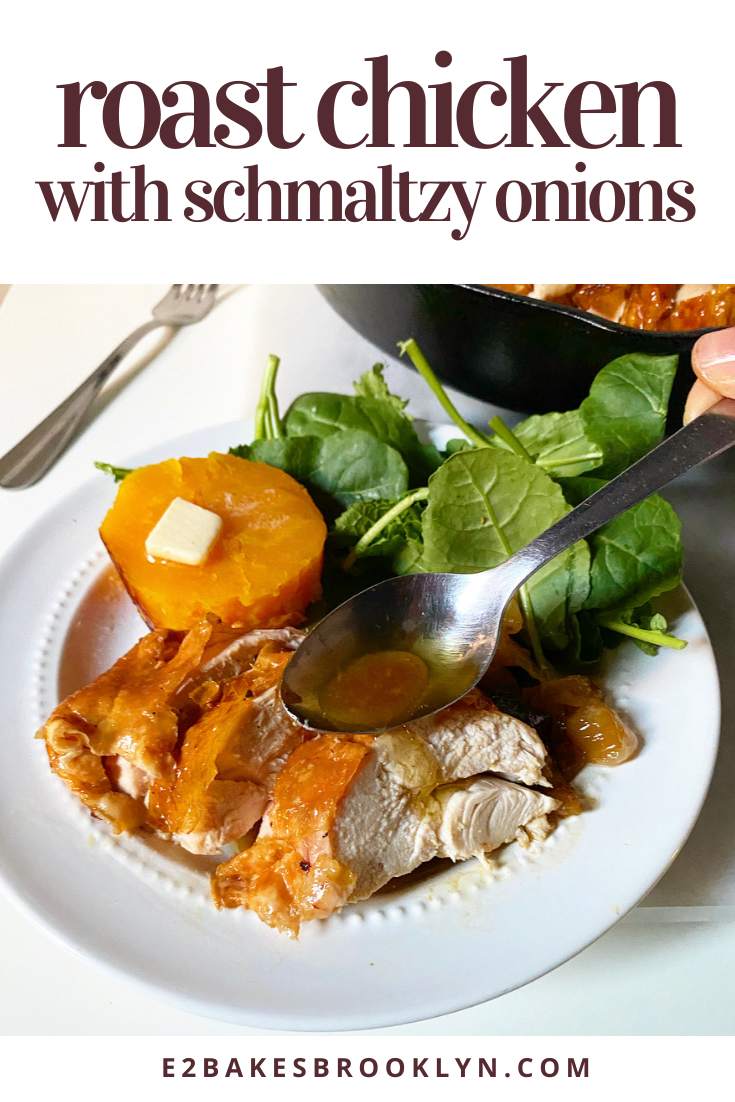
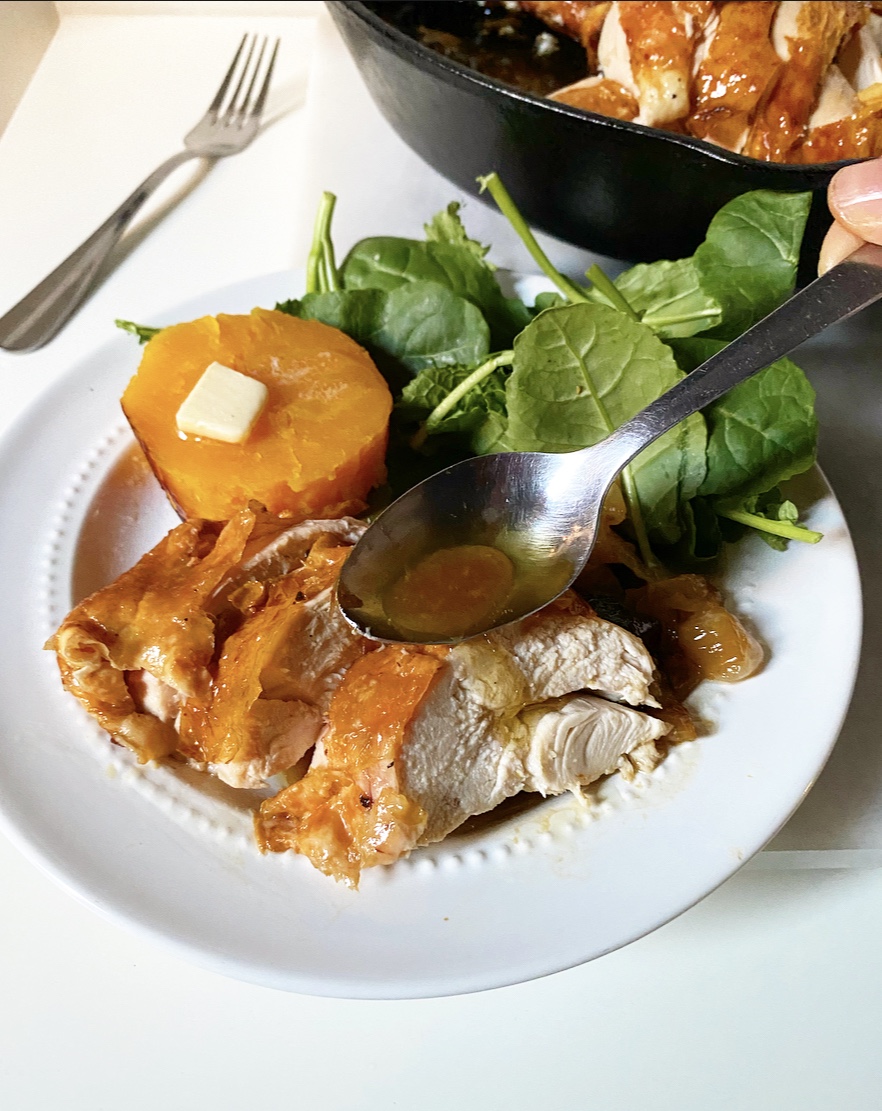 And that’s to say nothing of the soft roasted onions that are coated in rendered chicken fat (aka schmaltz). Seriously, if you’ve never tasted a sweet onion that’s been cooked in chicken fat, you’ve been deprived.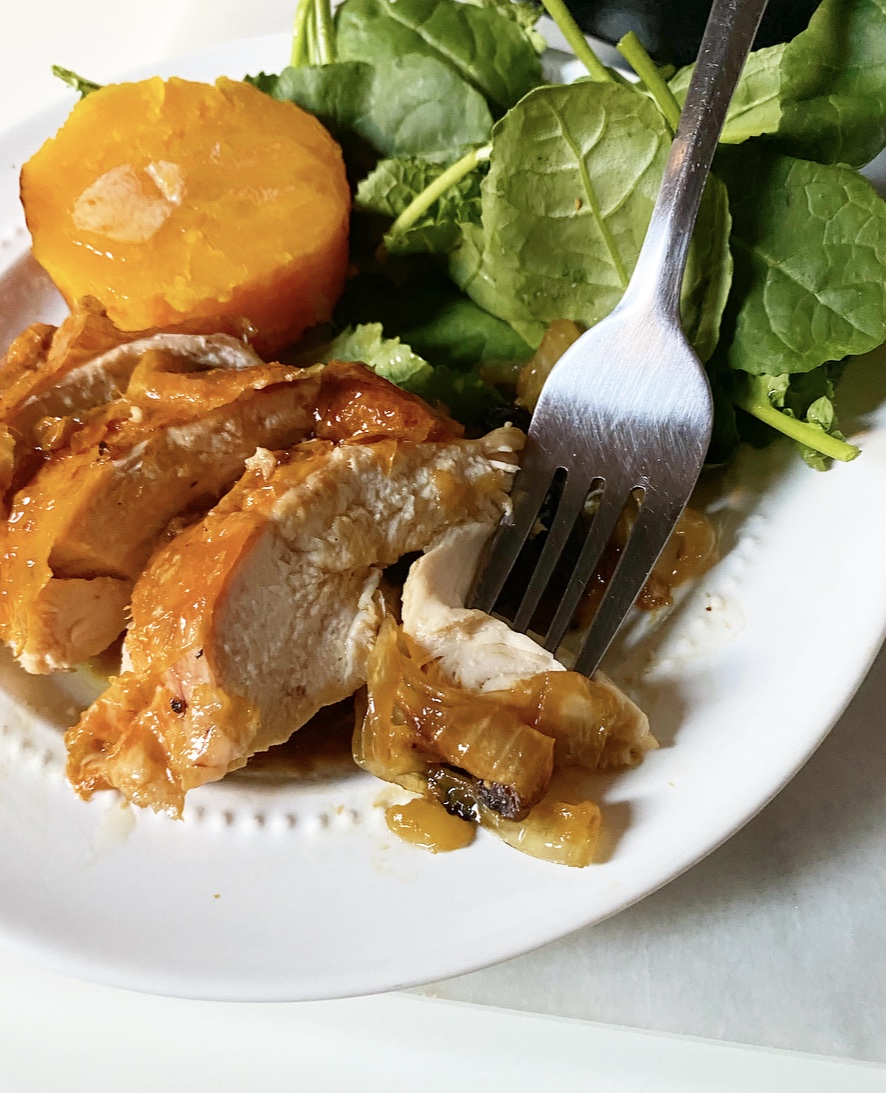
 e2 bakes brooklyn