Category Archives: Pastry

Maple Pear Tart

Maple Pear TartHalloween is over and Thanksgiving is coming up. You know what that means…

Pie Season!!! 🍁 πŸƒ πŸ‚πŸ πŸƒπŸ‚πŸπŸƒπŸ‚πŸπŸƒπŸ‚πŸπŸƒπŸ‚

Maple Pear TartIn the weeks leading up to Thanksgiving, I’ll be sharing a few new pie recipes, along with some other desserts, appetizers, and a Turkey Day side dish or two 😍😍😍
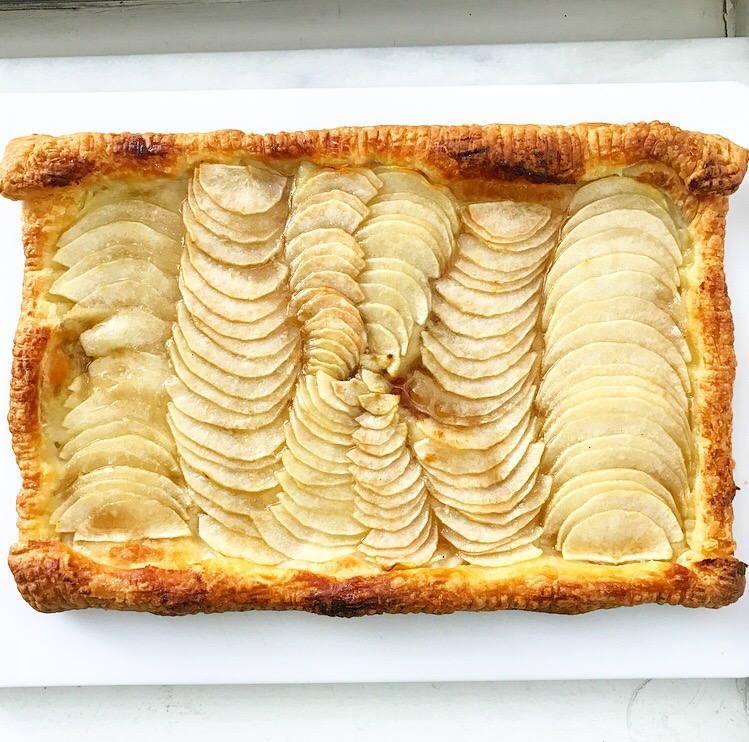
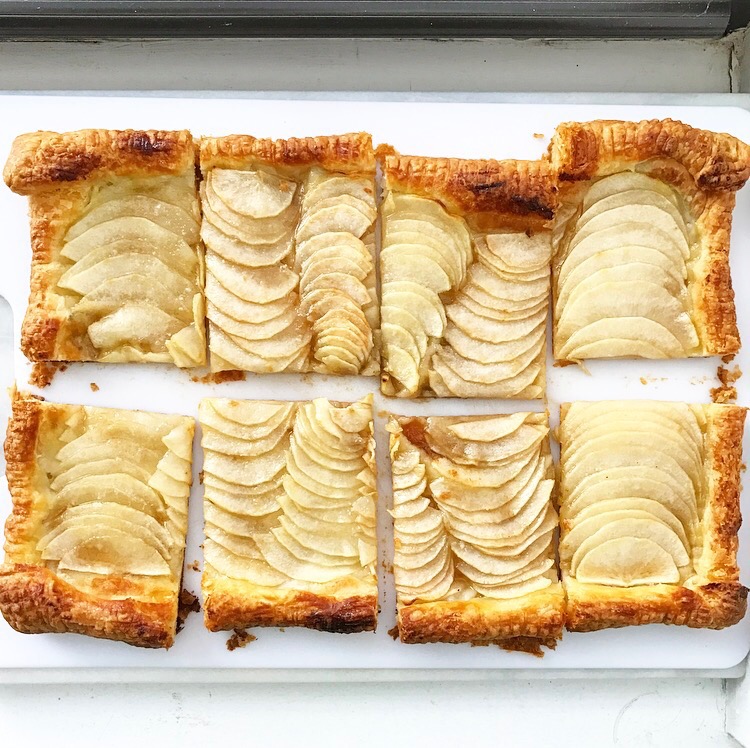
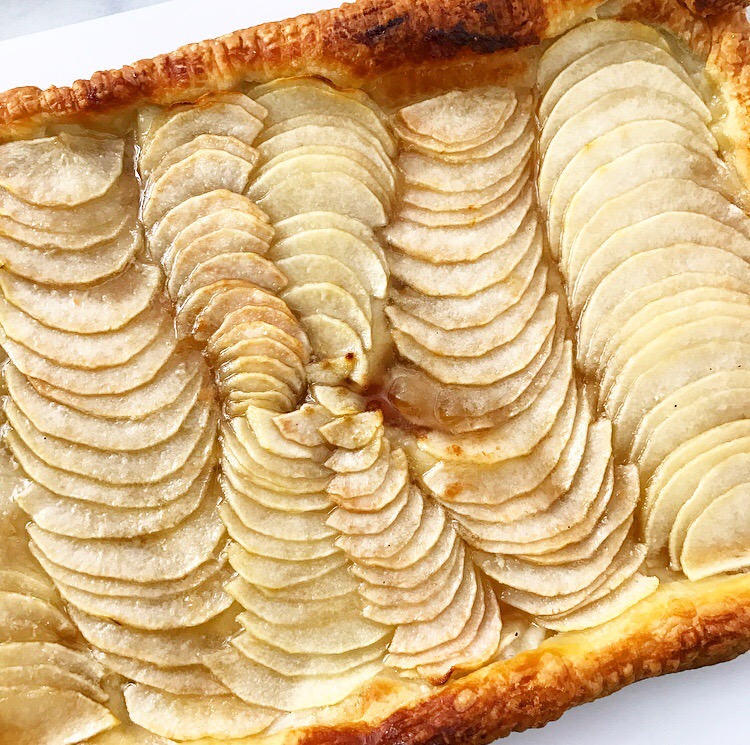
Maple Pear TartMaple Pear TartToday’s recipe isn’t exactly a pie–it’s a tart. A Maple Pear Tart. Like maple-glazed pears baked on the crispiest, butteriest crust that’s ever come out of my kitchen. This tart looks very fancy, but it is super easy to make. It’s literally easier than pie.
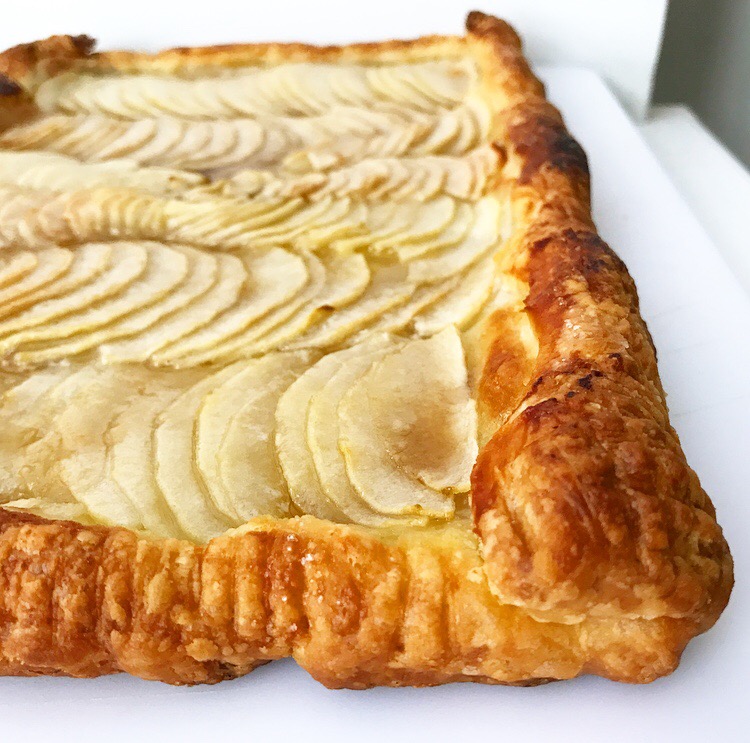
Maple Pear TartLet’s talk about the crust. It’s a simplified, homemade version of puff pastry, often called “Rough Puff.” I’ve used it for cheater croissants and for a few other things for which most people use frozen pastry, and I am consistently amazed that something I made in my kitchen could be so deeply buttery and flaky. Oh y’all, this is goooood.
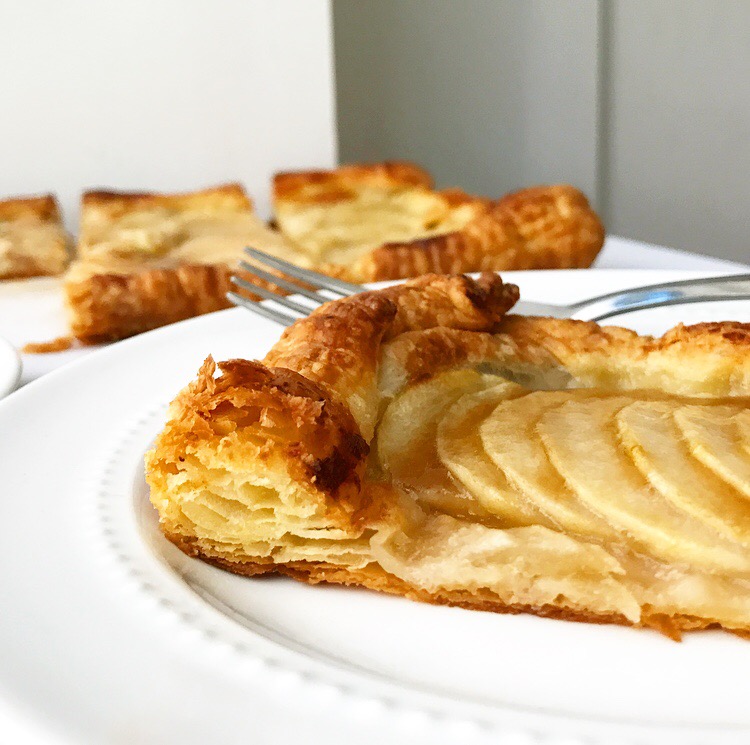
Maple Pear TartIf the idea of making your own puff pastry–even the easy version–puts fear in your heart, you may use the frozen all-butter stuff. But really, there is nothing to fear. This tart is easier than pie, and this pastry dough is easier than pie dough.

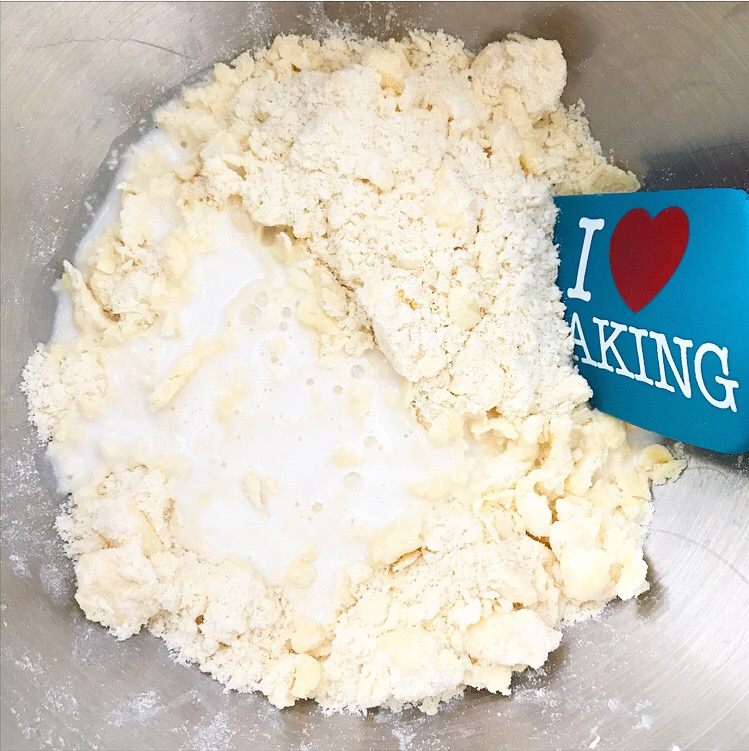
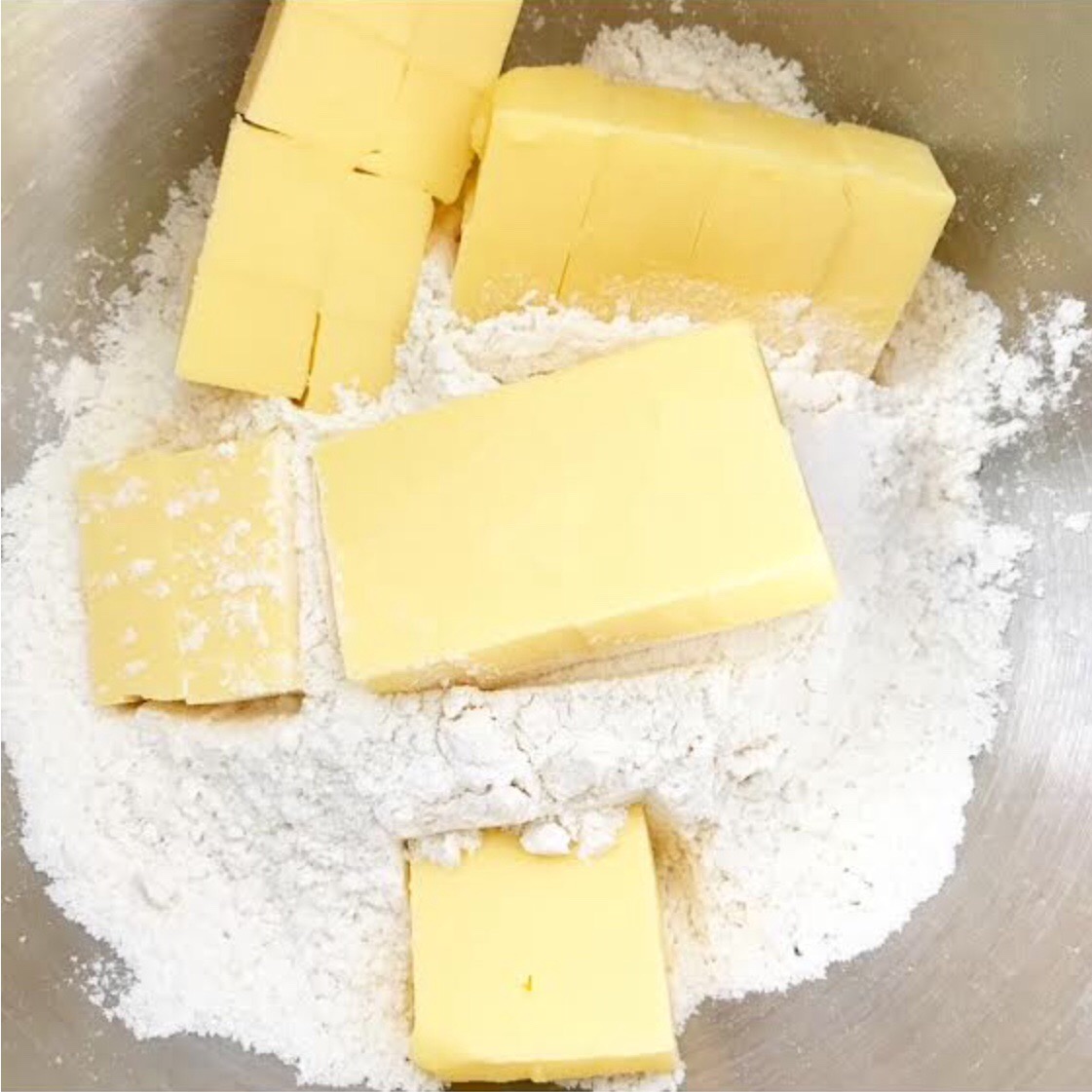
Just cut European-style butter into some flour and little salt…
Maple Pear Tartadd some cold milk…

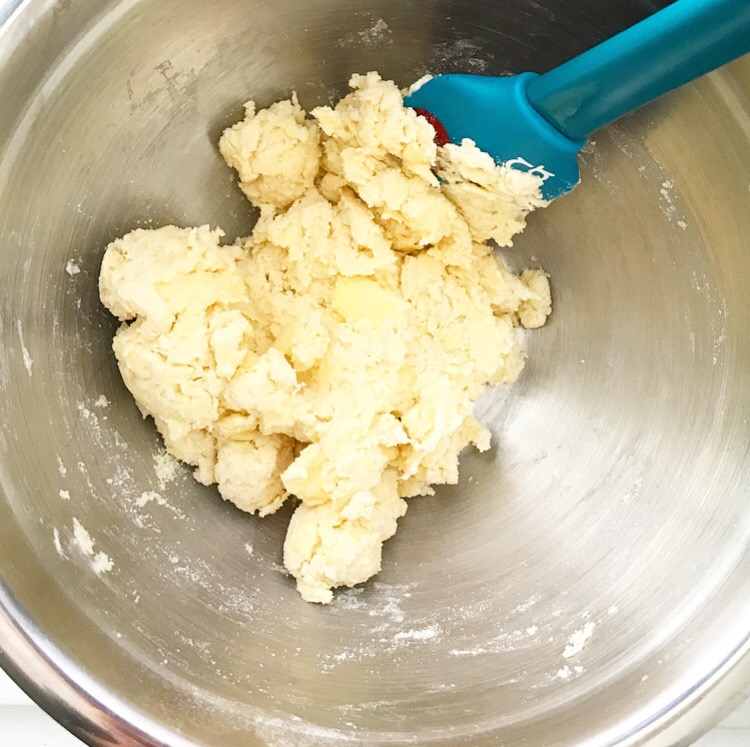
Maple Pear Tartfold it all into a dough…

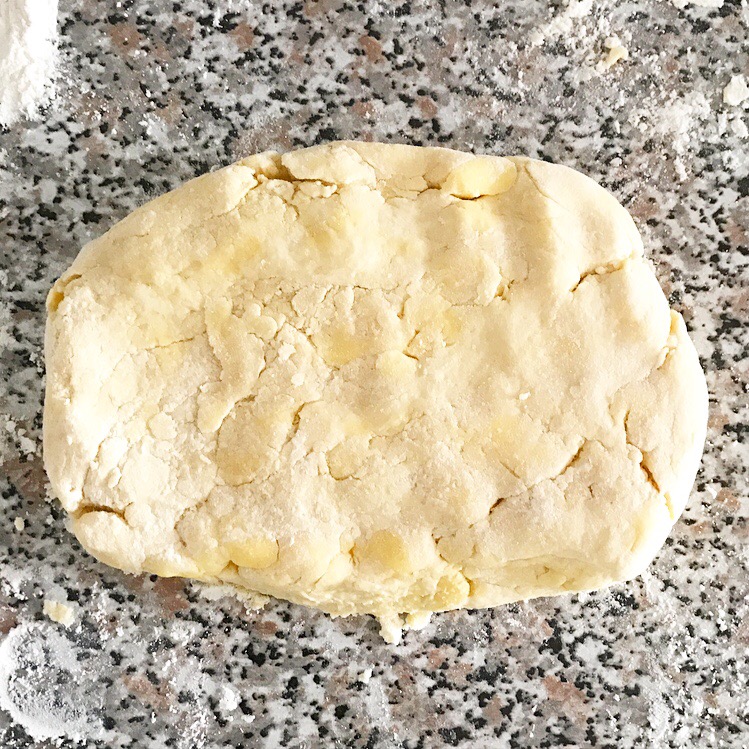
Maple Pear Tartpat it into a rectangle…

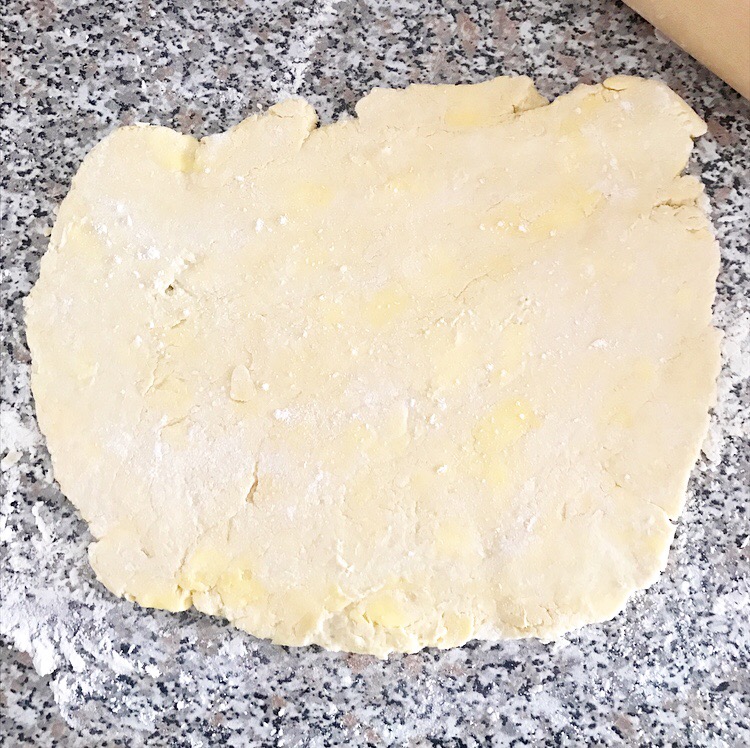
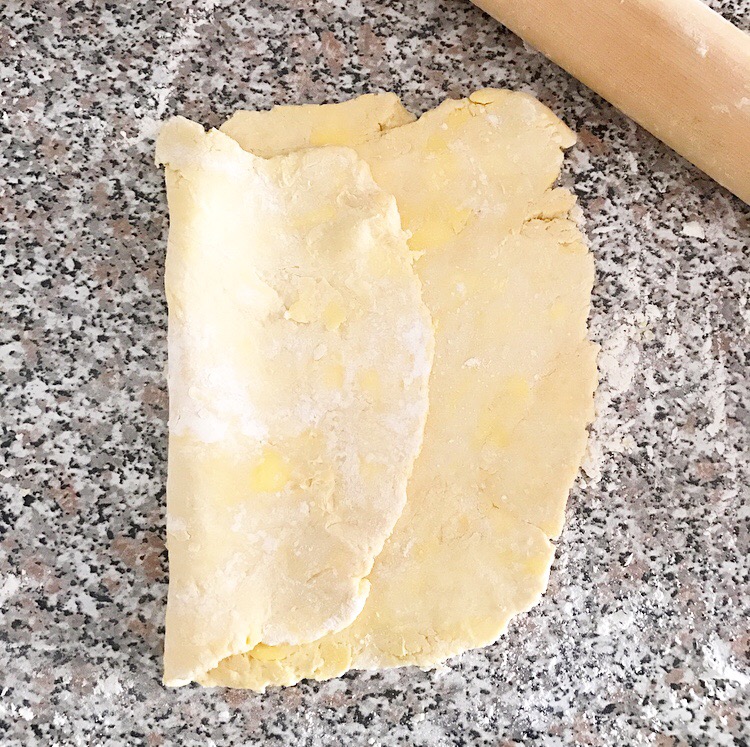
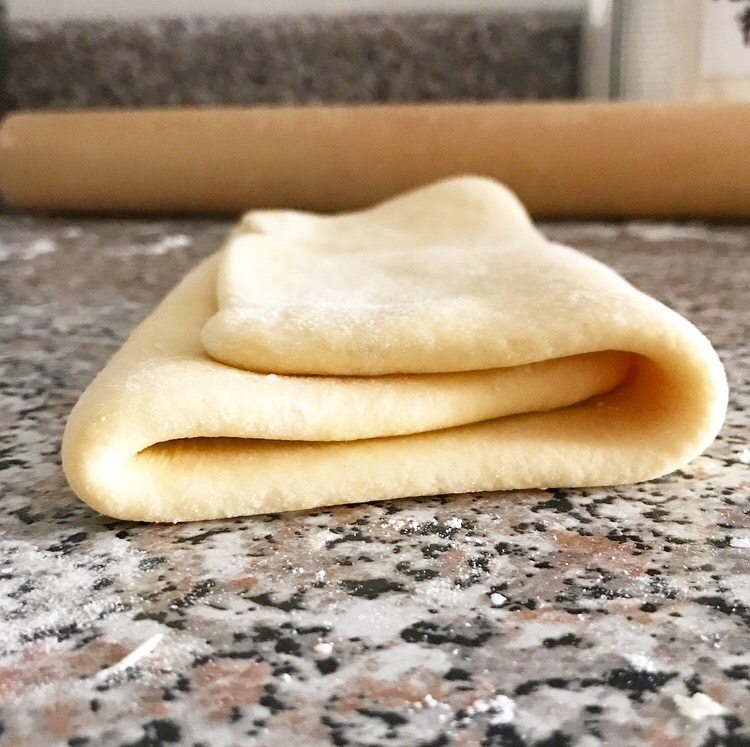
Maple Pear Tartand give it a few rolls and folds.

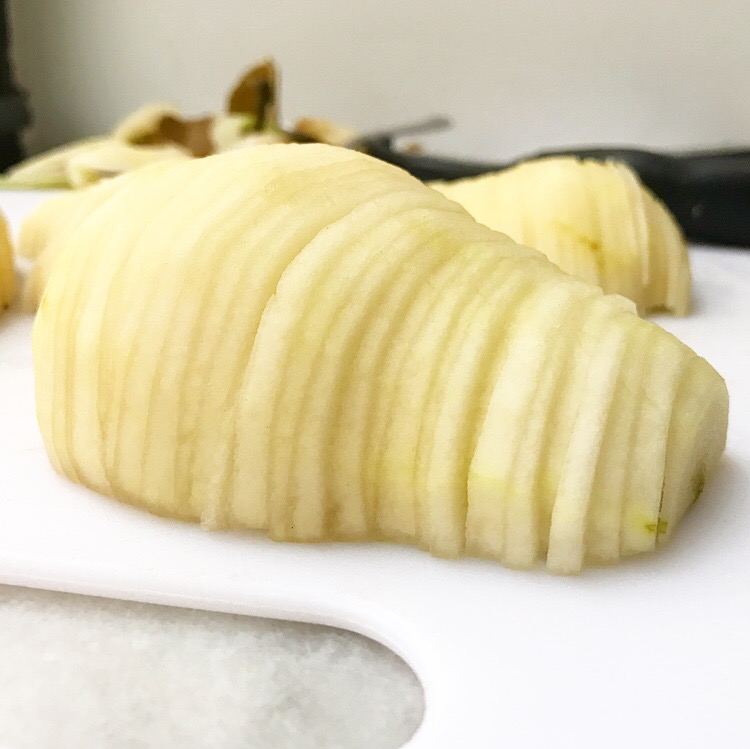
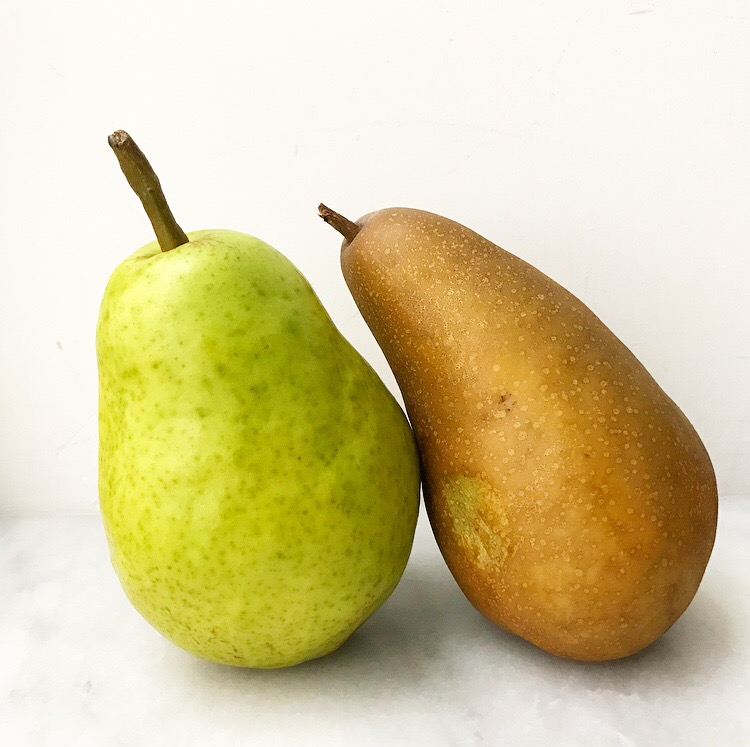
Maple Pear TartMaple Pear TartMaple Pear TartMaple Pear TartWrap your rough puff pastry in plastic and throw it in the fridge for an hour (or up to two days). When you’re ready to make your tart, peel two pears and slice them as thinly as you can. You might want to break out your mandolin. If you don’t have one of those handy gadgets (I don’t), you can use a chef’s knife. Just slice the pears as. thin. as. possible.
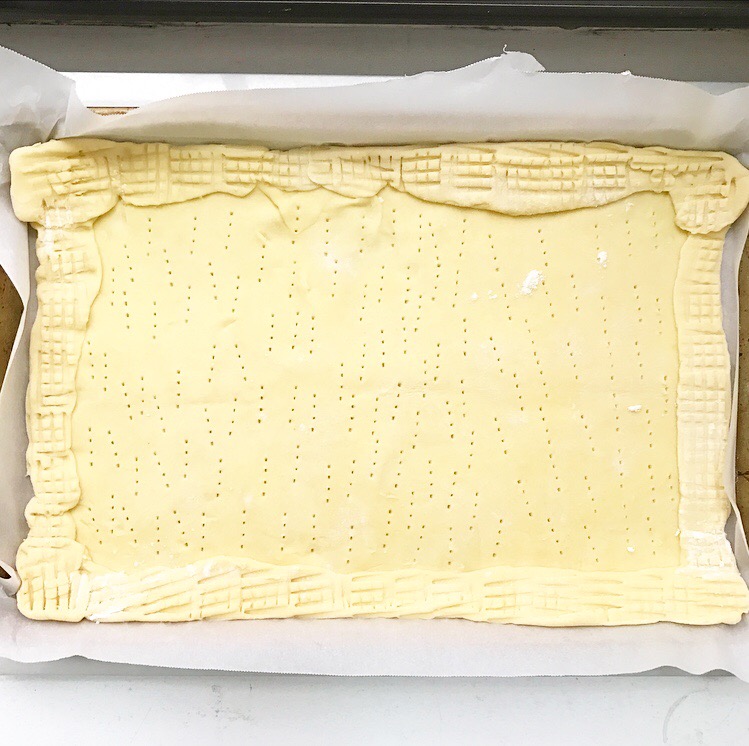
Maple Pear TartMaple Pear TartMaple Pear TartGrab that cold pastry from the fridge, unfold it, and roll it into a 10×14″ rectangle. Fold the edges over and crimp β€˜em, then dock the center with a fork. It doesn’t have to be beautiful–mine certainly wasn’t.
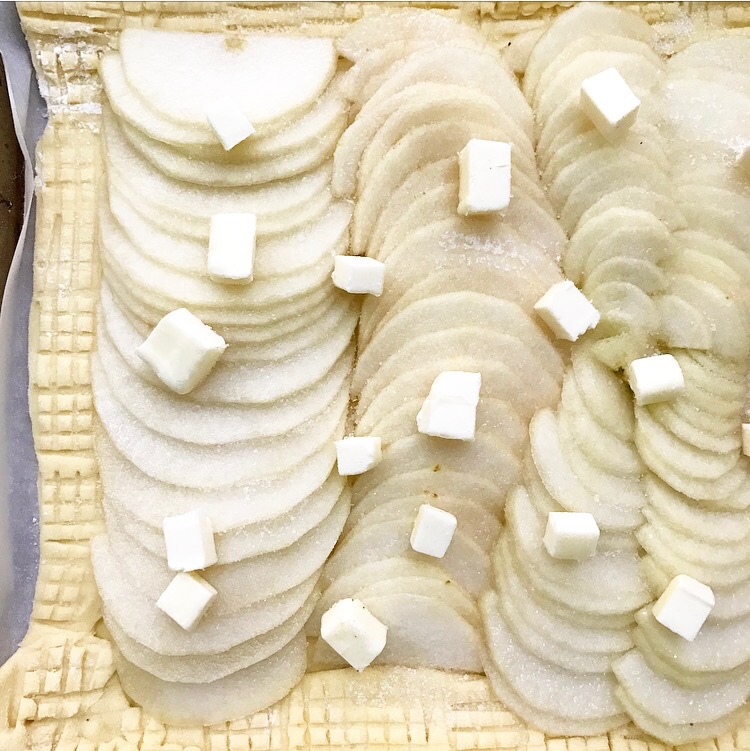
Maple Pear TartSeriously, it doesn’t matter at all. Sliced pears, a bit of sugar and butter cover all manner of ugly crimping.
Maple Pear TartBake it up! Some big bubbles may form despite the docked crust–just pop β€˜em with a knife. It’s way fun.

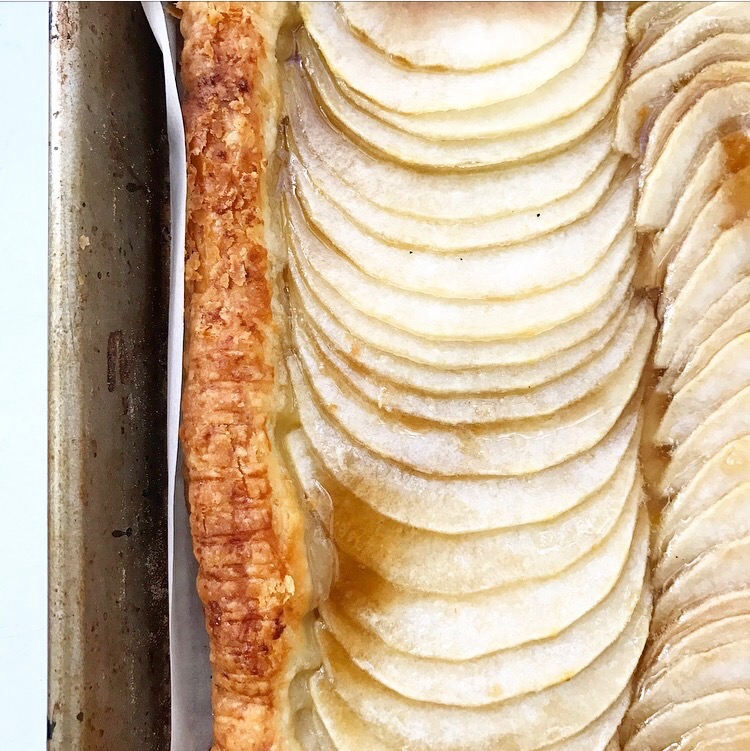
Maple Pear TartPaint the pears with a couple of tablespoons of maple syrup.
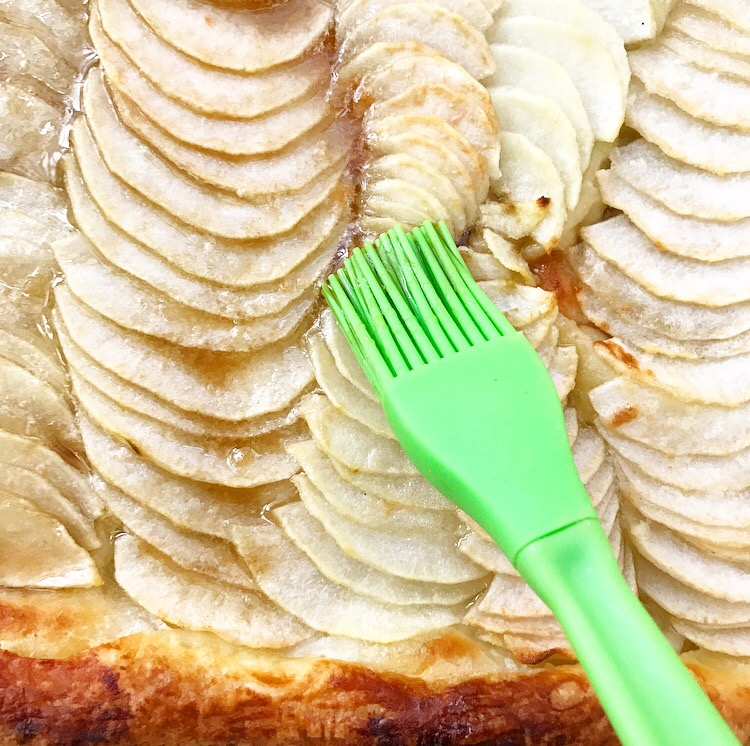
Maple Pear TartMaple Pear TartYUM.

Maple Pear TartSlice the tart into eight pieces and serve it to people you love.
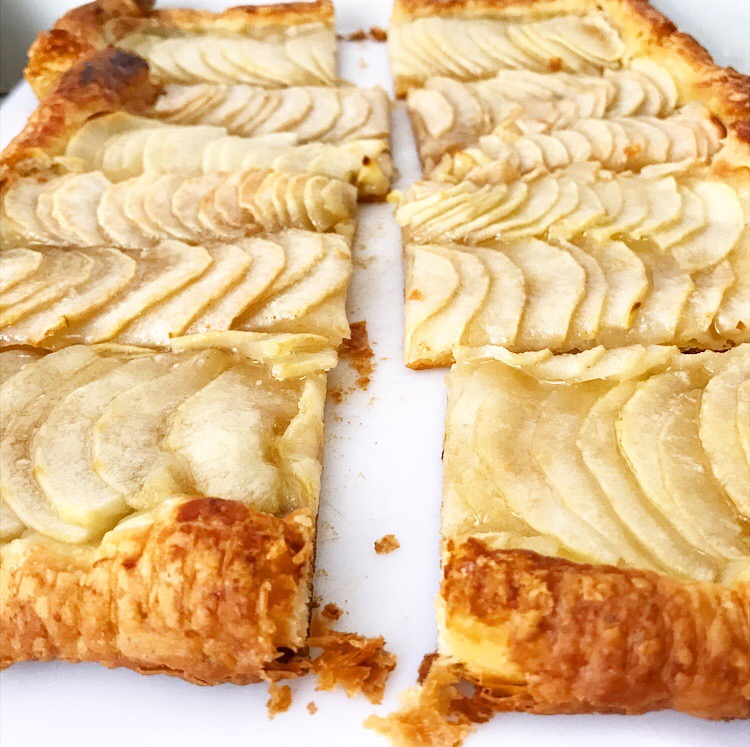
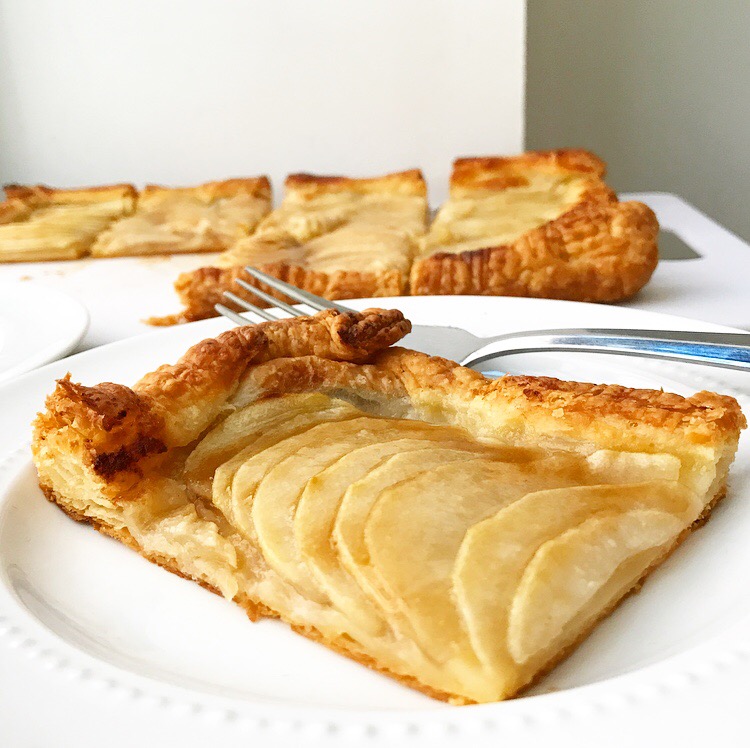
Maple Pear TartIsn’t that beautiful?! Those pears and that golden pastry are as visually stunning as they are delicious.
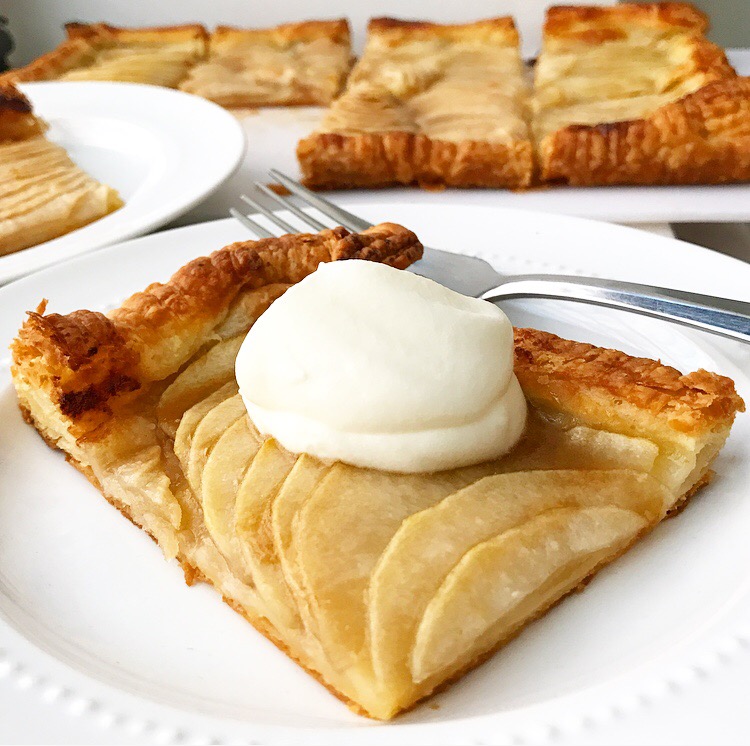
Maple Pear TartOh, I just love Pie Season.Maple Pear Tart

Maple Pear Tart
makes one tart

Rough Puff Pastry:
1 cup all-purpose flour
1/4 teaspoon Kosher or sea salt
5 ounces unsalted European-style butter, very cold, cut into small pieces
1/4 cup water or milk, very cold

For the tart:
2 large baking pears (I used a Bosc and a Bartlett)
2 tablespoons granulated sugar
2 tablespoons unsalted butter, very cold, cut into small pieces
2 tablespoons pure maple syrup

For serving:
whipped cream (optional)

Make the pastry. In a large mixing bowl, whisk together flour and salt. Use a pastry blender or two forks to cut butter into dry ingredients until the largest pieces are the size of small peas. Pour in cold water or milk and stir with a silicone spatula or wooden spoon until a shaggy dough forms.

Flour a surface and a rolling pin. Turn dough out onto surface, and use your hands to pat it into a rough rectangle. Roll the dough into an 8×10″ rectangle. Fold dough in thirds, and give it one quarter turn. Roll into an 8×10″ rectangle again, fold, and turn. Repeat rolling, folding, and turning until it has been done six times total. Wrap folded dough in plastic wrap and refrigerate for at least one hour, or up to 48 hours.

Make the tart. Place an oven rack in the center position. Preheat oven to 400F. Line a rimmed quarter-sheet pan or jelly roll pan with parchment.

Flour a surface and a rolling pin. Unfold dough. Roll dough out to 10×14-inch rectangle. Transfer dough to the prepared pan. Fold edges over about 1 inch and crimp with a fork. Dock center of the dough with a fork. Refrigerate while you prepare the pears.

Peel pears and slice in half lengthwise. Remove stems and seeds. Using a knife or mandolin, slice pears as thinly as possible, about 1/8-1/16 of an inch. Arrange pear slices decoratively over the crust. Scatter sugar over the top and dot with butter. Bake 28-30 minutes, until edges are puffed and golden brown. Large bubbles may form during baking. Just pop them with a fork or sharp knife.

Let tart cool completely in the pan on a rack. Use parchment to remove tart to a cutting board. Remove parchment. Slice into pieces. Serve immediately with whipped cream, if desired.

Tart is best eaten the day it’s made. Pastry will soften after several hours.
Maple Pear Tart

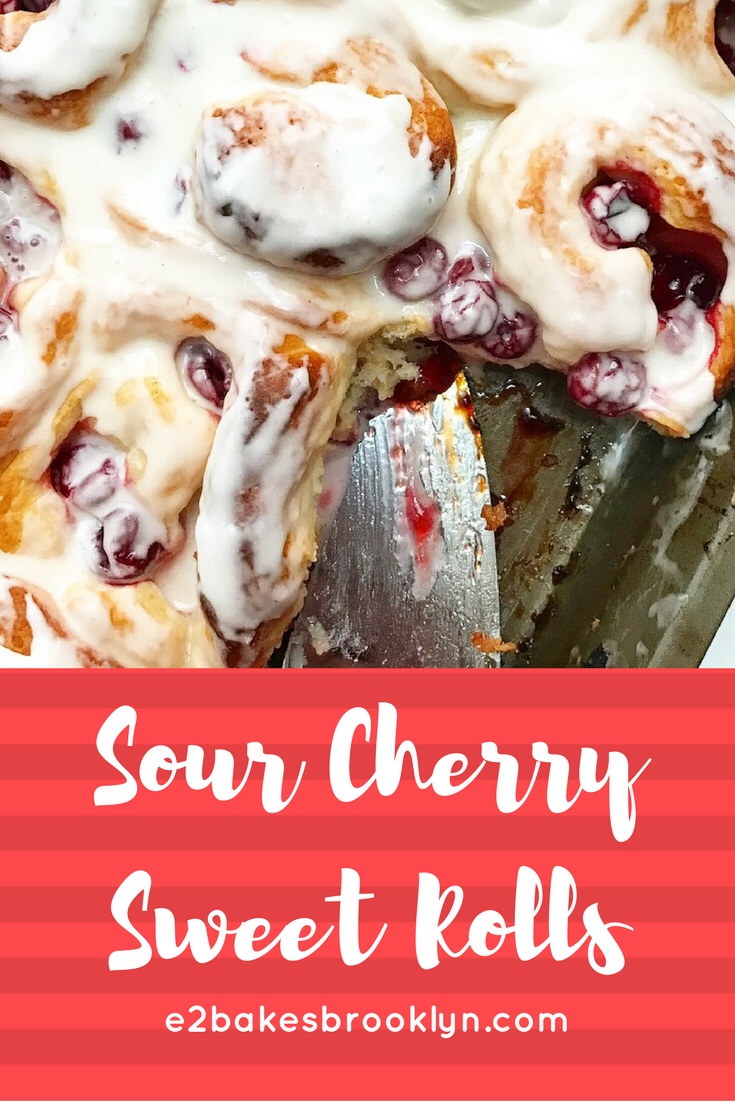
Sour Cherry Sweet Rolls

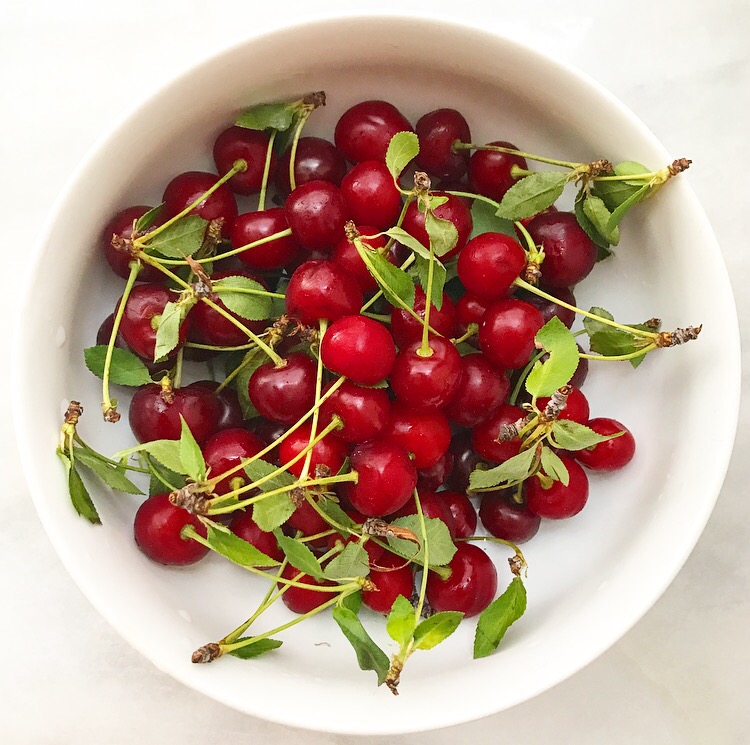
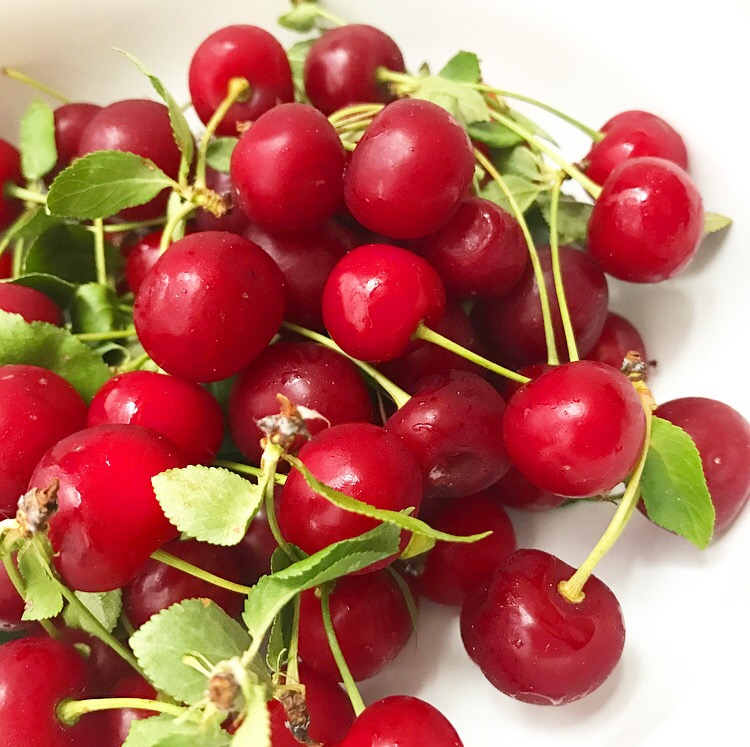
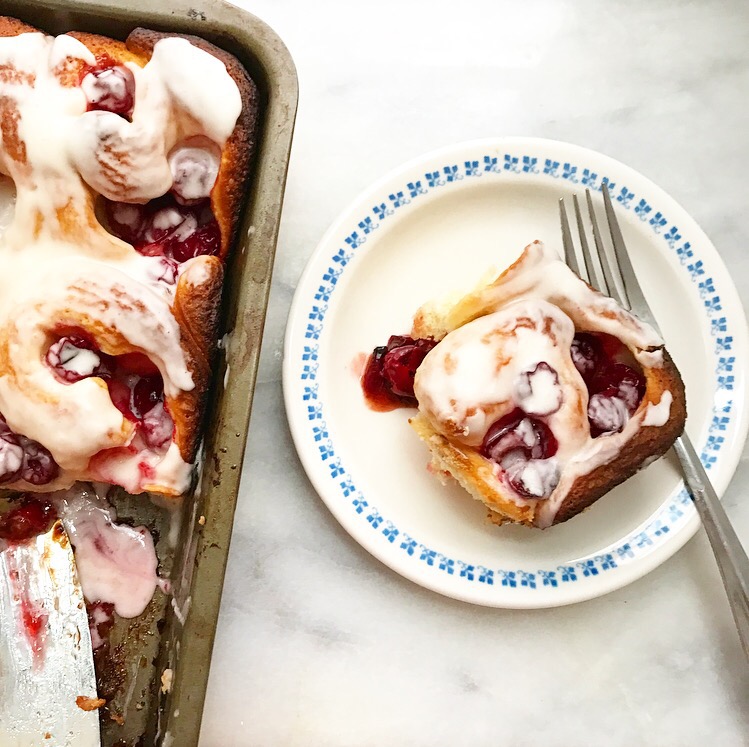
Sour Cherry Sweet RollsI wait all year long for sour cherries. I love their tart flavor and tiny size, and just look at the color! Does a more beautiful food exist?!

Sour Cherry Sweet RollsGetting your hands on sour cherries isn’t easy. Their season is only a few weeks long–blink and you’ll miss them! And you can’t find them just anywhere. I’ve seen them in a grocery store exactly once in the last five years and it was a super pricey specialty foods store. These are basically a farmers market-only find.

Sour Cherry Sweet RollsSour cherries are ideal for pie–I’m not sure I’ve seen them in any other application. Pie requires temperature control though, and the kitchen is the only room of my apartment that can’t be air conditioned 😒 Futzing with sticky pie dough while sweating and cursing whoever decided to put bars on a courtyard-facing second-story window is not my idea of a good time. Instead, I’m looking at the bright side and making something that needs a warm environment to work properly–Sour Cherry Sweet Rolls, y’all!

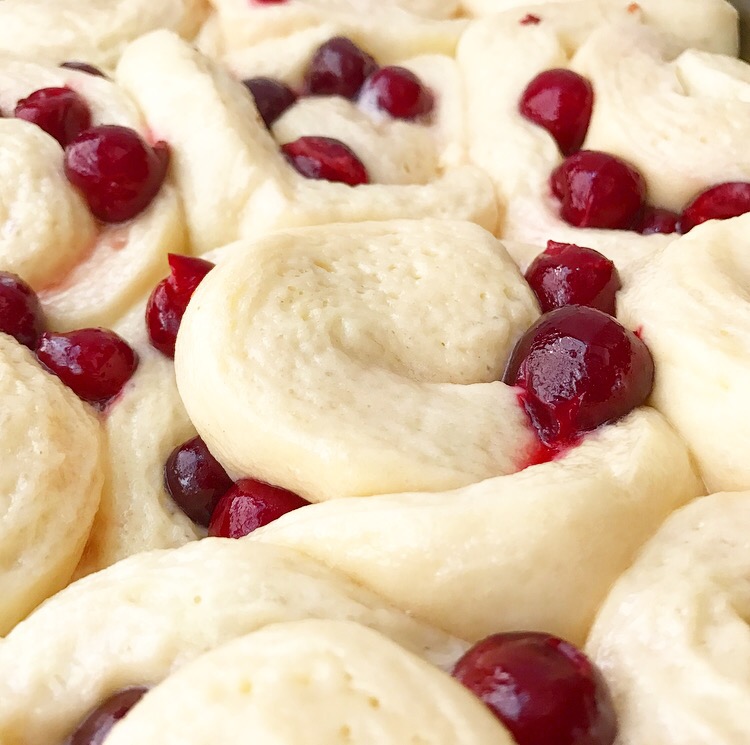
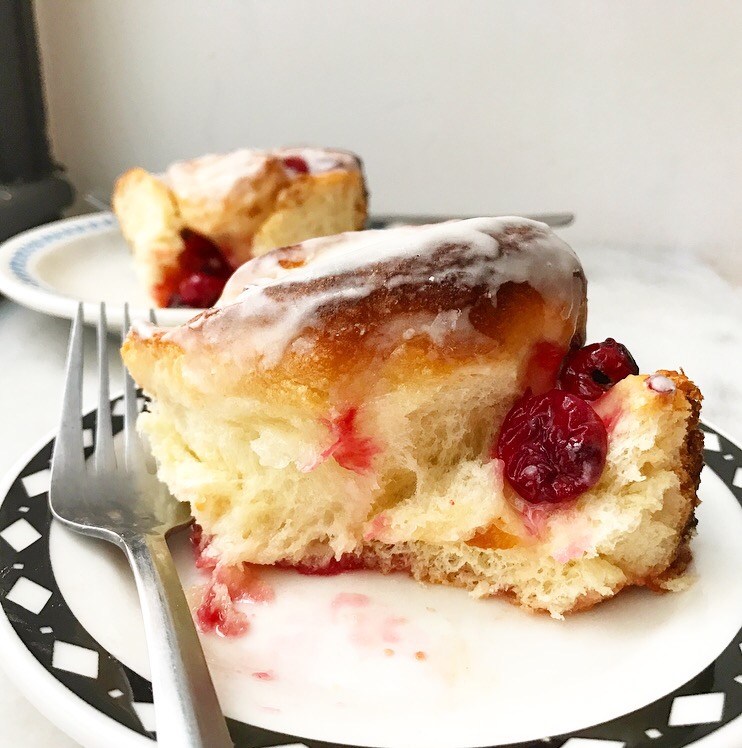
Sour Cherry Sweet RollsThese rolls are made with my favorite sweet yeast dough, and positively loaded with sour cherries! In fact, the filling is literally just sour cherries, sugar, butter, and a pinch of salt. I considered adding some spices to pep things up, but this perfect seasonal fruit simply doesn’t need any adornment.

Sour Cherry Sweet RollsThese rolls are delicious, but they can be a little tough to handle. Once the dough is rolled out and the filling is piled on, it’s time to roll everything up. This can be near impossible to do evenly, so please don’t stress yourself out about it.

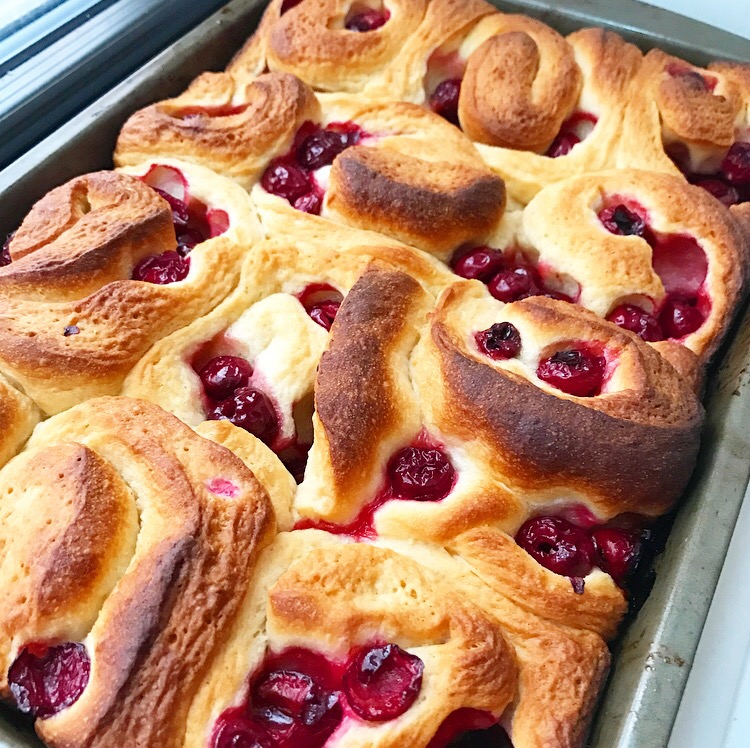
Slicing requires a little more patience than most sweet roll recipes. Instead of slicing all the rolls at once, I recommend slicing them individually, using your free hand to keep them intact as you transfer each one to the pan. This may not go perfectly either, but just know that a rise will make any cosmetic issues disappear. If you have any cherries fall out, just nudge them back in the best you can–again, don’t let this stress you out. Everything is going to be fine. You can’t see it in these photos, but just know that these rolls were truly hideous after slicing. Post-rise and bake though, you’d never know it…

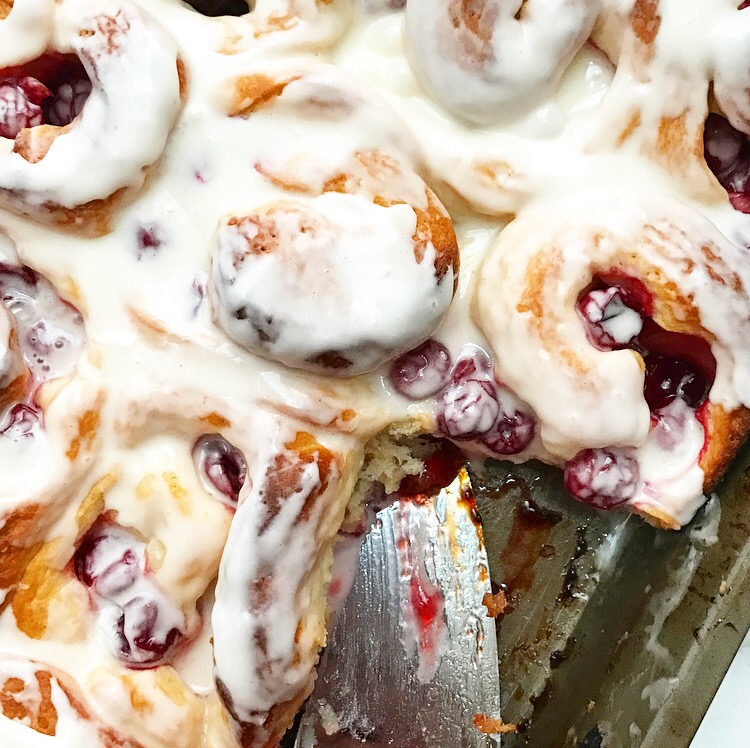
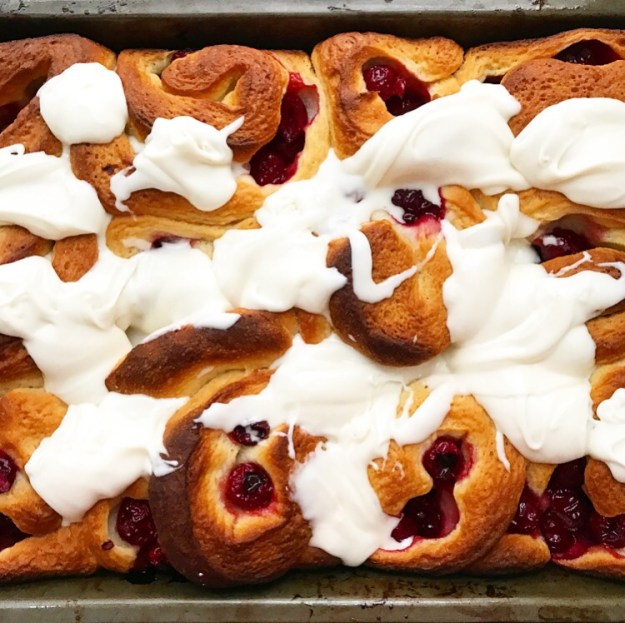
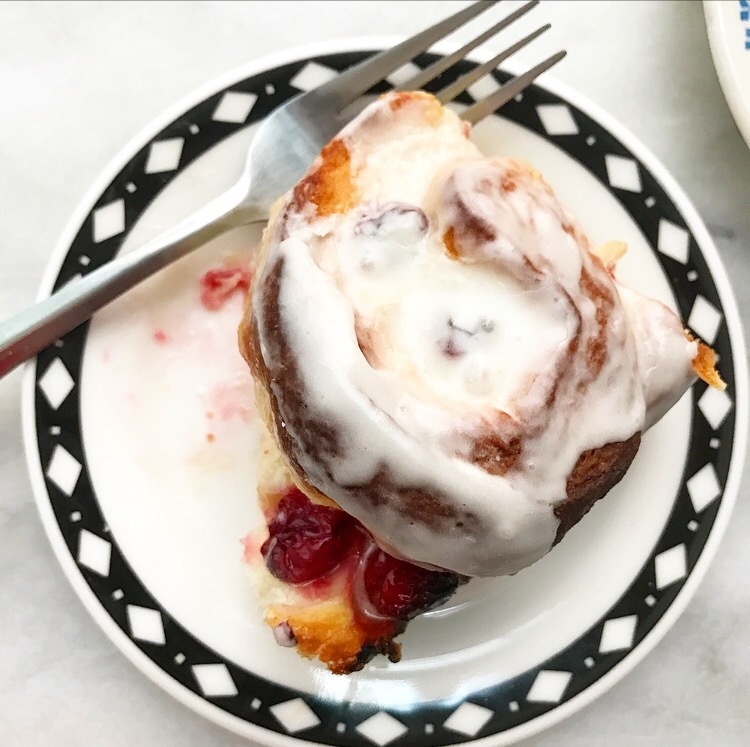
Sour Cherry Sweet RollsSour Cherry Sweet RollsSour Cherry Sweet Rolls…and even if you did, icing would fix it anyway. This quick, five-ingredient icing is the perfect accompaniment to the sour cherry filling. It’s flavored with vanilla and almond extracts, and formulated to be extra thick. Once it’s spread over the top, it melts down and mingles with the filling and it’s just…divine.
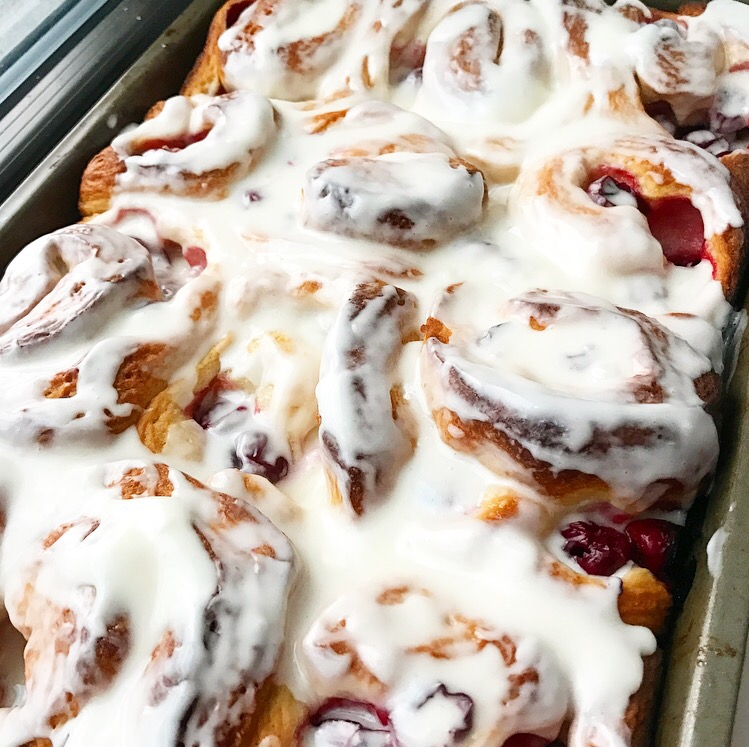
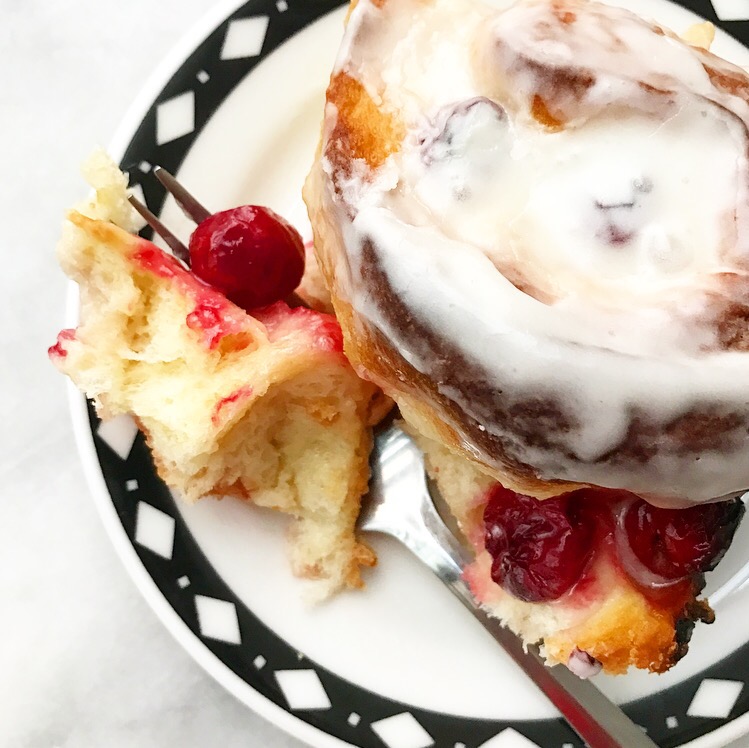
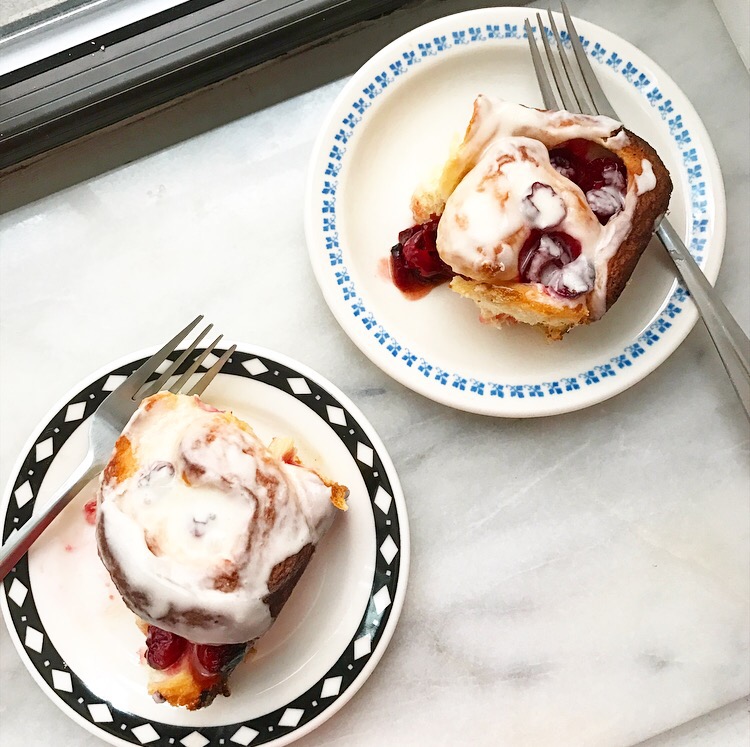
Sour Cherry Sweet RollsSour Cherry Sweet RollsSour Cherry Sweet RollsThese Sour Cherry Sweet Rolls are the best kind of mid-summer breakfast treat. Soft pastry, buttery, sweet-tart cherry filling, and delectable vanilla-almond icing–is there a better way to start the day?!

Sour Cherry Sweet RollsNow, run to the farmers market before the season is over! You don’t want to have to wait a year to make these.Sour Cherry Sweet Rolls

Sour Cherry Sweet Rolls
makes 12 rolls

Dough:
1 3/4-2 1/4 cups all-purpose flour
1/2 cup bread flour
3 tablespoons granulated sugar
1 packet (2 1/4 teaspoons) instant yeast (I use Fleischmann’s Rapid Rise Yeast)
1 teaspoon Kosher or sea salt
3/4 cup whole milk
3 tablespoons unsalted butter
1 large egg + 1 large egg yolk, beaten, room temperature

Filling:
2 1/2 cups sour cherries (fresh or frozen), pitted
6 tablespoons granulated sugar
pinch of Kosher or sea salt
4 tablespoons unsalted butter, softened to room temperature

Icing:
1 1/2 cups confectioners sugar
pinch of Kosher or sea salt
1 teaspoon pure vanilla extract
1/4 teaspoon pure almond extract
6-8 tablespoons heavy cream

Grease a 9×13-inch rimmed baking pan. Set aside.

In a large mixing bowl, whisk together 1 3/4 cups all-purpose flour, bread flour, sugar, instant yeast, and salt. Set aside.

In a small saucepan, heat whole milk and butter until hot to the touch, about 115F. Use a silicone spatula or wooden spoon to fold in milk mixture, followed by egg and yolk. Add more all-purpose flour until dough starts to pull away from the sides of the bowl. Knead 5-6 minutes before forming into a ball and placing in an oiled bowl. Cover with plastic wrap and let rest for 10 minutes.

Make the filling. In a small bowl, fold together sour cherries, sugar, and salt.

On a lightly floured surface, roll dough into an 8×14-inch rectangle. Use an offset icing knife to spread softened butter over the dough, leaving a 1/2-inch perimeter on all sides. Scatter cherry mixture over the top, leaving and excess liquid behind in the bowl. Starting with the long edge furthest from your body, tightly roll filled dough toward you, smoothing any seams with your thumbs. Carefully slice dough into 12 rolls–this may be very messy. Place rolls close together in prepared pan. Loosely cover the pan with aluminum foil. Place covered pan in a warm, draft-free place for 60-90 minutes, until rolls have doubled in size.

Preheat oven to 375F. Uncover rolls. Bake 25-30 minutes, recovering the rolls with foil if anything begins to brown too quickly. Let cool in the pan on a rack while you make the icing.

In a small bowl, use a fork to whisk together confectioners sugar and salt. Whisk in extracts and 6 tablespoons of heavy cream. Mix until smooth, adding more heavy cream by the tablespoon until the desired consistency is reached.

Drop spoonfuls of icing over the warm rolls and spread around with the back of a spoon. Slice and serve.

Rolls are best the day they are made, but will keep covered at room temperature for a day or so.

Sour Cherry Sweet Rolls

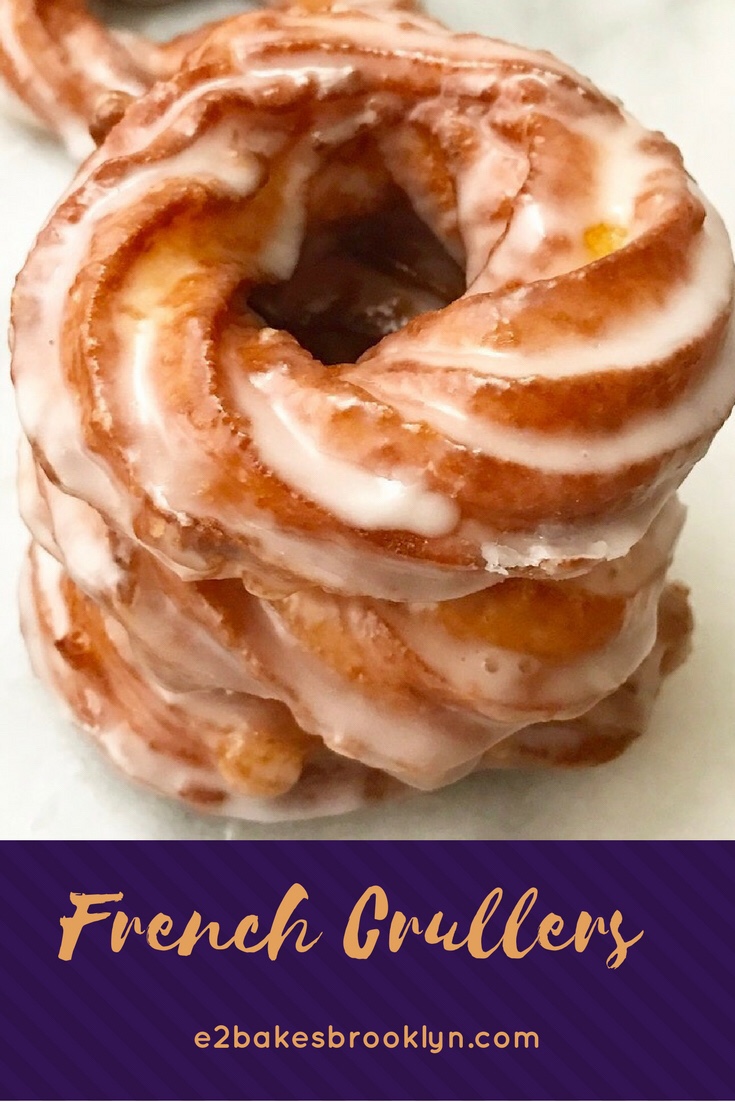
French Crullers

French CrullersLately, I’ve been all about homemade doughnuts (see here, here, and here). In that time, I have learned that a) homemade doughnuts are the best in the world, and b) they are easier than anyone would imagine. Seriously, if can make a quality homemade doughnut, anyone can!
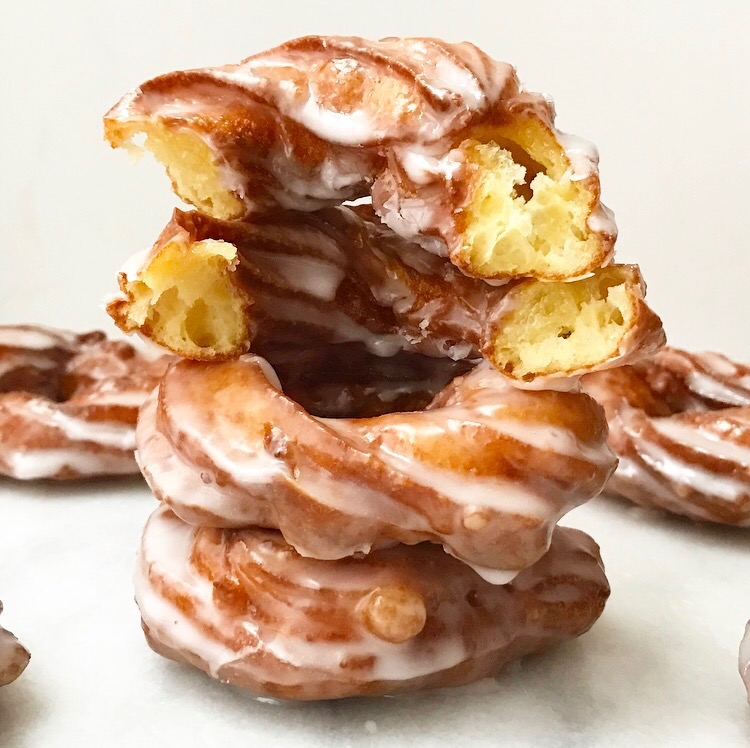
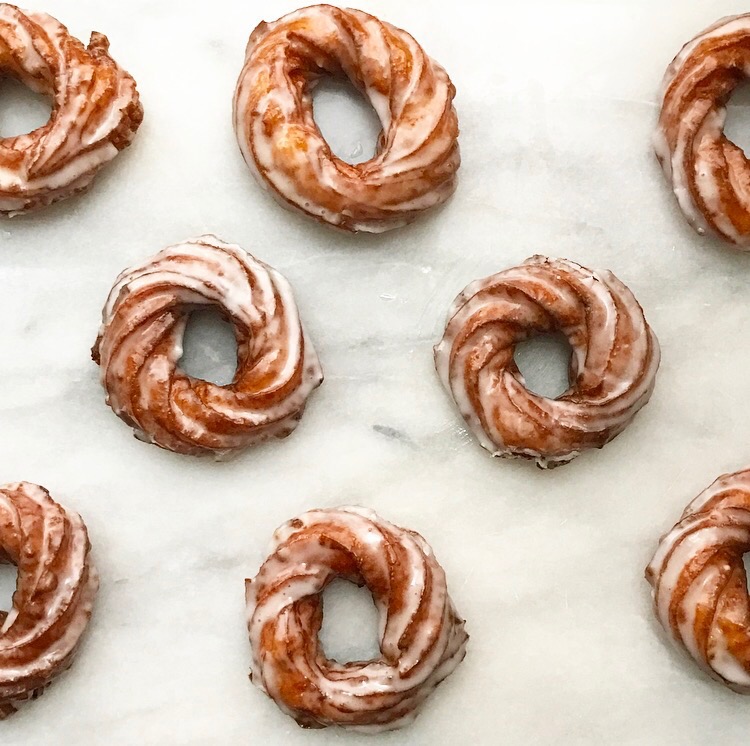
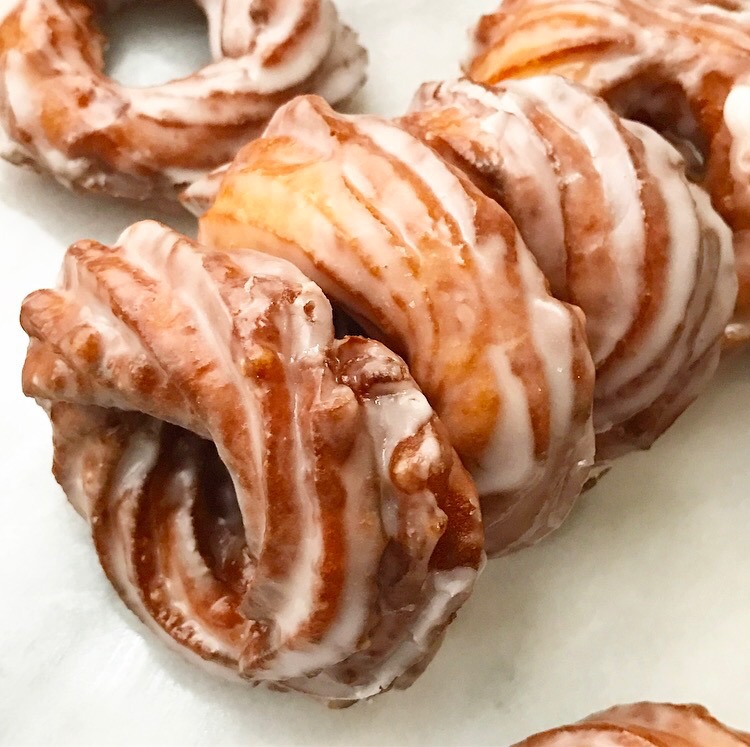
French CrullersFrench CrullersToday, the obsession continues with homemade French Crullers, a.k.a. those light, fluffy, ridgy doughnuts you see behind every shop counter. While I was content with the Dunkin’ Donuts variation of this classic for years, I am now a homemade cruller convert. There’s no comparison between these and the mass-produced variety. The crispy piped ridges and airy middles are what my (current) doughnut dreams are made of.

French CrullersSo, what makes these crullers so French? Well, it’s all in the dough. Where most doughnuts rely on yeast or baking powder to help them puff, French Crullers are made with a classic French pastry dough: pΓ’te Γ  choux. You might be familiar with it in eclairs, cheesy gougeres, or as the airy shell in cream puffs (more on those soon).

PΓ’te Γ  choux (pronounced “pat-a-shoe”) is unusual. It contains no chemical leaveners, instead relying on trapped steam to help it puff. Don’t worry–it’s only got six ingredients and it’s simple to make.

Like Churros, pΓ’te Γ  choux starts on the stove. Bring some whole milk, butter, a touch of sugar, and some salt to a boil over medium heat. Then, stir in some bread flour (we need the higher gluten content that it provides). Next, cook out the excess moisture. Turn down the heat and cook, stirring constantly, until you have a ball of dough. You’ll know it’s ready when there is a thin veil of dough on the bottom of the pan.French CrullersFrench Crullers

Transfer the dough ball to a mixing bowl and mix it with an electric mixer for one minute. This allows the hot dough to release a lot of steam. Next, beat three room temperature eggs in a measuring cup. With the mixer running, slowly stream in the eggs. The dough will start to become richer and thicker as it mixes. Once all three eggs are incorporated, lift the beater out of the bowl. Does the dough hanging off create a v-shape? It probably won’t at this point. Beat another egg and add it little-by-little, checking frequently to see if that v-shape is there. It may take all or part of another egg (the fifth, in this case) to achieve the right consistency. There is no guaranteed amount of egg in pΓ’te Γ  choux. This past weekend, I had one batch that only required 3 1/2 eggs, while another required 4 1/2. It all depends on how much moisture was cooked out on the stove. Long story short, make sure to have extra eggs.

When your pΓ’te Γ  choux is ready, it will be sort of sticky and gluey and look like this.French CrullersFrench Crullers

Load it into a pastry bag fitted with a large star tip and pipe rings on individual squares of parchment. You could fry them immediately, but they’d likely lose their signature ridges. I like to let my piped doughnuts sit uncovered at room temperature for half an hour–this allows the dough to rest and a sort of skin to form, guaranteeing a classic ridged final product.French CrullersFrench CrullersFrench Crullers

Next up, it’s time to fry. Heat a quart or two of frying fat (I used canola oil) to 350F. Carefully slip one cruller (still adhered to its parchment) into the oil. After a second or two, use tongs to remove the parchment from the oil. The doughnut will puff and turn deeply golden after 45 seconds or so. Flip it and continue to fry until it has a nice even color all over. Remove the doughnut from the oil and wait one minute. If it is properly cooked, it will stay intact–if not, it will collapse. Once you’re sure your first cruller is as it should be, continue frying the rest of them.

French CrullersFrench CrullersThe last step is to give these beautiful doughnuts a dip in a classic glaze. Let it set for 20 minutes or so before eating two. French Crullers are lower in sugar and calories than most doughnuts. I’m not saying they’re health food (because they’re definitely not), but you shouldn’t feel too much guilt about having a third. I sure didn’t.French Crullers

French Crullers
makes 12-16 doughnuts

1 cup whole milk
5 tablespoons unsalted butter
2 teaspoons granulated sugar
3/4 teaspoon fine sea salt
1 1/4 cup bread flour (I use King Arthur Bread Flour)
3 large eggs + 1-2 more, room temperature
1-2 quarts frying fat (I like shortening, safflower oil, or canola oil)

Glaze:
3 cups confectioners sugar
1 teaspoon pure vanilla extract
1 tablespoon light corn syrup (or mild honey)
4-5 tablespoons warm tap water

In a 4-quart saucepan, combine whole milk, butter, sugar, and salt. Bring to a full boil over medium heat, stirring frequently so that a skin does not form. Add bread flour all at once and stir in with a wooden spoon or silicone spatula. Reduce heat to low and continue to stir dough for 3-4 minutes, until a thin veil of dough covers the bottom of the pan. Remove dough to a large heat-proof mixing bowl.

Crack 3 large eggs into a liquid measuring cup and whisk with a fork until combined.

Use an electric mixer on low speed to beat the warm dough for 1 minute, until some steam has been released. Continue mixing while adding eggs in a thin stream, stopping occasionally to scrape down the bowl.

Once all three of the beaten eggs have been added, test the dough. Dip the end of the mixer into the dough and slowly pull upward. If the dough is sort of gluey and makes a V-shape, it’s ready. If not, beat another egg. Stream it in slowly–you may not need the whole egg. Check frequently to see if the dough is right. You may need part or all of a fifth egg.

Load dough into a piping bag (or gallon freezer bag) fitted with a large star tip. Cut a sheet of parchment into 16 3-4 inch squares. Lay squares on rimmed baking sheets. Pipe rings of dough onto squares. Let sit for 30 minutes at room temperature. Doughnuts may be frozen at this point, if desired.*

Position a rack over a rimmed baking sheet. Place near stove.

In a large, heavy-bottomed pot, heat frying fat until it reaches 350F. Slip one doughnut into the oil. After a second or two, it will detach from the parchment. Remove parchment with tongs. Continue to fry for 1-2 minutes, flipping when one side becomes deep golden brown. Remove to prepared rack. Wait one minute to make sure that the doughnut does not collapse (it will if it’s undercooked). Continue frying in batches of 1-2 doughnuts, until all have been cooked. Let doughnuts cool to room temperature.

Make the glaze. In a small mixing bowl, use a fork to whisk together confectioners sugar, vanilla, light corn syrup, and 4 tablespoons warm water until smooth and pourable. Add more water by the teaspoon, until the desired consistency is reached. Dip doughnuts one at a time, letting any excess glaze run back into the bowl. Place glazed doughnuts back on the rack. Glaze will set after 20 minutes.

French Crullers are best eaten the day they are made. If you must keep them overnight, leave them uncovered at room temperature.

Note:

To freeze piped crullers, lay them on a baking sheet and freeze until frozen. Transfer to a labeled freezer bag for up to a month. Let crullers thaw slightly while your oil is warming before proceeding with the recipe as written. They may take an extra minute to cook.

French Crullers

Monkey Bread

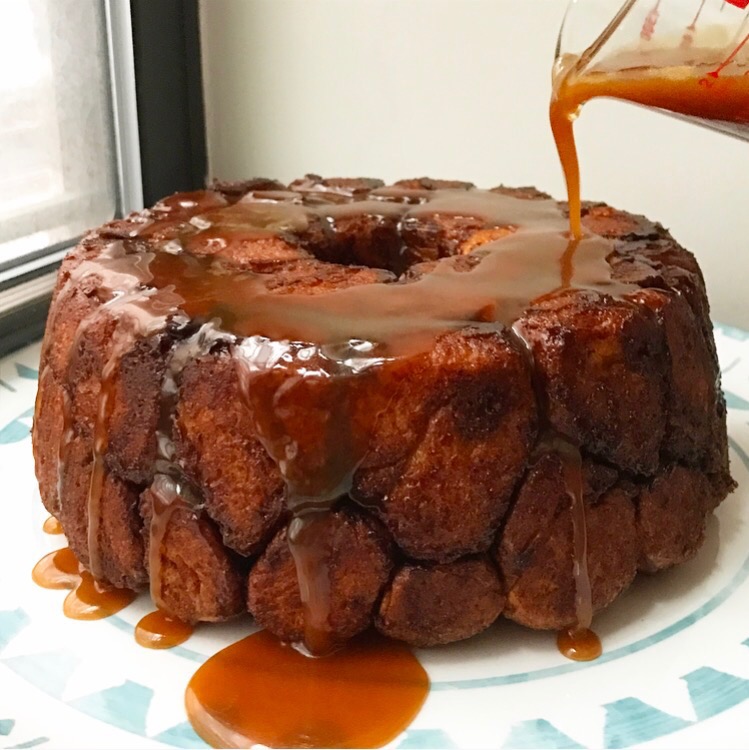
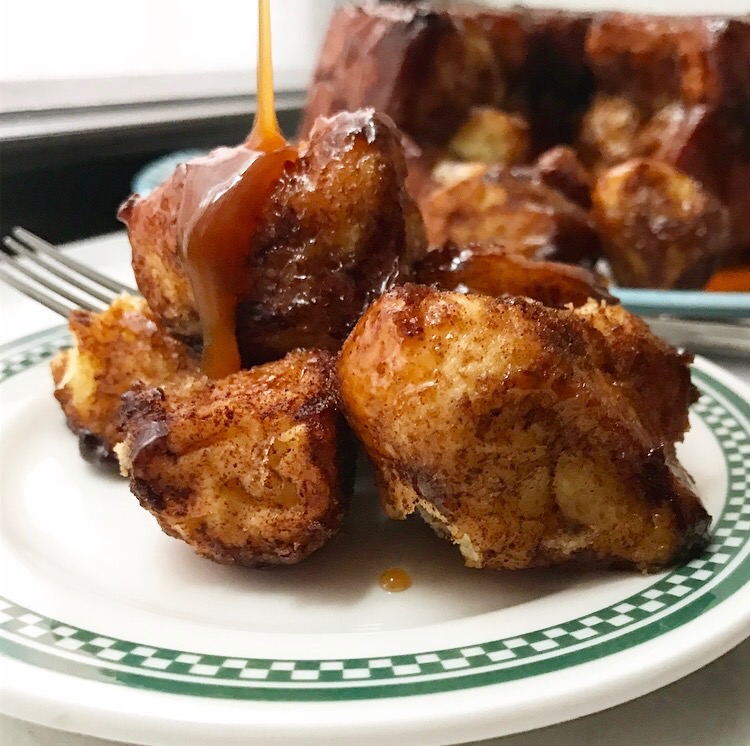
Monkey BreadHave you ever had Monkey Bread? I thought everyone had, but in the last 24 hours, I have found out that at least two of my friends have never even heard of it! That’s a real shame–I can’t imagine living my life not knowing that this sticky cinnamon-sugary masterpiece exists.

Monkey BreadUnlike those friends, I am a Monkey Bread connoisseur. I remember sneaking into the choir room at my church on Christmas Eve and Easter just to pick at their leftovers. Imagine it: me in my hideous purple plastic glasses and acolyte robes, breaking all the rules to sneak a few bites before the service began. What can I say? I’ve always been a little rebellious.

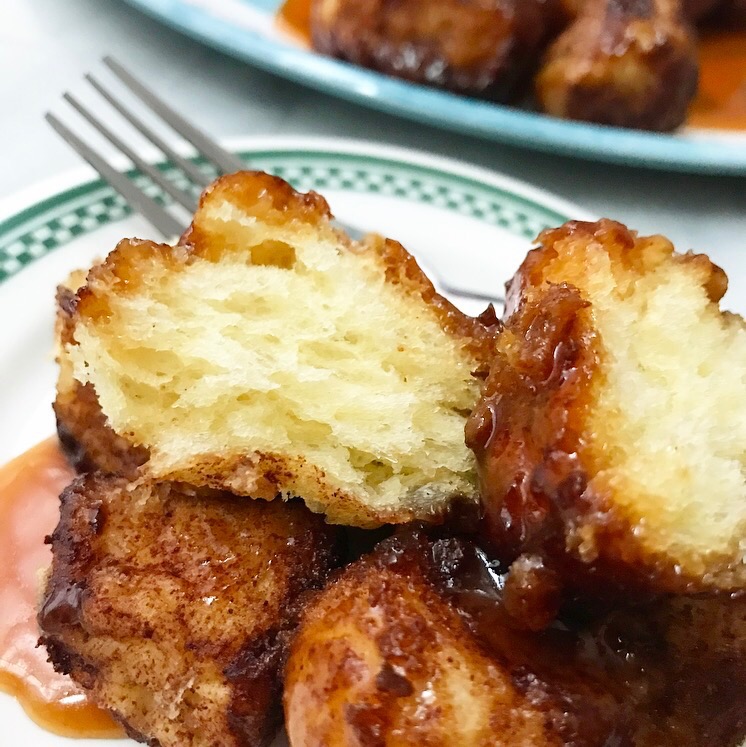
Monkey BreadI have made many Monkey Breads since my acolyte days. New York City has some incredible public parks, so picnicking is very popular up here. Let me tell you this–if you show up to a picnic with a fruit tray or sandwiches, everyone will be happy. If you show up with Monkey Bread, people will lose their freaking minds! Nobody, myself included, can resist this soft, sticky treat.

Monkey BreadIn the past, I have stuck to making Monkey Bread with cream biscuit dough (see here). It’s simple to throw together and doesn’t require the patience that working with yeast dough does. It’s super delicious, as all things coated in cinnamon-sugar ought to be. I really thought I’d be happy with that being the only Monkey Bread in my repertoire forever…but then, I went and created a yeast dough that I totally love. I used it in my Marzipan Cinnamon Rolls earlier this week, and I’m posting it again today because it’s just. that. good.

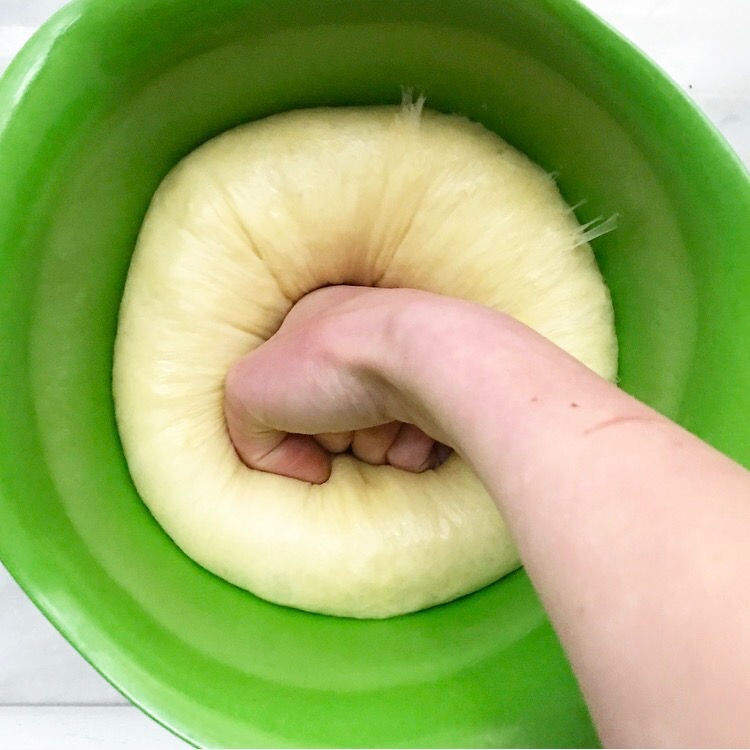
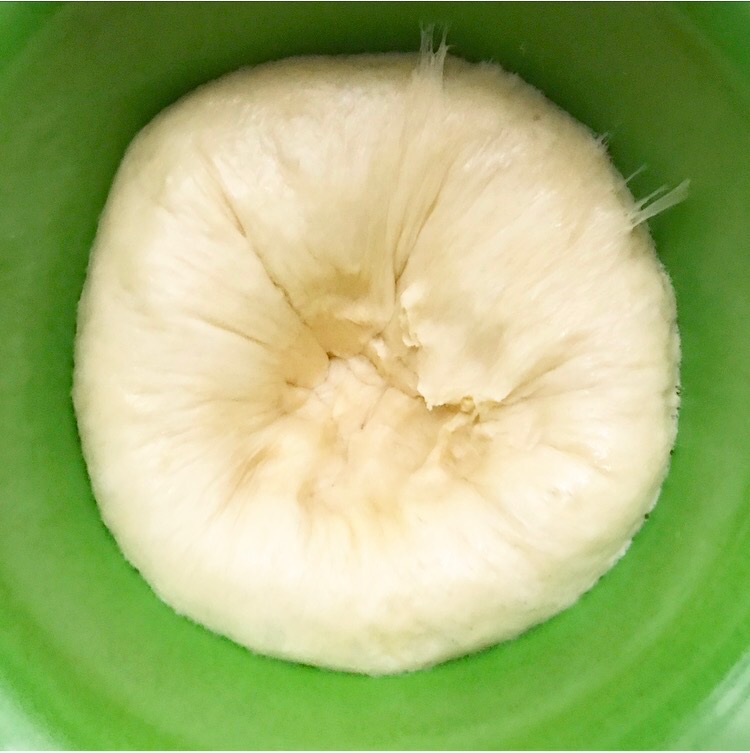
Monkey BreadMonkey BreadAs I’ve mentioned before, working with yeast is much simpler than you might think–it’s just another leavener. I like to work with instant yeast, which makes the whole process even easier. The dough comes together quickly. Once it’s nice and smooth, place it in a bowl, cover it, and let it rise for 60-90 minutes. You’ll know it’s ready to work with when you punch it down and it doesn’t spring back.

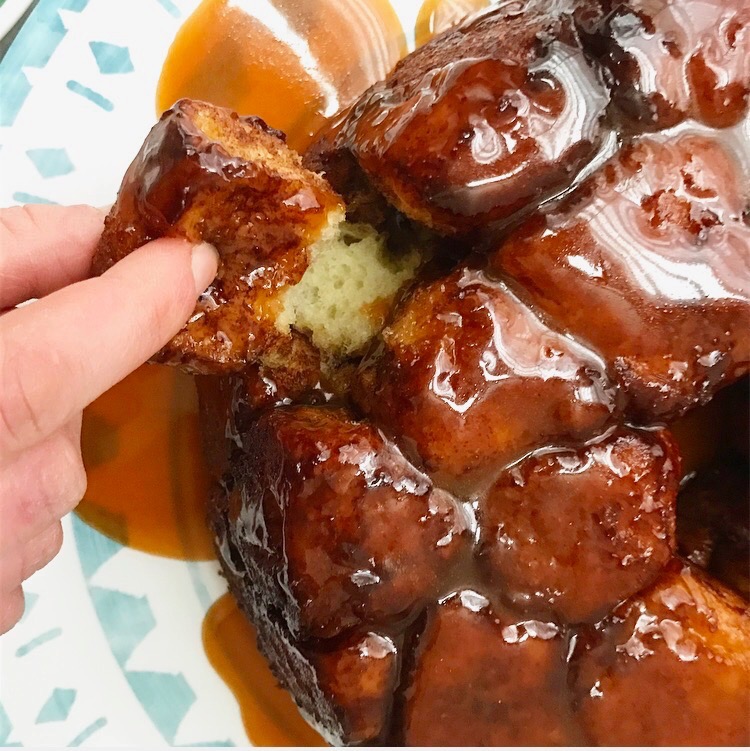
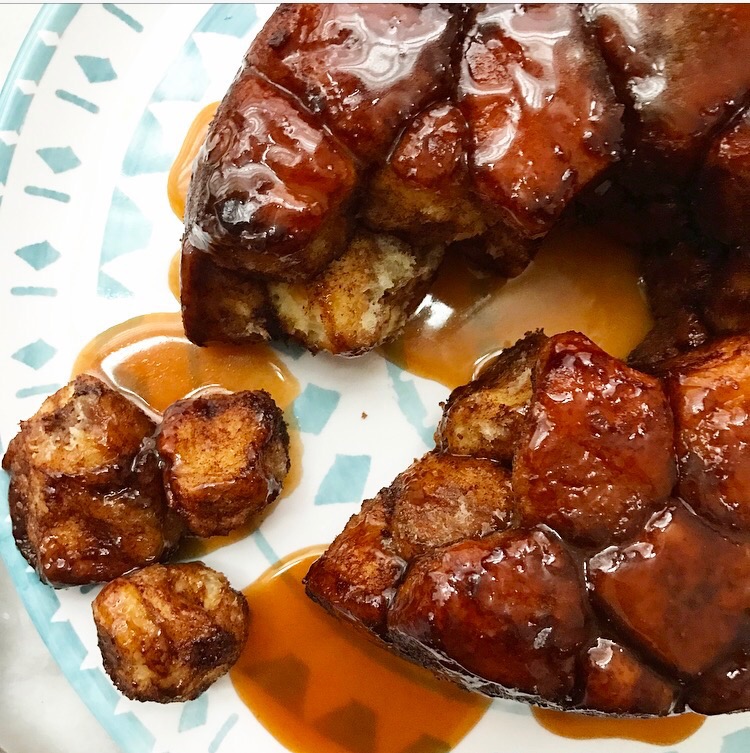
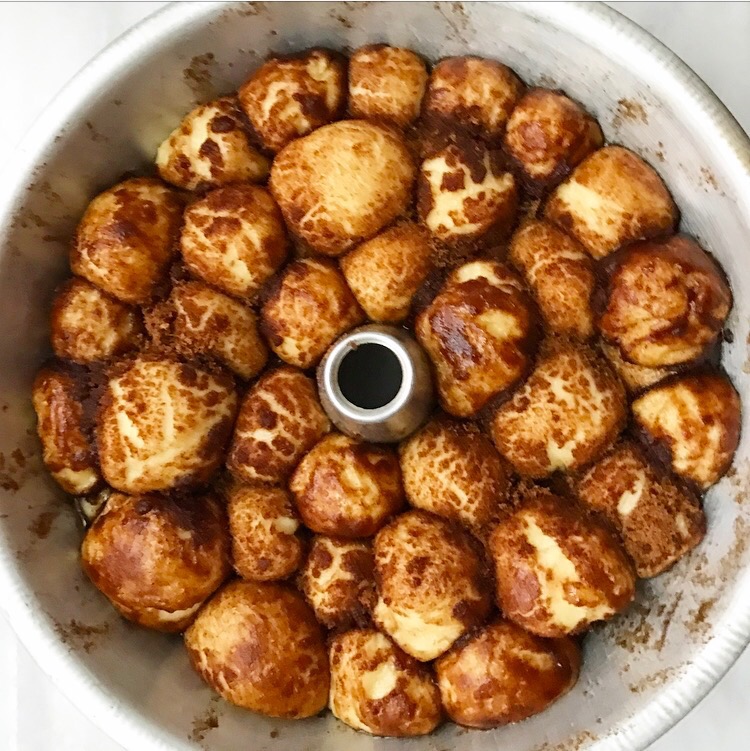
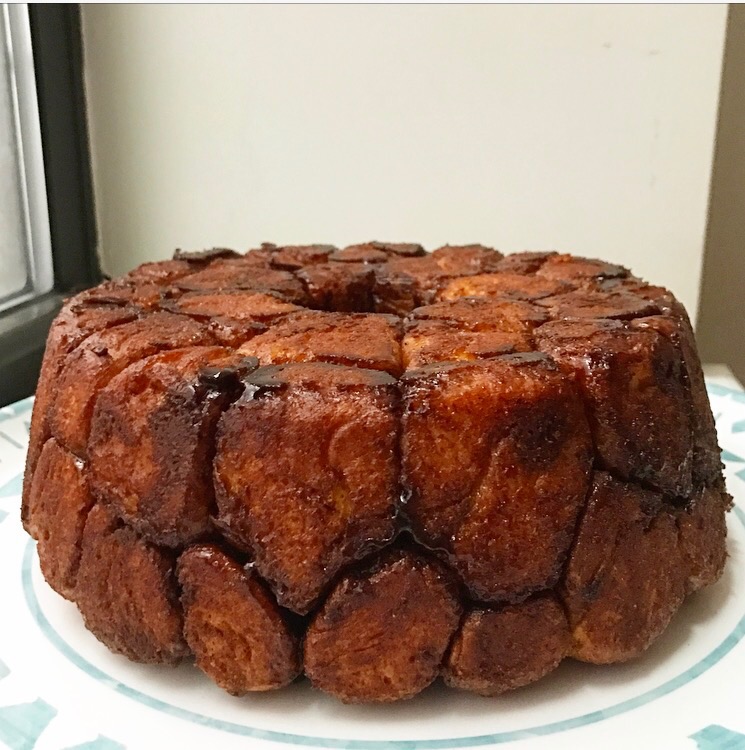
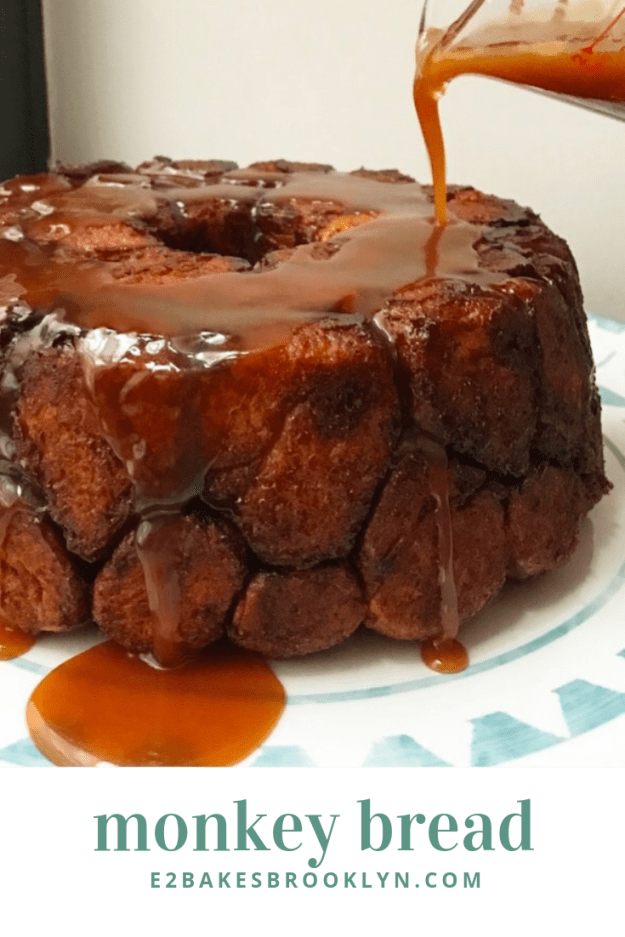
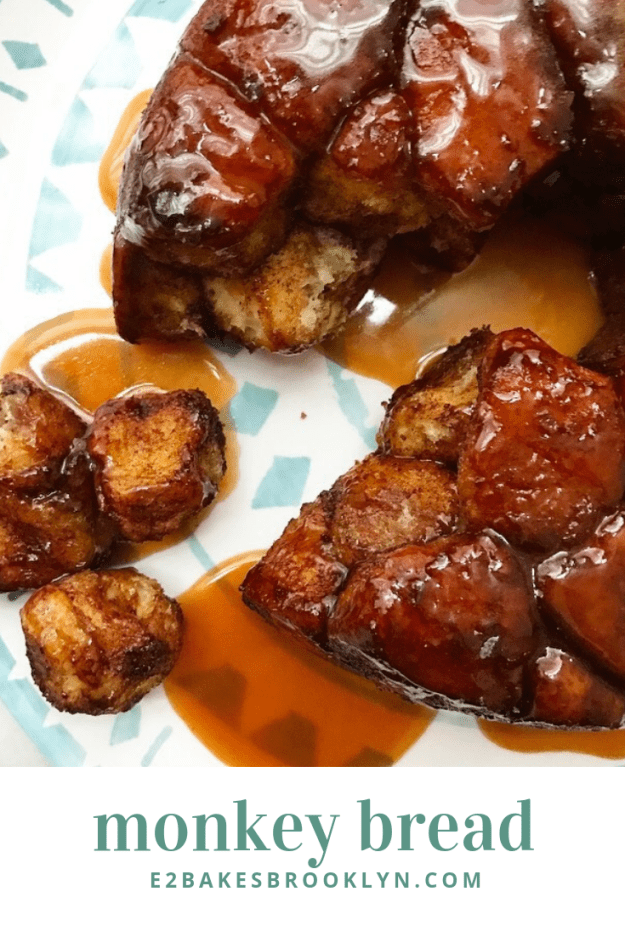
Monkey BreadMonkey BreadRoll the dough into a square and slice it into pieces. Take each one, form it into a ball, dip it in melted butter, and roll it in a mixture of dark brown sugar and cinnamon. Repeat that process 63 more times and place all of that cinnamon-sugar laden dough in a tube pan (or a bundt). Let it rise a bit at room temperature while you crank the oven to 350F, then let it bake for half an hour or so, just long enough to go totally crazy from the smell of cinnamon-sugar magic. Invert it onto a serving plate and voilΓ ! Monkey Bread.Monkey Bread

Monkey BreadNow, you could totally eat this as is. There is no real way to improve upon this classic…but that doesn’t mean I didn’t try 😊 I put together a quick caramel sauce while I was waiting to invert this Monkey Bread, and let me tell you, it was a brilliant idea. Cinnamon, sugar, sweet dough, *and* caramel? Little 10 year old acolyte me wouldn’t be able to tear herself away.Monkey Bread

Monkey Bread
makes 1 10-12 cup tube/bundt pan

Dough:
1 3/4-2 1/4 cups all-purpose flour
1/2 cup bread flour*
3 tablespoons granulated sugar
1 packet (2 1/4 teaspoons) instant yeast (I use Fleischmann’s Rapid Rise Yeast)
1 teaspoon Kosher or sea salt
3/4 cup whole milk
3 tablespoons unsalted butter
1 large egg + 1 large egg yolk, beaten, room temperature

Coating:
1/2 cup (1 stick) unsalted butter
1 cup dark brown sugar, packed
4 1/2 teaspoons ground cinnamon

Caramel:
1/2 cup granulated sugar
1/4 cup (1/2 stick) unsalted butter
1/3 cup heavy cream
2 tablespoons light corn syrup (or mild honey)
1 teaspoon pure vanilla extract
pinch of Kosher or sea salt

Make the dough. In a large mixing bowl, whisk together 1 3/4 cups all-purpose flour, bread flour, sugar, instant yeast, and salt. Set aside.

In a small saucepan, heat whole milk and butter until hot to the touch, about 115F. Use a silicone spatula or wooden spoon to fold in milk mixture, followed by egg and yolk. Add more all-purpose flour until dough starts to pull away from the sides of the bowl. Knead 5-6 minutes before forming into a ball and placing in an oiled bowl. Cover with plastic wrap and let rest for 10 minutes. Move covered bowl to a warm, draft-free environment* for 60-90 minutes, until dough has doubled in bulk.

Heavily grease a 10-12 cup tube (or bundt) pan with butter. Make sure to get butter into all the nooks and crannies. Set aside.

Make coating. Melt butter and place in a small bowl. In a separate small bowl, use a fork to mix together dark brown sugar and cinnamon.

Roll risen dough into a 10-inch square. Use a sharp chef’s knife to cut dough into 64 squares. Coat each ball in butter, then roll in cinnamon-sugar. Place in prepared pan. Repeat with all remaining squares. Cover pan with plastic wrap and let sit at room temperature while the oven heats up.

Preheat oven to 350F. Bake Monkey Bread for 30-35 minutes, covering with foil at the ten minute mark. Let baked Monkey Bread sit in the pan for 10 minutes. Run a small knife around the outer edge before inverting onto a serving dish.

Make the caramel. Arrange all ingredients except pecans within arm’s reach of the stove. Place sugar in a small, light-colored saucepan. Turn heat to medium-high. Whisk constantly while sugar melts and turns a deep copper color (but doesn’t burn). Whisk in butter. Remove from heat. Whisk in heavy cream–be careful, the hot caramel will expand quickly and dramatically. Whisk in corn syrup, followed by vanilla and salt. Let cool slightly. Drizzle over Monkey Bread immediately before serving.

Serve warm or at room temperature. Leftovers will keep covered at room temperature for a day or two.

Notes:

1. If you do not have or do not wish to use bread flour, you may use an equal volume of all-purpose flour. The texture will be slightly different, but your rolls will still be delicious.

2. I preheat my oven to 200F, turn it off, and slide the covered pan inside. After 60-90 minutes, my rolls are ready to bake. Works every time.

Monkey BreadMonkey Bread

Marzipan Cinnamon Rolls

Marzipan Cinnamon RollsThese Marzipan Cinnamon Rolls were not the plan. They weren’t even Plan B (I rarely have a Plan B–I’m not that organized).

Last week, while I was hanging out with my old friend, Erin, I definitely had sweet rolls on the brain, but they weren’t these. I had big plans for Banana Pecan Sticky Buns. The second Erin left to head back to Boston, I whipped up a batch of caramel, toasted some pecans, made a yeast dough and filled it with a cinnamon-banana filling. I let the rolls rise and baked them until golden. I inverted the pan, plated a roll for myself, and…I burnt the caramel. All that work and anticipation and I went and burnt the dang caramel. And I was fresh out of overripe bananas.

Marzipan Cinnamon RollsI did get one thing right with those failed sticky buns–I finally made a yeast dough that I love. I’ve liked my past attempts, but I am all about this new dough of mine. Whole milk and an extra egg yolk make it rich and flavorful, but soft and fluffy enough that eating one roll doesn’t make you feel like you’ve had a brick for breakfast. Knowing I had to get this new dough of mine on this blog ASAP, I rifled through my “special occasion” ingredients until I found a forgotten can of marzipan, an almond paste that is usually reserved for being shaped like fruit or for cake decorating. After a few minutes of debating if almond paste would actually “go” in a sweet roll, I came to my senses. Almonds and cinnamon are magnificent together. Paired with that new dough and an almond glaze, I knew I had a winner on my hands.
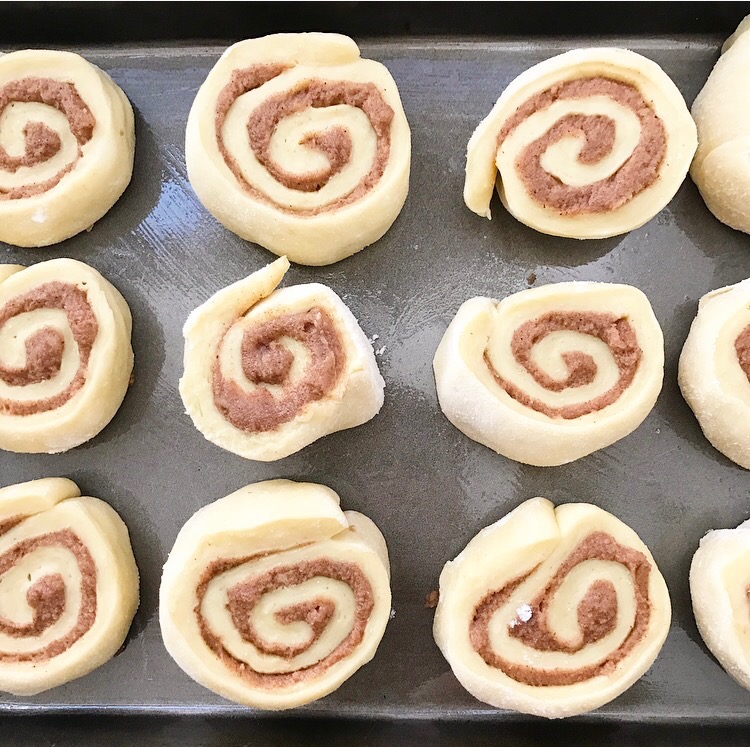
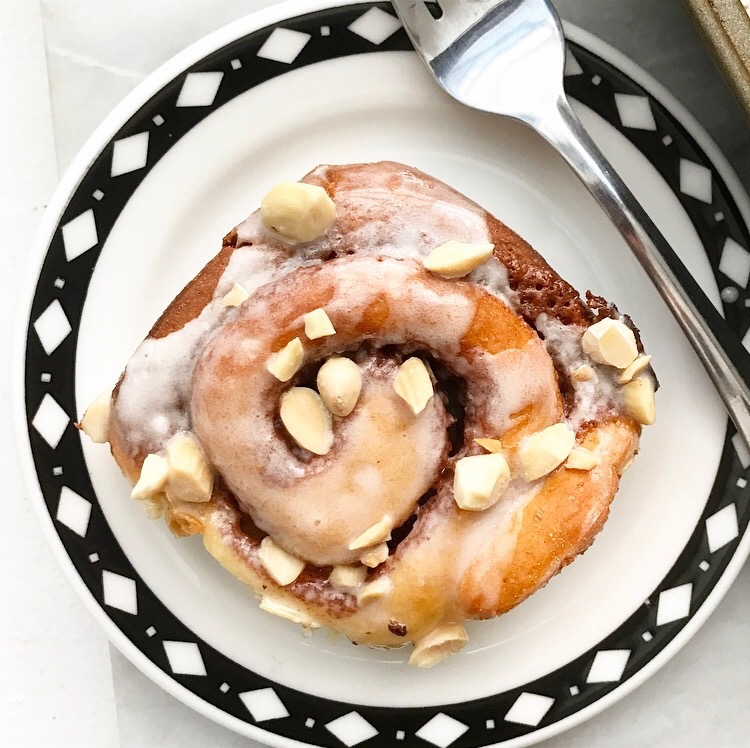
Marzipan Cinnamon RollsY’all, these rolls. They’ve got everything you love about classic cinnamon rolls, but with all the sweet almond-scented magic of marzipan. And thanks to instant yeast, they’re easy to make. 
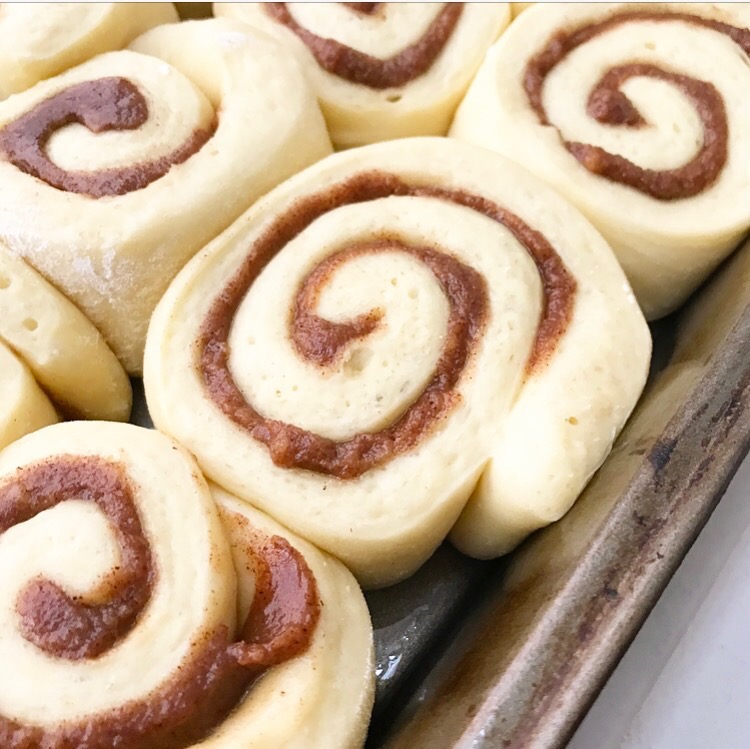
Yes, I just said working with yeast is easy. I know many home bakers are intimidated by it, but it’s really no trouble at all once it’s been proven. The problem is that the proofing step is what scares people away. Instant yeast, however, takes away the need for proofing, making yeast-based recipes just as easy as those made with baking powder and baking soda. Just whisk a packet of instant yeast into your dry ingredients–it’s that easy.
Marzipan Cinnamon RollsMarzipan Cinnamon RollsAnother great thing about instant yeast? It eliminates the need for two long rises. Once your dough is nice and smooth, it needs just ten minutes of rest before it can be filled. Instant yeast still requires one rest, but it’s only an hour–just enough time to have that second cup of coffee, apologize to your significant other/roommate/visiting friend, make another pot, and fall into a Wikipedia hole. Before you know it, your Marzipan Cinnamon Rolls will be nice and puffy and ready to bake.

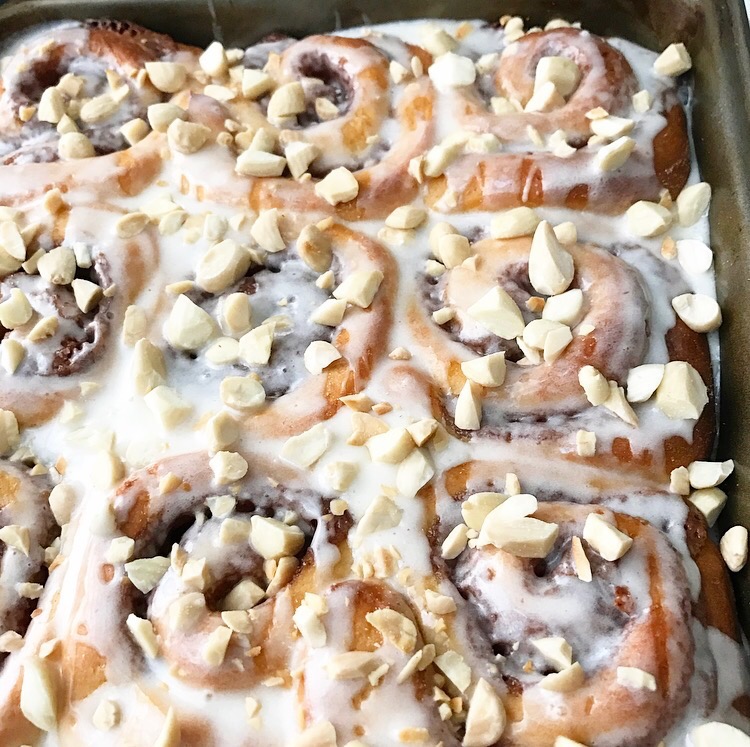
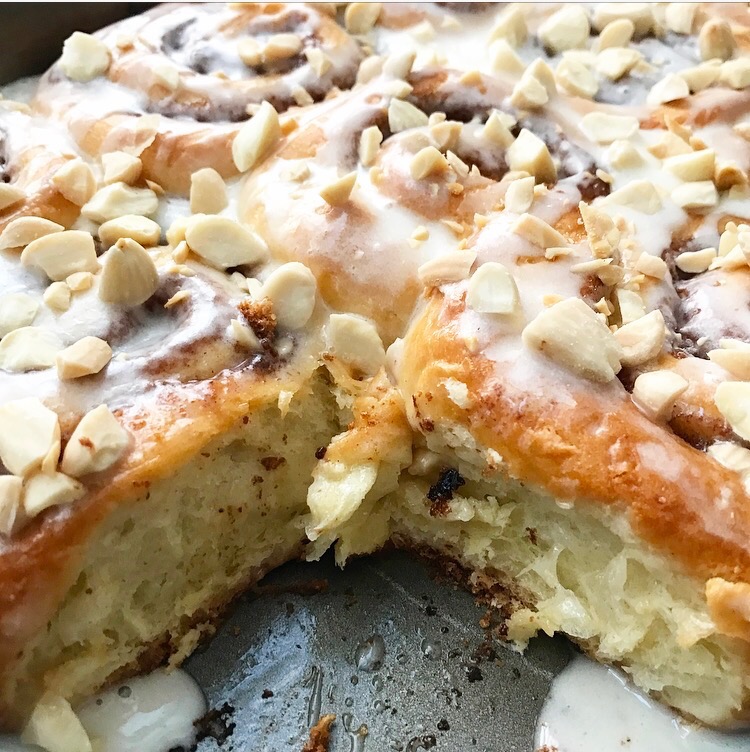
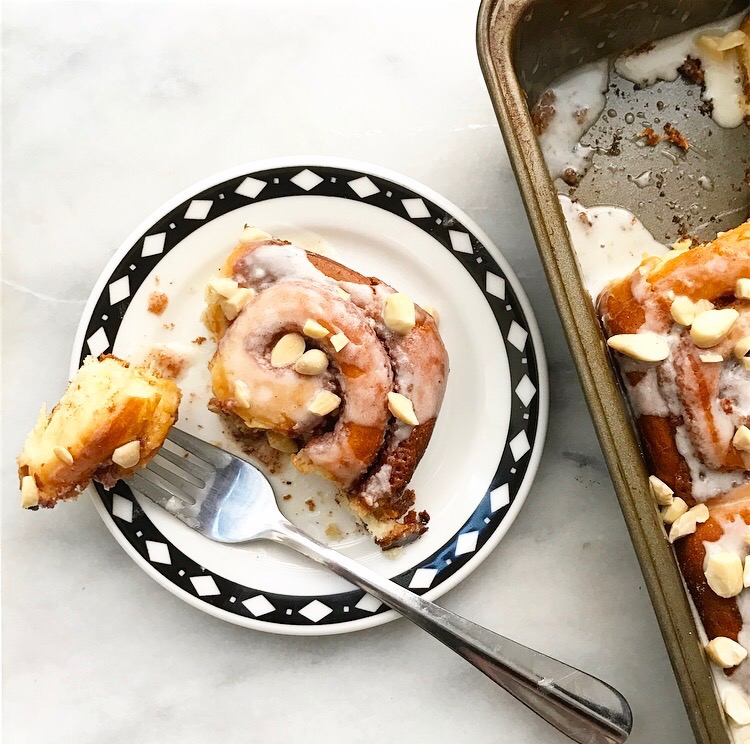
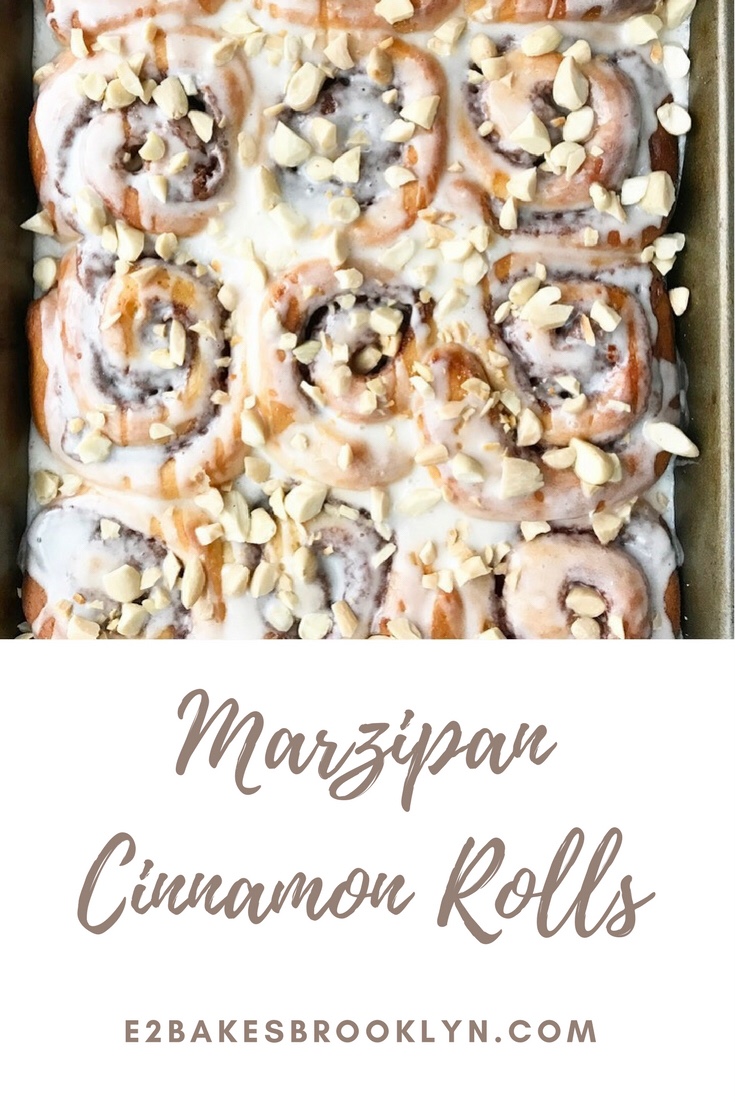
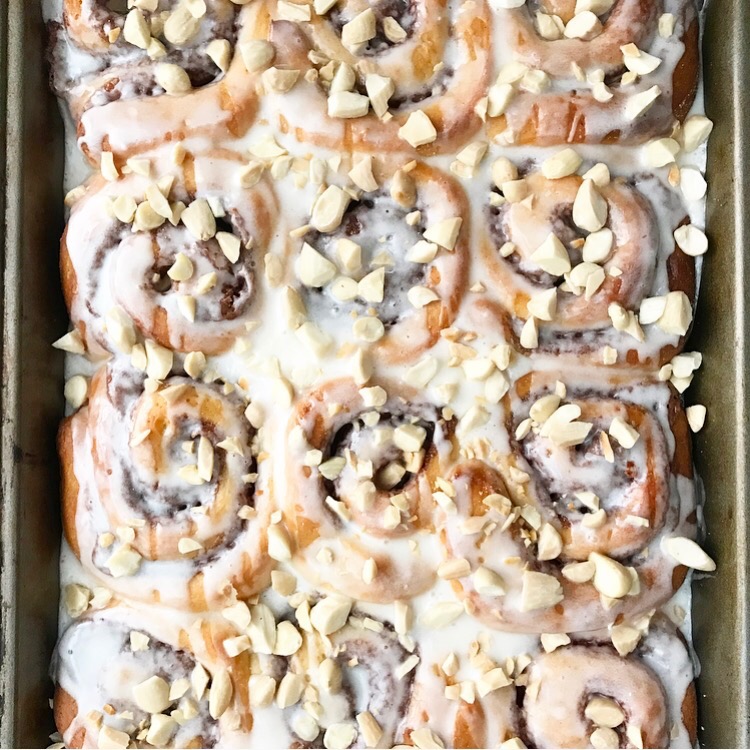
Marzipan Cinnamon RollsOnce your rolls are golden brown, drizzle a quick glaze over the top, sprinkle on some toasted almonds, and grab a plate and eleven of your closest friends. Trust me, you’ll need them. I ate two of these while they were still warm, took a gazillion photos of them, and then put an announcement on Facebook that I was giving away Marzipan Cinnamon Rolls to anyone who asked. My neighborhood friends are used to me doing stuff like that by now, so I spent Sunday evening running around delivering cinnamon rolls. The friends that tried them immediately understood why I couldn’t keep the whole batch in the house. They’re that good.Marzipan Cinnamon Rolls

Marzipan Cinnamon Rolls
makes 12 rolls

Dough:
1 3/4-2 1/4 cups all-purpose flour
1/2 cup bread flour*
3 tablespoons granulated sugar
1 packet (2 1/4 teaspoons) instant yeast (I use Fleischmann’s Rapid Rise Yeast)
1 teaspoon Kosher or sea salt
3/4 cup whole milk
3 tablespoons unsalted butter
1 large egg + 1 large egg yolk, beaten, room temperature

Filling:
5 tablespoons unsalted butter, softened to room temperature
8 ounces marzipan
2 tablespoons granulated sugar
4 teaspoons ground cinnamon
pinch of Kosher or sea salt
1/4 teaspoon pure almond extract (optional)

Garnish & Glaze:
1/2 cup slivered or chopped almonds
1 cup confectioner’s sugar
pinch of Kosher or sea salt
4-6 tablespoons heavy cream
1 teaspoon pure vanilla extract
1/8 teaspoon almond extract

Grease a 9×13-inch rimmed baking pan. Set aside.

In a large mixing bowl, whisk together 1 3/4 cups all-purpose flour, bread flour, sugar, instant yeast, and salt. Set aside.

In a small saucepan, heat whole milk and butter until hot to the touch, about 115F. Use a silicone spatula or wooden spoon to fold in milk mixture, followed by egg and yolk. Add more all-purpose flour until dough starts to pull away from the sides of the bowl. Knead 5-6 minutes before forming into a ball and placing in an oiled bowl. Cover with plastic wrap and let rest for 10 minutes.

Make the filling. In a small mixing bowl, use a fork to mash together butter and marzipan. Mash in sugar, cinnamon, salt, and optional almond extract. Set aside.

On a lightly floured surface, roll dough into an 8×14-inch rectangle. Drop filling over the dough by the spoonful. Use an offset knife or spoon to spread filling mixture over the dough, using a 1/2-inch perimeter on all sides. Starting with the long edge furthest from your body, tightly roll filled dough toward you, smoothing any seams with your thumbs. Slice dough into 12 rolls. Place rolls close together in prepared pan. Cover the pan with aluminum foil. Place covered pan in a warm, draft-free place* for 60-90 minutes, until rolls have doubled in size.

Preheat oven to 375F. Uncover rolls. Bake 25-30 minutes, recovering the rolls with foil if anything begins to brown too quickly.

While rolls are baking, prepare the garnish. Place almonds in a dry skillet. Heat over medium heat, stirring constantly until nuts are fragrant and slightly browned, 5-8 minutes. Transfer to a bowl to cool.

Make the glaze. In a small bowl, whisk together confectioners sugar, salt, heavy cream, vanilla, and almond extract. Drizzle over baked rolls. Scatter toasted almonds over the top. Serve warm.

Marzipan Cinnamon Rolls are best served the day they are made, but will keep at room temperature for a day or so.

Notes:

1. If you do not have or do not wish to use bread flour, you may use an equal volume of all-purpose flour. The texture will be slightly different, but your rolls will still be delicious.


2. I preheat my oven to 200F, turn it off, and slide the covered pan inside. After 60-90 minutes, my rolls are ready to bake. Works every time.

Marzipan Cinnamon Rolls