Monthly Archives: March 2023

Coffee Double Chip Cookies

After seven years of blogging, I occasionally get “baker’s block.” I’ve written a lot of recipes, y’all. Like…a lot. Understandably, sometimes the inspiration lags a little.
Coffee Double Chip Cookies​

I’ve found different ways of dealing with it, from doing morning pages to keeping lists to taking breaks. My current method is to bake just to bake, whether or not I have a plan. Last week, I treated myself to Simply Recipes’ Irish Soda Bread. This week, I decided to make cookies with whatever I found in my mix-in cabinet. That’s how we got here.
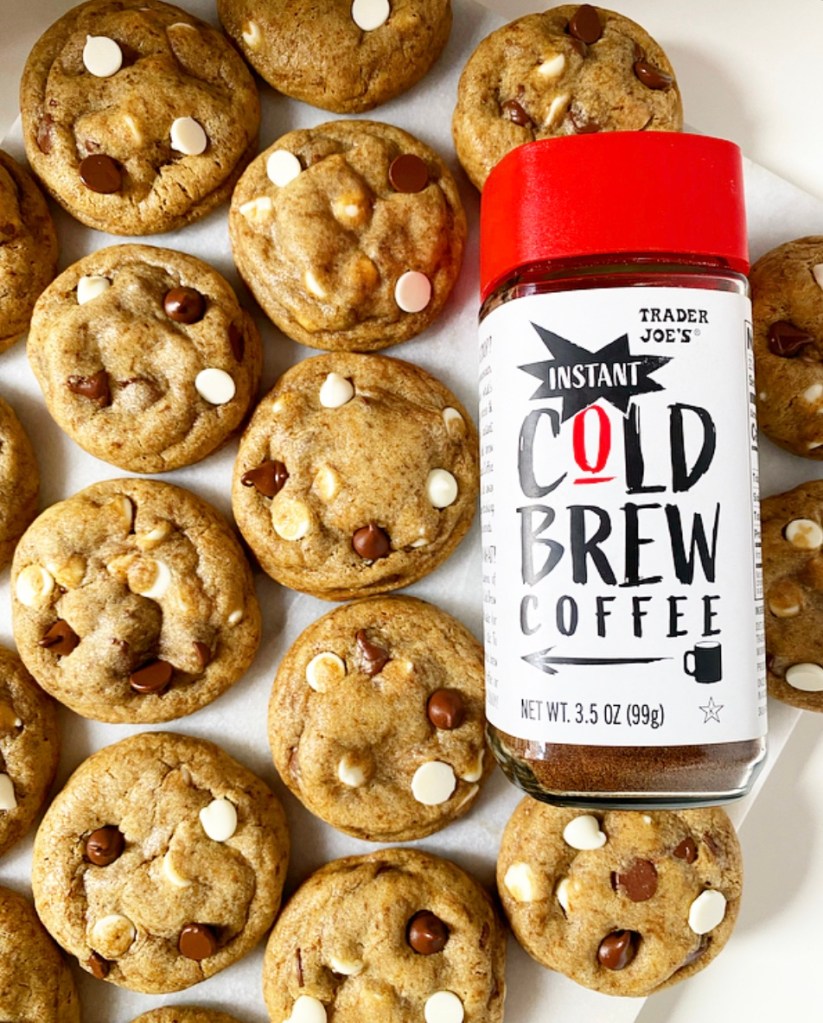
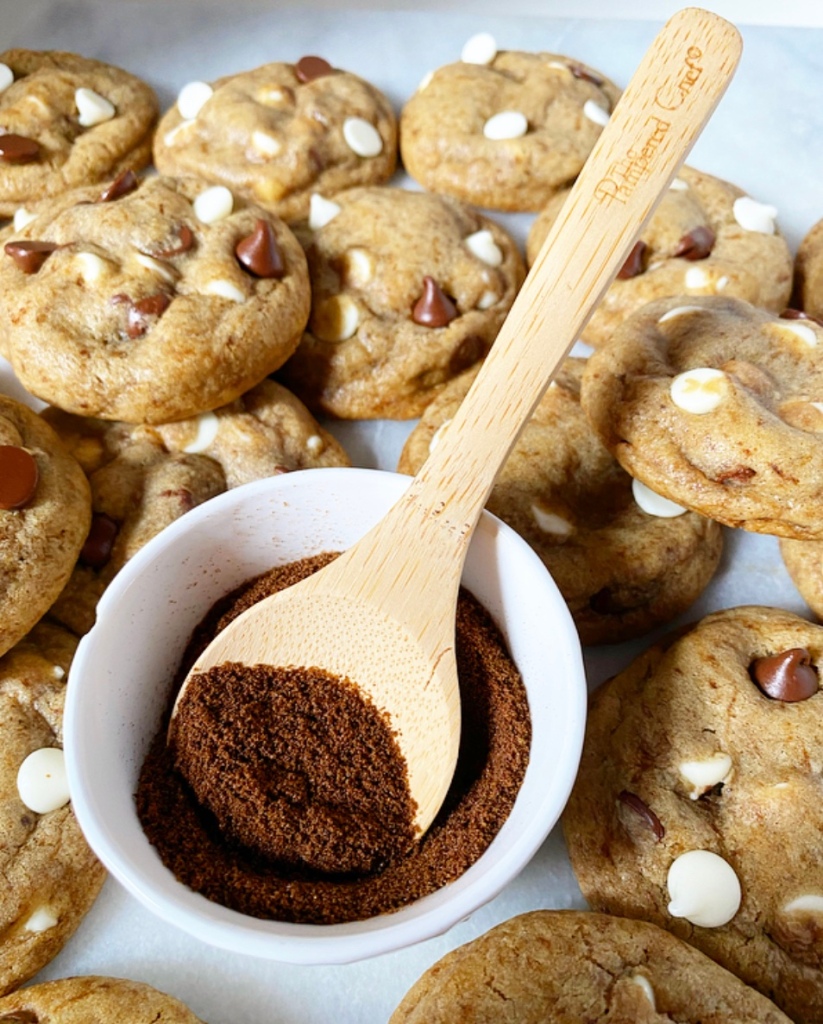
After a quick perusal, I found white and semisweet chocolate chips, powdered milk, and a container of granulated cold brew that I save for things like chocolate cake. And so, I took all those things and everything I know about making cookies (which is kind of a lot), and made something really delicious: Coffee Double Chip Cookies.
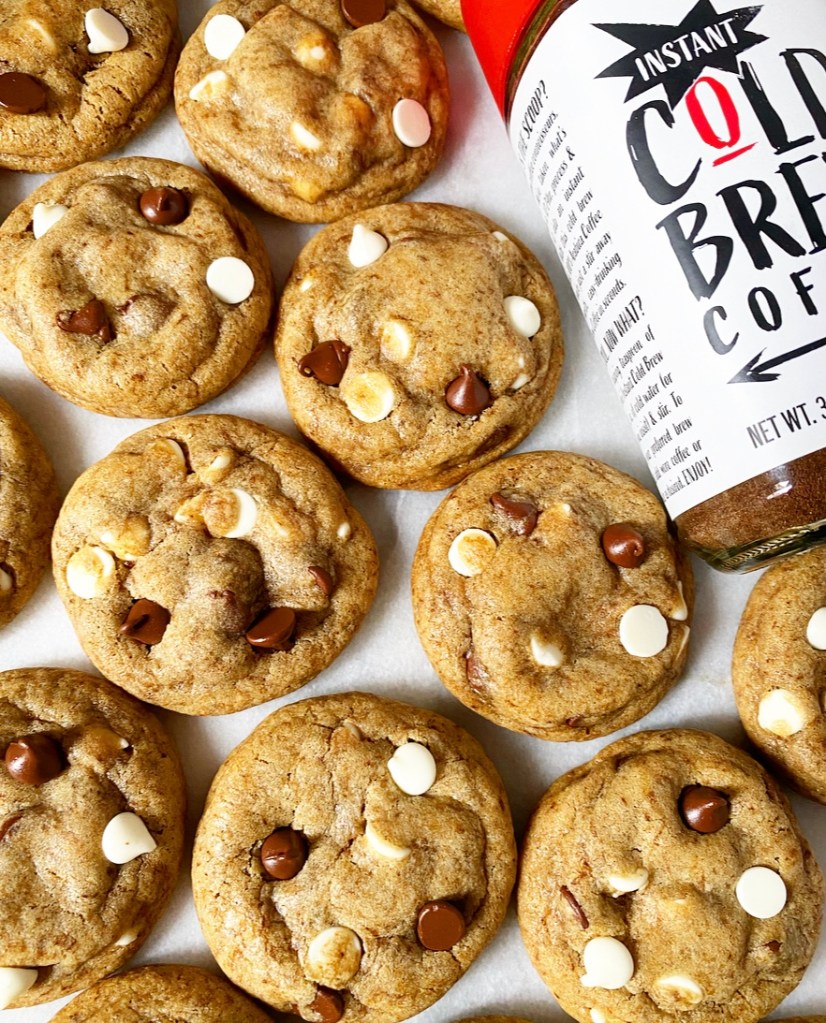
Coffee Double Chip Cookies​

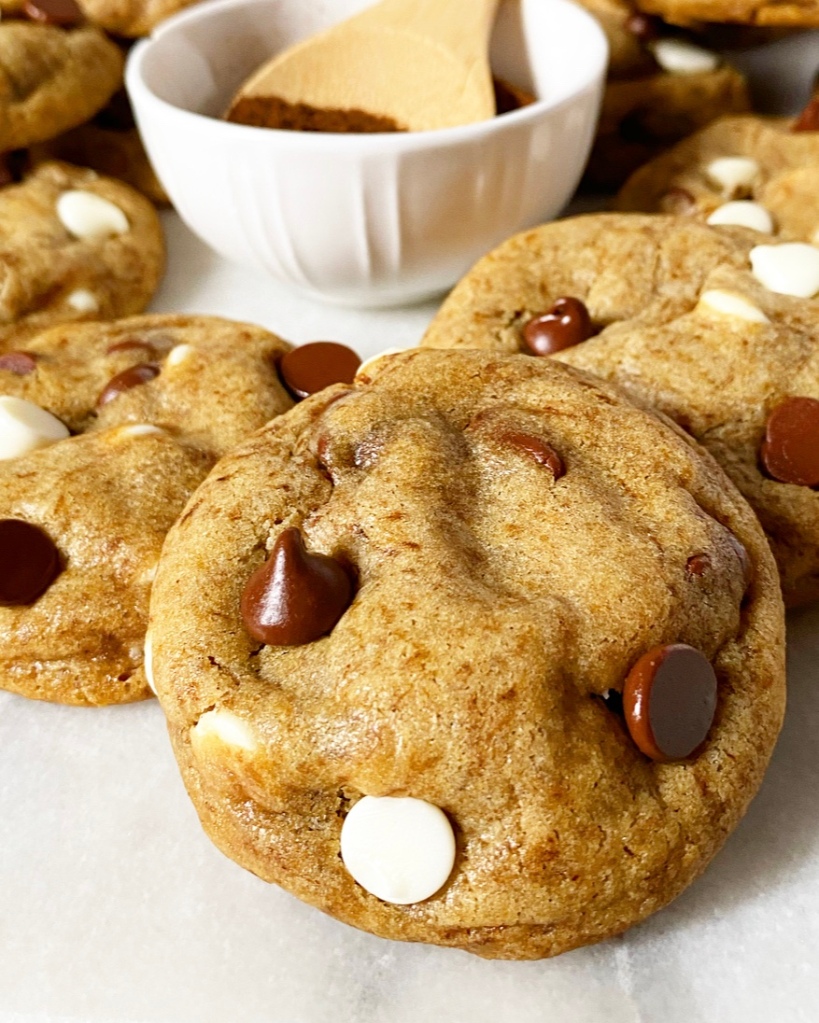
These cookies are soft and chewy, and will politely wallop you with robust coffee flavor, depth and sheen from the powdered milk, and more white and semisweet chocolate chips than seems reasonable. Who needs reason when you have cookies like these? Not me—I just need another cookie. Or two.

Coffee Double Chip Cookies​
Coffee Double Chip Cookies
makes about 28 cookies

2 3/4 cups all-purpose flour
1/2 cup nonfat milk powder
2-2 1/2 tablespoons granulated coffee or espresso (to taste)
1 tablespoon cornstarch
1/2 teaspoon baking powder
1/2 teaspoon baking soda
1/2 teaspoon Kosher or sea salt
1 cup (2 sticks) unsalted butter, melted and cooled slightly
3/4 cup granulated sugar
1/2 cup light brown sugar, packed
2 large eggs, room temperature
1 tablespoon pure vanilla extract
1 cup white chocolate chips, plus more for garnish (optional)
1 cup semisweet chocolate chips, plus more for garnish (optional)

In a medium mixing bowl, whisk together flour, milk powder, granulated coffee, cornstarch, baking powder, baking soda, and salt. Set aside.

In a large mixing bowl, whisk together melted butter, granulated and light brown sugars. Whisk in eggs one at a time, followed by vanilla. Add dry ingredients in two installments, scraping down the bowl as necessary. Mix in white chocolate chips and semisweet chocolate chips. Dough will be very thick.

Cover dough with plastic wrap and chill for at least 2 hours, or up to 3 days.

Place oven racks in central positions and preheat the oven to 350F. Line two rimmed baking sheets with parchment.

Scoop dough in 2 tablespoon increments, roll into balls, and place at least 3 inches apart on prepared pans. Bake 10-12 minutes, rotating pans top-to-bottom and front-to-back at the 5 minute mark. Cookies are done when the edges are turning golden and the centers still look a bit underdone. Garnish with more white chocolate chips and semisweet chocolate chips, if desired. Let cookies cool on pans for 5 minutes before transferring to a rack to cool completely. Let baking sheets come back to room temperature before repeating process with any remaining dough.

Cookies will keep in an airtight container at room temperature for up to a week.


Oven Fries (that are worth eating)

Oven Fries (that are worth eating)

I want to make it clear that I love frying things. I love it. Doughnuts, chicken, onion rings, fries—I want them all deep-fried to golden perfection. Not baked. Not. Baked. Because let’s be real, baked versions of things that are supposed to be fried are rarely worth eating. Like, if I want a doughnut, I don’t want what amounts to a muffin baked in a ring mold. And if I want fried chicken, I don’t want it “oven-fried.” Just give me the real deal, or don’t give it to me at all.

All that said, I had a little change of heart a few weeks ago while making dinner. I had an unallocated potato that needed using, and decided to try to make oven fries with the main goal of them not just being fry-shaped roasted potatoes. I wanted crisp, golden, fluffy-centered fries, but without the pot of hot oil. It seemed like an impossible goal at the time.

I am here to tell you that I achieved this goal. I achieved it in style. And now I feel so silly for being so adamantly opposed to Oven Fries for upwards of a decade. I’m just opposed to lousy oven fries, ya know? But these are anything but lousy. They’re crispy, salty, and bear little resemblance to any roasted potatoes I’ve come across (though that is fundamentally what they are, of course).

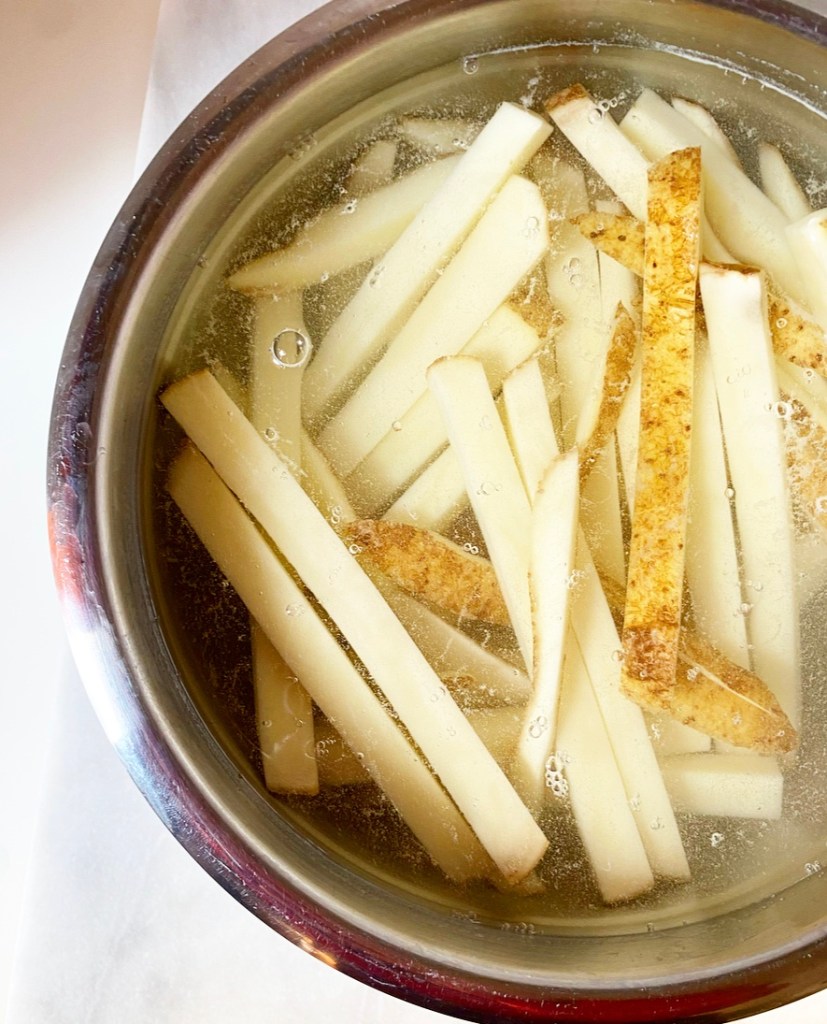
The secret to great Oven Fries is treating them as much like regular fries as possible. This means using classic, starchy russet potatoes and starting with a soak in cold water. I add some salt and baking soda to the water to help pull all the starches in the sliced potatoes to their surfaces. This leads to crispy outsides and fluffy insides every time.

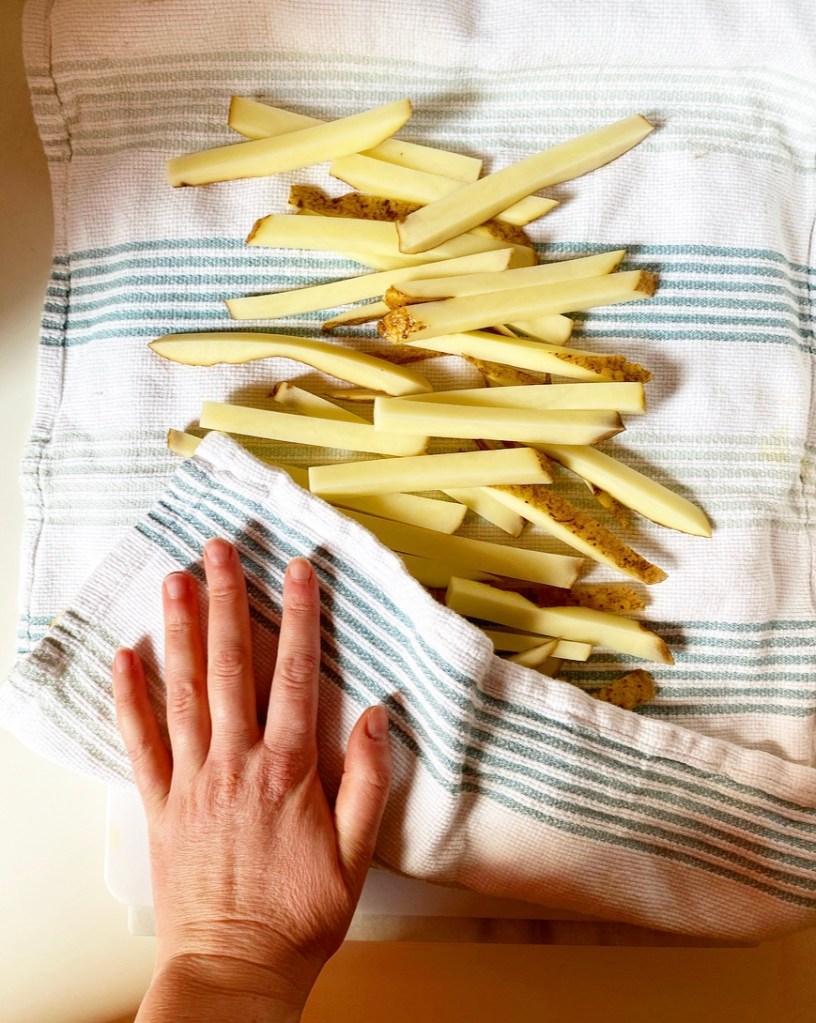
After soaking, make sure to pat your fries as dry as you can so they sear more than they steam. Toss them with about a tablespoon of oil per potato and a hefty pinch of salt, then spread them out on a couple of sheet pans and roast them high and fast, flipping when they’re golden on one side. Heads up that if you’re using dark (coated) pans, your fries will brown faster than they will on the aluminum pans I use.

Oven Fries (that are worth eating)

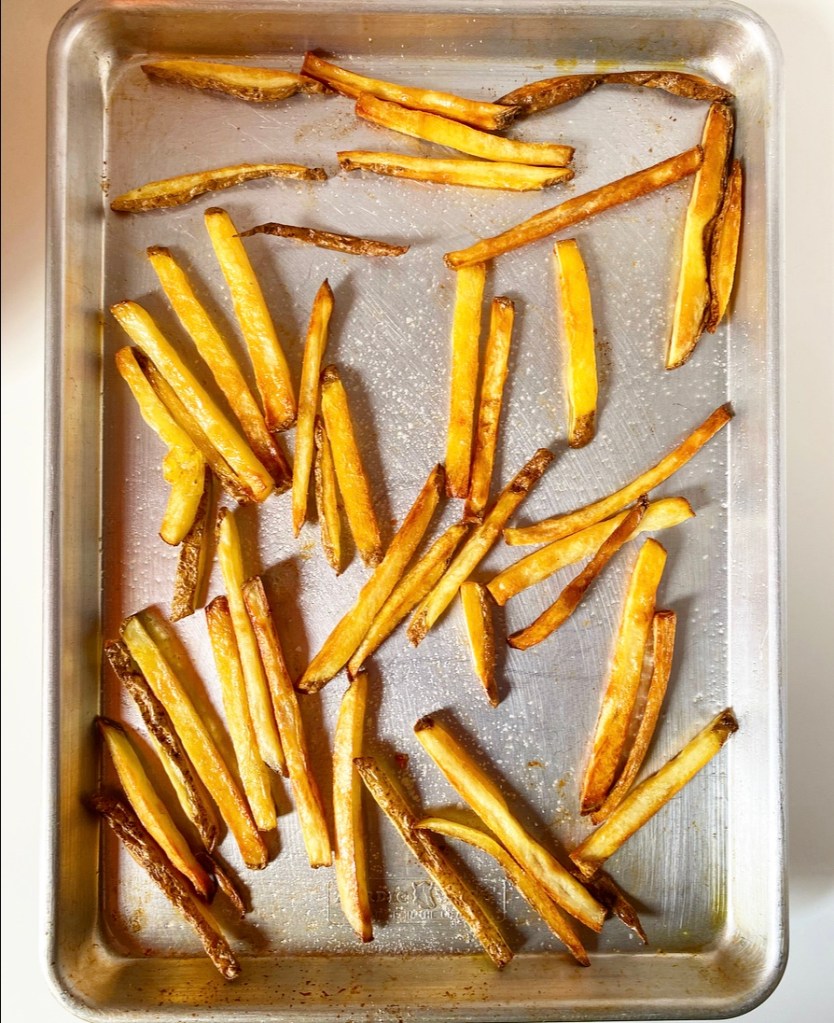
When your Oven Fries are done, make sure to hit them with another big pinch of salt for a little extra punch (and crunch!). You can also dust them with a favorite spice blend or scatter some crispy garlic over the top—however you like your fries. I’m a no-frills fry kind of human, so all I need is a little side of ketchup.

Oven Fries (that are worth eating)

Y’all, these are so good. Crispy, with soft centers and an irresistible golden brown color—not a masquerading plain roasted potato in the bunch. These are Oven Fries good enough to change even the staunchest fried food defender. Dare I say, they’re Oven Fries worth eating. Oven Fries…to love?

I’ll see myself out.

Oven Fries
makes 2 large or 3-4 small servings

2 large russet potatoes
cold water
1/2 teaspoon baking soda
Kosher or sea salt, to taste
2-3 tablespoons neutral oil (I used canola)
ketchup (or other dipping sauce), for serving

Scrub potatoes, and peel if desired. Transfer them to a cutting board. Use a large, sharp chef’s knife to slice potatoes into pieces approximately 1 centimeter thick.

Place all potato pieces in a medium mixing bowl, and add enough cold water to cover. For extra deep golden fries, add baking soda and 1/2 teaspoon salt to the water. Let potato pieces soak for 30 minutes.

Meanwhile, place the oven racks in central positions. Turn the oven to 450F.

Once 30 minutes have passed, drain water from potatoes. Dry potato pieces well with a clean kitchen towel.

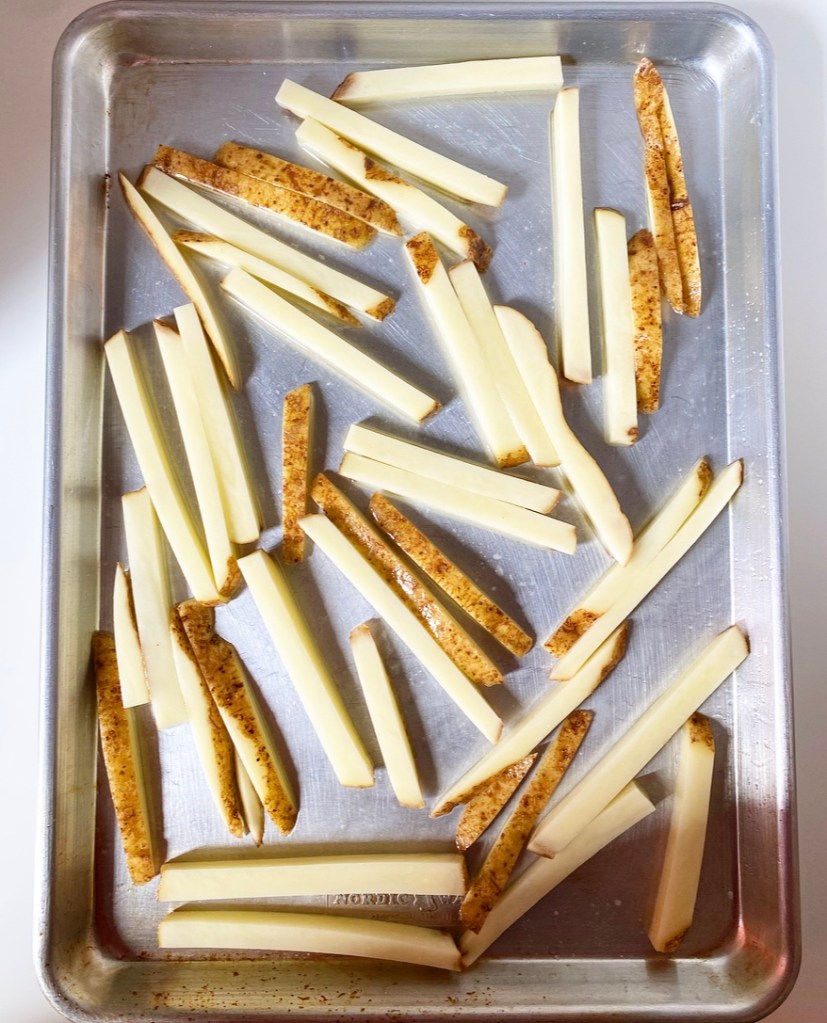
Divide potatoes between two dry rimmed baking sheets. Drizzle each pan with 1-1 1/2 tablespoons oil. Season well with salt. Use your hands to toss all pieces to coat. Arrange potato pieces in a single layer with none touching each other.

Bake fries for 15 minutes. At this point, they should all be turning golden on the underside; if they’re not, let them bake another 5 minutes and check again. Use a spatula to flip them all over, then rearrange them into an even layer with none touching. Rotate the pans top-to-bottom and back-to-front. Bake 15-20 more minutes, or until golden to your liking.

Remove the fries from the oven and salt again, if desired.

Serve immediately with ketchup or other dipping sauce, if desired.

Red Velvet Loaf Cake

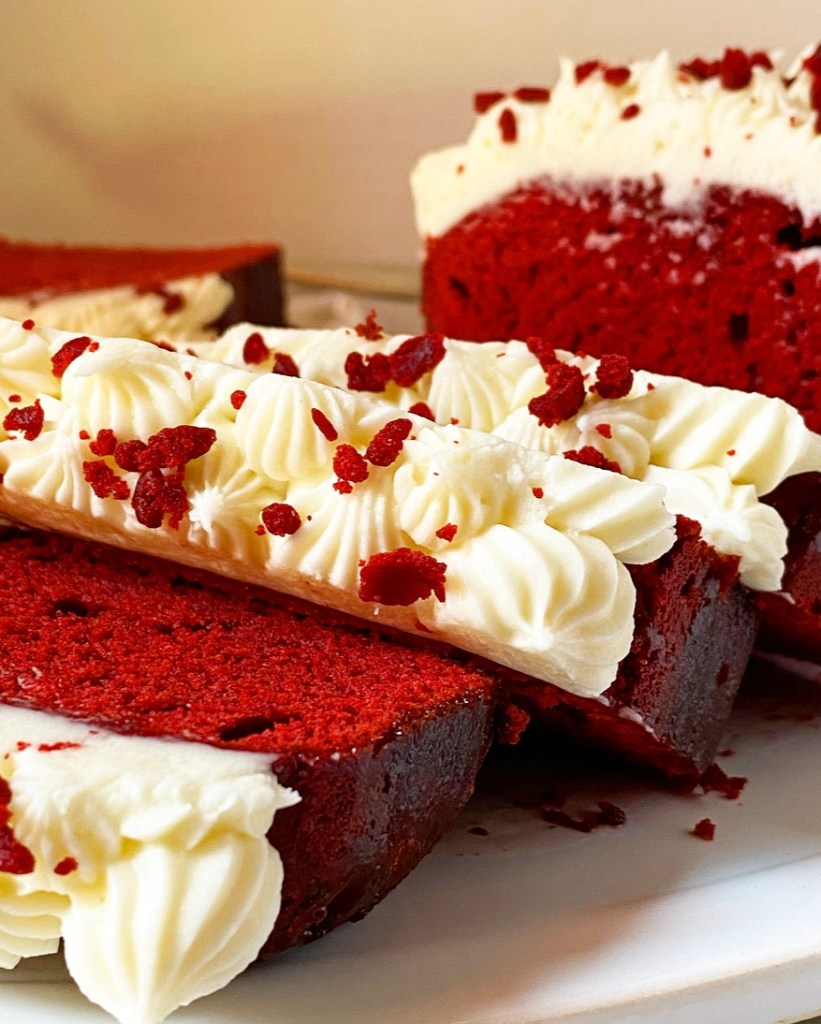
I’ve been over here making red velvet on every Oscar weekend for the past twenty years, always with the explanation that it’s “red like the red carpet.” Except I don’t know if you’ve heard, but the Oscars are doing away with the red carpet this year in favor of a champagne motif.

Rest assured, I’m keeping my little tradition alive anyway, not least because I’m sober and won’t bake with champagne. I mean, who even wants champagne cake when you can have a festive bright red cake flavored with cocoa and vanilla and finished with my best-ever cream cheese frosting? Not me.

Red Velvet Loaf Cake

Red velvet and I have a long history and I’m not going to ruin a good thing when I’ve got one going. I’ve made blondies, cakes, cookies, and cakes that are cookies—I’ve done it all.

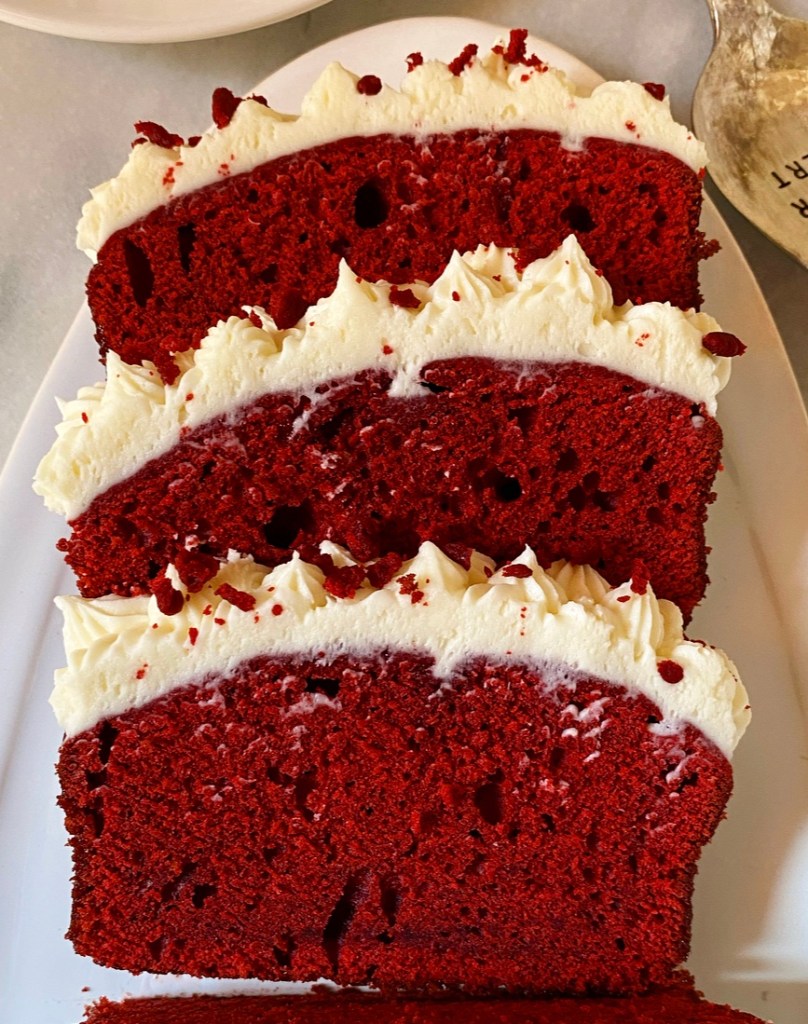
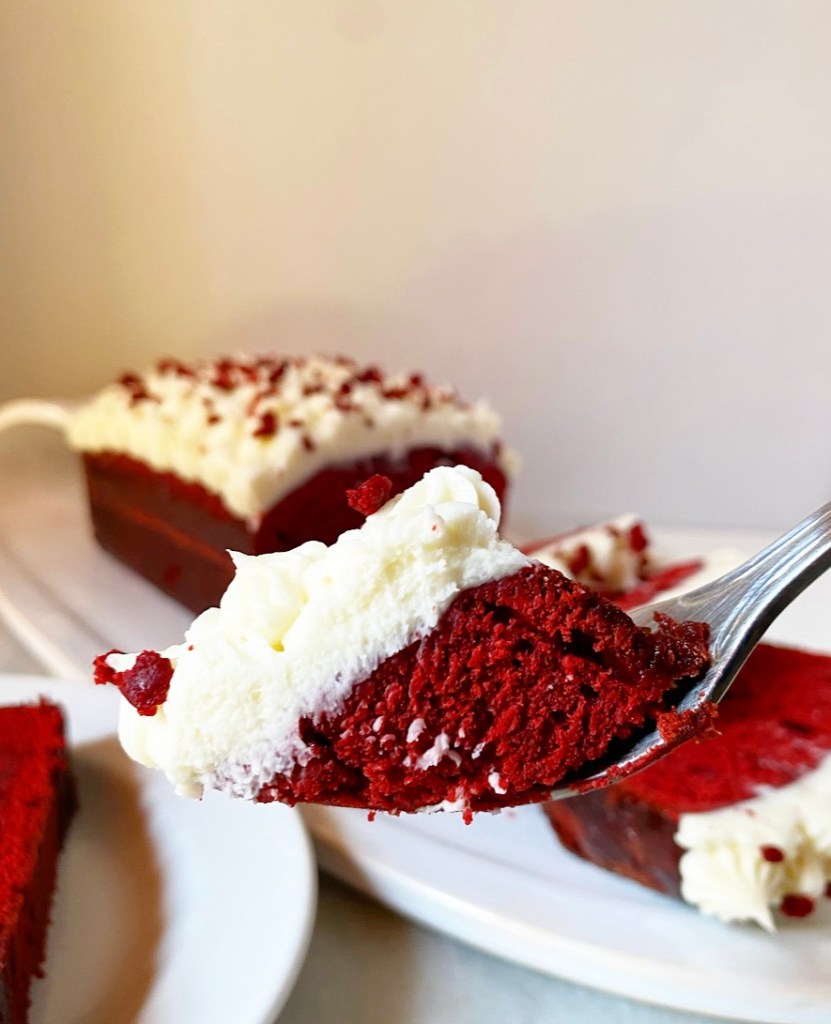
While the Oscars are straying from some tradition this year, I’m returning to form…or at least, I’m returning to cake. Specifically, red velvet cake in a loaf pan. It’s every bit and soft and delicious as its layered counterpart, but in an easy, approachable loaf.

Red Velvet Loaf Cake

The process is delightfully simple—just chuck all the ingredients in a bowl and let your mixer do the work, then bake for about an hour. Once cool, paint it with simple syrup and christen with cream cheese frosting and a few cake crumbs.

And that’s it! She’s simple, but she’s also glitz, glam, and ready for the red, er, champagne carpet. And so am I.

Red Velvet Loaf Cake
makes one 9x5-inch loaf

Cake:
1 cup granulated sugar
1/2 cup (1 stick) unsalted butter, room temperature, cut into 8 pieces
2 large eggs, room temperature
1 1/2 teaspoons pure vanilla extract
1 cup + 6 tablespoons all-purpose flour
2 tablespoons natural unsweetened cocoa powder
3/4 teaspoon baking powder
1/4 teaspoon baking soda
1/4 teaspoon Kosher or sea salt
6 tablespoons milk (preferably whole), room temperature
2 tablespoons full-fat sour cream, not fridge cold
1/2 teaspoon red gel food coloring (1-1 1/2 teaspoons red liquid food coloring)

Simple Syrup:
1/4 cup granulated sugar
2 tablespoons water

Cream Cheese Frosting:
4 ounces (1/2 beick$ full-fat brick-style cream cheese, softened to room temperature
1/2 cup (1 stick) unsalted butter, softened to room temperature
2 cups confectioner's sugar
pinch of Kosher or sea salt
1 teaspoon pure vanilla extract

Place an oven rack in the center position. Preheat oven to 350F. Grease a 9x5-inch loaf pan. Line with parchment, leaving overhang on the two long sides, and grease again. Set aside.

Make the cake. Combine all cake ingredients in a large mixing bowl. Use an electric mixer to mix on low for 30 seconds. Increase speed to medium and mix for 3 minutes. Batter will be thick.

Transfer batter to prepared pan and smooth the top with a silicone spatula or wooden spoon. Tap full pans on the counter five times to release any large air bubbles. Bake 50-60 minutes, or until a toothpick inserted in the center comes out clean.

Let cake cool completely in the pan on a rack. Once cool, slide a thin knife around the edges of the pan, then use the parchment overhang to lift the cake onto a work surface. At this point, you may also wrap it in plastic wrap and store it for up to a day before continuing.

Use a serrated knife to trim off a sliver of the top of the cake. This will be used for garnish. Set aside.

Make the simple syrup. Combine sugar and water in a small saucepan over low heat. Stir constantly until sugar dissolves, about 3-5 minutes. Remove from heat.

Use a pastry brush to paint syrup all over the cake—it will seem like a lot, but should soak in quickly. Let sit 20 minutes while you make the frosting.

Make the cream cheese frosting. In a large mixing bowl, use an electric mixer to beat cream cheese and butter together until light and fluffy. Add confectioner's sugar and salt in two installments, until completely combined. Beat in vanilla. Once combined, beat on high for two additional minutes, until light and fluffy.

Load frosting into a piping bag fitted with a star tip and coupler. Pipe frosting over the top of the cake as desired. Alternatively, use an offset icing spatula to spread frosting over the top of the cake. Garnish the cake by crumbling the reserved sliver of cake over the top of frosting.

Slice and serve! Leftover cake may be kept covered at room temperature for up to two days or in the refrigerator for up to five.