Category Archives: Breads

Star Bread

Star Bread

I’ve been generally bad at posting regularly for the last year or so, but I have recently made it a bit of a habit to post my early morning baking adventures over on my Instagram stories. Whether those recipes make it onto this website is not the point—the point is to share what’s happening in my kitchen. Last week, I posted a picture of a Star Bread on there and got so many compliments, which is really kind and validating. There was one bit of feedback from an old friend that really stuck out to me though:

“I cannot imagine being able to go in my kitchen and make something like this.”

It was followed up by compliments, but that statement has stayed with me. I mean, if I’m not over here convincing you that you can indeed go in your kitchen and make Star Bread, then what exactly am I doing?
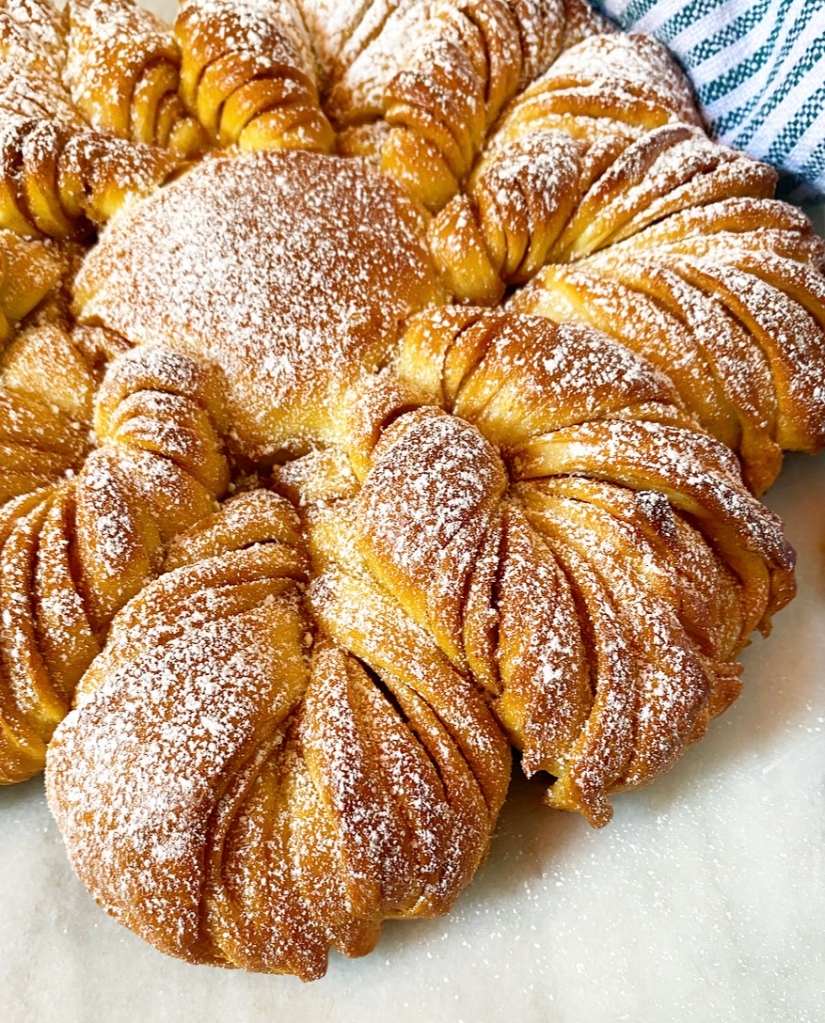
Star Bread

Ten years ago, I was convinced by food blogs that I could make vanilla wafers at home. Which I did. And then I made it my whole personality. And while vanilla wafers and yeast doughs are not the same level of difficulty, I want you to know that you almost certainly can go in your kitchen and make Star Bread. You can.
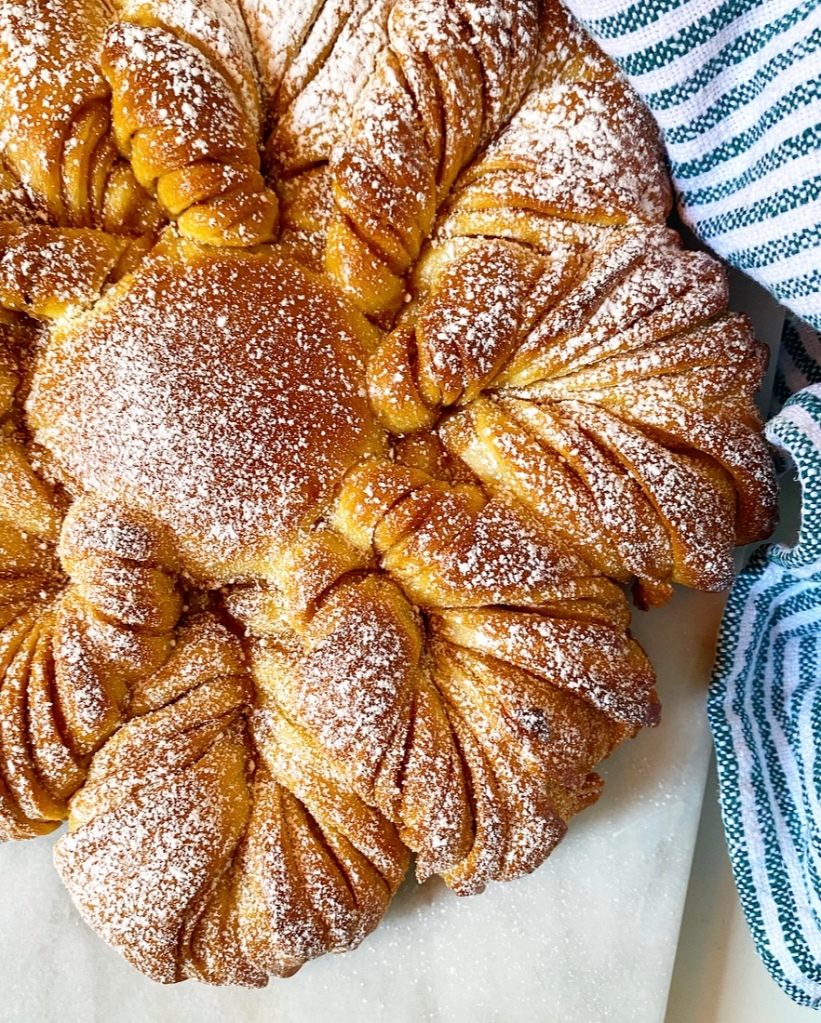
Star Bread

If you can make cinnamon rolls, you can make Star Bread. If you can make pull-aparts, you can make Star Bread. Same goes for monkey bread and cinnamon swirl bread. They are all fundamentally the same—cinnamon-sugar and a simple enriched yeast dough wrapped together, sliced, and baked. If you’ve got time and a basic kitchen set-up with a fridge and an oven, you, my friend, can make a Star Bread.
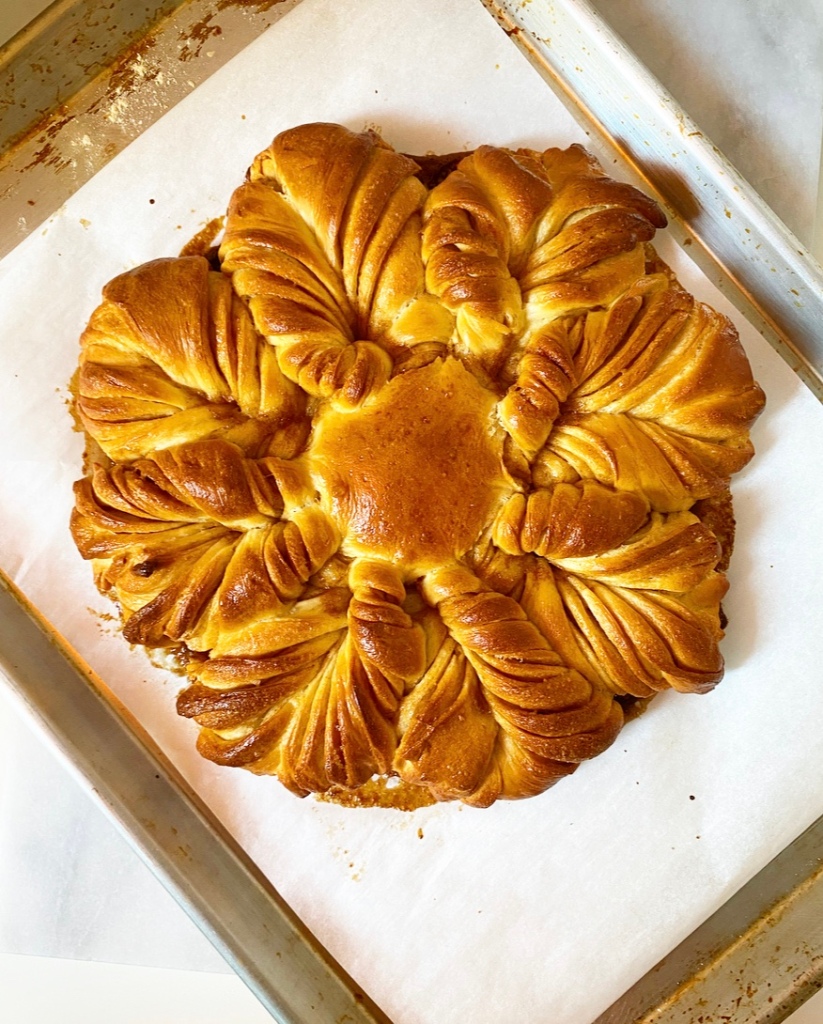
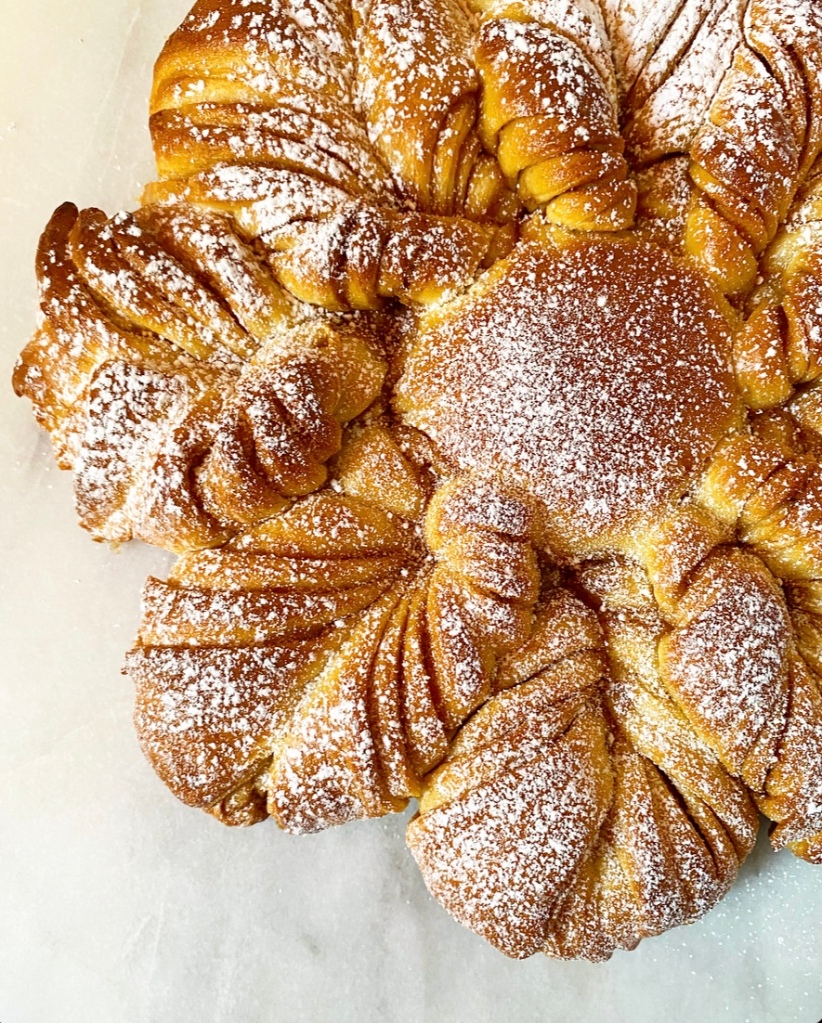
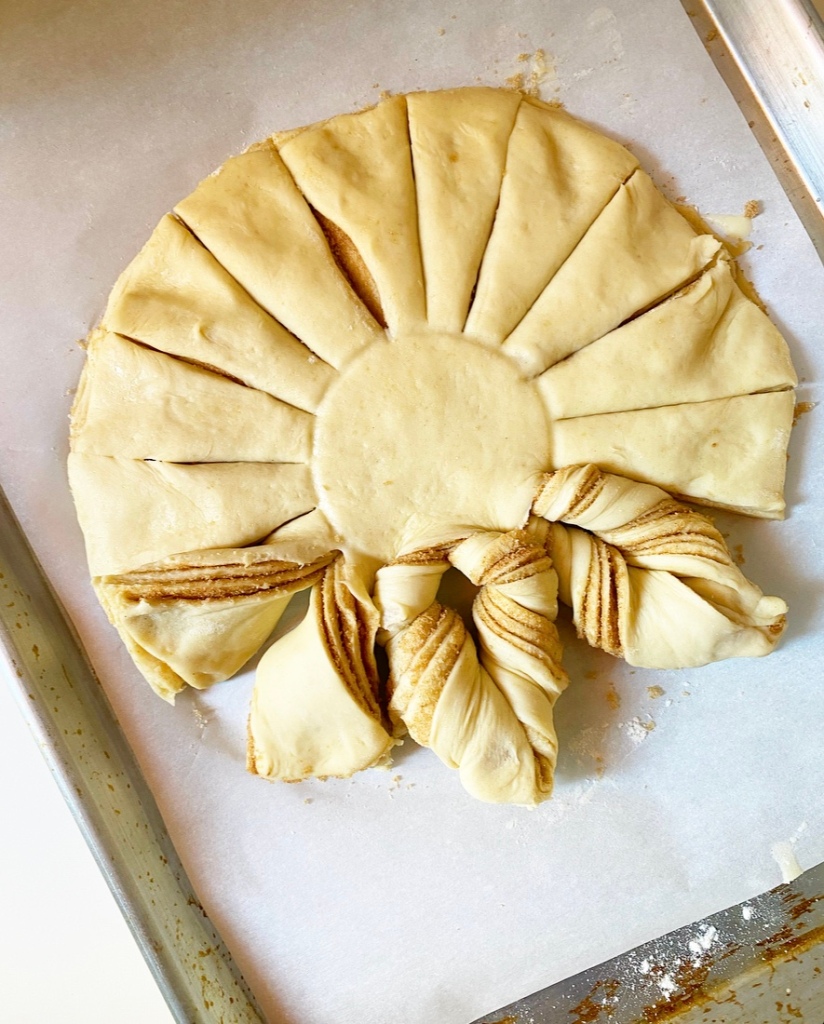
In this case, it’s just a matter of dividing and stacking the dough with the cinnamon-brown sugar, then slicing it so that it resembles a sun. The signature shape comes in when pairs of the sun’s rays are twisted away from one another, creating a festive eight-point loaf.
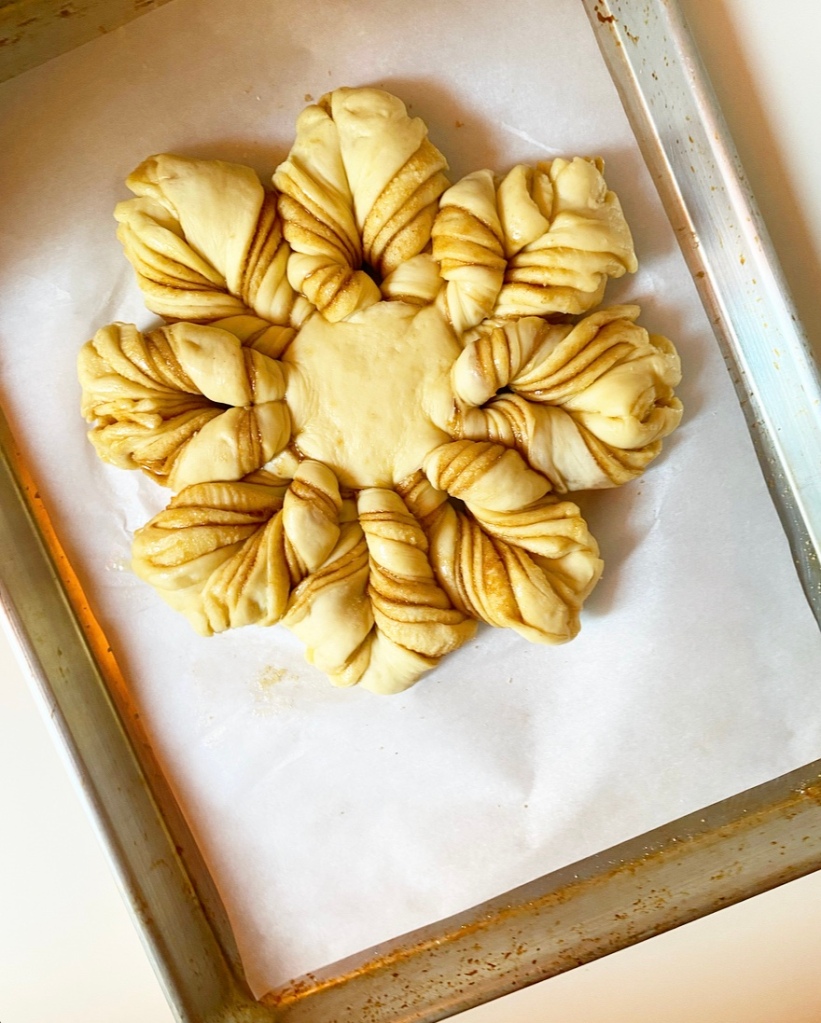
Let it rest and rise a second time, then paint it with egg wash to encourage a burnished final product, and bake until beautiful. Star Bread can certainly be served by its lonesome, but I like a light dusting of confectioner’s sugar for garnish. It gives a snowy day vibe that works super well this time of year.
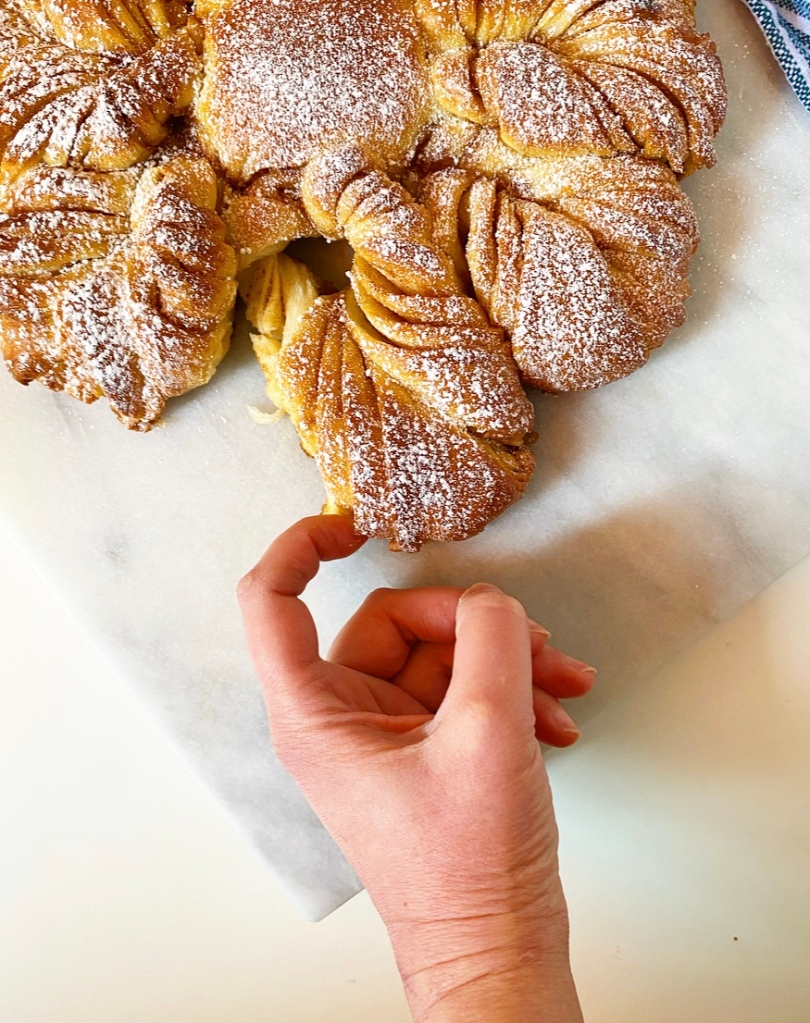
Star Bread

I know cinnamon rolls are a popular Christmas breakfast, but perhaps this year you can use your skills to make a Star Bread instead. They’re the same in so many ways, and while they’re both showstoppers, Star Bread clearly has a bit more of a…well, a star quality. And you do too, my friend. You can make a Star Bread. I believe in you.
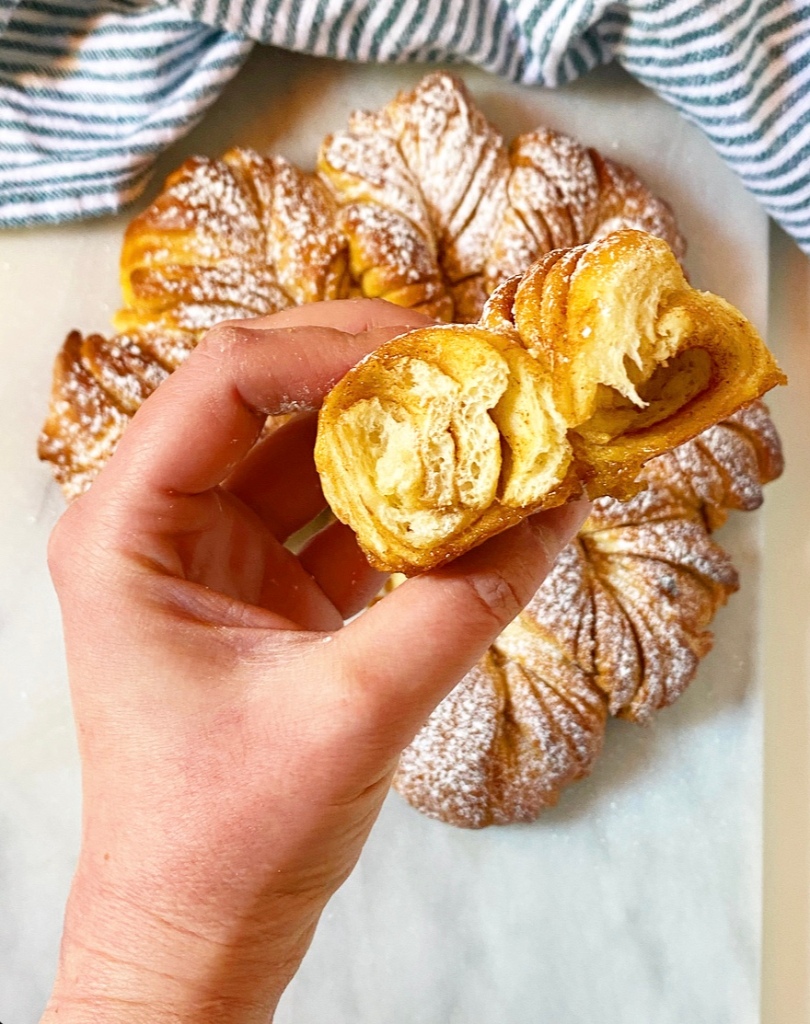
Star Bread
Star Bread
makes 1 loaf (about 8-10 servings)

Dough:
2 3/4-3 cups all-purpose flour
3 tablespoons granulated sugar
1 packet (2 1/4 teaspoons) instant yeast
1 teaspoon fine sea salt
3 tablespoons unsalted butter
1 cup whole milk
1 large egg, room temperature

Filling:
6 tablespoons light or dark brown sugar, packed
1 teaspoon ground cinnamon
pinch of Kosher or sea salt
2 tablespoons unsalted butter, melted

Egg Wash:
1 large egg
1 teaspoon water

For Finishing:
confectioner’s sugar

Make the dough. In a medium-large mixing bowl, whisk together all-purpose flour, sugar, instant yeast, and salt. Set aside.

In a small saucepan over medium-low heat, melt butter and milk together until just warm to the touch, about 95-110 degrees.

Crack the egg into a small mixing bowl. Whisking constantly, add the butter/milk mixture in a thin stream until completely combined. Add mixture to the dry ingredients and fold together.

Turn dough onto a floured surface and knead 5-6 minutes, until smooth. Gather dough into a ball and place it in an oiled bowl, making sure to get a little oil on all sides. Stretch some plastic wrap over the top and allow dough to rise in a warm, draft-free environment for 40 minutes or until doubled in bulk. Alternatively, place wrapped bowl in the refrigerator for 12-24 hours (a cold proof).

Make the filling. In a small bowl, use a fork to whisk together brown sugar, cinnamon, and salt. Set aside.

Line a rimmed half-sheet pan with parchment paper.

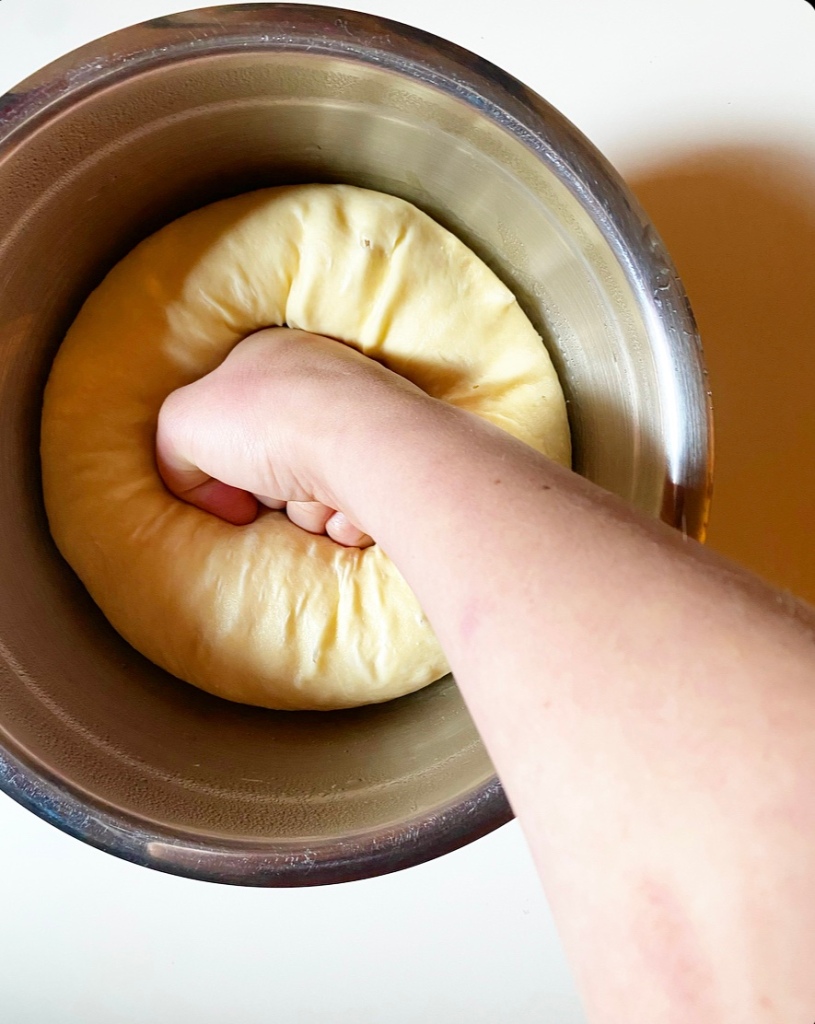
Flour a surface, your hands, a rolling pin, and a large, sharp knife or bench scraper. Punch down your dough. Turn it onto the surface, then use the knife or bench scraper to divide it into four even pieces.

Working with one piece at a time, roll it to a circle 9-inches in diameter (or larger and cut off excess). Gently transfer the first circle to the center of the prepared baking sheet.
Paint it with melted butter and sprinkle with 1/3 of the filling mixture. Roll out two more circles,
then paint with butter and sprinkle with the remaining 2/3 of the filling mixture. Top with the fourth and final circle. Gently press down on top to adhere everything. Slice off and discard any scraggly bits.

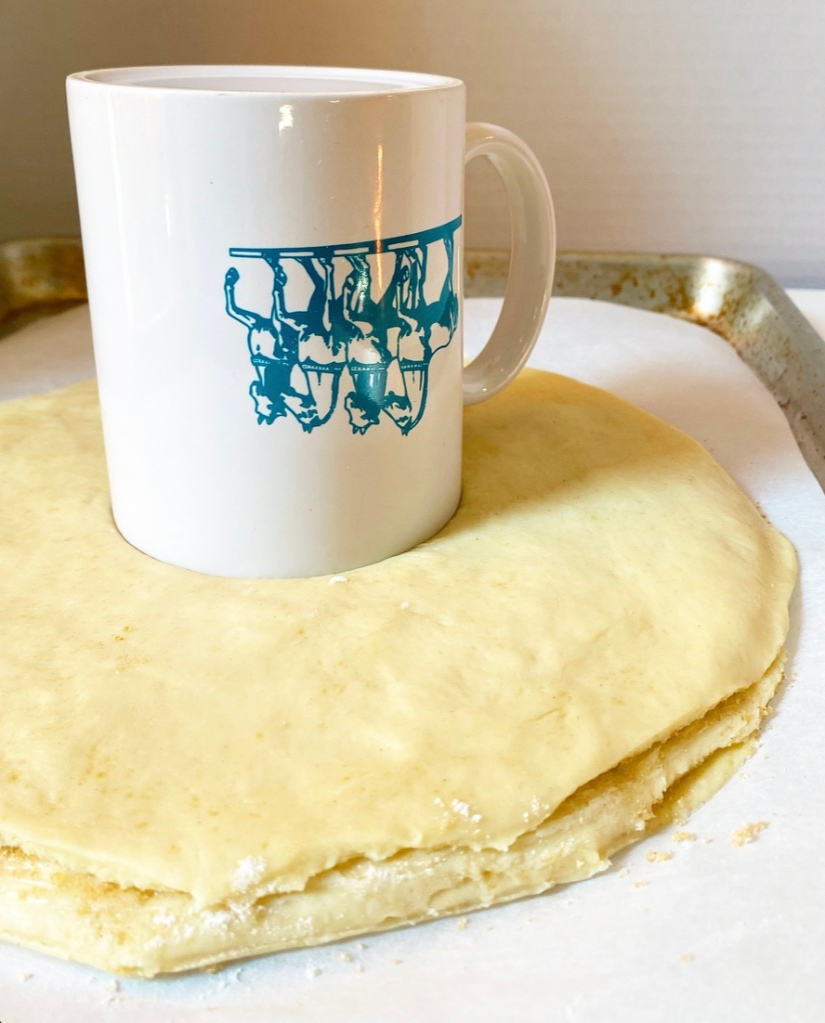
Shape the bread. Use a coffee mug or other 3-inch stencil to mark a 3-inch circle on the top of your stack. Then, use the large sharp knife or bench scraper to slice the portion outside of the 3-inch circle into 16 strips. This should look like a sun with rays.

Working with two neighboring rays at a time, twist them away from each other 3-4 times before pinching them together at the ends. Repeat until you have 8 little points on your Star bread. Gently tuck in scraggly ends and nudge the points into a shape you find pleasing. Cover with bread with plastic wrap and a tea towel, then let rise 40-50 minutes, or until risen. You’ll know it’s ready when you poke it with your finger and it doesn’t immediately bounce back.

During rising, preheat the oven to 350F. Make the egg wash by whisking the egg and water together in a small bowl or mug.

When the bread has risen, remove the plastic wrap and tea towel. Discard plastic wrap. Paint the entire surface of the star bread with egg wash. Bake for 25-30 minutes until golden and burnished.

Let bread cool 10 minutes. Gently transfer to a serving plate. Dust with confectioner’s sugar, if desired. Serve warm.

Star Bread is best the day it’s made, but may be kept covered for up to 48 hours.
Pumpkin Spice English Muffin Bread

Pumpkin Spice English Muffin Bread​

One great thing about excellent base recipes is that with a little finesse, you can take them in any direction you like. Blondies are one that I mess with often, as is my cream cheese sugar cookie dough, as are so many other things.

Pumpkin Spice English Muffin Bread​

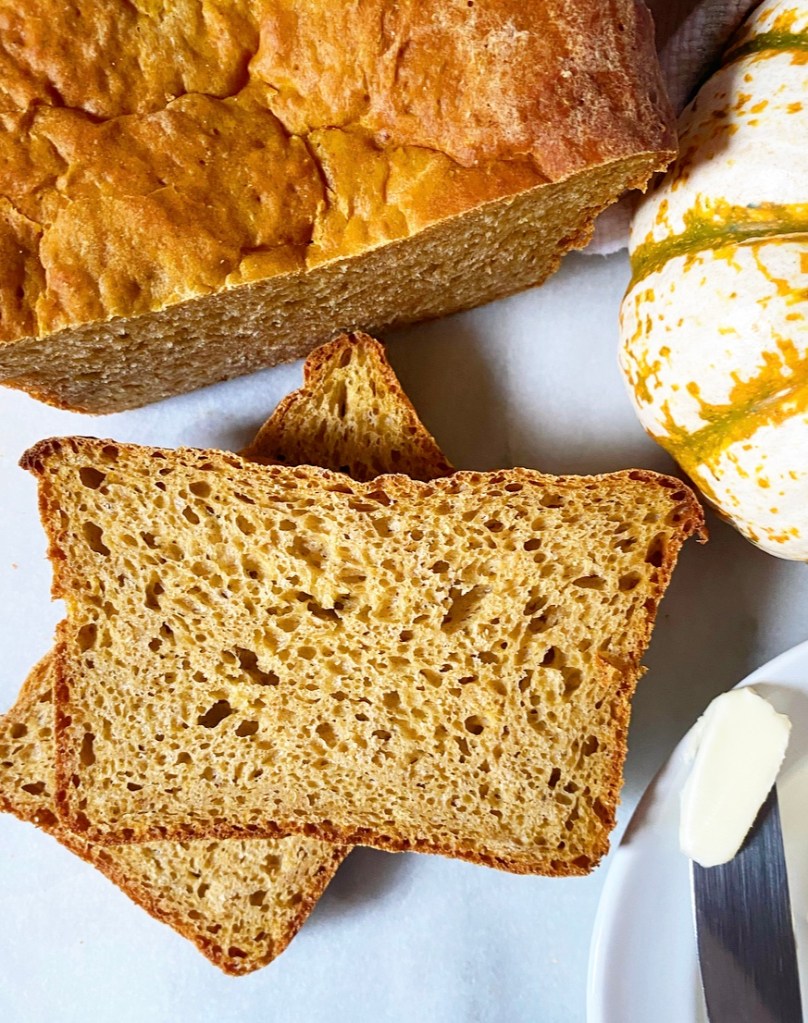
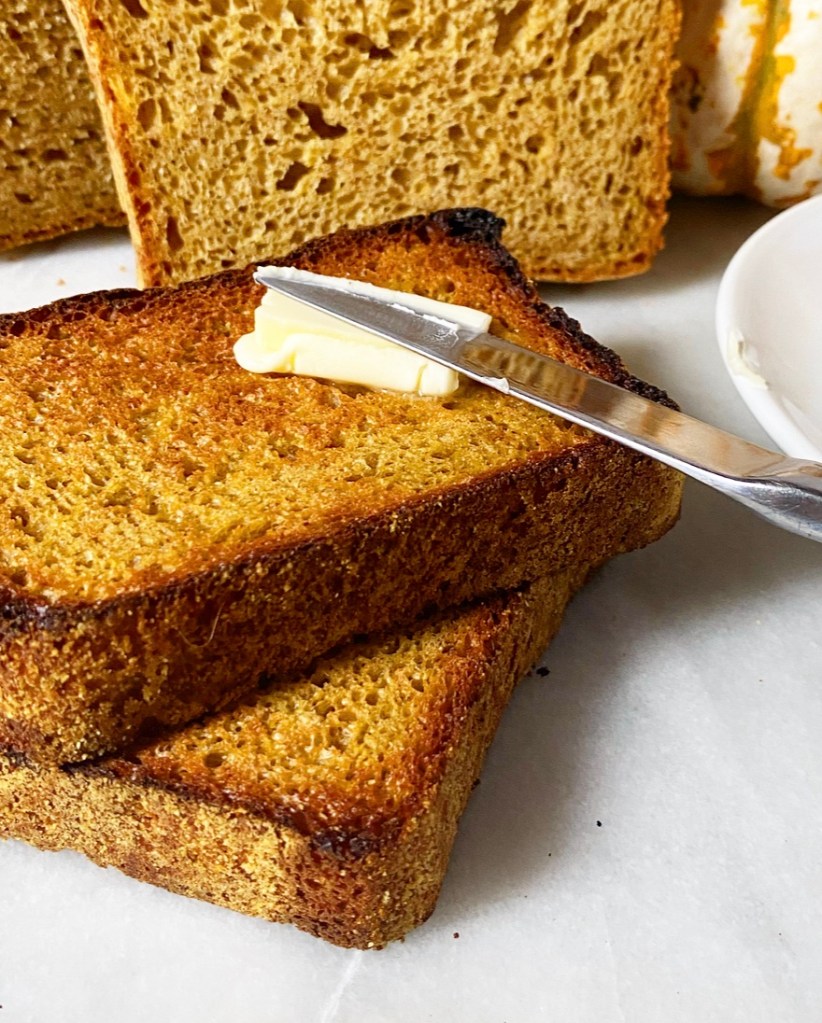
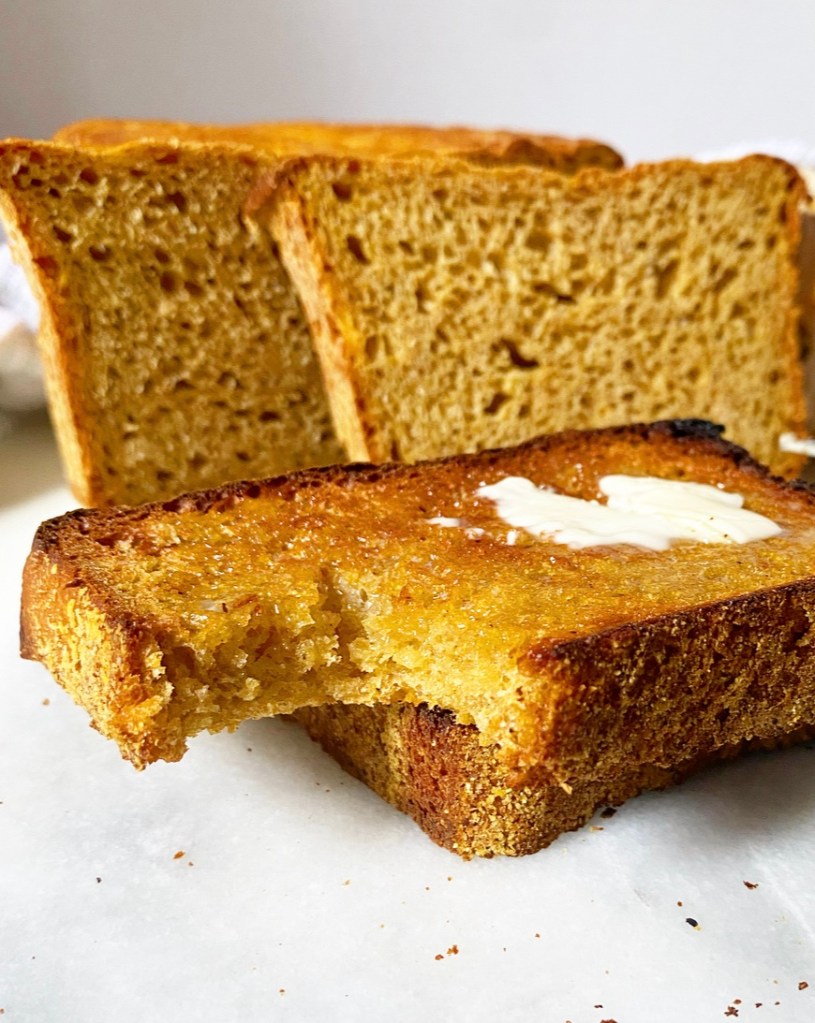
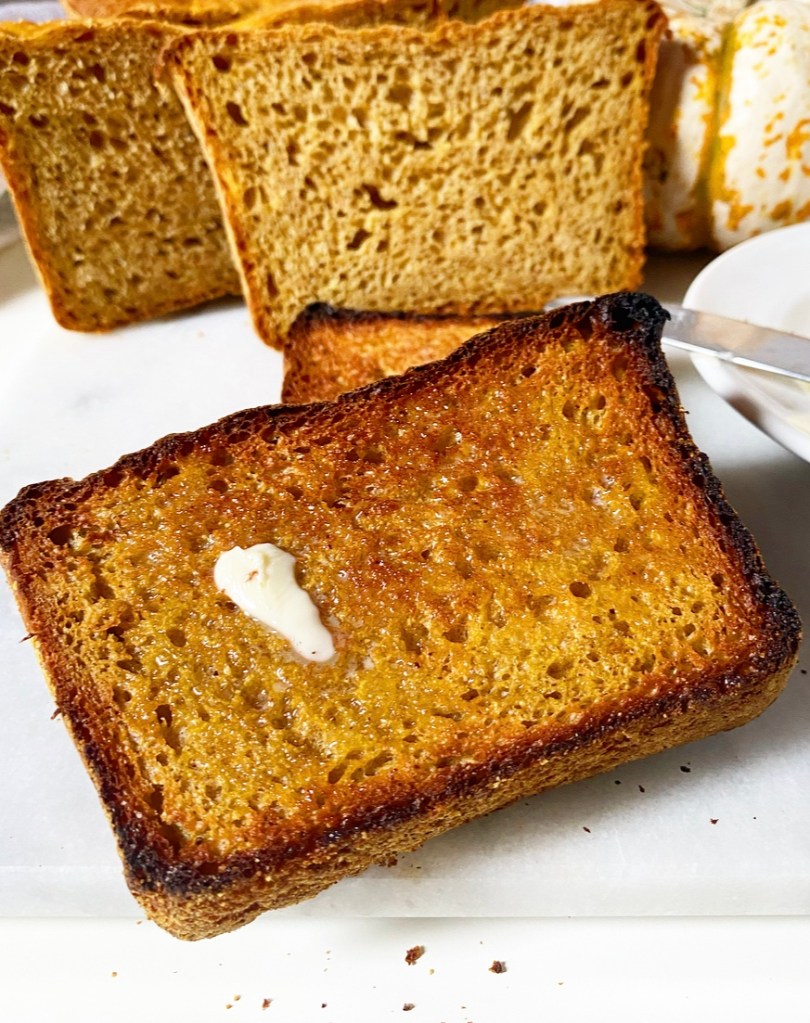
Take my English Muffin Bread, for instance. It comes together in one bowl and two loaf pans, requires exactly one rise, and bakes up tall in half an hour. When sliced thick and toasted, it’s soft inside and crispy-craggy on the edges, just like a really excellent English muffin. And that’s fantastic—no notes. But sometimes the creative urge overtakes me and I just have to mess with perfection.

Today, we’re starting with that excellent formula and giving it a little autumnal twist. With a hefty scoop of pumpkin purée, pumpkin pie spice, and just enough brown sugar for flavor (not overwhelming sweetness), this Pumpkin Spice English Muffin Bread makes a cozy, delicious breakfast.

Pumpkin Spice English Muffin Bread​

It’s got enough pumpkin flavor to fulfill a seasonal craving without overwhelming whatever is spread over and nestled into all those craggy bits. I kept my toppings classic here with just a little butter, but honestly, Pumpkin Spice English Muffin Bread makes the best Cinnamon Toast. Heck, you could even sub some of the cinnamon sugar for pumpkin pie spice sugar and really drive that autumnal vibe home.

No matter what you do to it though, this bread is fantastic. Like I said: no notes.

Pumpkin Spice English Muffin Bread​
Pumpkin Spice English Muffin Bread
makes 2 loaves

For the pans:
1 tablespoon unsalted butter
3-4 tablespoons cornmeal

Bread Dough:
5 1/2 cups all-purpose flour (or bread flour)
4 tablespoons granulated sugar or packed light brown sugar
4 teaspoons pumpkin pie spice
1/2 teaspoon baking soda
1 1/2 teaspoons Kosher salt
4 1/2 teaspoons (2 packages) instant yeast
2 tablespoons unsalted butter, melted
1/2 cup pure pumpkin purée
1/2 cup whole milk (warm to the touch, not hot)
1 2/3 cups warm water

For proofing:
plastic wrap
oil, butter or cooking spray

For serving:
butter
jam
honey

Grease 2 9x5-inch loaf pans with butter. Add cornmeal and rotate pans so that the entire insides are coated in a thin layer. Tap out and discard excess cornmeal.

In a medium-large mixing bowl, whisk together flour, sugar, pumpkin pie spice, baking soda, salt and instant yeast.

In a large liquid measuring cup (or other vessel) whisk together melted butter, pumpkin purée, warm milk, and warm water. It should be warm to the touch (90-110F) but not hot.

Whisk/stir wet ingredients into dry ingredients in two installments. Stir until a sticky, shaggy dough forms and flour is coated, then stir an additional 30 seconds to make sure things are saturated.

Grease your hands, then divide dough into prepared pans. Grease 2 pieces of plastic wrap. Lay them loosely over the top of each loaf pan.

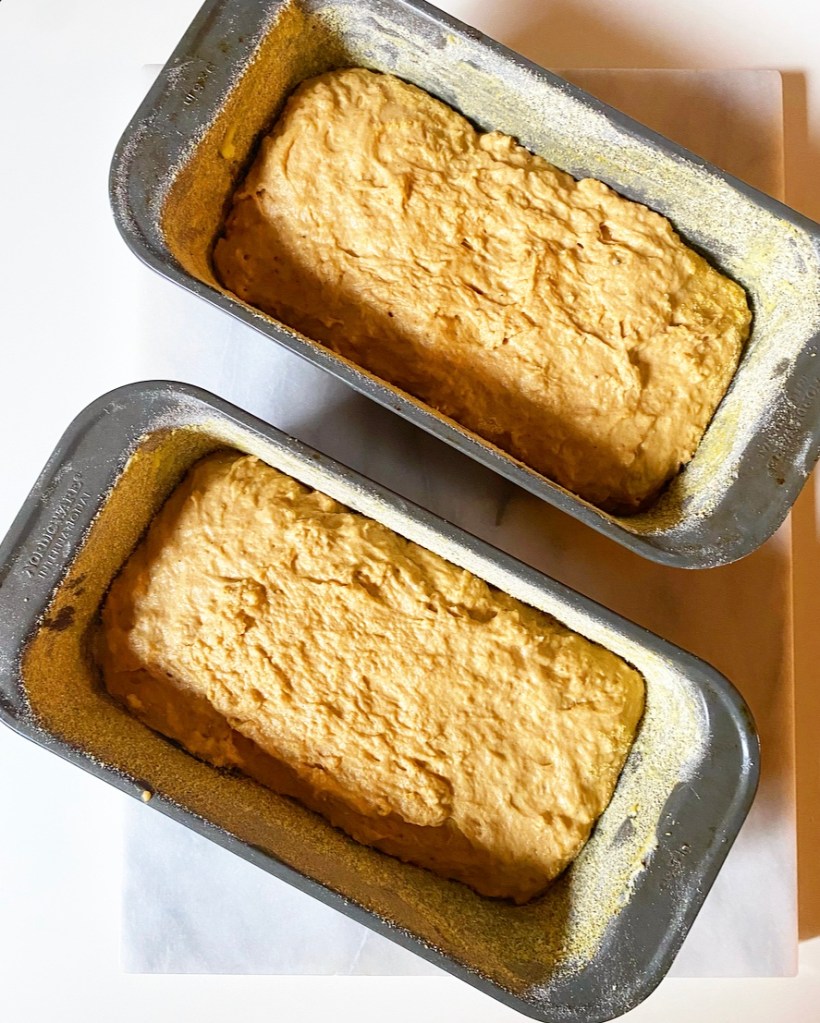
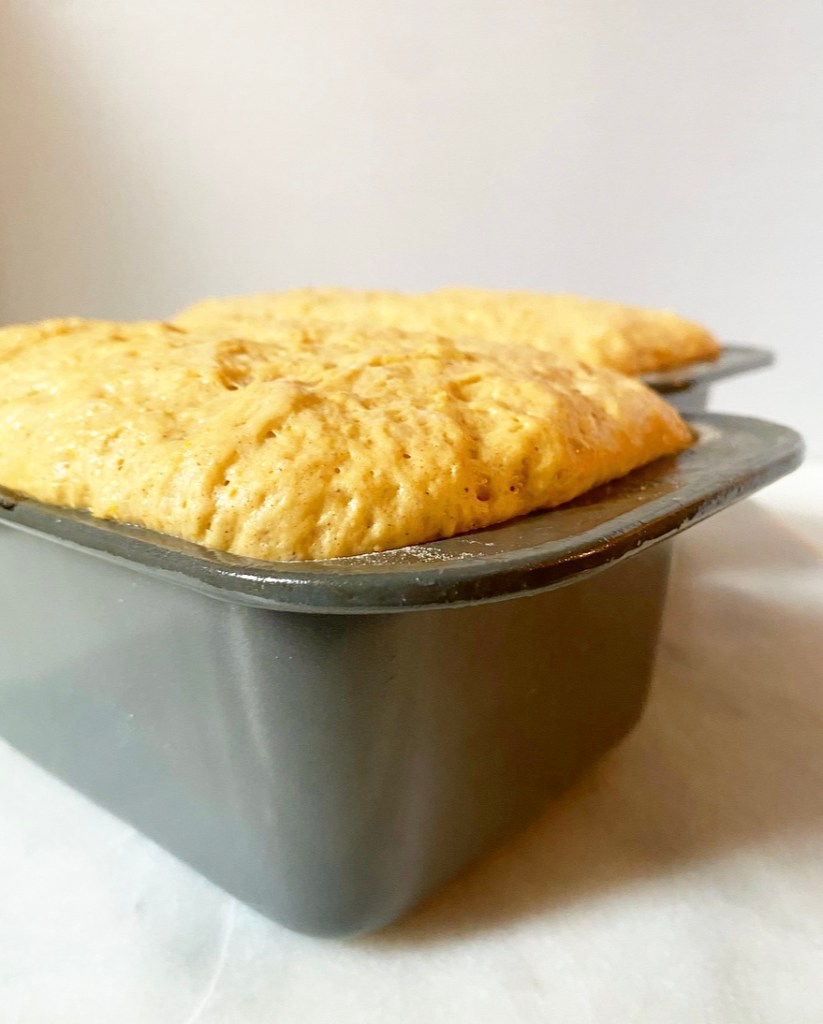
Place pans in a warm, draft-free environment for 45-60 minutes, or until the dough has risen just above the tops of the pans. While dough is rising, preheat oven to 400F.

When dough is ready, gently peel off and discard plastic wrap. Dough may seem a bit wet and jiggly. Gently place pans in the oven and bake for 25-30 minutes, or until golden all over. The interior temperature should be at least 190F.

Immediately turn bread out onto a rack. Let cool completely so crumb structure can set. Do not slice into bread until it is completely cool.

Slice and toast before serving. Leftovers will keep well-wrapped in the refrigerator for up to a week.

Cloverleaf Rolls

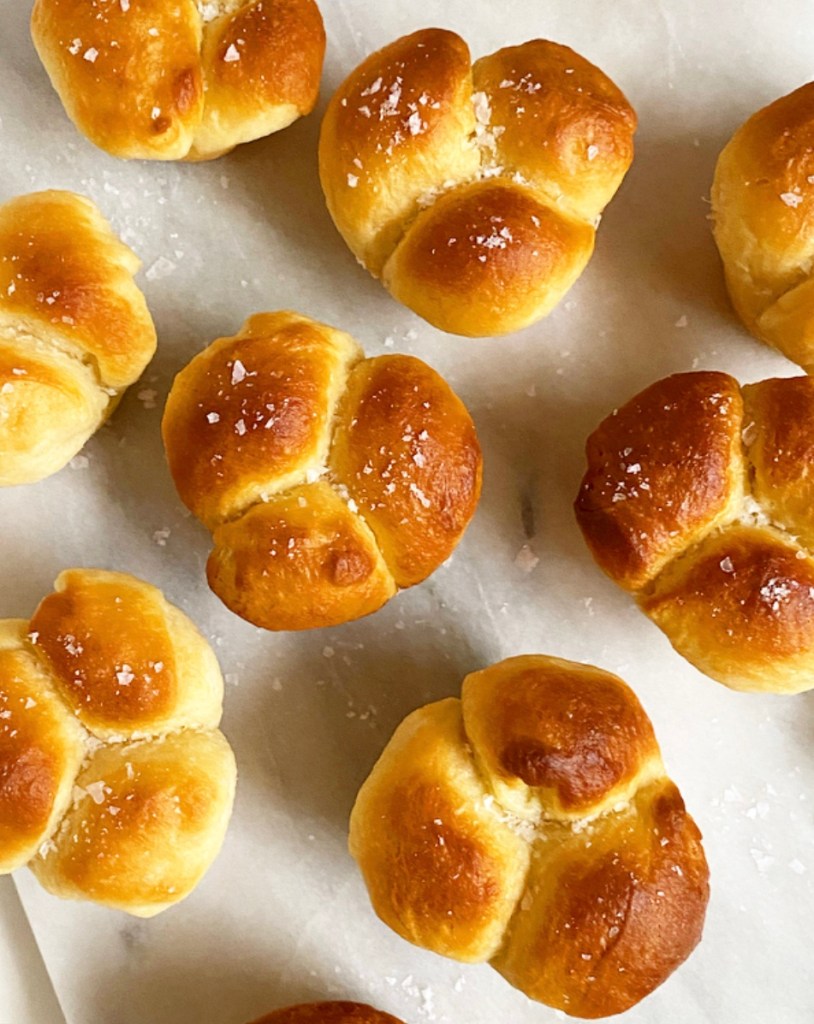
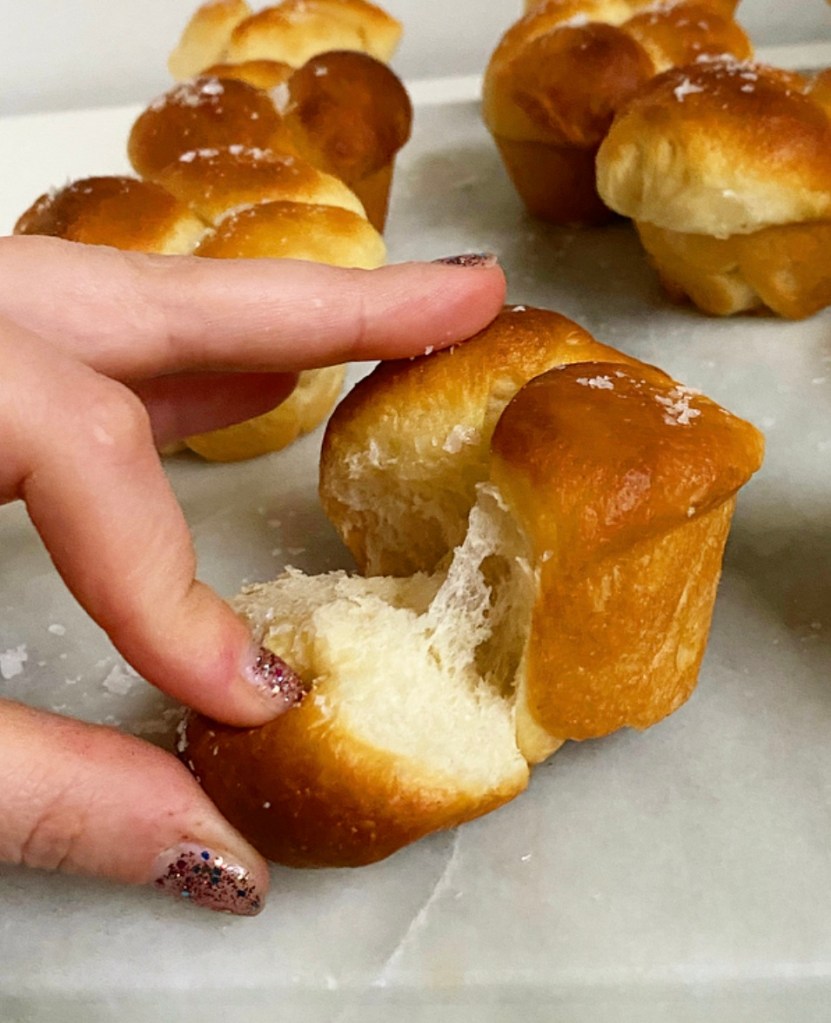
Once I started making my own dinner rolls and realized what a snap they are, I knew I had to try Cloverleaf Rolls next. They’re so buttery and pretty, and you can peel them apart—they’re a food and an activity!

Cloverleaf Rolls begin with the same dough as my original Fluffy Dinner Rolls. The recipes are identical until after the first rise when the dough is punched down and divided into twelve pieces.

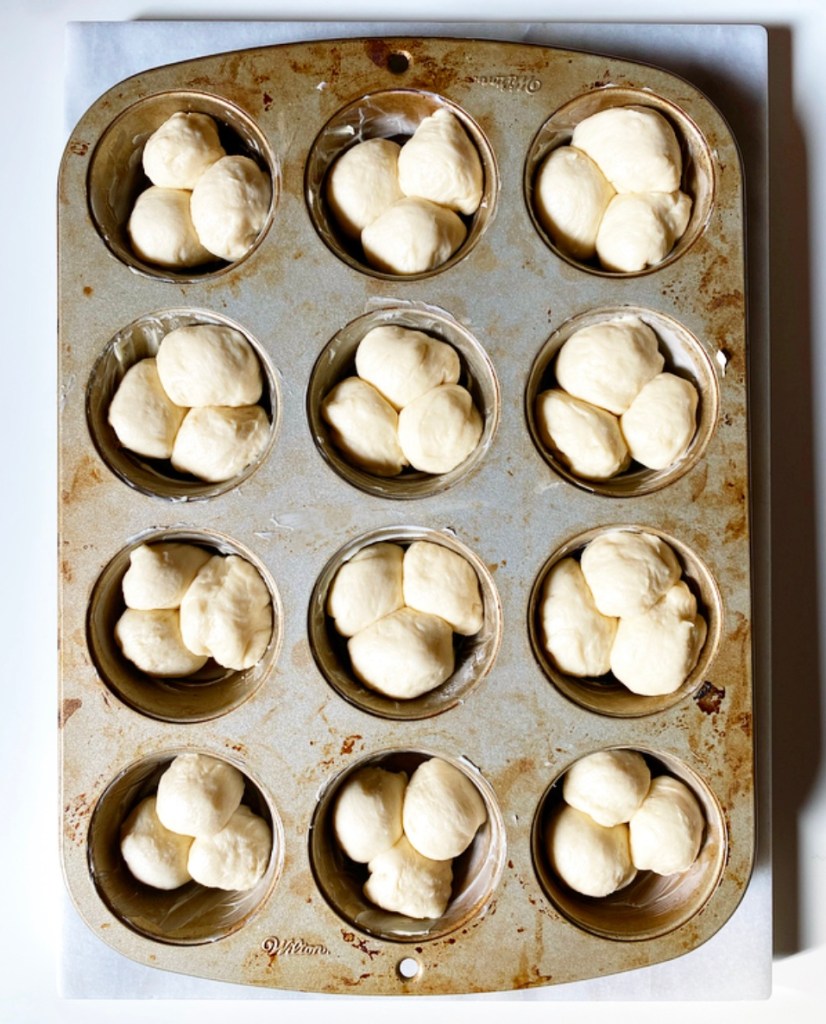
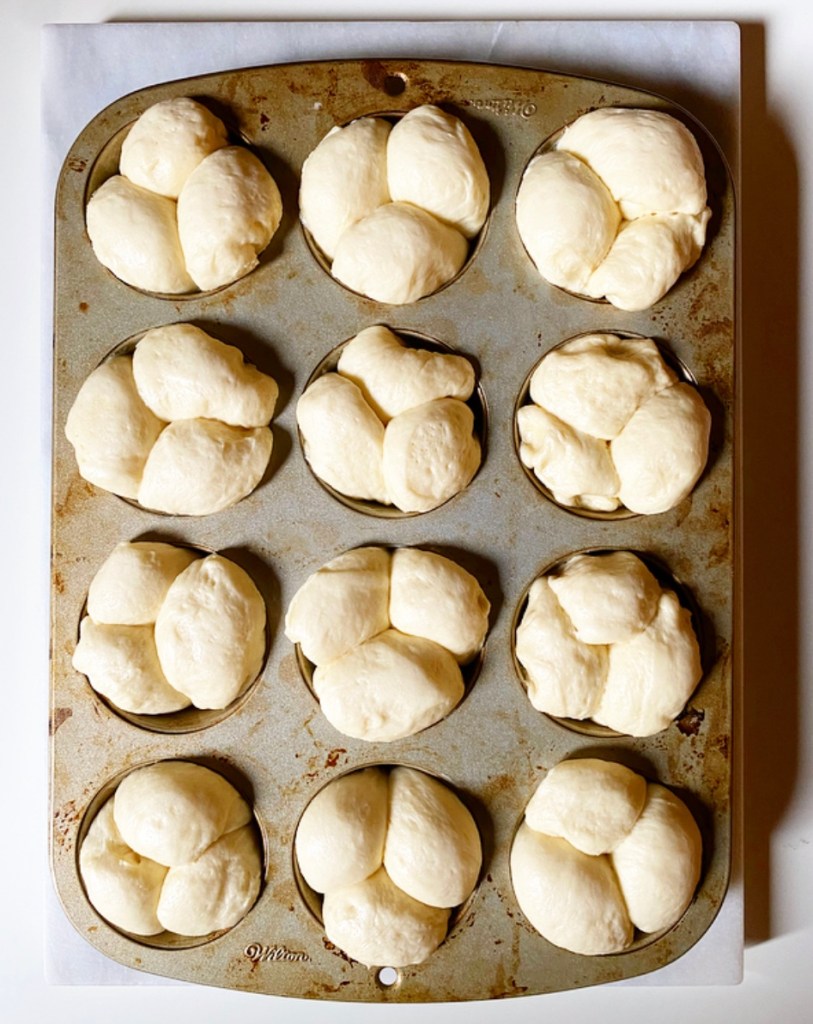
Each piece is further divided into three pieces (or four if you want four leaf Cloverleaf Rolls). Those little pieces are rolled into balls and sorted into a buttered muffin tin three at a time. They’ll rise up and the balls will fuse into “leaves” before baking. This is how they get that perfect peelability, not unlike Monkey Bread.

Cloverleaf Rolls

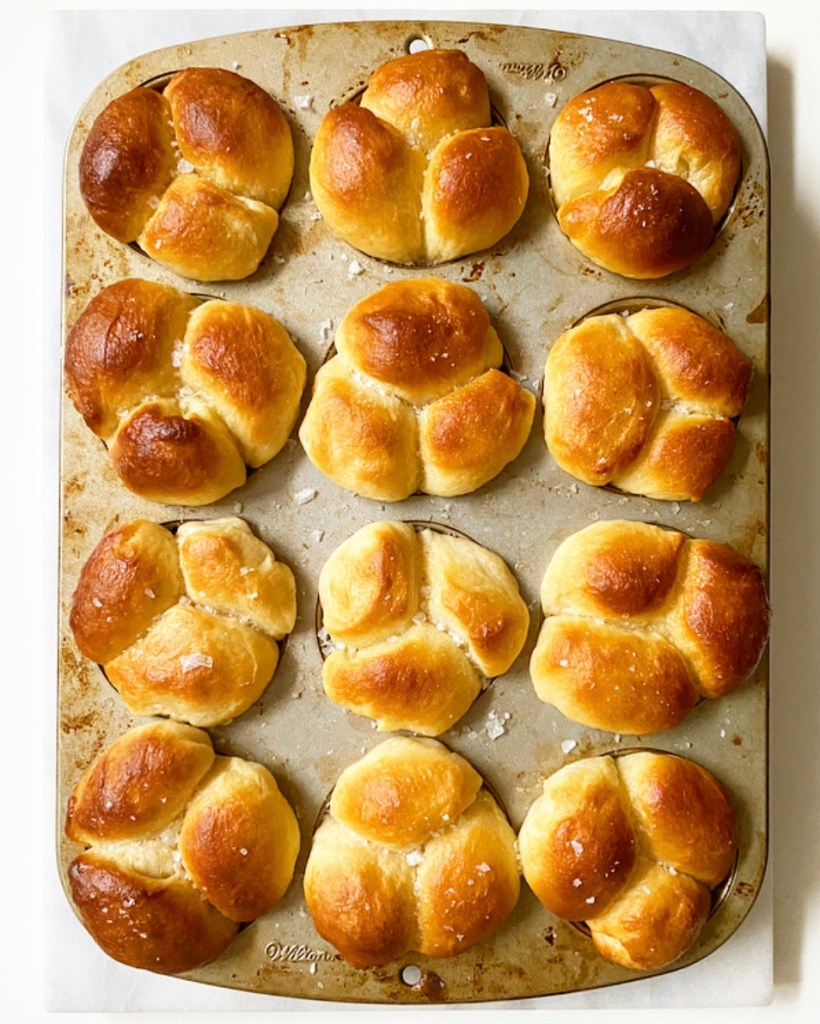
When the rolls are baked and golden, they get brushed with butter and sprinkled with flaky salt—fancy! Served warm, they’re the perfect addition to any Thanksgiving or holiday spread. I like to make them at random throughout the year as well—surprise Cloverleaf Rolls, anyone?

Cloverleaf Rolls
Cloverleaf Rolls
makes 12 dinner rolls

1 cup buttermilk
3 tablespoons granulated sugar
2 1/4 teaspoons (1 packet) active dry yeast*
2 3/4 cups all-purpose flour, divided
3/4 teaspoon fine sea salt
1/4 cup (1/2 stick) unsalted butter, cold, cut into cubes

For brushing & garnish:
1/4 cup (1/2 stick) unsalted butter, divided
flaky salt (I used Maldon)

Read the recipe all the way through before beginning. Instructions for using instant yeast and mixing by-hand are in the notes at the end of the recipe.

In a small saucepan over low heat, warm the buttermilk until it’s between 90-110F (warm to the touch, but not so hot that you can’t comfortably hold a finger in it).

Stir together buttermilk and granulated sugar in a liquid measuring cup or small bowl. Sprinkle yeast over the top and allow to sit for 5 minutes or until it is a bit bubbly or foamy (sometimes a light stir can help this be more visible). If it doesn’t bubble, your yeast is dead. Discard the mixture, get new yeast, and try again.

In the bowl of a stand mixer* fitted with a dough hook, combine 2 cups of flour and salt. Add butter and buttermilk mixture and mix to combine. Mix in remaining 3/4 cup flour. Knead dough in mixer* for 5 minutes or until smooth and slightly sticky. Cover bowl with plastic wrap and place in a warm, draft-free environment for 1 hour, or until dough has doubled in bulk.

Meanwhile, heavily butter (or otherwise grease) a 12-capacity muffin tin. Set aside.

Flour a surface. Uncover risen dough and gently punch it down. Place dough on floured surface and pat out into a 1-inch thick rectangle. Flour a large, sharp chef’s knife and slice the rectangle into 12 pieces.

Shape the rolls. Working with one piece at a time, slice it into 3 equal pieces. Working with one smaller piece at a time, use your fingers to pull edges or creases underneath, creating a smooth ball-like appearance. Place in pan, using 3 balls per muffin cup. Repeat until all rolls have been shaped.

Loosely cover the pan of rolls and place in a warm, draft-free environment for 30-45 minutes or until they have puffed over the top of the pan (see pictures).

Meanwhile, place an oven rack in the central or lower position (either will work). Preheat your oven to 400F. Melt the butter for brushing.

Uncover risen rolls. Use a pastry brush to gently brush the tops with 2 tablespoons of melted butter. Bake rolls for 19-20 minutes, or until deep golden on top. Brush with remaining 2 tablespoons of melted butter when you remove them from the oven. Sprinkle with flaky salt, if desired.

Let rolls cool 10-15 minutes before serving.

Rolls are best the day they are baked, but will keep in an airtight container at room temperature for a day or so.

Notes:
  • You may use an equal volume of instant yeast. Add it (and the sugar) directly to the dry ingredients, skipping the blooming step. Add warmed buttermilk and butter directly to the dry ingredients and mix as written above in the paragraph beginning “In the bowl of a stand mixer.” The rises may take about 15 minutes longer than with active dry yeast.
  • You may mix this dough in a large mixing bowl with a silicone spatula or wooden spoon.
  • You may knead this dough by hand on a floured surface.

Easy Homemade Almond Croissants

Easy Homemade Almond Croissants

I make almost every baked good I consume from scratch with the best ingredients available to me. I’m a bit of a snob when it comes down to it. Even at the height of the pandemic, I was inspecting different brands of flour to see their protein counts because I care that much.* That said, when it comes to store-bought baked goods, I have one glaring weakness: Costco croissants.

*4% or bust. King Arthur, Heckers & Trader Joe’s only.

Easy Homemade Almond Croissants

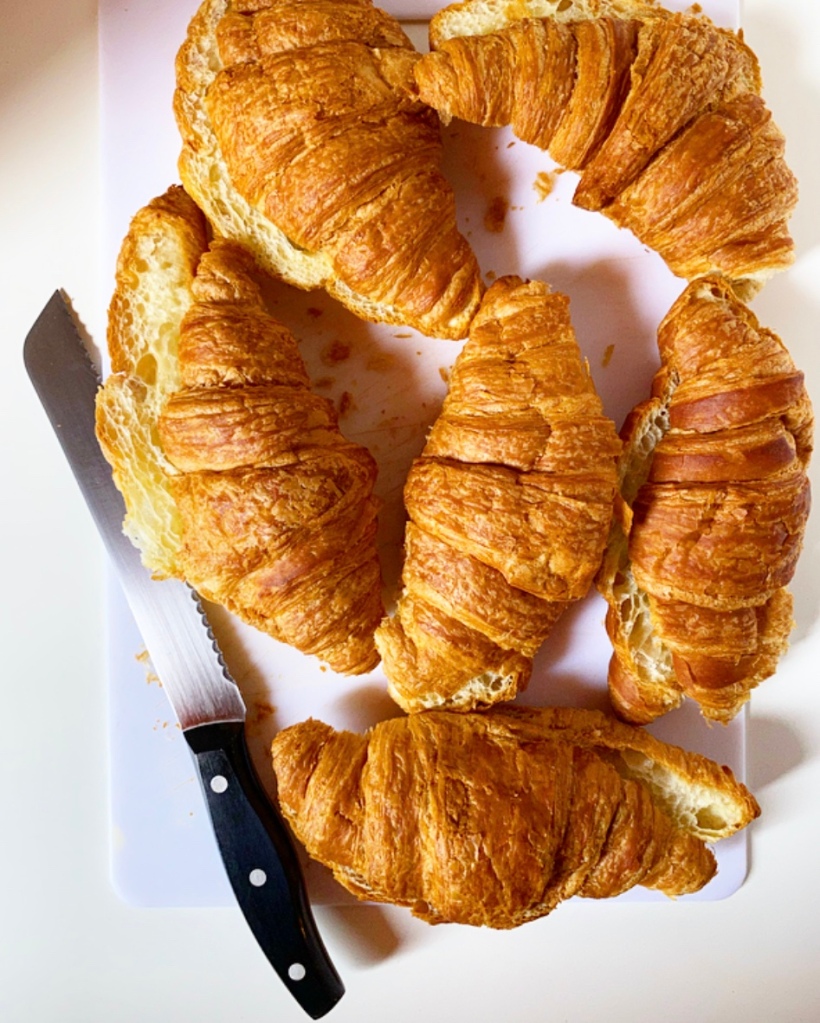
I will go out of my way for a Costco croissant. They are shockingly delicious, especially when eaten like a wild animal mid-shopping trip, somewhere between produce and electronics. I was introduced to them by my friend and certified Costco enthusiast, David, and I’ve been ruined ever since. The finest French pastry they are not, but I defy you not to enjoy one while it’s still warm, as they almost always are when I sling them into my cart. For $6 (and a Costco membership) you too can have 12 big, buttery Costco croissants in a giant clamshell package. Twelve seems like a lot, but if you’re anything like me, that means one for now, one for later, two for tomorrow, and eight to sit out on my counter to get stale for Easy Almond Croissants.

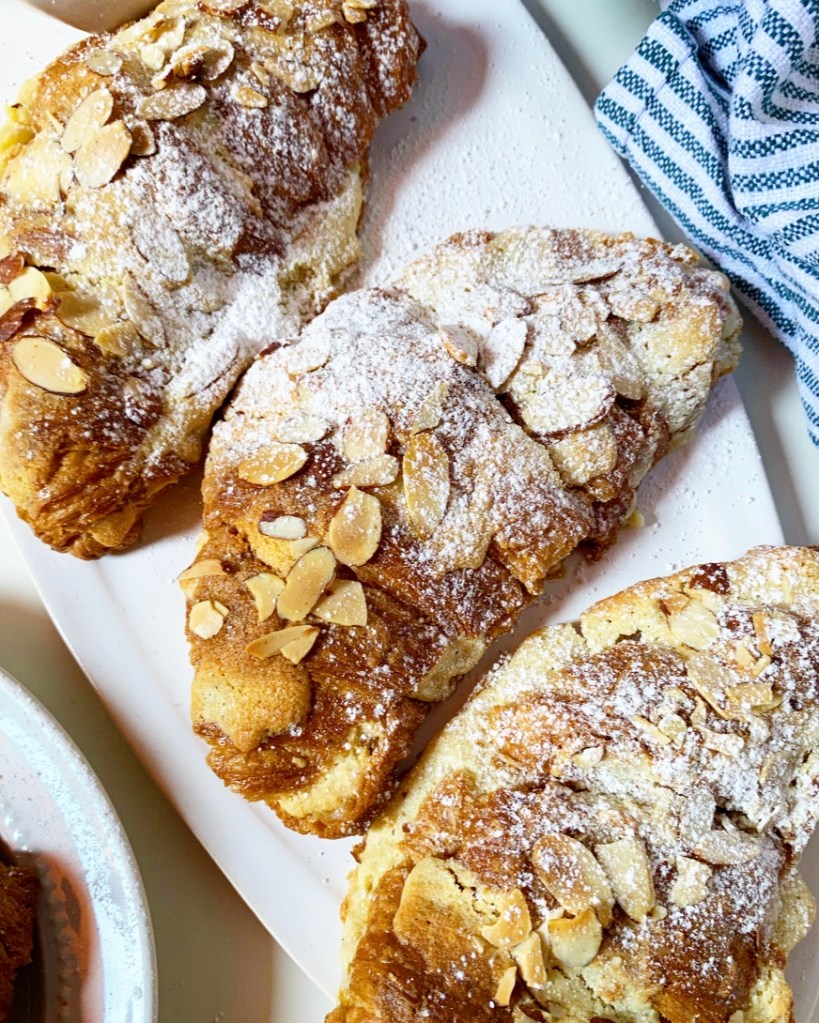
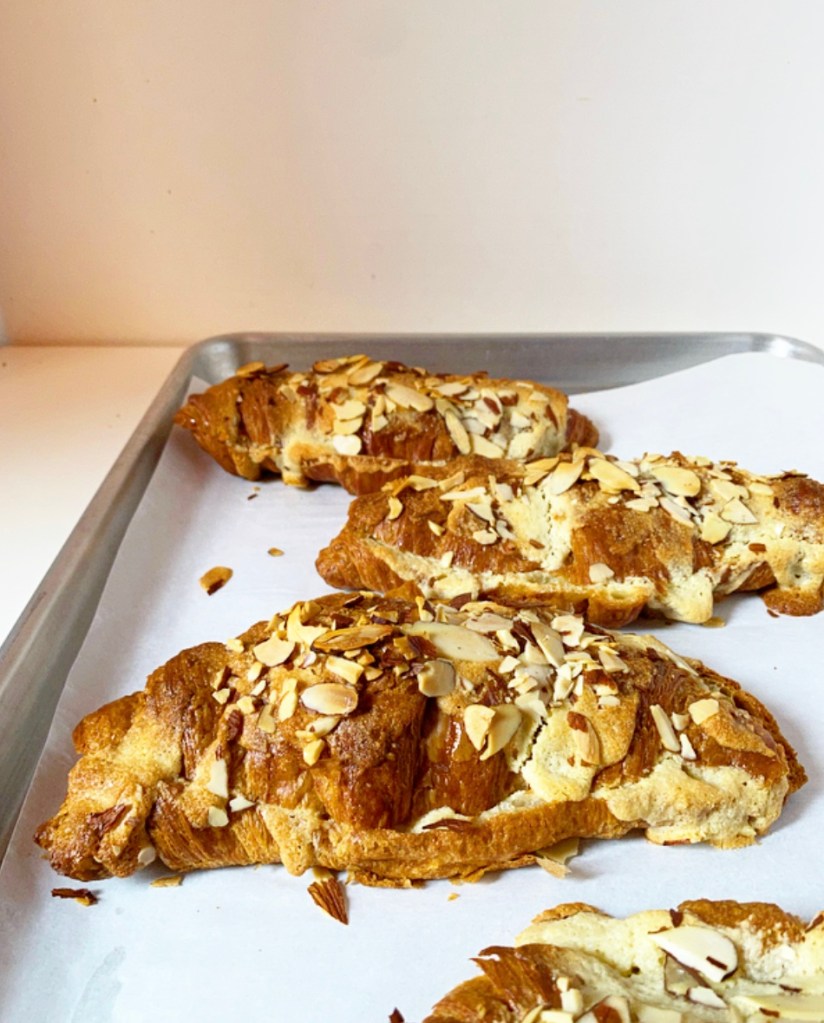
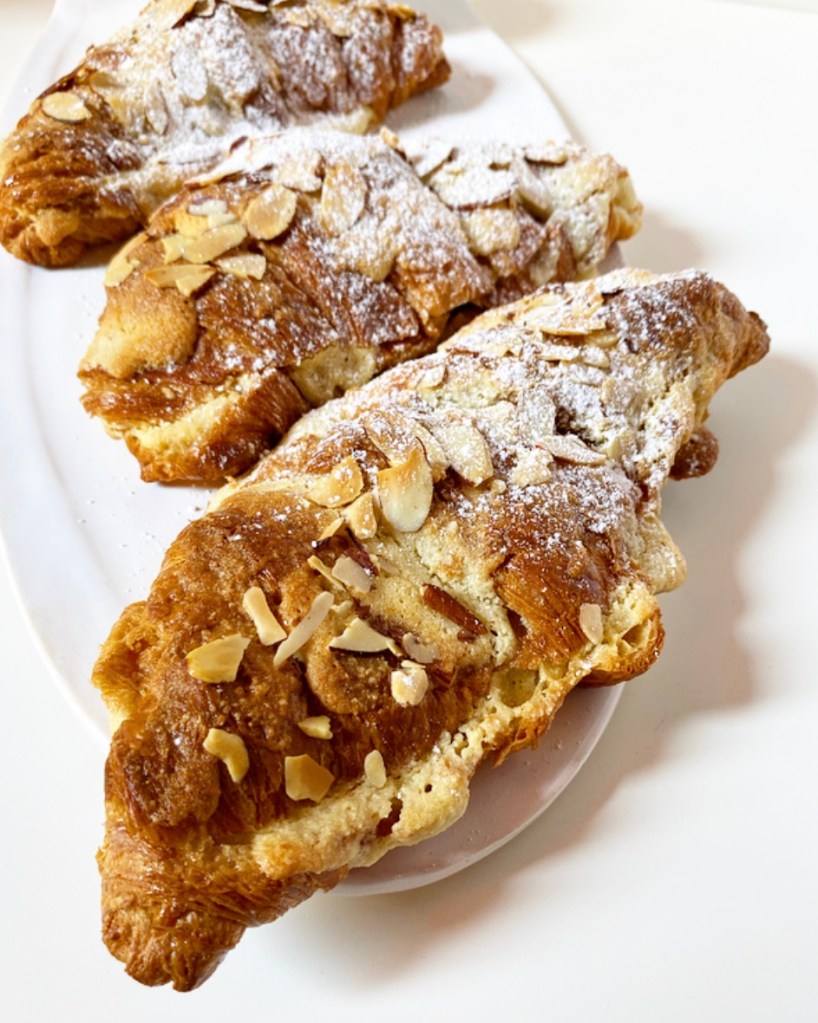
You see, Almond Croissants, while a bakery favorite, are frequently just another way to use up leftover bread; think of them as the even more sophisticated cousins of French toast and Bostock. Imbued with almond flavor inside and out, they’re deceptively simple to make and even easier to eat.

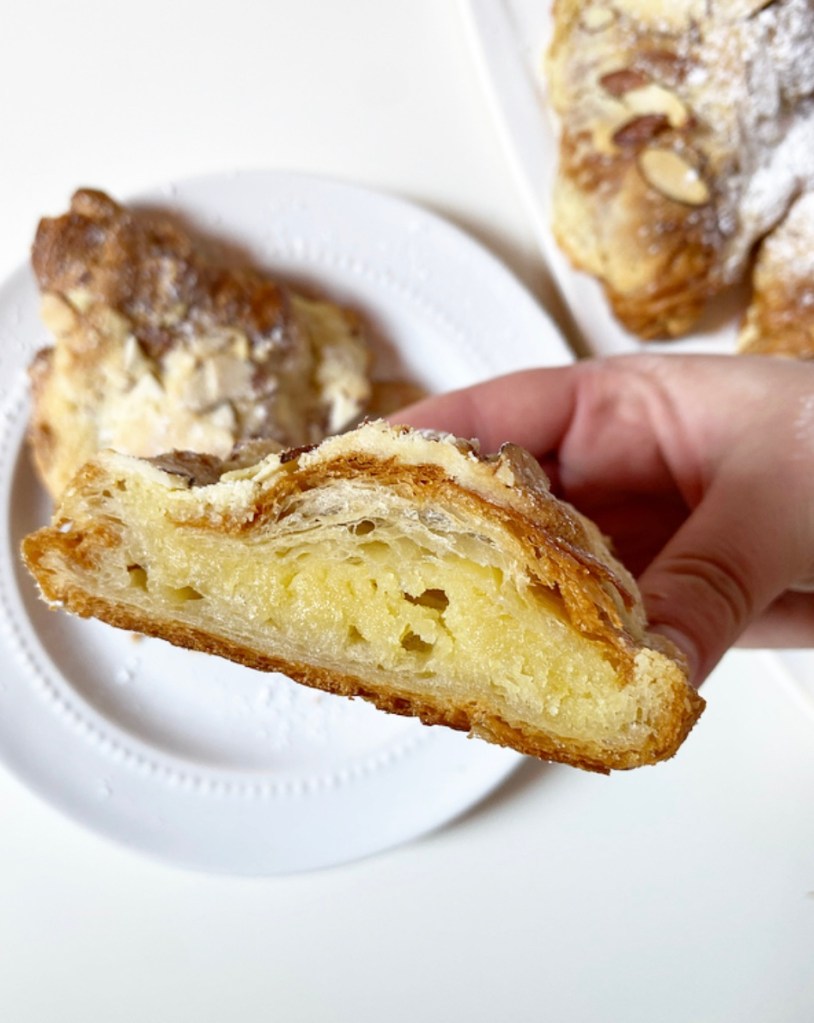
Stale croissants are split and soaked in simple syrup, smeared with homemade frangipane, sandwiched together, and topped with sliced almonds before baking. They emerge from the oven fragrant and flaky with the best crisp almond edges and rich, dense centers. You may leave them plain—as if there’s a way for Almond Croissants to seem plain!—or you may dust them with a little confectioner’s sugar for flair. I like flair.

Easy Homemade Almond Croissants

While I am a Costco croissant purist, these may be made with any pre-baked or store-bought croissants you may have on hand. Please keep in mind that your croissants may differ in size from mine, so you may end up with a larger or smaller quantity of Almond Croissants than I have. Not that I’ve ever found such a thing to be a problem. It is the summer of frangipane, after all.

Easy Homemade Almond Croissants
Easy Homemade Almond Croissants 
makes 8-12 (I made 8)

Simple Syrup:
3/4 cup granulated sugar
3/4 cup water

Frangipane*:
2 cup blanched almond flour or 8 ounces blanched almonds
2 tablespoons all-purpose flour
1/2 teaspoon Kosher or sea salt
3/4 cup granulated sugar
3/4 cup (1 1/2 sticks) unsalted butter, cold-ish room temperature, cut into cubes
2 large eggs
1 teaspoon pure almond extract

For Assembly & Garnish:
8-12 store-bought croissants (I used 8), preferably a little stale
1/2 cup sliced almonds
2 tablespoons confectioner’s sugar, optional

The simple syrup and frangipane may be made up to a day in advance. Just cover and refrigerate until you are ready to bake.

Make the simple syrup. Combine sugar and water in a saucepan over medium heat. Bring to a simmer and stir until sugar dissolves, about 5 minutes. Remove from heat and allow to cool until you can comfortably hold your finger in it. Transfer to a bowl or dish (I used a pie plate) that is slightly larger than your croissants.

Make the frangipane. In a food processor (or very good blender), pulse almond flour, all-purpose flour, salt and sugar together. Pulse in butter. Pour in eggs and almond extract, and process until frangipane is a homogenous paste. Set aside.

Arrange oven racks in central positions. Preheat the oven to 350F. Line two rimmed sheet pans with parchment.

Assemble the almond croissants. Slice each croissant in half equatorially.

Working with one sliced croissant at a time, dip each half in the simple syrup, making sure to coat all sides. Place the bottom halves cut-sides-up on the prepared pans, and set the top halves on plates or another surface while assembly continues.

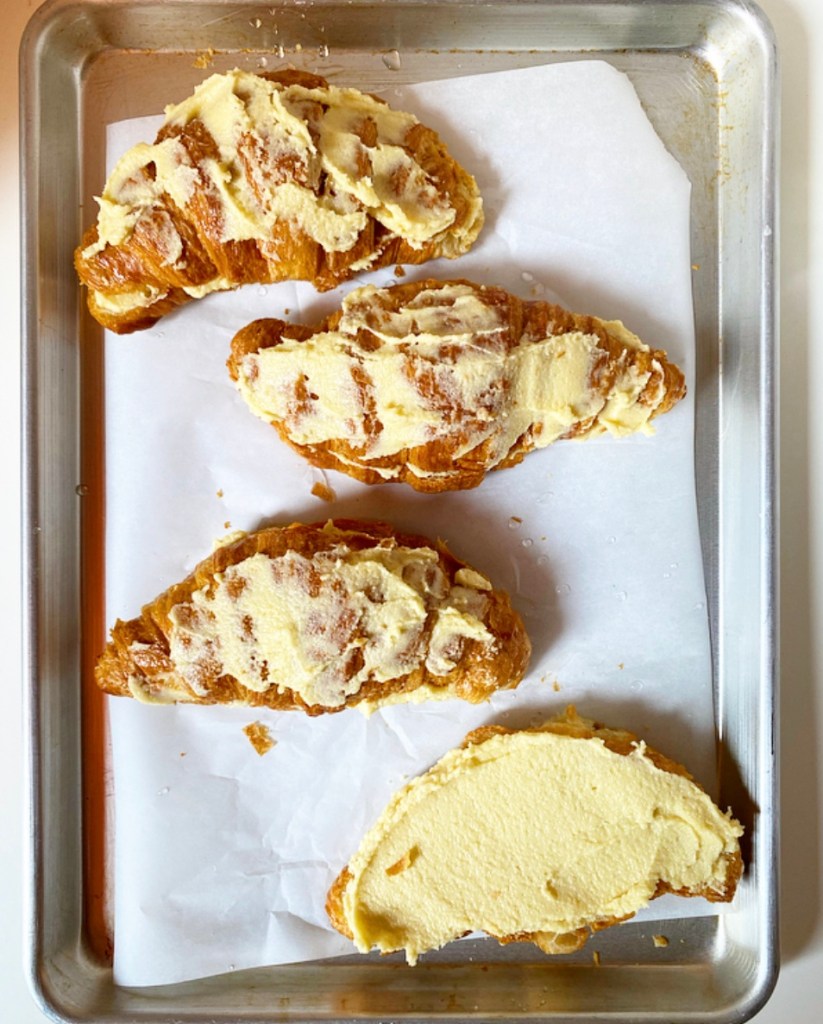
Use an offset icing spatula or the back of a spoon to spread about 2 heaping tablespoons of frangipane on the bottom half of each croissant. Top the frangipane with the top halves of the croissants, cut-sides-down. Press down lightly on each to adhere.

Spread about a tablespoon of frangipane on top of each filled croissant and sprinkle sliced almonds over the top. Bake croissants for 20-22 minutes, or until the frangipane is golden.

Let croissants cool on the pans for 15 minutes before removing to a rack to cool completely. Sift confectioner’s sugar over the tops, if desired. Serve slightly warm or at room temperature.

Almond Croissants are best eaten the day they are made.

Note: You will have some leftover frangipane after making these. Refrigerate it and use it for these or this.

Cinnamon Swirl Bread

Of all the myriad ways I describe myself and what I do, “bread baker” has consistently been pretty low on the list. I have gotten pretty good with cakes and cookies and even pie, but bread still isn’t an area of my expertise.

Cinnamon Swirl Bread

That said, I’ve been slowly getting into bread-making since the start of the pandemic. I didn’t jump on the sourdough starter train or anything (seemed like a huge waste of flour at the time), but I tinkered with no-knead recipes and have since posted two English muffin breads and a dreamy, decadent cheese bread. Today though, I’m tackling one of my favorite things in all of bread-dom, classic Cinnamon Swirl Bread.

Cinnamon Swirl Bread

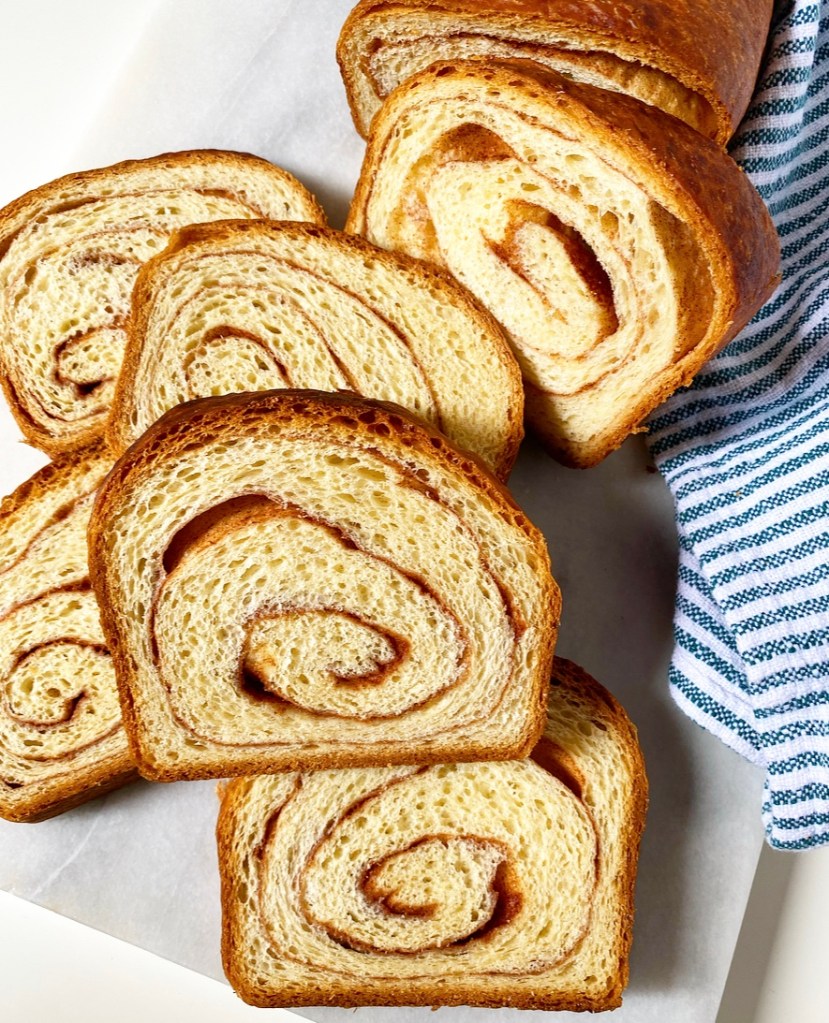
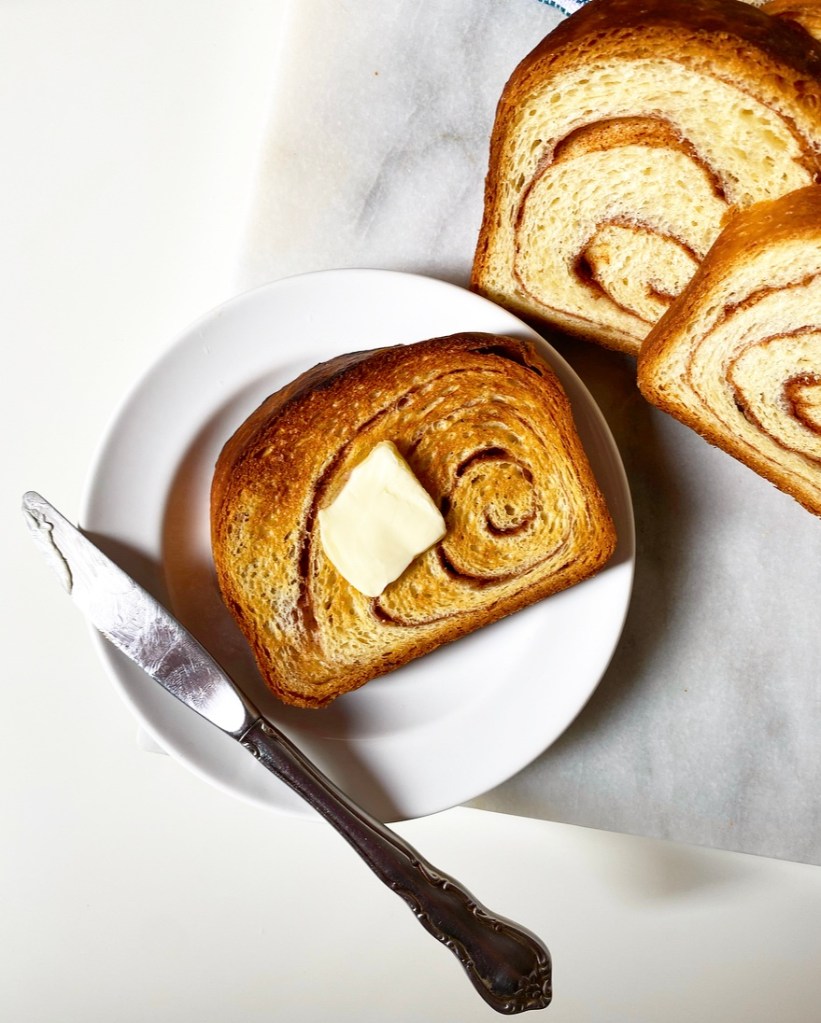
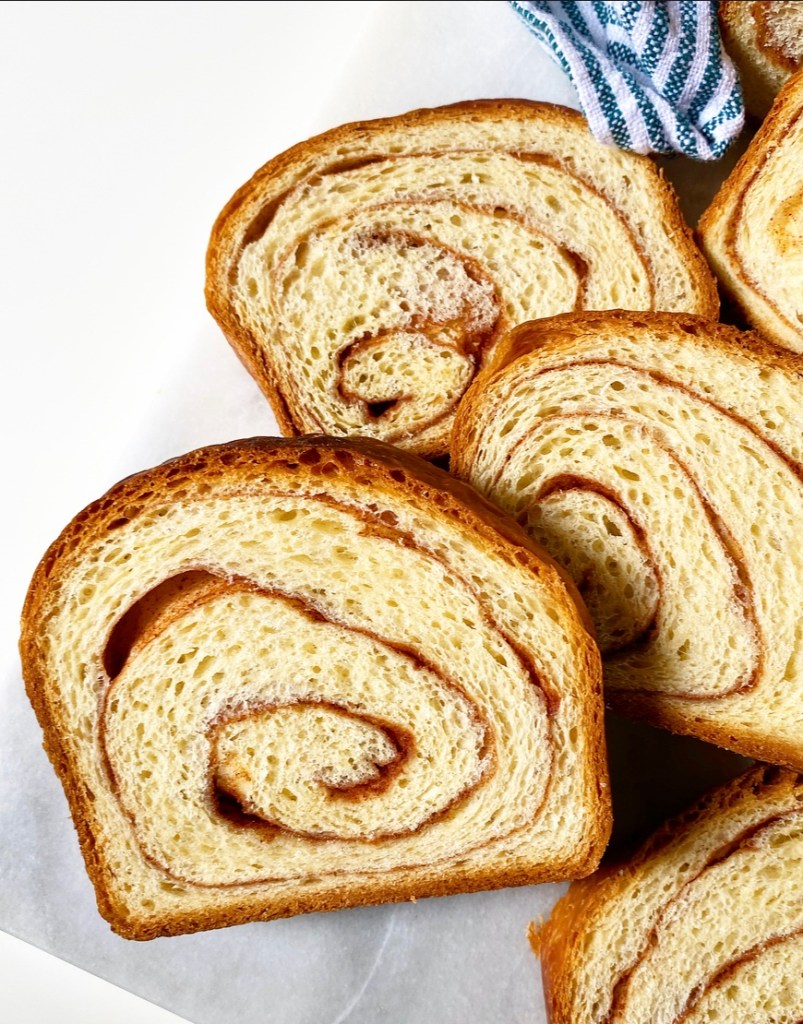
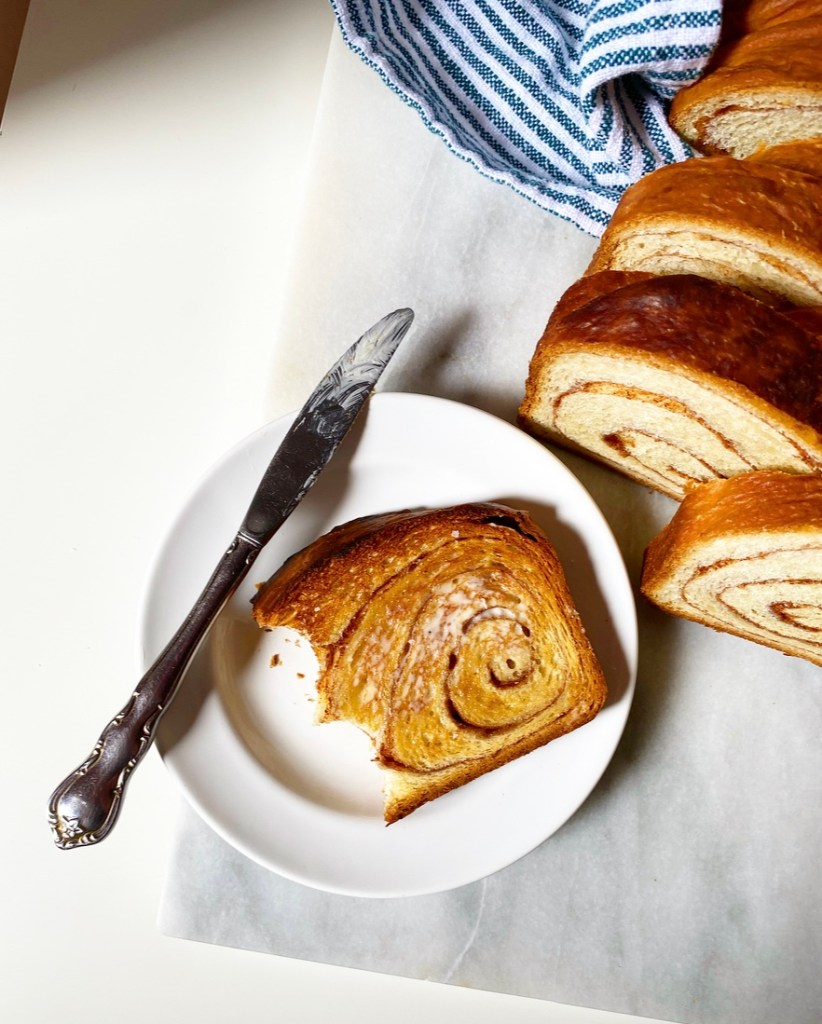
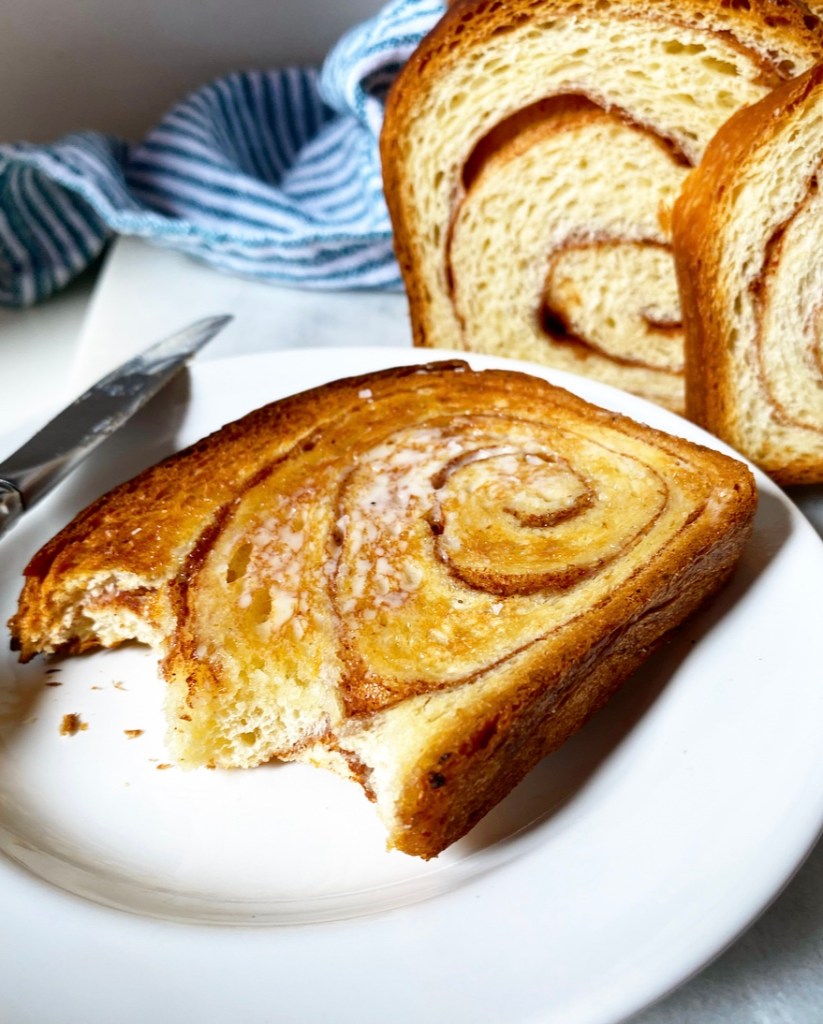
Oh yes, I have loved Cinnamon Swirl Bread as far back as I can remember. Paired with butter or peanut butter, it was my dad’s go-to “feed the kids” breakfast when I was little, and it’s one of my many go-to “feed yourself before your blood sugar drops further” meals at the ripe age of almost-37. A few weeks ago, I tried my hand at making Cinnamon Swirl Bread at home and it turned out so well! Soft, buttery, cinnamon-scented and perfect for toast.

Cinnamon Swirl Bread

Cinnamon Swirl Bread is super simple to make and can be put together in about 4 hours. That may seem like a lot, but with two rises and an hour of baking time, the active prep is a little more than 30 minutes.

The base recipe is exactly the same as the one I use for cheese bread—it’s soft and buttery, like a brioche. It comes together in minutes and is soft, pliable and so satisfying to knead. Let it rise once, then roll it out like you’re making cinnamon rolls and scatter it with cinnamon, sugar, and a little flour before rolling it up for a second rise. Flour in the filling may seem strange, but it lends some structure here so that the cinnamon swirl keeps its definition through the second rise and baking time. I can’t take credit for this brilliant tip—shout out to the fine folks at King Arthur Flour.

Cinnamon Swirl Bread

This bread needs nearly an hour in the oven, until it’s tall and deep brown and smells outrageously delicious. If you want a perfect swirl for toasting and all, you should probably let your Cinnamon Swirl Bread cool completely. I know that’s a big ask and you’re probably (justifiably) going to ignore it, but someone might revoke my newly-minted bread baker card if I don’t say it.

Cinnamon Swirl Bread

But for real, if you’re not at least tempted to tear into this like a wild animal, we might fundamentally misunderstand each other.

That’s okay, though. More Cinnamon Swirl Bread for the rest of us.

Cinnamon Swirl Bread
Cinnamon Roll Bread
makes one loaf

Dough:
2 3/4-3 cups all-purpose flour
2 tablespoons granulated sugar
1 packet (2 1/4 teaspoons) instant yeast
1 teaspoon fine sea salt
3 tablespoons unsalted butter
1 cup whole milk
1 large egg, room temperature

Filling:
1/3 cup granulated sugar
2 teaspoons ground cinnamon
1 teaspoon all-purpose flour

For Finishing:
2 tablespoons unsalted butter, melted

Make the dough. In a medium-large mixing bowl, whisk together 2 3/4 cups all-purpose flour, sugar, instant yeast, and salt. Set aside.

In a small saucepan over medium-low heat, melt butter and milk together until just warm to the touch, about 95-110 degrees.

Crack the egg into a small mixing bowl. Whisking constantly, add the butter/milk mixture in a thin stream until completely combined. Add mixture to the dry ingredients and fold together. A shaggy dough should form and be pulling away from the bowl. Gradually add flour in 2 tablespoon increments until the it pulls away a bit.

Turn dough onto a floured surface and knead 5-6 minutes, until smooth. Gather dough into a ball and place it in an oiled bowl, making sure to get a little oil on all sides. Stretch some plastic wrap over the top and allow dough to rise in a warm, draft-free environment for 45 minutes to 1 hour or until doubled in bulk.

In the meantime, heavily grease a 9x5-inch loaf pan with butter.

Mix the filling. In a small bowl, use a fork to whisk together sugar, cinnamon and flour. Set aside.

Flour a surface and a rolling pin. When the dough has risen, punch it down and turn it out onto the surface. Roll it out to an 11x14-inch rectangle (about 1/8-inch thick). Sprinkle the filling over the entire surface of the dough, leaving 1/2-inch bare on all sides. Starting from a short edge (an 11 inch edge), tightly roll the dough into a cylinder place it in the prepared pan. Cover pan loosely with plastic wrap. Let loaf rise in a warm, draft-free place for 45-60 minutes, or until it peaks over the top of the pan. If you poke it with your finger, the dent should remain.

Meanwhile, set an oven rack in the central position. Preheat oven to 350F.

When loaf has risen, remove and discard the plastic wrap. Bake loaf for 50-55 minutes, tenting the loaf with foil if it is getting too dark. Test for doneness with a skewer—if it meets any resistance or comes out with dough on it, bake in five minute increments until neither of those things happens. To test for doneness with a thermometer, insert the end into center. If it reads at 190F or above, it’s done.

When the bread is done, brush the entire top with melted butter. Let cool in the pan for 15 minutes before turning it onto a rack to cool completely.

Slice bread thickly and enjoy warm or room temperature, or use it for toast. Cover and refrigerate any leftovers for up to a week.