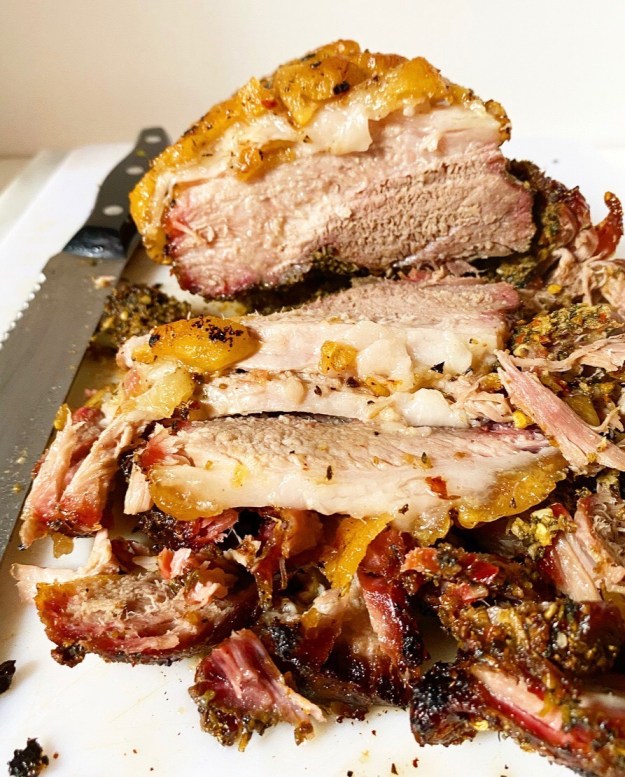
 When I was allowed to take the reins on planning Christmas dinner last month, I knew immediately what I wanted to make: Porchetta. For those of you who have no idea what I’m talking about, Porchetta is a slow-roasted Italian herbed pork dish that is traditionally made with whole pigs, but most home cooks use a center-cut pork loin wrapped in a sheet of pork belly.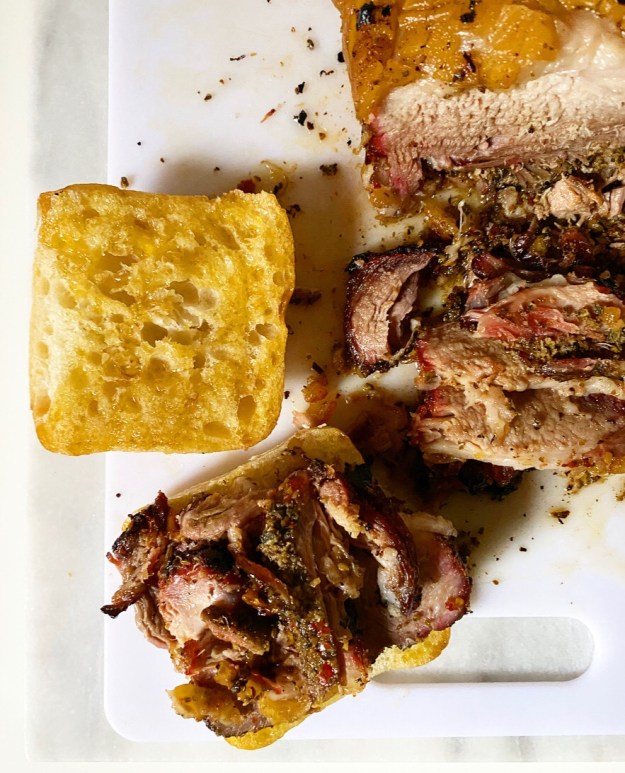
 I spent weeks planning this meal, going so far as to make a 1/4-sized tester in the days before Christmas. After that, I called Central Market (think Texas-specific Whole Foods…but way better than Whole Foods) and ordered all the meat. I packed my favorite knife, a sharpener, my largest meat cutting board, trussing string and an apron in my checked luggage and hightailed it to Fort Worth.
 Over the next several days, my mom, sister and I obtained the special-ordered pork and made a great fuss over preparing it…except that it wasn’t actually that much fuss. Once the herb mix was prepared, I butterflied the center-cut pork loin and scattered it over the top. Then I rolled it up jelly-roll-style, rolled that in the sheet of pork belly and tied it all up with trussing string. Afterward, I let it sit uncovered in the refrigerator (“dry brining”) until Christmas Day, on which it was brought to room temperature and then roasted until golden and crisp and pretty irresistible.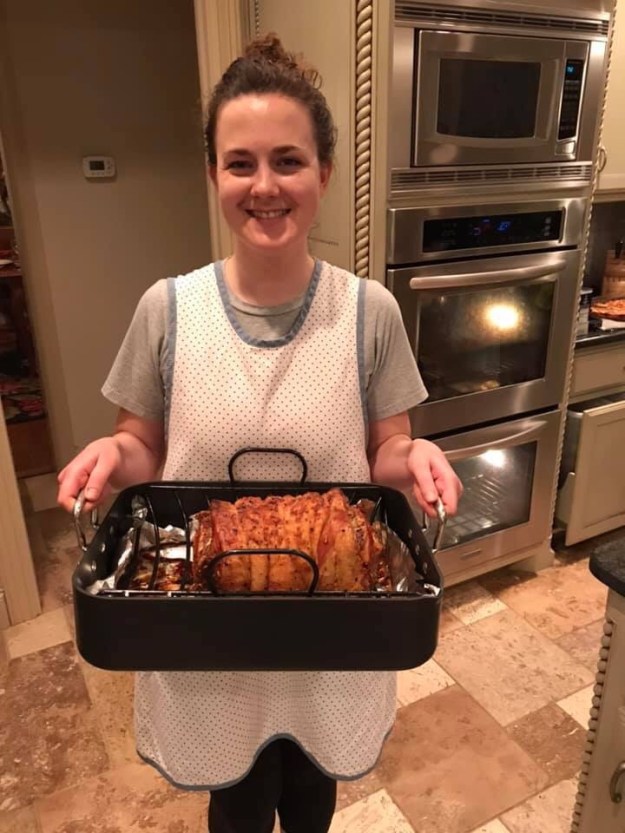
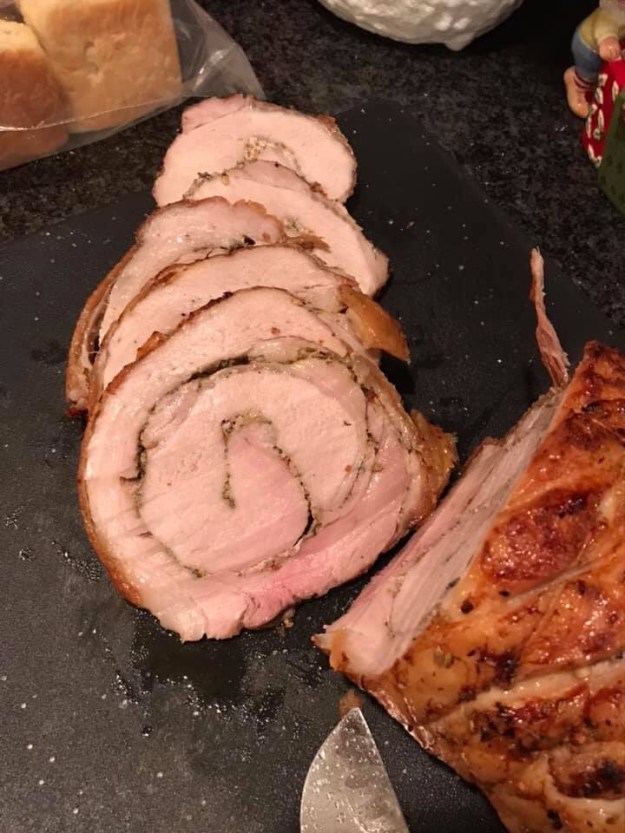 I was (am) very proud of myself and posted it to all my social media outlets, where I was promptly asked when I’d be posting a recipe. This was something I hadn’t even considered because while the Porchetta I made for Christmas is not particularly difficult to put together, but it *is* pricey.
 The meat had to be special-ordered for quantity and quality—a 5 pound sheet of skin-on pork belly is not an easy find—and came out to about $60. That’s $60 in Texas, so I’d guess it’s more like $80-$100 in New York, and that’s before the herbs. I love y’all, but not quite enough to spend hundreds testing one lone recipe.
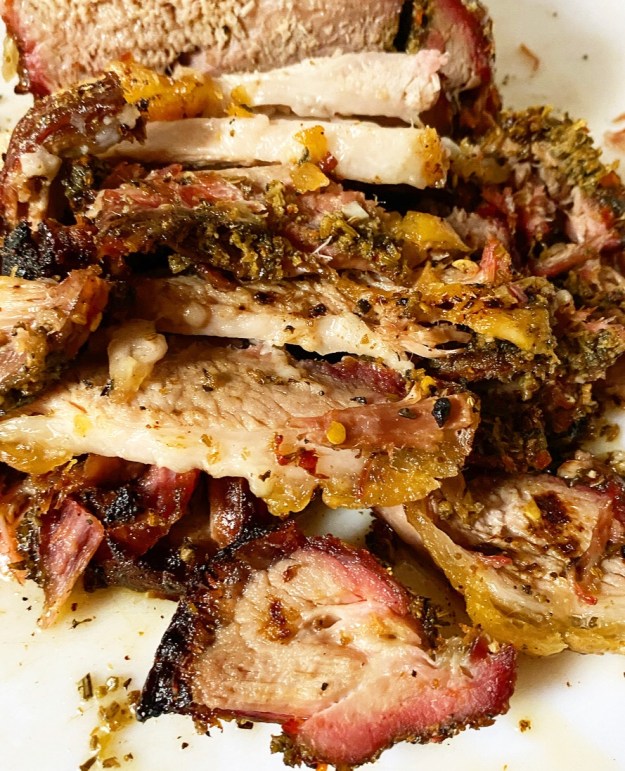
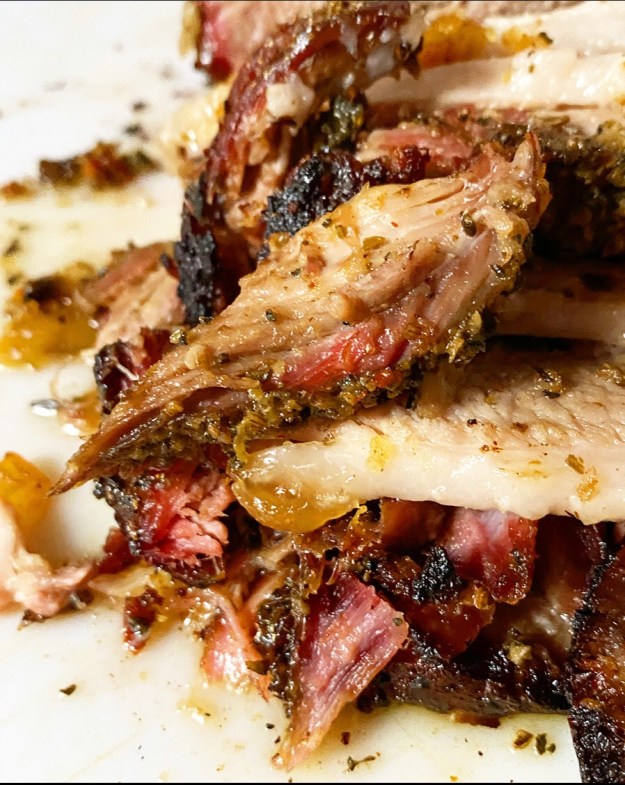 But. But! I had it in my head that I could give my beloved Slow-Roasted Pulled Pork recipe the Porchetta treatment, and Porchetta Queen Sara Jenkins (formerly of the Lower East Side, now of Maine) agrees. And so, with those recipes and the herb mixture I used at Christmas as guides, I set to work making this: the Pared-Down Porchetta. It’s got all the fatty, herby, meaty, crispy magic you love in traditional Porchetta, but it’s a little rough and tumble.
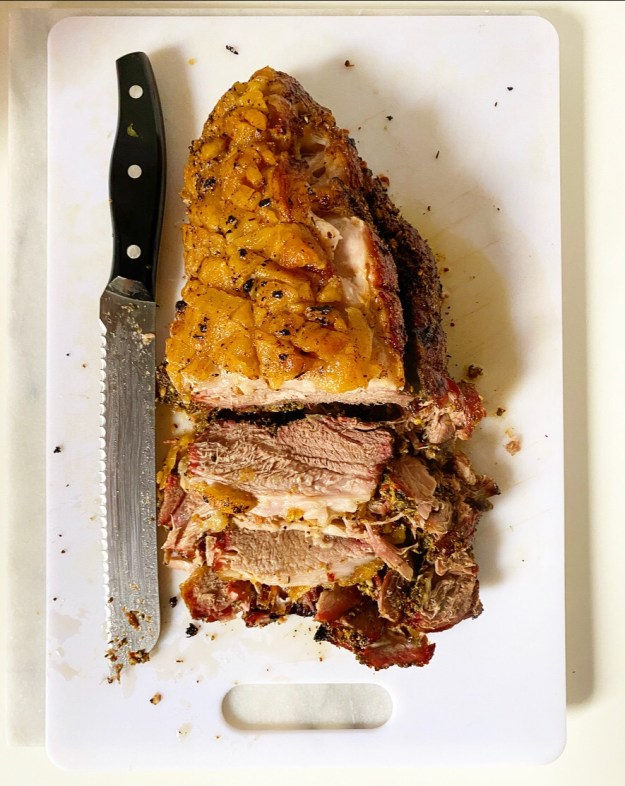 Yes, it still has to sit in your fridge for a day or two, but it is made from just one piece of meat (a boneless pork butt AKA pork shoulder), is mostly hands-off, and won’t cost you an obscene-ish amount of money.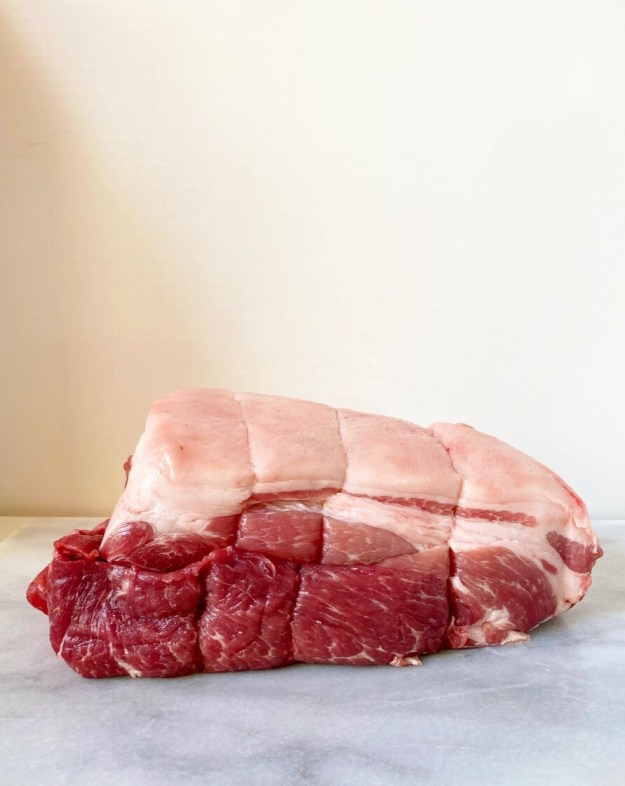
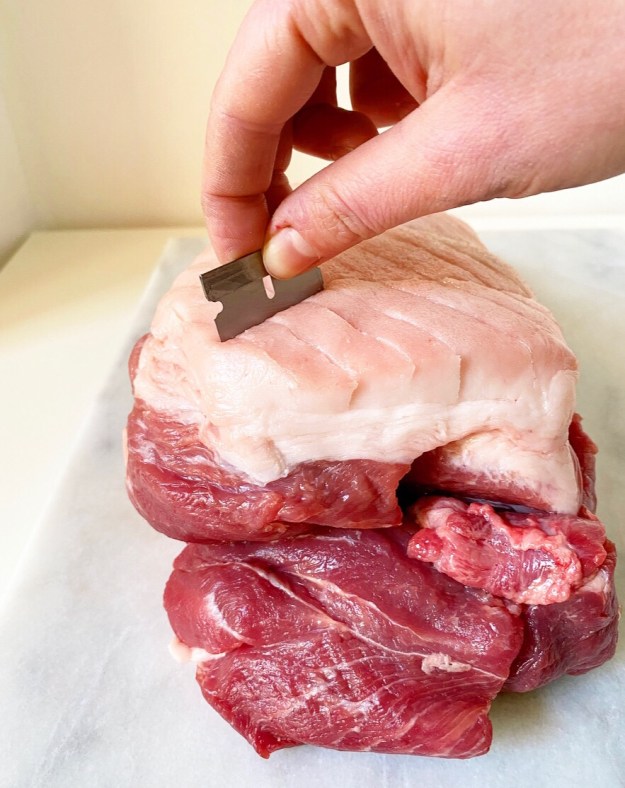 Let’s start with the meat. This pork butt? It weighed in at 4.5 pounds and cost a cool $14–pretty reasonable compared to $60+! You’ll want it to have a layer of skin or a good, thick fat cap (pictured here) for both flavor and texture. If you can’t find a pork butt that fits either of those descriptions, you can purchase a piece of pork belly or pork skin and tie it onto the butt with trussing string. You want that fatty lid so it can keep the meat moist during roasting and then get crispy at the end. Cracklings are life, am I right?!
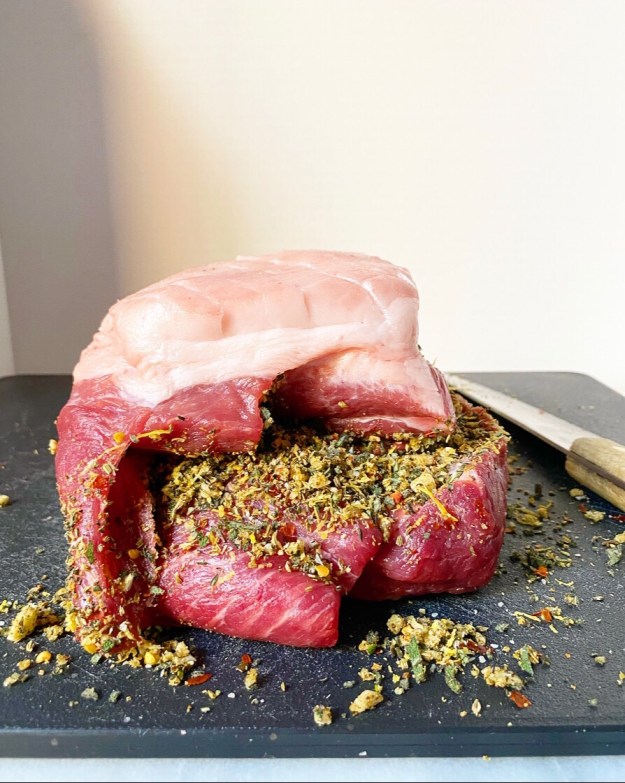
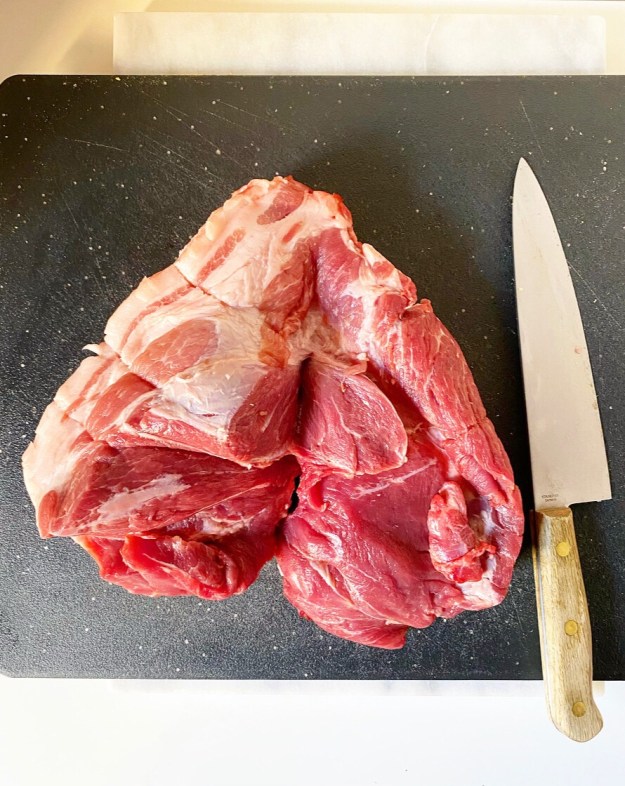 Your pork butt is unlikely to be in one seamless piece due to its heavy marbling and having had a bone cut out of it. This spot (or cavity or whatever you want to call it)? This is where the herb mixture will go. I used my knife to extend that opening down the length of the roast, while making sure to keep one edge intact.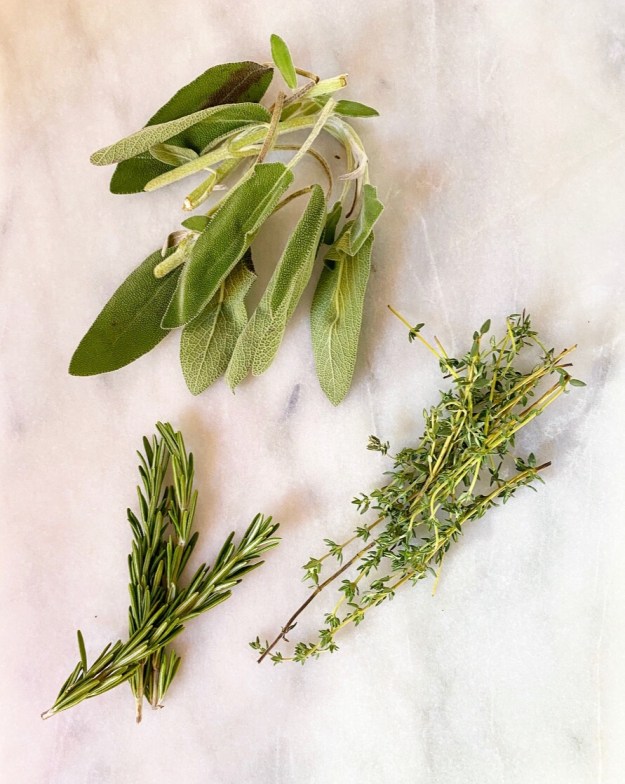
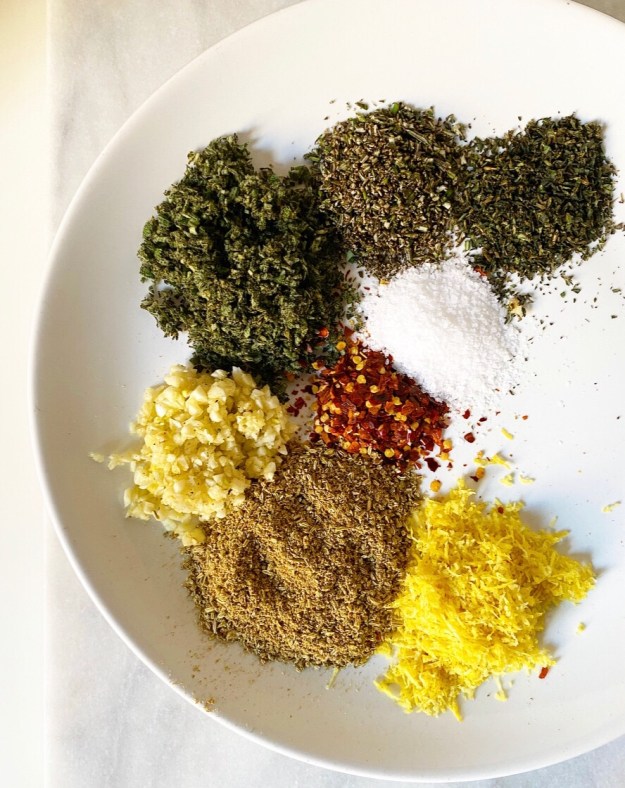
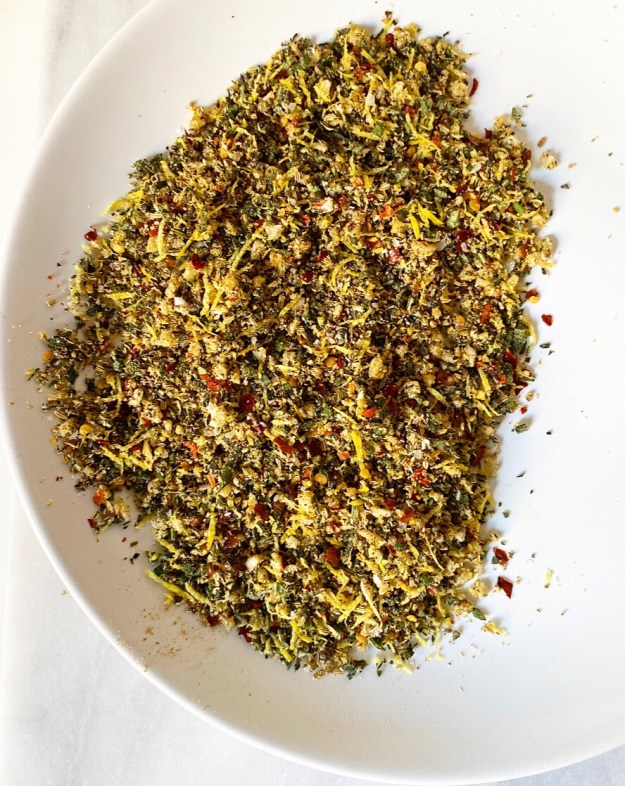
 Another thing you want? Kosher salt—about 1/2 teaspoon per pound. Don’t be tempted to skimp, or all the days of dry brining and the herbs and the money you spent will be for nothing. Salt is critical for both flavor and texture (it draws out moisture), and if used in proper amounts, will not leave your meat particularly salty, just flavorful. You’ll blitz most of it with toasted fennel seeds, sage, rosemary, thyme, garlic, lemon zest and crushed red pepper flakes to make the herb mixture. The rest will be rubbed into the crosshatched skin/fat cap.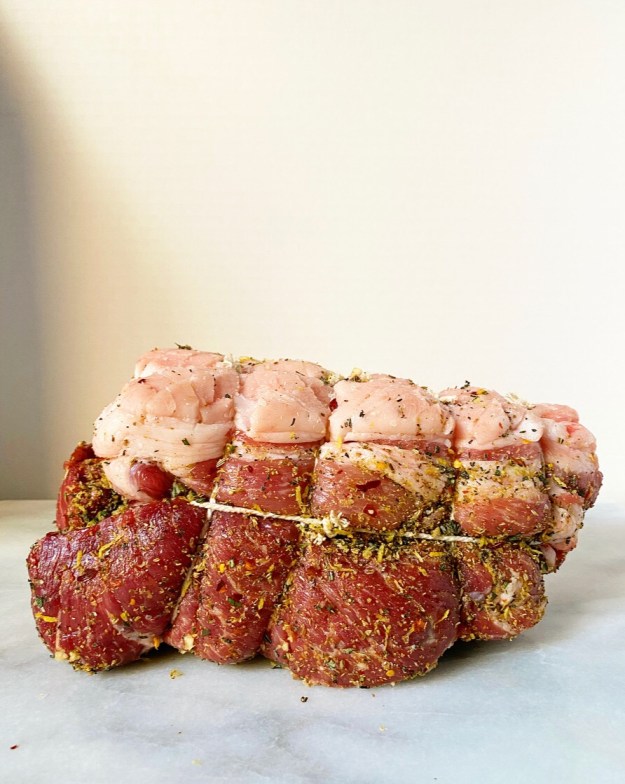
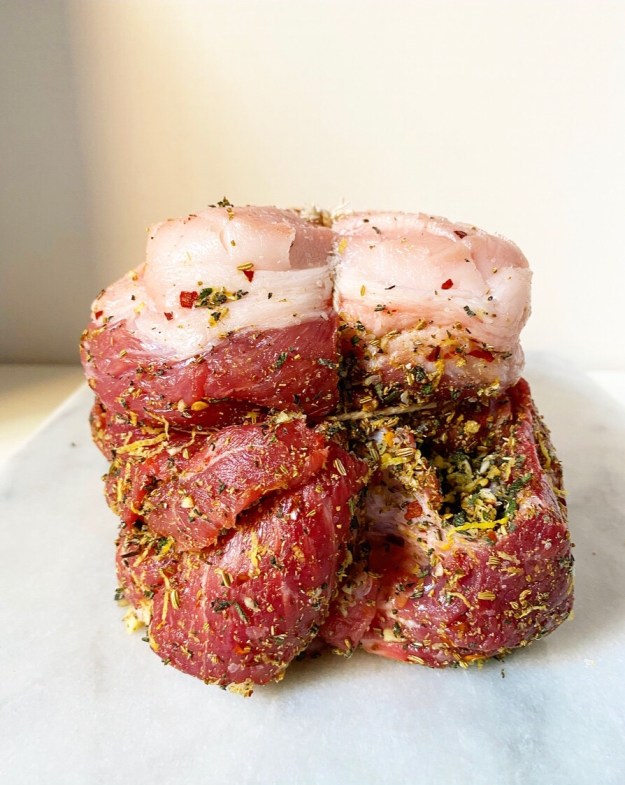
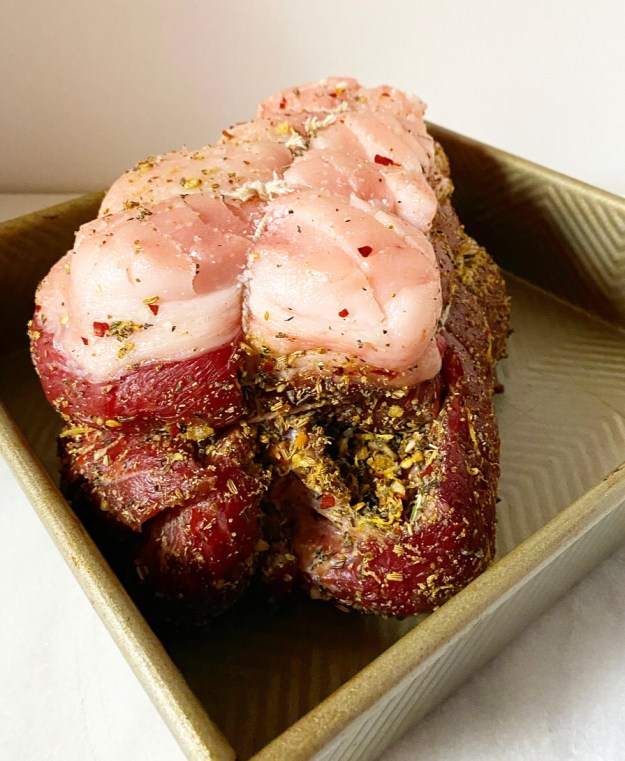 You will have to truss your pork butt, which is really no trouble. Just tie it at short intervals and then anywhere else it isn’t holding together as one cohesive unit. You want all those good herbs to stay put! Then stick the whole thing in a dish and put in the refrigerator and forget about it for 24-48 hours until it’s dry to the touch and the color has changed.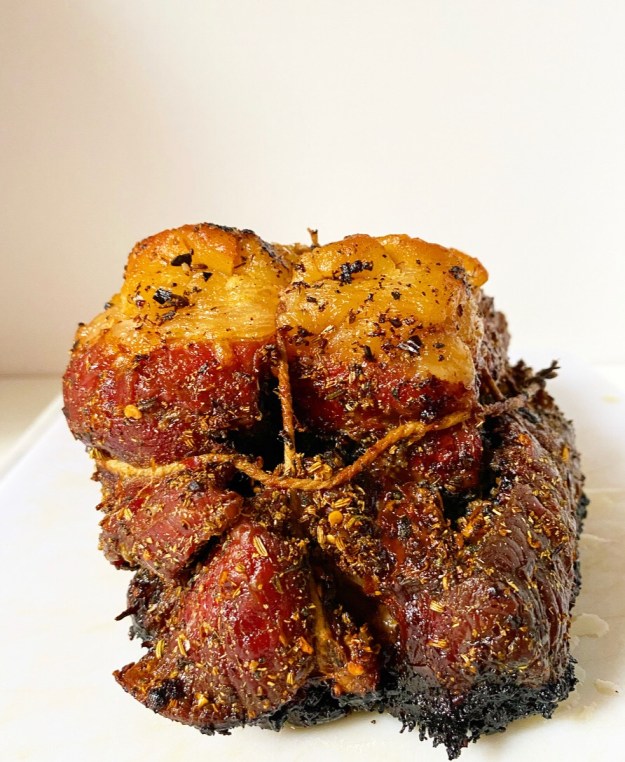
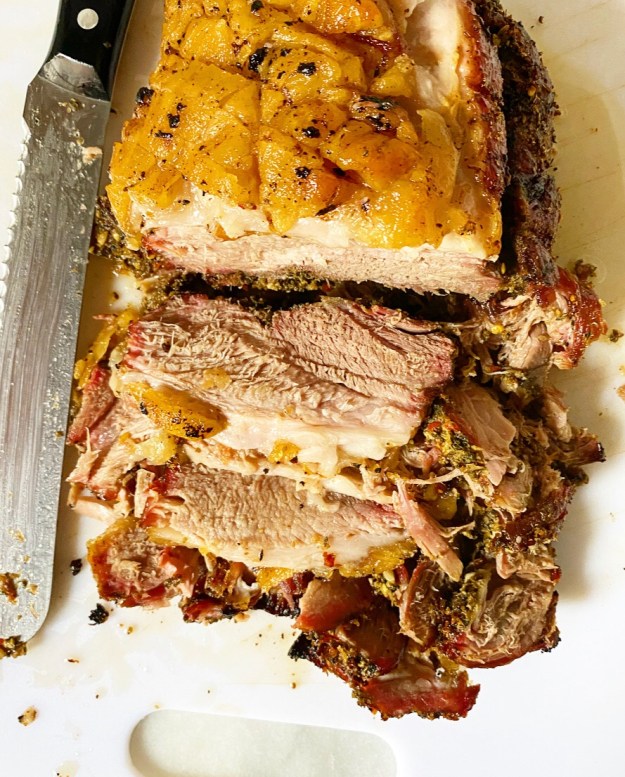
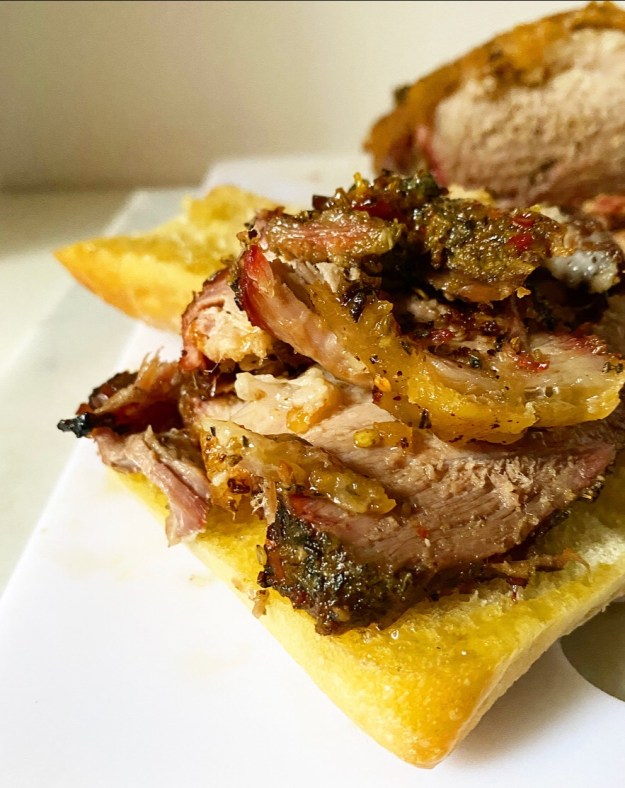
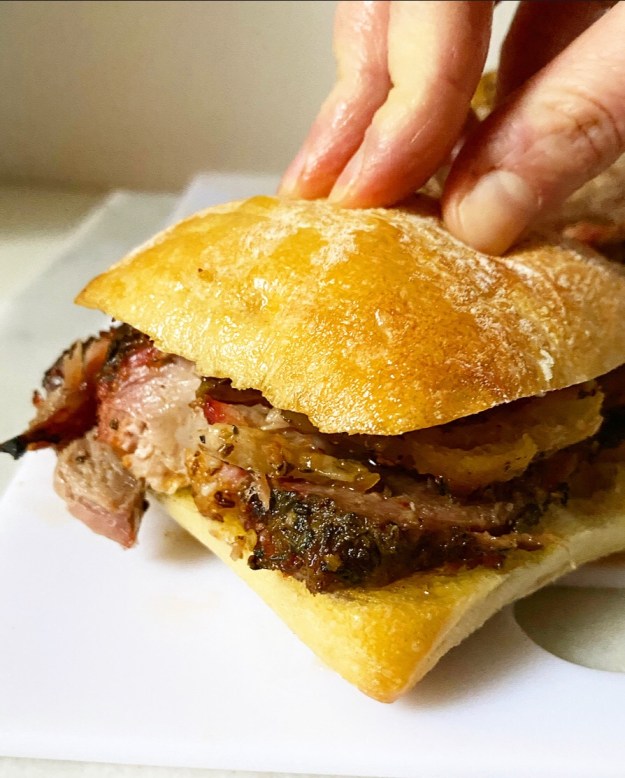
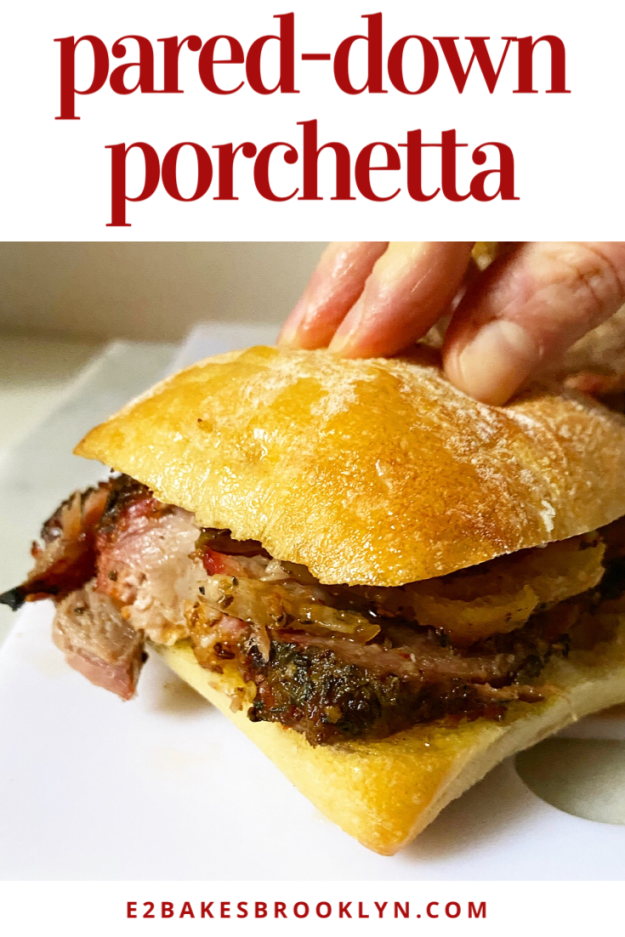
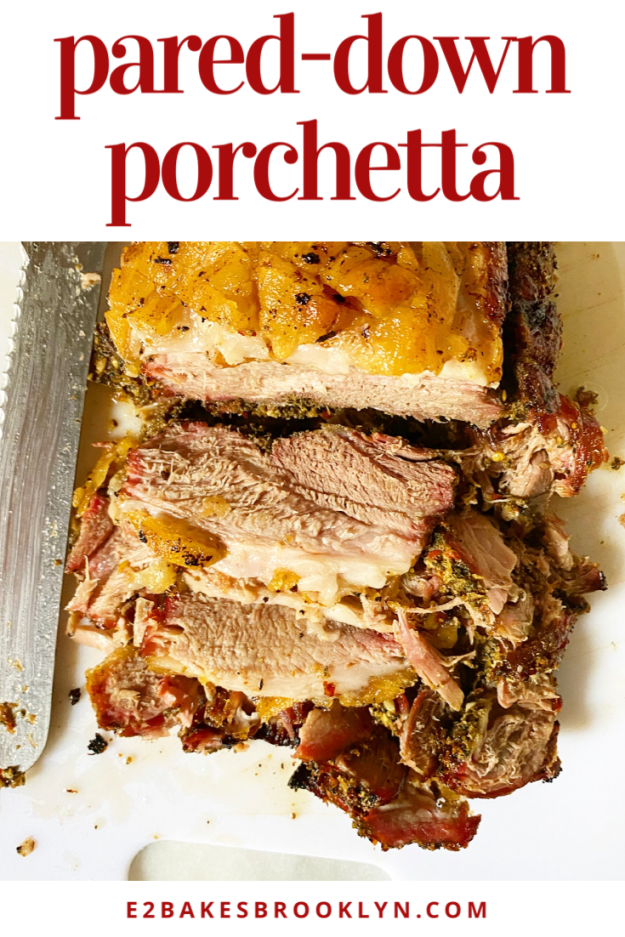
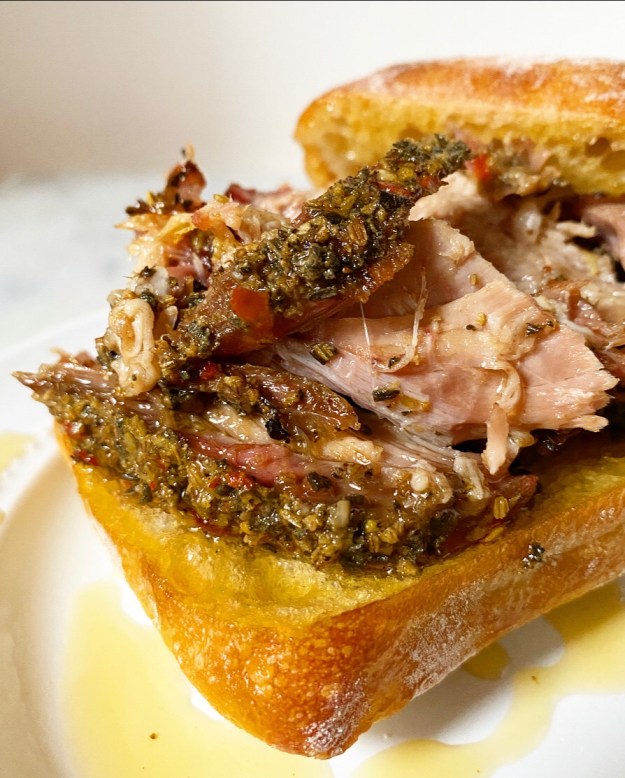 And then roast it looooow and slooooow before crisping up that fat cap, and slicing and serving it on rolls or crusty bread that you’ve given the slightest dip in the rendered fat. You can also serve it alongside garlicky greens or roasted vegetables. Really, you can’t go wrong.
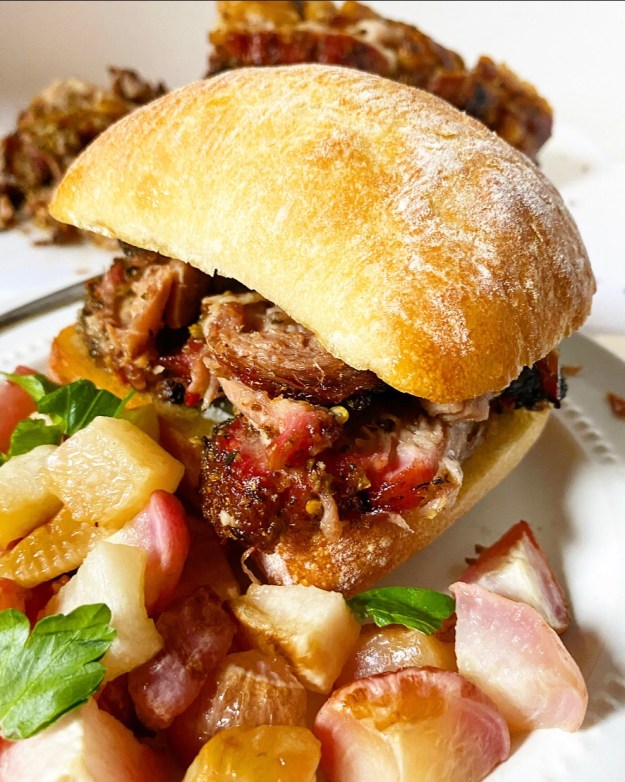 I feel like this Pared-Down Porchetta would be a wonderful main for Super Bowl Sunday, Oscar Night, Easter, or any old night. I mean, you could certainly hold onto this recipe until next Christmas, but that seems like an awfully long time from now, don’t you think?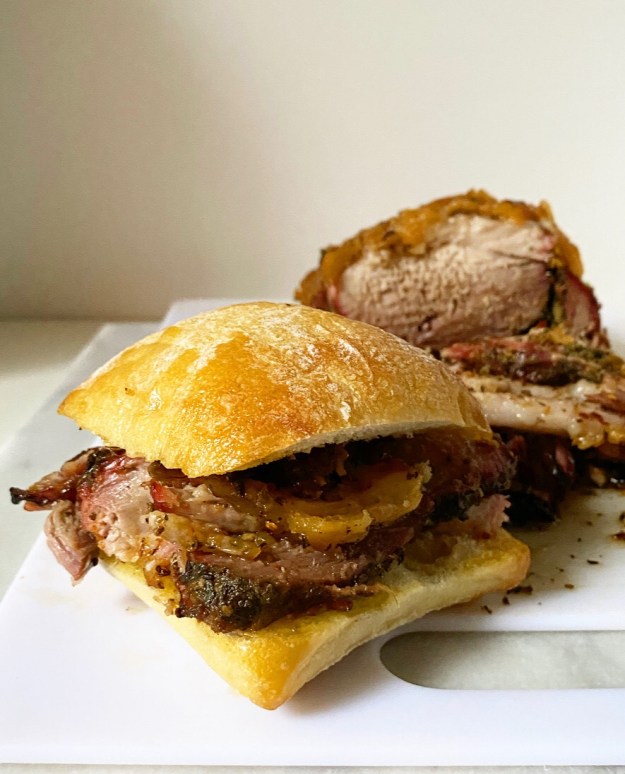
Pared-Down Porchetta
makes 8 (or so) servings
1 4-4.5 lb. boneless pork butt with skin or a thick fat cap*
3 tablespoons fennel seeds
2 tablespoons minced fresh sage
1 tablespoon minced fresh rosemary
1 tablespoon minced fresh thyme
3 cloves garlic, minced
1 tablespoon fresh lemon zest (about 1 medium-large lemon)
1-1 1/2 teaspoons crushed red pepper flakes
2-2 1/2 teaspoons Kosher salt, divided
Special Equipment:
trussing string
a dutch oven or roasting dish
For serving:
rolls (I used Trader Joe’s Ciabatta Rolls)
crusty bread
Read this recipe carefully before proceeding. While the majority of it is hands-off, it will take a minimum of two days to prepare.
If your pork butt was trussed when you purchased it, cut off the trussing string and discard. Blot pork butt to remove excess moisture. Use a large, sharp chef’s knife (or razor blade) to crosshatch the skin.
Toast fennel seeds in a dry pan over low heat until fragrant. Remove to a bowl to cool.
Make the herb mixture. Combine sage, rosemary, thyme, garlic lemon zest, red pepper flakes,1 1/2-2 teaspoons* Kosher salt. and fennel seeds in a food processor and pulse to combine (alternatively, mince with a large, sharp chef’s knife).
Look at your pork butt. It is unlikely to be one stable piece, so take a look and see a natural spot to butterfly it. I chose an area that was already open, and used my knife to further the opening a bit more, leaving one edge still intact (see photos).
Fill opening with herb mixture and then fold back together. Some herb mixture will fall out—this is okay. Use trussing string/kitchen twine to truss the meat. Tie it together at 2-inch intervals and then any other directions necessary to hold it together as a cohesive unit. Rub the herb mixture that fell out of the butterflied section over the outside of the meat. Sprinkle remaining 1/2 teaspoon of salt over the crosshatched skin and lightly massage in. Place pork in a small dish (I used a 9-inch square pan) and refrigerate uncovered for 24-48 hours.
Remove pork from the refrigerator. Let sit at room temperature for an hour. Place pork in a clean, dry oven-safe pot (I use my dutch oven).
Preheat oven to 250F. Place pork in the oven and let cook for 4.5-5.5 hours, until it registers 180F on a meat thermometer and is tender.
Remove pork from oven. Turn temperature up to 500F.
Return pork to the oven and let cook, turning the pot every 5 minutes, until the skin is golden and crispy. (Mine was done for 15 minutes, but I probably should have gone to 20.)
Let pork cool for 20 minutes before carefully, removing trussing string, slicing and serving with rolls or crusty bread.
Leftovers will keep in an airtight container in the refrigerator for a few days.
Note:
1. If you cannot find a boneless pork butt with skin or a fat cap, purchase a piece of pork belly or skin to tie on with trussing string. I’ve seen pork belly for sale at Whole Foods, Whole Foods 365, Costco and some regular supermarkets.
2. You’ll need 1/2 teaspoon Kosher salt per pound of meat, so 2 teaspoons for 4 lbs or 2 1/2 teaspoons for 4.5 lbs. With that knowledge, set aside 1/2 teaspoon of the salt for the skin/fat cap and add the rest to the herb mixture.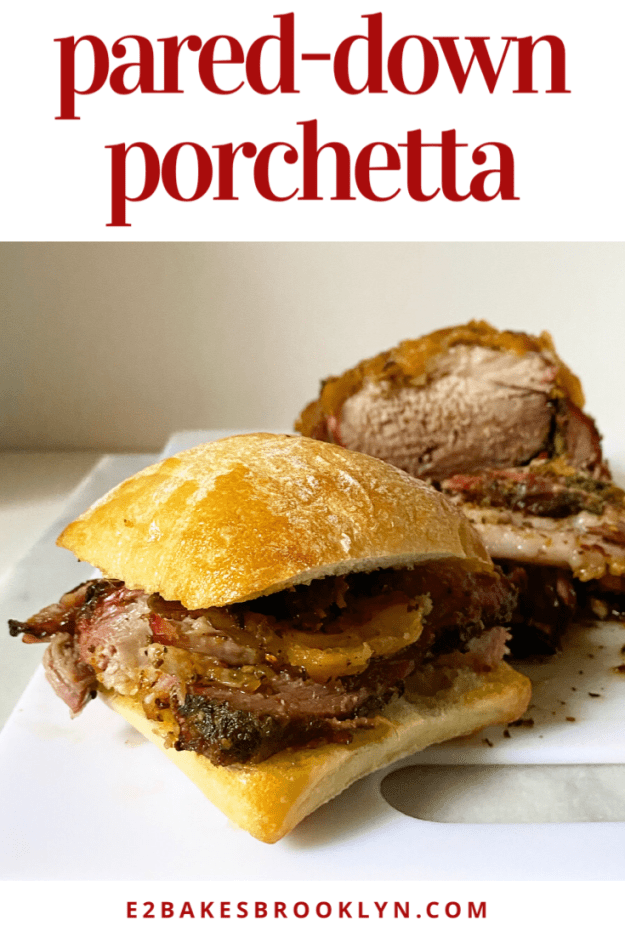
 When I think back on the Super Bowl parties of my youth (and since I am Texan, there were a lot), I don’t remember who played or much else, except for the food. I’ve said it
  Sometimes when I am bored, I tune out and think about recipes. That said, you won’t be surprised to learn that the idea for these Puff Pastry Pigs in Blankets popped into my head during the last Super Bowl.
 These are the sorts of things I think about instead of thinking about things that are actually important. I mean, *someone* has to think about the
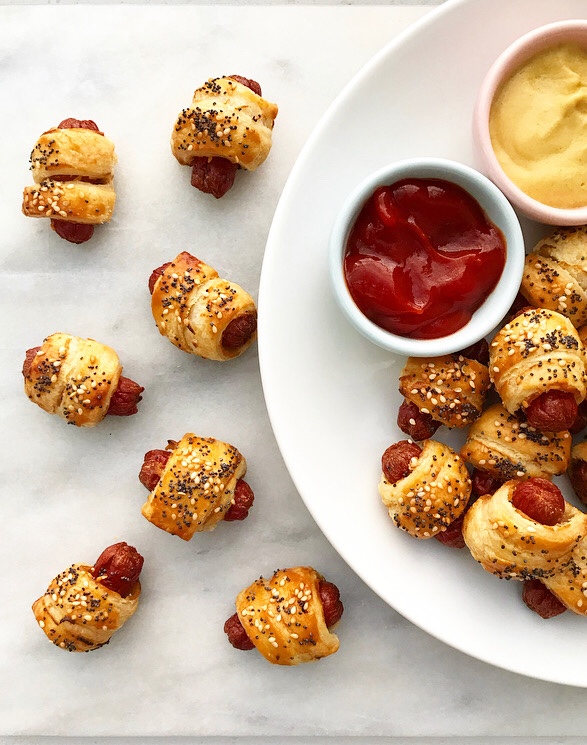
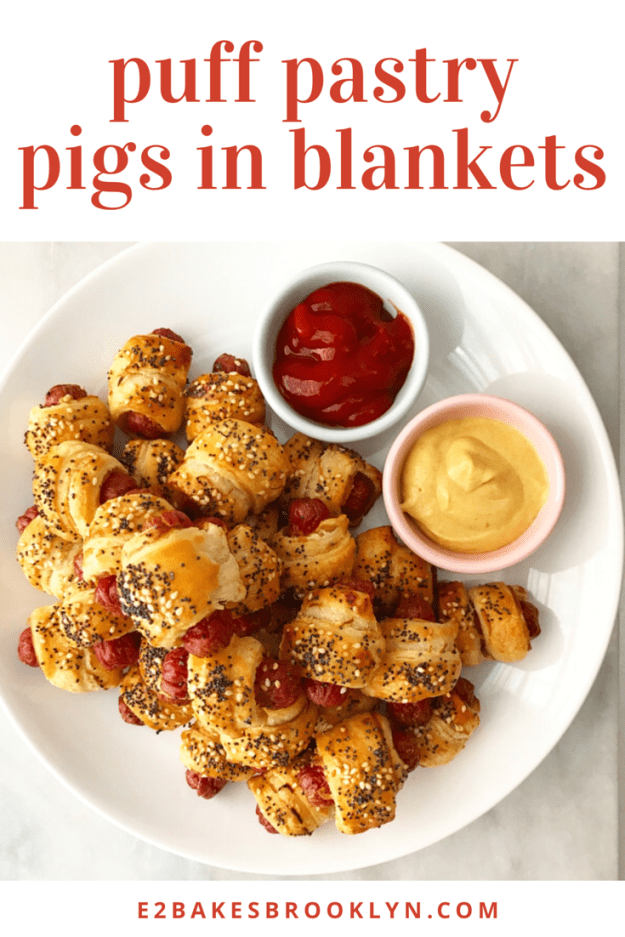
 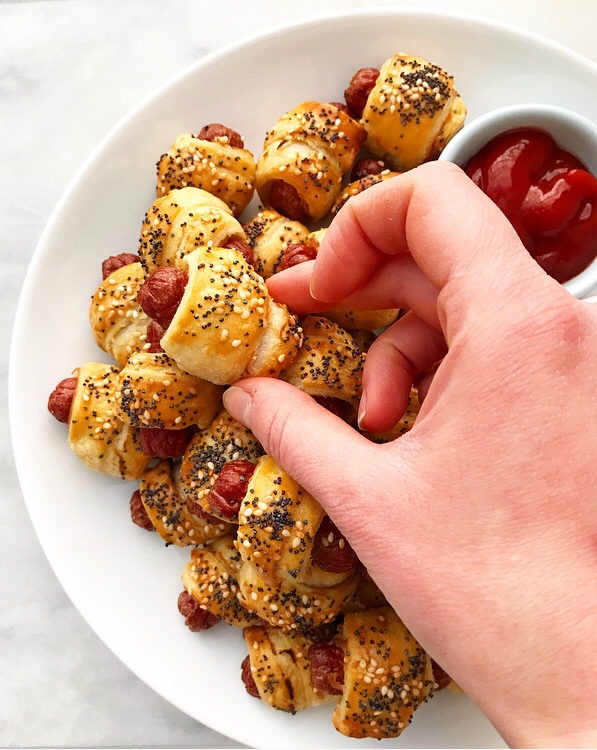 Puff Pastry Pigs in Blankets are exactly what they sound like: classic pigs in blankets (aka cocktail wieners wrapped in yeast dough), made with puff pastry. Miniature hotdogs wrapped in flaky, buttery pastry? Sign me up!
 These little morsels are super easy to make. Start by rolling out a sheet of puff pastry. I like to use
 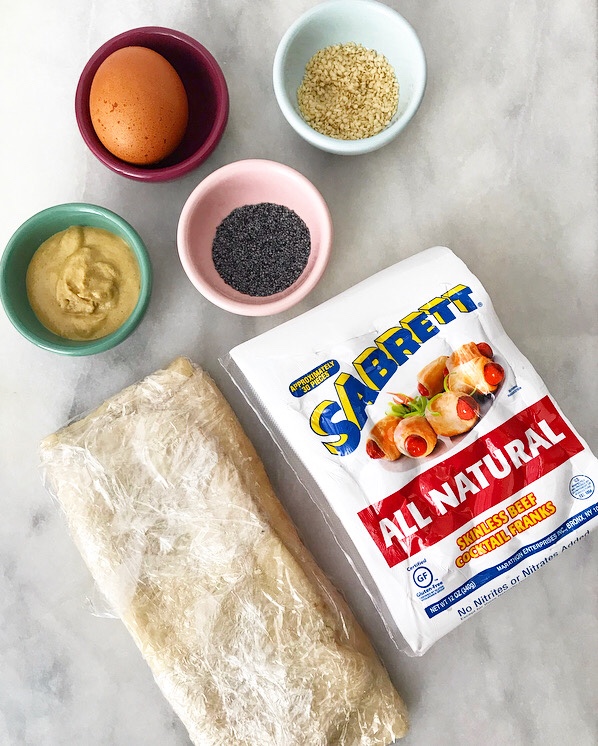 Spread a thin layer of dijon mustard over the top and then slice the pastry into strips. Wrap each strip around a cocktail wiener…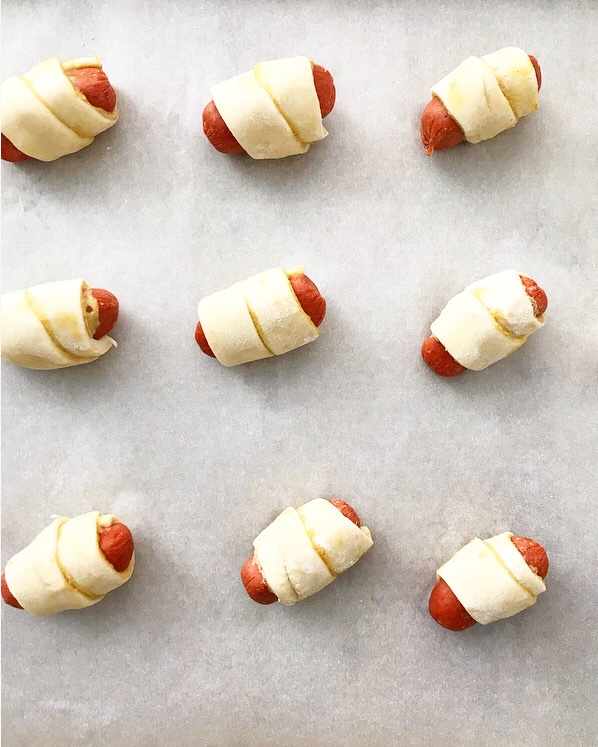
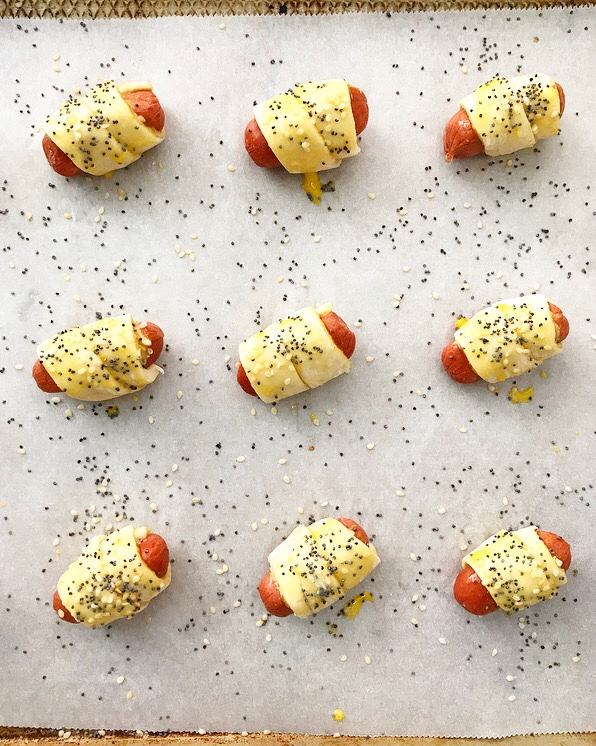 …then brush them all with egg wash and sprinkle them with poppyseeds and/or sesame seeds. This is purely for aesthetics, but I like the added texture it provides.
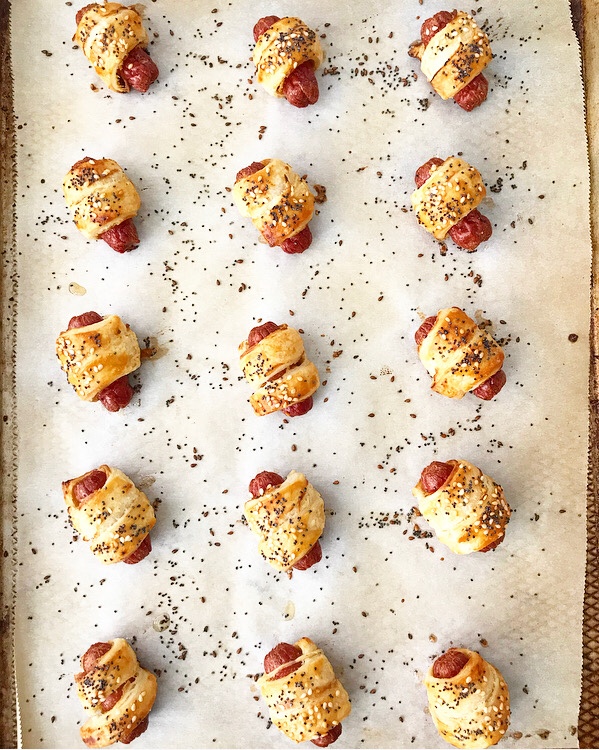 Bake the pigs in blankets for 15 minutes at 450F. The pastry will be gorgeous and golden when they’re done.
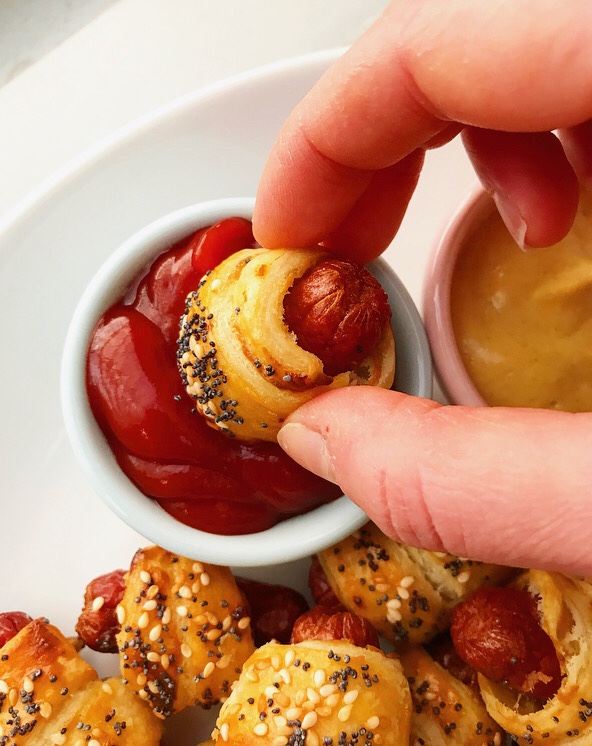
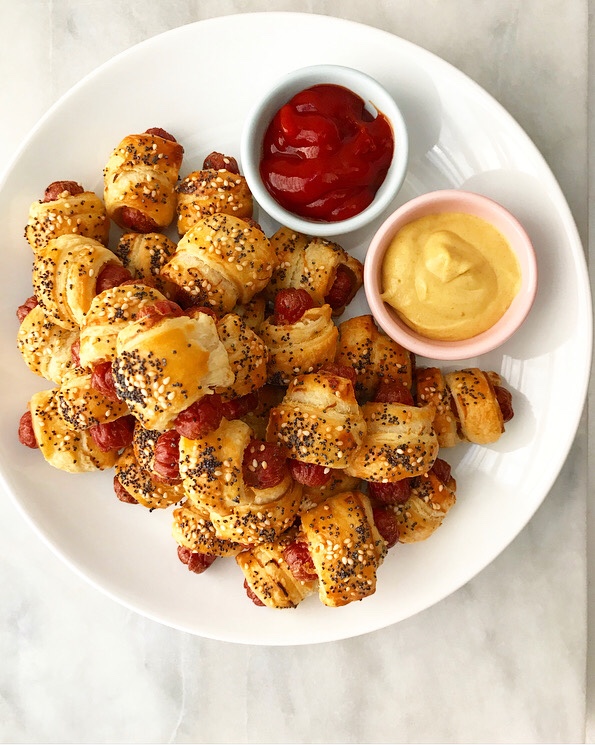 Serve ‘em with ketchup and more dijon mustard, or any condiment you like. Make sure to hoard a few for yourself before putting them on your Super Bowl table though because they’ll disappear before you know it, especially if I’m invited.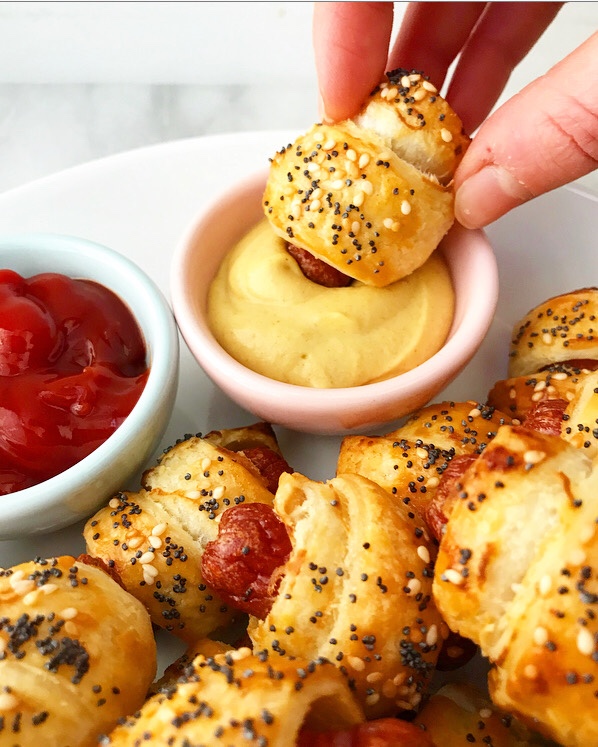


 If you go back and look at the order of recipes on this blog, you can clearly see my train of culinary thought. Last week, I posted three
  This week, I’m caramelizing everything. On Wednesday, it was
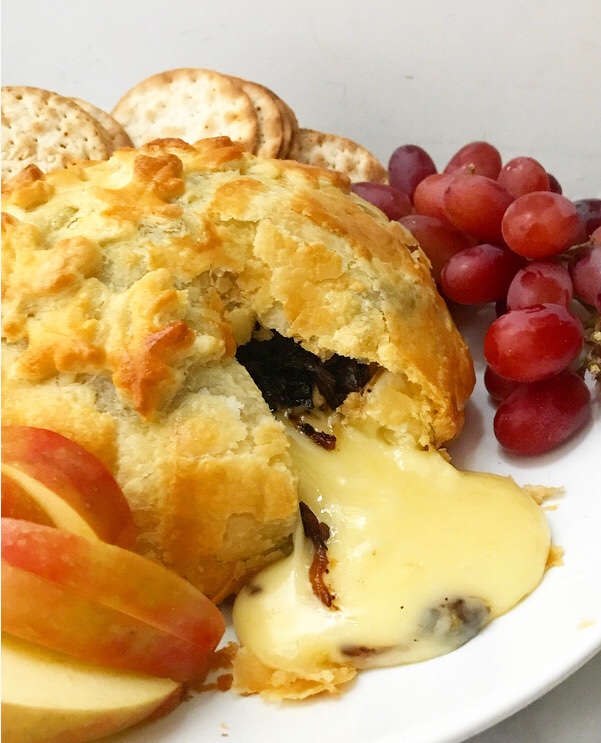
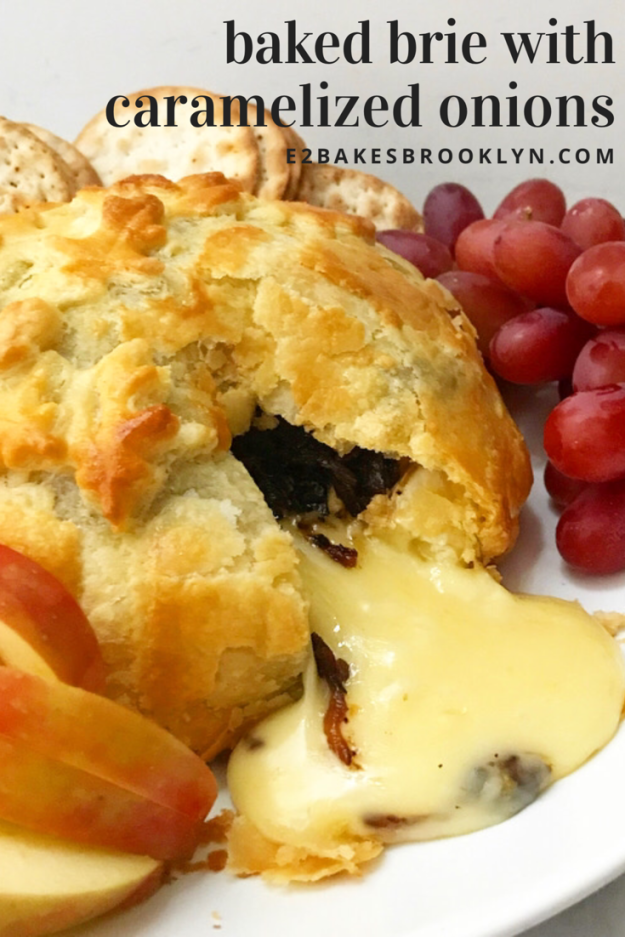
 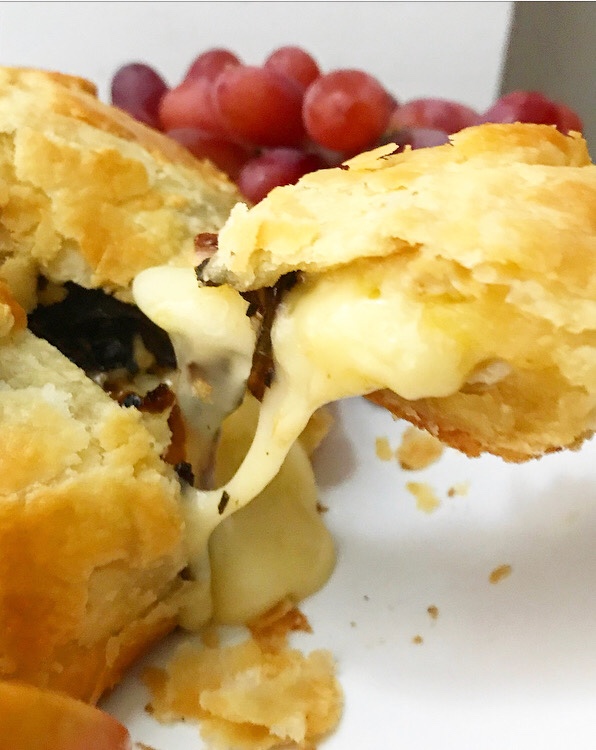 Baked brie is always a holiday hit—what’s not to love about the combination of melty cheese and flaky pastry?!—but I am all about the sweet addition of caramelized onions here. They’re cooked low and slow until they’re soft, sweet, and deeply browned. I like to add some minced garlic and fresh rosemary (it’s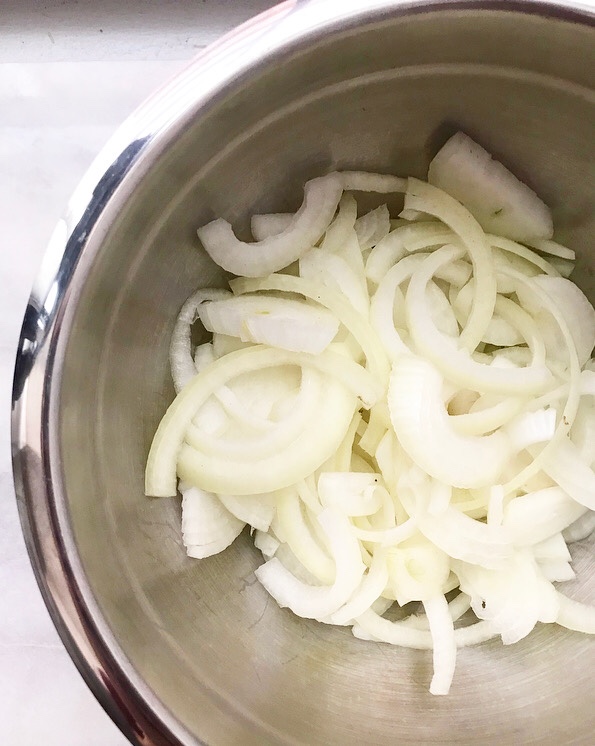
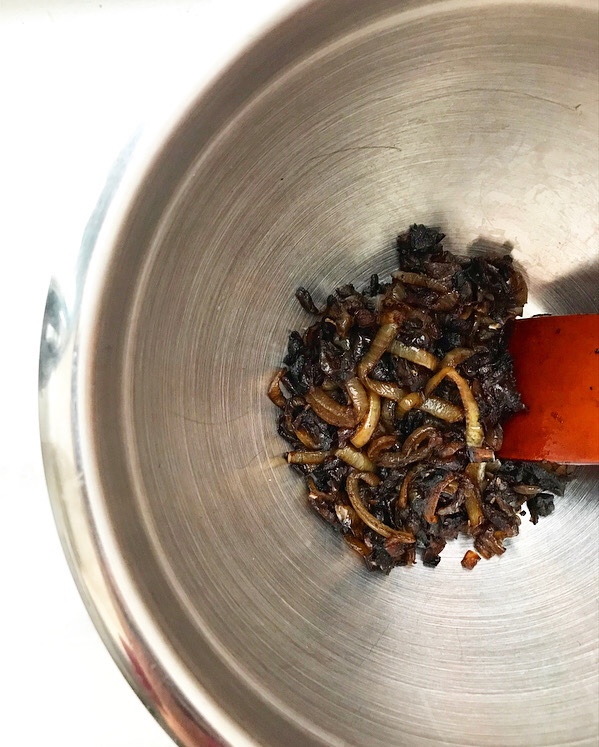 After the onions cool, it’s time to assemble the baked brie. Roll out a sheet of puff pastry (I use
 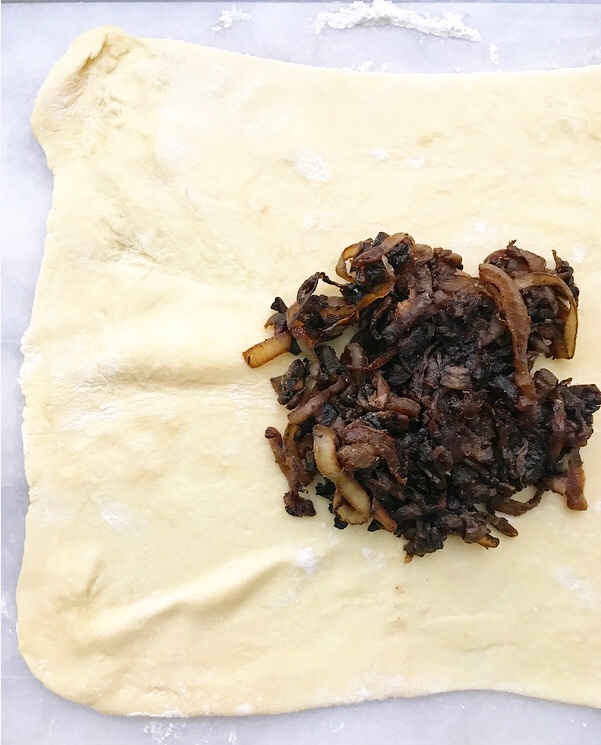 Smear a little dijon on one side of a wheel of brie and place it on top of the onions. The mustard flavor isn’t too pronounced here, but it’s sharpness helps offset the richness of the cheese and pastry.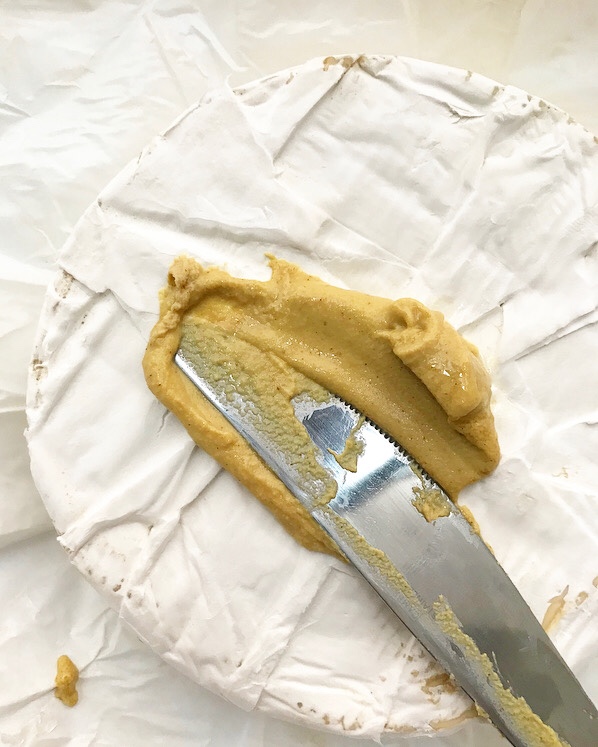
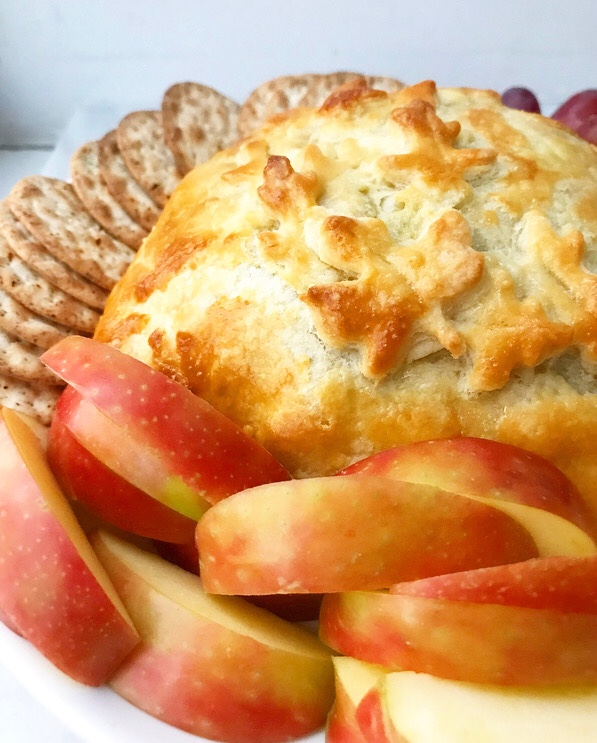
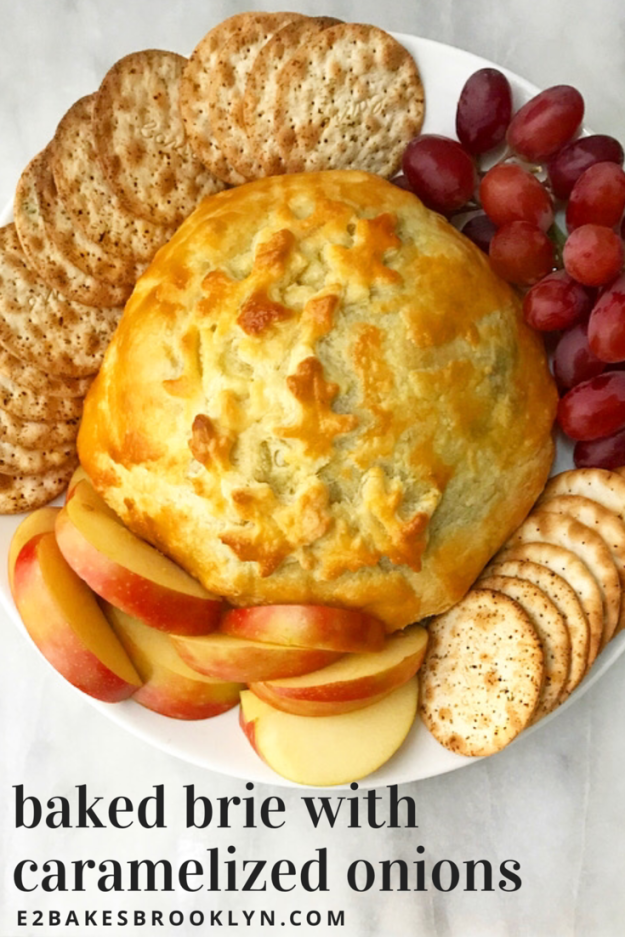
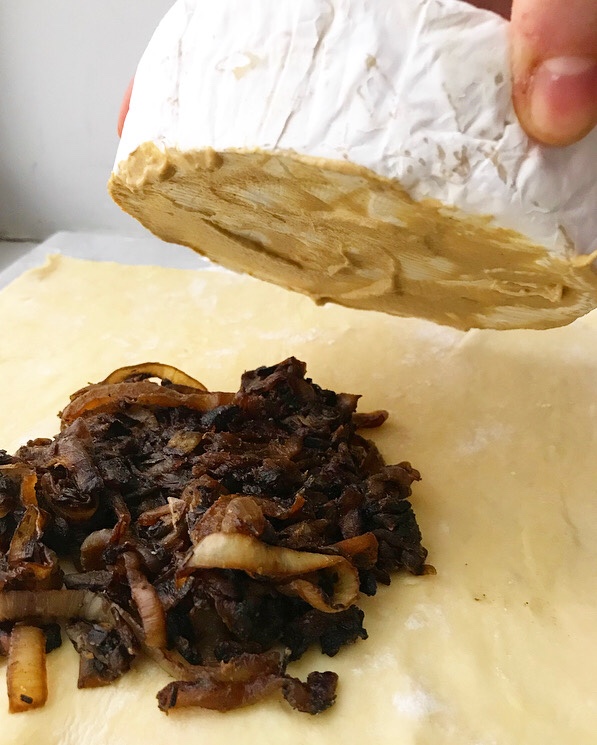 Wrap everything up tight, give it an egg wash glaze, and decorate with some little pastry leaves, if that’s the sort of thing you’re into.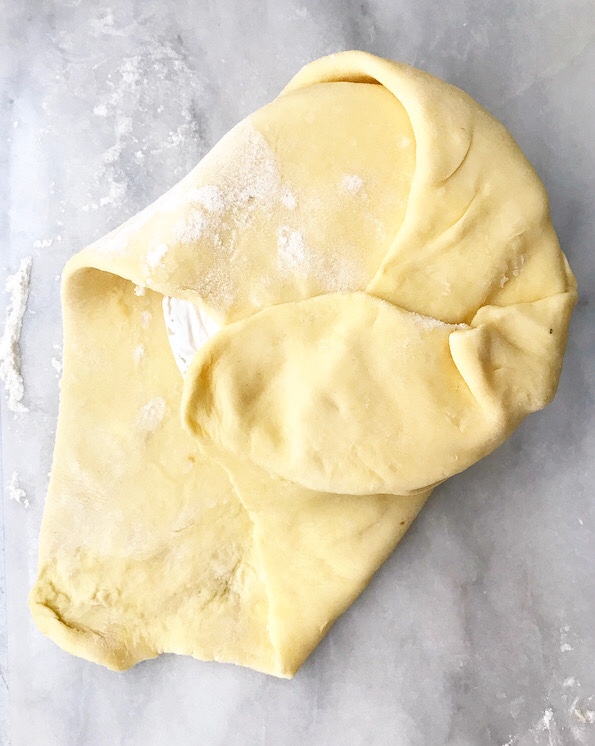
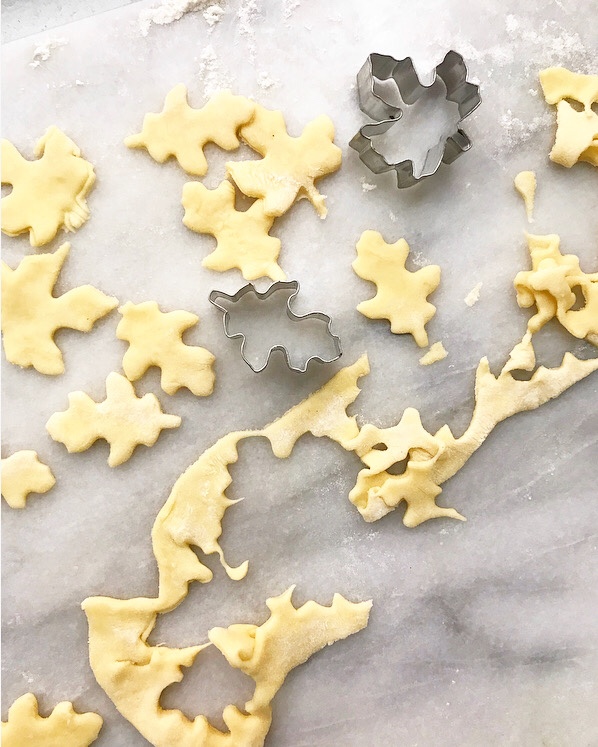
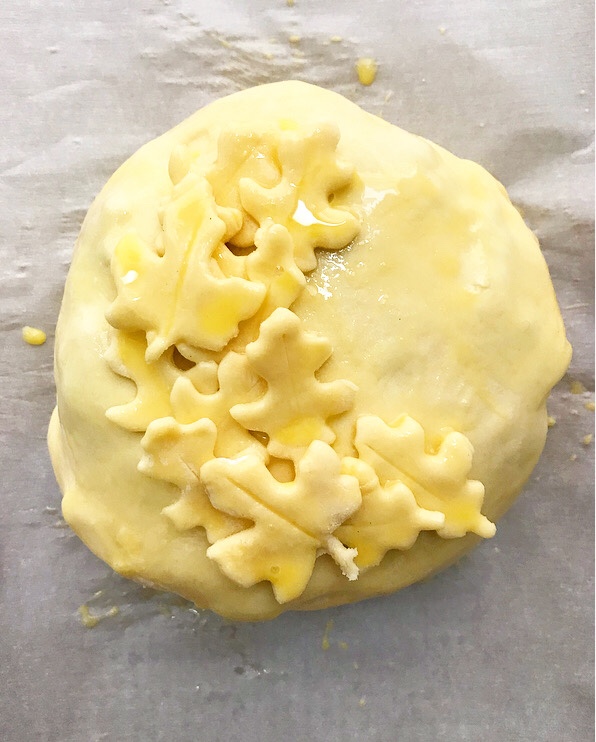
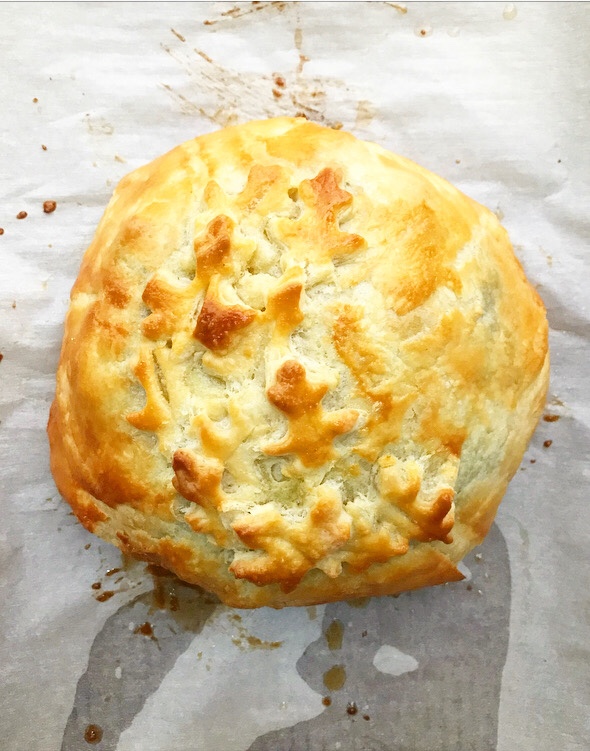 Bake the brie until the pastry puffs and turns golden. Wait a few minutes before serving it with seasonal fruit and the crackers you made your roommate go get from the overpriced cell-phone-dead-zone grocery store behind your building (and you didn’t even complain when he came back with some weird flavor instead of plain because you’re an adult and someone did you a favor)…
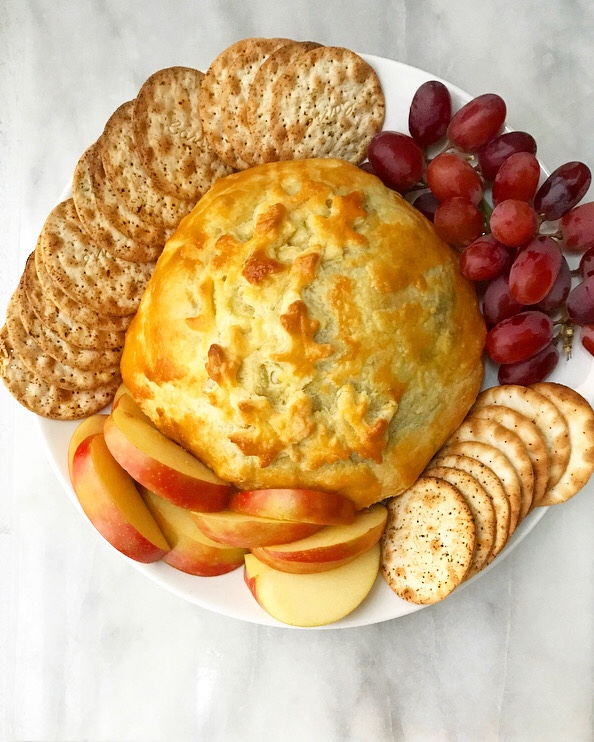 …um, what was that? Oops. Back to baked brie.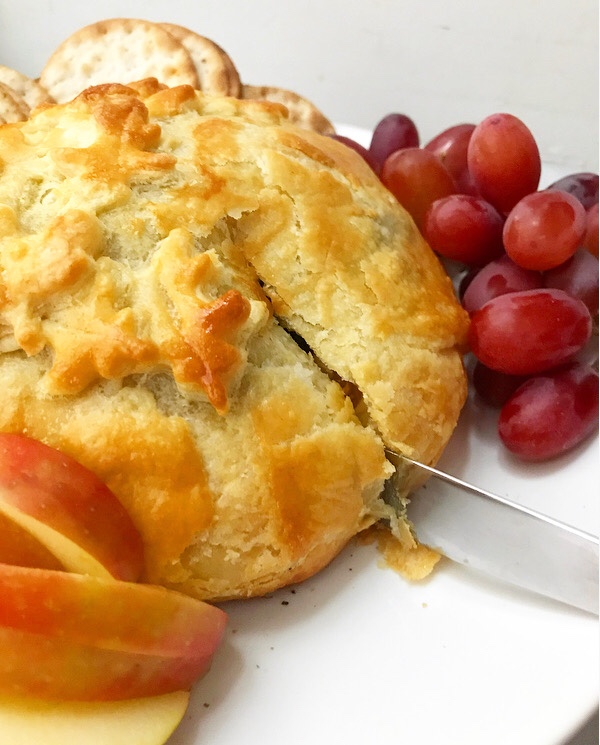
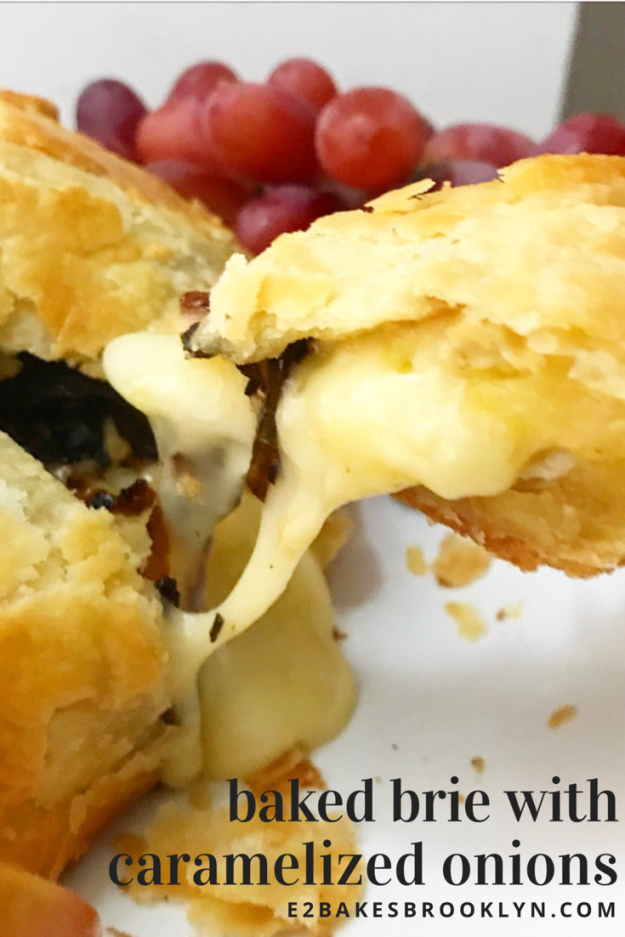
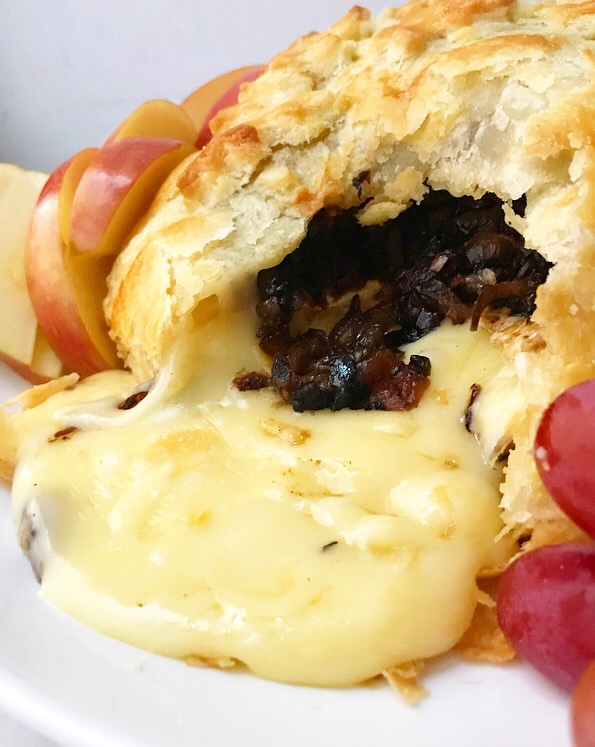 You’re going to love this brie, y’all! It’s rich and buttery, and oozes in the best possible way. One bite of this melty, cheesy, salty-sweet treat is worth every second it takes to cook those onions, I promise. I know all your holiday guests will agree.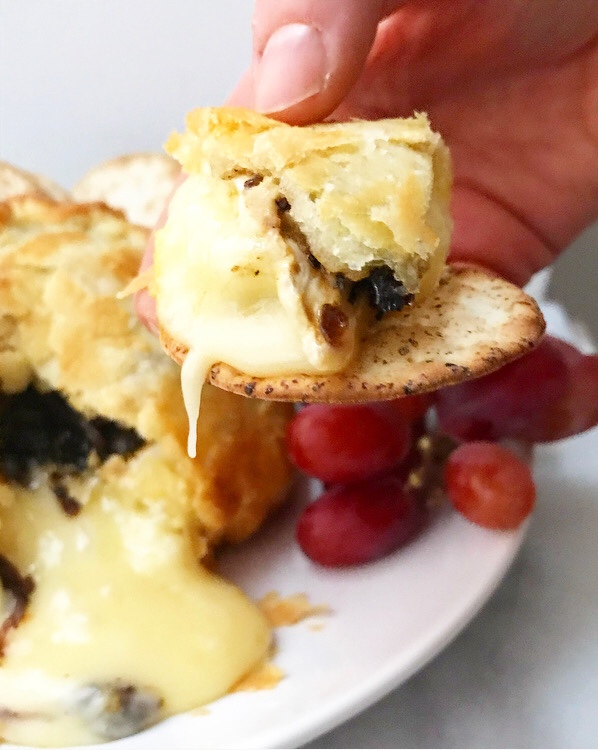
 Around this time every year, I draw a bit of a blank when it comes to this blog. I mean, I have plenty of ideas, but they are all autumn-related right now and I am a stickler for seasons. I know it’s getting cooler and the light is changing and all that, but it is technically still summer.
 We still have some
 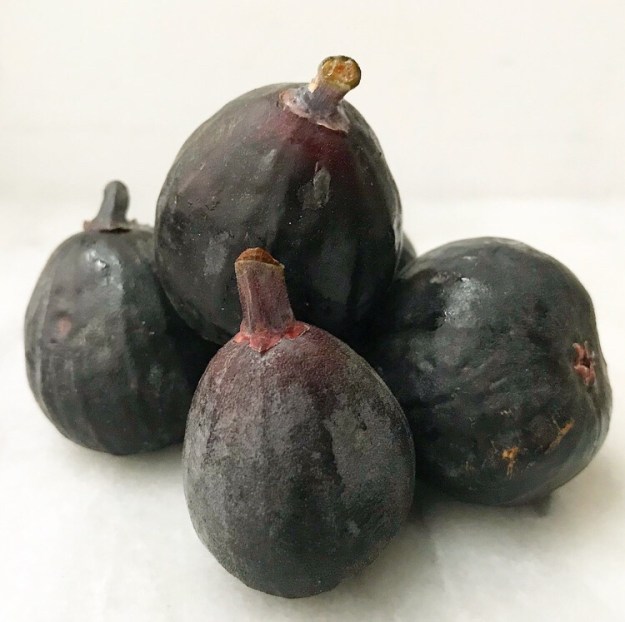 So, if I’m done with most summer produce and am not ready for fall, what’s left? Figs. So many figs. They are everywhere right now!
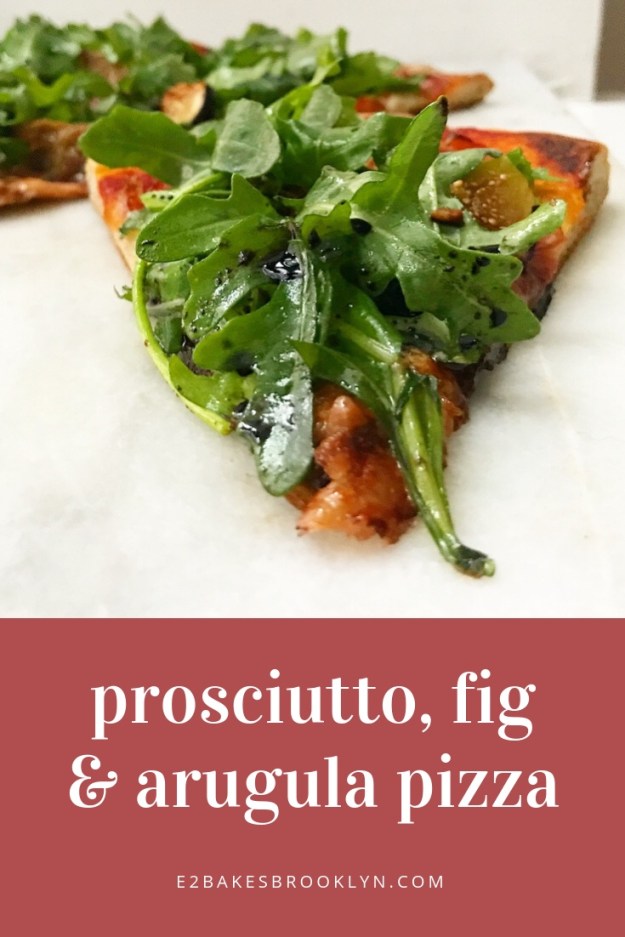
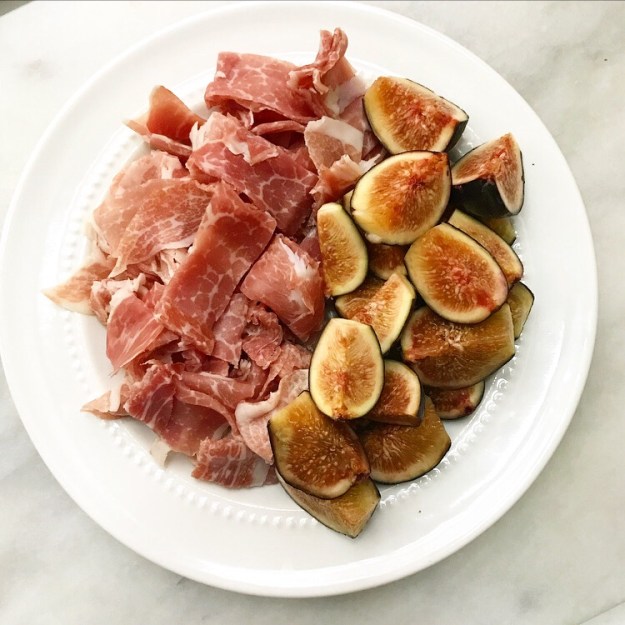 You know what goes great with fresh figs? Salty prosciutto. And arugula. And gorgonzola. And balsamic vinegar.
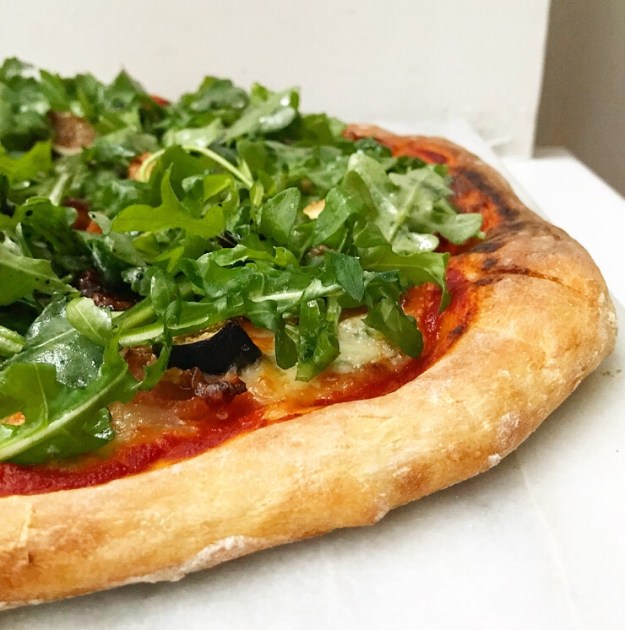
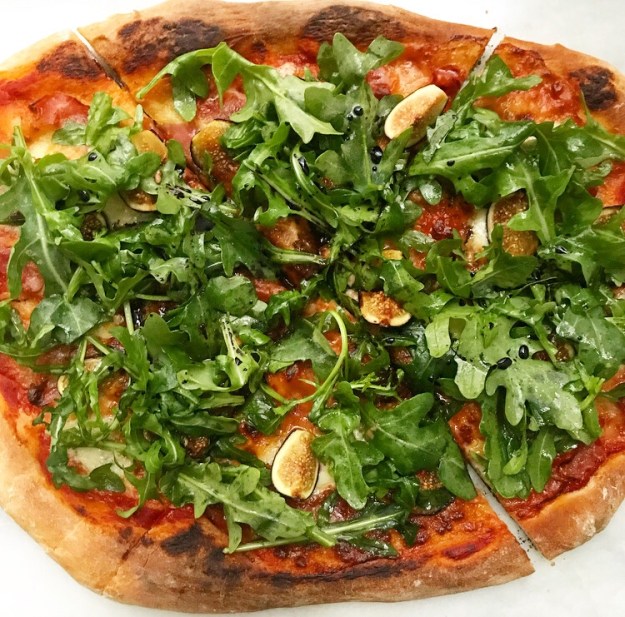 I could have taken all of these things and made a salad or something, but instead I threw them all on a pizza and you should, too.
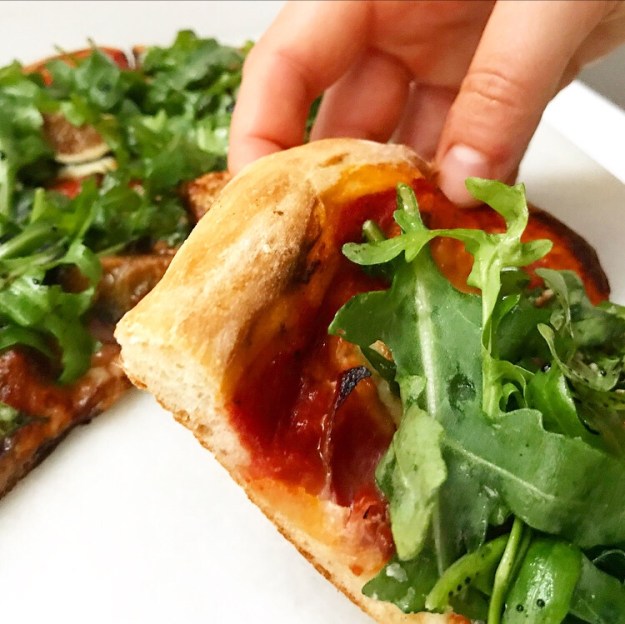 I take great pride in the quality of
 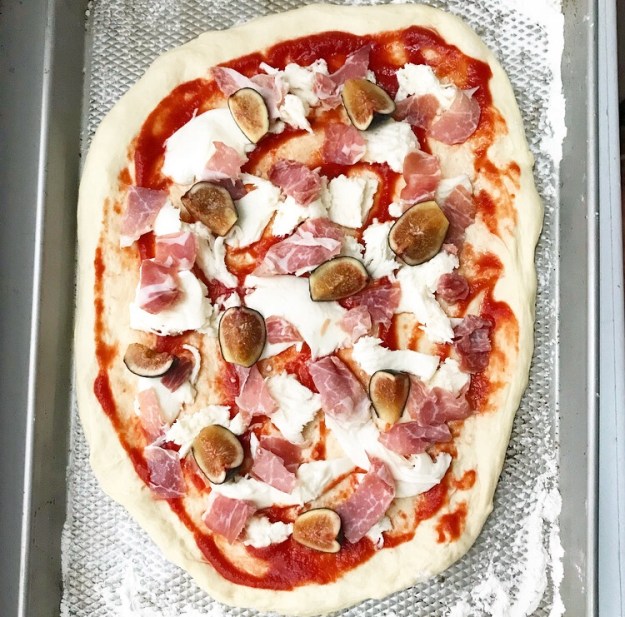 I let it start in a 500F oven before pulling it out, scattering some crumbled gorgonzola and a few more figs over the top (for variance in texture), and then throwing it under the broiler. I like to let it get a little crispy for a coal-oven-esque flavor.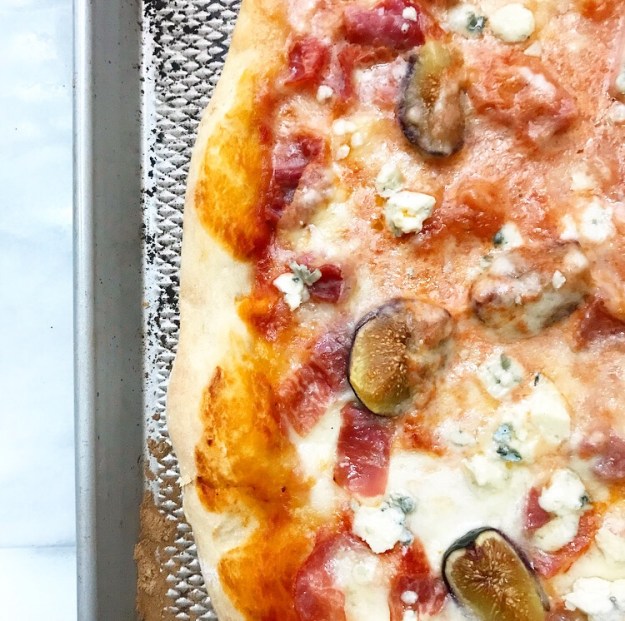
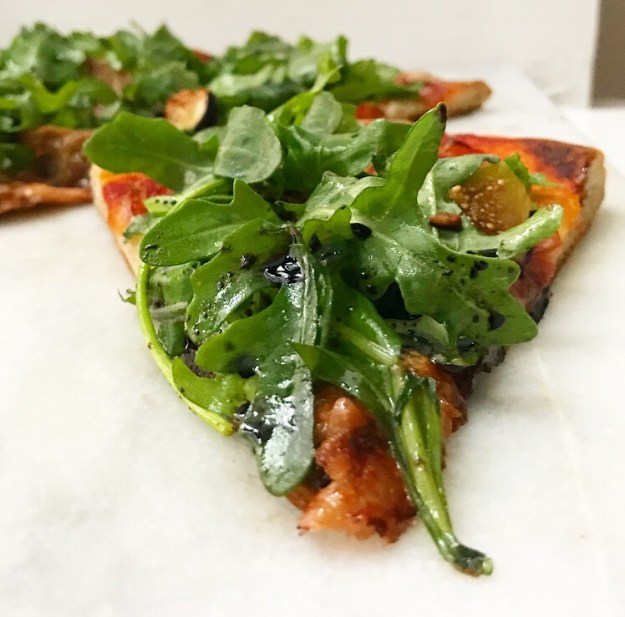
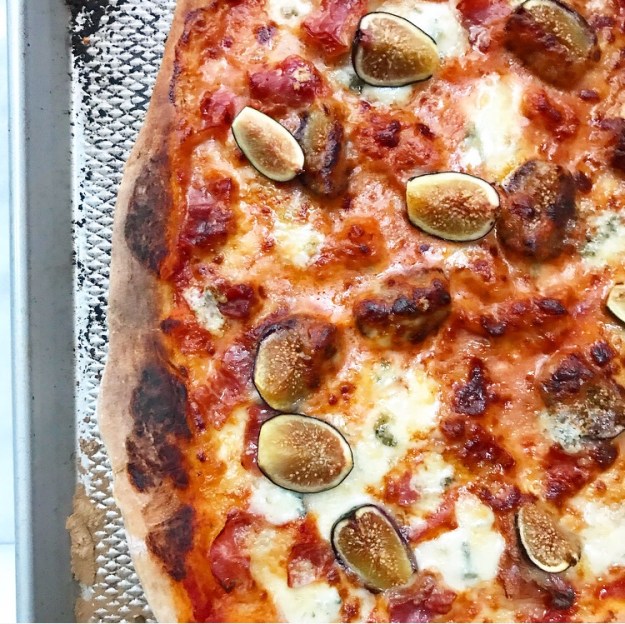 Next comes a bed of arugula that’s been tossed with olive oil. I love the contrast of these peppery greens with the saltiness of the prosciutto and the jammy figs.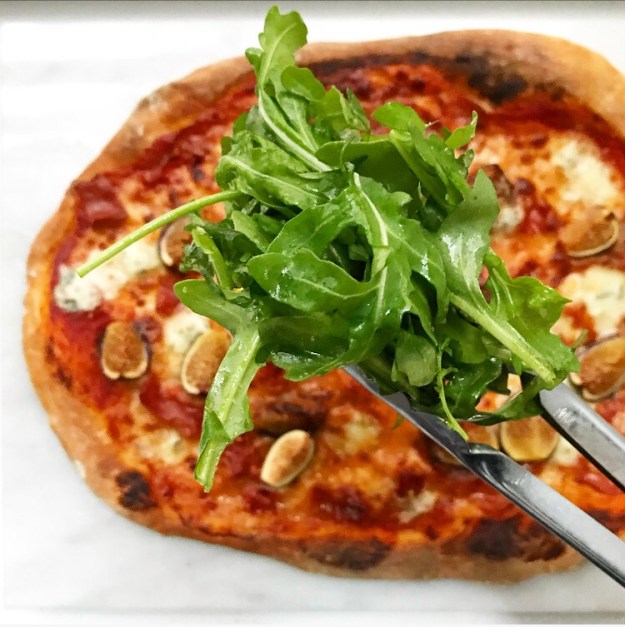
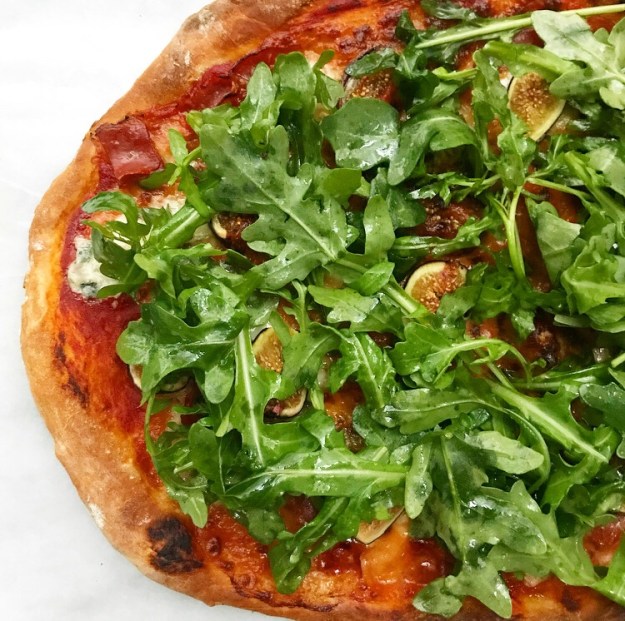 This pizza gets finished off with a drizzle of balsamic vinegar that’s been reduced to a thick, sweet syrup. Mmhmm.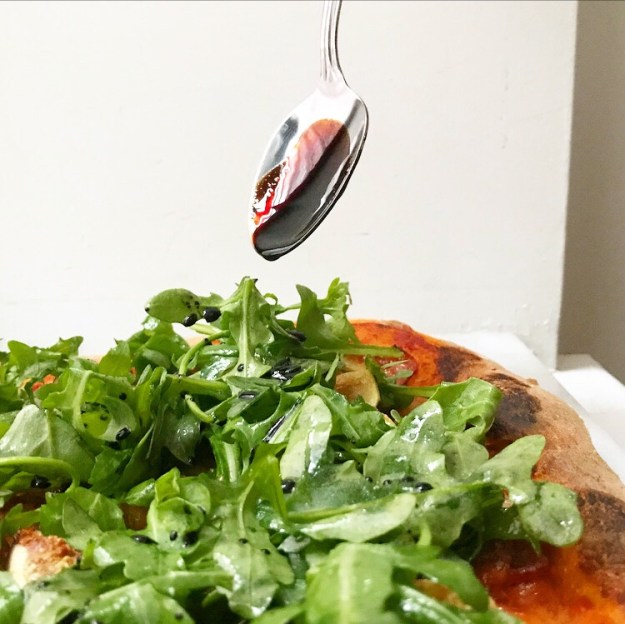
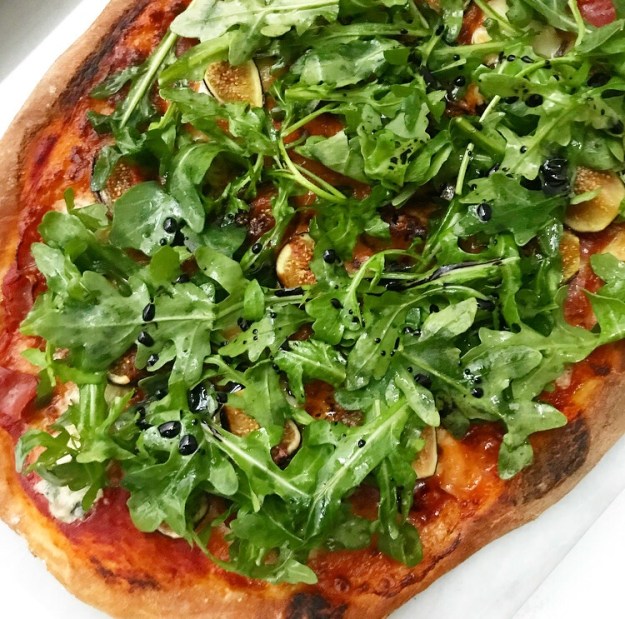 Oh, y’all. This is really good. Like I-ate-half-a-pizza-and-feel-absolutely-no-remorse good.
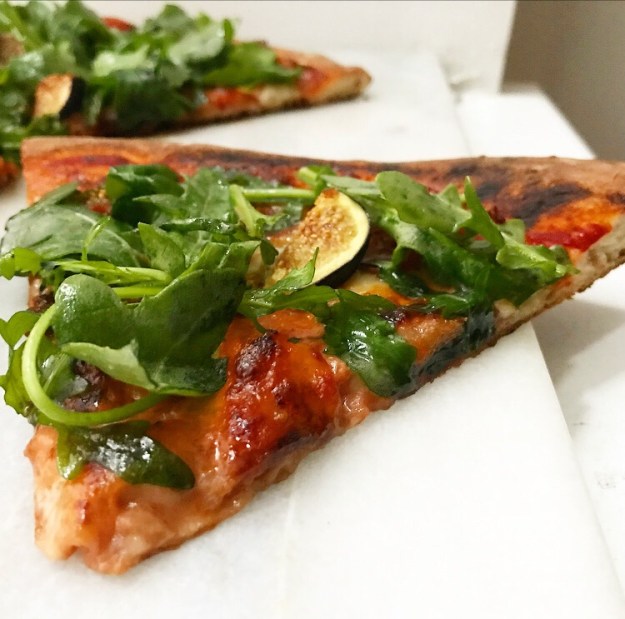 It’s a good thing the recipe makes two pizzas. That’s one for you and one for me, okay?!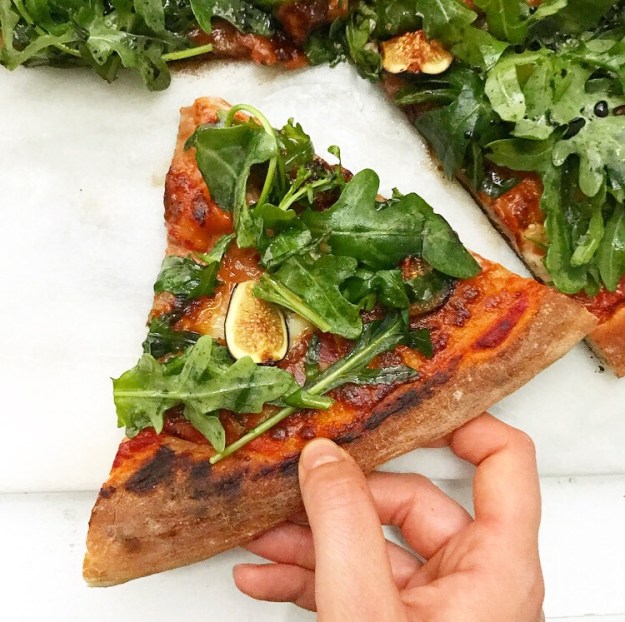
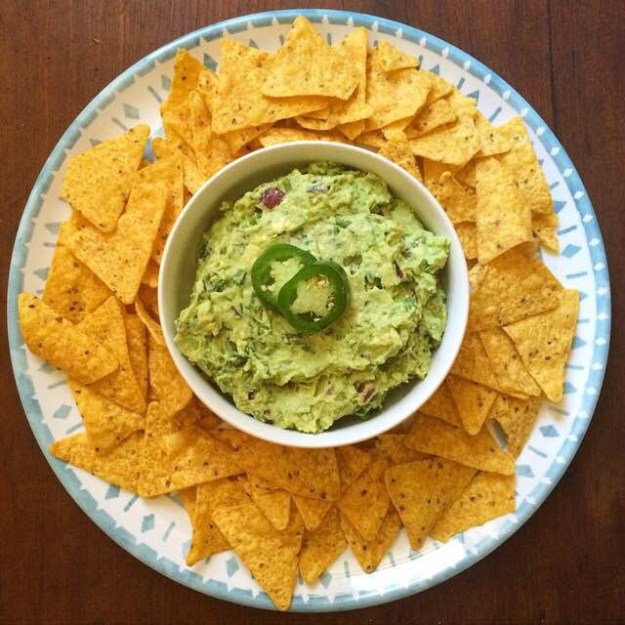
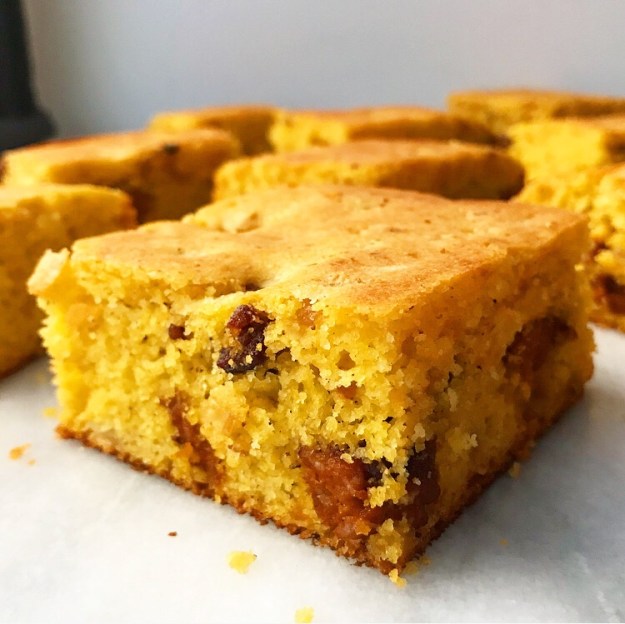
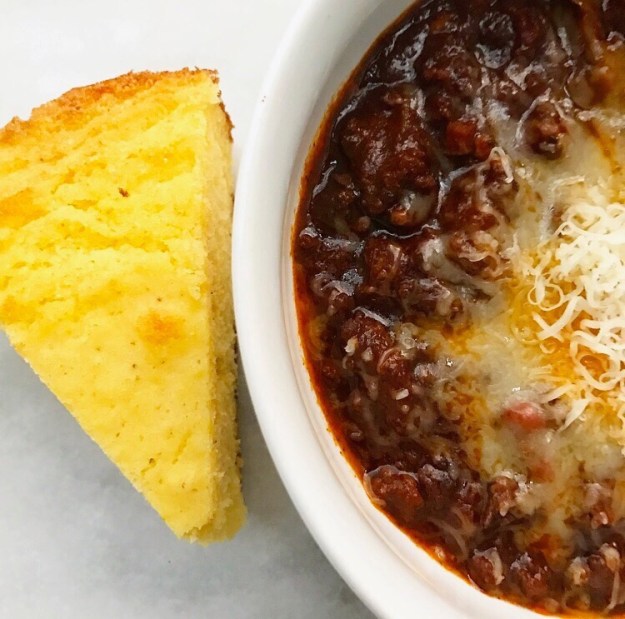
 Will you be serving any of these dishes next Sunday? Let me know on
  e2 bakes brooklyn