Category Archives: Savory

Cheesy Pizza Crackers

Oh, hello. You might be wondering where I’ve been. The answer to that is mostly working and in Broadway theaters, but what else is new?
Cheesy Pizza Crackers​

The pertinent information is really that my oven died. Well, she started dying in October, then actually died two days before Christmas—the worst possible timing. She was brought back to life by a new heating element in January, then died again (!) when the little computer that makes her work went kaput one morning while I was making French Onion Scones—more on those soon.

Rest assured, she lives once again. As do I, and I am here to bake and blog another day. Because, as a friend and I recently discussed, I really don’t know who I am if I’m not baking. Even if I’m not posting, I’m still baking. This unlikely hobby-turned-job of mine is so tightly wrapped into who I am that it’s kind of incredible. I know it sounds cheesy, but it’s true.
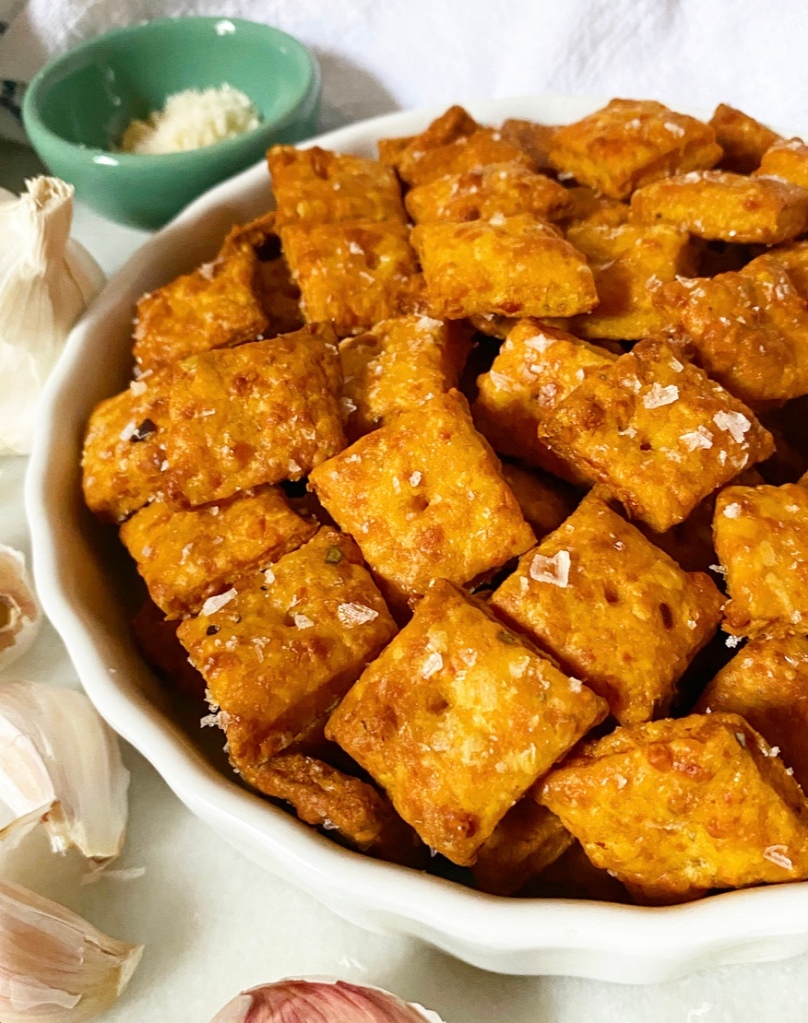
Cheesy Pizza Crackers​

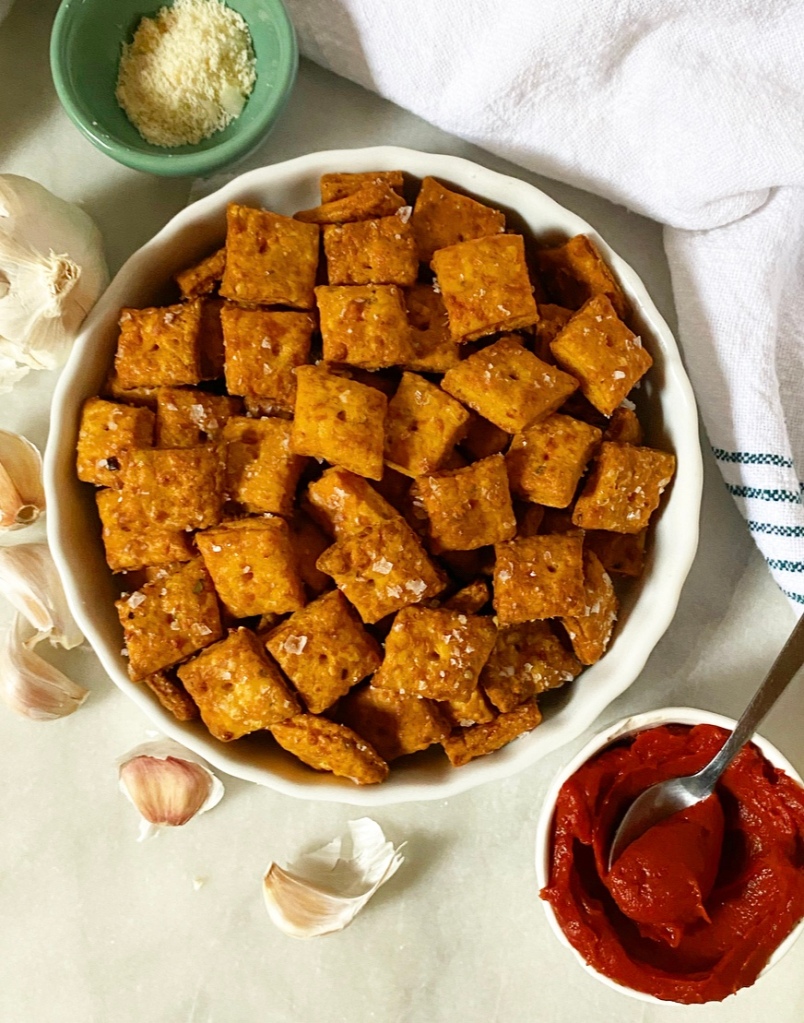
And anyway, cheesiness is on brand for today’s recipe: Cheesy Pizza Crackers. They’re savory, spicy (if that’s your deal), and with both mozzarella and Parmesan, they’re definitely cheesy. Beyond that, these crackers are flavored with garlic powder, oregano and red pepper flakes, and bound with tomato paste. They’re crispy and crunchy and reminiscent of everything good at your favorite pizzeria.

I recommend eating them by the handful.
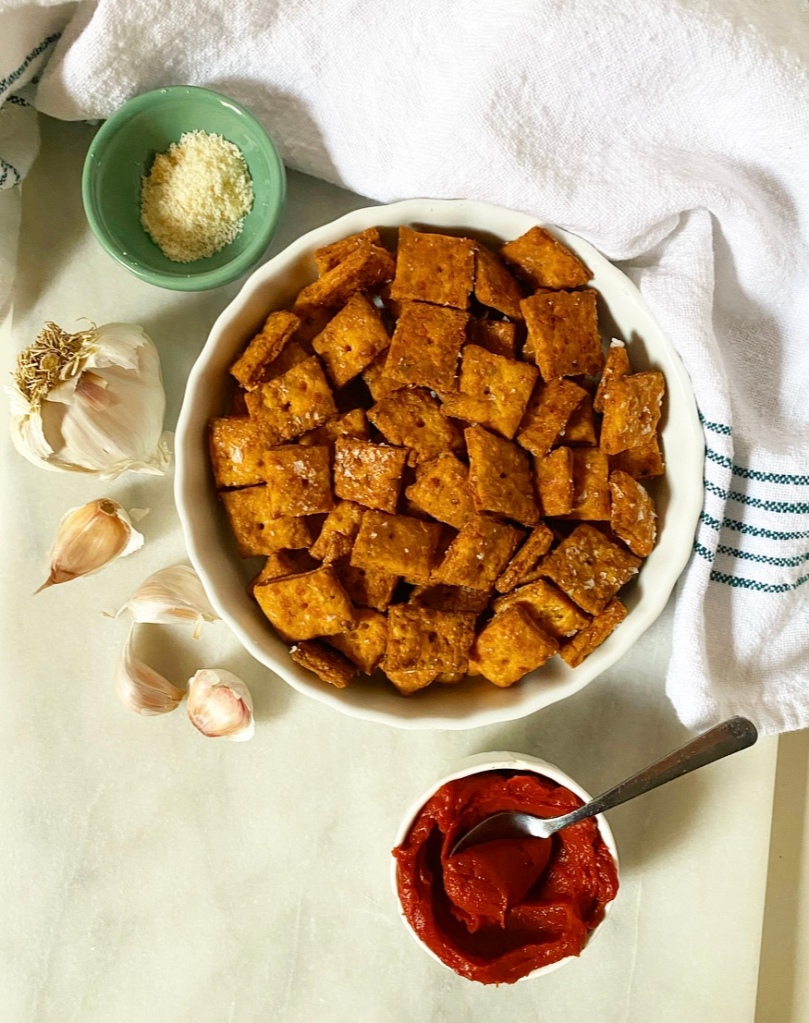
Cheesy Pizza Crackers​
Cheesy Pizza Crackers
makes lots

1 3/4 cup all-purpose flour
1 1/2 teaspoons granulated sugar
1 1/2 teaspoons garlic powder
1 1/2 teaspoons dried oregano
1/4-1/2 teaspoon red pepper flakes (optional, to taste)
3/4 teaspoon Kosher or sea salt
8 ounces whole milk low-moisture mozzarella (not fresh!), grated by hand (not pre-shredded!)
1/4 cup finely grated parmesan
1/2 cup (1 stick) unsalted butter, cold, cut into pieces
2 teaspoons tomato paste
1/3 cup cold water
flaky salt, for finishing

Place oven racks in the central positions. Preheat oven to 400F. Line two sheet pans with parchment paper.

In a food processor, combine flour, sugar, garlic powder, dried oregano, red pepper flakes, salt, grated mozzarella, parmesan, butter and tomato paste. Process until combined, with no large pieces of cheese or butter. Add water and process until dough starts to gather into a ball.

Flour your hands, a surface, and a rolling pin. Turn the dough onto the surface and give it a couple of kneads to combine. If you do not want to make crackers immediately, wrap the dough in plastic and refrigerate it for up to 3 days. When you’re ready to bake, you may roll it out cold or at room temperature.
Divide it in half. Loosely cover one half with plastic wrap or a clean kitchen towel. Roll the remaining half of the dough out to 1/8-inch thickness. Use a large, sharp chef’s knife (or bench scraper) to cut it into 1-inch squares. Carefully transfer squares to the baking sheets. Poke each square with a toothpick or other object to let steam out. Sprinkle with flaky salt.

Bake crackers 16-17 minutes, rotating the pans at the 10 minute mark for even browning. Let crackers cool on the pans. They will fully crisp up as they cool. Repeat rolling and baking with remaining dough and scraps.

Crackers will keep in an airtight container at room temperature for at least a week.

Note:

If you do not want to make crackers immediately, wrap the dough in plastic and refrigerate it for up to 3 days. When you’re ready to bake, you may roll it out cold or at room temperature.
French Onion Pinwheels

I usually concentrate on pie this time of year, and that’s great—pie is great!—but my favorite part of Thanksgiving is the hors d’oeuvres. Especially if there’s cheese involved (which there absolutely should be).

French Onion Pinwheels​

Over the years, I’ve made a cheesy tarte soleil, a flaky baked brie, savory cheddar shortbread, baked feta, and twisty rosemary Parmesan straws, all of which are worthy of the pre-meal spotlight. This year’s recipe finds you while I’m in the middle of a French Onion hyperfixation, so it’s all about caramelized onions and gruyere wrapped up in homemade (or not) flaky pastry.

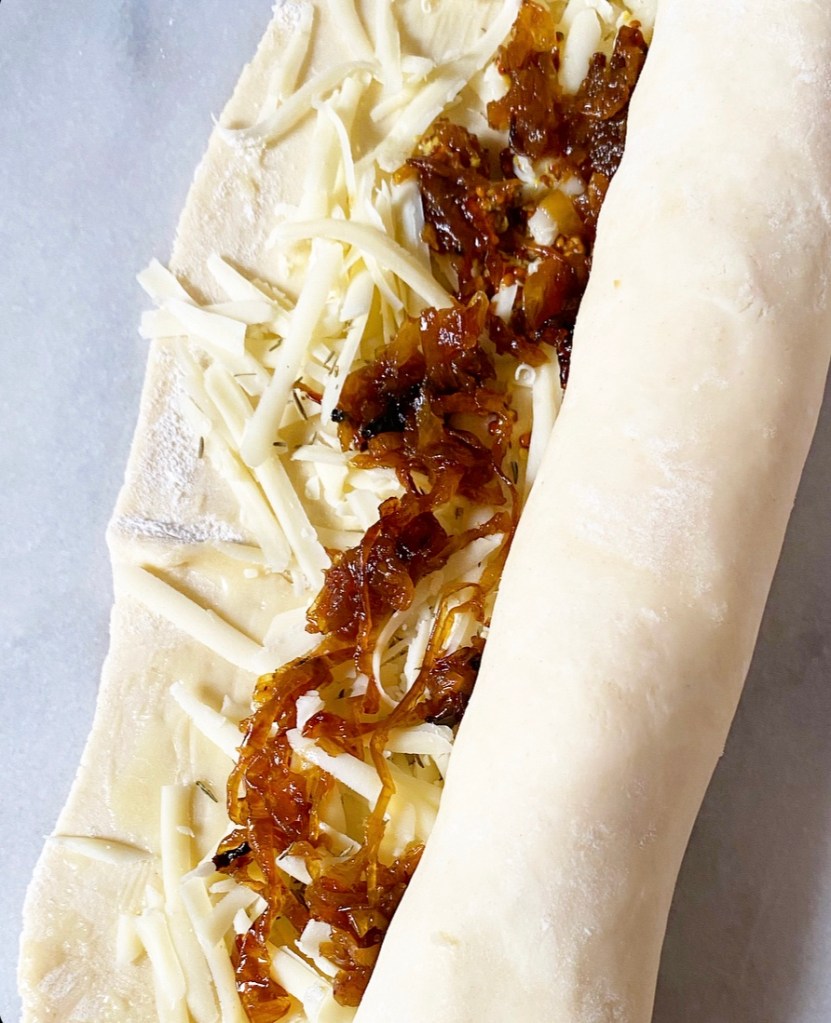
Simply take a sheet of puff pastry (I used homemade rough puff) and layer on everything good.

…or to be more specific, layer on melted butter, dijon or grainy mustard, gruyere, dried thyme and the caramelized onions you made in your oven while making some side dishes. Roll the whole thing up into a cylinder, give it a brief chill, then slice and bake.

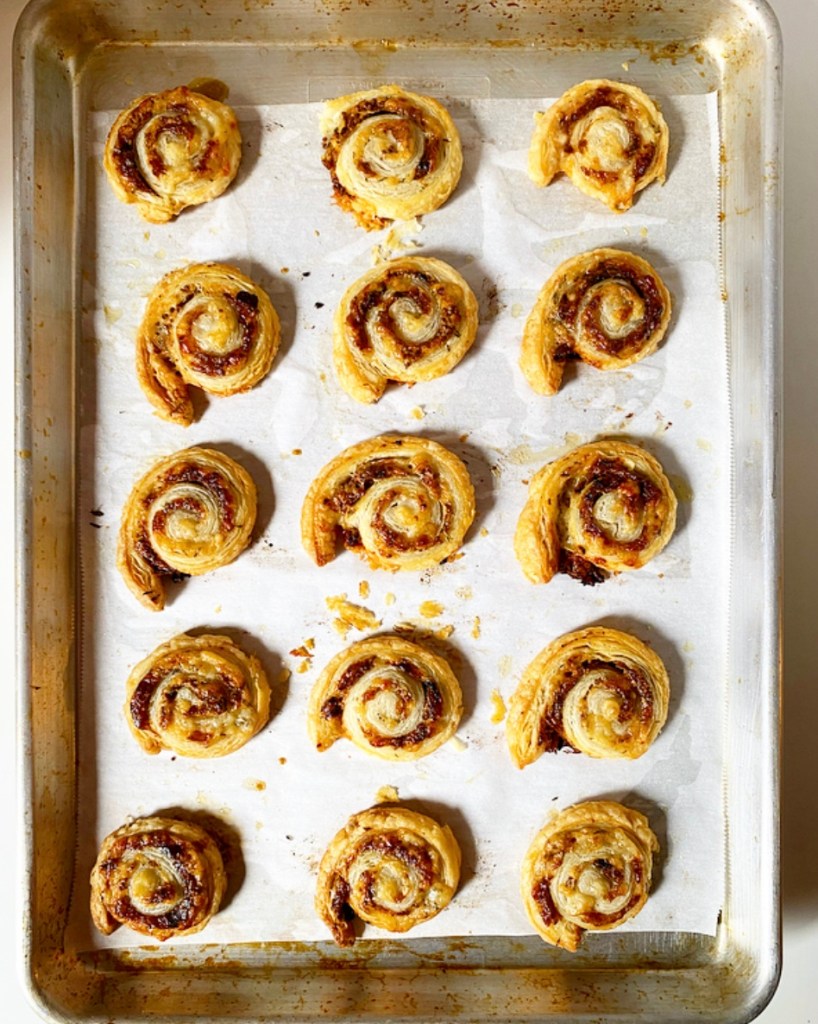
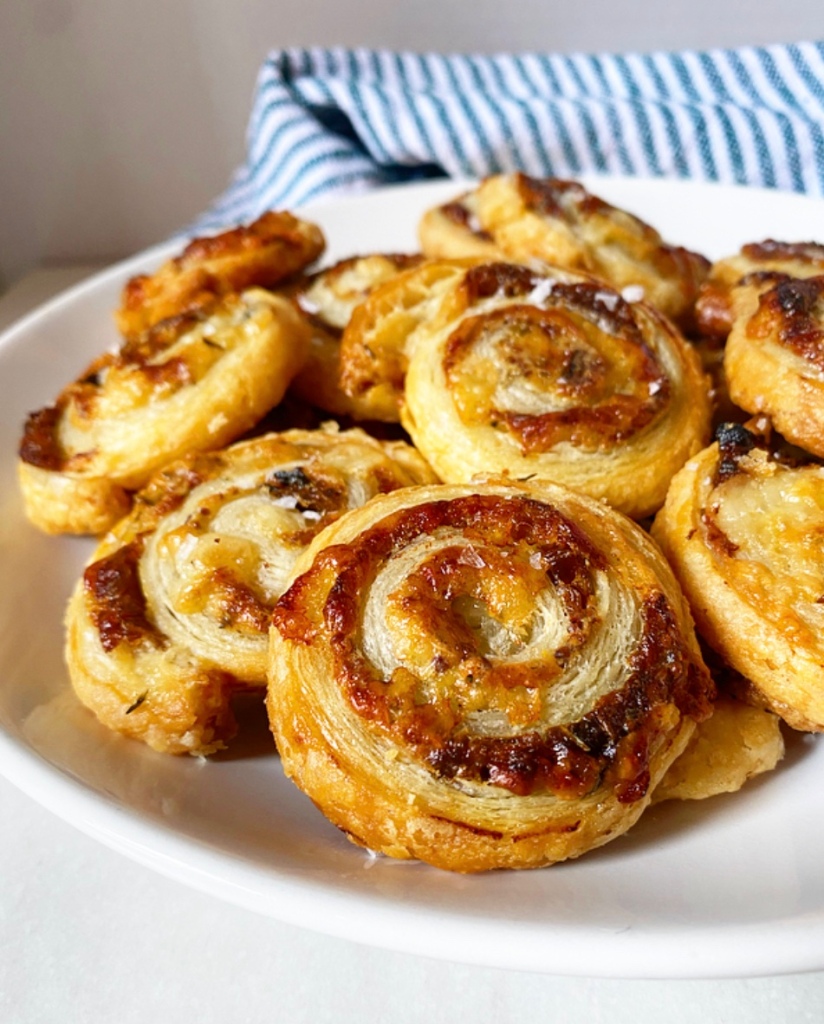
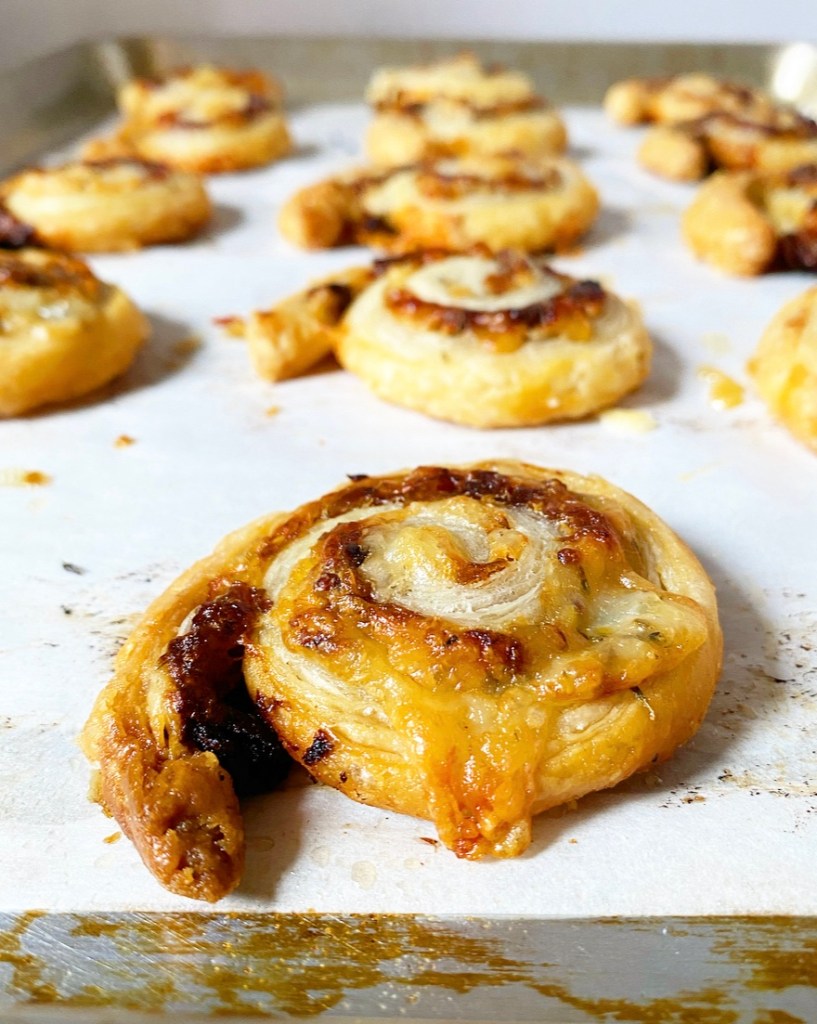
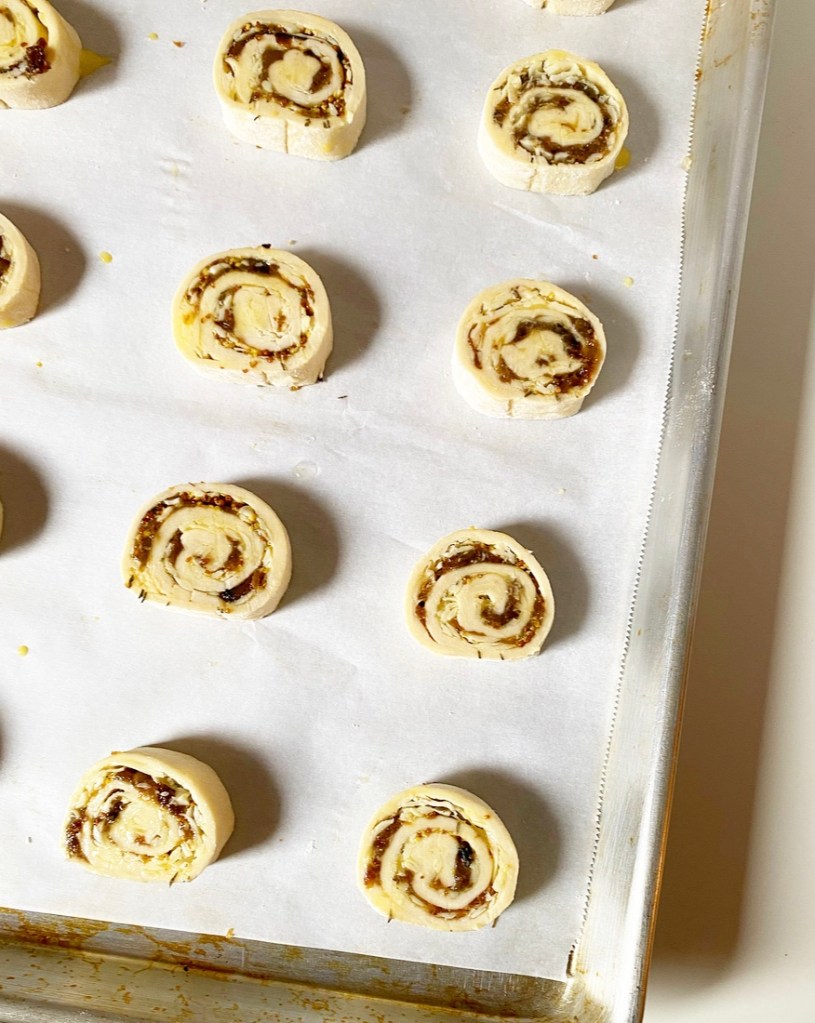
Ugh, can you even take how delicious these look? Golden and flaky, with bubbly cheese puddles and onions peeking through—simply gorgeous. And delicious, too.

French Onion Pinwheels​
French Onion Pinwheels
makes 22-24 pinwheels

Egg Wash:
1 large egg
1 teaspoon cold tap water

Pinwheels:
1 batch rough puff pastry (recipe below) or 1 sheet frozen thawed puff pastry
1 tablespoon melted butter, cooled slightly
1 tablespoon dijon or whole grain mustard
6 ounces gruyere cheese, freshly grated
1/2 teaspoon dried thyme (or 1 tablespoon fresh thyme leaves)
2/3 cup caramelized onions

Make the egg wash. In a small bowl, use a fork to whisk together egg and water. Set aside.

Make the pinwheels. Flour a surface and a rolling pin. Unfold puff pastry and roll to a 10x14-inch rectangle.

Use a pastry brush to brush a thin layer of butter over the surface of the pastry, leaving a 1/2-inch border on all sides.

Spread mustard over the butter. I find this easiest to do by dropping it in spoonfuls over the top, then spreading it out. It doesn’t have to be perfect; it’s going to be rolled up!

Scatter grated gruyere over the top, then sprinkle on the thyme. Drop caramelized onions over the cheese.

Paint the 1/2-inch border on one 14-inch side with egg wash. Starting at the other 14-inch side, tightly roll pastry together like you would cinnamon rolls. Lightly flour a pan or cutting board and place the rolled pastry on top. Freeze for 30 minutes or refrigerate for up to a day.

Preheat oven to 400F. Line two rimmed sheet pans with parchment paper. Set aside.

When freezing time is up, remove the rolled pastry back to the floured surface. Flour a large, sharp chef’s knife and use it to slice the roll into 1/2-inch pieces. Place them 2 inches apart on prepared pans. Brush each with egg wash.

Bake 18-20 minutes, or until golden and puffed. Let cool on their pans for about 5-10 minutes. Serve warm or at room temperature.
Leftovers should be kept in the refrigerator for up to 3 days.
Rough Puff Pastry
makes 1 sheet

1 cup all-purpose flour
1/4 teaspoon Kosher or sea salt
5 ounces unsalted European-style butter, very cold, cut into small pieces
1/4 cup water or milk, very cold

In a large mixing bowl, whisk together flour and salt. Use a pastry blender or two forks to cut butter into dry ingredients until the largest pieces are the size of small peas. Pour in cold water or milk and stir with a silicone spatula or wooden spoon until a shaggy dough forms.

Flour a surface and a rolling pin. Turn dough out onto surface, and use your hands to pat it into a rough rectangle. Roll the dough into an 8x10" rectangle. Fold dough in thirds, and give it one quarter turn. Roll into an 8x10" rectangle again, fold, and turn. Repeat rolling, folding, and turning until it has been done six times total. Wrap folded dough in plastic wrap and refrigerate for at least one hour, or up to 48 hours.

How to Caramelize Onions in the Oven

Caramelized Onions may have hit peak popularity in the 80s, but they’re always in style in my kitchen. They add depth and sweetness to any savory dish—an ideal quality when you’re planning a holiday meal.

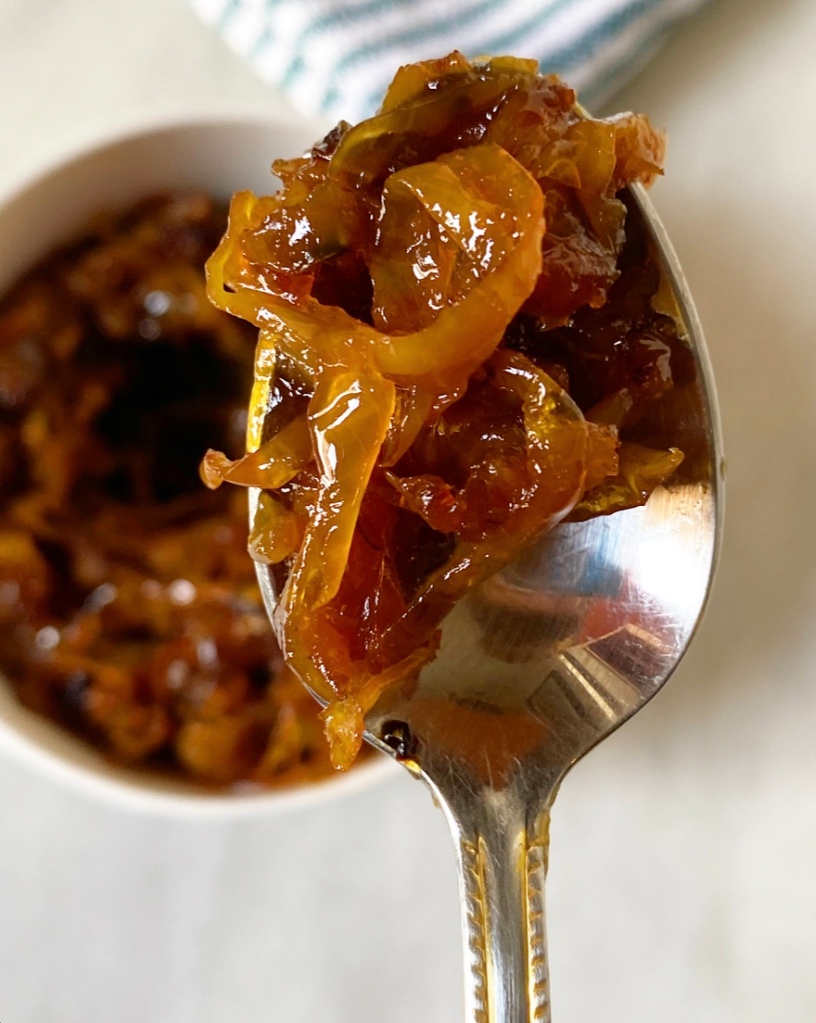
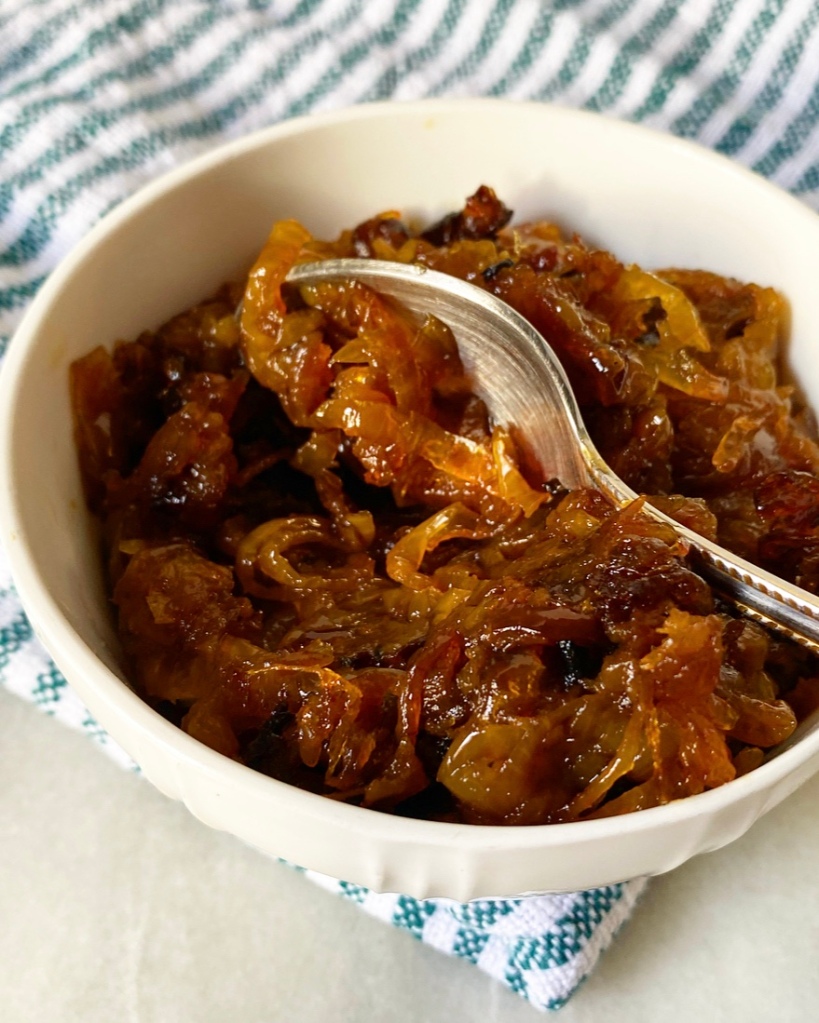
How to Caramelize Onions in the Oven​

Need to jazz up your mashed potatoes? Add caramelized onions. Looking for a quick compound butter? Caramelized onions to the rescue. Want to change up your cheese plate? Four words: Caramelized Onion Baked Brie.

Truly, there’s no wrong way to use them. The problem is that caramelizing onions takes time and attention. If someone tells you that they can caramelize onions in fifteen minutes, they are lying—this is more of an hour spent over the stove kind of project. Or at least, it was.

Nowadays, I’ve taken to caramelizing onions in the oven. It takes a while—a couple of hours at least—but it’s mostly inactive work time. If I’ve got the oven on for something, there’s a decent chance that I have a foil-wrapped casserole dish full of onions somewhere in there too, using up that heat. It’s a hack I use often, and it’s particularly perfect for a time of year when the oven is almost always on. Two birds and all.

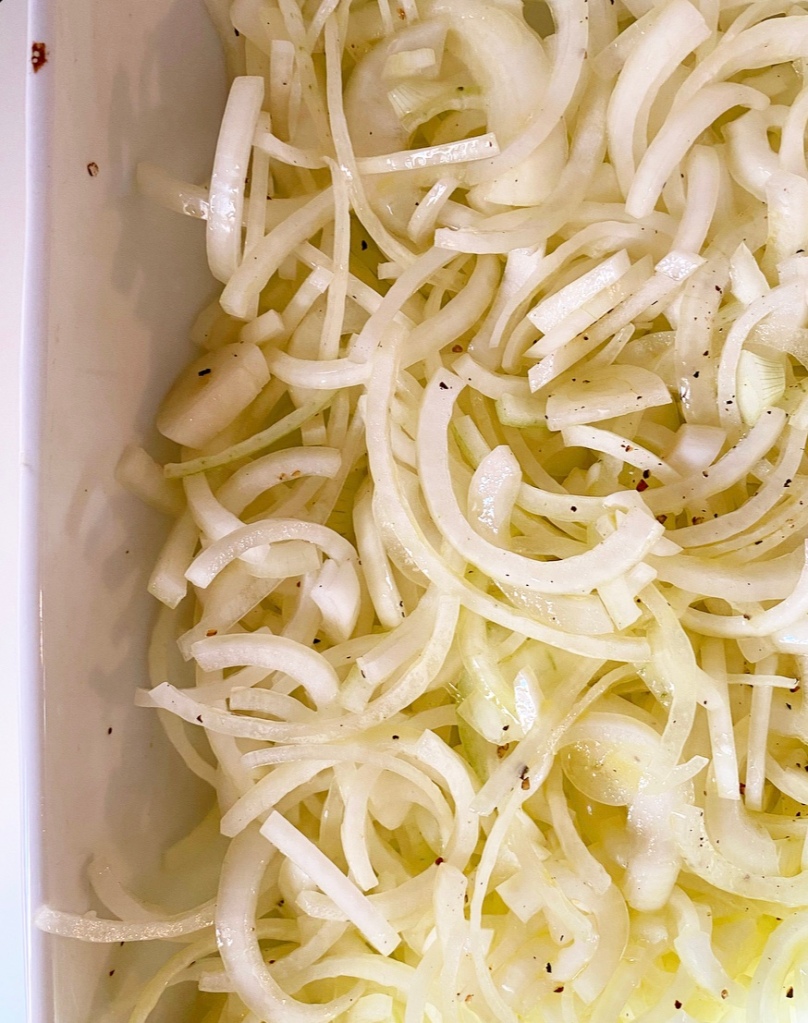
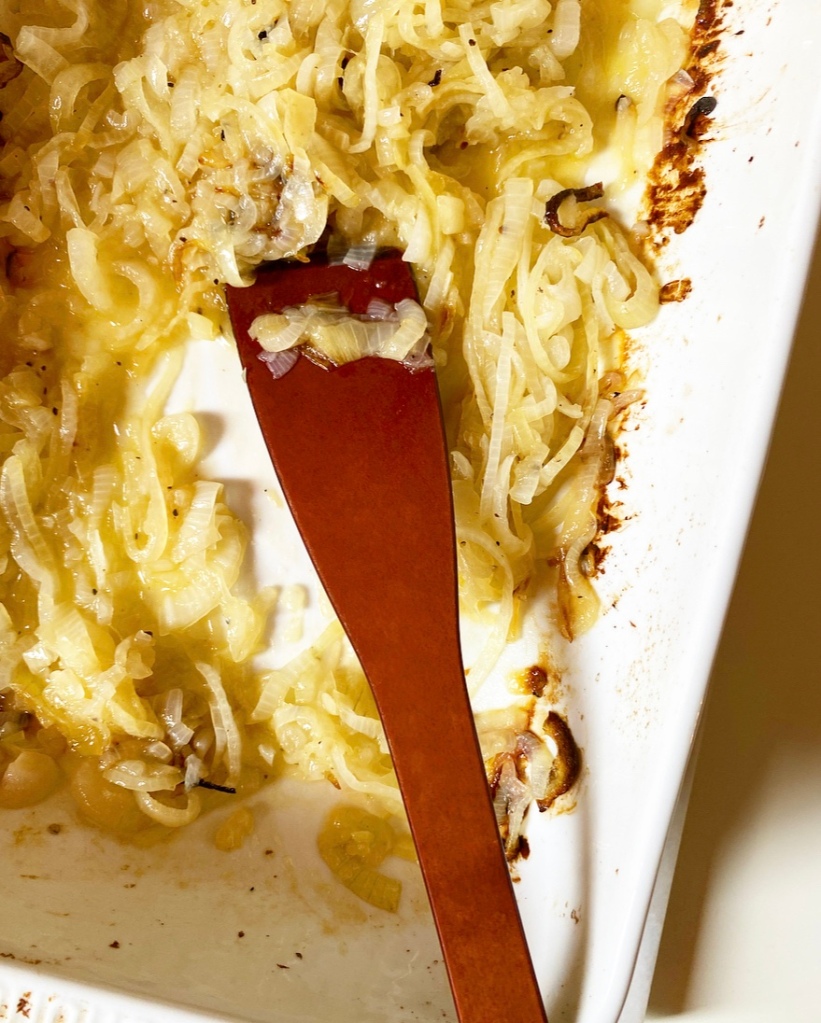
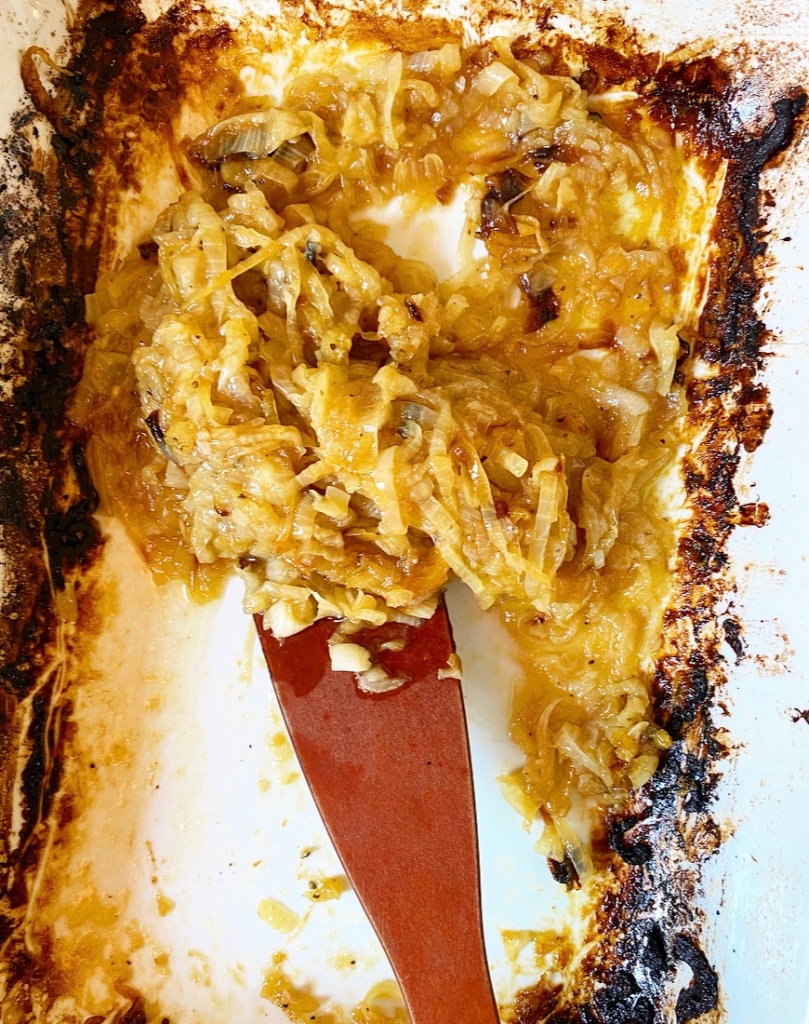
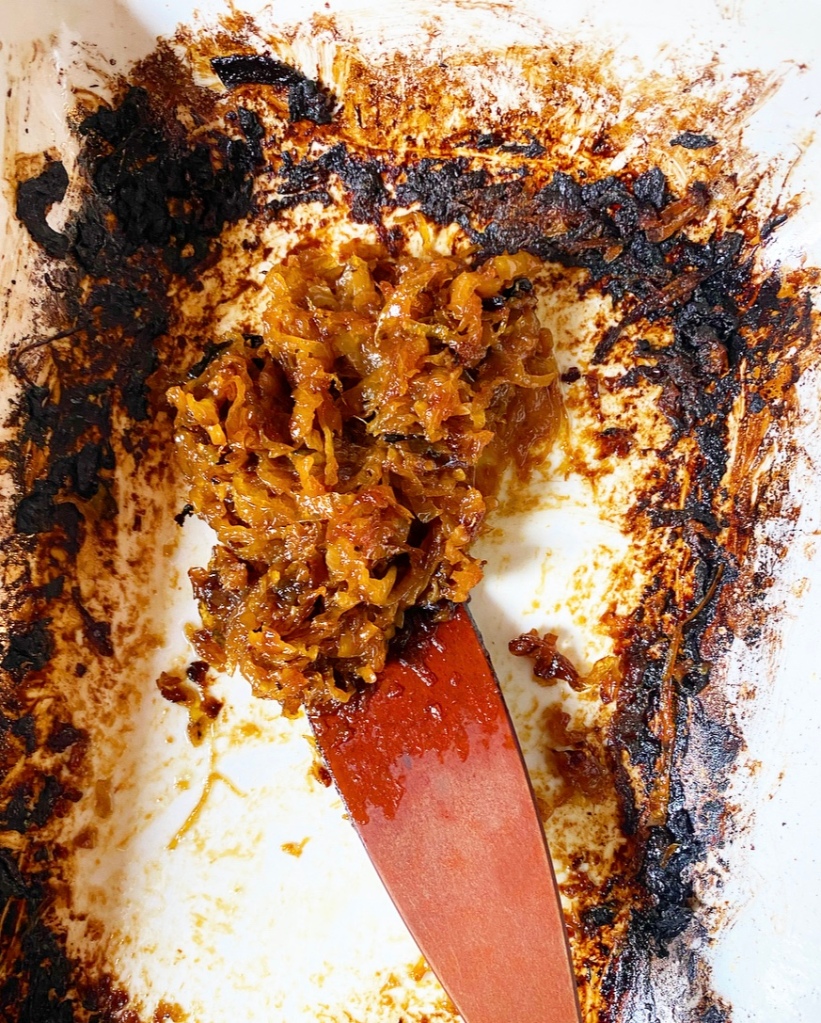
An added benefit to caramelizing onions in the oven is that you can make a ton at once. The onions pictured started as two full pounds, but cooked down to less than a cup all told. If you’ve got the oven space, there’s no reason not to start with four or even six pounds of onions. If you make too many for your intended project, you can easily freeze them for another day.

You know, like tomorrow…hint, hint.

How to Caramelize Onions in the Oven​
How to Caramelize Onions in the Oven
makes about 3/4 cup

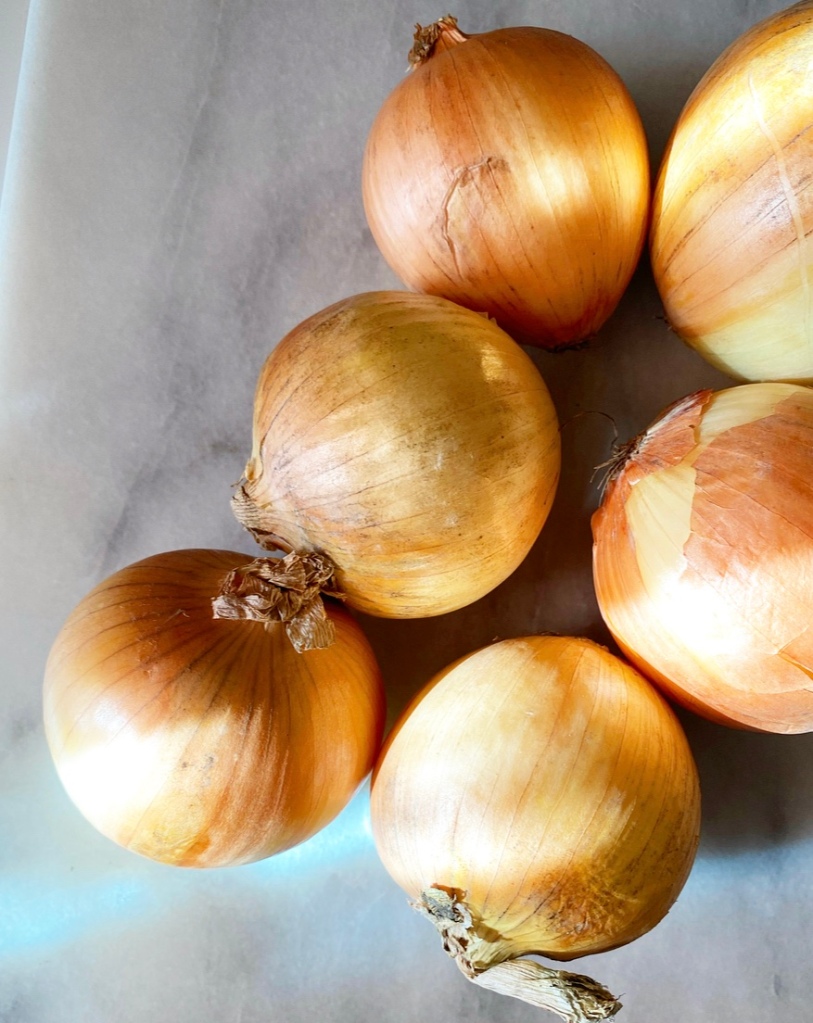
2 pounds Spanish, white or red onions, sliced 1/4-1/8-inch thick
2 tablespoons olive oil
Kosher or sea salt, to taste (I like a heaping 1/4 teaspoon)
few grinds black pepper

Equipment:
9x13” casserole dish
aluminum foil
a stirring implement

Preheat the oven to 350F.

Place sliced onions in a 9x13-inch casserole dish. Add olive oil, salt and pepper, and toss to combine. Cover the pan with foil and bake for 1 hour.

Remove the pan from the oven, lift the foil, and stir the onions. They should be fully soft and translucent at this point, and starting to turn a very pale brown.

Cover the pan with foil again, then bake for another 30 minutes before stirring again. The onions should be turning darker at this point. If any of the edge pieces have burned, lift them out and discard. Some of the sugars in the onions may char at the edges of the pan—this is normal.

Cover the pan again and bake in 15-20 minute increments, stirring between, until your desired color and consistency has been reached. The onions pictured went about 2.5 hours.

Once your onions are to your liking, remove them from the oven and let cool. Use as desired. Leftovers may be refrigerated for a few days or frozen.

Oven Fries (that are worth eating)

Oven Fries (that are worth eating)

I want to make it clear that I love frying things. I love it. Doughnuts, chicken, onion rings, fries—I want them all deep-fried to golden perfection. Not baked. Not. Baked. Because let’s be real, baked versions of things that are supposed to be fried are rarely worth eating. Like, if I want a doughnut, I don’t want what amounts to a muffin baked in a ring mold. And if I want fried chicken, I don’t want it “oven-fried.” Just give me the real deal, or don’t give it to me at all.

All that said, I had a little change of heart a few weeks ago while making dinner. I had an unallocated potato that needed using, and decided to try to make oven fries with the main goal of them not just being fry-shaped roasted potatoes. I wanted crisp, golden, fluffy-centered fries, but without the pot of hot oil. It seemed like an impossible goal at the time.

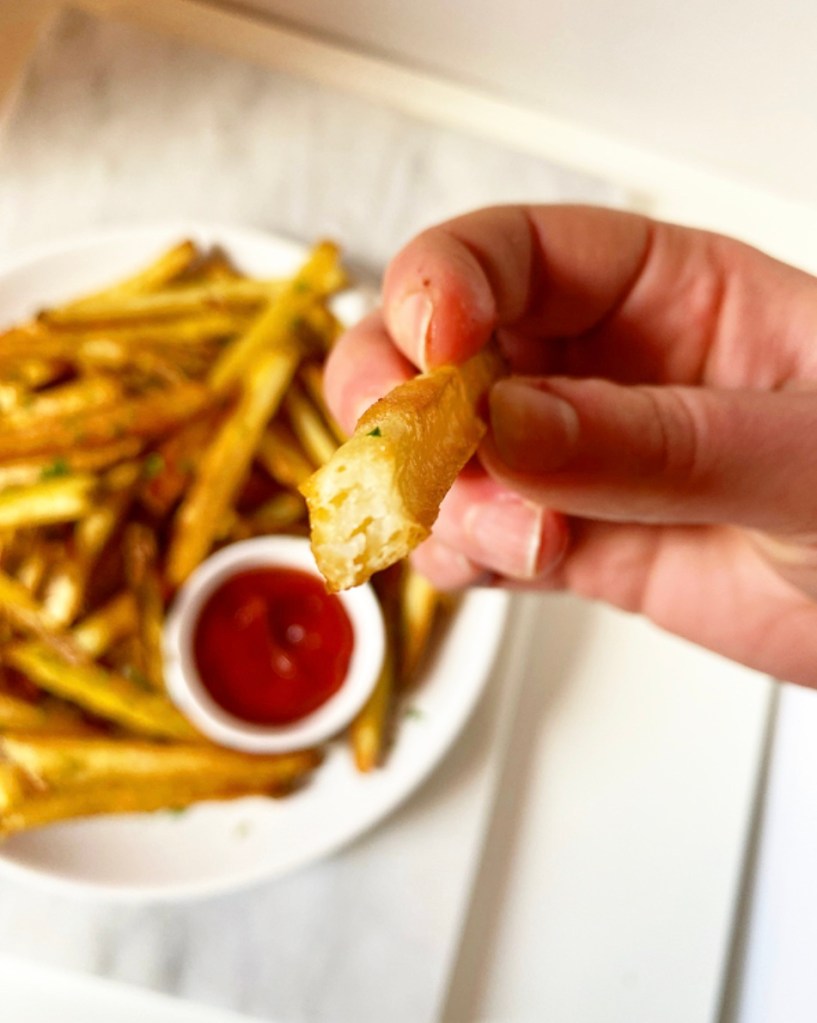
I am here to tell you that I achieved this goal. I achieved it in style. And now I feel so silly for being so adamantly opposed to Oven Fries for upwards of a decade. I’m just opposed to lousy oven fries, ya know? But these are anything but lousy. They’re crispy, salty, and bear little resemblance to any roasted potatoes I’ve come across (though that is fundamentally what they are, of course).

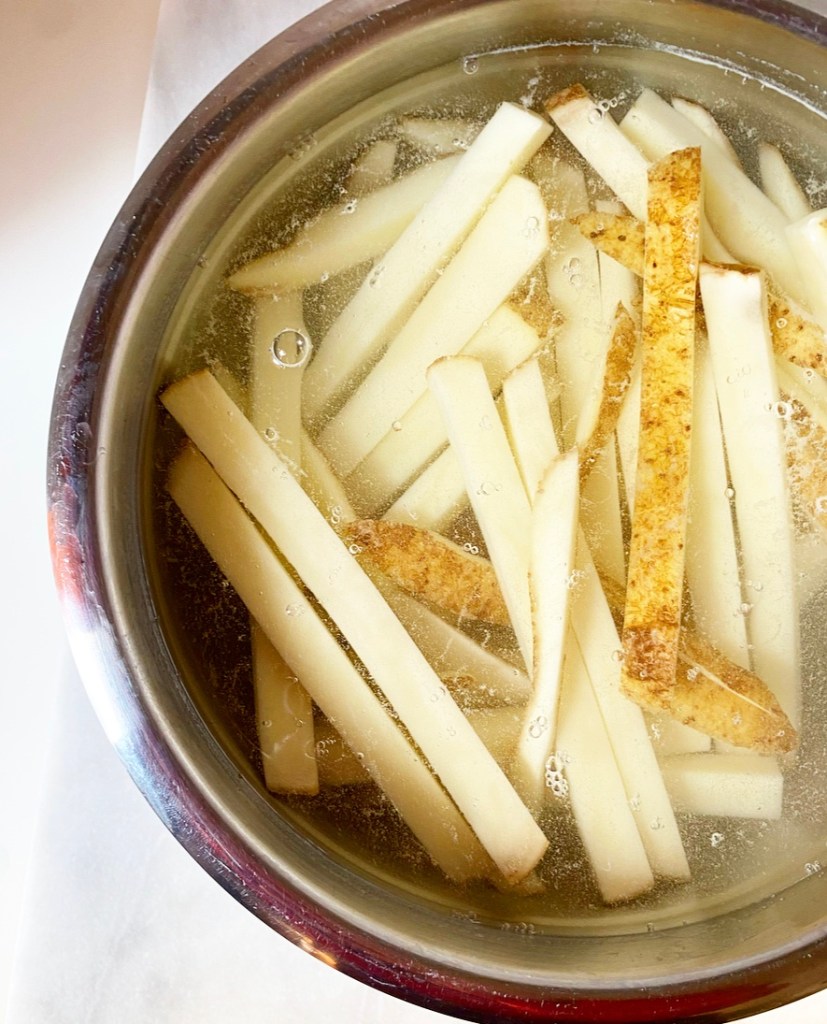
The secret to great Oven Fries is treating them as much like regular fries as possible. This means using classic, starchy russet potatoes and starting with a soak in cold water. I add some salt and baking soda to the water to help pull all the starches in the sliced potatoes to their surfaces. This leads to crispy outsides and fluffy insides every time.

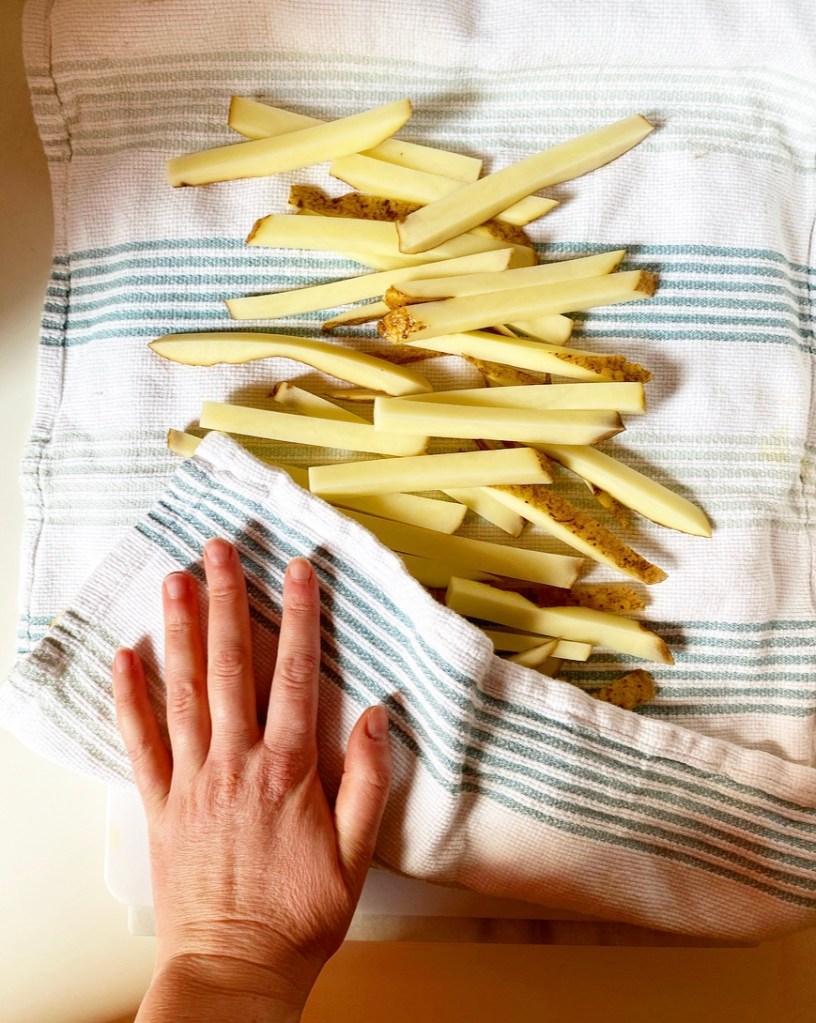
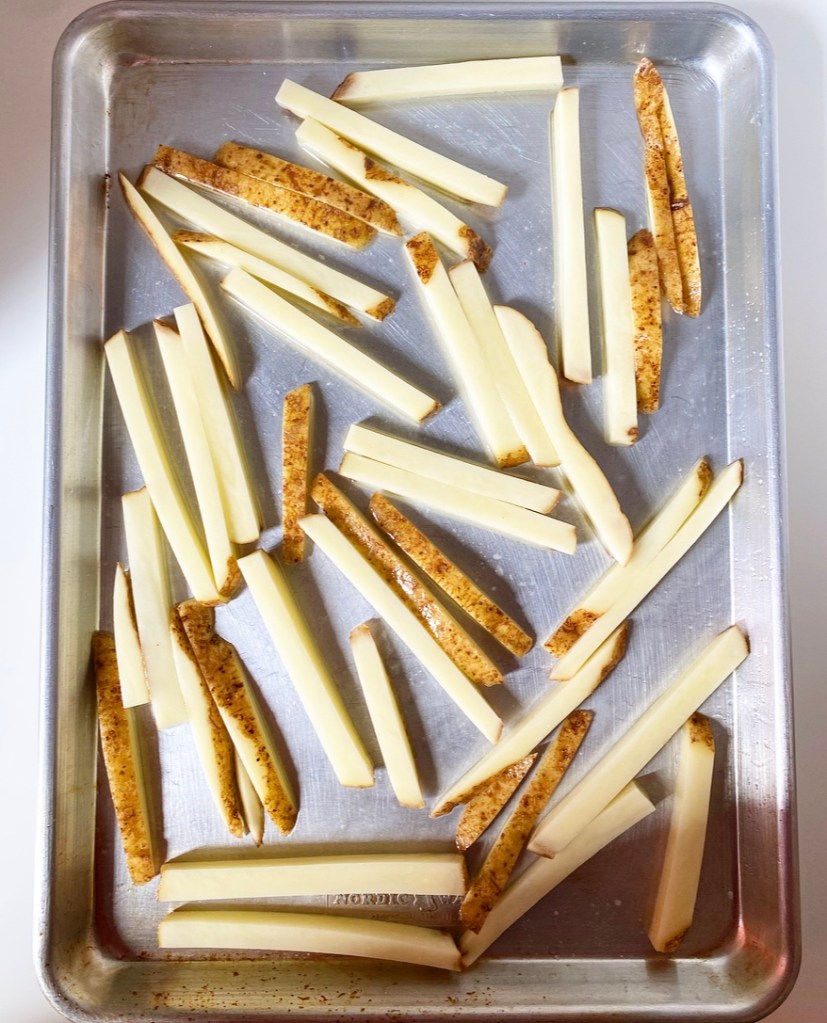
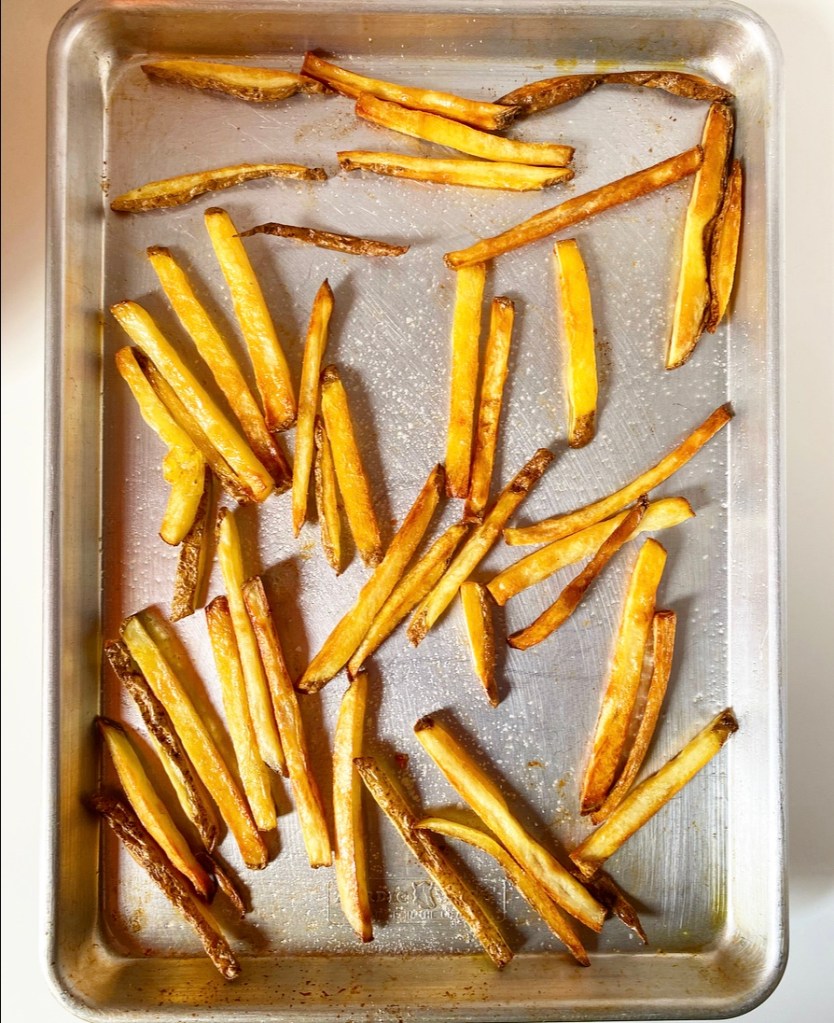
After soaking, make sure to pat your fries as dry as you can so they sear more than they steam. Toss them with about a tablespoon of oil per potato and a hefty pinch of salt, then spread them out on a couple of sheet pans and roast them high and fast, flipping when they’re golden on one side. Heads up that if you’re using dark (coated) pans, your fries will brown faster than they will on the aluminum pans I use.

Oven Fries (that are worth eating)

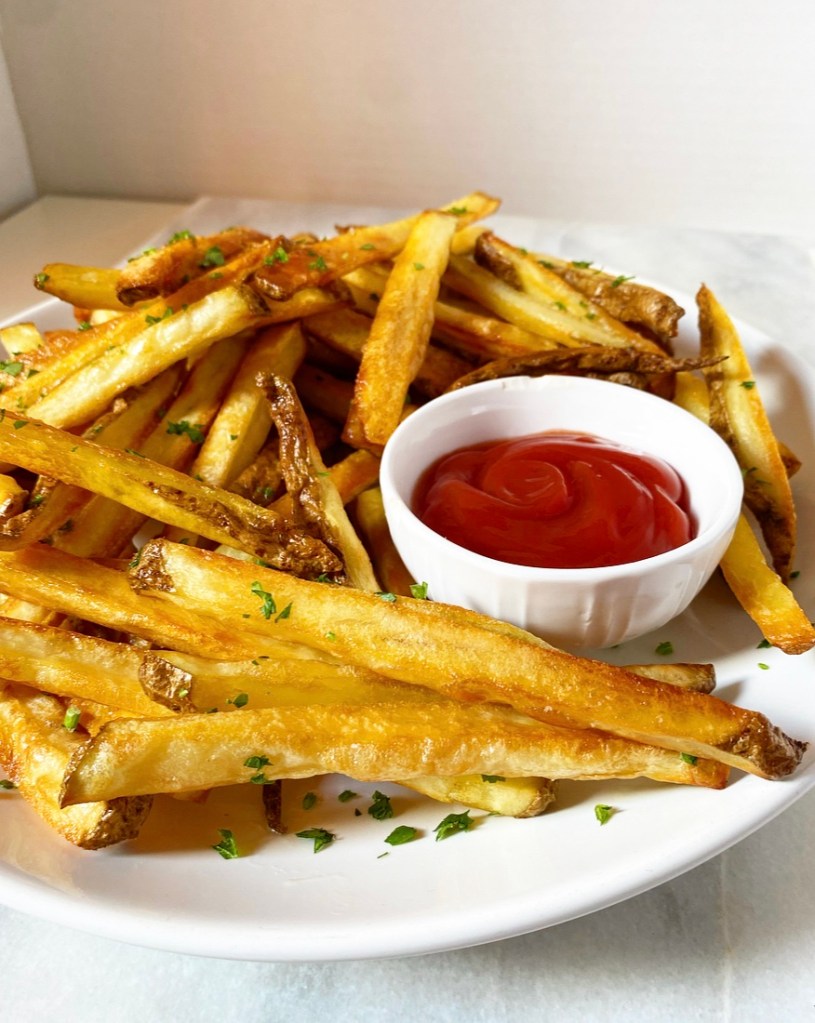
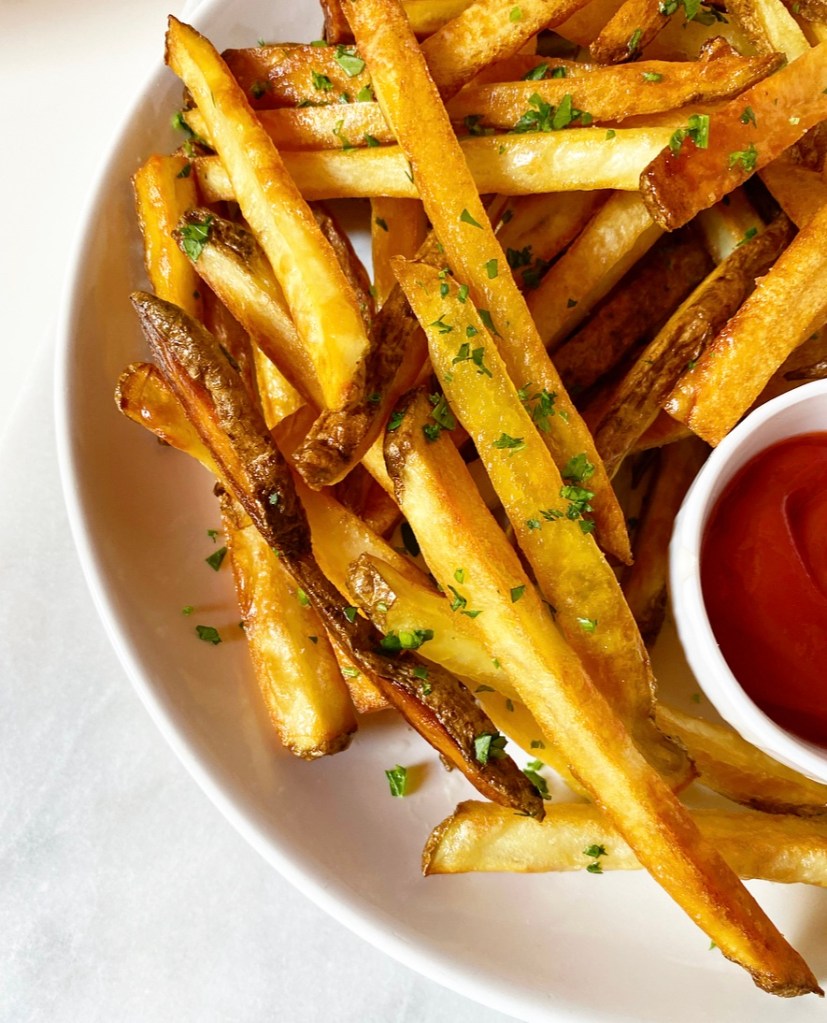
When your Oven Fries are done, make sure to hit them with another big pinch of salt for a little extra punch (and crunch!). You can also dust them with a favorite spice blend or scatter some crispy garlic over the top—however you like your fries. I’m a no-frills fry kind of human, so all I need is a little side of ketchup.

Oven Fries (that are worth eating)

Y’all, these are so good. Crispy, with soft centers and an irresistible golden brown color—not a masquerading plain roasted potato in the bunch. These are Oven Fries good enough to change even the staunchest fried food defender. Dare I say, they’re Oven Fries worth eating. Oven Fries…to love?

I’ll see myself out.

Oven Fries
makes 2 large or 3-4 small servings

2 large russet potatoes
cold water
1/2 teaspoon baking soda
Kosher or sea salt, to taste
2-3 tablespoons neutral oil (I used canola)
ketchup (or other dipping sauce), for serving

Scrub potatoes, and peel if desired. Transfer them to a cutting board. Use a large, sharp chef’s knife to slice potatoes into pieces approximately 1 centimeter thick.

Place all potato pieces in a medium mixing bowl, and add enough cold water to cover. For extra deep golden fries, add baking soda and 1/2 teaspoon salt to the water. Let potato pieces soak for 30 minutes.

Meanwhile, place the oven racks in central positions. Turn the oven to 450F.

Once 30 minutes have passed, drain water from potatoes. Dry potato pieces well with a clean kitchen towel.

Divide potatoes between two dry rimmed baking sheets. Drizzle each pan with 1-1 1/2 tablespoons oil. Season well with salt. Use your hands to toss all pieces to coat. Arrange potato pieces in a single layer with none touching each other.

Bake fries for 15 minutes. At this point, they should all be turning golden on the underside; if they’re not, let them bake another 5 minutes and check again. Use a spatula to flip them all over, then rearrange them into an even layer with none touching. Rotate the pans top-to-bottom and back-to-front. Bake 15-20 more minutes, or until golden to your liking.

Remove the fries from the oven and salt again, if desired.

Serve immediately with ketchup or other dipping sauce, if desired.

Lasagna a la Betsy

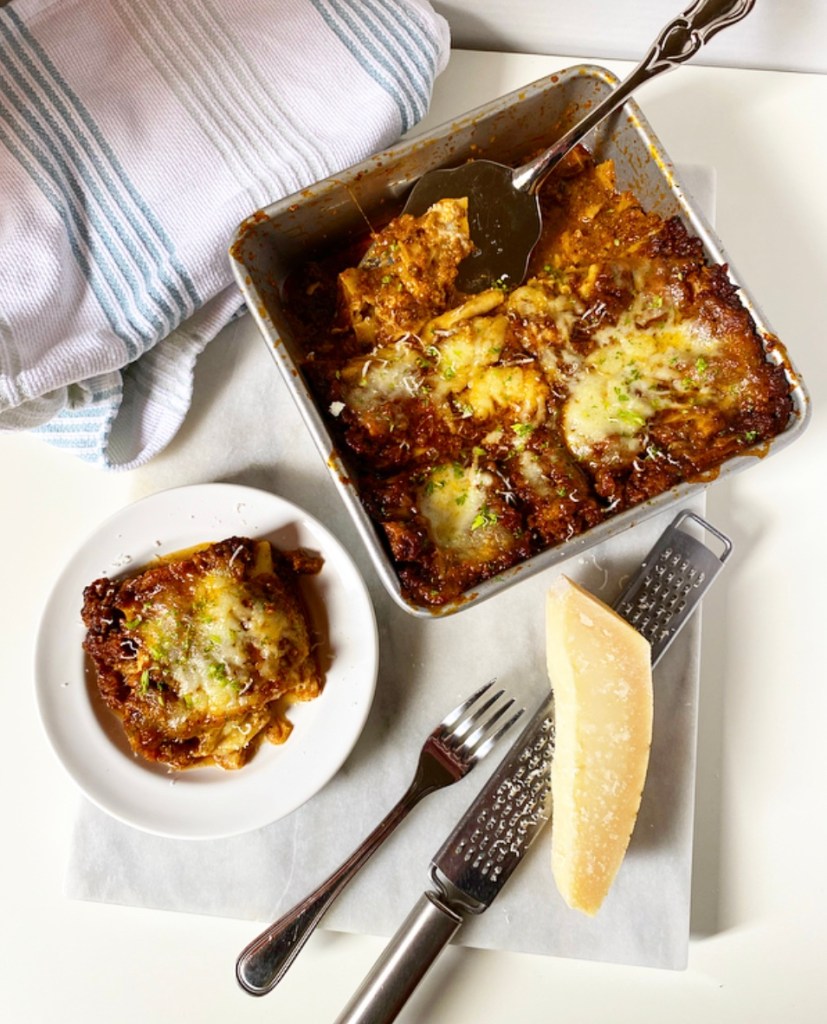
Lasagna a la Betsy​

Listen, I know that the internet is full of lasagna recipes. There’s everything from the jarred sauce and pre-shredded cheese kind to some that take three days and are lovingly layered with from-scratch bolognese, béchamel, and pasta made by hand. If you’re looking for a lasagna to suit your tastes, there’s a decent chance it’s out there…unless, of course, you were hoping to find mine.

I have been making lasagnas for people for years. Truthfully, if you ask nicely and pay for my ingredients, transportation, labor and time, I’ll come right to your house, tie on an apron, and fill your freezer with tightly-wrapped aluminum pans of layered bolognese, cheese, and pasta with an index card with baking instructions scotch taped on top. If, however, I’m out of your budget and you don’t want to have to interpret my handwriting, it’s your lucky day—Lasagna a la Betsy is finally on the blog.

Lasagna a la Betsy​

Now, what makes it “a la Betsy”? Well, half of everyone I know started calling me Betsy seven years ago, and while I introduce myself as “Liz” everywhere but Starbucks, I like that nickname whenever it suits me, which includes but isn’t limited to when I make lasagna. Also, this recipe is authentic to nothing—I am not trying to make this as lovingly as anyone’s Italian grandmother, I’m just trying to get dinner on the table today (and maybe sometime in a few weeks). But mostly, it’s a la Betsy because it’s what I like in my lasagna, and it’s made the way I like to make it. Period, end of story.

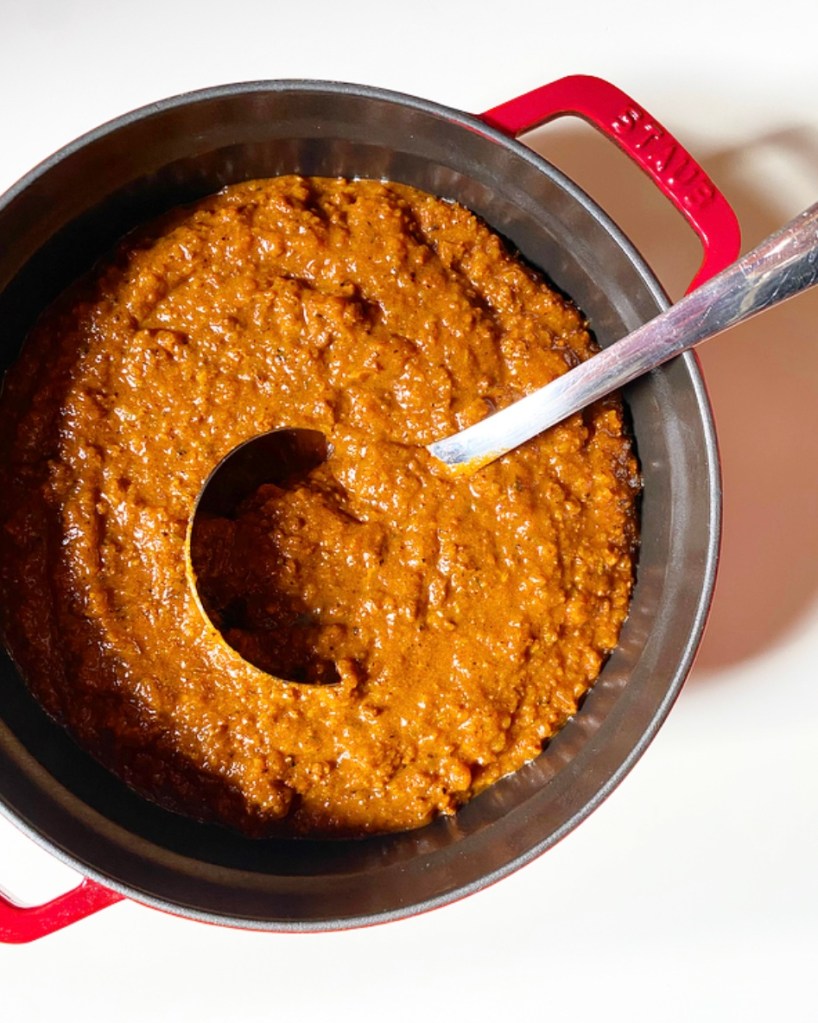
The “bones” of Lasagna a la Betsy are similar to many classic recipes. It starts with making my tried and true bolognese sauce from scratch. I usually do this a day ahead to split up the work, but it can be made the same day the lasagnas are assembled. It takes about three hours of browning and simmering beef, sausage, mushrooms and aromatics, but the results are meaty and rich and worth it all, I promise. Frankly, the sauce is the most time consuming part of this whole process; the rest is just layering. And oh, they are good layers.

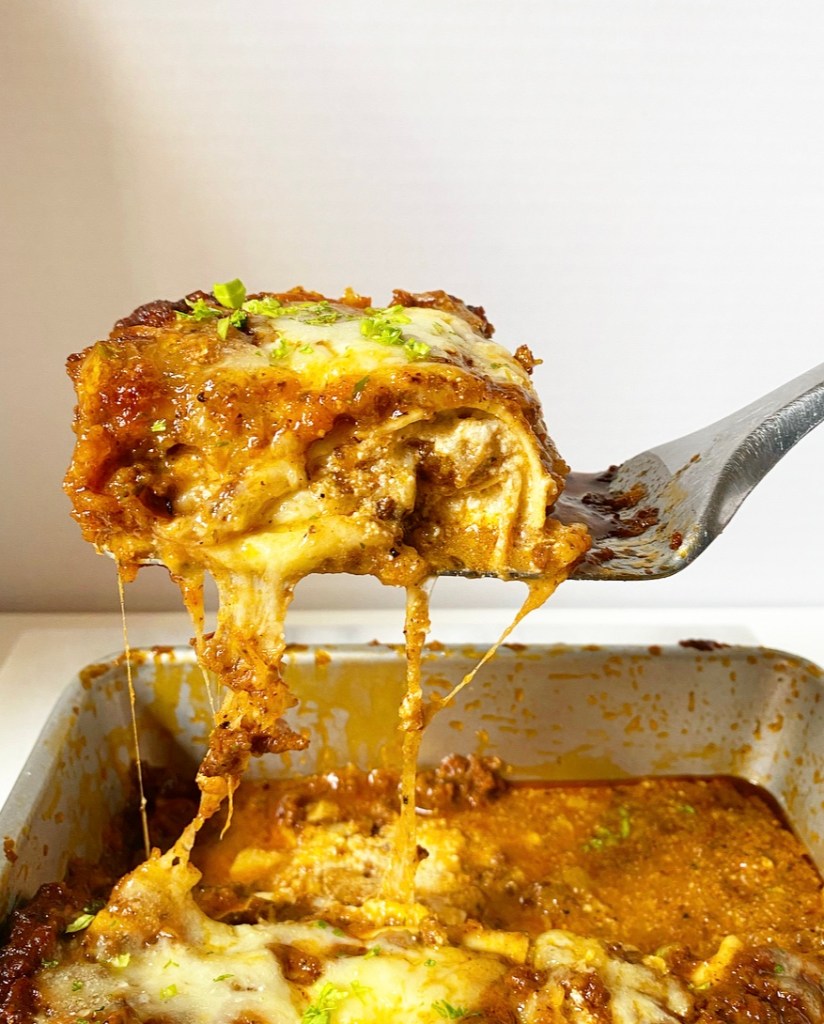
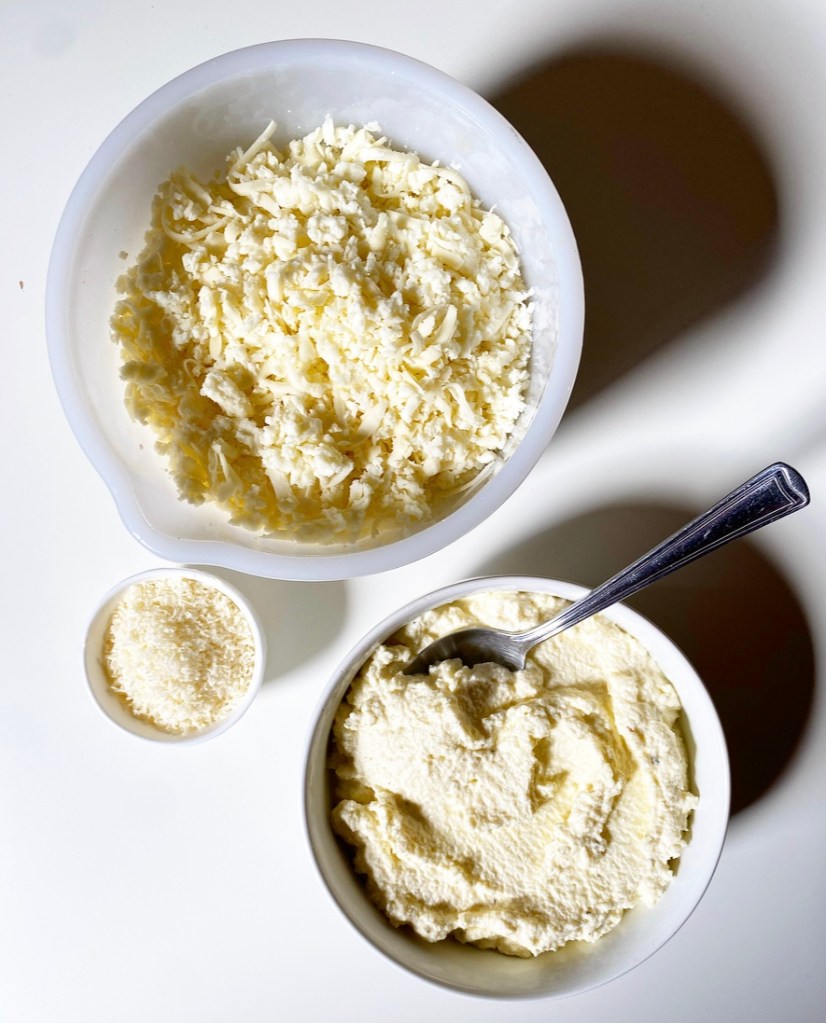
You know the stuff: shredded mozzarella, spoonfuls of parmesan-spiked ricotta, the bolognese, some no-boil noodles… Yeah, I use the no-boil noodles—they’re one of the only convenience ingredients that I will swear by. I’ve used the boil-yourself kind and they are delicious, but they can be finicky and take a while. I like saving myself a little stress. I mean, I already made the sauce from scratch. That said, use whichever noodles work for you.

Lasagna a la Betsy​

My personal favorite part of my lasagna recipe? It makes two! Unless you have a huge family or are having a party, you probably don’t need a 9×13” pan of lasagna, but two 8” square pans? One for now and one for the freezer? Yeah, that’ll work. Future you is going to be so happy you planned ahead. Current me is already pretty jazzed about it.

To that end, I’ve included instructions for baking lasagnas right away, as well and freezing and baking from frozen. Whichever path you choose, you’re in for a treat. Hot homemade lasagna (a la Betsy or otherwise) is always a treat.

Lasagna a la Betsy
makes two 8-inch square lasagnas (each 4-6 servings)

1 recipe Bolognese Sauce (about 9-10 cups)
16 ounces whole milk ricotta cheese
1 large egg
2 tablespoons olive oil + more for drizzling
pinch of ground nutmeg
a few grinds freshly cracked black pepper
1/4 teaspoon Kosher or sea salt
1 1/4 cups grated parmesan cheese, divided
1 1/2 pounds (24 ounces) shredded mozzarella (fresh, low-moisture whole milk, or a mix)
12 no-boil lasagna noodles
chopped parsley, for garnish (optional)

Make the bolognese sauce. Remove from heat and let cool for at least an hour before assembling lasagnas. Alternatively, make the sauce the day before and let it chill in the refrigerator overnight. It can be used cold.

Preheat the oven to 375F. Grease 2 8-inch square baking dishes. If using aluminum pans or freezing the lasagnas, line them with parchment.

In a small mixing bowl, whisk together ricotta, egg, 2 tablespoons of olive oil, nutmeg, pepper, and salt. Stir in 1 cup grated parmesan. Set aside.

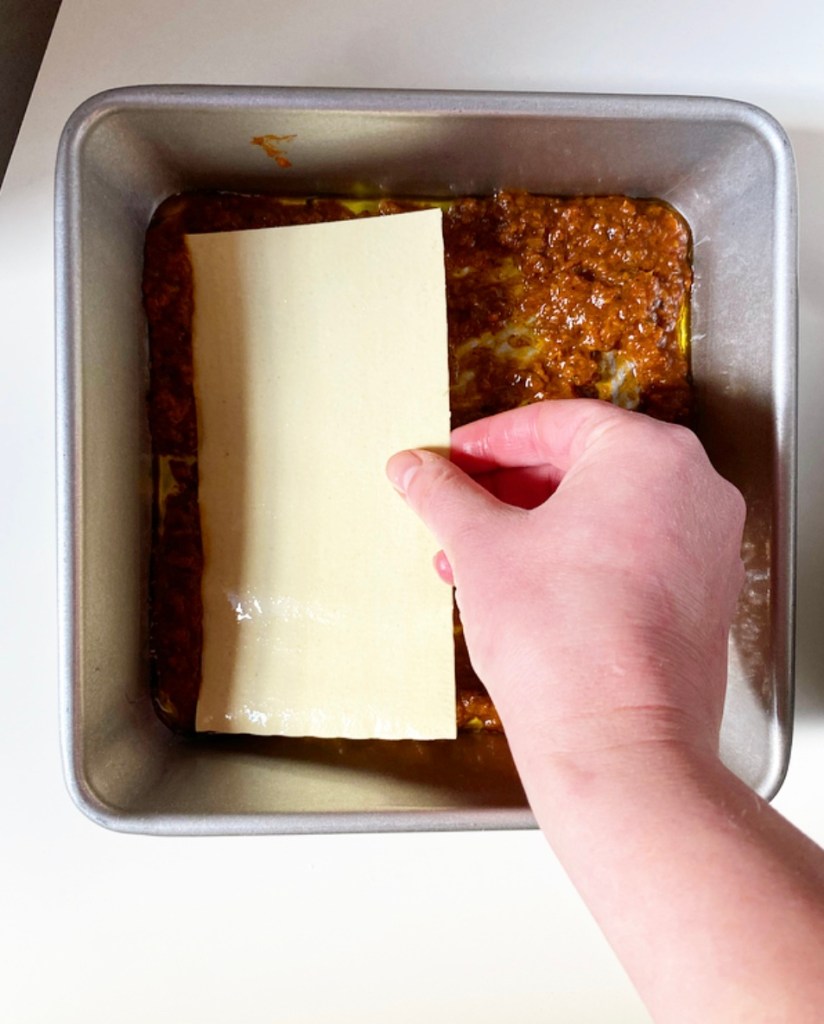
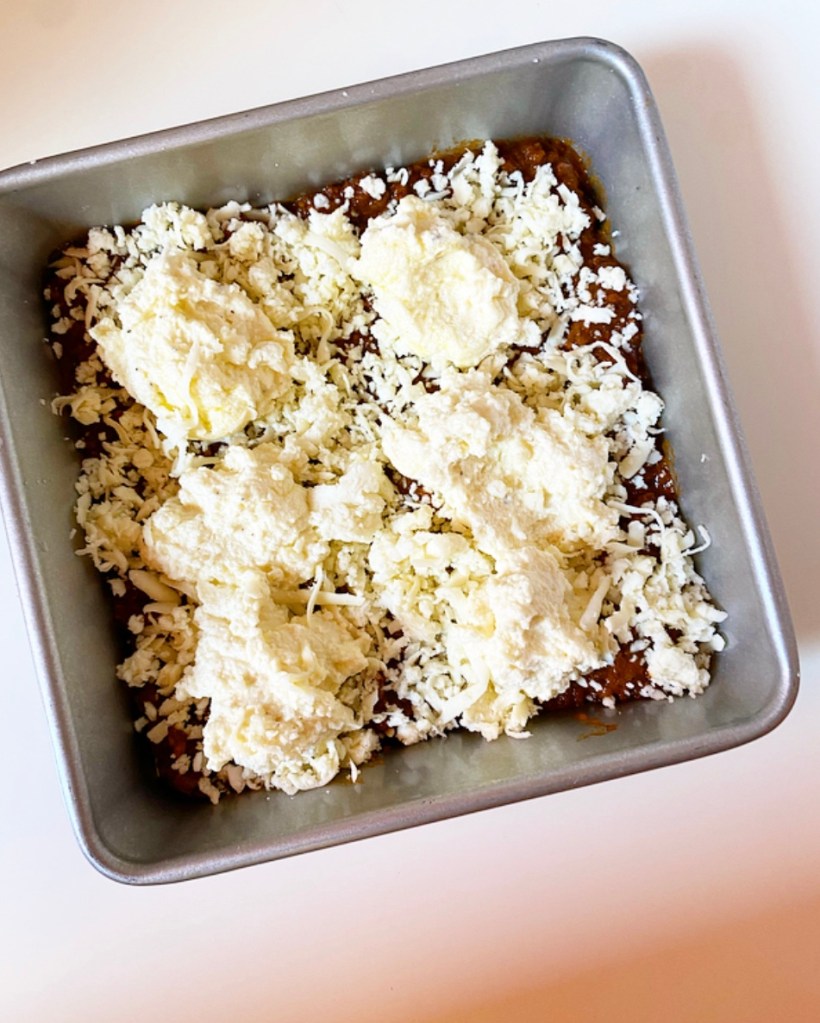
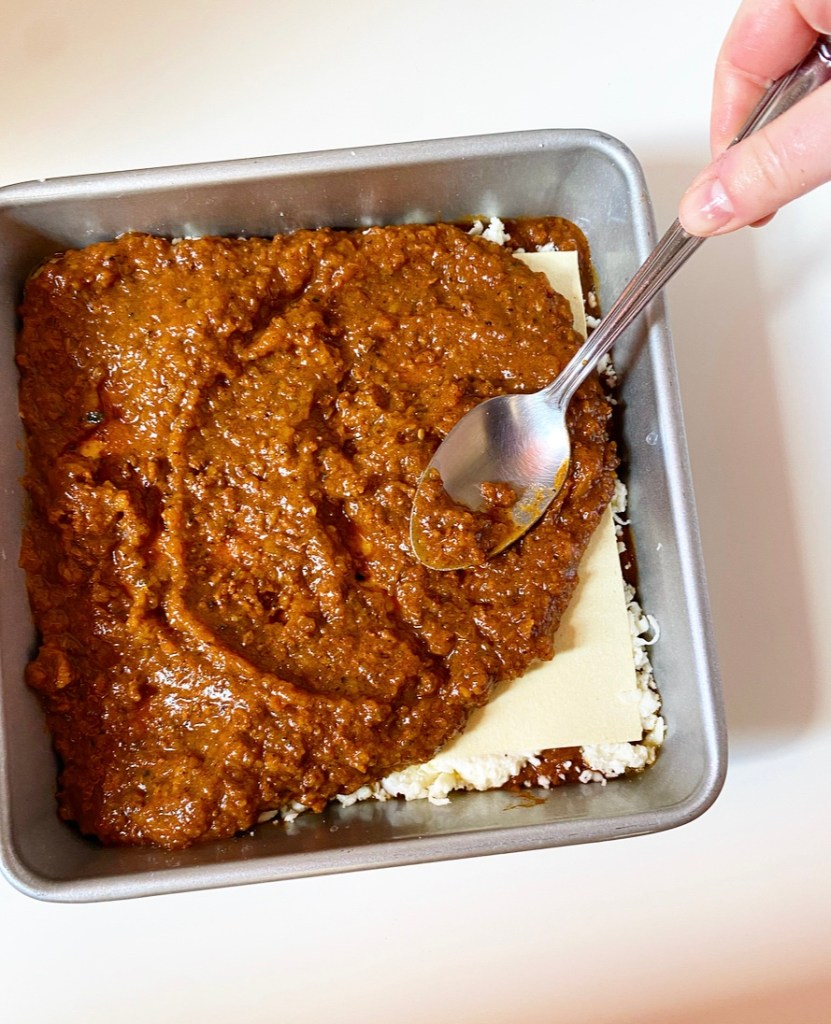
Assemble lasagnas. Spread 1/2 cup bolognese sauce in the bottom of one of the prepared pans. Top with 2 no-boil lasagna noodles (do not overlap them). Spread 1 cup of sauce over the top, then sprinkle on 1 cup of shredded mozzarella, and drop 1/4 of the ricotta mixture (about a heaping 1/3 cup) in spoonfuls over the top. Top with 2 more lasagna noodles, then another layer with 1 cup bolognese, 1 cup shredded mozzarella, and 1/4 of the ricotta mixture. Top with 2 more noodles, then 1 cup sauce. Sprinkle 1/2 cup shredded mozzarella over the top, followed by 2 tablespoons grated parmesan. Drizzle with a little olive oil.

Repeat layering process with remaining ingredients and prepare pan. Freeze any leftover bolognese (I usually have 1 1/2 cups leftover).

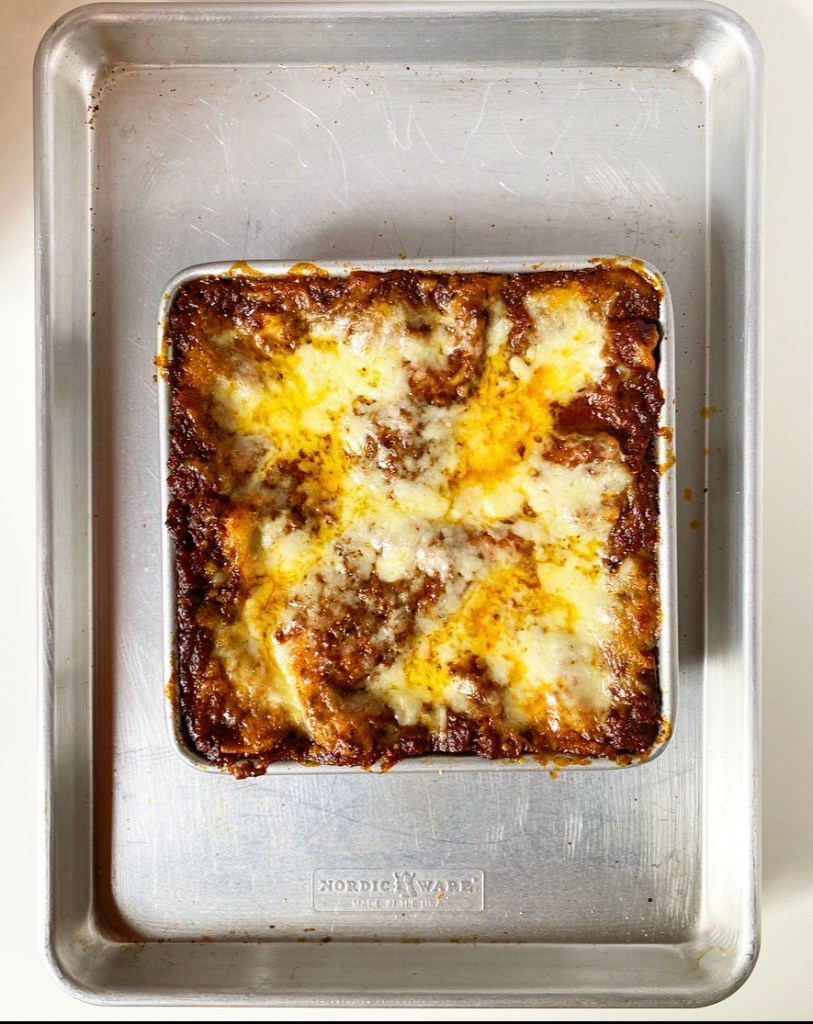
To bake lasagna immediately: cover with foil, making sure to tent it at the top so it doesn’t touch the cheese or sauce. Place the pan(s) on a sheet pan (to catch any mess). Bake 40 minutes. Remove foil and bake another 10-15 minutes, until browning in places and getting a little crispy at the edges. Let cool 15-30 minutes before slicing and serving. Garnish with parsley, if desired.

To freeze unbaked lasagna: cut a 7-inch square of parchment and lay it on the top of the lasagna. Triple-wrap the pan with plastic wrap. Wrap with foil. Freeze for up to one month.

To bake a lasagna from frozen: Preheat the oven to 350F. Remove frozen lasagna from the freezer. Remove and discard foil, plastic wrap, and parchment. Cover the pan with fresh foil, making sure to tent it at the top so it doesn’t touch the cheese or sauce. Place the pan(s) on a sheet pan (to catch any mess). Bake 75 minutes. Remove foil and bake another 10-15 minutes, until browning in places and getting a little crispy at the edges. Let cool 15-30 minutes before slicing and serving. Garnish with parsley, if desired.

Leftover lasagna will keep covered in the refrigerator for up to 5 days.