How to Make Excellent Pizza at Home {Full Photo Tutorial}

How to Make Excellent Pizza at HomeI have made eleven pizzas since Saturday night. Eleven.

That’s seven batches of dough, five pounds of four different flours, a container of Pomi strained tomatoes, four pounds of mozzarella, and a bunch of basil. Whew.
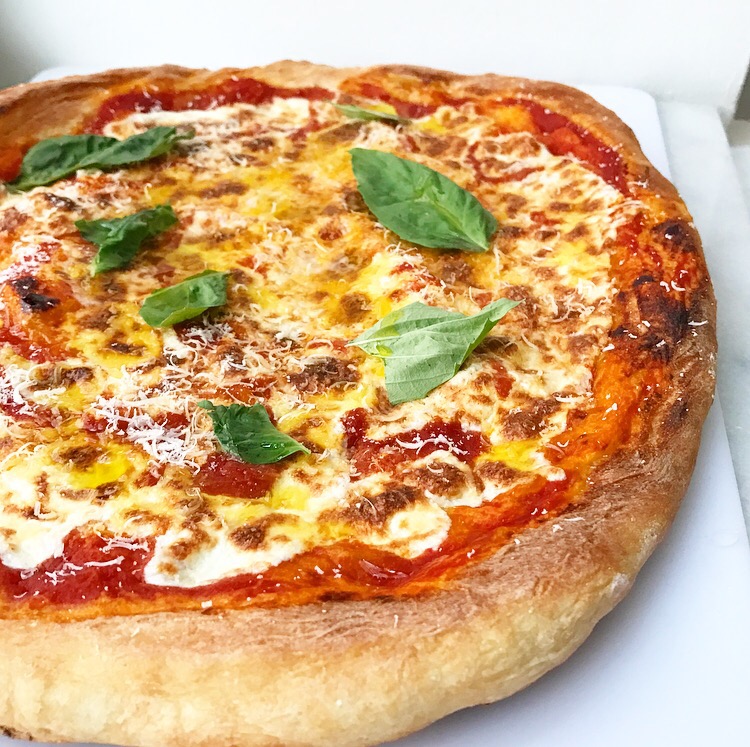
How to Make Excellent Pizza at HomeNo, I did not eat eleven whole pizzas. Not even close. I tasted eight of them, gave a lot to my roommates, fed two to the family I work for, and deposited three directly into the trash. You see, I was on a mission. I wanted to see if I could make restaurant-quality pizza at home–without a stone, peel, or an oven that reaches 1000F.

I don’t think I’ll be putting Di Fara out of business anytime soon, but yes, I can in fact make a high quality pizza in my home oven. And now, so can you.
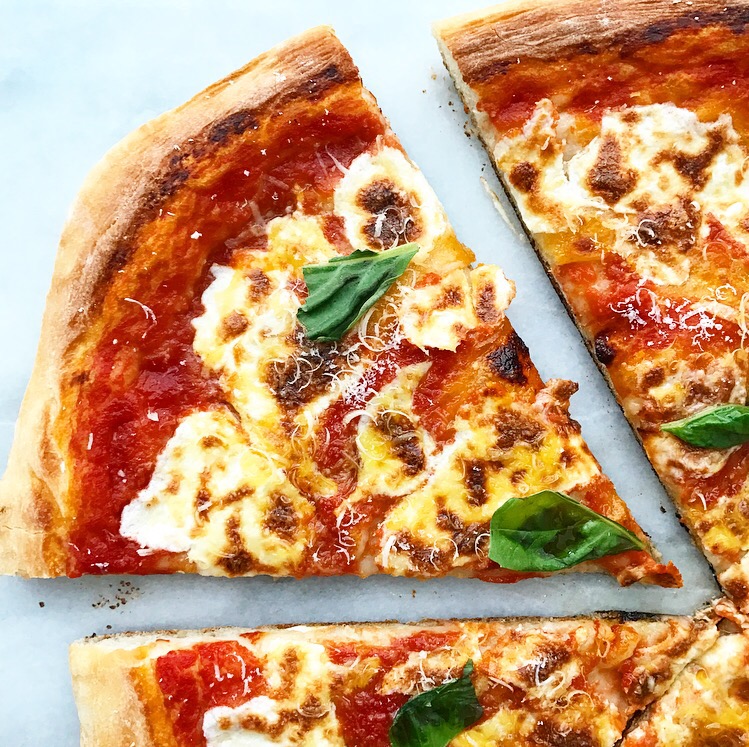
How to Make Excellent Pizza at HomeNow, I’m sure many of you have made pizza–probably very good pizza–at home. I have too, but it was never anything like the pizza I want when I go out with friends. Where their pizzas are paper thin, delicate, and charred to perfection, mine have traditionally been thick and bready, with a yeasty flavor and pale crust. I’m not saying those pizzas were tough to eat; I’m just saying that, after this past weekend, I don’t think I’ll spend so much time daydreaming about the pizzeria six blocks away.

So, how do I make quality pizza in an apartment oven that barely reaches 500F? Well, it’s simpler than I ever imagined it could be.

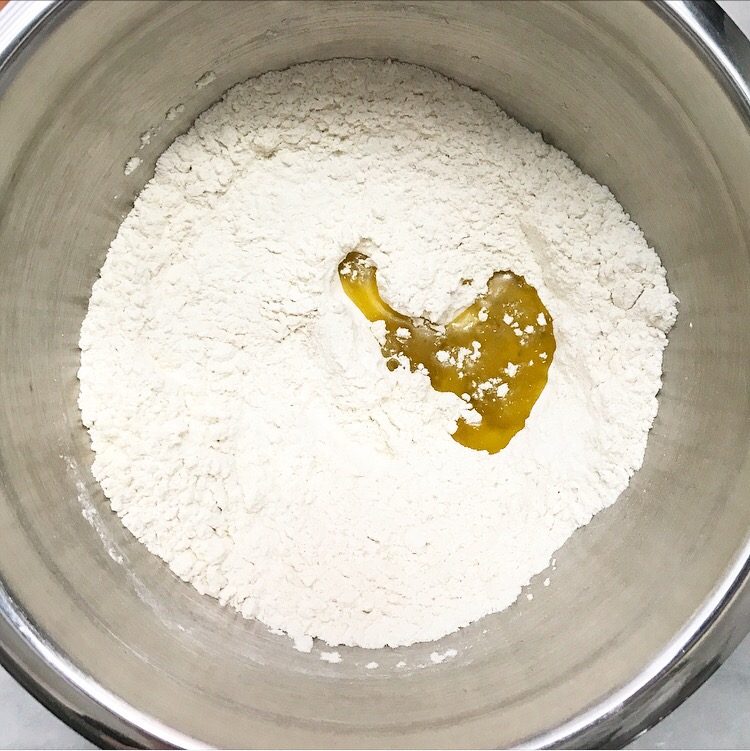
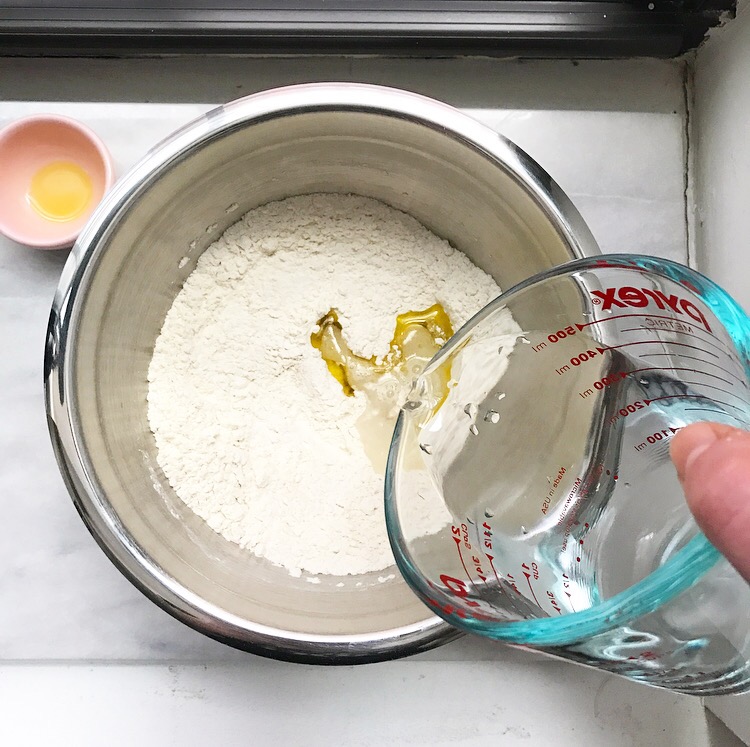
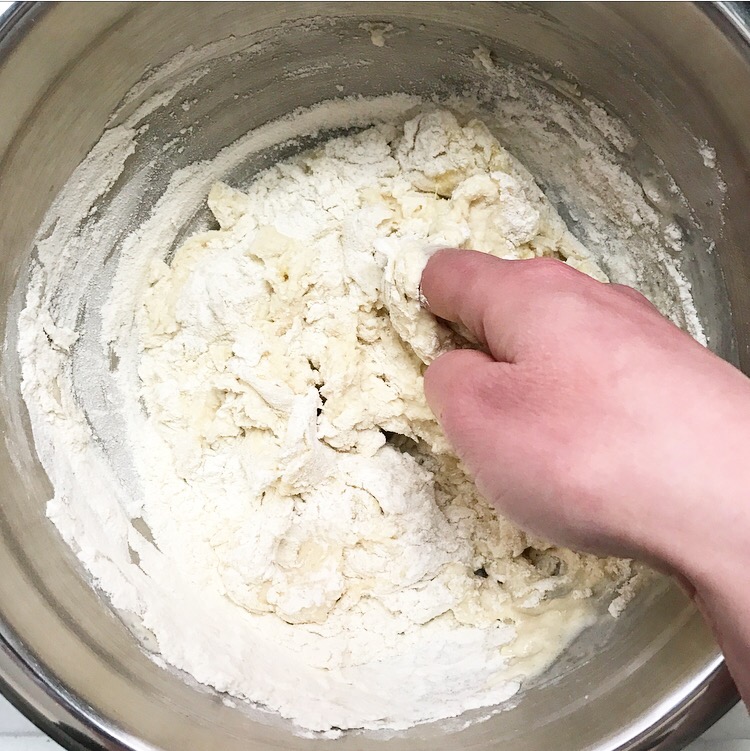
How to Make Excellent Pizza at HomeHow to Make Excellent Pizza at HomeHow to Make Excellent Pizza at HomeHow to Make Excellent Pizza at HomeFirst things first–every great pizza starts with great dough. Mine is simple to make, doesn’t require any unusual flours, and comes together quickly. Just whisk together flour, instant yeast, sugar, and salt, then stir in water and olive oil until a shaggy dough forms. I find this easiest to do with my hand, but I’m sure a silicone spatula works too.
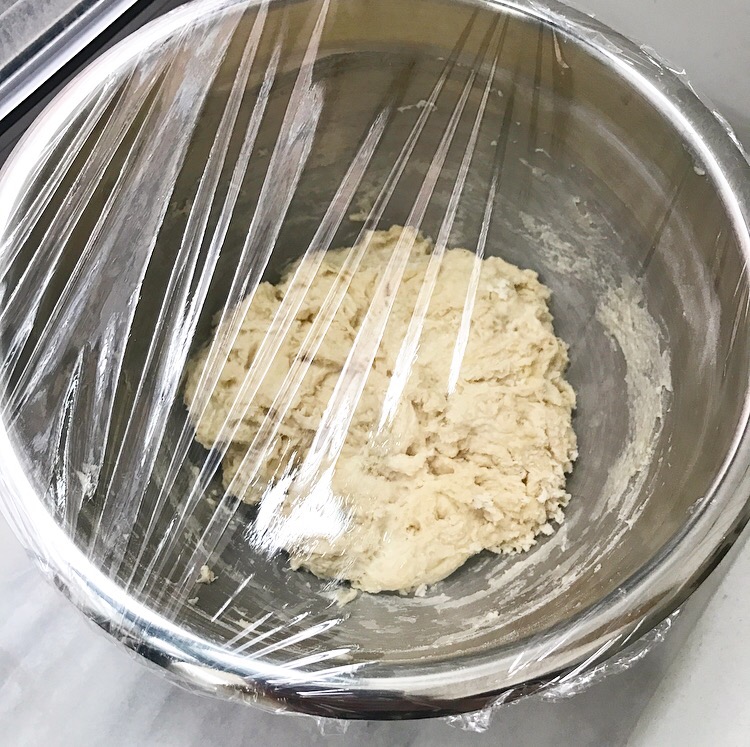
How to Make Excellent Pizza at HomeOnce the dough is formed, cover it with plastic wrap and let it rest for 15 minutes. Then knead it on a floured surface until smooth, about seven minutes. That’s fun for me–I love to knead. If kneading is not your favorite task, you can use a stand mixer with a dough hook attachment. Just let it run on low for seven minutes.
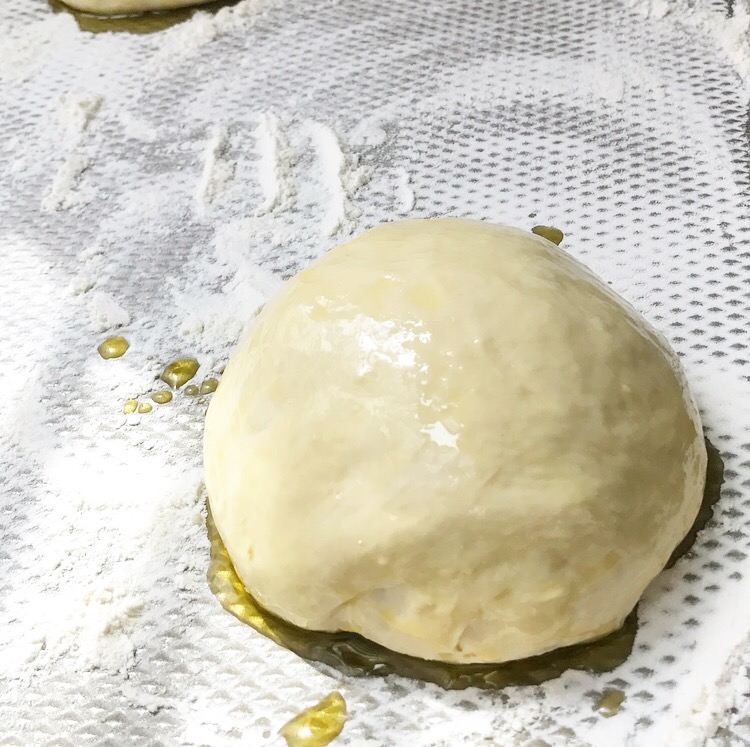
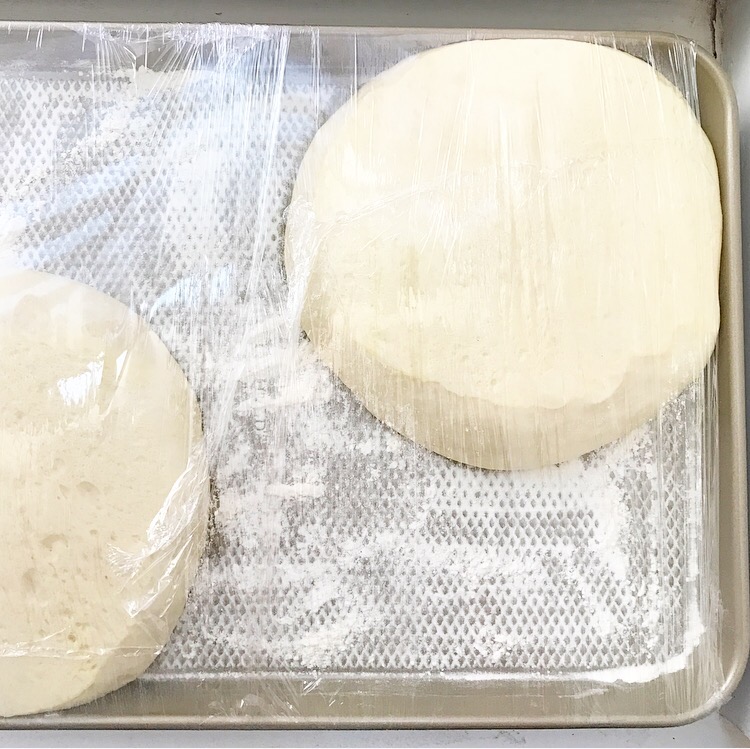
How to Make Excellent Pizza at HomeHow to Make Excellent Pizza at HomeUse a sharp knife to divide the kneaded dough into two pieces. Form them into balls, place them on a floured baking sheet, and brush them with olive oil. Cover them with plastic wrap and let the dough rise for about an hour. The dough will expand into two large, thick discs.

Now it’s time to make the pizzas. Before you do anything else, preheat your oven to 500F. It needs to heat for at least an hour–it should be screaming hot. If you have an in-oven broiler, place a rack about six inches away from the heating element.
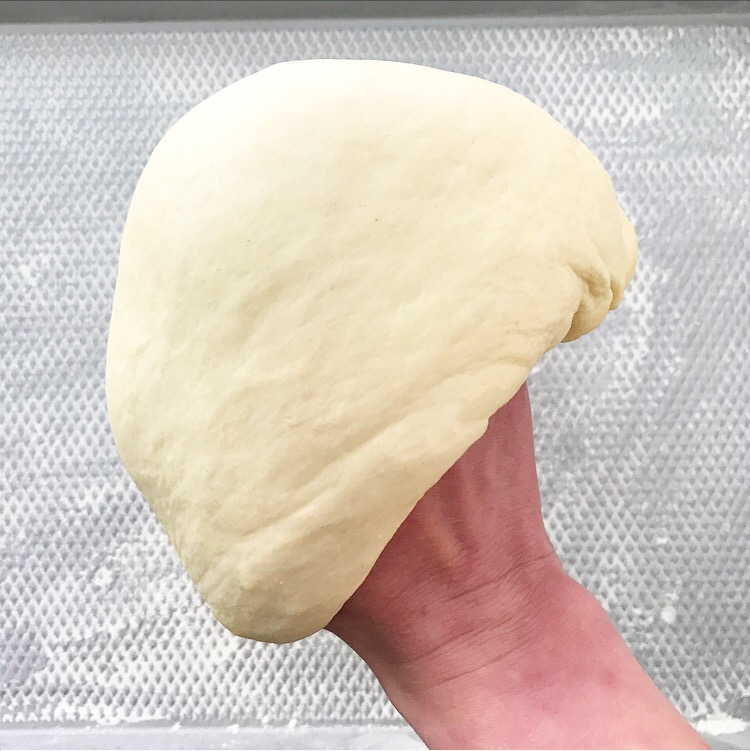
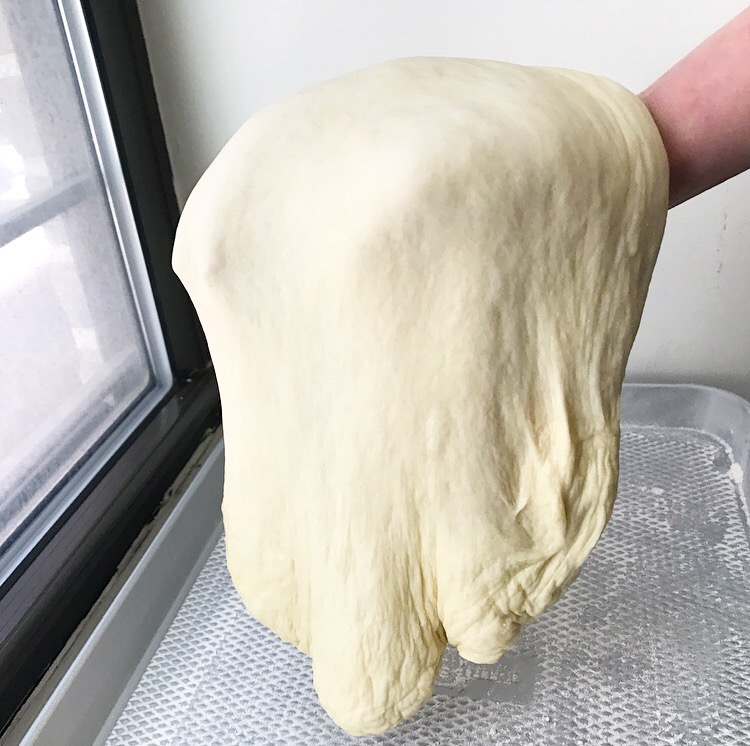
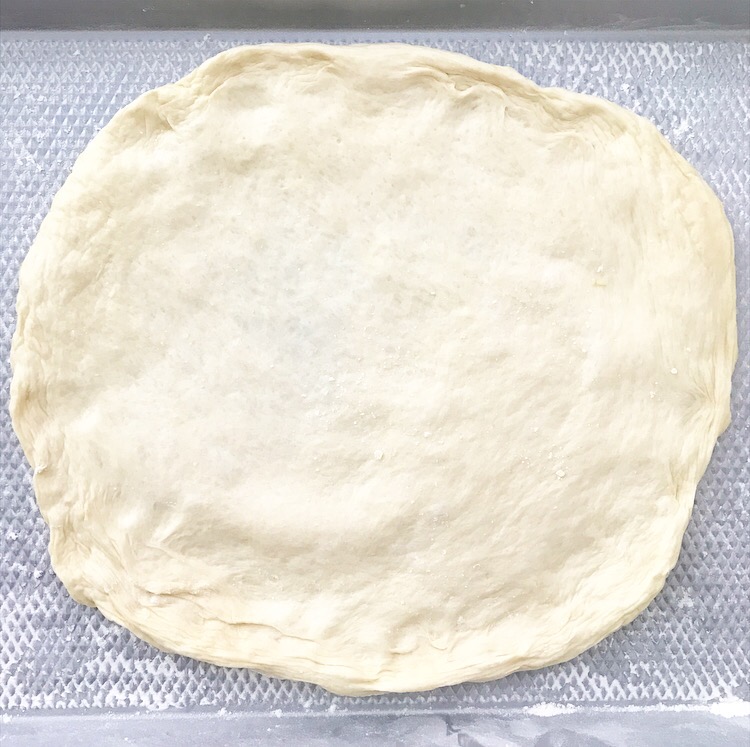
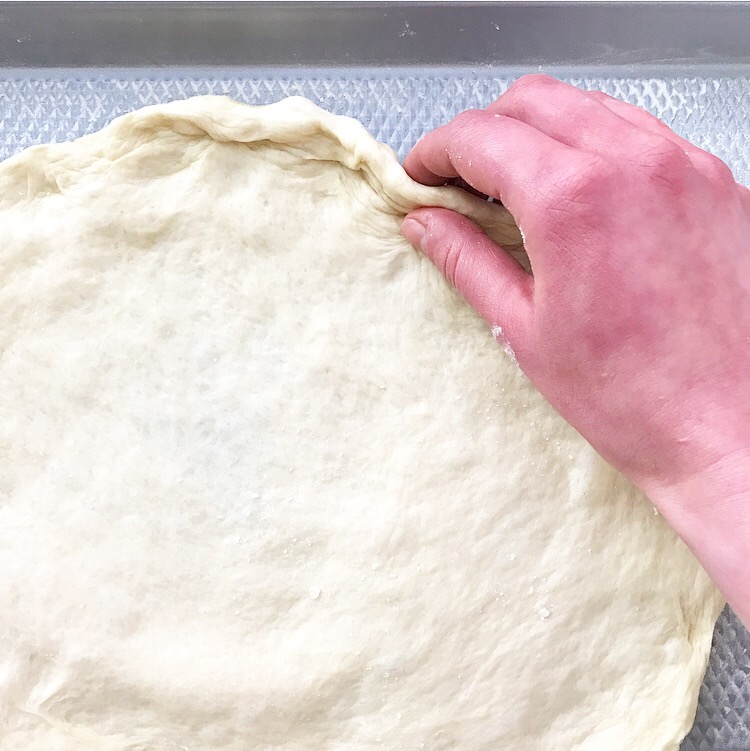
How to Make Excellent Pizza at HomeHow to Make Excellent Pizza at HomeHow to Make Excellent Pizza at HomeHow to Make Excellent Pizza at HomeTake one disc of dough, lifting it with the tops of your hands. Let gravity stretch it while you slowly move your hands in a circular fashion. The dough is very delicate and will stretch in a minute or so. Gently lay the stretched dough on a floured baking sheet, shaping it as necessary. Pinch the edges lightly to form a crust. Repeat this process with the other disc of dough.
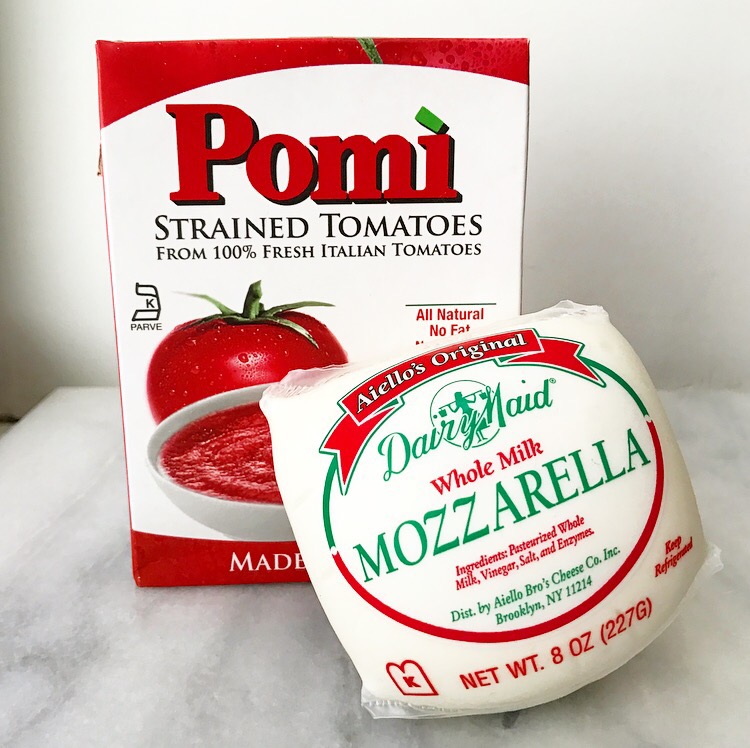
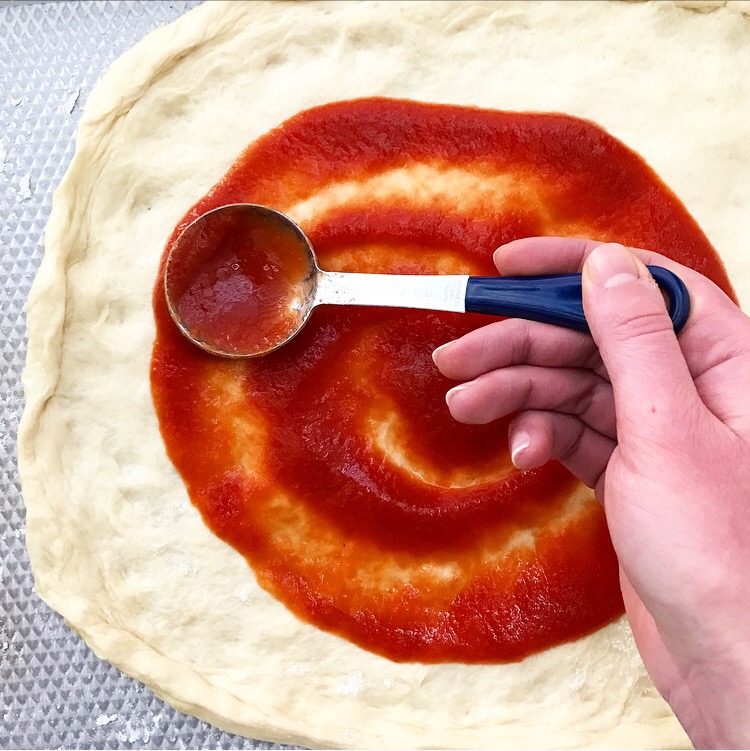
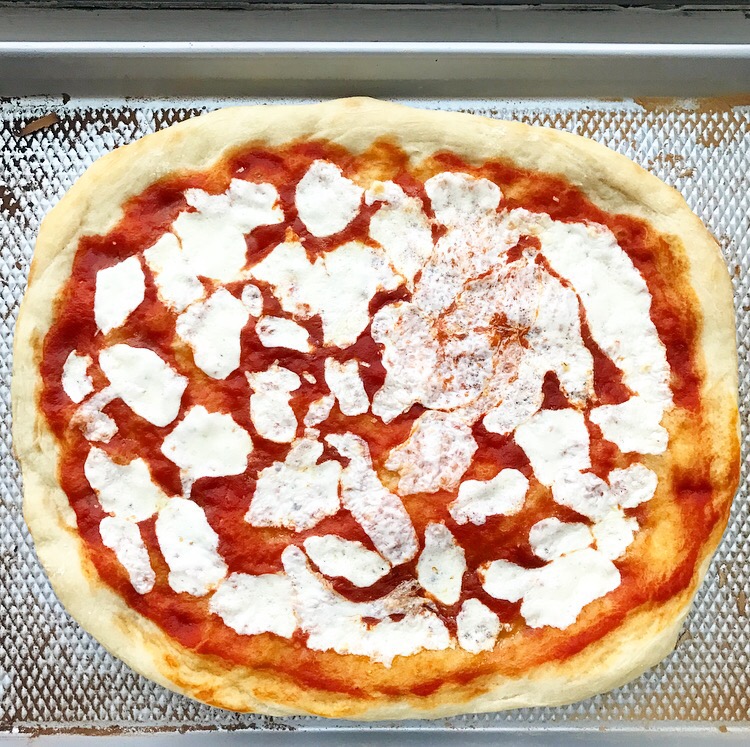
How to Make Excellent Pizza at HomeHow to Make Excellent Pizza at HomeHow to Make Excellent Pizza at HomeNext, top the pizzas. Today’s recipe is for a classic Pizza Margherita, topped with tomato sauce, fresh mozzarella, and basil. I like to use Pomi strained tomatoes for my sauce, but use any sauce you like. Spread it around each pizza crust, leaving the pinched border bare. Top them with torn fresh mozzarella and a drizzle of olive oil.
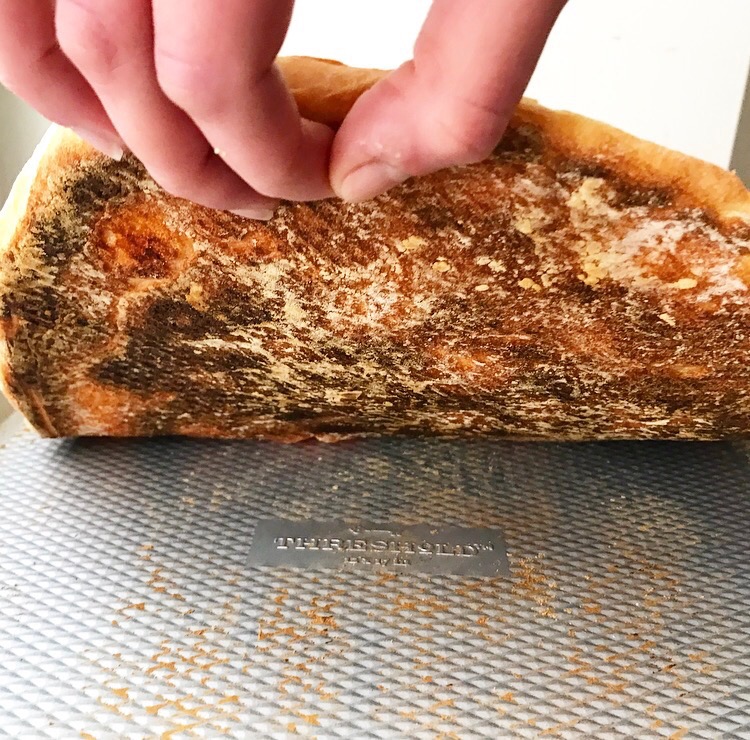
How to Make Excellent Pizza at HomeHow to Make Excellent Pizza at HomeBaking the pizzas is a two step process and neither is what you might expect. Instead of being baked on a rack, the pizzas are baked in their pans on the oven floor. Yes, the oven floor. This is the poor (wo)man’s way of getting a crisp bottom crust without having to work with (or even own) a pizza stone. Bake the pizzas for about seven minutes–when you take them out of the oven, lift the edges with a spatula to make sure the bottom crust has some good color.
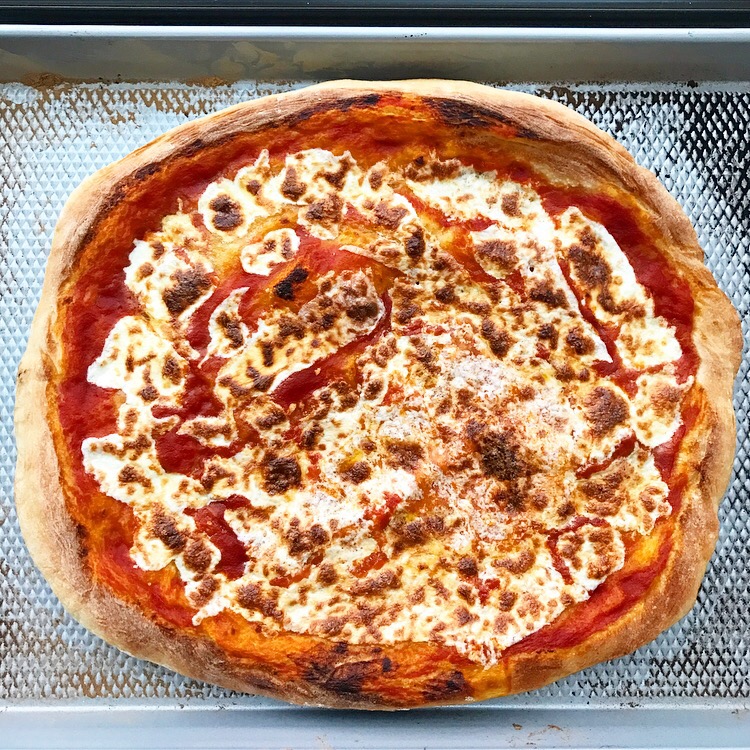
How to Make Excellent Pizza at HomeNext up, broil the pizzas. I know this sounds drastic, but a 500F oven will never give you the blistered cheese and singed crust that the broiler will. This is a quick process; it usually takes me 2 1/2-3 minutes. This step will give the pizzas a sort of charred flavor, not unlike those at your favorite coal oven pizzeria.How to Make Excellent Pizza at HomeHow to Make Excellent Pizza at Home
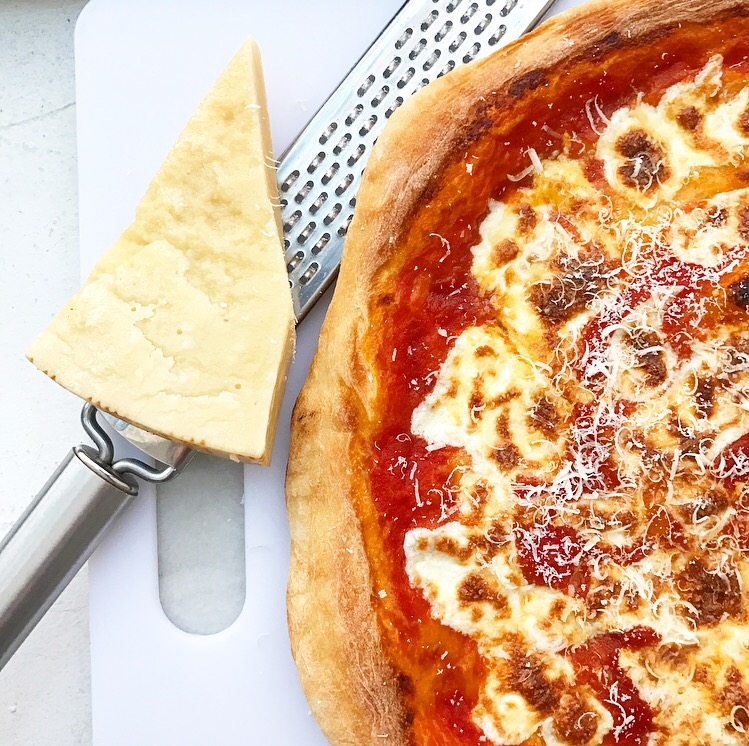
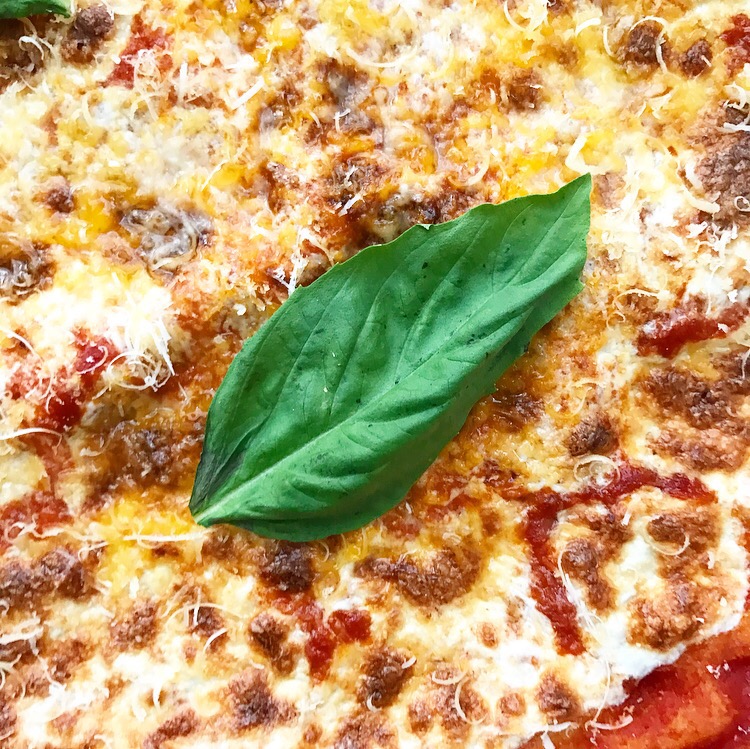
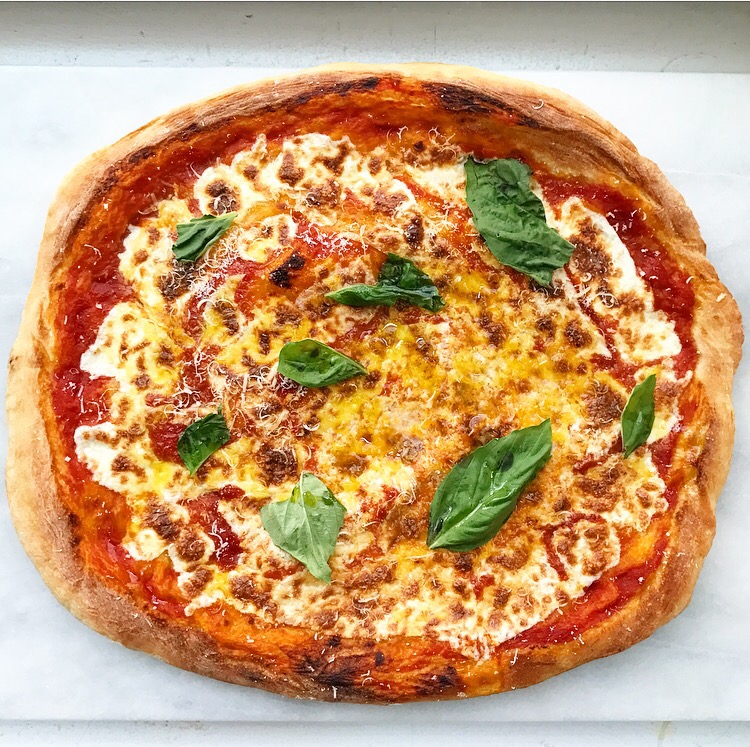
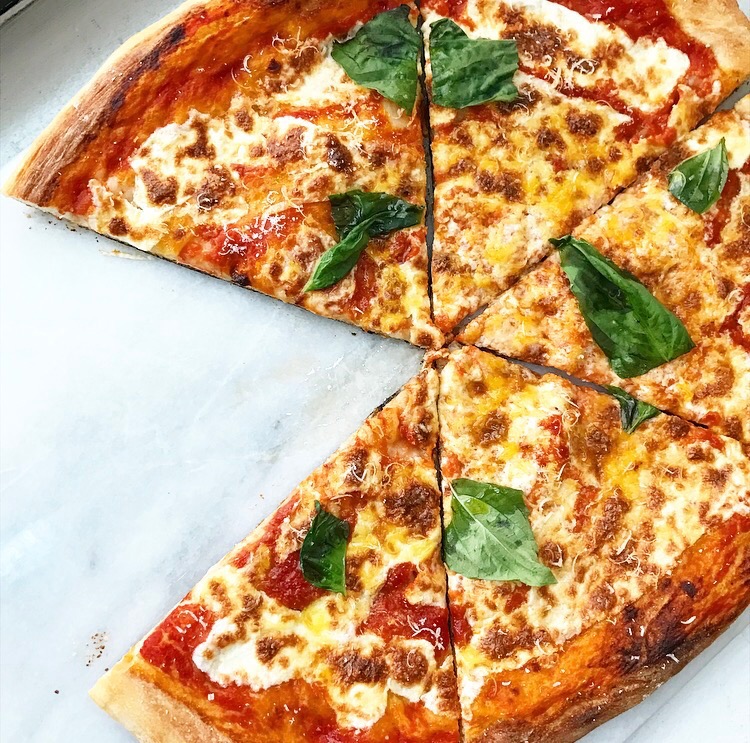
How to Make Excellent Pizza at HomeOnce the pizzas are to your liking, remove them from the broiler. Top them immediately with some grated Parmesan, a drizzle of olive oil, and some torn fresh basil. Let them cool for a few minutes before transferring them to cutting boards and slicing them up.
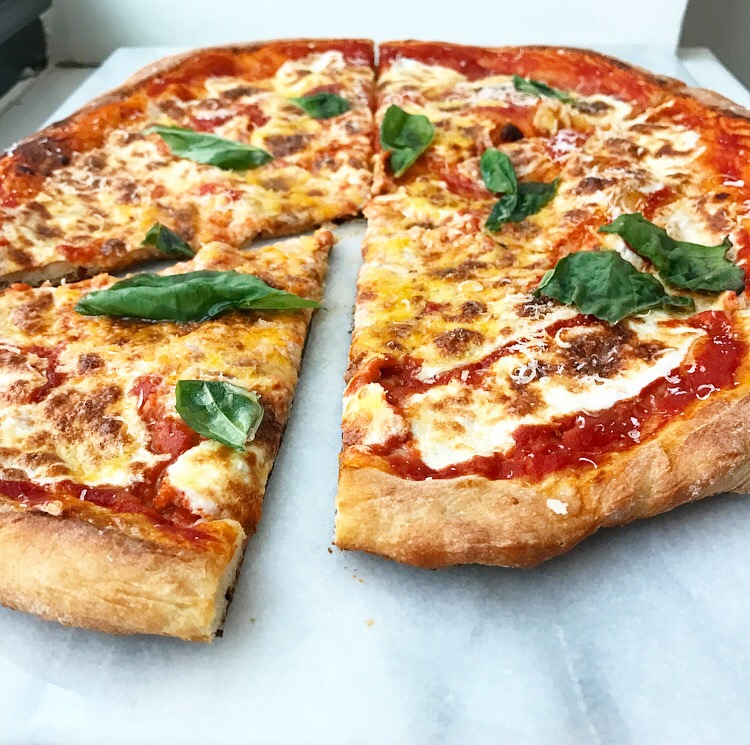
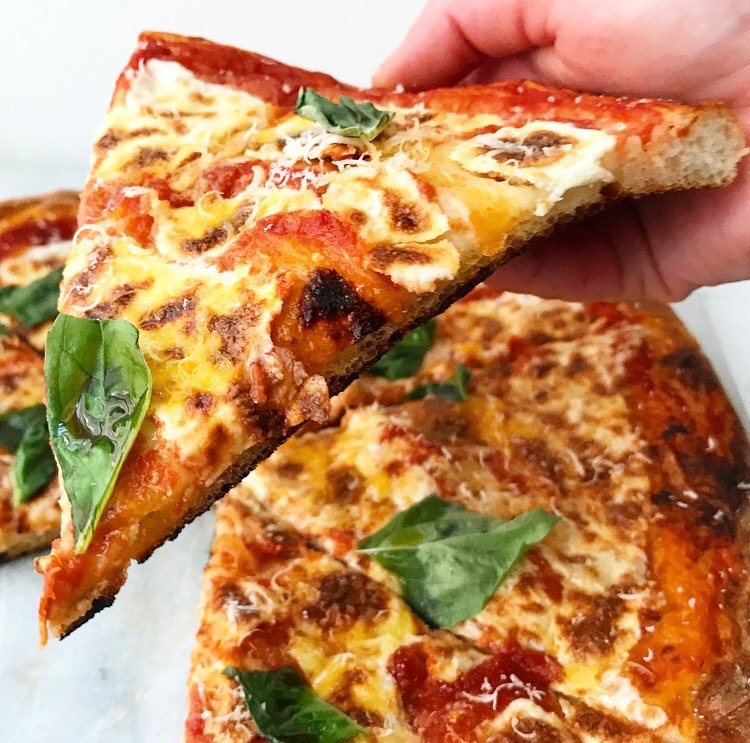
How to Make Excellent Pizza at HomeThese pizzas, y’all. They’re thin and delicate, but have a good crisp edge and chewy crusts. Oh, and the flavors. It goes without saying that the combination of tomato, mozzarella, and basil is an unbeatable classic, and the slight char from the broiling step brings it over the top. You won’t be able to stop at just one slice!

And that, my friends, is how you make pizza reminiscent of your favorite pizzeria at home. All you need is a little dough, a few toppings, some time, and eleven test-pizzas worth of ingenuity.How to Make Excellent Pizza at Home
Pizza Dough
makes enough for 2 12-inch pizzas

2 1/2 cups all-purpose flour
1 1/2 teaspoons instant yeast (instructions for regular yeast below)
1 tablespoon granulated sugar
1 teaspoon fine sea salt
1 tablespoon olive oil + more for brushing
1 cup lukewarm tap water

In a medium-large mixing bowl, stir together flour, instant yeast, sugar, and salt. Add olive oil and water. Mix with your hand or a silicone spatula just until combined. Cover bowl with plastic wrap and let sit for 15 minutes at room temperature.

Flour a surface and your hands. Turn dough onto the surface and knead until smooth, about 7 minutes. Form dough into a ball. Divide dough ball into two pieces and form those into balls. Heavily flour a rimmed baking sheet (or two dinner plates). Place dough balls in opposite corners and brush any exposed dough with olive oil. Wrap pan in plastic wrap. Let dough rise in a warm, draft-free environment for 60-70 minutes, until doubled in size. Proceed with pizza-making.

Notes:

You may also use regular active dry yeast, but the recipe needs a few adjustments. All volumes stay the same. Start by dissolving sugar and yeast into the lukewarm tap water. Let sit 5-10 minutes, until yeast bubbles (proofs). If your yeast does not bubble, it is dead–start the recipe again with new yeast. In a medium-large mixing bowl, stir together flour and salt. Add olive oil and yeast mixture. Use your hand or a silicone spatula to mix until just combined. Cover bowl and let sit for 15 minutes. Proceed with recipe as written, keeping in mind that the rise might take up to 90 minutes.

Pizza Margherita
makes 2 12-inch pizzas, enough for 4-6 adults

1 batch Pizza Dough (2 dough balls)
6-8 tablespoons strained tomatoes, tomato purée, or other sauce, divided
8-12 ounces fresh mozzarella, torn into pieces, divided
olive oil, for drizzling
grated Parmesan cheese
fresh basil leaves, torn

If you have an in-oven broiler, place one rack about 6 inches from the heating element. Preheat oven to 500F for at least one hour–the entire oven needs to be very hot.

Flour 2 rimmed baking sheets, tapping out any excess.

Flour your hands. Working with one ball of risen pizza dough at a time, place your hands (palms down) underneath the dough, lifting it from the pan it rose on. Let dough stretch with gravity, moving your hands slowly in a circular motion to allow for even stretching. Gently place dough on one of the prepared pans. Stretch further with your fingertips until the desired shape is reached. Pinch the edges to form a crust. Set aside while you stretch and shape the other ball of dough.

Working with one pizza at a time, pour 3-4 tablespoons of sauce in the center. Use a spoon or ladle to spread the sauce in a circular motion, leaving blank space at the edge. Scatter torn mozzarella over the top. Drizzle with olive oil. Set aside while you top the other pizza.

Working with one pizza at a time, bake pizza (in the lightly-floured pan) for 6-8 minutes on the floor of your oven. Remove from oven. Lift edges with a spatula to ensure bottom crust is browned. If it isn’t, bake for an additional 1-2 minutes, checking bottom crust after each minute. Repeat process with other pizza.

If you do not have an in-oven broiler, turn off oven and heat broiler for 5-10 minutes, until very hot. If you do have an in-oven broiler, turn it on and proceed immediately.

Broil each pizza 1-4 minutes, until crust and cheese are bubbly and a bit charred. Check pizzas after each minute, and every 30-45 seconds after the 2 minute mark. My pizzas broil in 2 1/2-3 minutes. I like to rotate the pans after 1 1/2 minutes for even browning. Let pizzas cool for five minutes in their pans.

Remove to cutting board(s). Top with grated Parmesan, a drizzle of olive oil, and torn fresh basil. Slice with a sharp chef’s knife (or pizza cutter) and serve. Wrap any leftovers in foil and store in the refrigerator.

How to Make Excellent Pizza at Home

Strawberry Rhubarb Galette

Strawberry Rhubarb GaletteMy mother is not a baker. If the main ingredients in a recipe are flour, sugar, and butter, she’ll pass or politely ask someone else to make it. That’s why I found it so funny when Shari’s Berries asked me to pass along this Mother’s Day post featuring baking advice from the mothers of popular food bloggers, including Sally of Sally’s Baking Addiction and Michelle from Brown Eyed Baker. Their mothers impart some great advice–my favorite is “Don’t be afraid to mess up!” from Yossi Arefi’s mom. That’s great advice for life in general.

Strawberry Rhubarb GaletteWhen I first got into baking, my mom was left scratching her head. She’s a great cook, but baking just frustrates her. How I grew up to be a baker, I don’t know. It’s probably some sort of cosmic middle child joke.

I have seen my mother bake exactly one thing: a classic cherry-pineapple dump cake. Except that my mother, ever a lady, would never serve something called “dump cake.” Instead she takes a tip from her mother, tops it with vanilla ice cream, and calls it “Simply Delicious.” That’s what it is, after all. I guess my mom’s lone piece of baking advice–besides “don’t”–would be that if you don’t like the name of your dessert, change it.

Strawberry Rhubarb GaletteStrawberry Rhubarb GaletteStrawberry Rhubarb GaletteNo, my mother is not a baker. But when all is said and done, my mom and I, we’re not so different. For one, we’re both caretakers by nature. We express love in acts of service which, incidentally, is also the form in which we receive love. If you mention to my mom that you are struggling with something, she’ll be right there with you, trying to figure it out. If she perceives that you are overwhelmed, she’ll send you flowers or a goofy card. That doesn’t mean she doesn’t occasionally neglect her own needs and make herself crazy because she’s trying to help someone else–that’s something that her mother did before she did and a habit of mine as well. 

Just know that if my mom does you a favor or sends you a gift or calls at 11pm on a Wednesday just because she wants to say hello, it’s because she really values you. And if I make you a pie and put it on the internet for a holiday we can’t even celebrate together, know that it’s because I really value you.

Strawberry Rhubarb GaletteStrawberry Rhubarb GaletteStrawberry Rhubarb GaletteStrawberry Rhubarb GaletteAnother way my mother and I are alike? We both prefer fruit desserts over chocolate.* When I started planning what I’d make for my Mother’s Day post, I really thought about what my mom would like to eat. Strawberry rhubarb pie quickly came to mind, with a whole wheat crust, because my mom will take extra nutrition anywhere she can get it, even in dessert.

*Know that my little sister is rolling her eyes as she reads this.

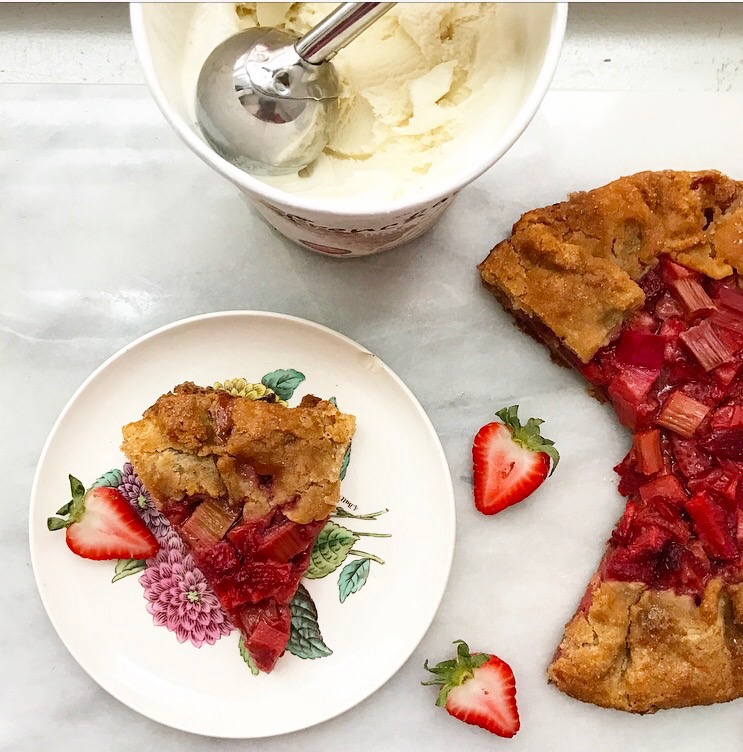
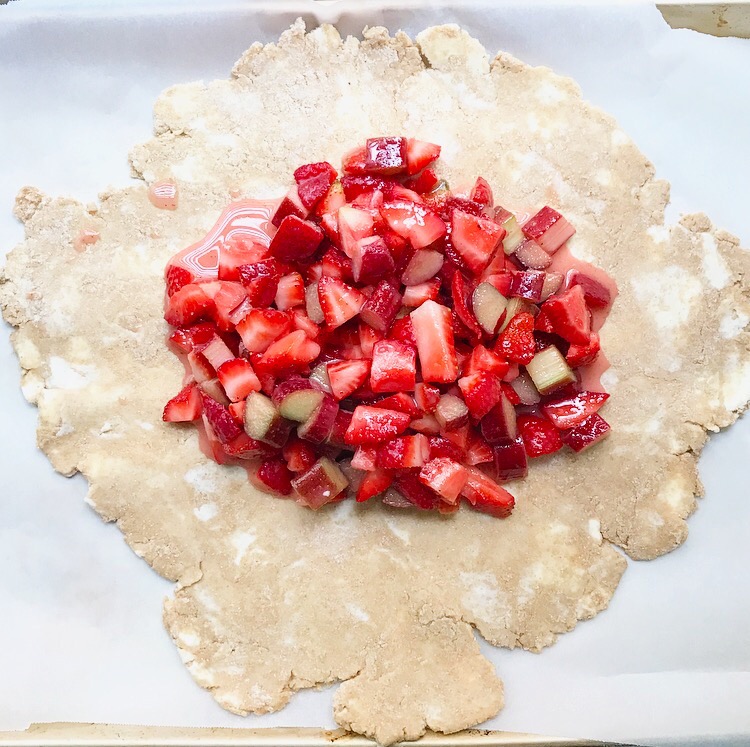
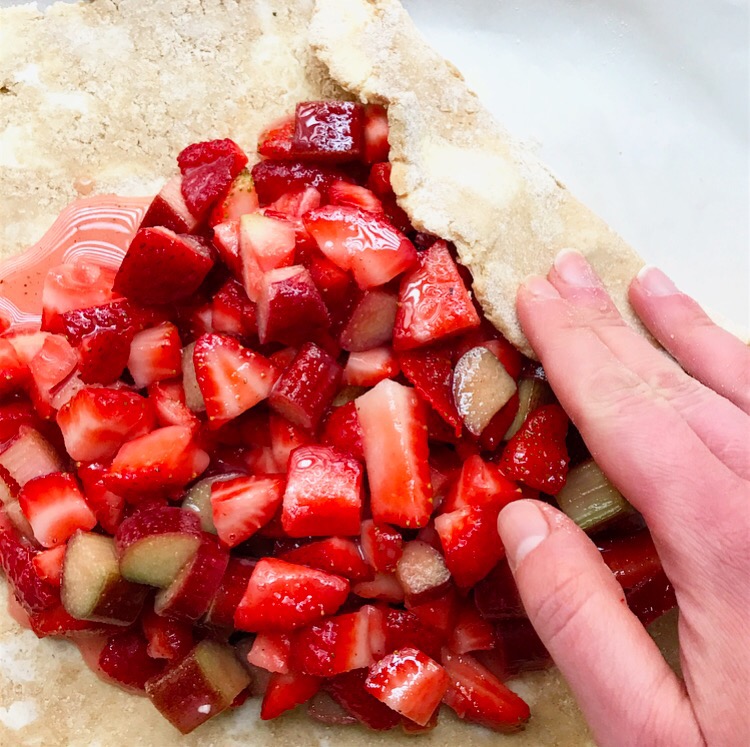
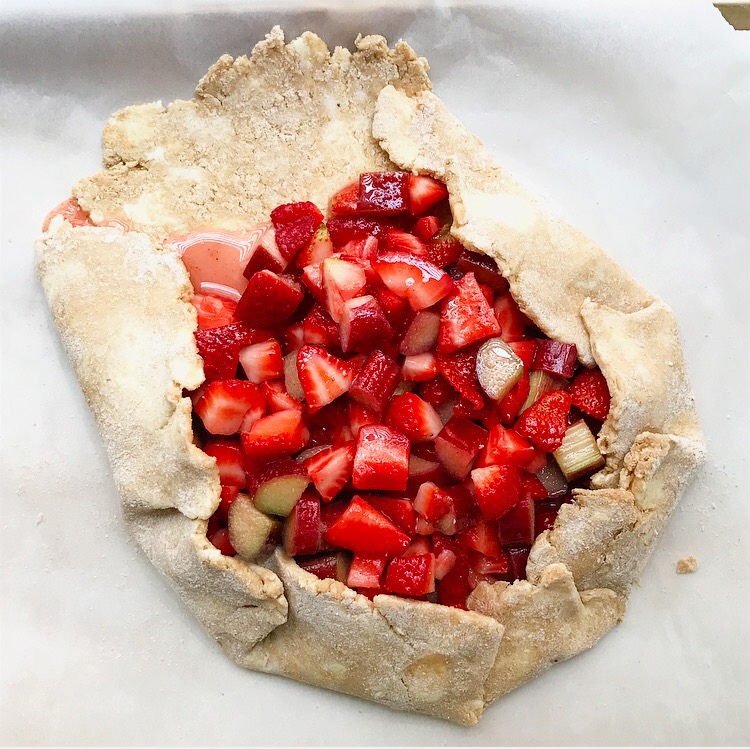
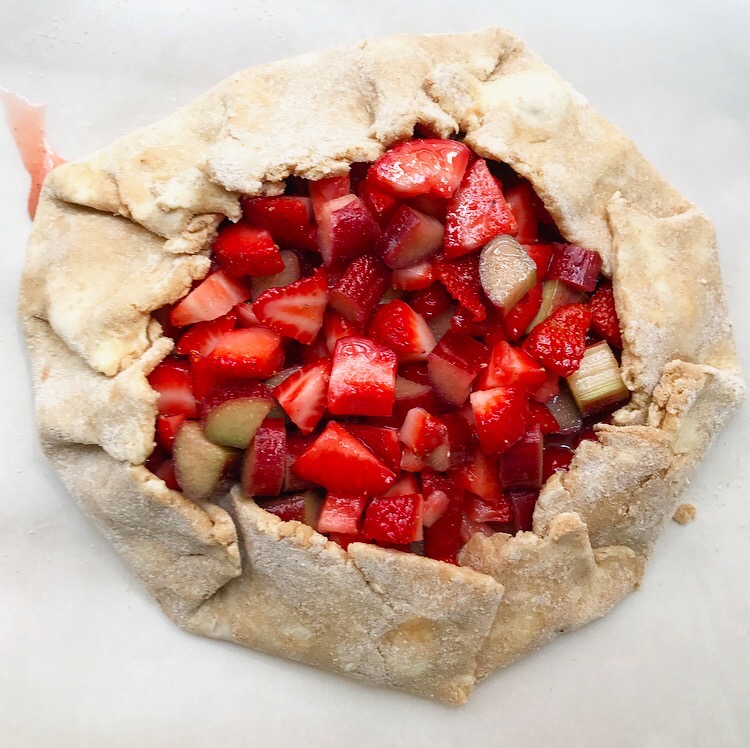
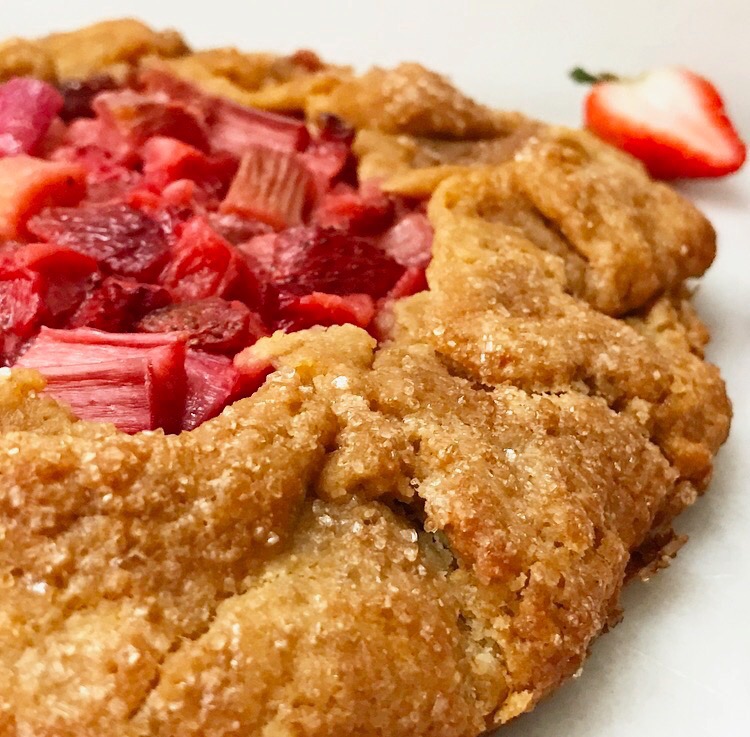
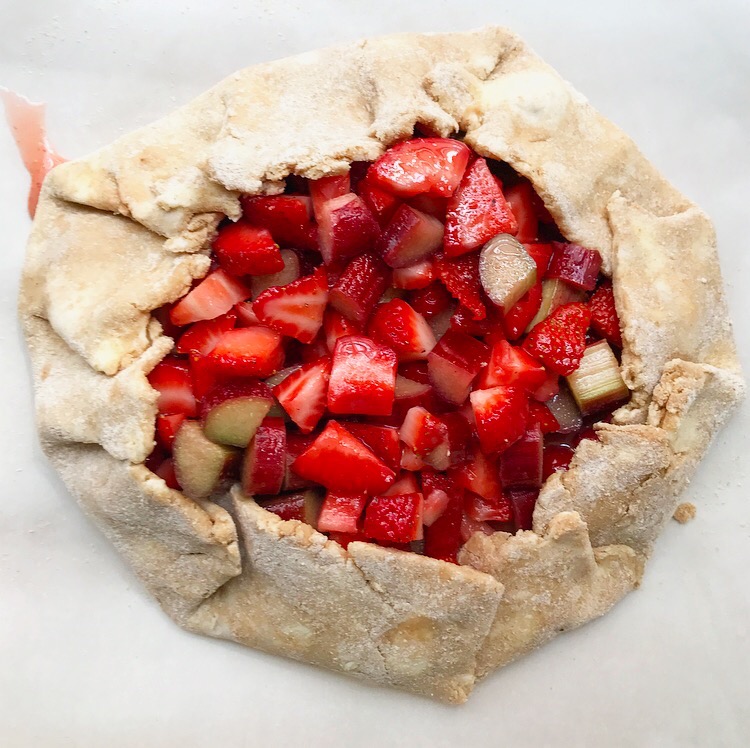
Strawberry Rhubarb GaletteInstead of making pie, something that my mom would literally never attempt, I went for a simple, rustic Strawberry Rhubarb Galette. Free-form pies are definitely my mom’s style. There’s no crimping or anything–just lay the rolled dough on a baking sheet, pile the filling in the middle, and gather it all together with your hands. Bake it for 45 minutes and let it cool before serving.

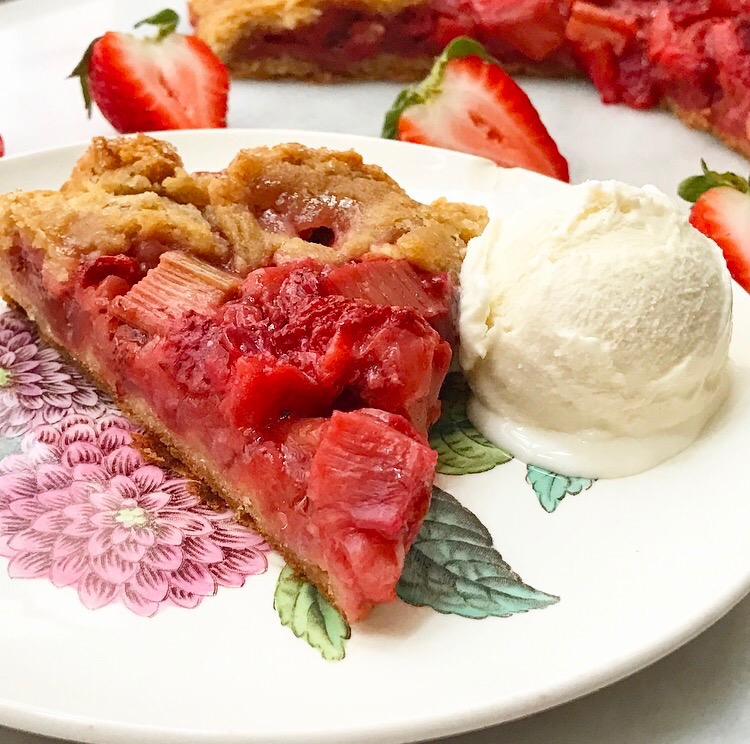
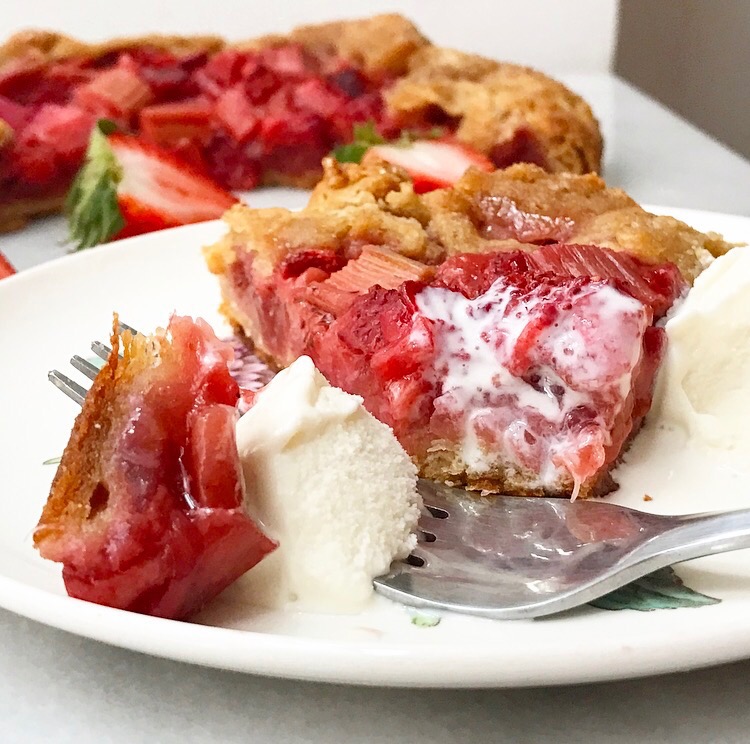
My mom, a self-proclaimed vanilla person, would insist on a scoop of vanilla ice cream to go with her slice of this sweet-tart classic dessert. I would too. My mom and I–we’re more alike than we are different.Strawberry Rhubarb GaletteStrawberry Rhubarb Galette

Happy Mother’s Day, Mom! I love you waaaaay more than chocolate. XOXO

Strawberry Rhubarb Galette
makes 1 galette, 8 servings

2 cups fresh strawberries, cut into 1/2-inch pieces (about 16 ounces)
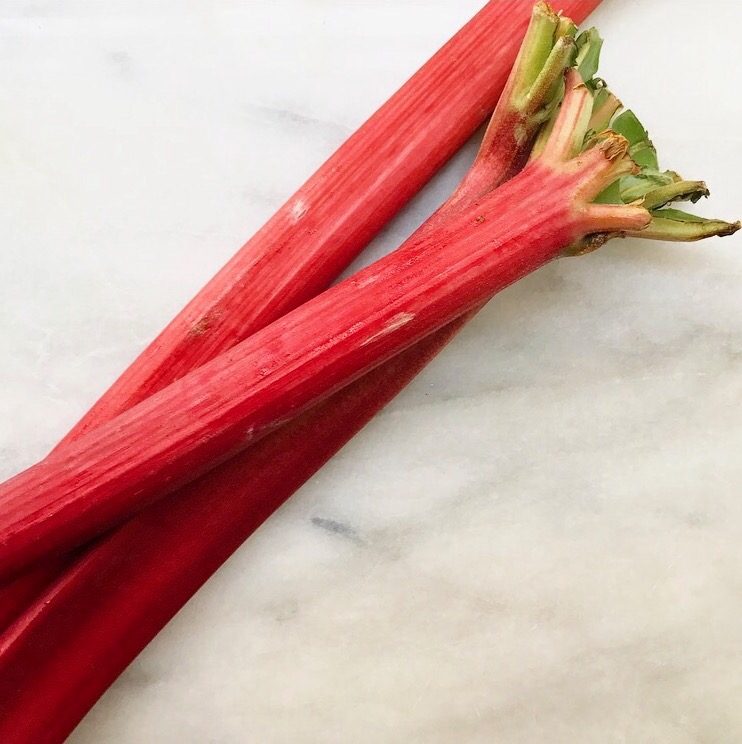
1 cup fresh rhubarb, trimmed, cut into 1/2-inch pieces (about 1-2 stalks)
2/3 cup granulated sugar
1/4 teaspoon ground ginger
1/4 teaspoon ground nutmeg
pinch of Kosher or sea salt
4 tablespoons cornstarch
2 tablespoons fresh lime juice (about 1 lime)
1/2 recipe Whole Wheat Pie Dough, or other good crust
milk, for brushing
1 tablespoon coarse sugar, for sprinkling (I used turbinado)
1 tablespoon unsalted butter, cut into small pieces
vanilla ice cream, for serving, if desired

Arrange oven racks in the upper and lower positions. Preheat oven to 375F. Line a rimmed baking sheet with parchment paper. Set aside.

Combine strawberries and rhubarb in a large mixing bowl. Add sugar, ginger, nutmeg, salt, cornstarch, and lime juice. Stir together with a silicone spatula or wooden spoon and let sit for 15 minutes at room temperature.

Flour a surface and a rolling pin. Roll pie dough out until it is 1/8-inch thick. Trim scraggly edges, if desired. Transfer to prepared pan. Use a slotted spoon to remove strawberry rhubarb filling from the bowl, leaving behind excess liquid. Mound filling in the middle of the dough, leaving at least 2 inches of excess on all sides. Fold dough over the sides of the filling, to contain it. Brush exposed crust with milk and sprinkle with coarse sugar. Dot exposed filling with butter.

Bake galette on the upper rack for 25 minutes. Tent galette with aluminum foil and move to the lower rack. Bake for 20-25 more minutes. Crust will firm up as the galette cools.

Let galette cool completely in the pan on a rack. Remove to a cutting board. Slice and serve with vanilla ice cream, if desired.

Pie will keep covered at room temperature for three days, or in the refrigerator for up to four.

Strawberry Rhubarb Galette

Whole Wheat Pie Dough

Whole Wheat Pie DoughI have a lot of feelings about pie crust. Namely, that it should be easy, homemade, have defined flaky layers, and be insanely delicious. No hard, crunchy, cardboard-flavored crusts for me, thanks.

Whole Wheat Pie DoughWhole Wheat Pie DoughNow, I have a pie crust that is all these things and more. Yes, my Cream Cheese Pie Dough is perfection, as far as I’m concerned. And what’s not to love? The dough is simple to make and never, ever tears during rolling. It goes well with sweet and savory applications. It has so many layers that I have had friends comment that it’s akin to having a pie wrapped in croissant dough. And it really is delicious.

I could go on and on about that crust all day. Really, I could. But as much as I love it, sometimes I just need a change.

Whole Wheat Pie DoughWhole Wheat Pie DoughEnter this Whole Wheat Pie Dough. It has all the ease, flakiness, and versatility of my beloved Cream Cheese Pie Dough, but with a rich whole wheat flavor. It might sound a little odd, the idea of a pie made with a whole grain crust, but trust me when I say that it’s shockingly good. The combination of sweet, jammy fruit and nubbly wheat crust–let’s just say it’s the dessert you never knew you wanted.
If you don’t believe me, just wait–I have a Strawberry Rhubarb Galette coming your way tomorrow 😊🍓Whole Wheat Pie Dough

Whole Wheat Pie Dough
makes two 9-inch pie crusts

2 1/2 cups whole wheat flour (or white whole wheat flour)
1/2 teaspoon baking powder
2 tablespoons granulated sugar
1/2 teaspoon Kosher or sea salt
8 ounces (2 sticks) unsalted butter, very cold, cut into cubes
2/3-3/4 cup buttermilk, very cold

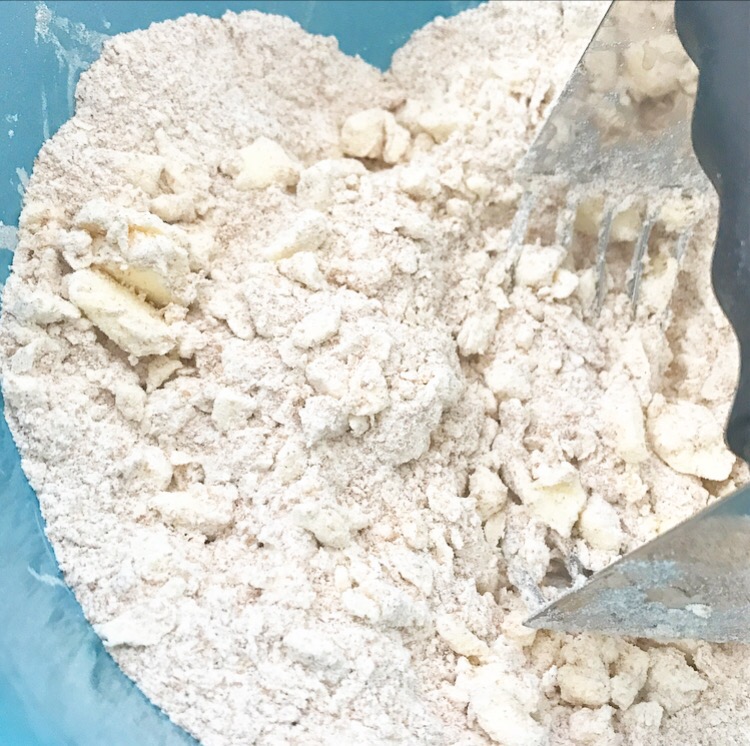
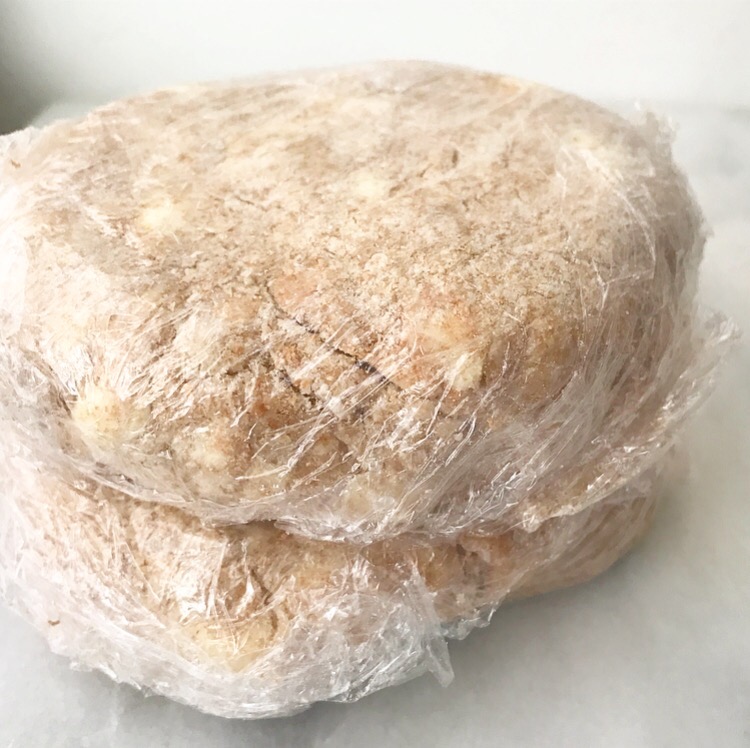
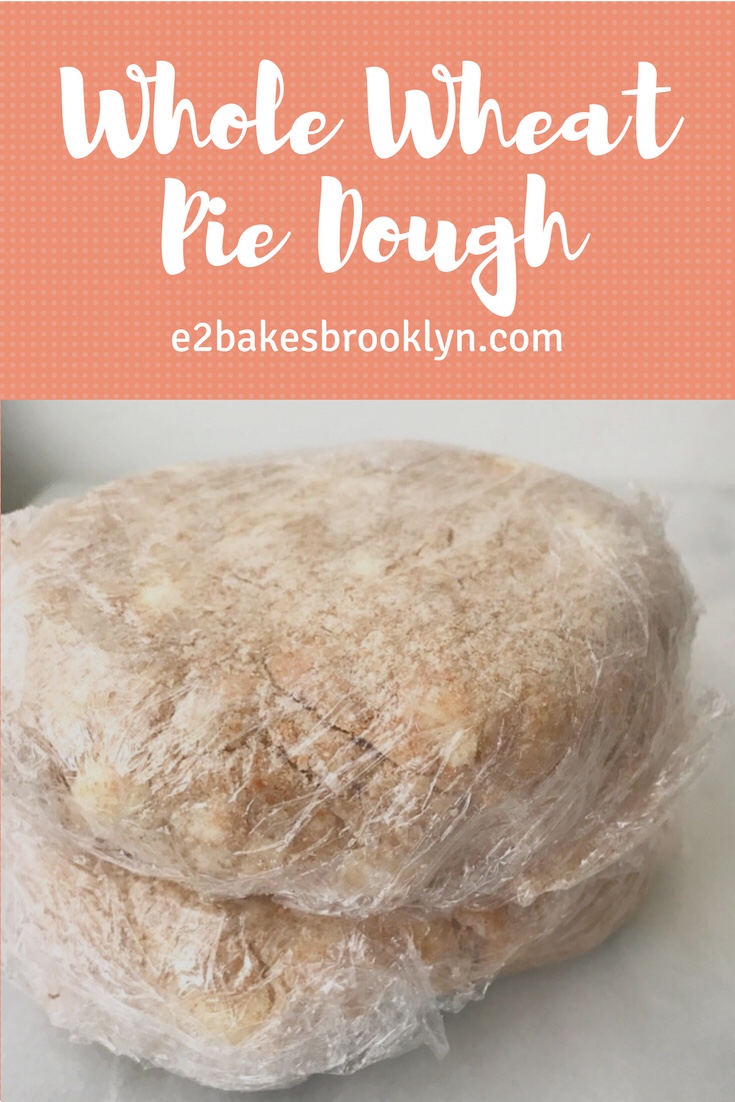
In a large mixing bowl, whisk together whole wheat flour, baking powder, sugar, and salt. Add cold butter, and use a handheld pastry blender to cut it into the dry ingredients until the smallest pieces are the size of large peas. Pour in 1/2 cup cold buttermilk and stir with a silicone spatula or wooden spoon until clumps form. Add more buttermilk by the tablespoon, as necessary. Put your hands* in the bowl to knead the mixture until it comes together. Form the dough into two discs, and wrap them individually in plastic wrap. Chill for one hour, or up to two days.
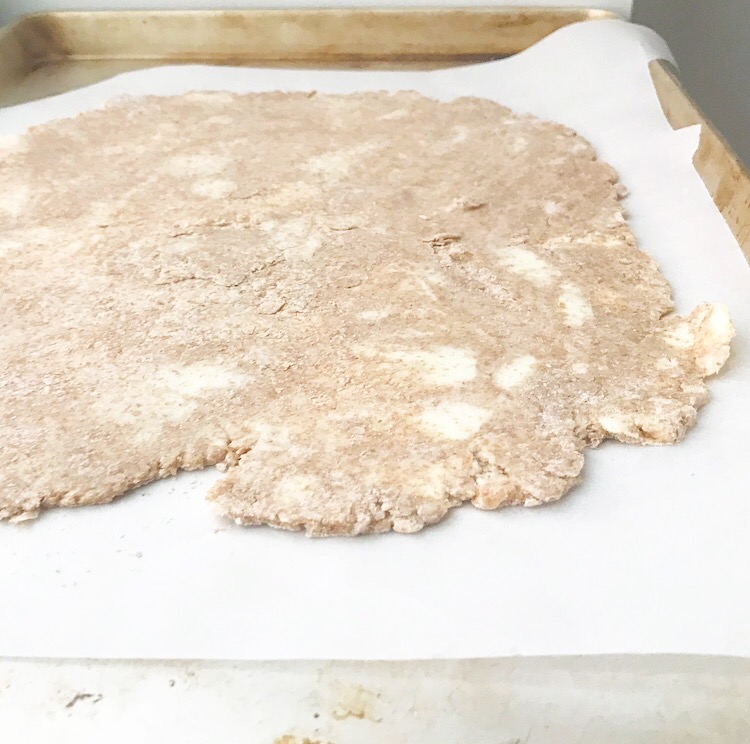
Flour a surface and a rolling pin. Take one disc of dough out of the refrigerator, unwrap it, and place it on the surface. Press the dough with the rolling pin. Roll it in one direction 3-4 times, and then turn it 90 degrees. Roll in one direction 3-4 times. Repeat rolling and turning until dough is at least 12 inches in diameter, dusting with more flour as necessary to prevent sticking.

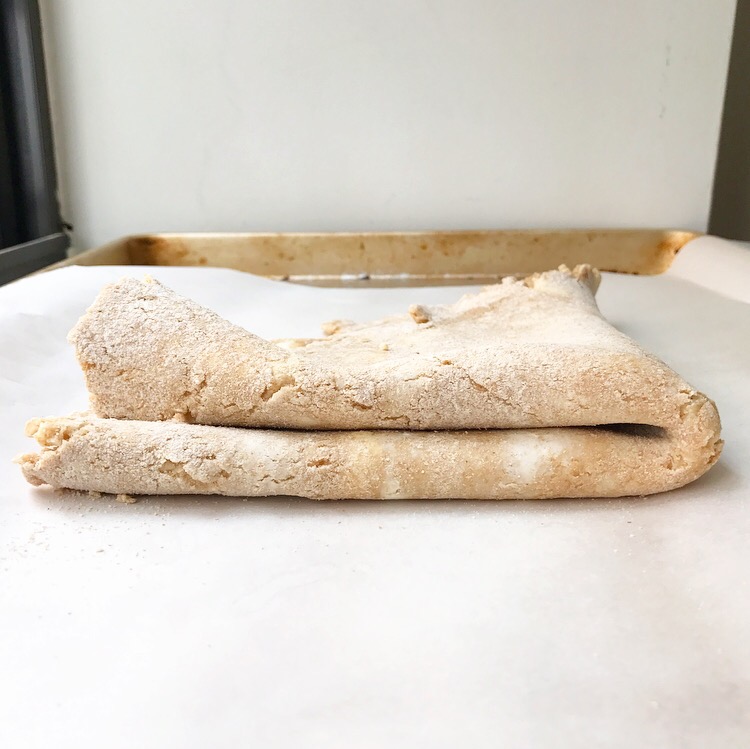
Fold dough in quarters, and place in a pie plate with the scraggly edges hanging over the outside of the pan. Unfold the dough to fill the pan. Trim the excess to 1/2 inch. Fill crust with filling and chill for at least 15 minutes. From here, there are two options.

For a single crust pie, crimp the edges, and brush them with additional buttermilk. and bake at 375F for 45 minutes to one hour, covering the crust with foil halfway through. Let cool at least three hours.

For a double crust pie, roll out the top crust the same way that you did the bottom crust. Cut into strips for a lattice,* or leave whole to cover the whole pie. Trim the excess to 1/2 inch. Crimp the edges, then chill for 15 minutes. Brush the crust with additional buttermilk. Cut vents if the top crust is whole. Bake at 375F for 45 minutes to one hour. Let cool for at least three hours.

Notes:

If your hands are warm, run them under cold water for thirty seconds (and then dry them) before kneading.

Whole Wheat Pie Dough

French Crullers

French CrullersLately, I’ve been all about homemade doughnuts (see here, here, and here). In that time, I have learned that a) homemade doughnuts are the best in the world, and b) they are easier than anyone would imagine. Seriously, if can make a quality homemade doughnut, anyone can!

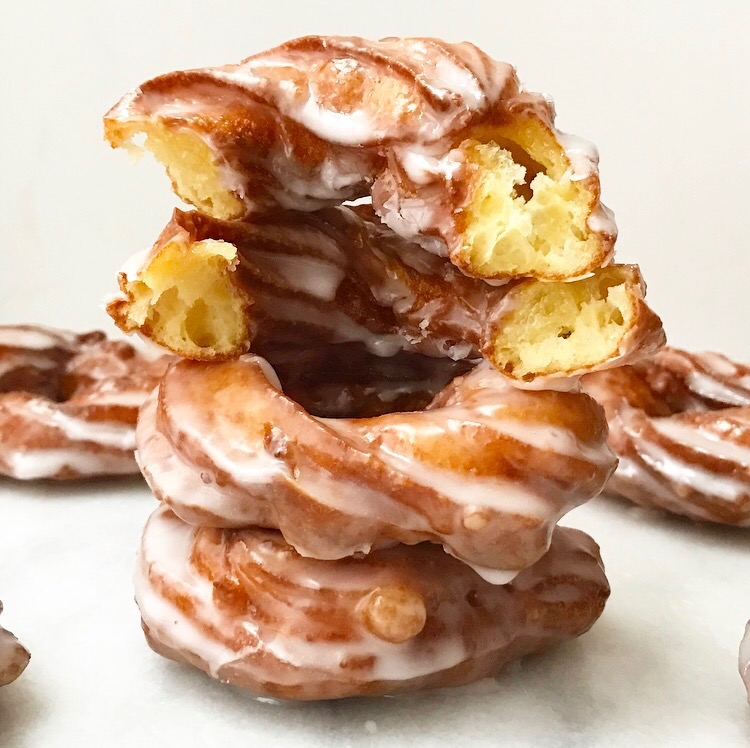
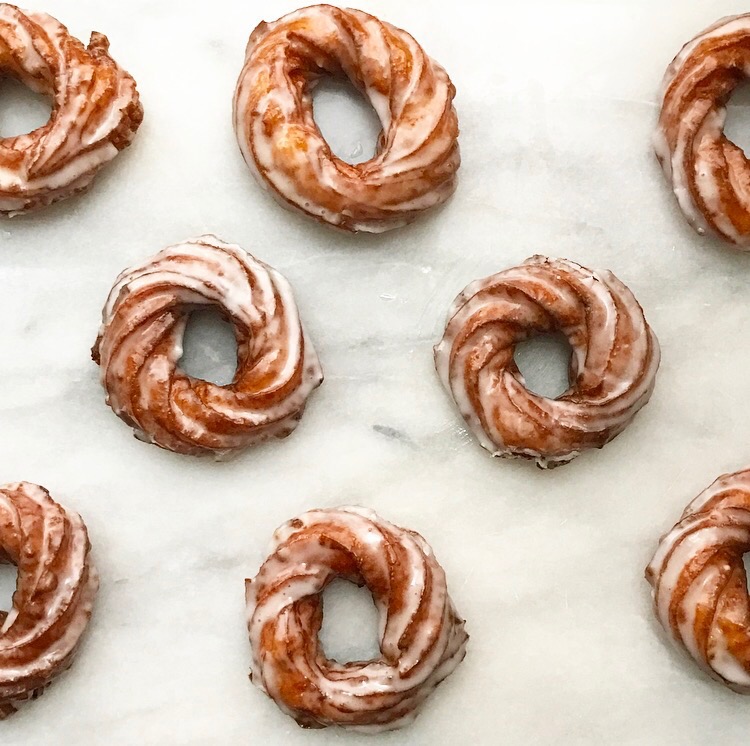
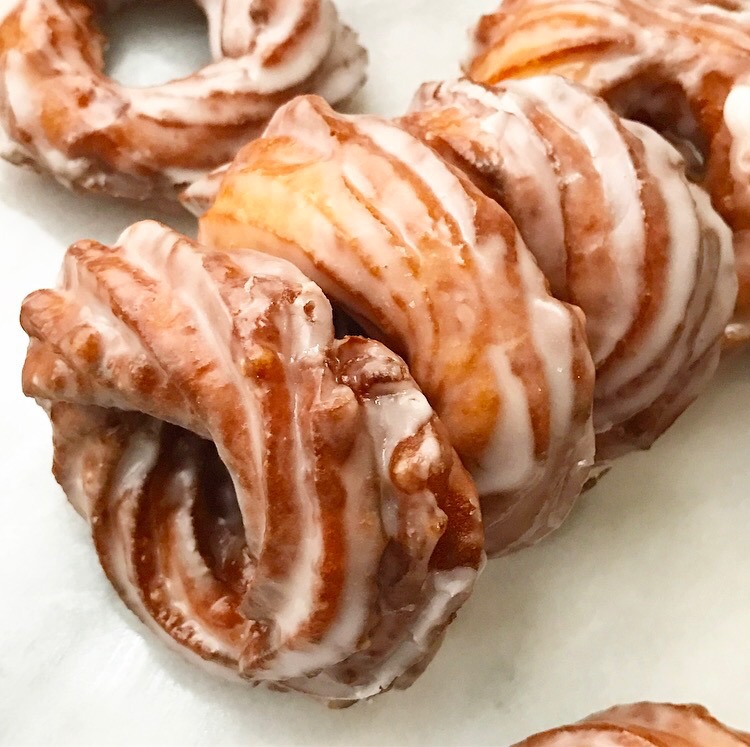
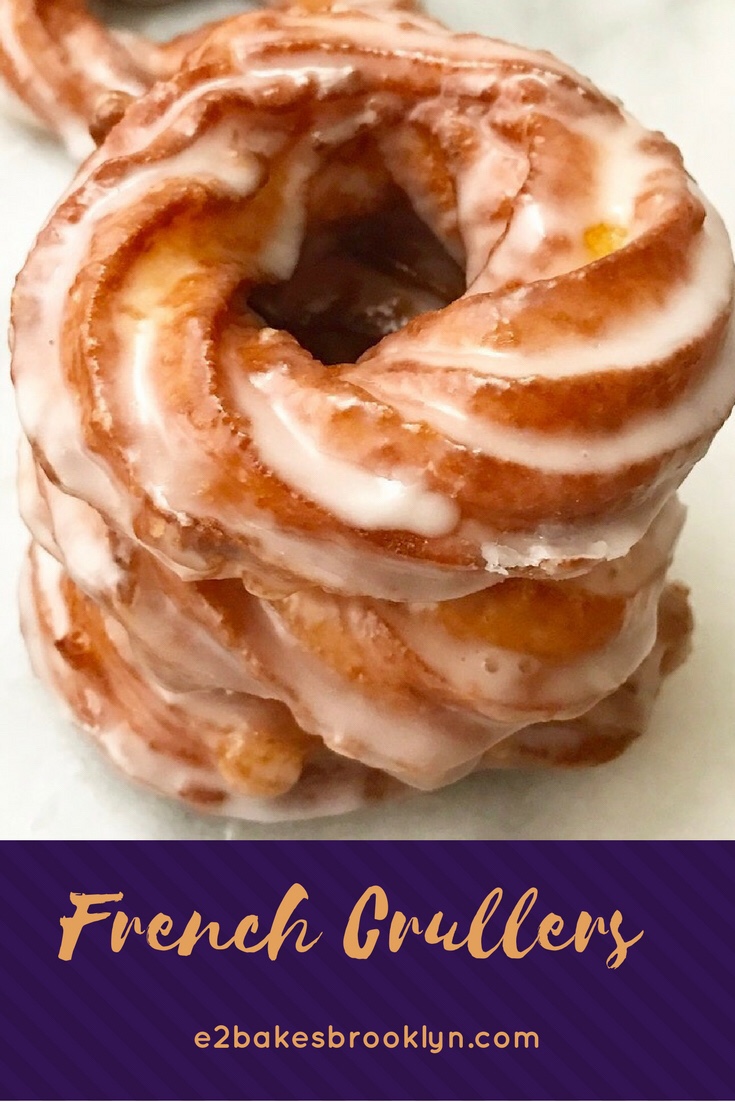
French CrullersFrench CrullersToday, the obsession continues with homemade French Crullers, a.k.a. those light, fluffy, ridgy doughnuts you see behind every shop counter. While I was content with the Dunkin’ Donuts variation of this classic for years, I am now a homemade cruller convert. There’s no comparison between these and the mass-produced variety. The crispy piped ridges and airy middles are what my (current) doughnut dreams are made of.

French CrullersSo, what makes these crullers so French? Well, it’s all in the dough. Where most doughnuts rely on yeast or baking powder to help them puff, French Crullers are made with a classic French pastry dough: pâte à choux. You might be familiar with it in eclairs, cheesy gougeres, or as the airy shell in cream puffs (more on those soon).

Pâte à choux (pronounced “pat-a-shoe”) is unusual. It contains no chemical leaveners, instead relying on trapped steam to help it puff. Don’t worry–it’s only got six ingredients and it’s simple to make.

Like Churros, pâte à choux starts on the stove. Bring some whole milk, butter, a touch of sugar, and some salt to a boil over medium heat. Then, stir in some bread flour (we need the higher gluten content that it provides). Next, cook out the excess moisture. Turn down the heat and cook, stirring constantly, until you have a ball of dough. You’ll know it’s ready when there is a thin veil of dough on the bottom of the pan.French CrullersFrench Crullers

Transfer the dough ball to a mixing bowl and mix it with an electric mixer for one minute. This allows the hot dough to release a lot of steam. Next, beat three room temperature eggs in a measuring cup. With the mixer running, slowly stream in the eggs. The dough will start to become richer and thicker as it mixes. Once all three eggs are incorporated, lift the beater out of the bowl. Does the dough hanging off create a v-shape? It probably won’t at this point. Beat another egg and add it little-by-little, checking frequently to see if that v-shape is there. It may take all or part of another egg (the fifth, in this case) to achieve the right consistency. There is no guaranteed amount of egg in pâte à choux. This past weekend, I had one batch that only required 3 1/2 eggs, while another required 4 1/2. It all depends on how much moisture was cooked out on the stove. Long story short, make sure to have extra eggs.

When your pâte à choux is ready, it will be sort of sticky and gluey and look like this.French CrullersFrench Crullers

Load it into a pastry bag fitted with a large star tip and pipe rings on individual squares of parchment. You could fry them immediately, but they’d likely lose their signature ridges. I like to let my piped doughnuts sit uncovered at room temperature for half an hour–this allows the dough to rest and a sort of skin to form, guaranteeing a classic ridged final product.French CrullersFrench CrullersFrench Crullers

Next up, it’s time to fry. Heat a quart or two of frying fat (I used canola oil) to 350F. Carefully slip one cruller (still adhered to its parchment) into the oil. After a second or two, use tongs to remove the parchment from the oil. The doughnut will puff and turn deeply golden after 45 seconds or so. Flip it and continue to fry until it has a nice even color all over. Remove the doughnut from the oil and wait one minute. If it is properly cooked, it will stay intact–if not, it will collapse. Once you’re sure your first cruller is as it should be, continue frying the rest of them.

French CrullersFrench CrullersThe last step is to give these beautiful doughnuts a dip in a classic glaze. Let it set for 20 minutes or so before eating two. French Crullers are lower in sugar and calories than most doughnuts. I’m not saying they’re health food (because they’re definitely not), but you shouldn’t feel too much guilt about having a third. I sure didn’t.French Crullers

French Crullers
makes 12-16 doughnuts

1 cup whole milk
5 tablespoons unsalted butter
2 teaspoons granulated sugar
3/4 teaspoon fine sea salt
1 1/4 cup bread flour (I use King Arthur Bread Flour)
3 large eggs + 1-2 more, room temperature
1-2 quarts frying fat (I like shortening, safflower oil, or canola oil)

Glaze:
3 cups confectioners sugar
1 teaspoon pure vanilla extract
1 tablespoon light corn syrup (or mild honey)
4-5 tablespoons warm tap water

In a 4-quart saucepan, combine whole milk, butter, sugar, and salt. Bring to a full boil over medium heat, stirring frequently so that a skin does not form. Add bread flour all at once and stir in with a wooden spoon or silicone spatula. Reduce heat to low and continue to stir dough for 3-4 minutes, until a thin veil of dough covers the bottom of the pan. Remove dough to a large heat-proof mixing bowl.

Crack 3 large eggs into a liquid measuring cup and whisk with a fork until combined.

Use an electric mixer on low speed to beat the warm dough for 1 minute, until some steam has been released. Continue mixing while adding eggs in a thin stream, stopping occasionally to scrape down the bowl.

Once all three of the beaten eggs have been added, test the dough. Dip the end of the mixer into the dough and slowly pull upward. If the dough is sort of gluey and makes a V-shape, it’s ready. If not, beat another egg. Stream it in slowly–you may not need the whole egg. Check frequently to see if the dough is right. You may need part or all of a fifth egg.

Load dough into a piping bag (or gallon freezer bag) fitted with a large star tip. Cut a sheet of parchment into 16 3-4 inch squares. Lay squares on rimmed baking sheets. Pipe rings of dough onto squares. Let sit for 30 minutes at room temperature. Doughnuts may be frozen at this point, if desired.*

Position a rack over a rimmed baking sheet. Place near stove.

In a large, heavy-bottomed pot, heat frying fat until it reaches 350F. Slip one doughnut into the oil. After a second or two, it will detach from the parchment. Remove parchment with tongs. Continue to fry for 1-2 minutes, flipping when one side becomes deep golden brown. Remove to prepared rack. Wait one minute to make sure that the doughnut does not collapse (it will if it’s undercooked). Continue frying in batches of 1-2 doughnuts, until all have been cooked. Let doughnuts cool to room temperature.

Make the glaze. In a small mixing bowl, use a fork to whisk together confectioners sugar, vanilla, light corn syrup, and 4 tablespoons warm water until smooth and pourable. Add more water by the teaspoon, until the desired consistency is reached. Dip doughnuts one at a time, letting any excess glaze run back into the bowl. Place glazed doughnuts back on the rack. Glaze will set after 20 minutes.

French Crullers are best eaten the day they are made. If you must keep them overnight, leave them uncovered at room temperature.

Note:

To freeze piped crullers, lay them on a baking sheet and freeze until frozen. Transfer to a labeled freezer bag for up to a month. Let crullers thaw slightly while your oil is warming before proceeding with the recipe as written. They may take an extra minute to cook.

French Crullers

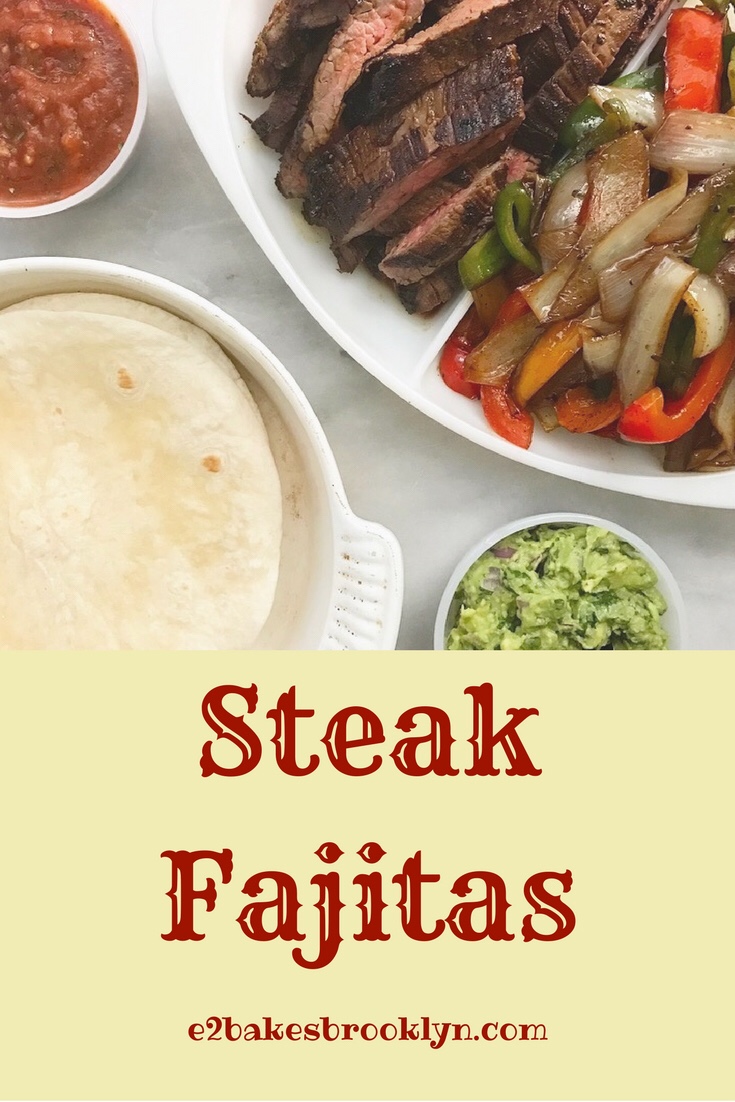
Steak Fajitas

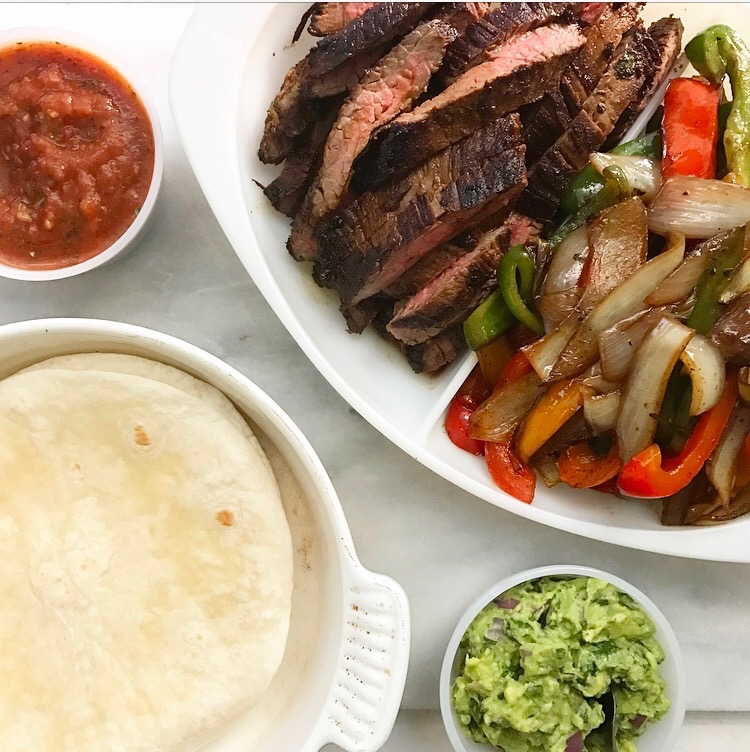
Steak FajitasHello! I am taking a break from an absolutely insane week to bring you one of my favorite dinners ever–Steak Fajitas!

Steak FajitasAs you know by now, I was raised in Texas. Naturally, Tex-Mex is my love language. And while I live for enchiladas, fajitas are the real way to my heart. Yep.

Until a few years ago, I thought of fajitas as a restaurant-only meal. It’s easy to understand, given that I had only ever seen them served in a blistering hot cast iron pan. Something about all that presentation (which occasionally included fire) made fajitas seem far beyond my abilities. That’s ridiculous, of course. Fajitas are just meat, peppers, and onions that have been cooked in a screaming-hot pan. That’s literally the whole process, aside from heating some tortillas and arranging some toppings. You don’t even have to make guacamole and salsa if you don’t feel like it.

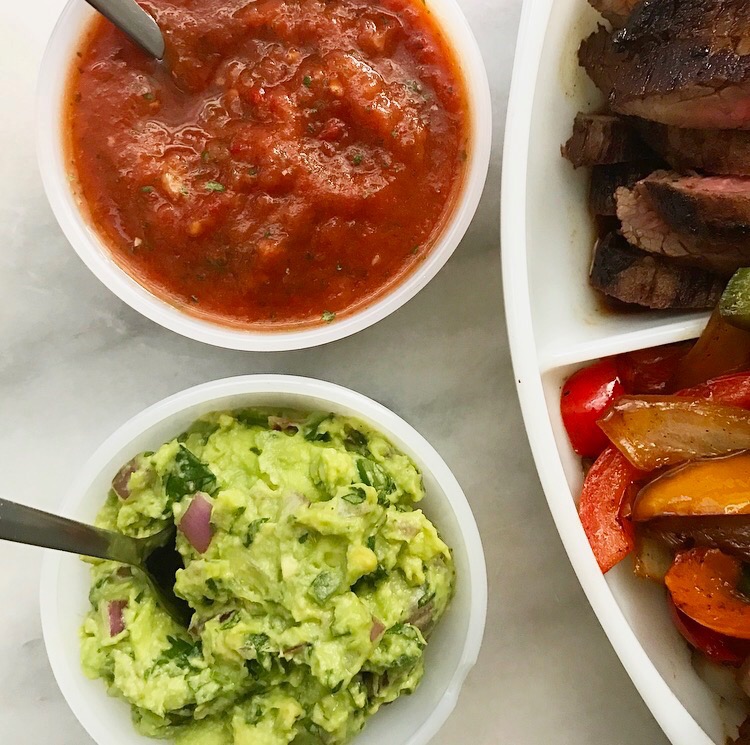
You totally should though. Homemade guacamole and salsa beat the pants off anything you can buy.Steak FajitasSo, how exactly do you make Steak Fajitas at home? Well, it all starts with the marinade. Mine involves soy sauce, vinegar, garlic, cilantro, lime, and plenty of spices–loads of flavor here! Mix the marinade, pour it in a bag, and add two pounds of flank steak. Seal the bag and then let the meat sit at room temperature for an hour.

Next, slice up a large onion and some bell peppers. That won’t take the whole hour, so make the guacamole and salsa (seriously, do it), shred some cheese, chop some cilantro, and take the remaining half hour to needlessly surf the Internet or teach yourself how to do calligraphy or something.

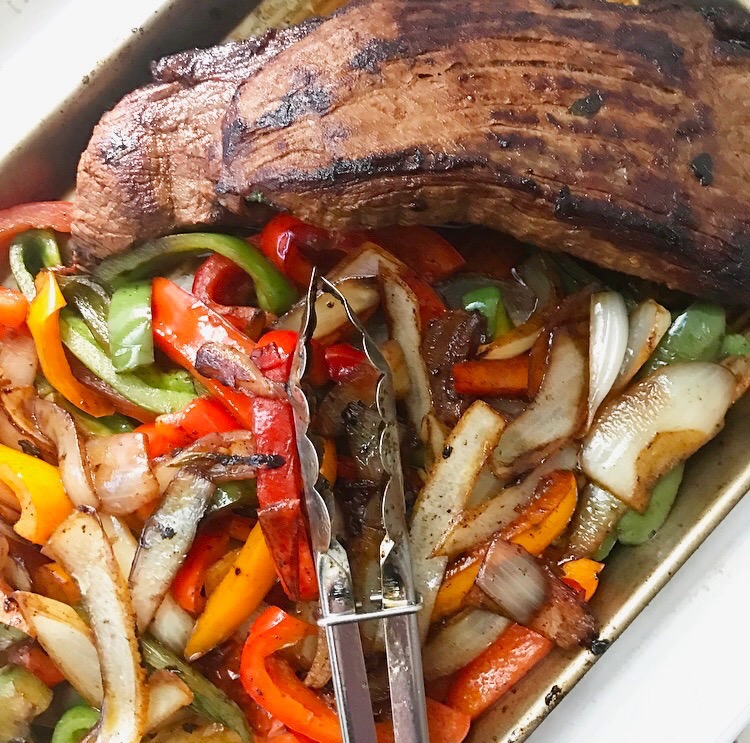
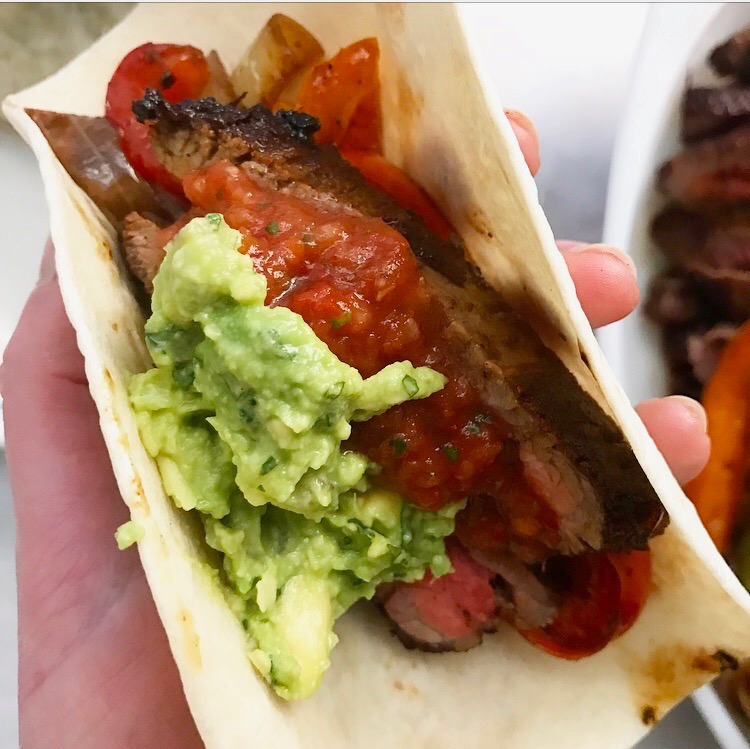
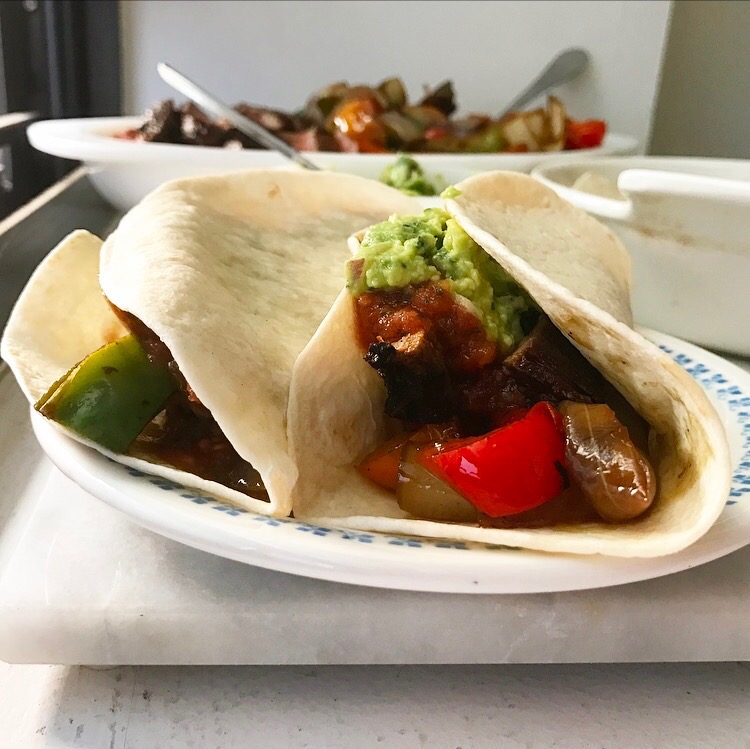
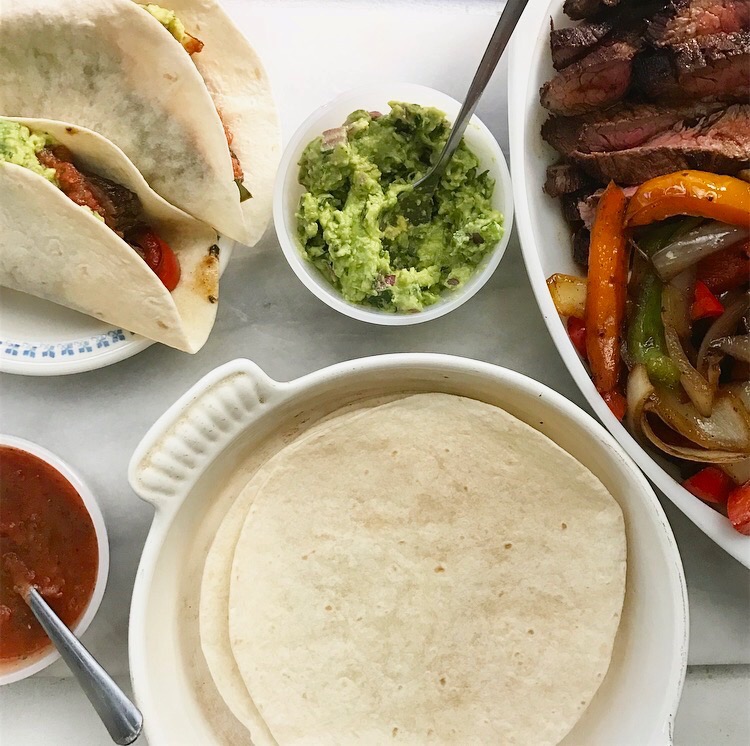
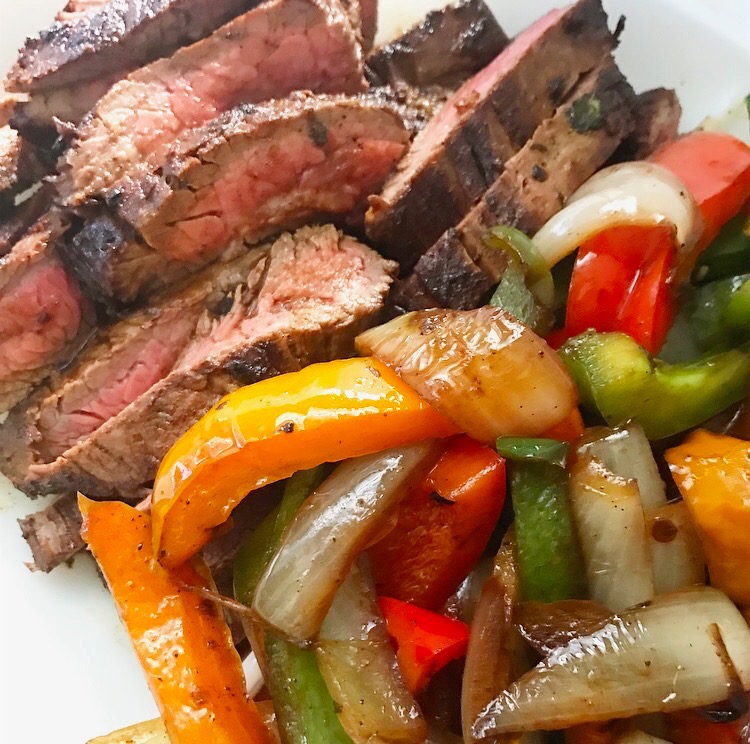
Steak FajitasWhen the hour is up, cook the steaks as desired. These are cooked to medium, but make yours to your liking. Then, let them rest while you cook the peppers and onions. Slice the steaks and transfer everything to a serving dish. Warm some tortillas and serve with all those garnishes. Your family and friends will love being able to customize this meal to their liking!

Steak FajitasSteak FajitasY’all, these Steak Fajitas are crazy good. The steak is super flavorful from the marinade, and the vegetables are the perfect accompaniment. Piled into a warm flour tortilla and topped with all sorts of goodness, these fajitas are great for weeknights and summertime dinner parties alike! The only way to improve upon this meal is to make Churros for dessert 😊Steak Fajitas

Steak Fajitas
makes about 6 servings

Marinade:
3/4 cup soy sauce
1/4 cup apple cider vinegar (or white vinegar)
1/4 cup olive oil
4 large cloves garlic, minced
1/4 cup chopped cilantro
1 tablespoon ground cumin
1 tablespoon ground chile powder (I used ancho)
1 teaspoon ground cayenne pepper (optional)
2 limes, sliced into half-moons
1 jalapeño, stem removed, sliced in half

Fajitas:
2 pounds flank steak (I had 2 steaks)
1-2 tablespoons olive oil, divided
1 large white onion, sliced into 1/2-inch pieces
1-2 sweet bell peppers, sliced into 1/2-inch pieces
1 green bell pepper, sliced into 1/2-inch pieces

For serving:
1-2 dozen small flour tortillas, warmed
guacamole
salsa
shredded cheese
sour cream
chopped cilantro

Marinate the steak. In a small mixing bowl, whisk together soy sauce, vinegar, olive oil, garlic, cilantro, cumin, chile powder, and cayenne. Pour mixture into a gallon zip-top bag, and drop in lime slices and jalapeño. Add steak to bag. Squeeze out as much air as you can before sealing. Set full bag in a bowl (in case of leaks) and let sit at room temperature for 1 hour (or up to 2 hours in the refrigerator). Remove steak from bag and blot with paper towels. Discard marinade.

Heat a large heavy-bottomed skillet over medium-high heat for 1-2 minutes. Add 1 tablespoon olive oil to the pan. Working in batches (if necessary) cook each steak 3-4 minutes per side for medium, or longer, depending on your preferences. Remove to a rimmed sheet pan and tent with foil.

Turn heat down to medium. Add another tablespoon of olive oil to the pan, if necessary. Add onions and peppers to the pan and cook, stirring frequently, until soft (about 10 minutes). Remove to a serving dish.

Remove steak to a cutting board. Working against the grain, cut the steak into thin slices. Transfer to a serving dish.

Serve fajitas with warm flour tortillas, guacamole, salsa, shredded cheese, sour cream, and/or cilantro, if desired.

Fajitas will keep in an airtight container in the refrigerator for up to four days.

Steak Fajitas