Category Archives: Savory

Cornbread Crackers

If you’ve been around a while, you know I do a “savory January” full of weeknight meals to counterbalance all the sweets. I’m not sure how tightly I’ll keep that tradition this year, but I’m holding to it for now.

Cornbread Crackers​

You might be saying “But Liz, crackers aren’t a weeknight meal.” To that I say, “Anything can be a weeknight meal, Susan.” I eat crackers for dinner all the time. There is usually cheese and some form of fruit or vegetable involved, but the crackers are unquestionably the thing that holds everything together.

Usually, I’ll go for some sort of cracker from the grocery store, but occasionally I’ll DIY them (see exhibits A & B). Right now it’s these Cornbread Crackers, which were inspired by a bag of Cornbread Crisps I saw at Trader Joe’s. Instead of buying some like a normal person, I thought “I can make those,” and indeed I did. I regret nothing.
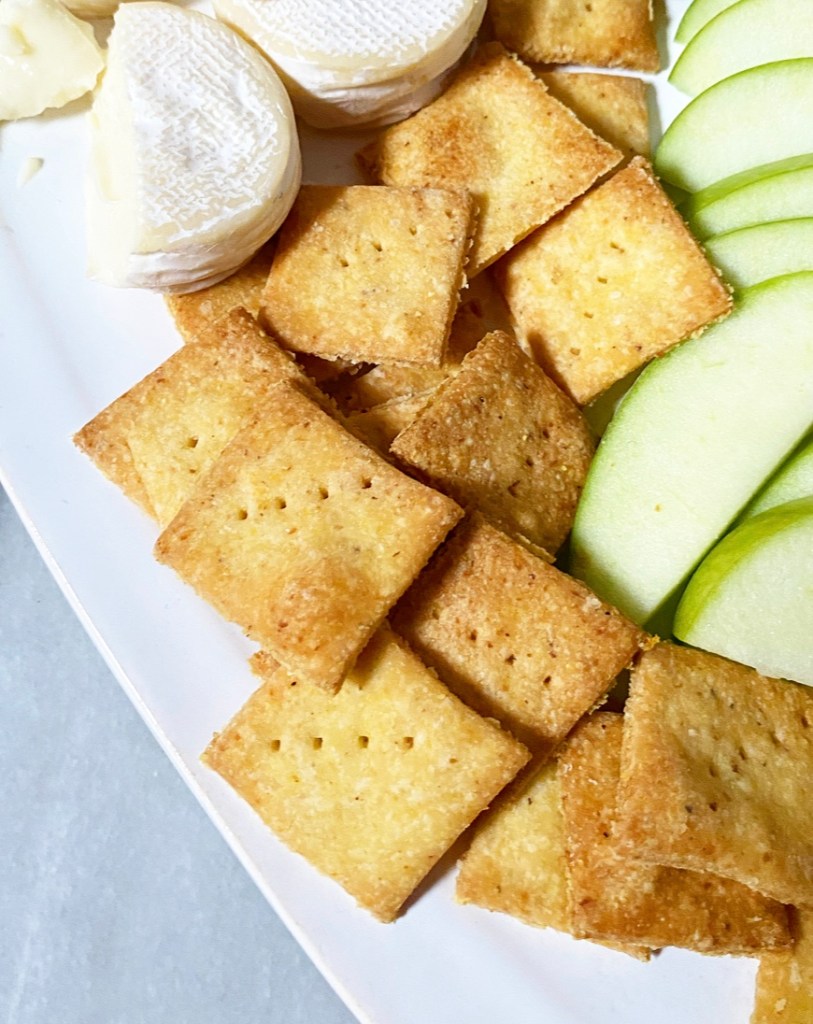
Cornbread Crackers​

Cornbread Crackers are just what they sound like: crackers with the flavors of cornbread. Made with equal parts yellow cornmeal and all-purpose flour, hints of sugar and salt, and bound with butter and water, these crunchy snacks are as welcome on a cheese plate as they are with a bowl of soup or chili.
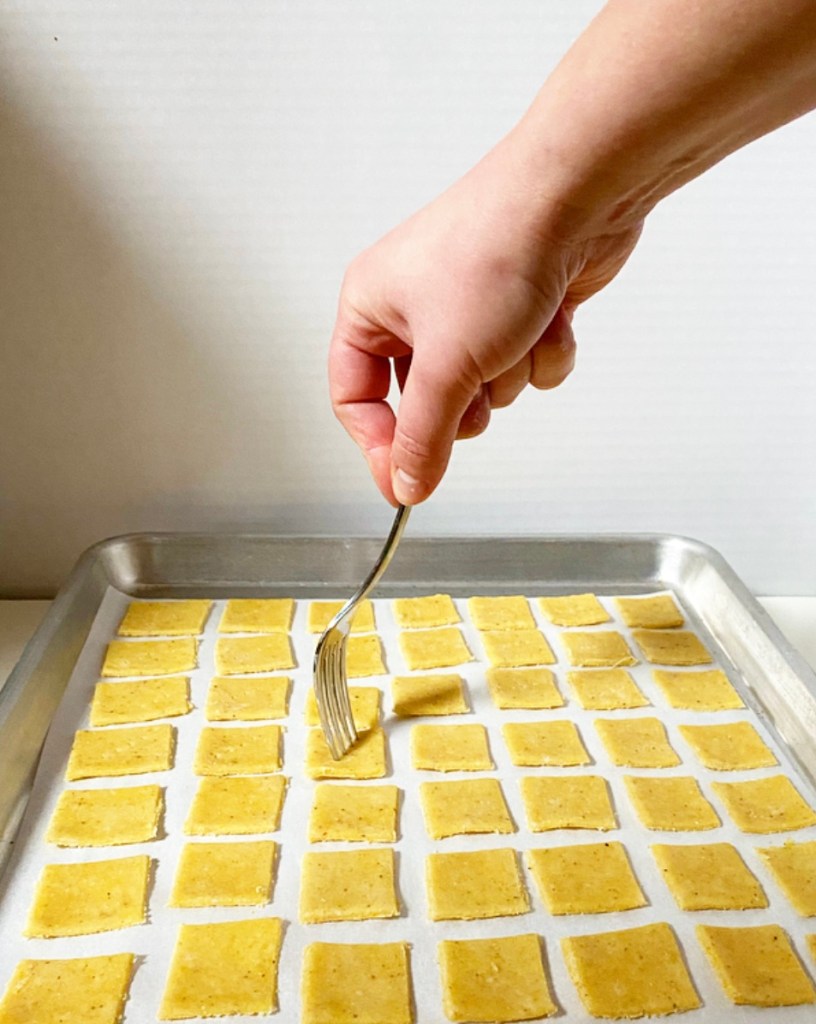
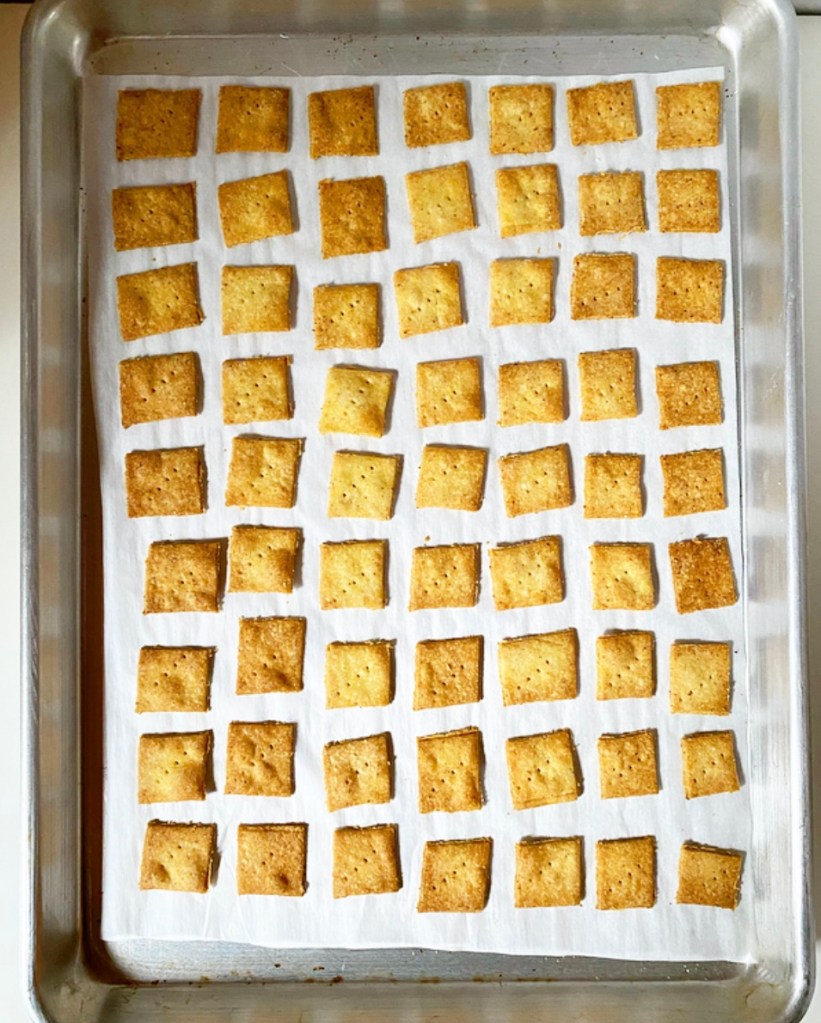
Their texture is crisp and light, with a pleasing bit of grit from the cornmeal. The sugar in the dough is just enough to balance the salt and corn flavor, and the butter rounds them out and gives a little richness. On the grand spectrum of crackers (let’s pretend that’s a thing), they fall somewhere between water crackers and Wheat Thins, which basically means that I can’t keep myself from grabbing a little handful every time I pass by their container…or when I have some Trader Joe’s Mini Brie Bites on hand.

Don’t worry, I’ll leave the cheesemaking to the professionals.
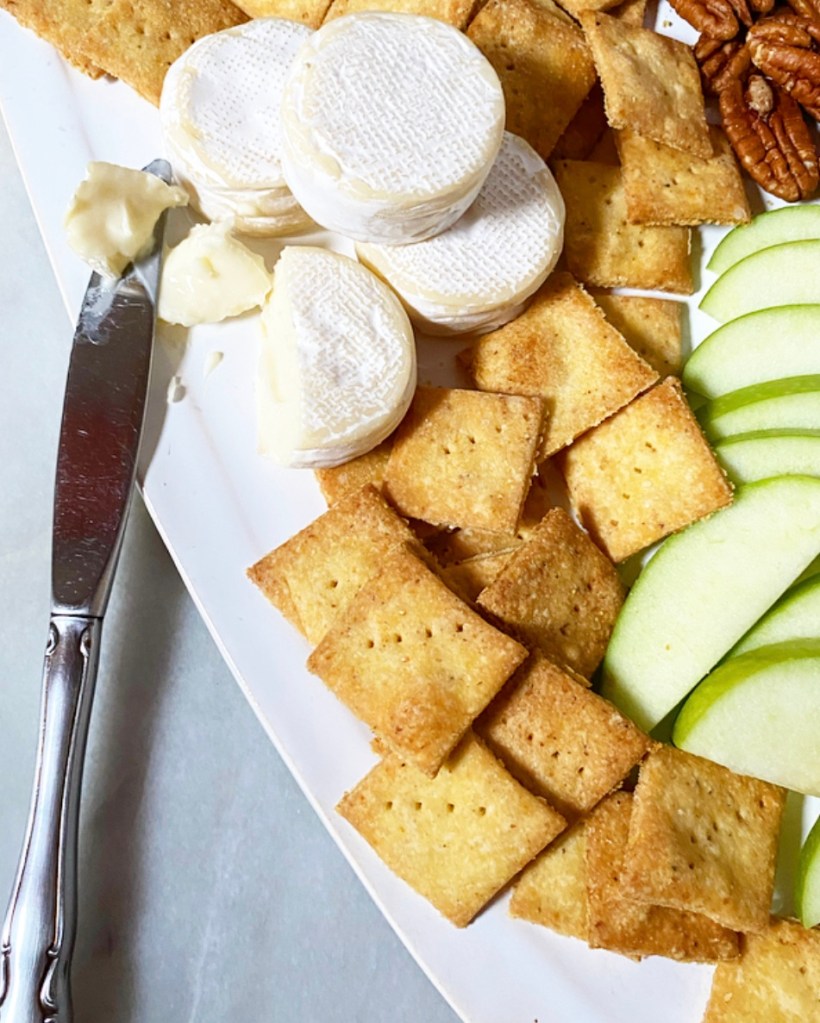
Cornbread Crackers​
Cornbread Crackers
makes lots (150 small crackers)

1/2 cup all-purpose flour
1/2 cup yellow cornmeal
1 teaspoon granulated sugar
1/2 teaspoon kosher or sea salt
3 tablespoons unsalted butter, melted
3 tablespoons warm water

In a medium mixing bowl, whisk together cornmeal, flour, sugar, and salt. Add melted butter and warm water and whisk just until combined. Dough may seem a little dry, but should hold together very well when pinched.

Gather dough into a ball and cover with plastic wrap. Let rest at room temperature for 15 minutes.

Place oven racks in central positions. Preheat oven to 400F. Line two rimmed baking sheets with parchment.

Roll out the crackers. Lightly flour a surface and a rolling pin. Divide dough in half, then move on half to the surface while covering the other back up with plastic wrap. Use the rolling pin to roll the dough out to 1/8-inch thickness.

Cut the crackers. Use a sharp chef’s knife, pizza cutter or bench scraper to cut dough into crackers. Mine are roughly 1-inch squares, but you may cut them as big or small as you like, keeping in mind that baking time may be affected. Use a thin offset icing spatula (or other implement) to remove each cracker from the surface. Place crackers close together (but not touching) on baking sheets. Prick each cracker with a toothpick or fork.

Repeat rolling/cutting/baking process with remaining dough. Re-roll scraps as needed.

Bake crackers for 15-17 minutes, or until just turning golden. Keep an eye on them after 15 minutes, as they can burn quickly.

Let crackers cool completely on their pans. Serve with soup, as part of a cheese plate, or on their own.

Crackers will keep in an airtight container for at least a week.
Cloverleaf Rolls

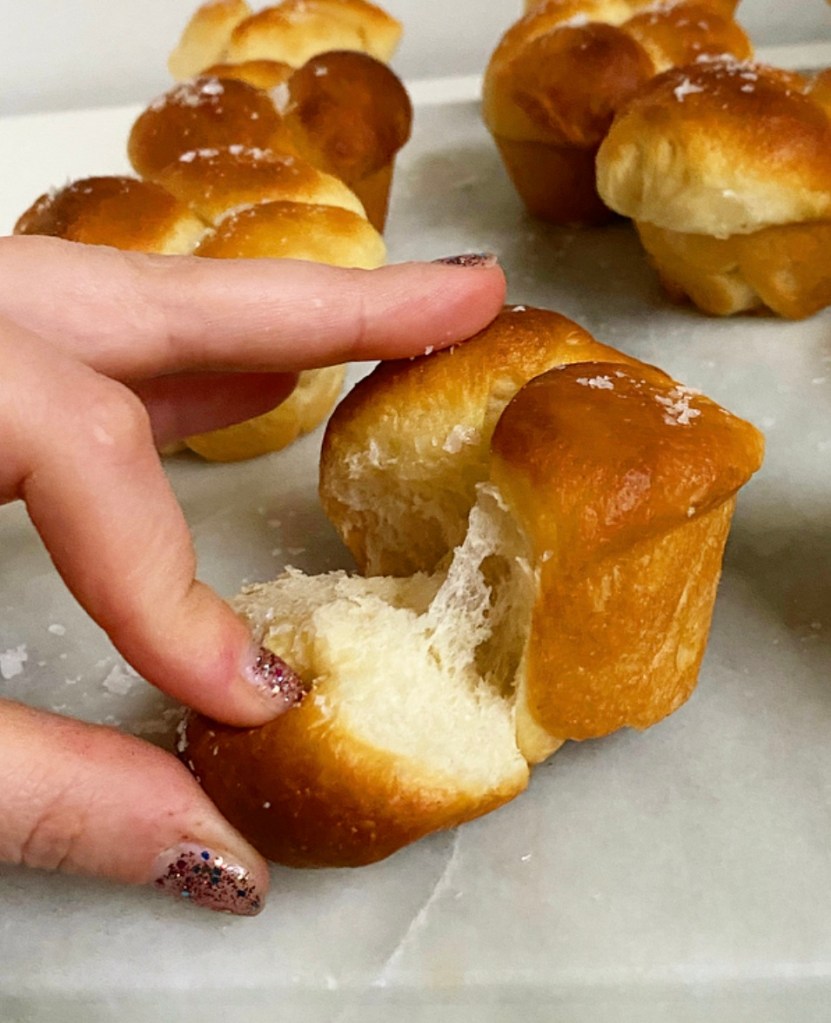
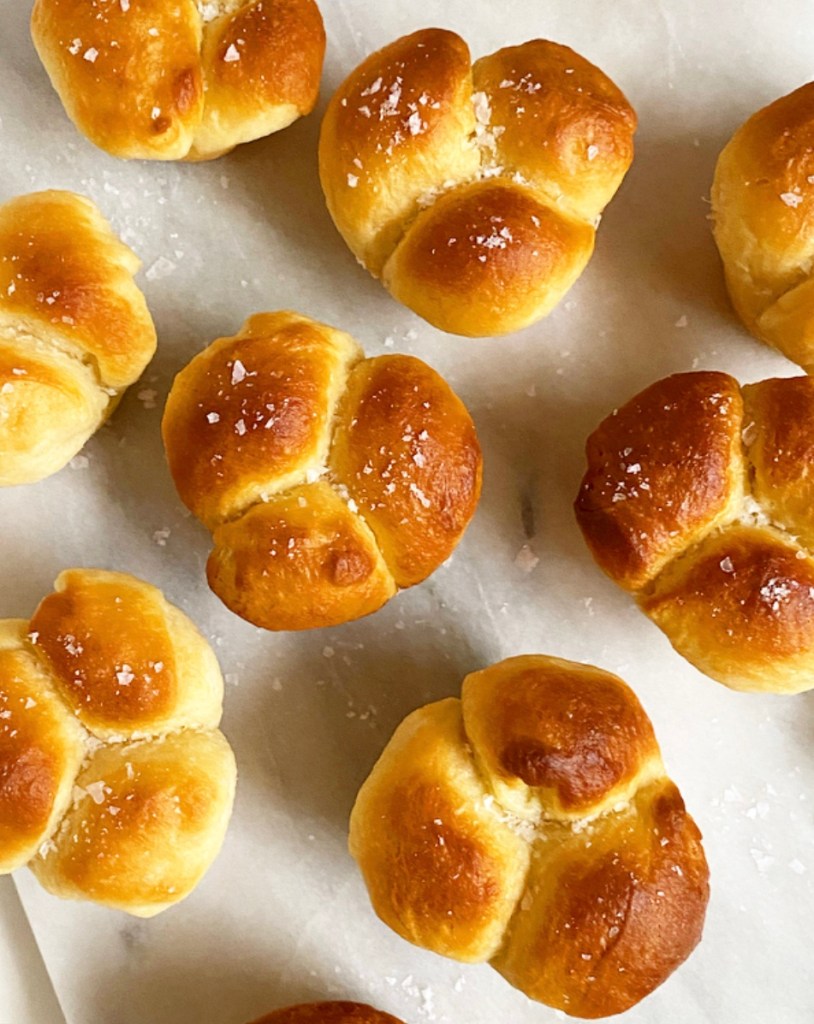
Once I started making my own dinner rolls and realized what a snap they are, I knew I had to try Cloverleaf Rolls next. They’re so buttery and pretty, and you can peel them apart—they’re a food and an activity!

Cloverleaf Rolls begin with the same dough as my original Fluffy Dinner Rolls. The recipes are identical until after the first rise when the dough is punched down and divided into twelve pieces.

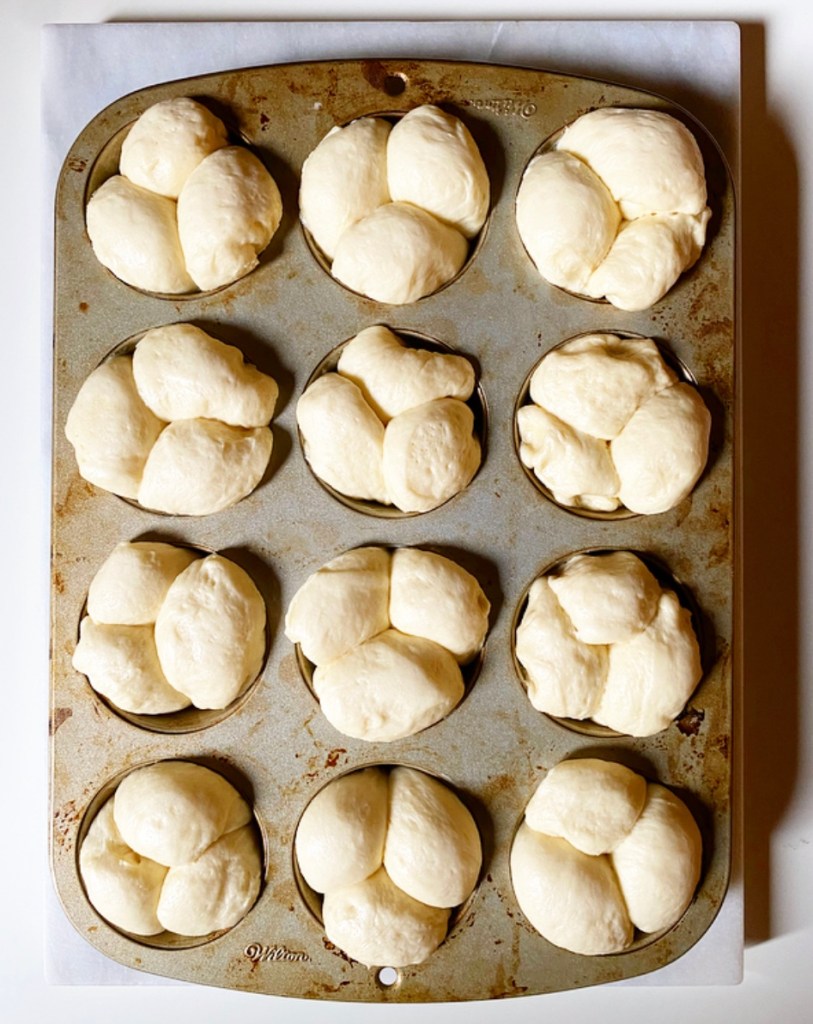
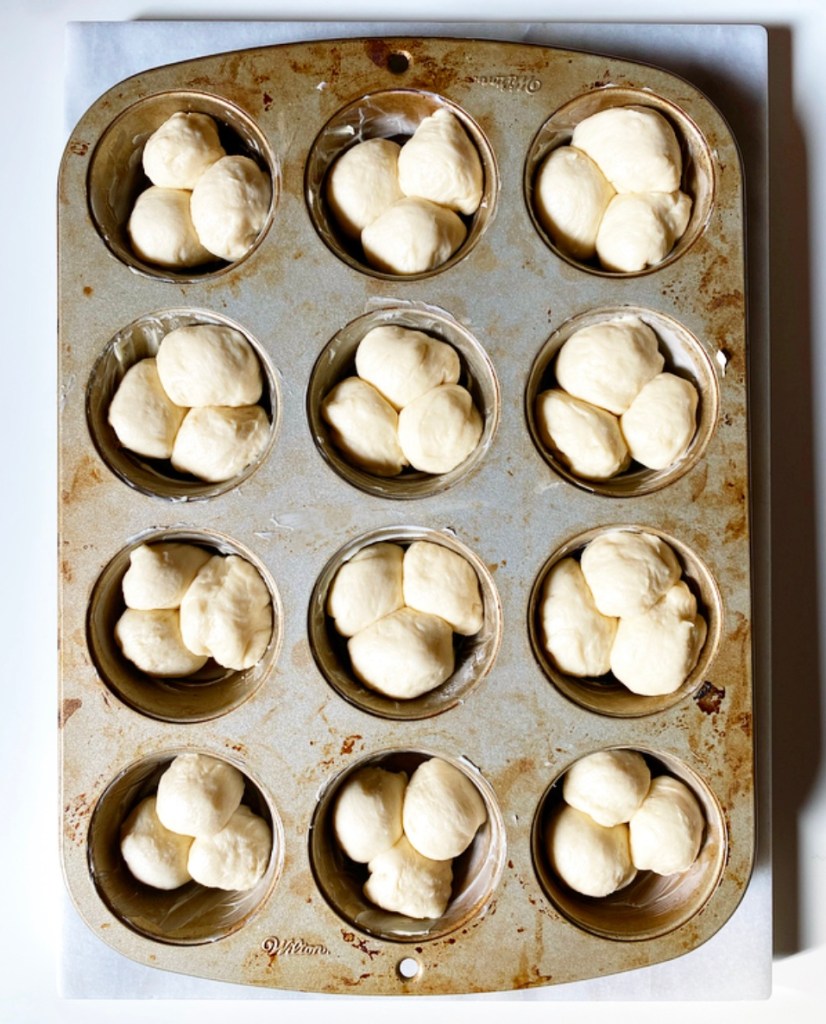
Each piece is further divided into three pieces (or four if you want four leaf Cloverleaf Rolls). Those little pieces are rolled into balls and sorted into a buttered muffin tin three at a time. They’ll rise up and the balls will fuse into “leaves” before baking. This is how they get that perfect peelability, not unlike Monkey Bread.

Cloverleaf Rolls

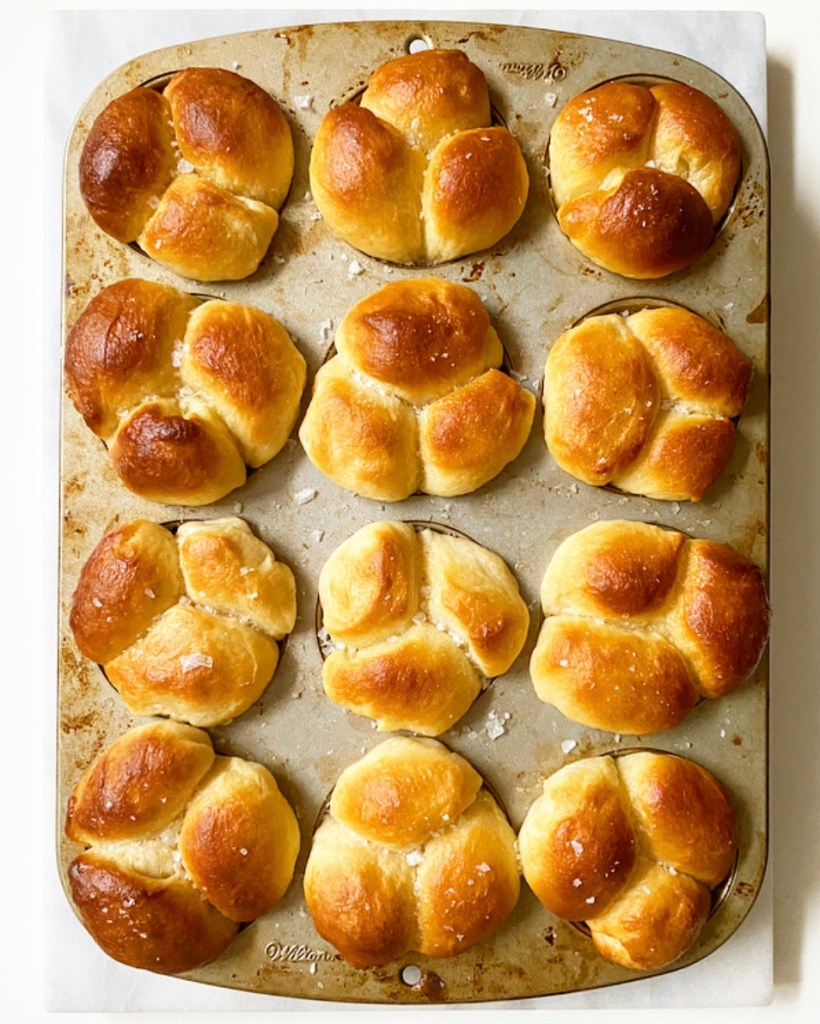
When the rolls are baked and golden, they get brushed with butter and sprinkled with flaky salt—fancy! Served warm, they’re the perfect addition to any Thanksgiving or holiday spread. I like to make them at random throughout the year as well—surprise Cloverleaf Rolls, anyone?

Cloverleaf Rolls
Cloverleaf Rolls
makes 12 dinner rolls

1 cup buttermilk
3 tablespoons granulated sugar
2 1/4 teaspoons (1 packet) active dry yeast*
2 3/4 cups all-purpose flour, divided
3/4 teaspoon fine sea salt
1/4 cup (1/2 stick) unsalted butter, cold, cut into cubes

For brushing & garnish:
1/4 cup (1/2 stick) unsalted butter, divided
flaky salt (I used Maldon)

Read the recipe all the way through before beginning. Instructions for using instant yeast and mixing by-hand are in the notes at the end of the recipe.

In a small saucepan over low heat, warm the buttermilk until it’s between 90-110F (warm to the touch, but not so hot that you can’t comfortably hold a finger in it).

Stir together buttermilk and granulated sugar in a liquid measuring cup or small bowl. Sprinkle yeast over the top and allow to sit for 5 minutes or until it is a bit bubbly or foamy (sometimes a light stir can help this be more visible). If it doesn’t bubble, your yeast is dead. Discard the mixture, get new yeast, and try again.

In the bowl of a stand mixer* fitted with a dough hook, combine 2 cups of flour and salt. Add butter and buttermilk mixture and mix to combine. Mix in remaining 3/4 cup flour. Knead dough in mixer* for 5 minutes or until smooth and slightly sticky. Cover bowl with plastic wrap and place in a warm, draft-free environment for 1 hour, or until dough has doubled in bulk.

Meanwhile, heavily butter (or otherwise grease) a 12-capacity muffin tin. Set aside.

Flour a surface. Uncover risen dough and gently punch it down. Place dough on floured surface and pat out into a 1-inch thick rectangle. Flour a large, sharp chef’s knife and slice the rectangle into 12 pieces.

Shape the rolls. Working with one piece at a time, slice it into 3 equal pieces. Working with one smaller piece at a time, use your fingers to pull edges or creases underneath, creating a smooth ball-like appearance. Place in pan, using 3 balls per muffin cup. Repeat until all rolls have been shaped.

Loosely cover the pan of rolls and place in a warm, draft-free environment for 30-45 minutes or until they have puffed over the top of the pan (see pictures).

Meanwhile, place an oven rack in the central or lower position (either will work). Preheat your oven to 400F. Melt the butter for brushing.

Uncover risen rolls. Use a pastry brush to gently brush the tops with 2 tablespoons of melted butter. Bake rolls for 19-20 minutes, or until deep golden on top. Brush with remaining 2 tablespoons of melted butter when you remove them from the oven. Sprinkle with flaky salt, if desired.

Let rolls cool 10-15 minutes before serving.

Rolls are best the day they are baked, but will keep in an airtight container at room temperature for a day or so.

Notes:
  • You may use an equal volume of instant yeast. Add it (and the sugar) directly to the dry ingredients, skipping the blooming step. Add warmed buttermilk and butter directly to the dry ingredients and mix as written above in the paragraph beginning “In the bowl of a stand mixer.” The rises may take about 15 minutes longer than with active dry yeast.
  • You may mix this dough in a large mixing bowl with a silicone spatula or wooden spoon.
  • You may knead this dough by hand on a floured surface.

Soft Cheddar Cheese Bread

Soft Cheddar Cheese Bread

When I was twisting up Lemon Morning Buns a few weeks ago, it occurred to me that the same soft, stretchy, buttery dough would make spectacular cheese bread. Long story short, I was right.

Soft Cheddar Cheese Bread

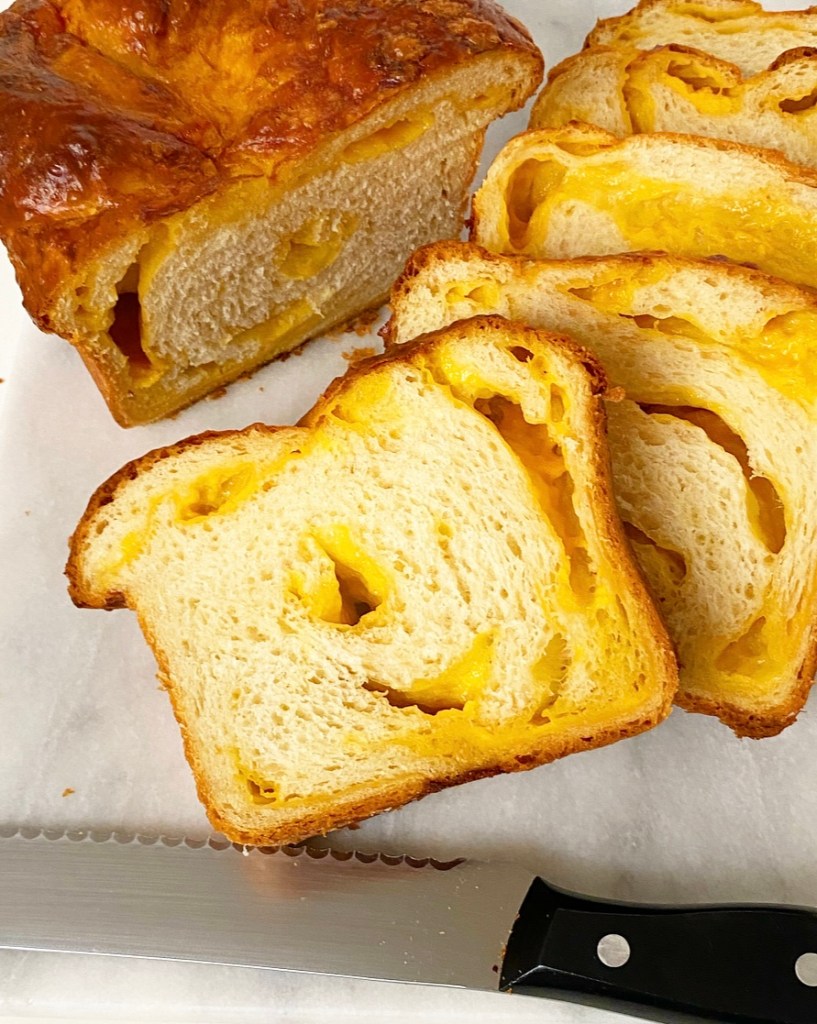
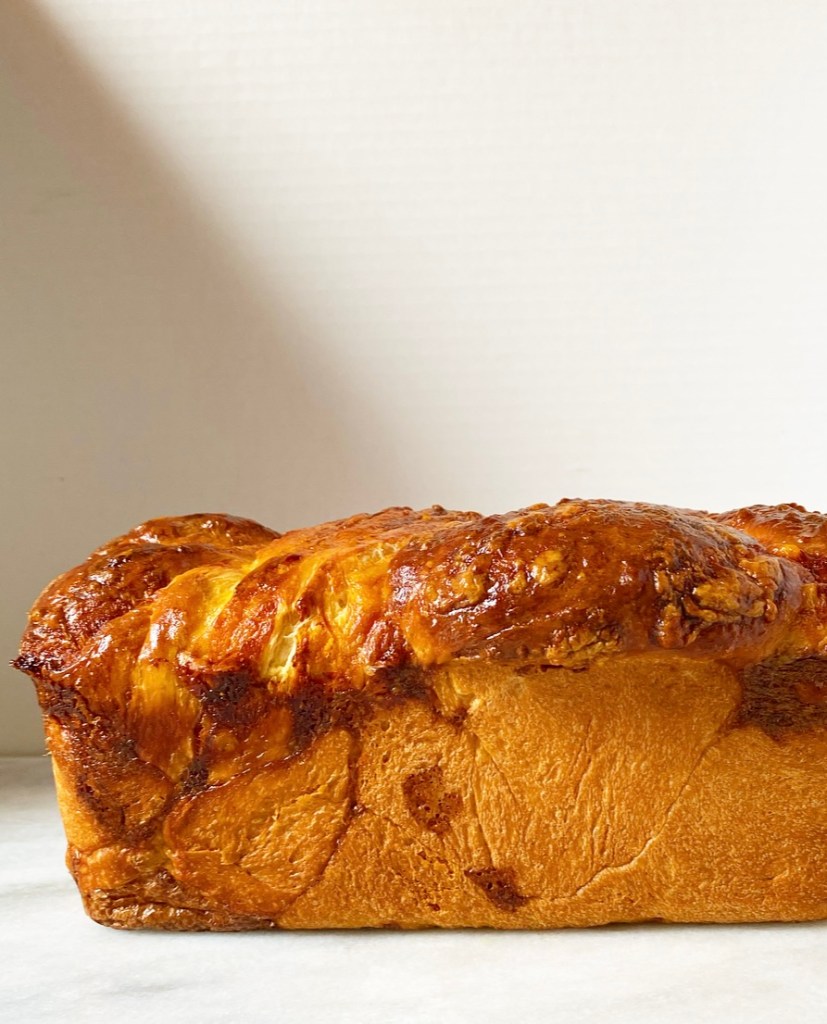
This here loaf is as rich as any brioche, layered with extra sharp cheddar, twisted up like a babka and baked to burnished, glossy perfection. It’s cheesy and buttery, savory with a hint of sweetness, and best served in thick slices at literally any temperature.

Soft Cheddar Cheese Bread

Seriously. Served warm, the cheese is super melty. At room temperature, all the flavors are at their peak. Sliced cold out of the fridge, it’s reminiscent of leftover mac & cheese, one of my favorite things on earth. (I know I’m not the only one who likes cold mac & cheese!)

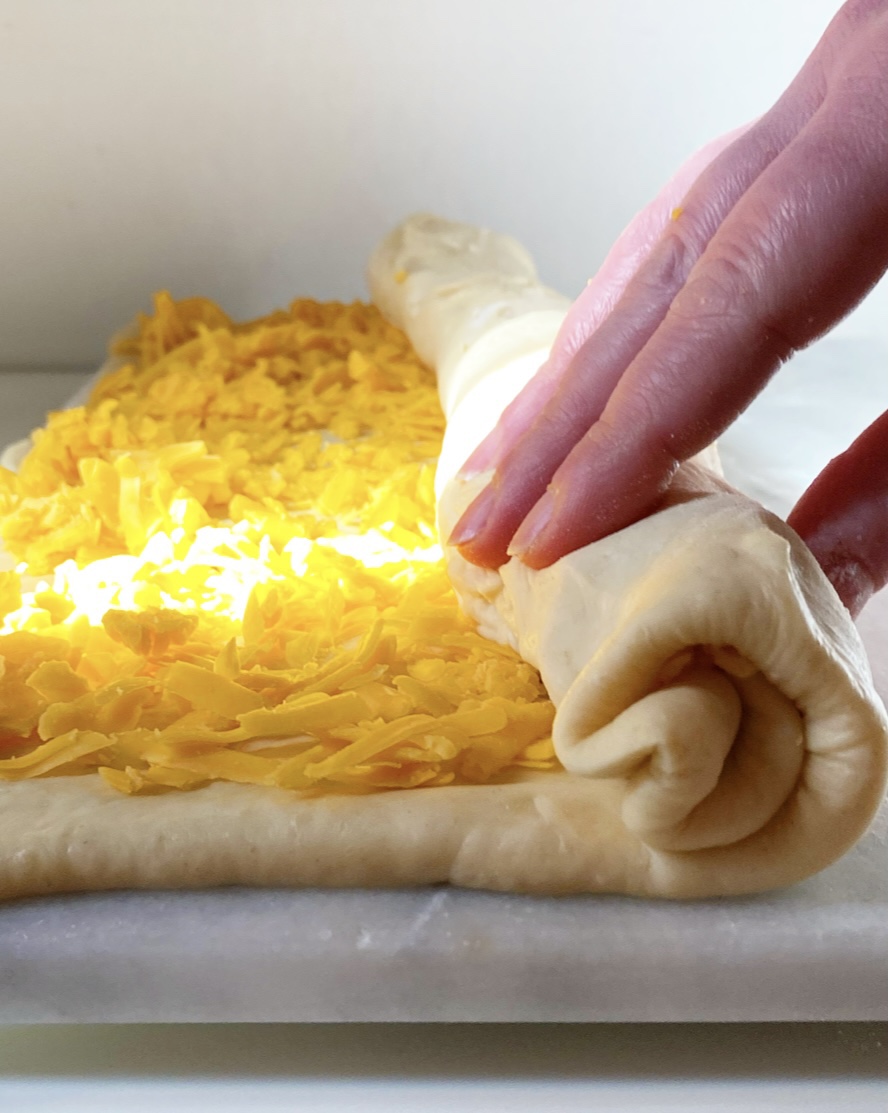
This cheese bread looks much more difficult to make than it actually is. It starts the same way as the Morning Buns: mixing, kneading, and letting the dough rise. After that, roll it out into a rectangle, cover it with cheese, and roll it back up cinnamon roll-style.

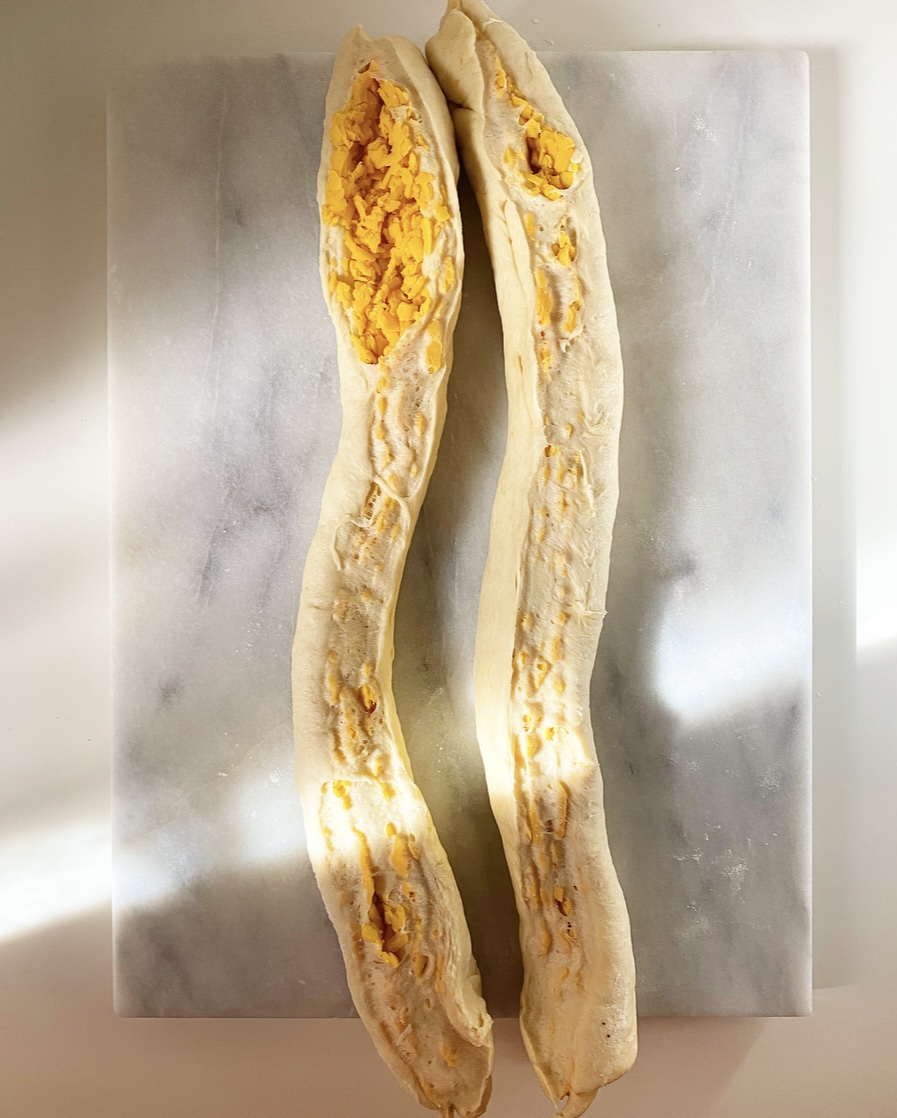
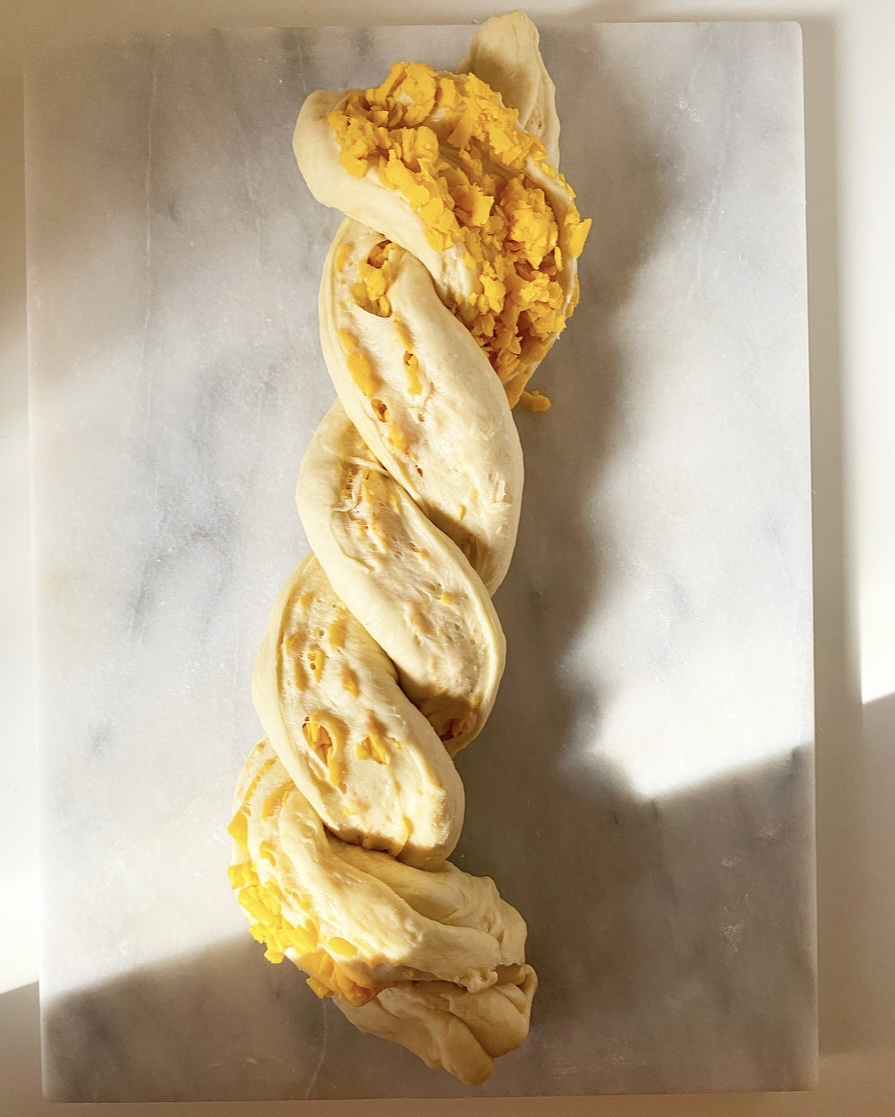
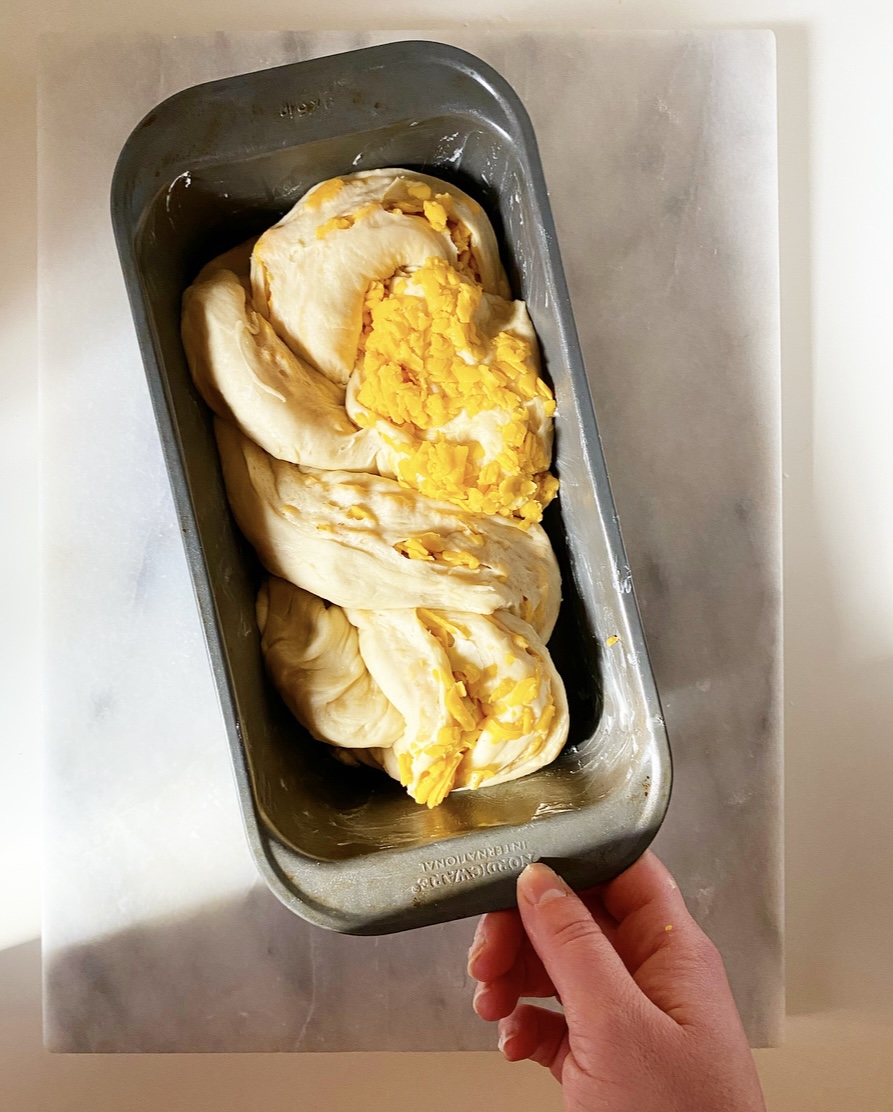
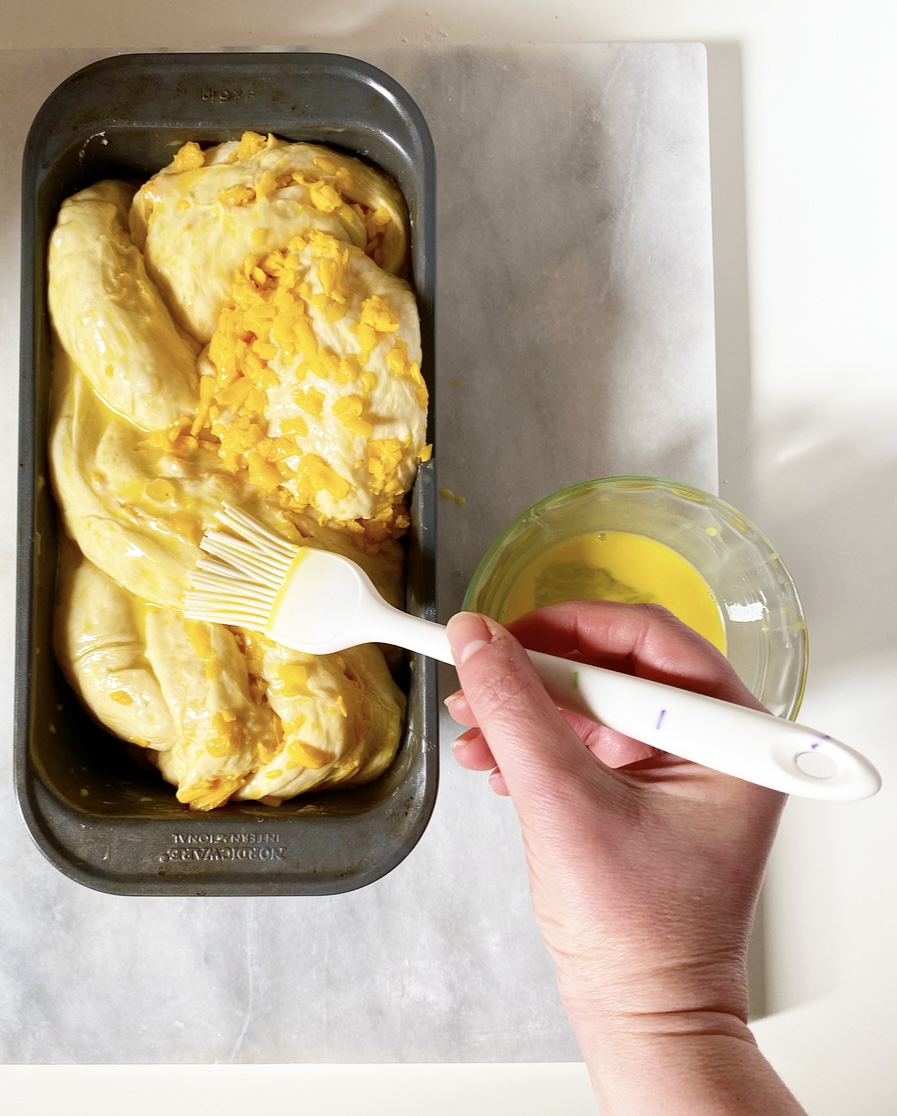
Here’s where we get a little wild. Slice your rolled up dough lengthwise so that you have two long pieces. Twist those together and put them in a loaf pan to rise again—don’t fret if it looks wonky. Once risen again, give the loaf a good brush of egg wash and bake til golden, pausing partway through to give it another swipe of egg for excellent sheen. I like to hit it with a little butter right out of the oven too, just for kicks.

Soft Cheddar Cheese Bread

As with most baked goods, the most difficult part of this recipe is letting it cool long enough so that you don’t destroy your fingers and the roof of your mouth with piping hot cheese bread. It’s almost a risk worth taking. Almost.

Soft Cheddar Cheese Bread
makes one loaf

Dough:
2 3/4-3 cups all-purpose flour
2 tablespoons granulated sugar
1 packet (2 1/4 teaspoons) instant yeast
1 teaspoon fine sea salt
3 tablespoons unsalted butter
1 cup whole milk
1 large egg, room temperature

Filling:
1 8-ounce brick sharp cheddar cheese, grated

Egg Wash:
1 large egg
1 teaspoon water

For Finishing:
2 tablespoons unsalted butter, melted

Make the dough. In a medium-large mixing bowl, whisk together 2 3/4 cups all-purpose flour, sugar, instant yeast, and salt. Set aside.

In a small saucepan over medium-low heat, melt butter and milk together until just warm to the touch, about 95-110 degrees.

Crack the egg into a small mixing bowl. Whisking constantly, add the butter/milk mixture in a thin stream until completely combined. Add mixture to the dry ingredients and fold together. A shaggy dough should form and be pulling away from the bowl. Gradually add flour in 2 tablespoon increments until the it pulls away a bit.

Turn dough onto a floured surface and knead 5-6 minutes, until smooth. Gather dough into a ball and place it in an oiled bowl, making sure to get a little oil on all sides. Stretch some plastic wrap over the top and allow dough to rise in a warm, draft-free environment for 45 minutes to 1 hour or until doubled in bulk.

In the meantime, heavily grease a 9x5-inch loaf pan with butter.

Shape the loaf. Flour a surface and a rolling pin. When the dough has risen, punch it down and turn it out onto the surface. Roll it out to an 11x14-inch rectangle (about 1/8-inch thick). Sprinkle the cheese over the entire surface of the dough, leaving 1/2-inch bare on all sides. Starting from a short edge (an 11 inch edge), tightly roll the dough into a cylinder and set it on the surface seam-side-down.

Slice the cylinder in half lengthwise. Place both halves next to each other, cut-sides-up. Carefully twist them together. Place twist in one of the prepared pan. Cover pan loosely with plastic wrap. Let loaf rise in a warm, draft-free place for 30-45 minutes, or until it peaks over the top of the pan. If you poke it with your finger, the dent should remain.

Meanwhile, set an oven rack in the central position. Preheat oven to 350F.

Make the egg wash. In a small bowl, use a fork to whisk together egg and water.

When loaf has risen, remove and discard the plastic wrap. Use a pastry brush to brush the entire top of the loaf with egg wash. Do not discard remaining egg wash.

Bake loaf for 25 minutes. Remove loaf from the oven and brush the top again with egg wash. Bake for another 20-25 minutes, tenting the loaf with foil if it is getting too dark. Test for doneness with a skewer—if it meets any resistance or comes out with dough on it, bake in five minute increments until neither of those things happens. To test for doneness with a thermometer, insert the end into center. If it reads at 190F or above, it’s done.

When the bread is done, brush the entire top with melted butter. Let cool in the pan for 15 minutes before turning it onto a rack to cool completely.

Slice bread thickly and enjoy warm, room temperature or cold. Cover and refrigerate any leftovers for up to a week.
Pimento Cheese Twice-Baked Potatoes

Pimento Cheese Twice-Baked Potatoes​

Carbs and cheese are the name of the game this week. Wednesday was all about French Onion Grilled Cheese, and today has Pimento Cheese Twice-Baked Potatoes written all over it.
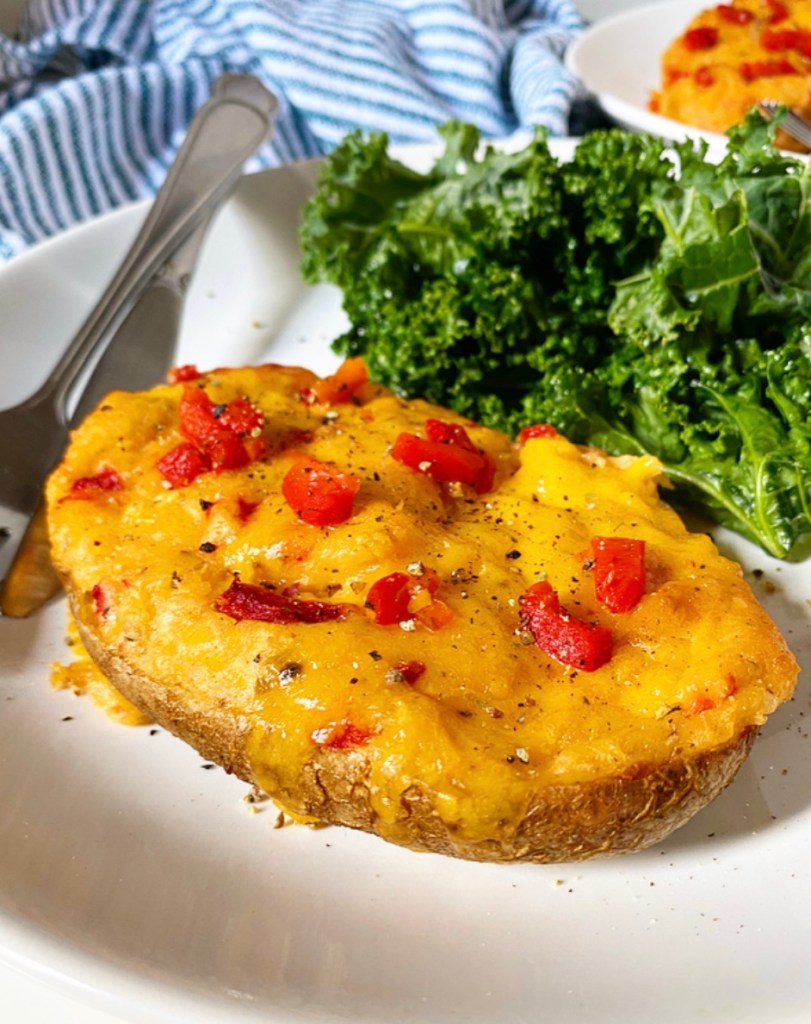
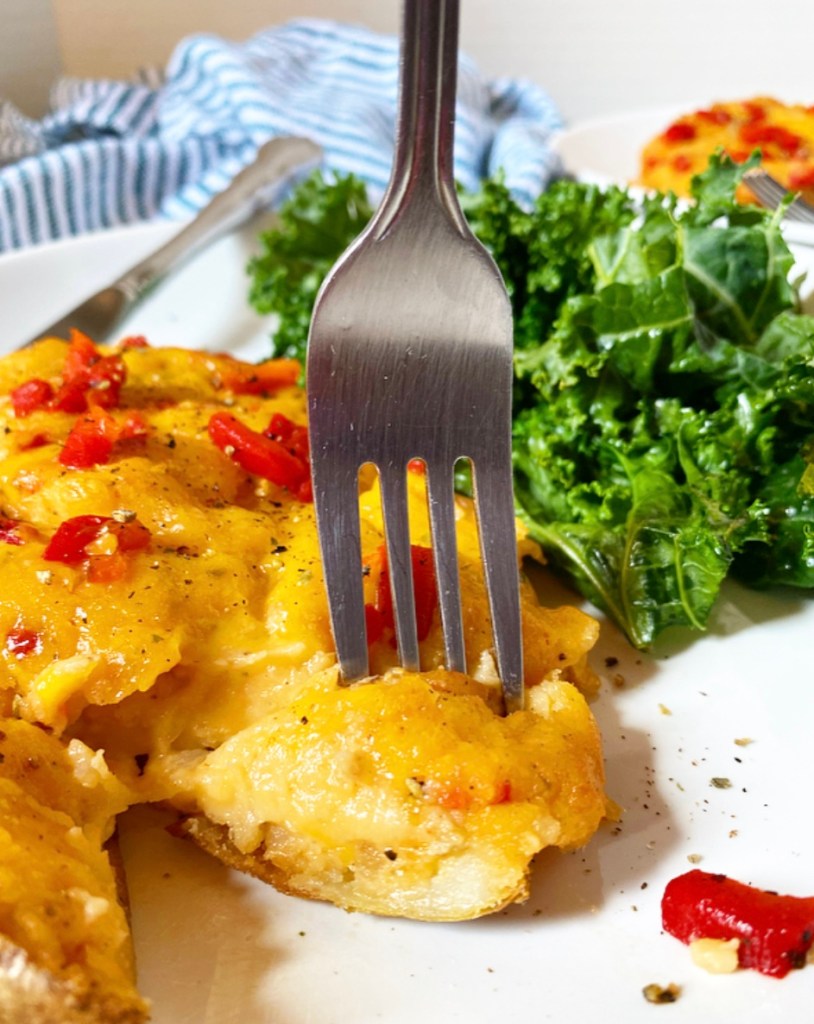
This recipe is a comfort food mash-up for the ages. Tender, salt-rubbed baked potatoes overstuffed with a rich pimento cheese filling? Sign me up!

Pimento Cheese Twice-Baked Potatoes​

If you’re unfamiliar with pimento cheese, it’s a popular southern dip/condiment made of cheddar cheese, sweet pimento peppers, black pepper and mayonnaise. It doesn’t sound great when I lay it out like that, but when combined it’s salty, spicy, creamy, tangy, a little sweet—in short, it’s delightful. And that’s coming from someone who despises mayonnaise and is weird about creamy things, so do with that what you will.

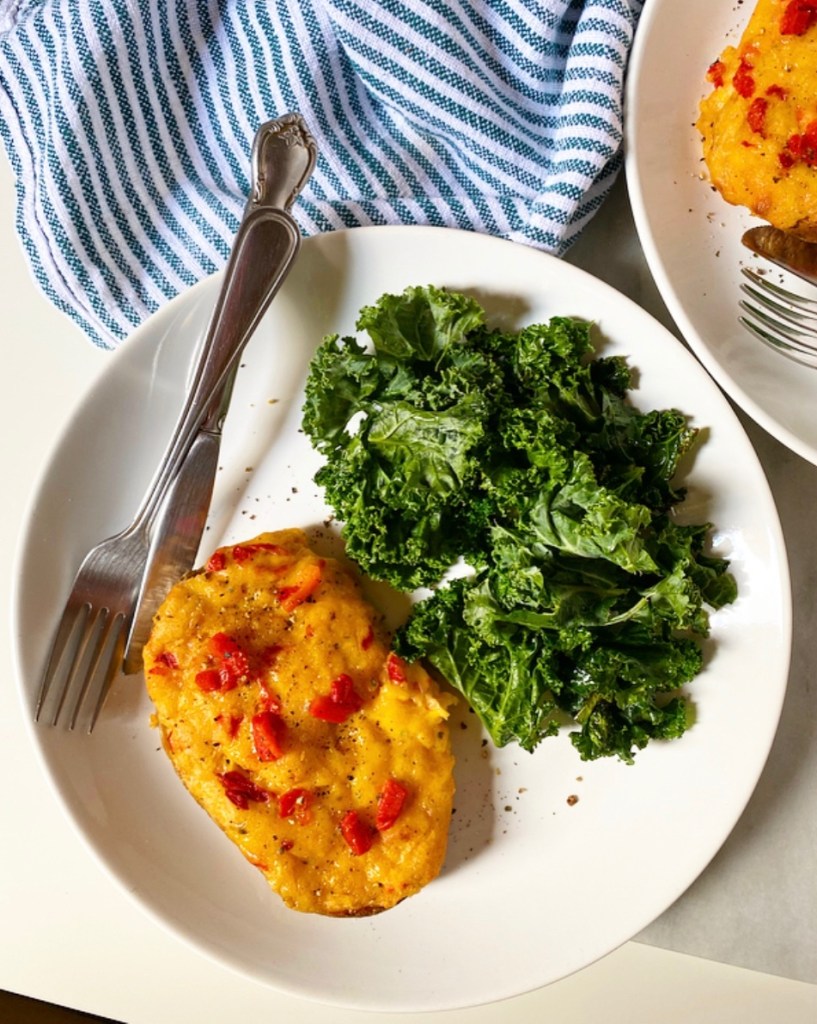
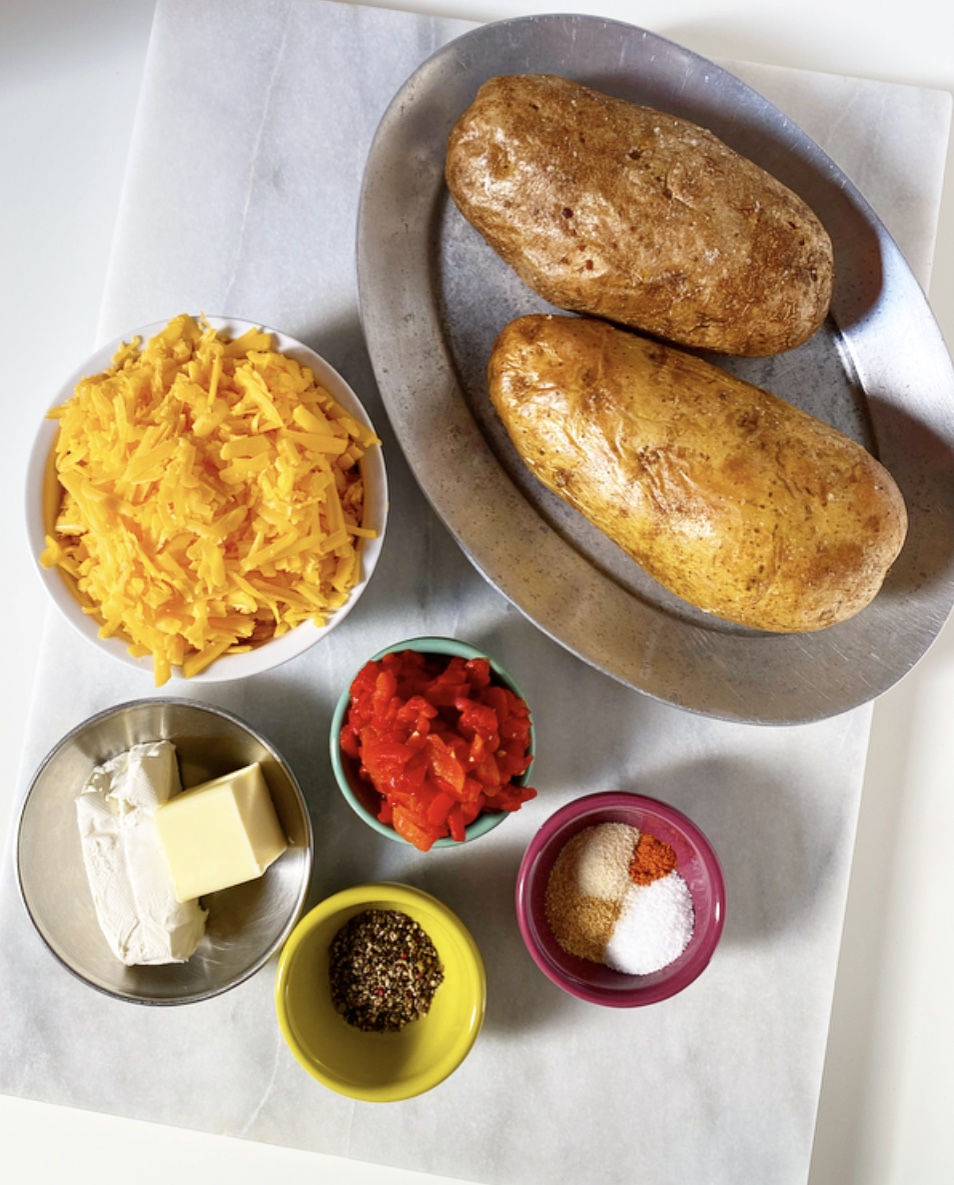
Here, we’re ditching the controversial mayo in favor of potato-friendly cream cheese and butter, combining them with pimento cheese staples like extra sharp cheddar, jarred pimentos and a lot of black pepper. Scoop out the innards of some warm baked potatoes, mash in all those creamy, cheesy ingredients along with garlic and onion powders, load that glorious filling back into the empty potato skins and bake again. Top ‘em off with a little more cheese and maybe some more pimentos, if you’re feeling kicky, then serve them up with the sides of your choice and dig in!

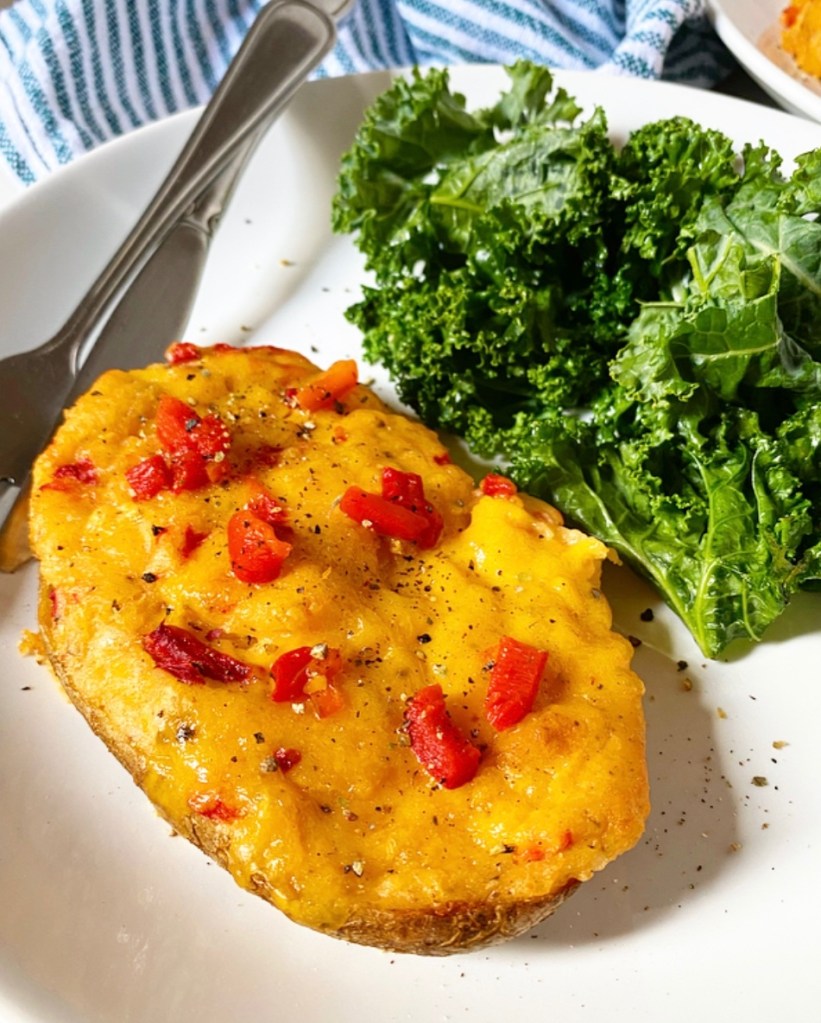
Spicy, cheesy, and filling, Pimento Cheese Twice-Baked Potatoes make a great vegetarian main (or even a side, depending how hungry you are). They’re extra cheesy with plenty of spice from the pepper and some optional cayenne, and that classic pimento cheese tang from the chopped pimentos. In short, they’re what I’m craving as we head into a snowy weekend here in NYC, and that’s a good thing because I have a lot of leftovers.

Pimento Cheese Twice-Baked Potatoes​
Pimento Cheese Twice-Baked Potatoes
makes 4 servings

2 medium-large russet potatoes
1 teaspoon olive oil
1 teaspoon Kosher salt (or to taste), divided
1 4-ounce jar pimentos
1 8 ounce brick extra sharp cheddar cheese, divided (I used Tillamook)
2 ounces (1/4 brick) full-fat cream cheese (or sour cream)
2 tablespoons unsalted butter
1/2 teaspoon garlic powder
1/2 teaspoon onion powder
1 teaspoon freshly-cracked black pepper (or to taste)
1/8 teaspoon cayenne pepper, optional

Preheat oven to 400F. Line a baking sheet with parchment paper.

Scrub and dry potatoes. Prick each several times with a fork. Massage 1/2 teaspoon olive oil and 1/4 teaspoon salt onto each whole potato. Place on prepared pan and bake about 1 hour, or until I small knife meets no resistance when inserted. Let potatoes cool 7-10 minutes, or until they can be handled.

While potatoes are baking, prepare the filling ingredients. Drain pimentos and blot as dry as possible on paper towels. Remove to a cutting board and dice into 1/4-inch pieces. Set aside.

Use the large hole side of a box grater to shred cheese. Set aside.

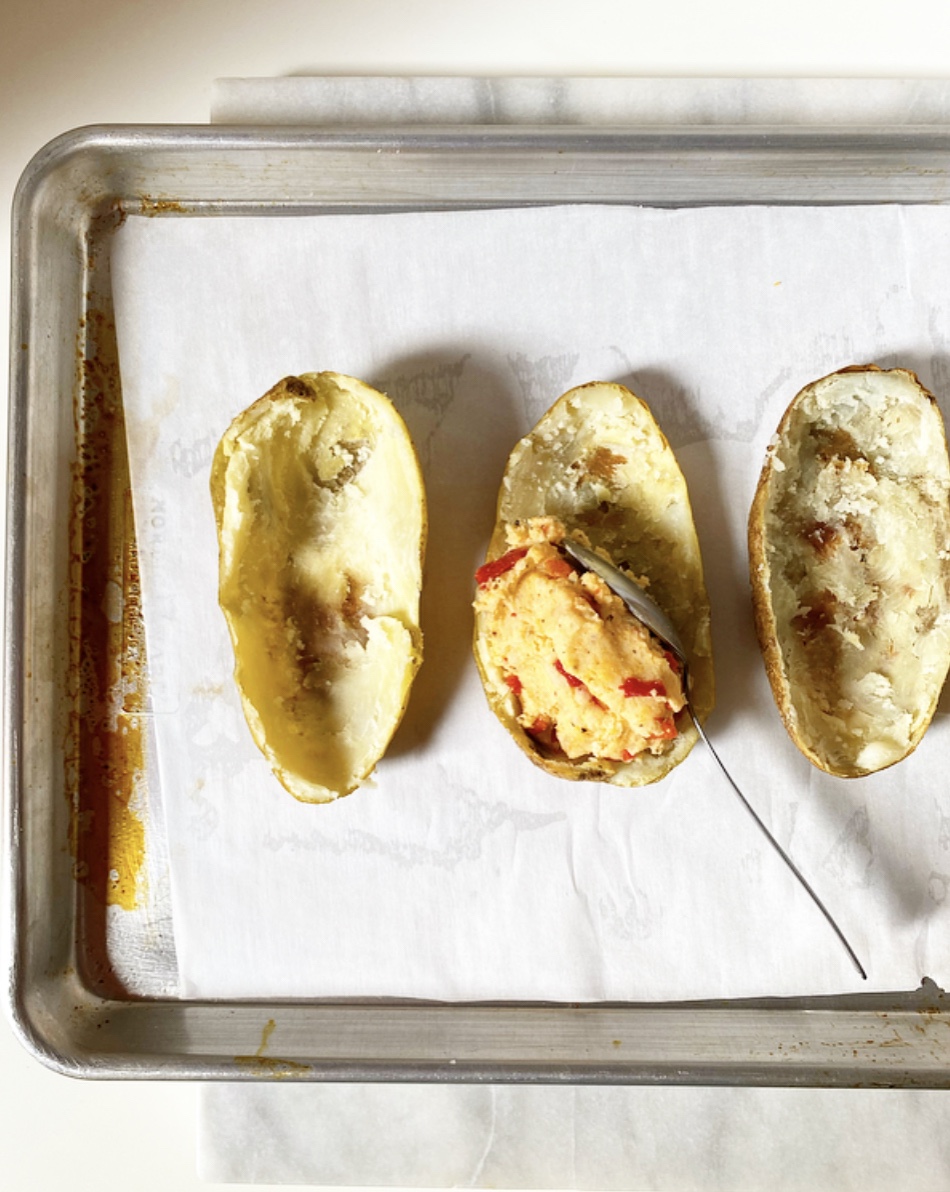
When you can handle the potatoes (they should still be very warm), remove them to a cutting board. Slice them in half lengthwise and use a spoon to scoop out the flesh, leaving behind the potato skin “boats.” Set the skins aside.

Make the filling. Place potato flesh in a medium mixing bowl. Use a potato masher (or two forks) to break up the large pieces. Add cream cheese, butter, 1/2 teaspoon salt, garlic powder, onion powder, black pepper, and optional cayenne and continue to mash just until combined. Do not over-mash. Use a silicone spatula or wooden spoon to fold in pimentos and 3/4 (6 ounces) of the shredded cheddar. Taste a small bite of filling and adjust seasoning as needed.

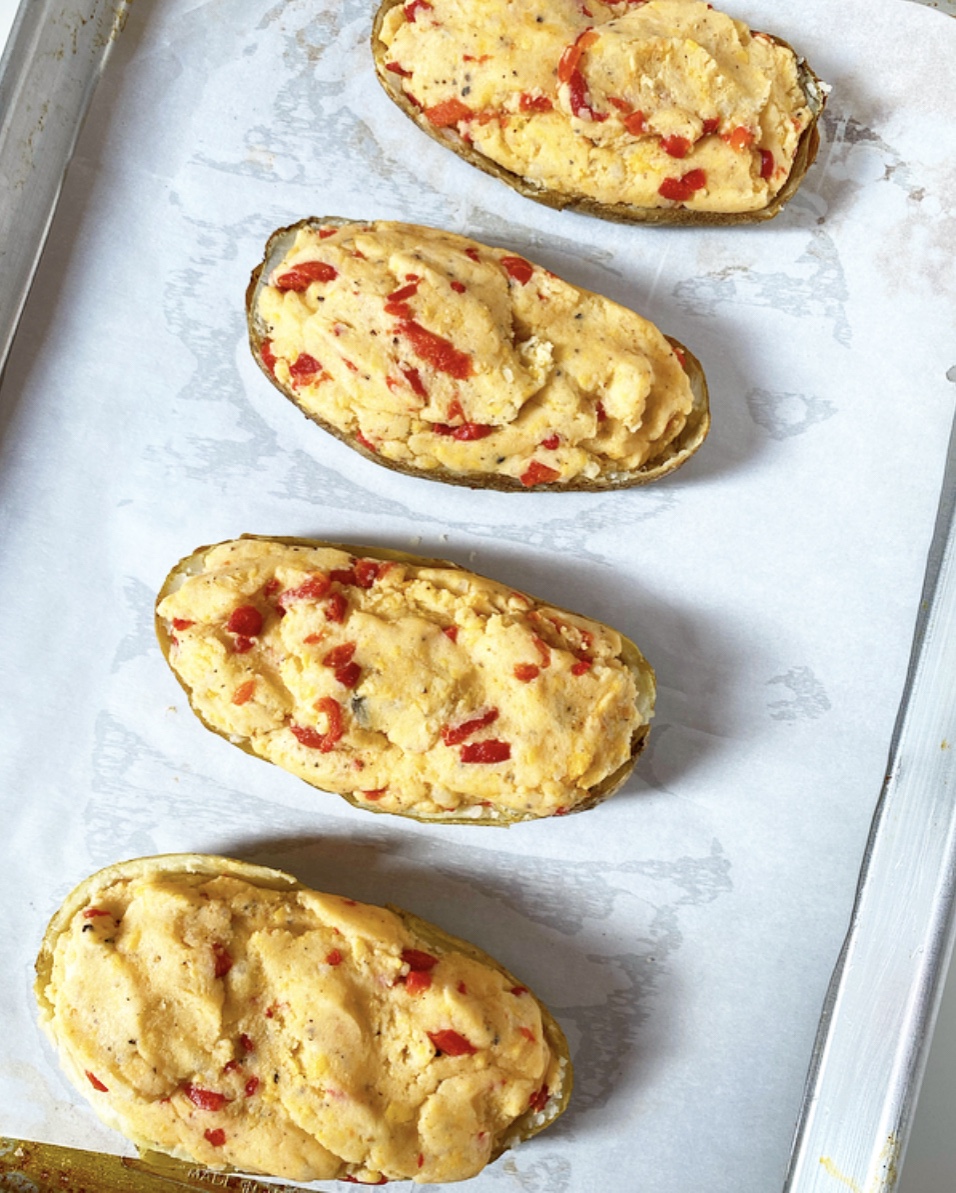
Place potato skins on a parchment-lined baking sheet. Divide filling mixture among skins (1/2-2/3 cup each); they will likely be heaping a bit. Bake uncovered for another 20-25 minutes at 400F, or until the filling is puffed in places. Top with remaining cheese and return to the oven for 3-5 minutes, just to melt. Add more pimentos if desired. Let potatoes cool a few minutes before serving.

Twice-Baked Potatoes are best eaten the day they are made, but leftovers can be reheated in the microwave, if desired. I’m sure they can also be reheated in a toaster oven or oven, although I have not tried it myself. Leftovers will keep covered in the refrigerator for up to 3 days.

French Onion Grilled Cheese

French Onion Grilled Cheese

When I was in college, I thought French Onion Soup was pure luxury. That may have been because I lived in a very small town at the time, or perhaps because caramelized onions, gruyere cheese, and well-browned croutons are delicious and feel inherently fancy. Gruyere, at least, has the price tag to prove it. This classic and an extra saucy order of Strawberries Romanoff were my meal of choice at a local chain every time I went to Dallas for solo dinner & a movie during those years. It always hit the spot and felt like a treat.

(For those of you wondering what kind of college student drives an hour each way to get chain restaurant soup and see movies by herself, know that I was 85 years old at birth. Thirty six years later, I am still 85 years old.)

While things have changed since college—you won’t find me eating at many chain restaurants and I live in the largest city in my country of origin—I still dig French Onion Soup. I’ve made Julia Child’s recipe several times and it’s pretty perfect, and there are many good versions around NYC too. It’s simple food, made of caramelized onions, herbs, beef stock and cognac, and finished off with a crouton and some blistered gruyere cheese. It’s so good!

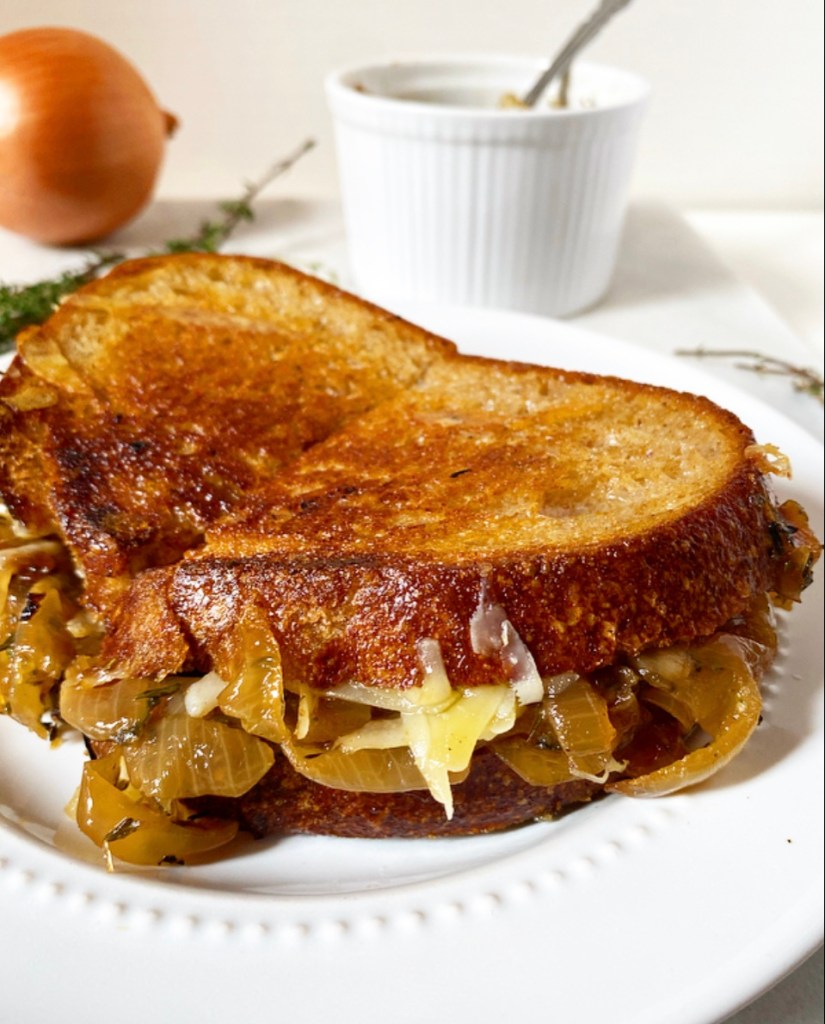
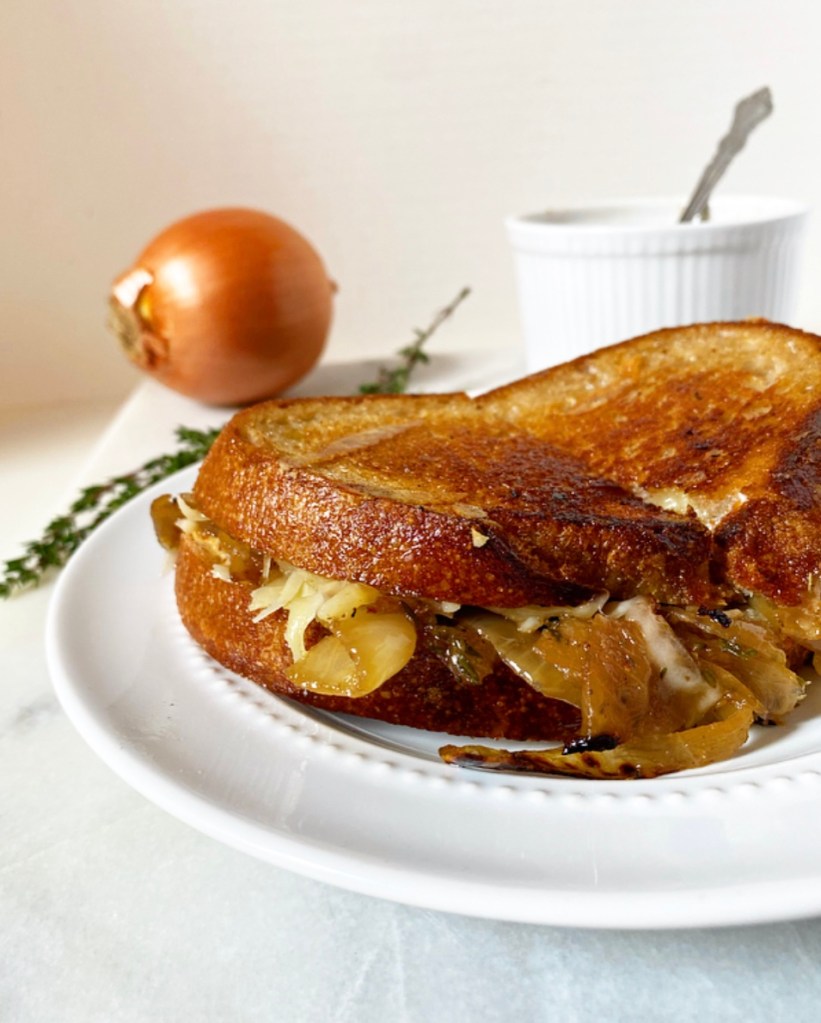
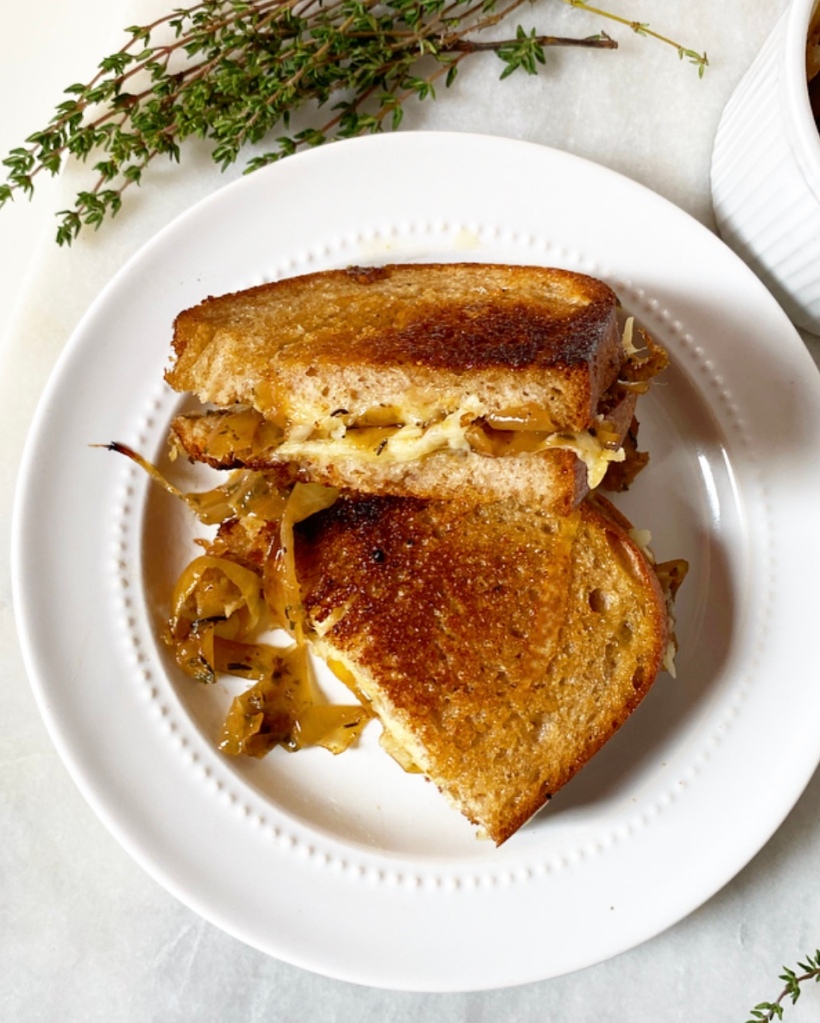
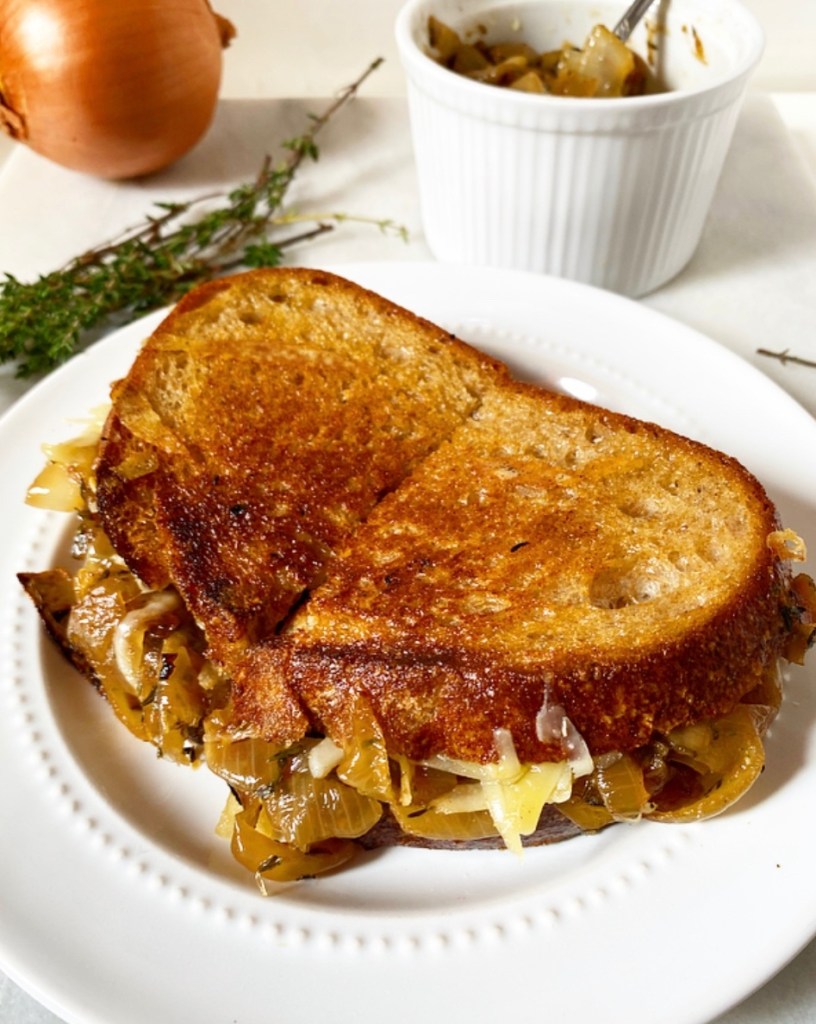
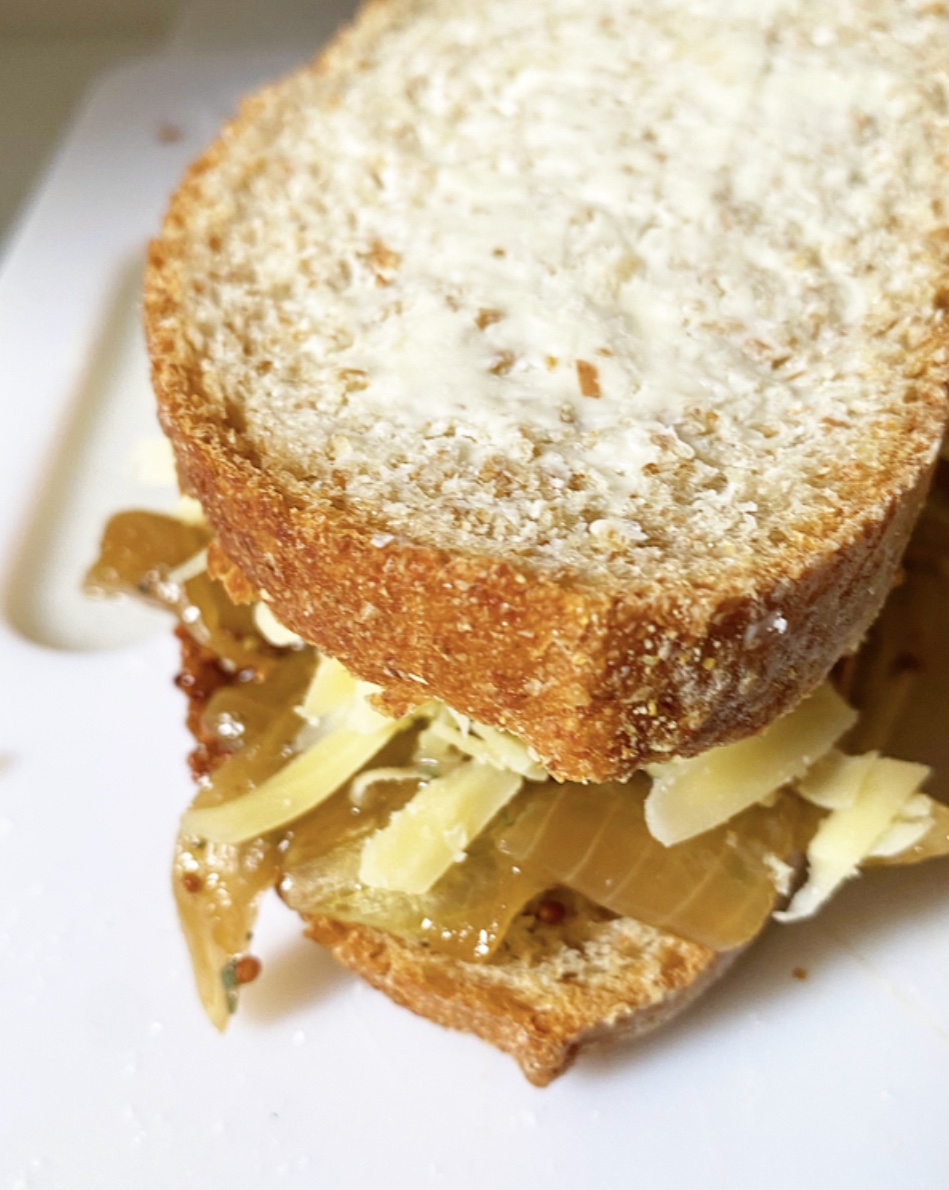
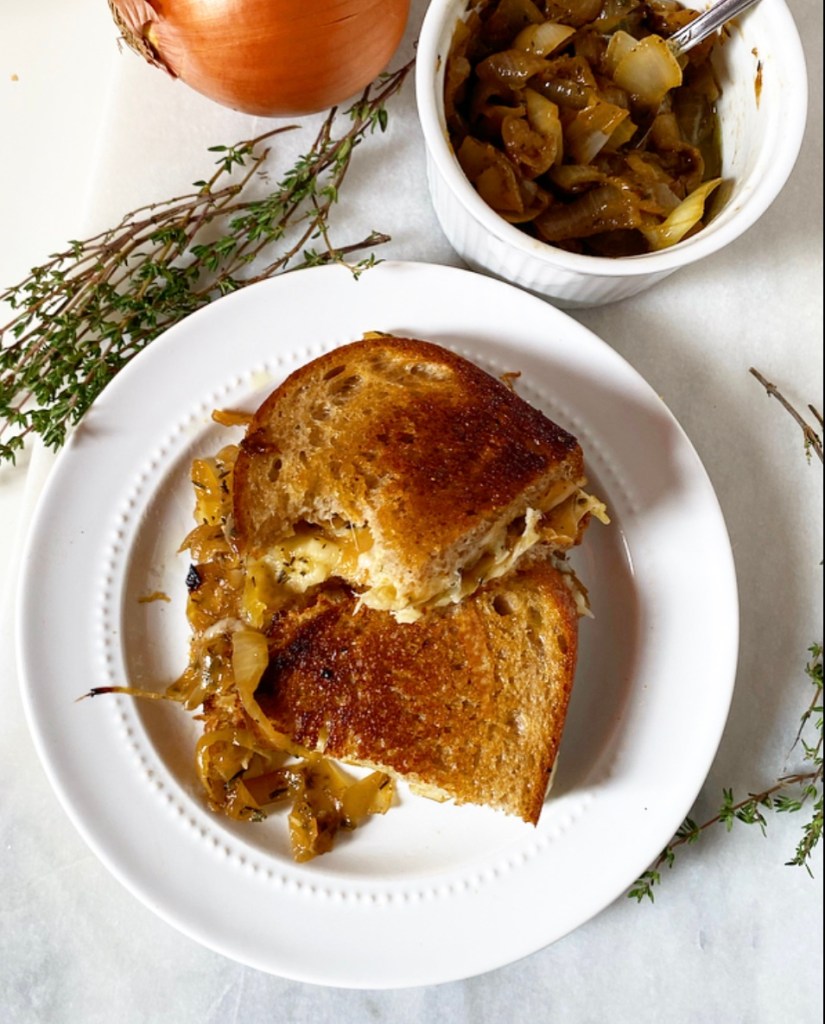
All that said, may I suggest that you leave the soup for another day and make French Onion Grilled Cheese instead? Think about it: herby caramelized onions and gruyere stacked on buttered sourdough and then seared to golden brown, crunchy, cheesy perfection. I mean, what’s not to love?!

French Onion Grilled Cheese

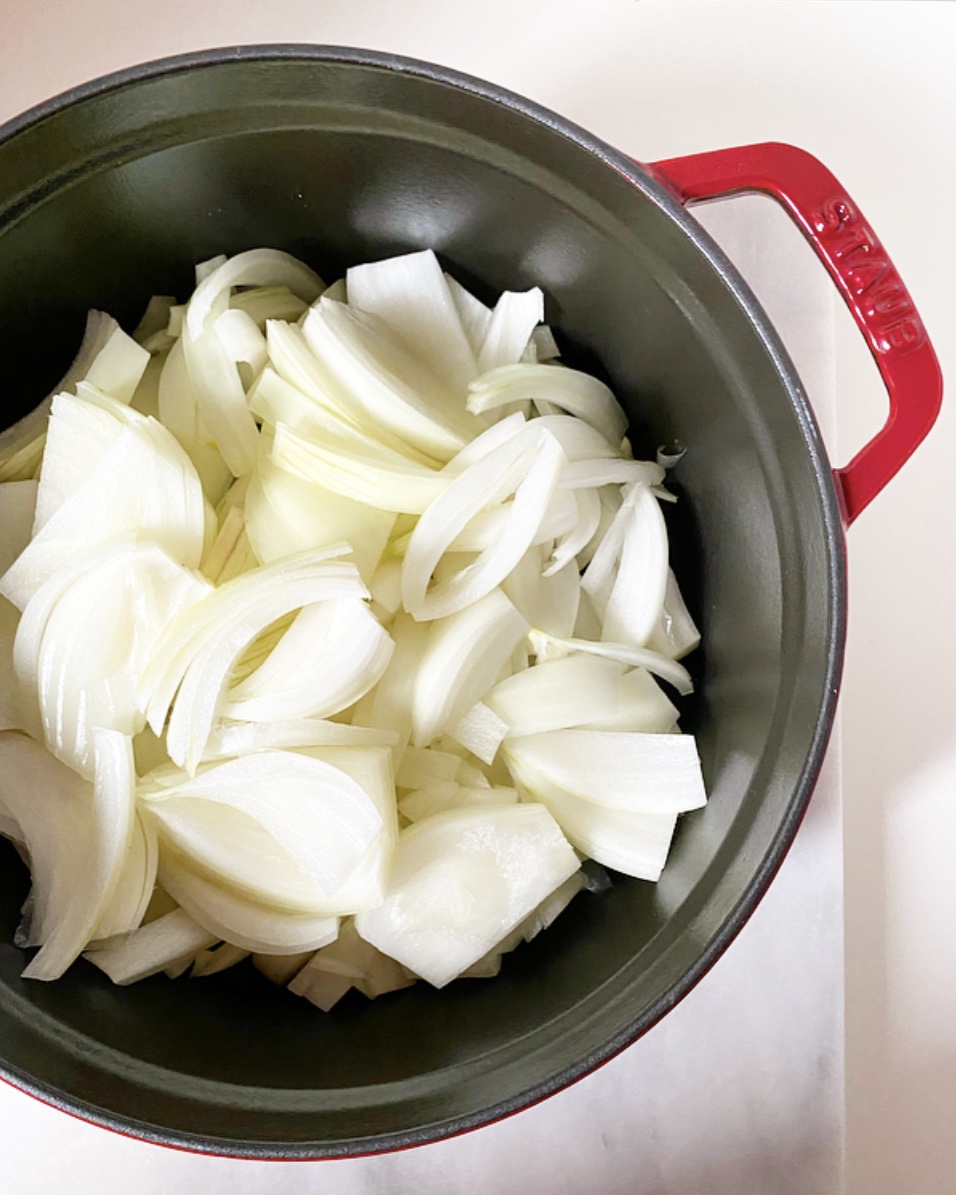
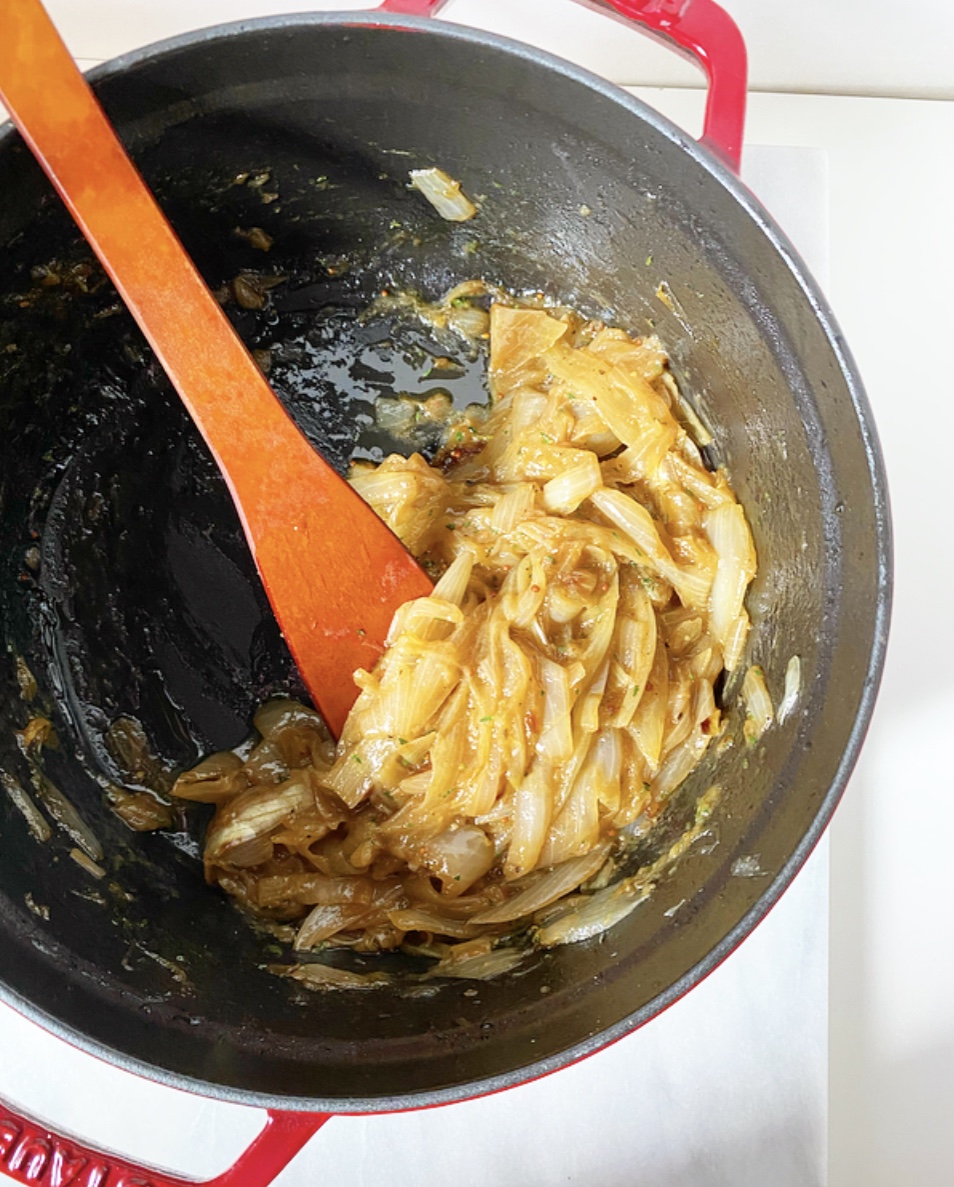
The most time consuming step of this whole recipe is caramelizing the onions. Some cooks will tell you that you can do this in 15 minutes over medium-high heat, but they are wrong. What they’re doing is sautéing, which is a great technique, but that’s not what we’re after in our French Onion Grilled Cheeses. Nope! We’re going the low and slow route, watching the onions collapse and then take on color as their natural sugars are drawn out little by little. This will take anywhere from 45-75 minutes, but I assure you it will be worth the investment.

Yes, caramelizing onions takes time, but it’s easy as can be. I frequently put a pan on the back burner while I’m working on another dish, occasionally reaching over and giving them a stir until they are browned to my preference. While caramelized onions need no help to be delicious, I like to add some French Onion flavor here so I finish them off with thyme, dijon mustard, beef (or vegetable) stock, salt & pepper. I don’t drink, so I leave the cognac out of the equation, but feel free to add a splash to the mix.

Once finished, you can use your onions right away or cover and refrigerate for later. I like to think of this as having French Onion Grilled Cheese on demand.

As for the sandwiching, it’s Grilled Cheese 101. Low heat, lots of butter, and time (about 8 minutes) are all that stand between you and crispy, cheesy, savory French Onion perfection. Pure luxury, indeed.

French Onion Grilled Cheese
makes 4 sandwiches

For the Onions:
2 tablespoons olive oil
3 medium Spanish or white onions, 1/2-inch thick half moons
Kosher or sea salt, to taste
1 tablespoon chopped fresh thyme leaves (or 1 teaspoon dried)
1/2 teaspoon dijon or grainy mustard
1/4 cup beef or vegetable stock
freshly-cracked black pepper, to taste

For the Sandwiches:
8 slices sourdough
dijon or grainy mustard
8 ounces gruyere cheese, shredded
4 tablespoons butter, softened to room temperature
few pinches of Kosher or sea salt, as needed

Make the onions. Heat olive oil in a large, heavy-bottomed pan over medium-low heat. Add onions and a pinch of salt. Cook, stirring frequently, until soft and deeply caramelized; this will take 45-75 minutes. Do not rush this step.

When onions are caramelized, stir in thyme, mustard, and stock, stirring until incorporated, but not soupy. Taste for seasoning and add salt and pepper to taste. Remove from heat. At this point, you may either use the onions immediately or cover and refrigerate for up to 4 days.

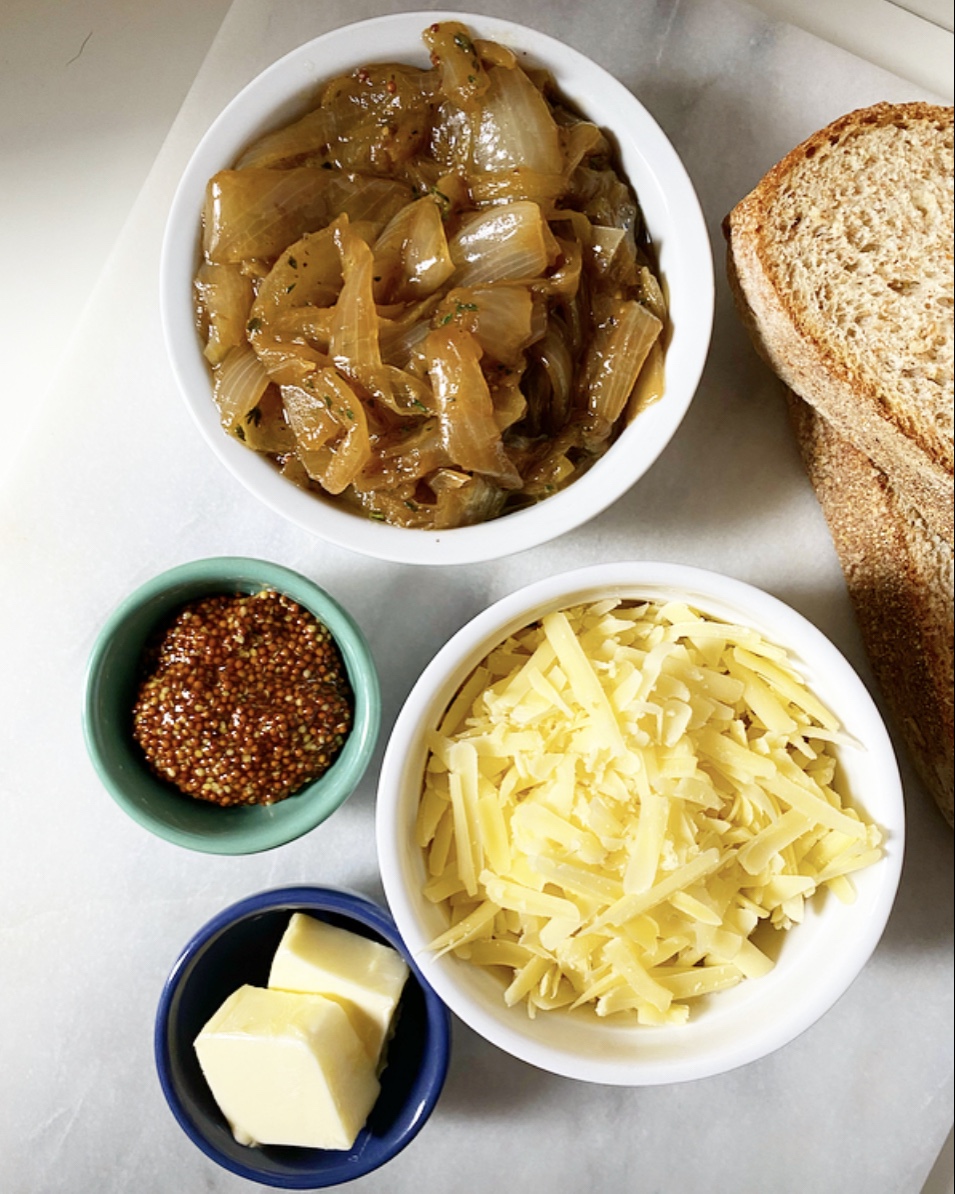
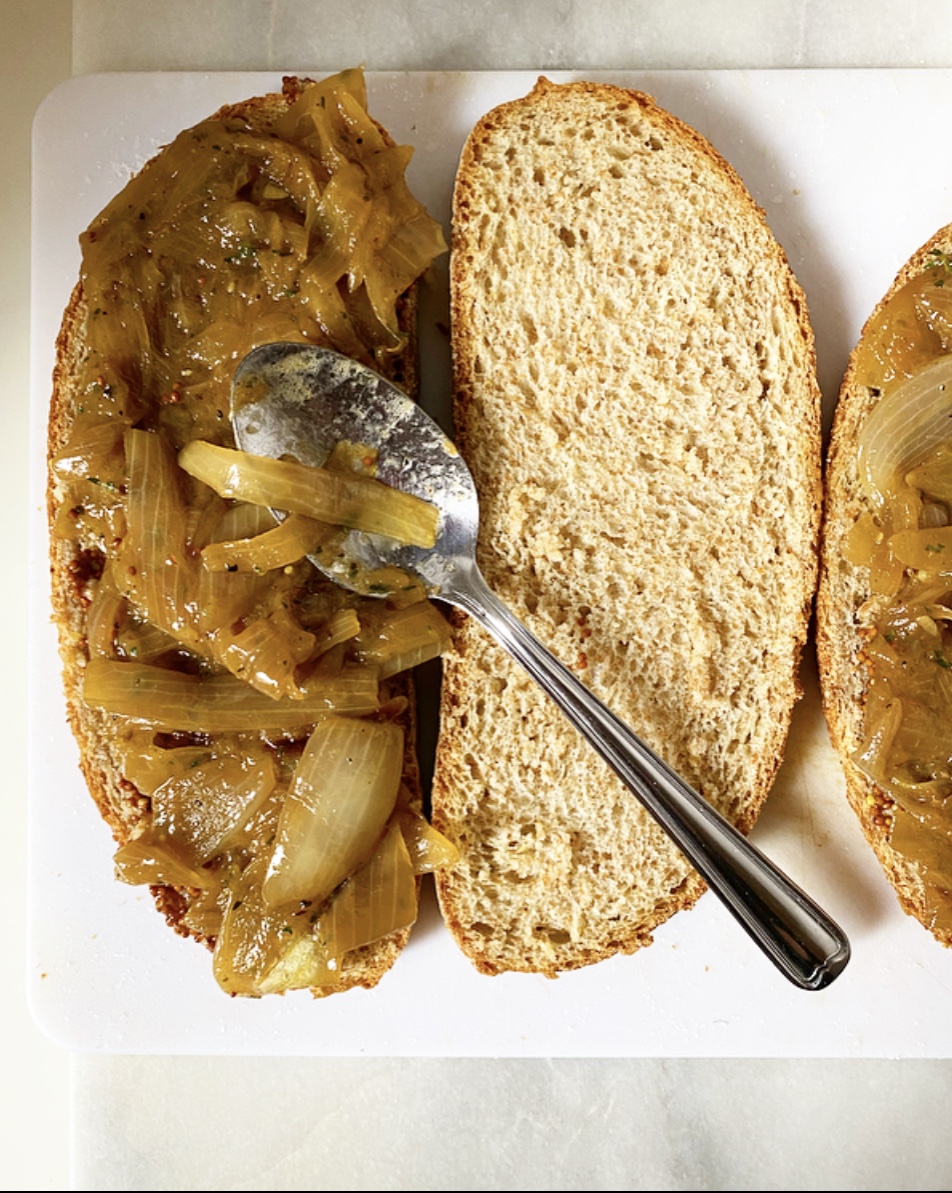
Lay all slices of bread on a surface. Spread four of the slices with mustard. Top mustard slices with ~2 tablespoons caramelized onions each, spreading to cover. Sprinkle each one with 1/4 of the gruyere. Top cheese with plain slices of bread, “closing” the sandwiches. Use a knife to spread 1/2 tablespoon softened butter on both sides of each sandwich (1 tablespoon butter per sandwich). Sprinkle butter with salt if using unsalted butter.

Heat a medium-large heavy-bottomed skillet over medium-low heat. Add sandwiches buttered-bread-side-down. Let sandwiches cook, without moving or squishing, until they are golden on the bottom, about 3-4 minutes. Flip sandwiches and let cook, without moving or squishing, until they are golden on the other side, about 3 more minutes.

Remove to plates and serve immediately.