Category Archives: Vegan

Almond Flour Sparkling Shortbread {Vegan, Gluten-Free}

I am very happy to participate in the Sweetest Season Cookie Exchange for the sixth time this year. This is a food blogger-lead fundraising event and awareness campaign for Cookies for Kids’ Cancer. This organization is a 501(c)3 non-profit with the mission to raise funds for innovative pediatric cancer treatments and research through bake sales and cookie swaps. Supporters (“Good Cookies”) can do this throughout the year, but we are bringing awareness during this time of holiday giving. If you’d like to learn more and/or make a charitable donation to Cookies for Kids’ Cancer, click here. Otherwise, scroll on for Almond Flour Sparkling Shortbread!

Almond Flour Sparkling Shortbread {Vegan, Gluten-Free}​

Every year, I take great pride in having a vegan, gluten-free recipe in my holiday repertoire. Half of everyone I know falls into one of these two categories; it’s kind of a no-brainer to have this as part of my skill set. I love feeding my people.

When writing these sorts of recipes, the only boundaries I give myself are that I won’t work with hard-to-access flours or pre-made blends (they’re inconsistent). As such, it should come as no surprise that I buy almond flour in bulk at Costco, and also that I go through it at the speed of light. I’ve got a lot of gluten-free and/or vegan people to feed, ya know.
Almond Flour Sparkling Shortbread {Vegan, Gluten-Free}​

This holiday season, I’m keeping it very simple. How simple? Six ingredients-, slice & bake-, stays good for days-simple. But with sparkle, of course, because simple doesn’t mean boring around here. Almond Flour Sparkling Shortbread, y’all.
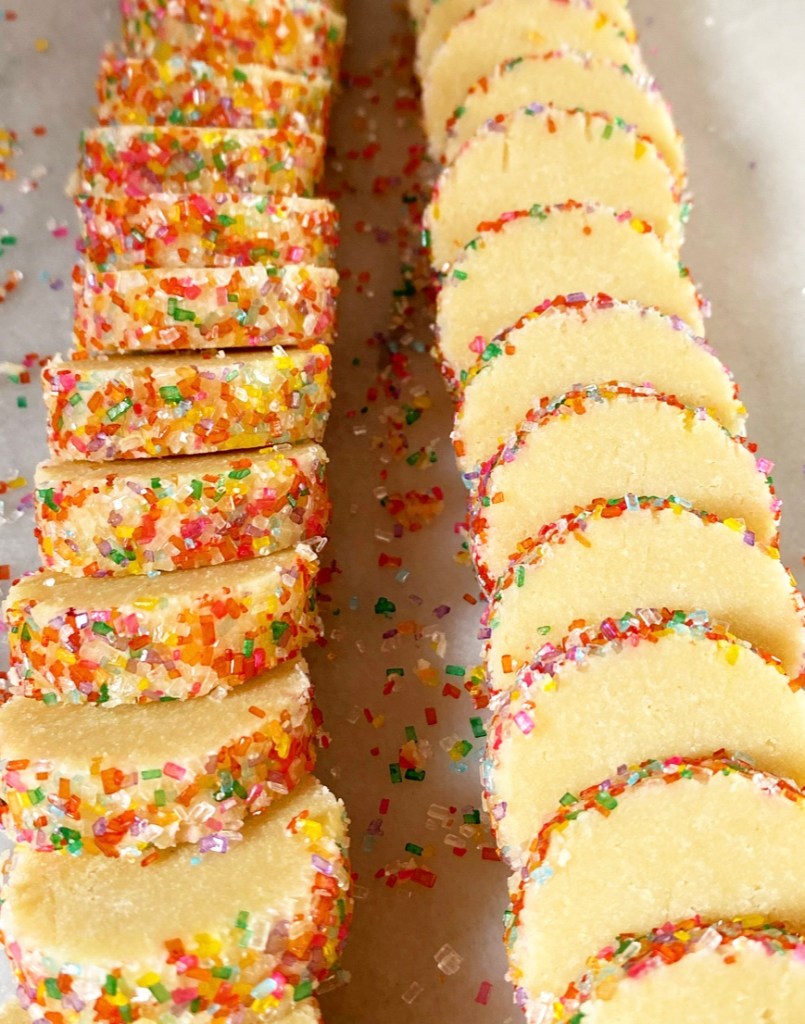
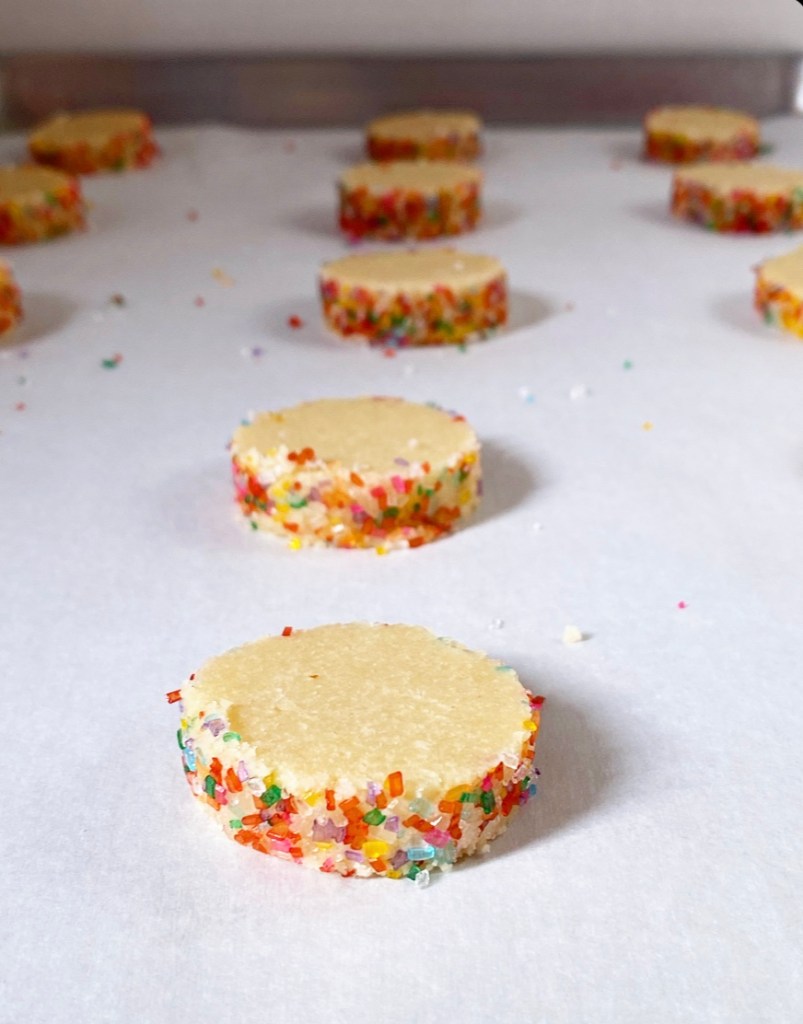
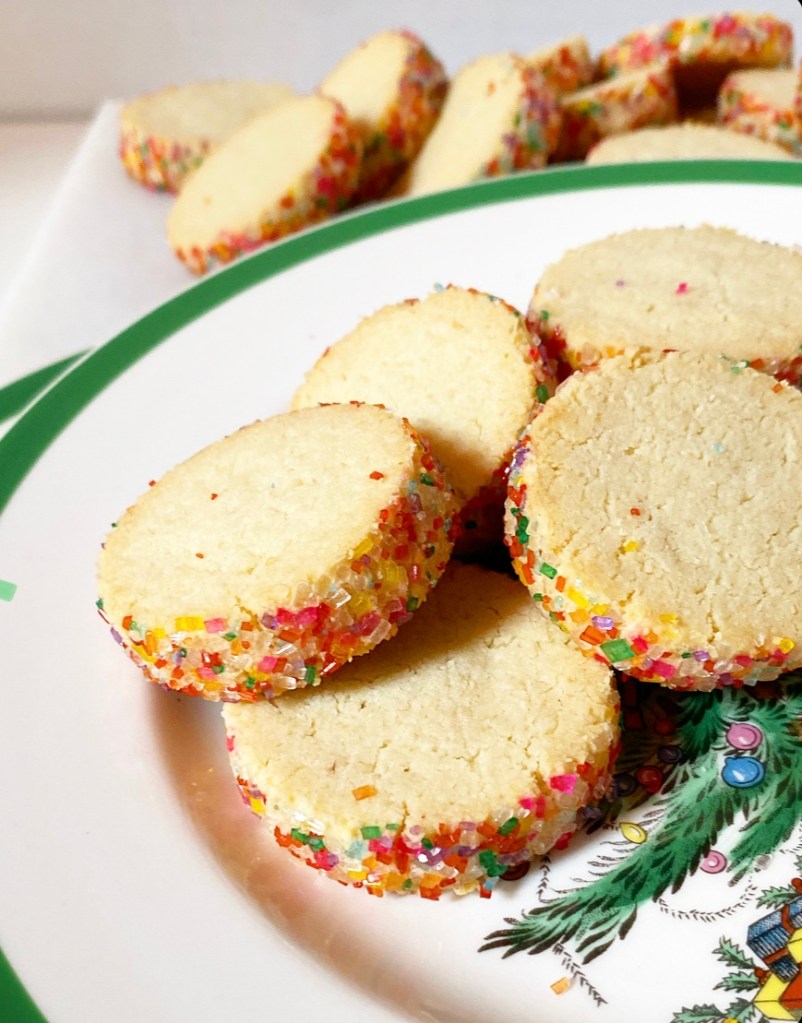
These cookies are so easy to make. The dough is is a quick one with just five ingredients: almond flour, vegan butter, confectioner’s sugar, salt and vanilla. Once the it’s mixed up, it’s rolled into two logs, coated in your sparkling sugar (or vegan sprinkles), and refrigerated for a few hours or a few days depending on your schedule and needs. When you’re ready for cookies (and who isn’t?) simply slice them thick and bake them just until they look dry.
Almond Flour Sparkling Shortbread {Vegan, Gluten-Free}​

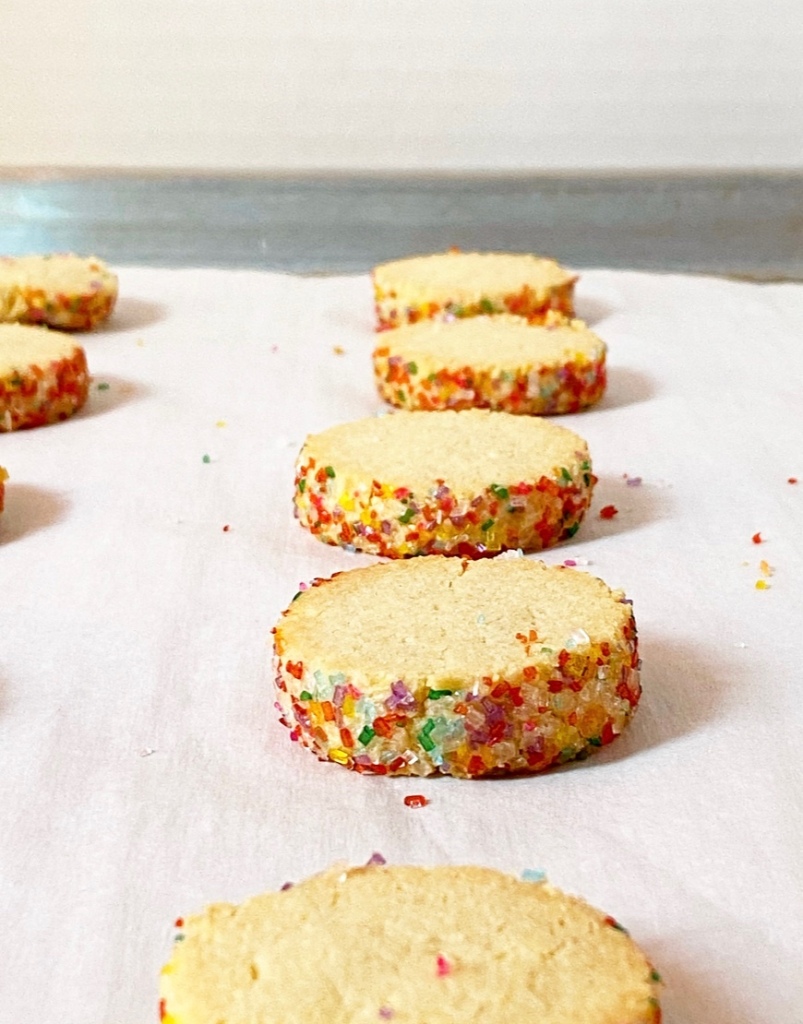
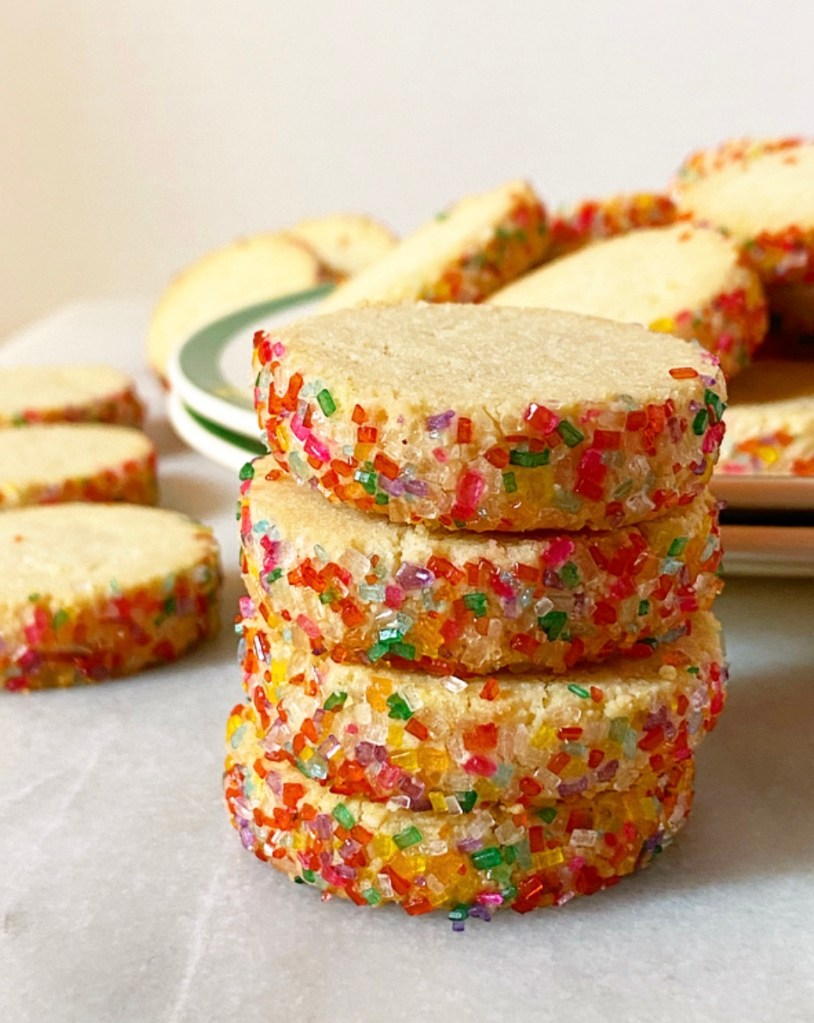
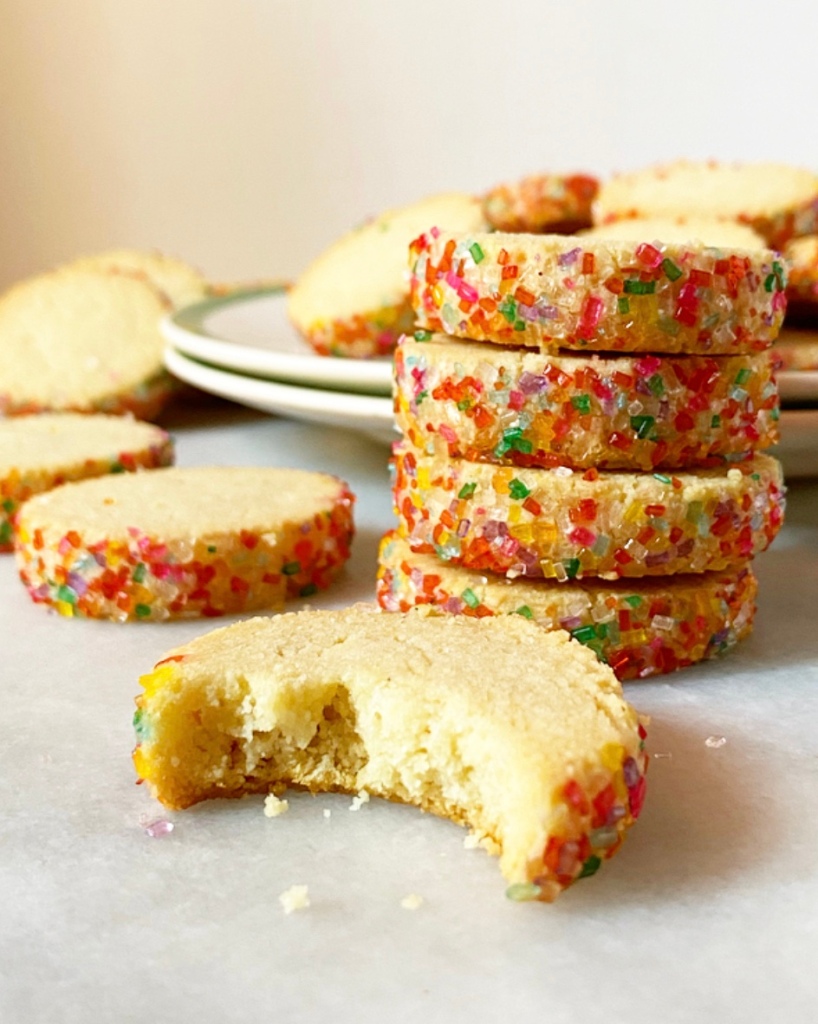
Almond Flour Sparkling Shortbread have it all. They’re buttery with a pronounced almond flavor, and a tender-crisp bite. The sparkling sugar on the edges adds a little pizzazz and a some extra crunch. And since they’re vegan and gluten-free, they’re one more festive way to feed both my people and yours.
Almond Flour Sparkling Shortbread {Vegan, Gluten-Free}​

Not vegan and gluten-free? Try my classic Sparkling Shortbread!

Almond Flour Sparkling Shortbread {Vegan, Gluten-Free}
makes about 3 dozen small cookies

6 tablespoons vegan butter, softened to room temperature (or dairy butter if not vegan)
6 tablespoons confectioner’s sugar
1 teaspoon pure vanilla extract
2 cups blanched almond flour
1/2 teaspoon Kosher or sea salt
6 tablespoons sparkling sugar, or (vegan) sprinkles of choice

In a medium-large mixing bowl, use an electric mixer to beat vegan butter until fluffy (about 2 minutes). Add confectioner’s sugar and beat until fully combined (about 2 minutes). Beat in vanilla.

Add half the almond flour and mix until combined. Beat in remaining almond flour and salt. Dough may look rubbly, but should hold together extremely well when pinched.

Knead dough a couple of times with your hand, then divide it in half.

Place two sheets of plastic wrap on the counter. Place sparkling sugar on a dinner plate.

Working with one half of the dough at a time, form it into a log that is roughly 7 inches long and 1 inch in diameter. Place the dough log on the plate of sparkling sugar, then gently roll it around to coat completely. Remove it to one of the sheets of plastic wrap and wrap it up. Repeat this process with the remaining dough and sparkling sugar. When done, place both logs of dough in the refrigerator for 2 hours or up to 3 days.

When ready to bake, preheat oven to 325F. Line two rimmed sheet pans with parchment paper.

Working with one log of dough at a time, slice off any scraggly ends, then slice in increments of 1/4-1/3 inch (I went 1/3 inch because I prefer thick shortbread). Place slices about 1 1/2 inches apart on prepared pans.

Bake cookies 14-16 minutes, rotating the pans top to bottom and back to front at the 8 minute mark. Cookies are done when they look completely dry and are just starting to turn pale golden at the edges. They should not brown.

Let cookies cool completely on their sheet pans. Serve. Store them in an airtight container at room temperature for at least a week.

Oven Fries (that are worth eating)

Oven Fries (that are worth eating)

I want to make it clear that I love frying things. I love it. Doughnuts, chicken, onion rings, fries—I want them all deep-fried to golden perfection. Not baked. Not. Baked. Because let’s be real, baked versions of things that are supposed to be fried are rarely worth eating. Like, if I want a doughnut, I don’t want what amounts to a muffin baked in a ring mold. And if I want fried chicken, I don’t want it “oven-fried.” Just give me the real deal, or don’t give it to me at all.

All that said, I had a little change of heart a few weeks ago while making dinner. I had an unallocated potato that needed using, and decided to try to make oven fries with the main goal of them not just being fry-shaped roasted potatoes. I wanted crisp, golden, fluffy-centered fries, but without the pot of hot oil. It seemed like an impossible goal at the time.

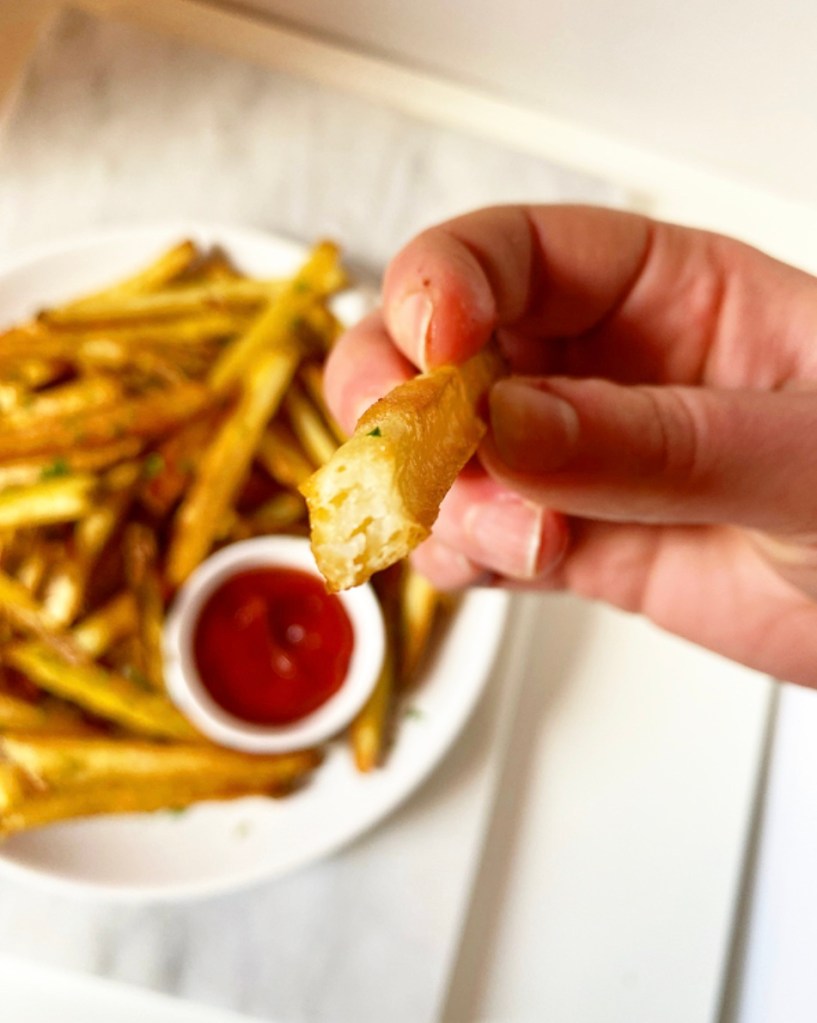
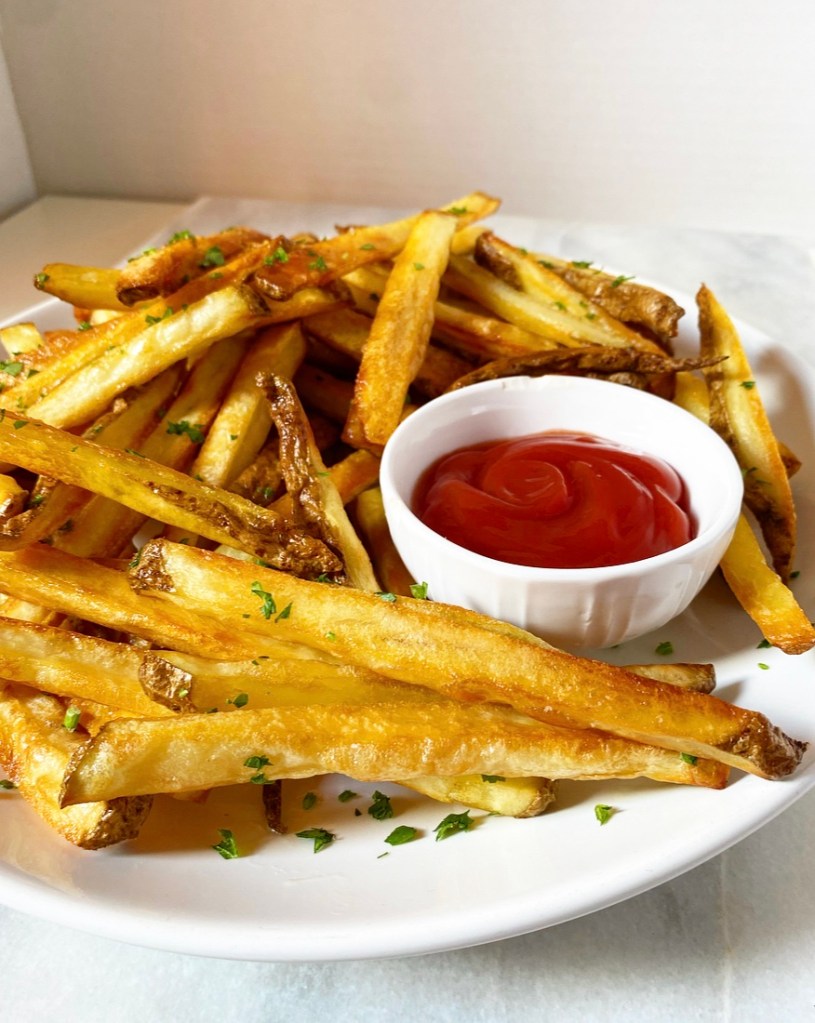
I am here to tell you that I achieved this goal. I achieved it in style. And now I feel so silly for being so adamantly opposed to Oven Fries for upwards of a decade. I’m just opposed to lousy oven fries, ya know? But these are anything but lousy. They’re crispy, salty, and bear little resemblance to any roasted potatoes I’ve come across (though that is fundamentally what they are, of course).

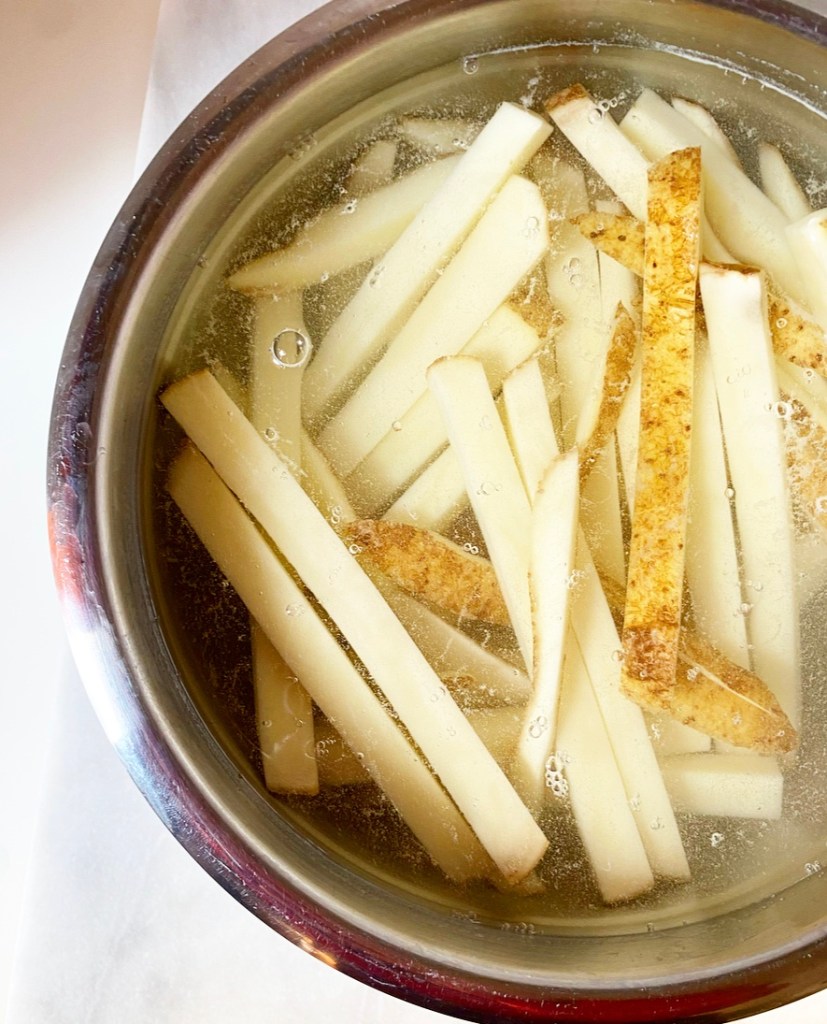
The secret to great Oven Fries is treating them as much like regular fries as possible. This means using classic, starchy russet potatoes and starting with a soak in cold water. I add some salt and baking soda to the water to help pull all the starches in the sliced potatoes to their surfaces. This leads to crispy outsides and fluffy insides every time.

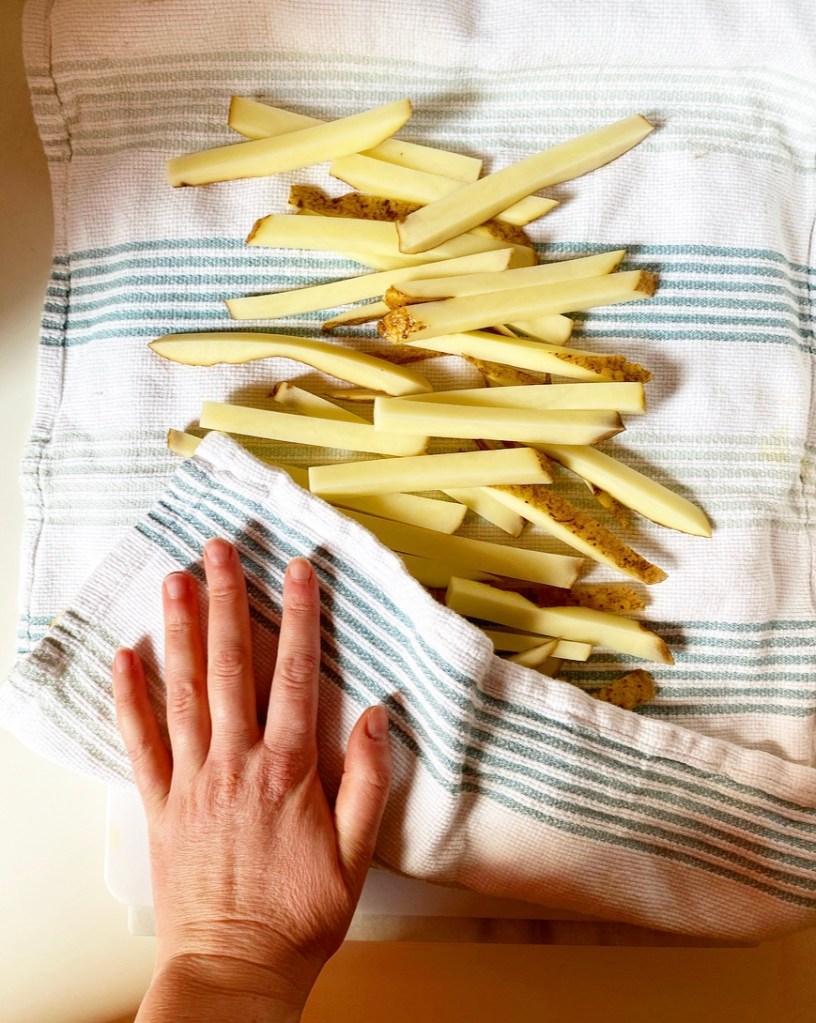
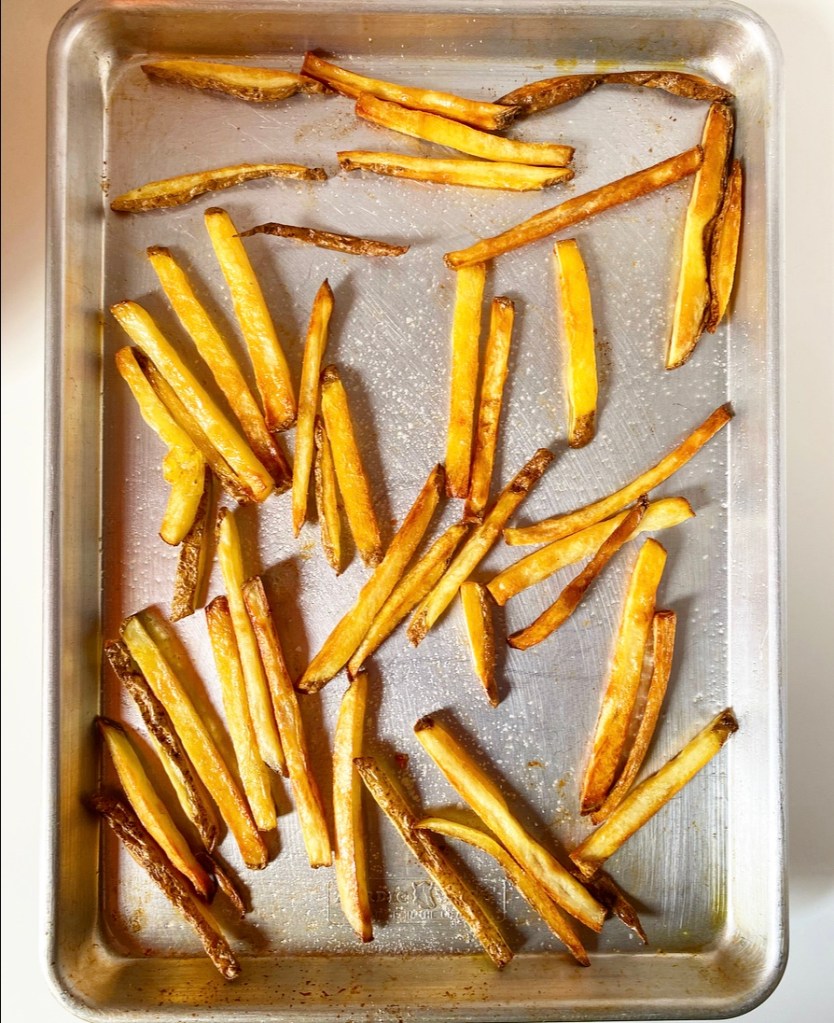
After soaking, make sure to pat your fries as dry as you can so they sear more than they steam. Toss them with about a tablespoon of oil per potato and a hefty pinch of salt, then spread them out on a couple of sheet pans and roast them high and fast, flipping when they’re golden on one side. Heads up that if you’re using dark (coated) pans, your fries will brown faster than they will on the aluminum pans I use.

Oven Fries (that are worth eating)

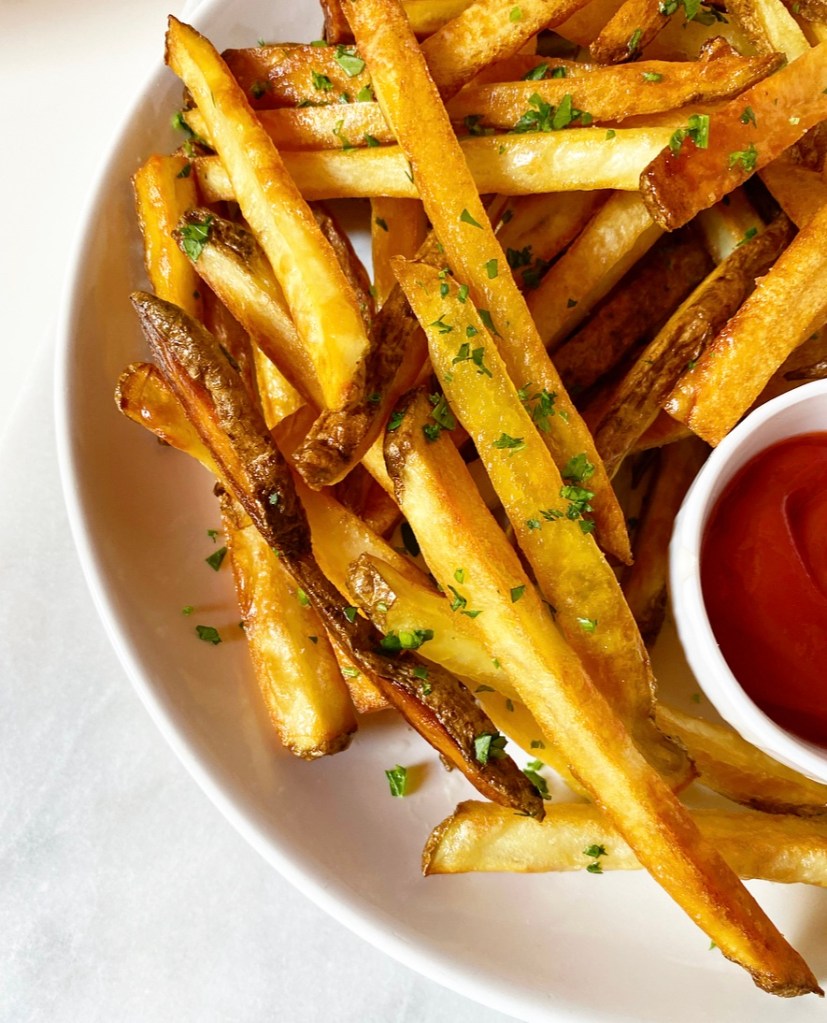
When your Oven Fries are done, make sure to hit them with another big pinch of salt for a little extra punch (and crunch!). You can also dust them with a favorite spice blend or scatter some crispy garlic over the top—however you like your fries. I’m a no-frills fry kind of human, so all I need is a little side of ketchup.

Oven Fries (that are worth eating)

Y’all, these are so good. Crispy, with soft centers and an irresistible golden brown color—not a masquerading plain roasted potato in the bunch. These are Oven Fries good enough to change even the staunchest fried food defender. Dare I say, they’re Oven Fries worth eating. Oven Fries…to love?

I’ll see myself out.

Oven Fries
makes 2 large or 3-4 small servings

2 large russet potatoes
cold water
1/2 teaspoon baking soda
Kosher or sea salt, to taste
2-3 tablespoons neutral oil (I used canola)
ketchup (or other dipping sauce), for serving

Scrub potatoes, and peel if desired. Transfer them to a cutting board. Use a large, sharp chef’s knife to slice potatoes into pieces approximately 1 centimeter thick.

Place all potato pieces in a medium mixing bowl, and add enough cold water to cover. For extra deep golden fries, add baking soda and 1/2 teaspoon salt to the water. Let potato pieces soak for 30 minutes.

Meanwhile, place the oven racks in central positions. Turn the oven to 450F.

Once 30 minutes have passed, drain water from potatoes. Dry potato pieces well with a clean kitchen towel.

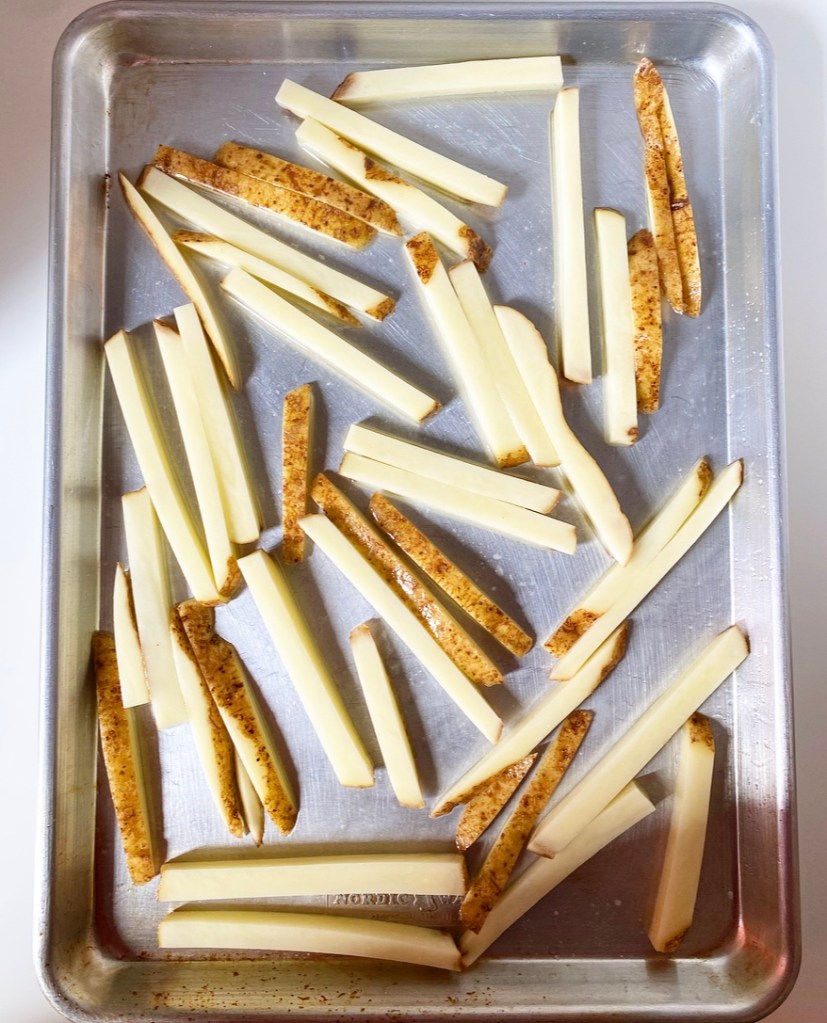
Divide potatoes between two dry rimmed baking sheets. Drizzle each pan with 1-1 1/2 tablespoons oil. Season well with salt. Use your hands to toss all pieces to coat. Arrange potato pieces in a single layer with none touching each other.

Bake fries for 15 minutes. At this point, they should all be turning golden on the underside; if they’re not, let them bake another 5 minutes and check again. Use a spatula to flip them all over, then rearrange them into an even layer with none touching. Rotate the pans top-to-bottom and back-to-front. Bake 15-20 more minutes, or until golden to your liking.

Remove the fries from the oven and salt again, if desired.

Serve immediately with ketchup or other dipping sauce, if desired.

Vegan, Gluten-Free Peachy Berry Crisp

Our annual trip to Maine is coming up in just five weeks. In addition spending my days dreaming about what treasures I’m going to pick up at Iverstudio and tiptoeing into the ocean at Fine Sand Beach, I’m diving deep into menu planning.

Vegan, Gluten-Free Peachy Berry Crisp

I cook a primarily vegan, gluten-free menu up there to accommodate all of our various dietary needs. It works for us, and even the guests we’ve had who don’t regularly eat that way seem to enjoy it. We have a list of staple meals—vegan Everyday Cassoulet is always the #1 request—but I am constantly on the lookout for new things to add to our repertoire. Beyond three square meals a day (plus a lot of guacamole), I most look forward to making a vegan, gluten-free dessert for my friends and my blog.

Last year’s offering was an easy Vegan, Gluten-Free Apple Crisp. It was fall on the island, so going with apples made perfect sense. Now in the heat of summer, I’m giving that recipe a peachy berry spin!

Vegan, Gluten-Free Peachy Berry Crisp

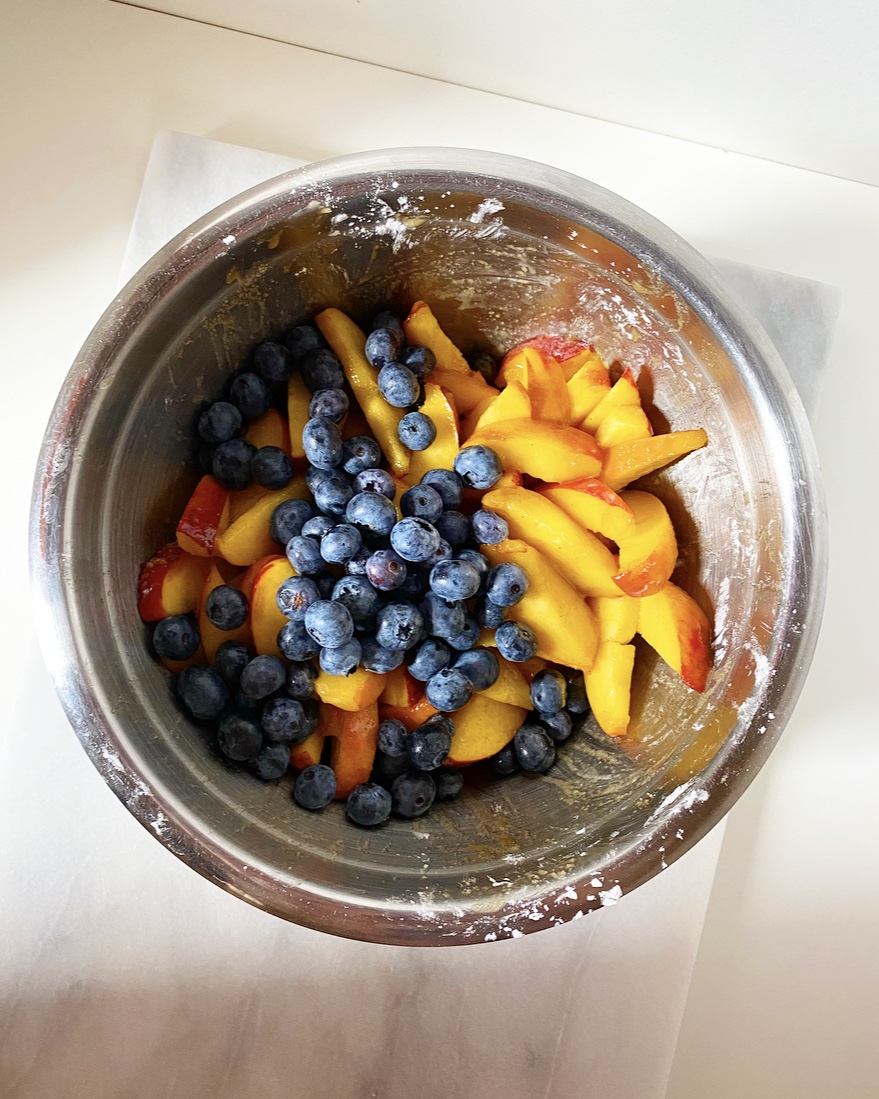
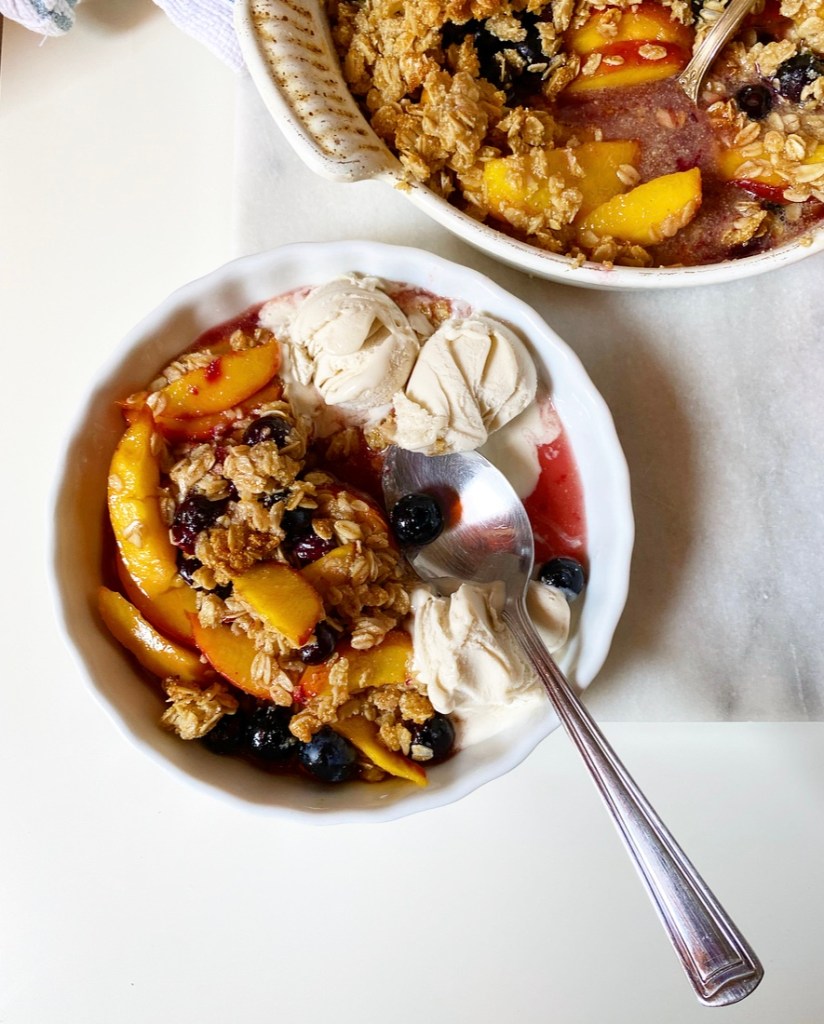
I punched up the original recipe with loads of fresh peaches, brown sugar and lemon, and just a hint of spice—enough so you know it’s there, but not enough to overwhelm the fruit. Once the peaches are prepared and tossed with all that goodness, a cup of fresh blueberries are added to the mix. You could add any berry you like here and it would work, but keep in mind that some may leach color more easily than others.

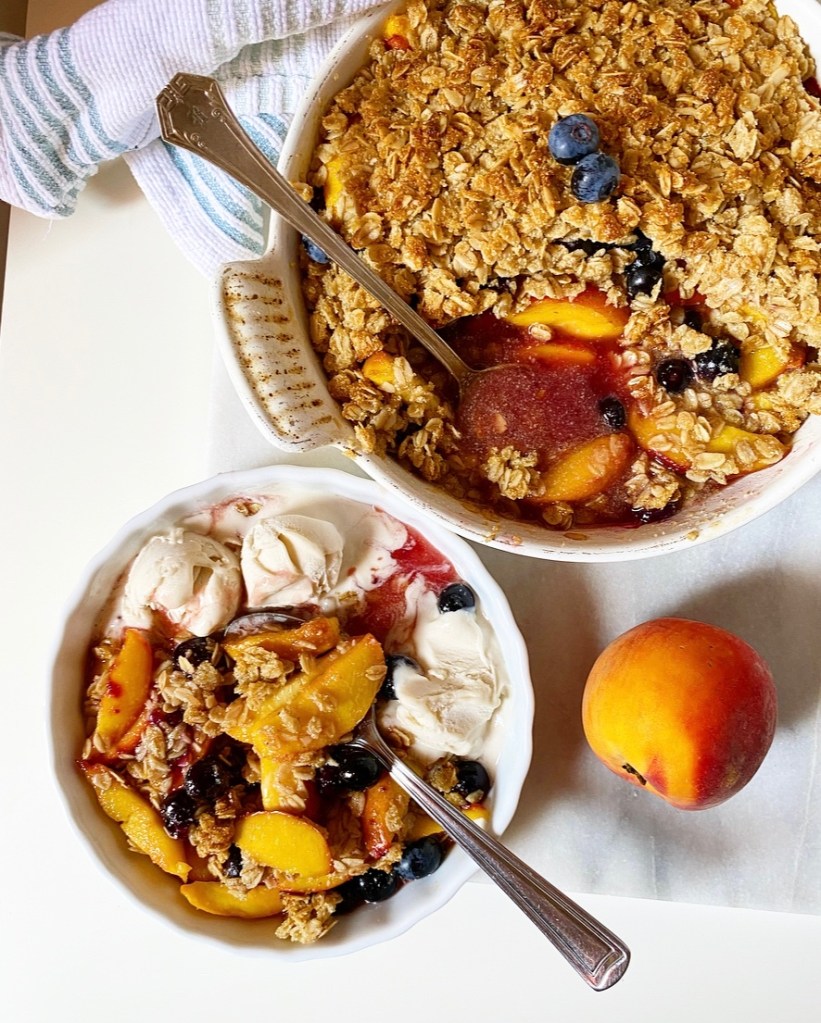
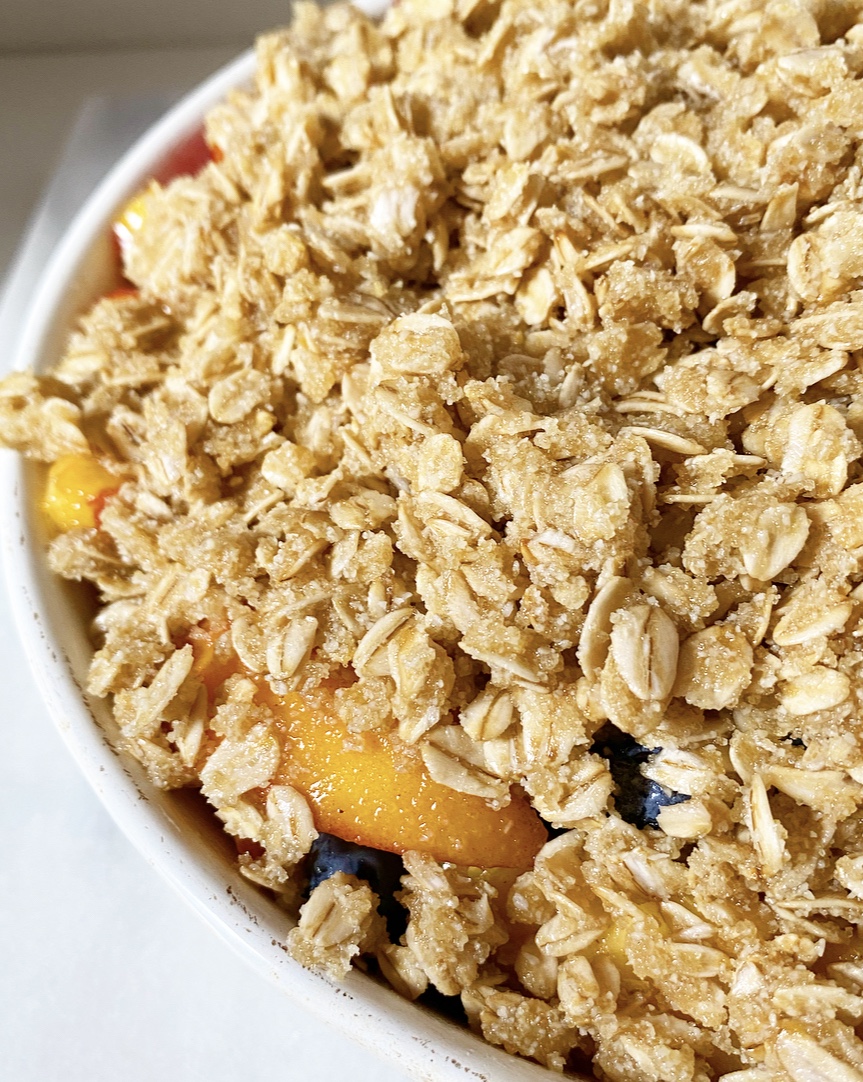
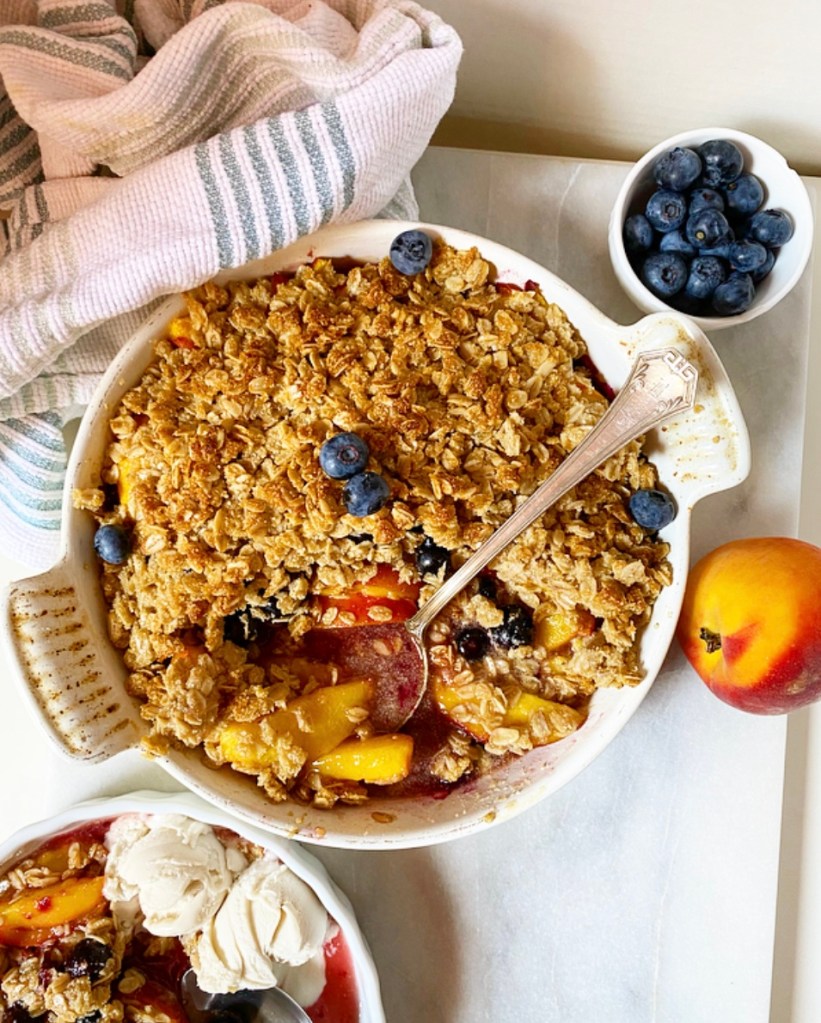
The crisp topping is made primarily with almond flour, gluten-free rolled oats, brown sugar and vegan butter (or coconut oil). A thick layer is scattered over the filling, and then the whole thing is baked until golden, piping hot, and screaming for a scoop (or two or three) of your favorite vegan vanilla ice cream. I’m an oat milk vanilla girl myself.

Vegan, Gluten-Free Peachy Berry Crisp

Vegan, Gluten-Free Peachy Berry Crisp is super summery and wildly quick and simple to make. It’s perfect for cookouts and dinner parties, but if you can swing it, it’ll really hit the spot on vacation with two of your favorite people.

Vegan, Gluten-Free Peachy Berry Crisp
makes one 9-10 inch dish, about 6 servings

Filling:
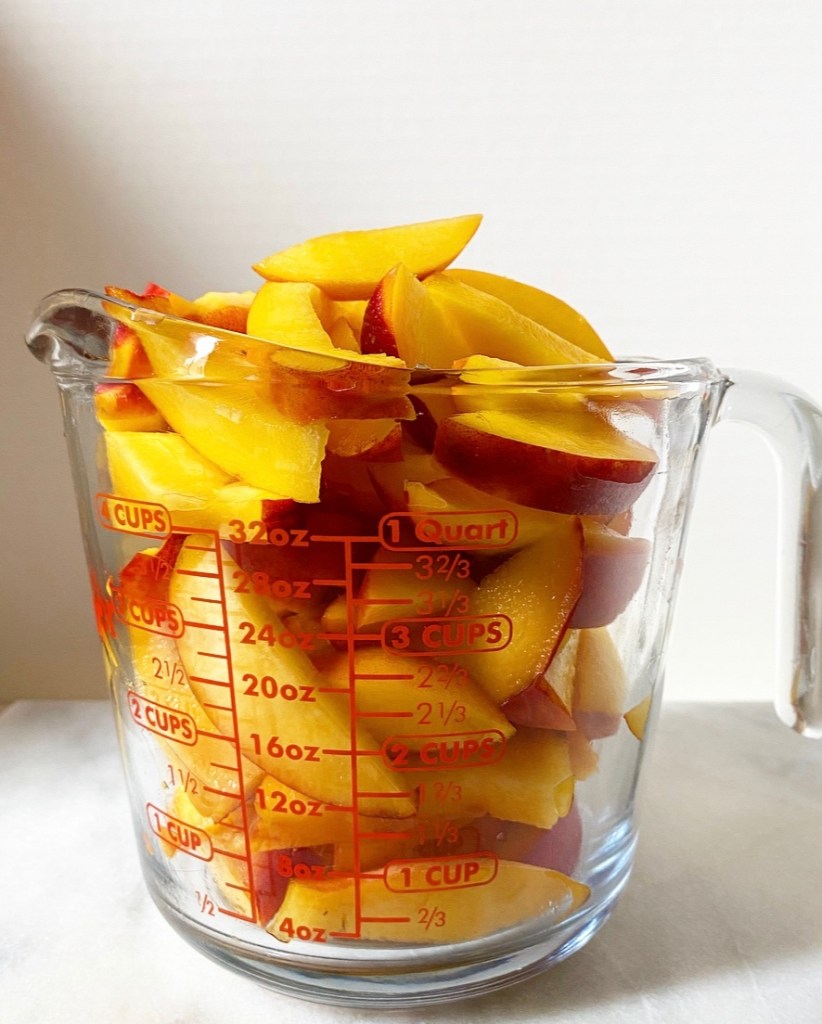
5 cups sliced ripe peaches (about 7-8 medium peaches)
juice of 1/2 lemon
1/2 cup light brown sugar, packed
2 tablespoons cornstarch
1/8 teaspoon ground cinnamon
1/8 teaspoon ground ginger
1/4 teaspoon Kosher or sea salt
1 cup fresh blueberries

Crisp Topping:
1 cup rolled oats
1/2 cup almond flour
1/2 cup light brown sugar, packed
1/2 teaspoon kosher or sea salt
1/2 cup vegan butter (or refined coconut oil), melted

For serving:
dairy-free vanilla ice cream

Preheat oven to 350F. Grease a 9-inch casserole dish or cast iron pan with vegan butter (or refined coconut oil). Set aside.

Place peach slices in a medium mixing bowl and toss with lemon juice, brown sugar, cornstarch, cinnamon, ginger, and salt. Add blueberries and gently fold together. Transfer to the prepared baking dish.

Make the topping. In a medium mixing bowl (I just wipe out the one I used for the fruit), whisk together oats, almond flour, sugar, and salt. Add melted butter (or coconut oil) and stir until everything is saturated. It may seem sandy; this is okay. Scatter topping onto the fruit.

Bake 28-30 minutes, until topping is browned and peaches are tender. Let cool 10 minutes before serving in bowls with dairy-free vanilla ice cream, if desired.

Cover and refrigerate any leftovers for up to 4 days. Reheat before serving.

Vegan, Gluten-Free Carrot Cake

Vegan, Gluten-Free Carrot Cake​

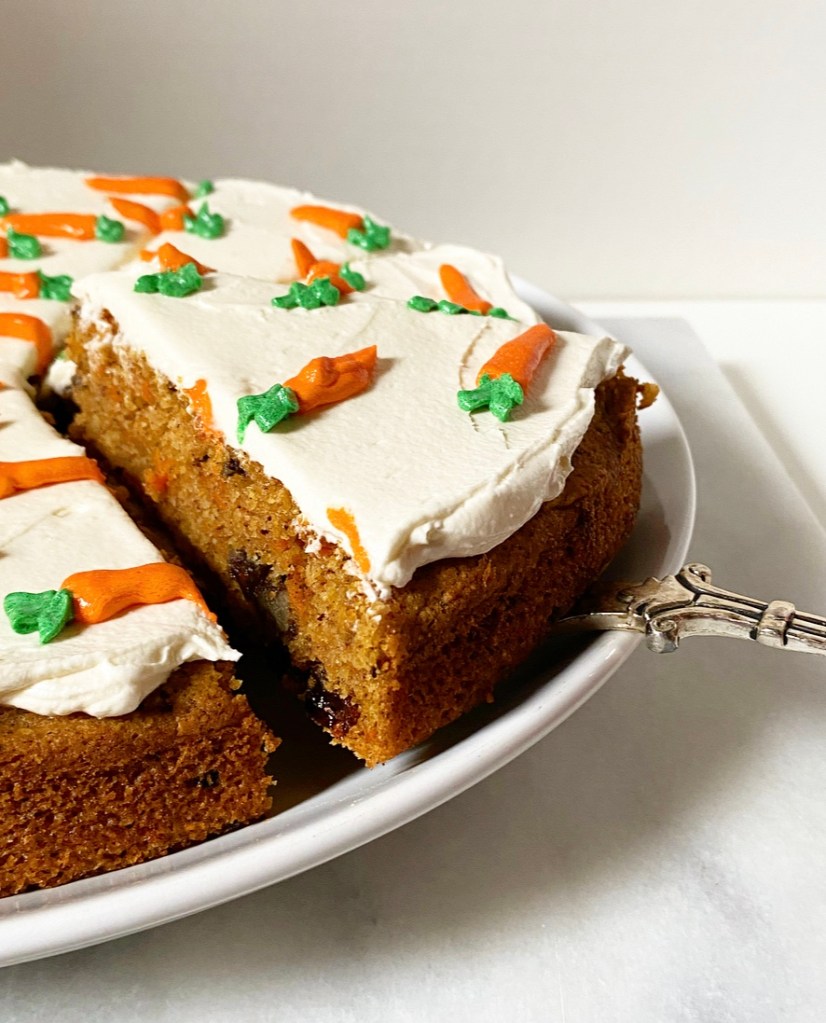
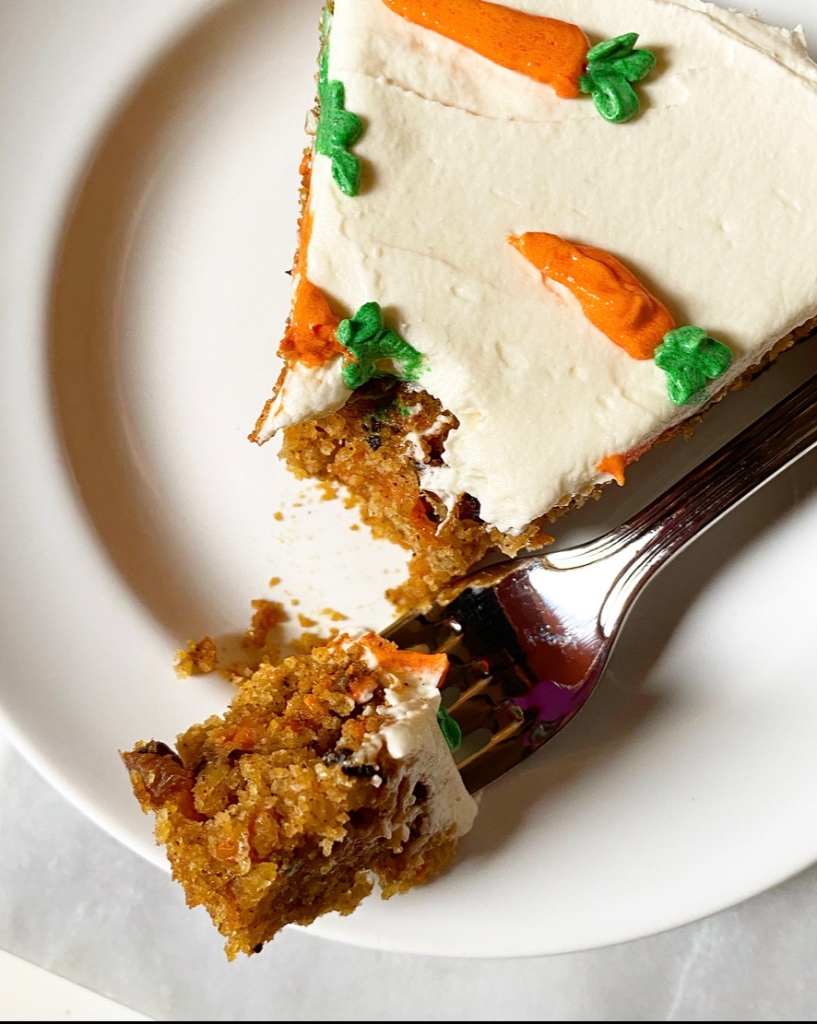
With Easter coming up next weekend, I’ve got carrot cake on my mind. To be more specific, I’ve got this moist, flavorful and incredibly simple Vegan, Gluten-Free Carrot Cake front and center in my brain. It’s everything I love about the classic cake—the texture, the spices, the frosting—just made a little more accessible. I totally love it!

Vegan, Gluten-Free Carrot Cake

To make this sweet little cake, I began with my go-to vegan, gluten-free cake formula and then slowly, but surely, figured it out. I toyed with all sorts of different ratios of pumpkin to grated carrots, and adjusted the spices until they were just right. Ten practice cakes and two scrapped photoshoots later, I think I’ve finally nailed it.

Vegan, Gluten-Free Carrot Cake

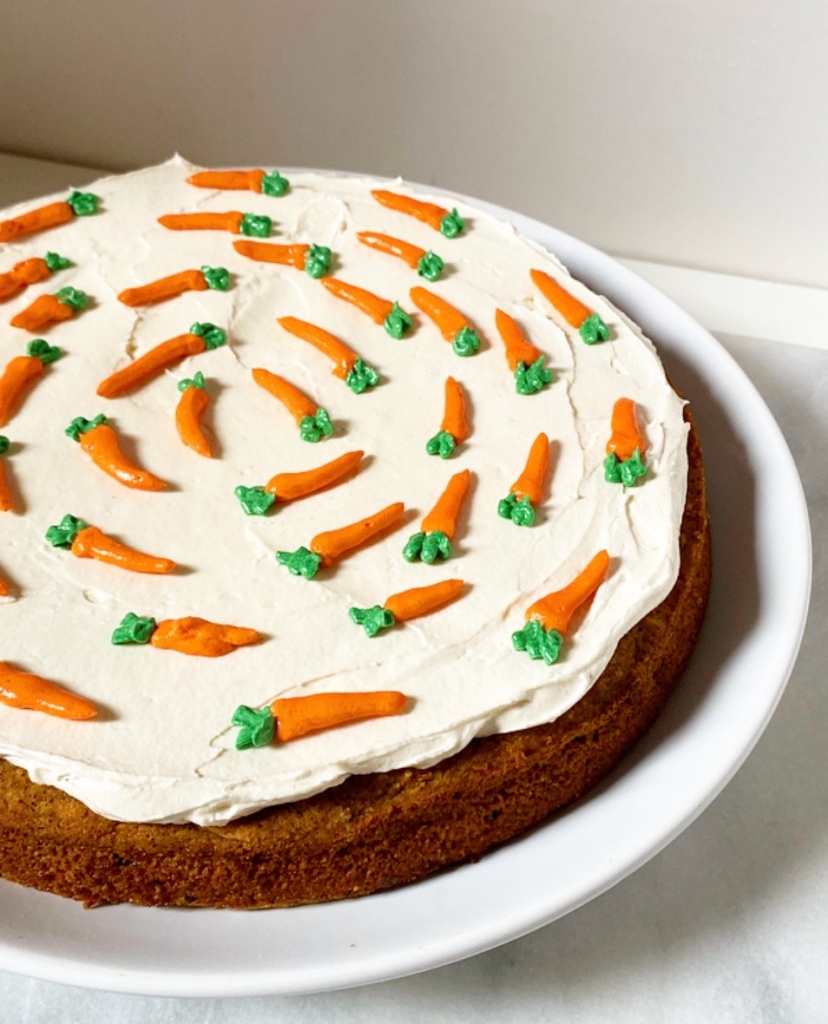
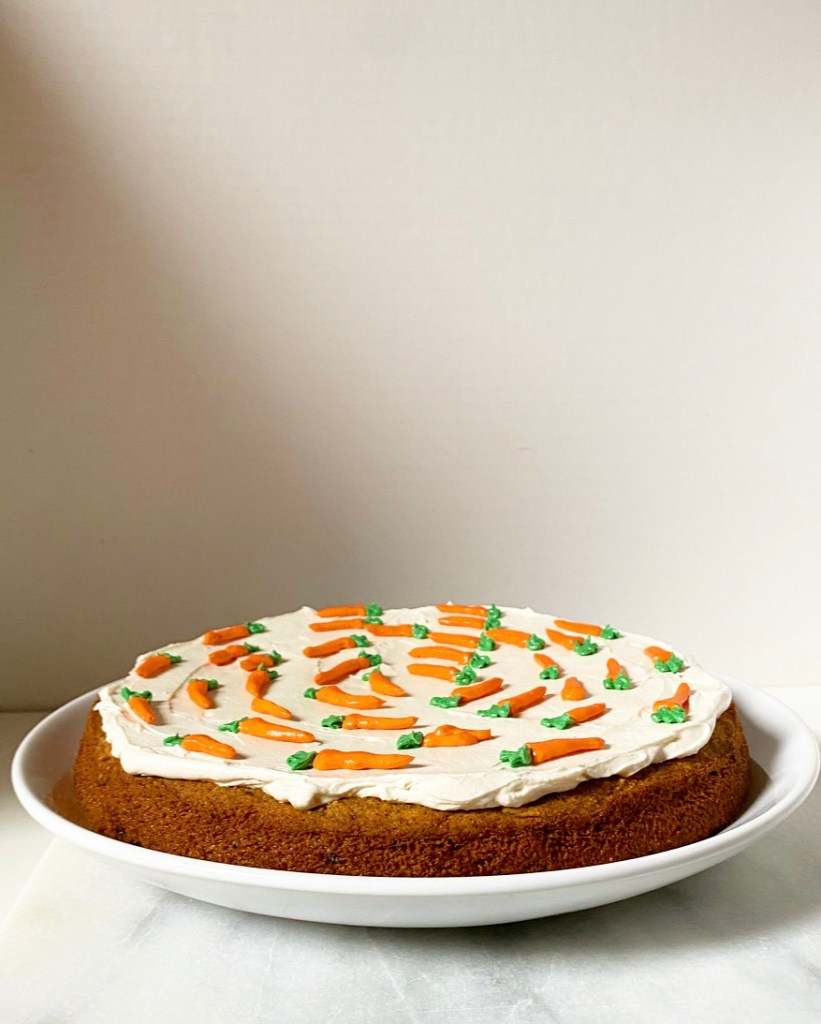
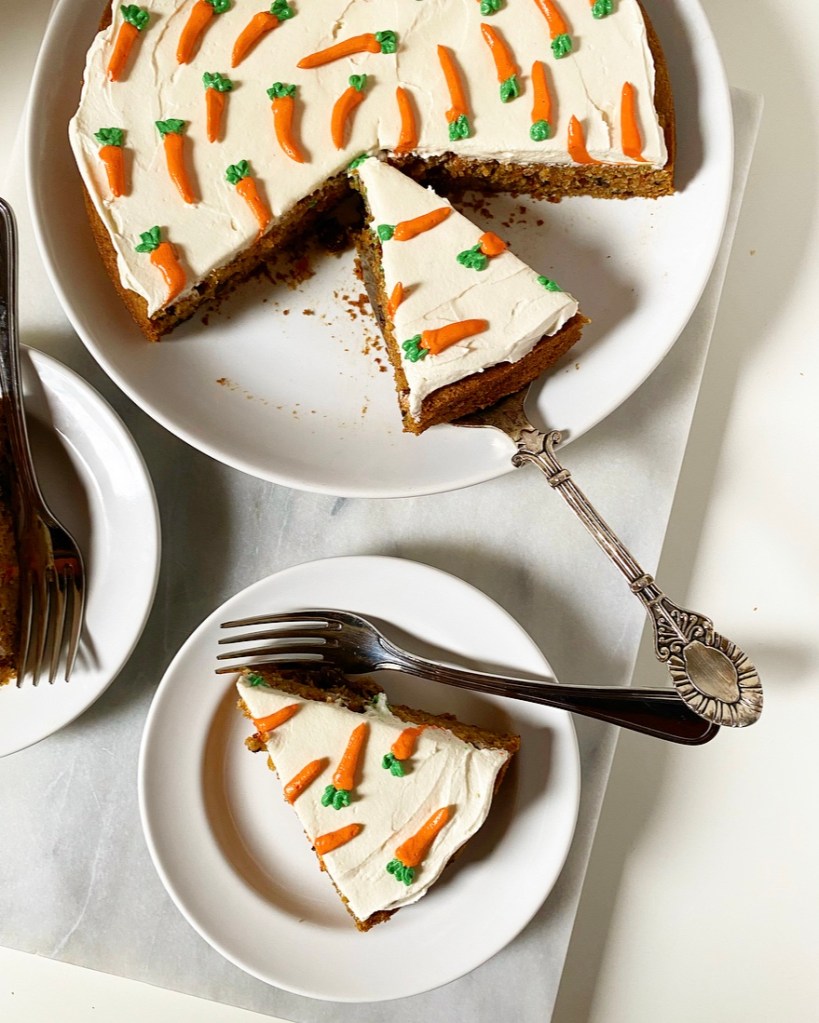
My Vegan, Gluten-Free Carrot Cake is tender, fragrant, and packed with carrots, raisins and walnuts, though you can leave out those last two ingredients if you’re not a nuts-and-fruit-in-your-cake kind of human. Paired with my go-to Vegan Cream Cheese Frosting, it’s so good, even the non-gluten-free, non-vegans (like me!) will go back for seconds.

Vegan, Gluten-Free Carrot Cake​

This recipe is written for a single layer of cake and a corresponding amount of frosting. I kept it simple because making layer cakes has seemed exhausting lately and it’s no fun to make something that exhausts you. If you’d like to make this recipe into a layer cake, I’d double the batter for two 9-inch round cake pans and triple the frosting. You could even quadruple it—nobody worth knowing has ever been unhappy about extra cream cheese frosting, especially when piped into little carrots.

Vegan, Gluten-Free Carrot Cake​
Vegan, Gluten-Free Carrot Cake
makes a single layer 9-inch round cake

1/3 cup chopped walnuts or pecans (optional)
1 teaspoons apple cider vinegar
~1 cup unsweetened non-dairy milk
2 tablespoons pure pumpkin purée or unsweetened applesauce
2 teaspoon pure vanilla extract
1/3 cup light or dark brown sugar, packed
1/3 cup granulated sugar
1/2 cup potato starch
1/4 cup cornstarch
1 teaspoons baking soda
1 teaspoon baking powder
1 teaspoon ground cinnamon
1 teaspoon ground ginger
1/2 teaspoon ground nutmeg
1/2 teaspoon Kosher or sea salt
1 1/2 cups blanched almond flour
1 cup grated carrots
1/3 cup raisins (optional)

If you would like a layer cake, double the recipe for two 9-inch pans. Triple the frosting recipe that follows.

Preheat oven to 350F. Grease a 9-inch round or square cake pan. Line the bottom with parchment and grease again. Set aside.

Place chopped nuts of choice (if using) on a dry rimmed sheet pan. Roast in the oven for 5-7 minutes or until fragrant. Remove and set aside to cool while you prepare the cake batter.

Pour apple cider vinegar into a liquid measuring cup. Add non-dairy milk until liquid reaches the 1 cup mark. Stir and let sit for 5-10 minutes, until curdled. Stir in pumpkin (or applesauce) and vanilla. Set aside.

In a large mixing bowl, whisk together brown sugar, granulated sugar, potato starch, cornstarch, baking soda, baking powder, cinnamon, ginger, nutmeg, almond flour, and salt. Stir in grated carrots, raisins and toasted nuts (if using).

Add liquid ingredients in two installments, stirring until combined. Make sure to scrape the bottom of the bowl to ensure thorough mixing.

Transfer batter to prepared pan and smooth to the edges with a silicone spatula or wooden spoon. Tap pan on the counter 5 times to release any large air bubbles. Transfer to the oven and bake 32-35 minutes, or until a toothpick inserted in the center comes out with only a few crumbs (not wet batter).

Let cake cool completely in its pan on a cooling rack. Run a thin knife along the edges of the pan before inverting to release.

Place cake on desired platter. Frost as desired with Vegan Cream Cheese Frosting (recipe below).

Frosted cake will keep at room temperature for up to 2 days or in the refrigerator for up to 4 days. Unfrosted cake may be triple-wrapped in plastic wrap and frozen for up to 1 month. Thaw overnight in the refrigerator before frosting.

Vegan Cream Cheese Frosting
makes enough for the top of one sheet cake

2 ounces (1/4 cup) vegan butter, room temperature (I like Miyoko’s)
1 ounce (2 tablespoons) shortening, room temperature (I like Nutiva)
1 ounce (2 tablespoons, 1/8 of an 8 ounce tub) vegan cream cheese, slightly softened
3/4 cup confectioner’s sugar
pinch of Kosher or sea salt
1 teaspoons pure vanilla extract
green food coloring, for piped carrots (optional)
orange food coloring, for piped carrots (optional)

Frosting may get very soft at room temperature depending which vegan cream cheese you use. Plain Miyoko’s brand vegan cream cheese is my gold standard for flavor and holding up well at room temperature.

In a large mixing bowl, use an electric mixer to beat vegan butter, shortening, and vegan cream cheese until light and fluffy. Mix in confectioners sugar in two installments, mixing until combined and fluffy. Mix in salt, followed by vanilla.

If piping carrots, dye 2 tablespoons of frosting green and 2 tablespoons orange.

Use plain frosting to frost the top of the cake as desired. If piping carrots, put colored frostings in separate piping bags, snip small corners and pipe as desired. I make carrots by following the method on this video.

Vegan, Gluten-Free Icing Thumbprints

Vegan, Gluten-Free Icing Thumbprints

Have I made icing thumbprints on here before? Sure have! But I’ve never made them vegan and gluten-free, probably because I didn’t have a great vegan, gluten-free cookie base yet.

Vegan, Gluten-Free Icing Thumbprints

But, as you might have guessed, I do now. On my never-ending quest to feed all my various people, I spent a good chunk of the holiday season figuring out a dairy- and egg-free almond flour dough that works for a multitude of cookie applications. So far, I’ve made some stellar gingerbread and linzers that taste shockingly close to the real deal, and I’ve got all sorts of variations ready to be doled out as the need arises (as it has today).

Vegan, Gluten-Free Icing Thumbprints

While using this dough for a completely different cookie recipe last week, it occurred to me that I hadn’t checked to see if it would make good thumbprints. My traditional sugar cookie recipe thumbprints (using it as a verb) like a dream with a tiny adjustment, but would this one?

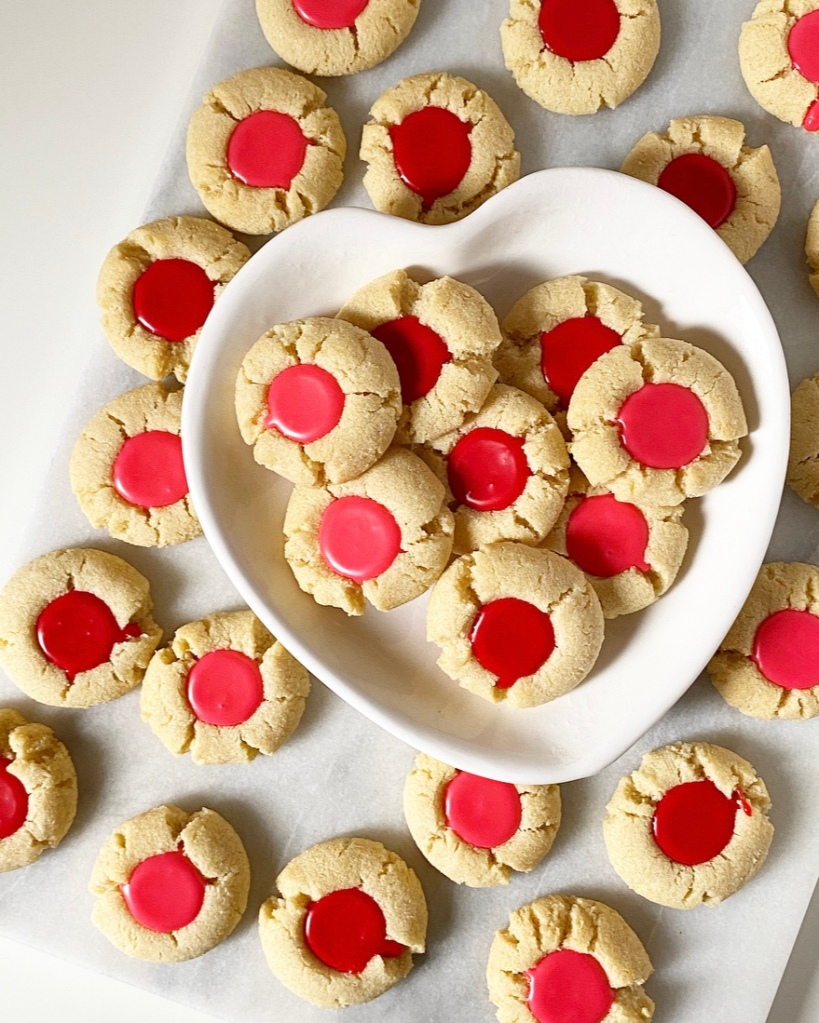
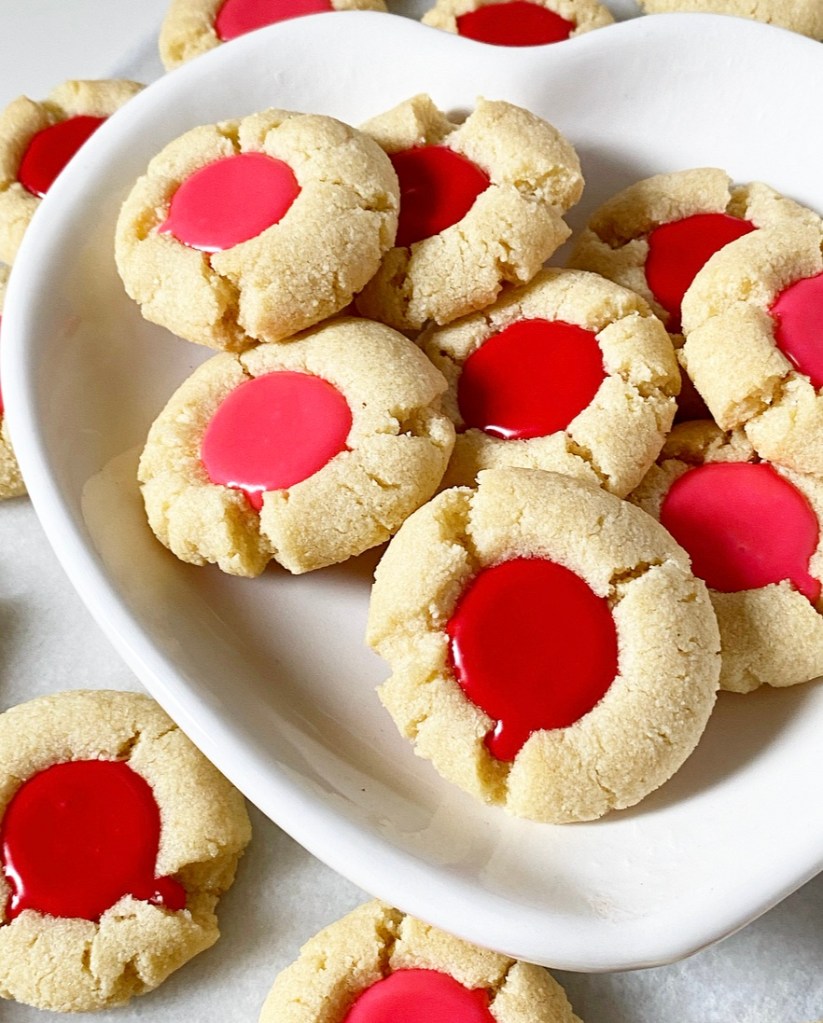
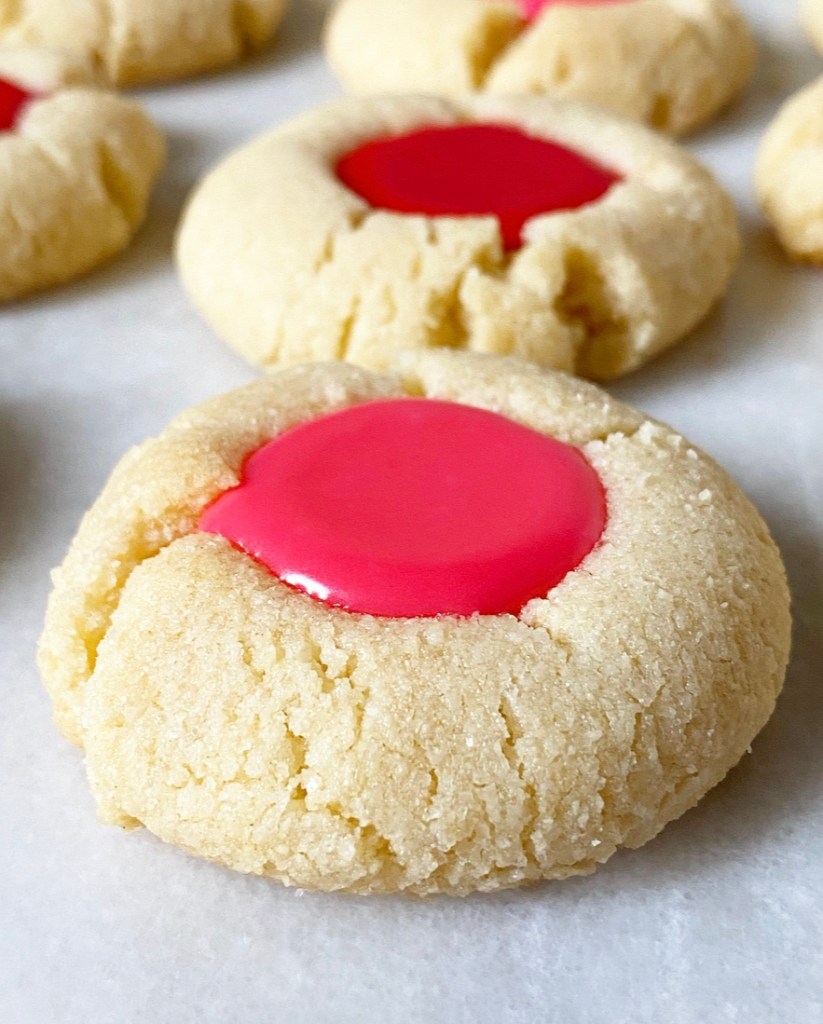
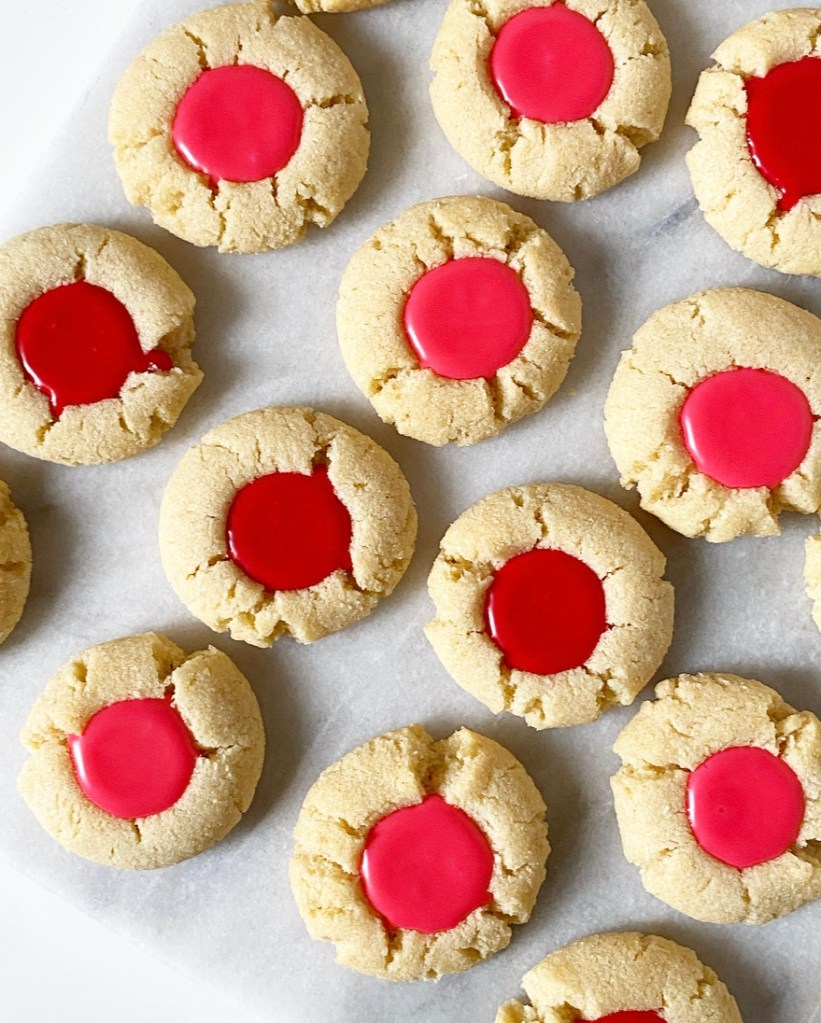
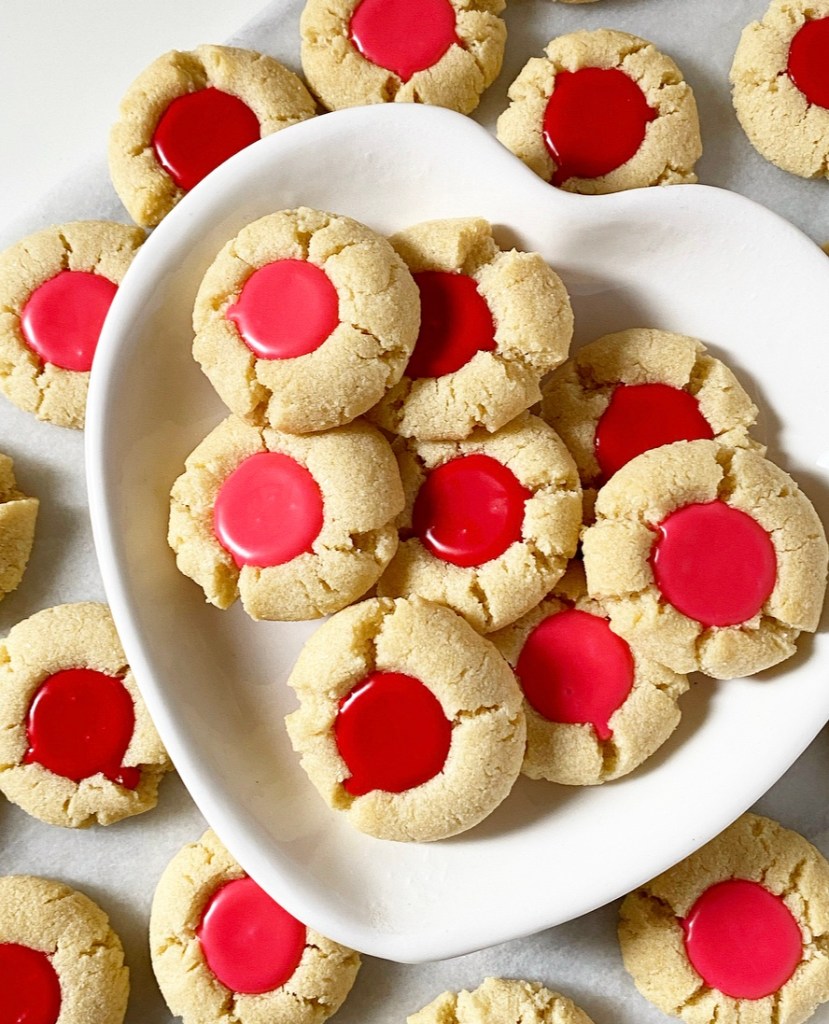
Well, yes. Yes, it would. It does! And with no adjustment at all, which is a dang delight. These cookies bake up somewhere between crisp and chewy and are sturdy enough to hold up against all that icing. What can I say? With a quality base recipe, I am unstoppable. Unstoppable and full of cookies.

Vegan, Gluten-Free Icing Thumbprints

As for the filling, don’t you love these little wells of colorful icing? Say what you want about food coloring, but you can’t deny its cheer factor. With Valentine’s Day around the corner, I went with a vibrant pink and red motif for these, but do whatever makes you happy! I imagine that a display of these in team colors would make for a very festive Super Bowl dessert.

That said, if you’re making these for any occasion, please invite me.

Vegan, Gluten-Free Icing Thumbprints
makes about 2.5 dozen cookies

Cookie Dough:
3 cups blanched almond flour
1 teaspoon baking powder
1 teaspoon Kosher or sea salt
1/2 cup vegan butter, softened to room temperature
2/3 cup granulated sugar
1/3 cup confectioner’s sugar
2 tablespoons maple syrup or light corn syrup
2 teaspoons pure vanilla extract

Icing:
1 1/3 cups confectioner’s sugar, divided
pinch of salt
2 vegan gel or liquid food colorings of choice
2-3 tablespoons (6-9 teaspoons) unsweetened non-dairy milk, divided

In a medium mixing bowl, whisk together almond flour, baking powder, and salt. Set aside.

In a separate medium-large mixing bowl, use an electric mixer to beat vegan butter until fluffy (about 2 minutes). Add sugar and confectioner’s sugar and beat until fully combined (about 2 minutes). Beat in maple syrup and vanilla.

Add dry ingredients in two installments, mixing completely after each addition. Dough may look rubbly, but should hold together extremely well when pinched.

Divide dough in two. Form each half into a disk, then wrap with plastic wrap. Chill for 1 hour or up to 3 days.

Place oven racks in central positions. Preheat oven to 325F. Line two rimmed baking sheets with parchment.

Remove dough from the refrigerator. Scoop dough by the tablespoon and roll each int a ball. Place dough balls at least 2 inches apart on prepared pans. Use the back of a very small spoon (like a 1/2 teaspoon measuring spoon) to slowly press a well into each dough ball. They may crack a bit—just smooth them with your fingers. If dough gets too warm and sticky, freeze for 10 minutes.

Bake cookies 13-14 minutes. Cookies are done when puffed and no longer wet-looking. When you remove the cookies from the oven, press the back of the small spoon (I use 1 teaspoon measuring spoon) into the centers again. Let cookies cool on the pans for 10 minutes before carefully removing to a rack to cool completely. Repeat rolling and baking process with all remaining dough, letting the cookie sheets come back to room temperature between batches.

Make the icing. Place 2/3 cup of confectioners sugar and tiny pinches of salt in each of two small bowls. Stir 1 tablespoon (3 teaspoons) of non-dairy milk into each bowl. Add desired food colorings to the separate bowls. Whisk each with a fork until combined. Add more milk by the 1/2 teaspoon until icings are very thick, but pourable.

Transfer icings to piping bags (or ziptop sandwich bags) twist them tight and snip off very small corners. Fill wells in cookies as desired.

You can serve the cookies almost immediately, but the icing won’t set to a non-drippy texture for a few hours. Cookies will keep in an airtight container at room temperature for a few days. Place parchment or wax paper between layers for easiest storage.