 I have been thinking a lot lately about what it means to celebrate this year. Does it feel like the world is crashing down around us and everything is at least vaguely scary? Sure. Is there still stuff to celebrate? You know it.
I mean, all of us are going to have pandemic birthdays this year. Every last dang one. Birthday parties are inadvisable, but cake? That’s non-negotiable. If we can’t have cake in times of both joy and crisis, then what on earth are we even doing here?! In that spirit, today’s post is not actually a recipe, but instead is all about how to make a layer cake fit for a pandemic…er, small group. Sure, you could make a single layer of cake for any occasion you have coming up, but some things require a cake that’s stacked up tall, even if it’s on the miniature side. I’ve been making Mini Layer Cakes for years, for everything from birthdays to baby showers to wedding cake practice. It’s super fun and a great way to brighten someone’s day (or your own!) in these rough times.

How Big are Mini Layer Cakes?
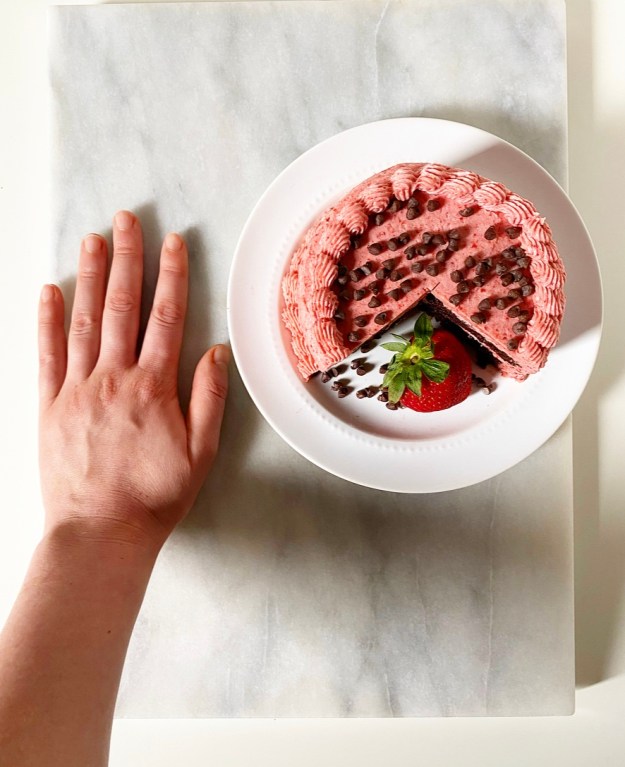
The cakes pictured are 4 inches in diameter and 2.5 and 2.75 inches tall, respectively.
How Many People Can Mini Layer Cakes Feed?
Well, it depends. I think of these as being 4-6 servings, but could go up to eight in a pinch. I’m sure some of you are looking at these and thinking they’d only feed two–I suppose it all depends on exactly how much cake you want to eat in one go. Use your judgment.
What Flavors are Best for Mini Layer Cakes?
The answer here is pretty much anything your heart desires. The cakes pictured are Vanilla Cake + Nutella Buttercream and Chocolate Cake + Strawberry Buttercream; I chose these flavors based solely on what I had on hand.
The general rule for my Mini Layer Cakes is to make roughly half the recipe of any normal 9-inch layer cake. If you need some inspiration, here are some ideas off the top of my head:
–Funfetti cake + vanilla buttercream
–red velvet cake + cream cheese frosting
–carrot cake (without nuts/fruit) + cream cheese frosting
–white cake + seasonal fruit or jam + whipped cream frosting
–vanilla cake with a little almond extract + mocha buttercream
-vanilla cake + key lime curd + whipped cream frosting
-vanilla cake + lemon syrup + lazy lemon curd + vanilla buttercream with lemon zest
–chocolate cake + Oreo Buttercream
–peanut butter cake + chocolate frosting
–Black Forest Cake {Schwarzvaldtårta}! <—Yes, it works!
Things You Need to Make a Mini Layer Cake
-a single 9-inch layer of cake
-a half-batch of buttercream
-filling of choice, if not using buttercream
-a serving plate or cardboard round
-a ruler
–a 4-inch ring cutter
-a serrated knife for trimming
-an offset icing knife
First things first, you’ve got to have the supplies. This list is pretty similar to what I use for regular layer cakes with a few exceptions. To start, you’ll need one 9-inch layer of cake and a small batch of buttercream…or roughly a half the quantity of most layer cake recipes. I understand that not all cake recipes halve easily (splitting eggs!), so I’ve included halved versions of my vanilla and chocolate cakes at the end of the post. The major specialty item here is a 4-inch ring for cutting small layers. Can you just bake your cake in 4-inch pans? Sure, and I have on many occasions, but they tend to produce dramatically domed cakes, and frankly, you’re never going to get as much use out of those pans as you think you will. As a person who has nearly every piece of kitchen equipment anyone could ever need, please trust me on this. It is much easier to bake a single larger layer of cake and then cut it into smaller ones.
With a 4-inch cutter, you’ll be able to get two small layers out of a single 9-inch round layer. If you measure/have a keener eye than I do, you can bake a 9-inch square layer and get four small layers out of it. That way, you can make two mini cakes at once or freeze two of the layers for another occasion. Either way, you’ll have leftover cake scraps, but I don’t see that as a problem.
Don’t have or want a 4-inch ring? Find a 4-inch circular object, trace it onto parchment, then cut out the circle and use it as a stencil.
How to Assemble a Mini Layer Cake
Mini Layer Cake assembly isn’t rocket science, but has its challenges. There is a lot of measuring and evening out of things, but rest assured that you’ll get the hang of it quickly. Start by using your cutter to cut two small layers out of your larger layer. Make sure that the cutter is as close to the edge of the larger layer as possible, so as to make room for a complete second layer. <—This is important.
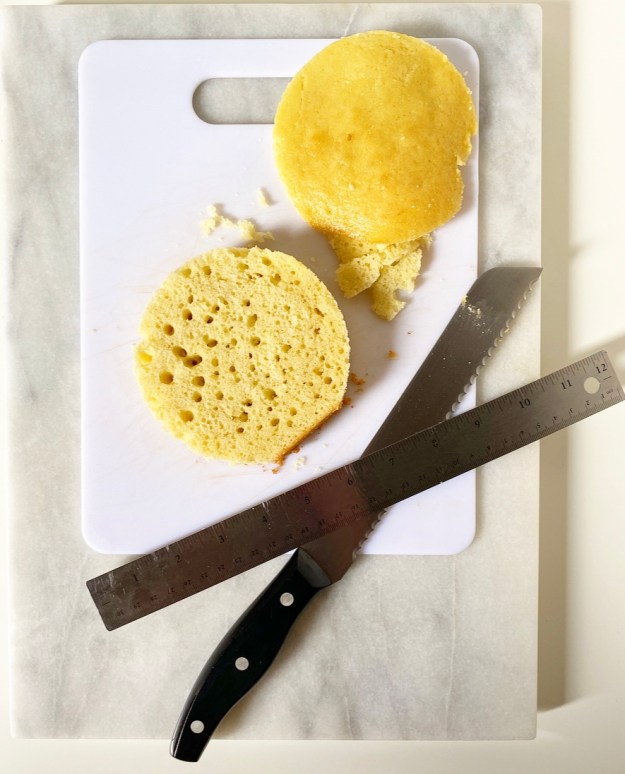 Use your ruler to measure your layers for height. There is a good chance your layers will have an incline, as cakes tend to dome a bit as they bake. Grab your serrated knife and even out the top of one layer. Make sure it’s even (or very close) and measure it again—this how tall you want your other layer to be. Repeat that process to even out that second layer, until they’re identical in height (or very close). Mine are all about an inch tall.
 Next up, stacking. Swipe a tiny bit of buttercream on your plate or cardboard round, then place one of your layers on top. If you’re a messy froster like me, tuck bits of parchment under the cake all the way around for clean edges. Frost the top of your layer, then stack the second layer on top and press down lightly to adhere.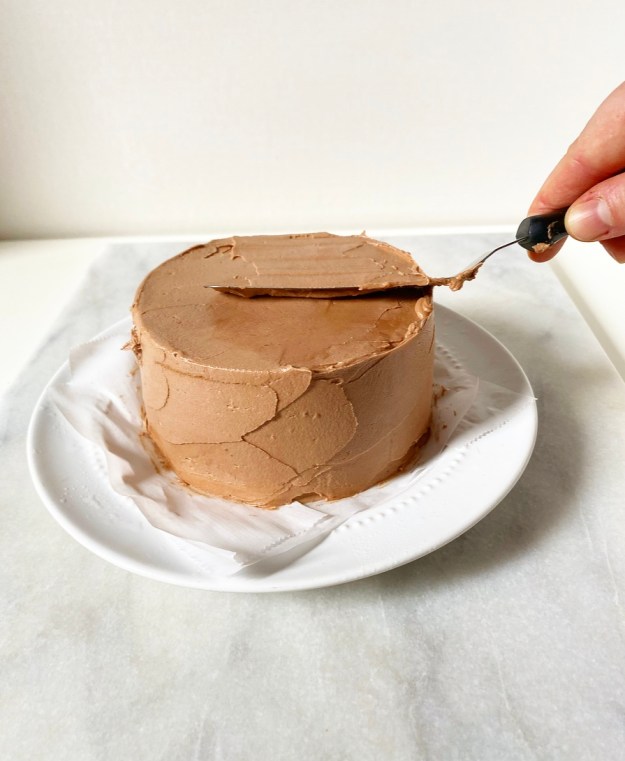
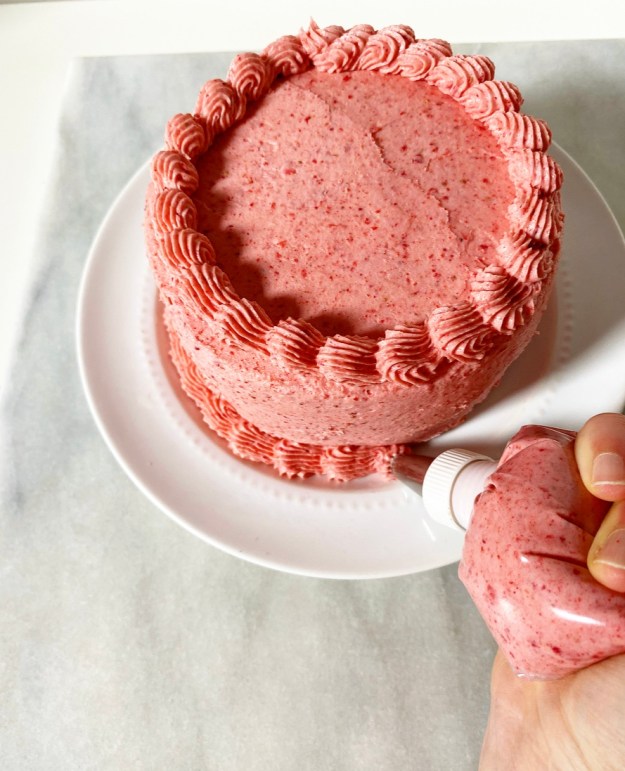 From here, frost as normal. For me, that means a very light crumb coat (thin layer of buttercream), a 20 minute chill, then a thicker layer of buttercream, piping and decor.
Keep in mind that Mini Layer Cakes are smaller and lighter-weight than what most of us are used to, and therefore cannot take as much physical pressure as a larger cake, particularly when frosting around the sides. Be gentle with the cake and with yourself, and remember that there is no shame in having to move layers back into place and frost over flaws. Buttercream is a surprisingly forgiving medium.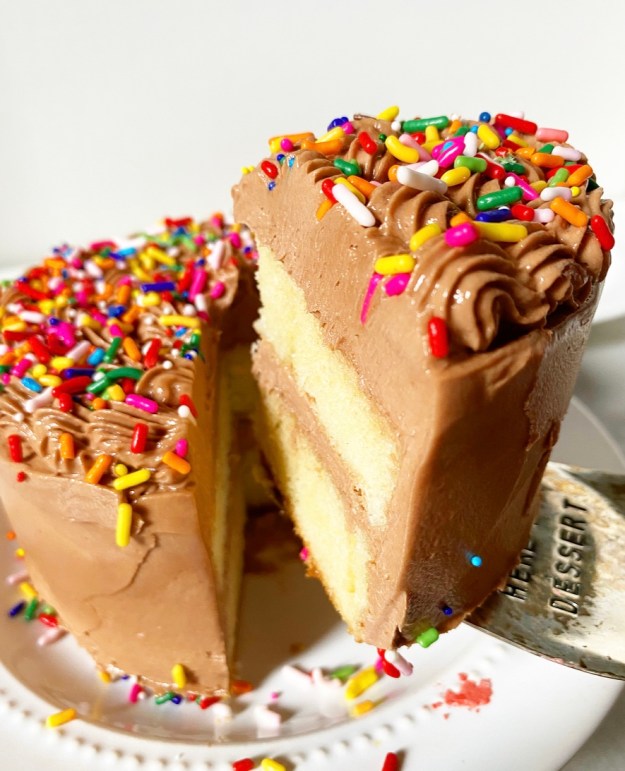
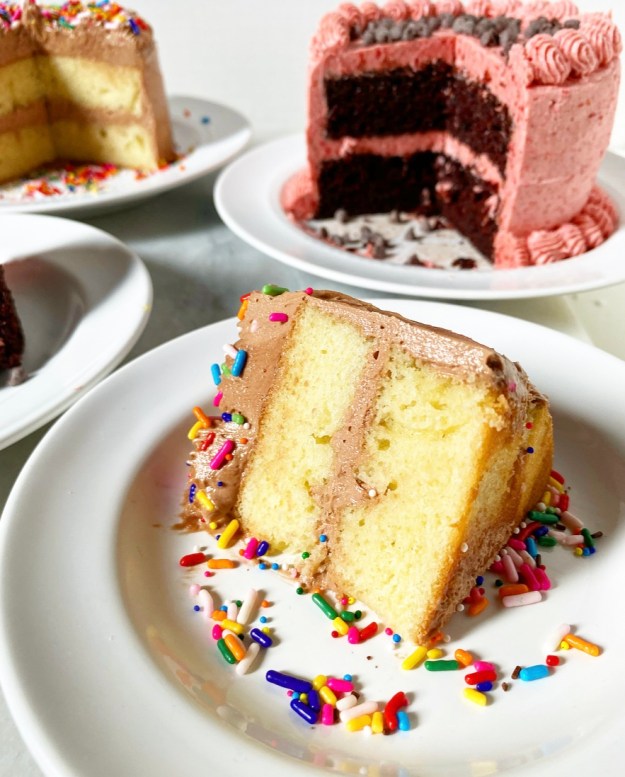 At this point you can serve your cake. I, however, like to let mine sit for an hour or two ahead of serving, just to let everything adhere nicely. This isn’t strictly necessary, but I find it makes slicing easier and prettier. If you’re refrigerating your cake, make sure to let it sit at room temperature for 20-30 minutes before serving.
How to Transport a Mini Layer Cake
If you’re making a Mini Layer Cake (or any layer cake), chances are you have to take it to a celebrant or they have to pick it up. In more normal times, I box and transport cakes all over NYC. The most important thing in this process is to make sure your cake fits the box beforehand—this is why I have a ruler in my kitchen. My cake boxes are 3-inches tall, so the cardboard round, both layers of cake and any filling and frosting need to be shorter than that when stacked.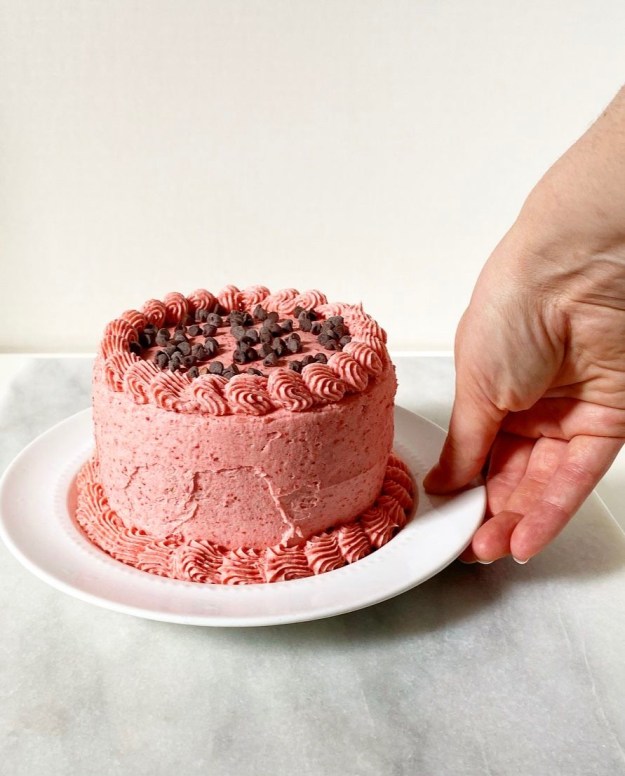 Other important things? Keep your box as level as possible. I’ve gotten pretty good at keeping them level while walking and riding in cars and on the subway. It’s just a matter of remembering that pretty much everything (your body, a car seat, etc.) has a natural slope, and then carrying/positioning your box in a way to counterbalance that. Also, remember that cold cakes are easier to transport. When delivering cakes, I refrigerate them as soon as I’m done assembling, and then let them come back to room temp while en route to wherever I’m going.
Please know that I have shown up a few times with cakes that did not look the way they did when I left the house. This is a hazard of the job–rest assured that ugly cake is still delicious. If you make somebody a cake and they don’t like it because it’s a little disheveled, take it back. You don’t need that negativity.
And on that note, if you are inspired to make a Mini Layer Cake or two and need a place for them to go, I’m gladly accepting donations.
Are there any Mini Layer Cake tutorials you’d like to see? Thinking of doing one for tiered cakes (wedding cake). Let me know what you think in the comments.
Vanilla Cake {Half Recipe}
makes 1 9-inch layer or enough for 1 mini layer cake
1 1/2 cups all-purpose flour
2 1/2 tablespoons cornstarch
1/2 teaspoon baking powder
1/4 teaspoon baking soda
1/4 teaspoon Kosher or sea salt
1/2 cup granulated sugar
1/2 cup light brown sugar, packed
1/2 cup (1 stick) unsalted butter, softened to room temperature
2 large eggs, room temperature
2 teaspoons pure vanilla extract
1 cup buttermilk, room temperature
1/2 batch Nutella Buttercream or other buttercream
Preheat oven to 325F. Grease a 9-inch round or square pan. Line the bottom with parchment. Grease again. Set aside.
Make the cake batter. In a medium mixing bowl, whisk together flour, cornstarch, baking powder, baking soda, salt, granulated sugar and light brown sugar. Set aside.
In a large mixing bowl, cream butter with an electric mixer until light and fluffy, about two minutes. Add eggs one at a time, beating completely after each addition. Mix in half the dry ingredients, followed by half the buttermilk. Add remaining dry ingredients followed by the remaining buttermilk. Scrape down the bowl as necessary.
Pour batter into prepared pan. Tap full pan on the counter five times to release any large air bubbles. Bake cakes 35 minutes, or until a toothpick inserted in the center comes out clean. Let cake cool in its pan for fifteen minutes. Run a small thin knife around the edge of the pans and invert the cakes onto a rack to cool completely. Peel off and discard parchment.
For a Mini Layer Cake, follow instructions detailed in the post above. Fill and frost with Nutella Buttercream or other buttercream.
Chocolate Cake {Half Recipe}
makes 1 9-inch layer or enough for 1 mini layer cake
3/4 cup + 2 tablespoons all-purpose flour
6 tablespoons natural unsweetened cocoa powder (not Dutch process)
1 1/2 teaspoons espresso granules (optional, but recommended)
1/2 cup granulated sugar
6 tablespoons light or dark brown sugar, packed
1/2 teaspoon baking powder
1 teaspoon baking soda
1/2 teaspoon Kosher or sea salt
1/4 cup canola oil
1 large egg, room temperature
1 teaspoon pure vanilla extract
1/2 cup buttermilk, room temperature
1/2 cup boiling water
1 batch Strawberry Buttercream or other buttercream
Preheat the oven to 325F. Grease a 9-inch round or square pan. Line the bottom with parchment. Grease again. Set aside.
Make the cake batter. In a large mixing bowl, whisk together flour, cocoa powder, espresso granules, granulated sugar, brown sugar, baking powder, baking soda, and salt. Set aside.
In a separate large mixing bowl, whisk together oil and egg, followed by vanilla and buttermilk. Whisk in half the dry ingredients, followed by half the boiling water. Whisk in remaining dry ingredients, followed by remaining boiling water.
Pour batter into the pans. Tap full pan on the counter five times to release any air bubbles. Bake 25-27 minutes, or until a toothpick inserted in the middle comes out clean.
Let cake cool in pan for fifteen minutes before running a small, thin knife around the edge. Invert cake onto a cooling rack and allow to cool to room temperature. Peel off and discard parchment.
For a Mini Layer Cake, follow instructions detailed in the post above. Fill and frost with Strawberry Buttercream or other buttercream.


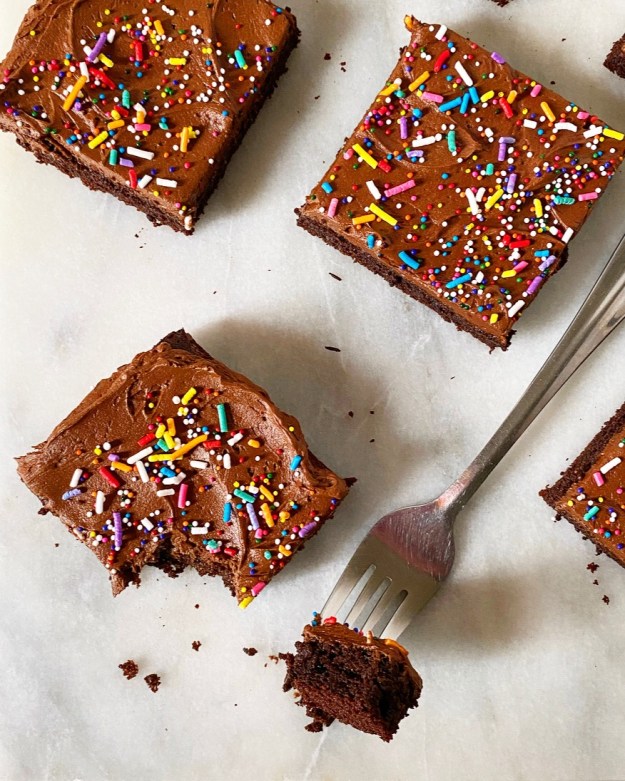 Cake with frosting seems like it’s almost not allowed right now, but this is not just any cake and this is not just any day. Coronavirus be damned.
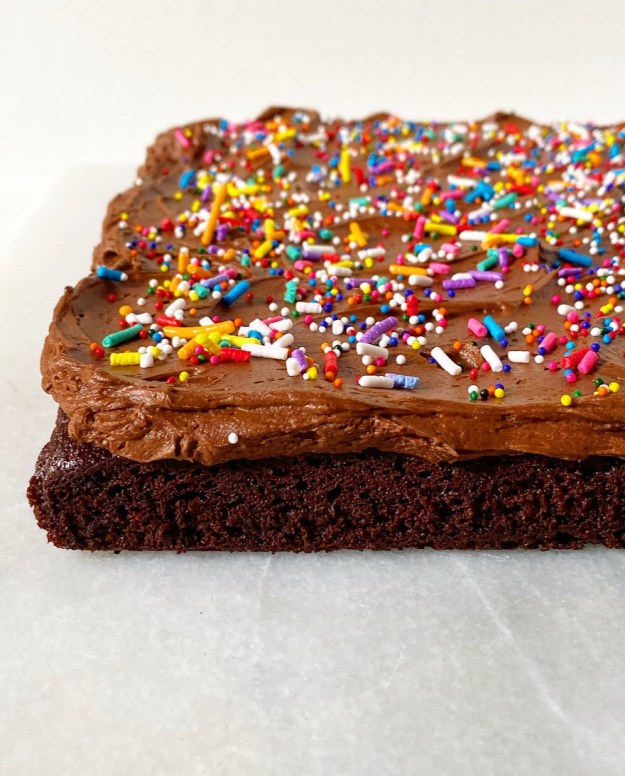 If you’re scratching your head wondering what today is…well, it’s Earth Day, and that is important. But there’s also something that I don’t talk about much on here because it seems mostly irrelevant to the daily operation of a food blog…but it’s actually completely relevant because there would be no E2 Bakes without it. Today marks seven years since I took a drink or a drug. Yep, I’m that sober home-baking food blogger that nobody warned you about.
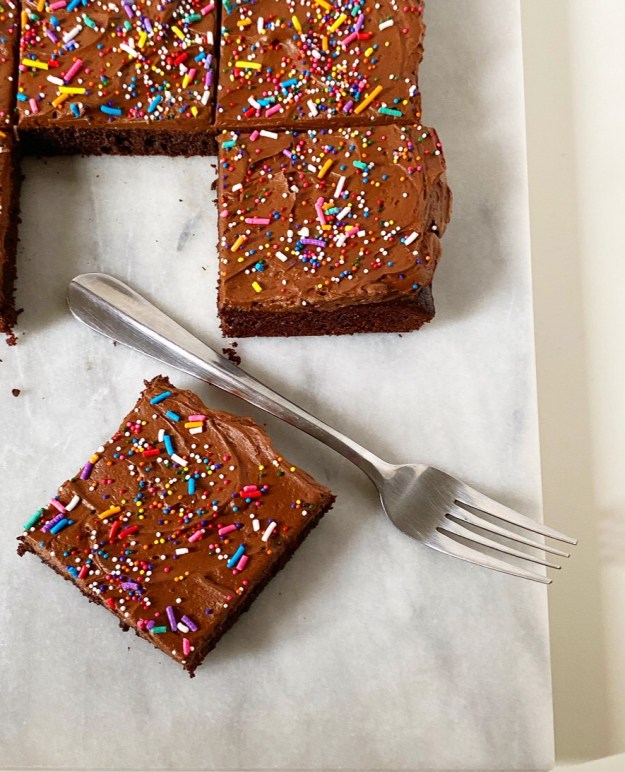 Quitting drinking and putting mind-altering substances in my body is the kindest thing I’ve ever done for myself and the people I love. I’ve gained so much more from that one decision (and many moments of grace and a lot of trudging) than I will ever be able to adequately express, least of all the ambition to run a baking blog. And, well, now you know why there is never liquor in my bakes or wine in my sauces–I can’t post something I can’t test.
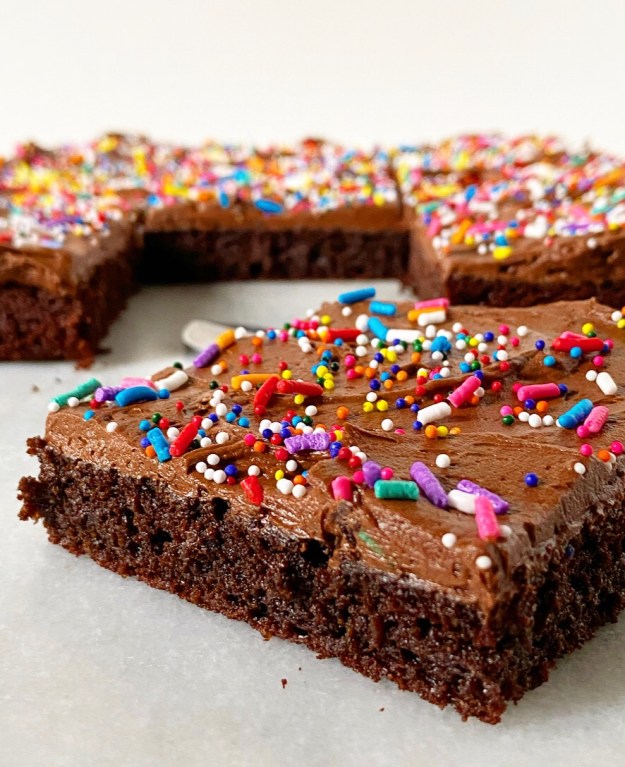
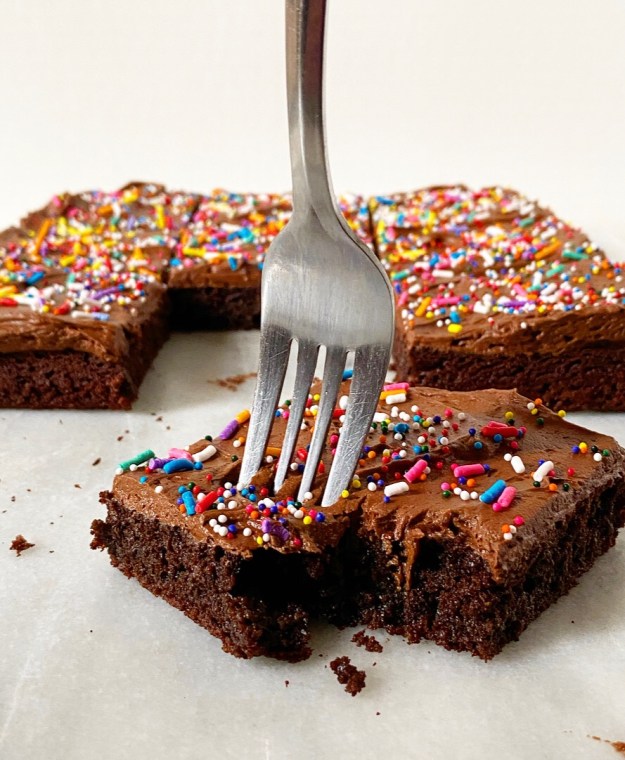
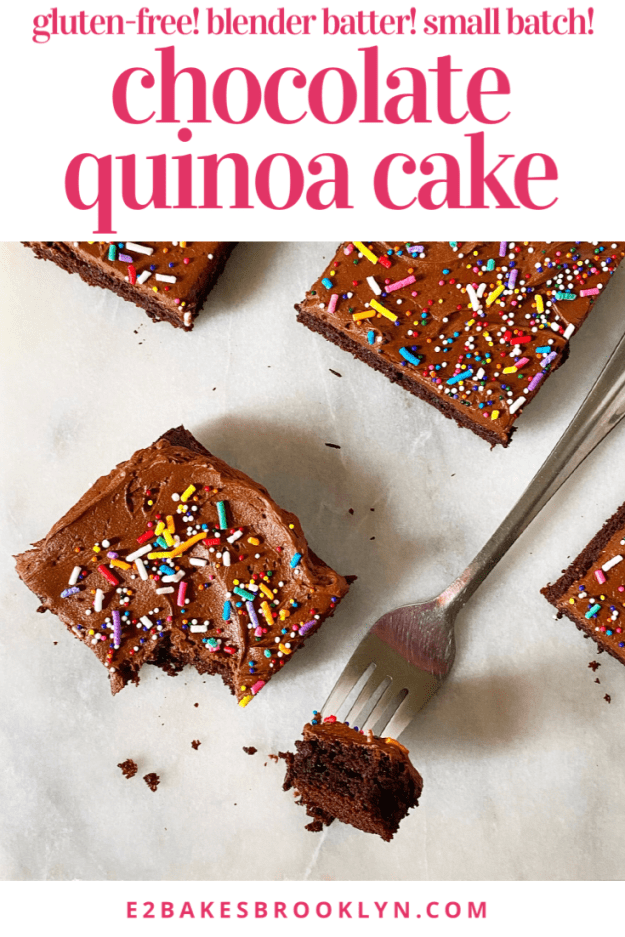
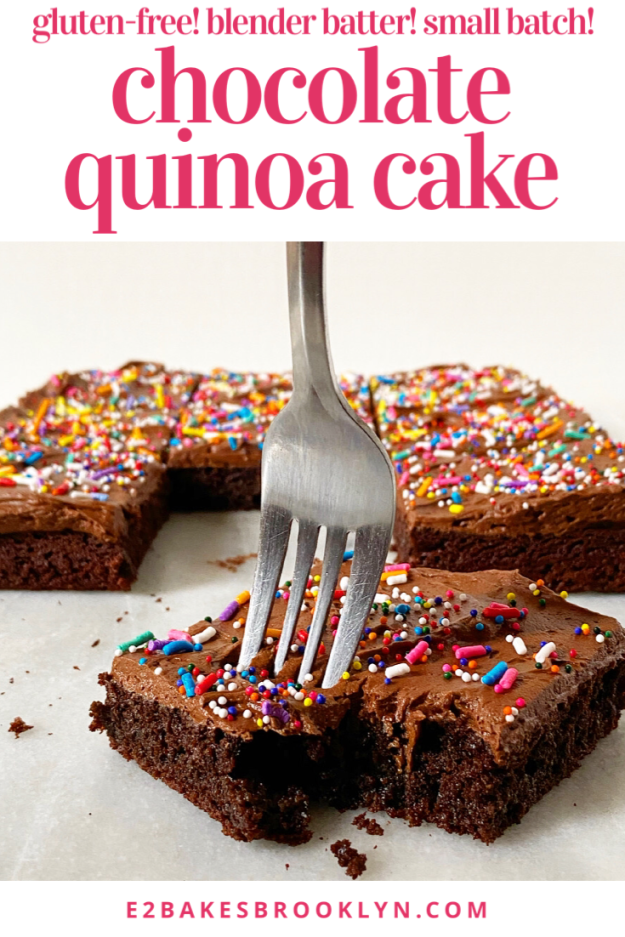
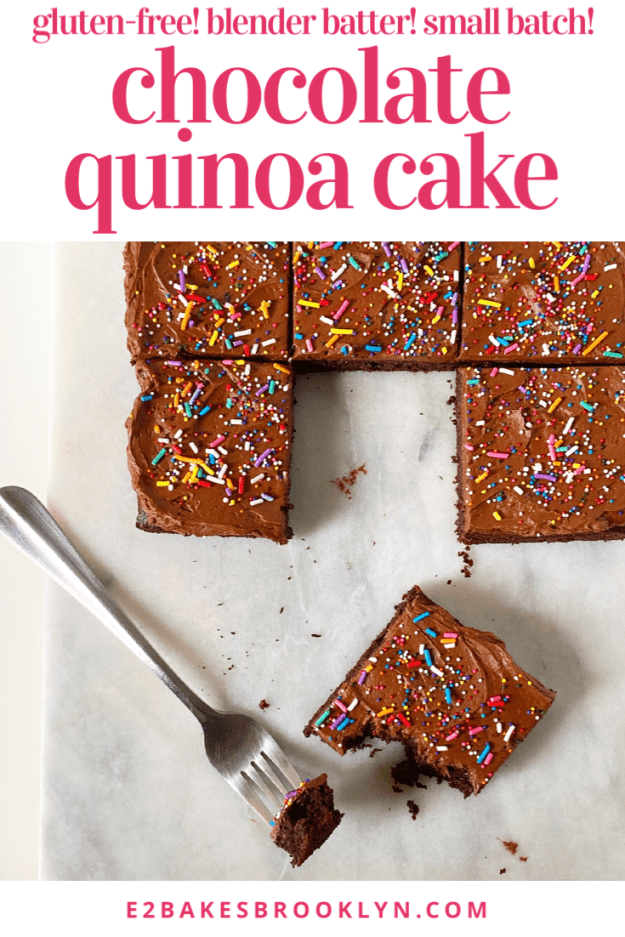
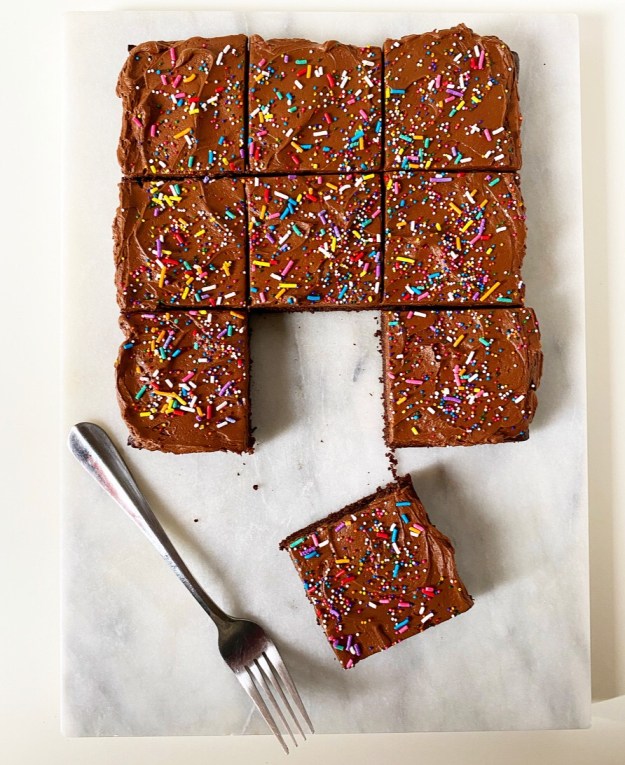 Layer cakes are out for now and flour is difficult to find, but chocolate and frosting (and sprinkles!) are always welcome in my kitchen. Today’s cake is one of the best chocolate cakes I have ever had—so tender and chocolaty! If I weren’t telling you right now, I bet you’d never guess that it’s made with a cup of cooked quinoa instead of flour. For real.
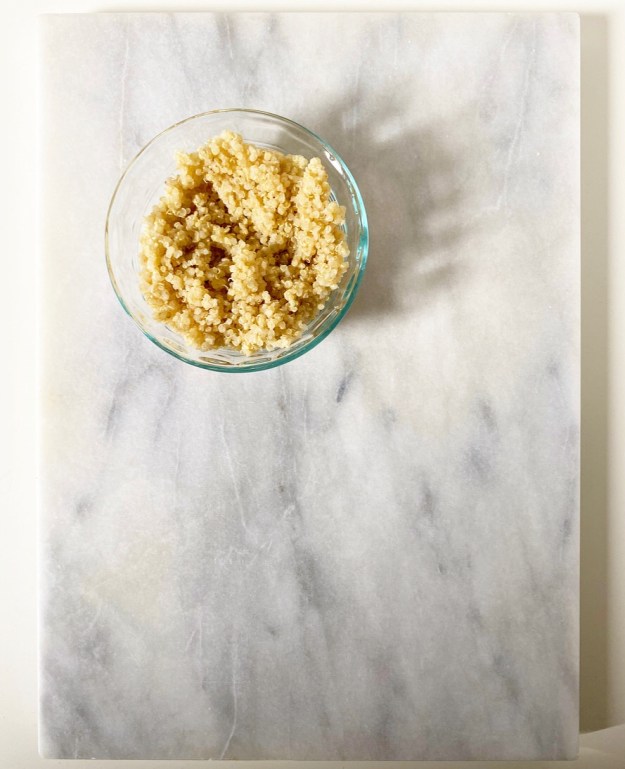 The batter—which includes cocoa powder, a hint of coffee, eggs and milk—is made in a blender to eliminate any whole pieces of quinoa. I wouldn’t recommend making most cake batters in a blender, but since this cake is naturally gluten-free, there’s no need to worry about overmixing or tough cake. Score!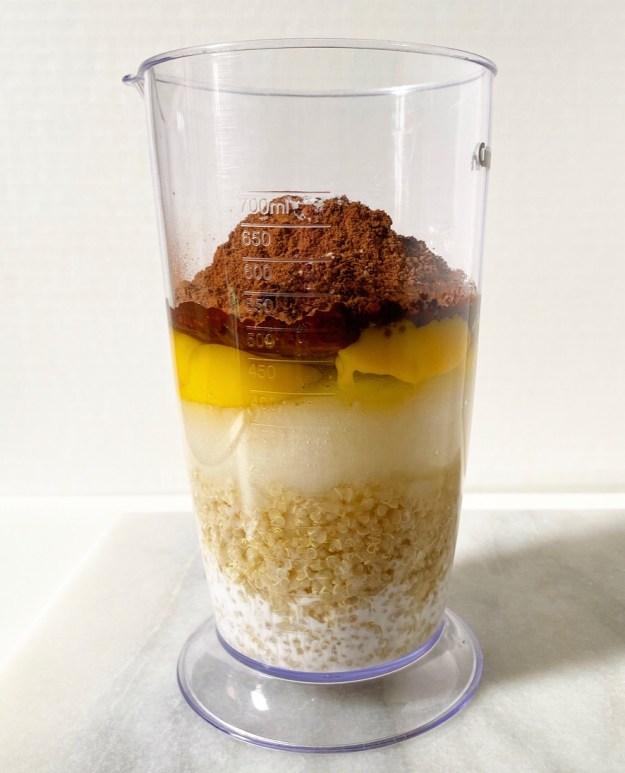
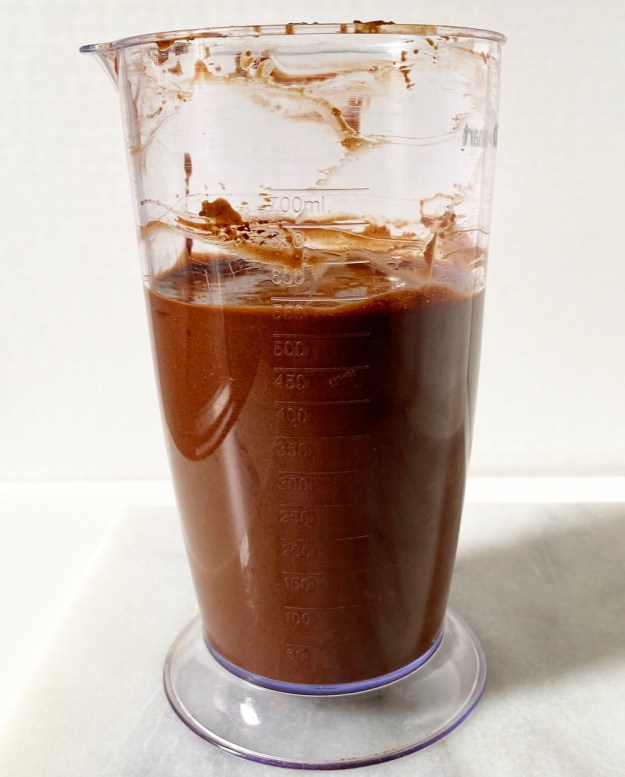
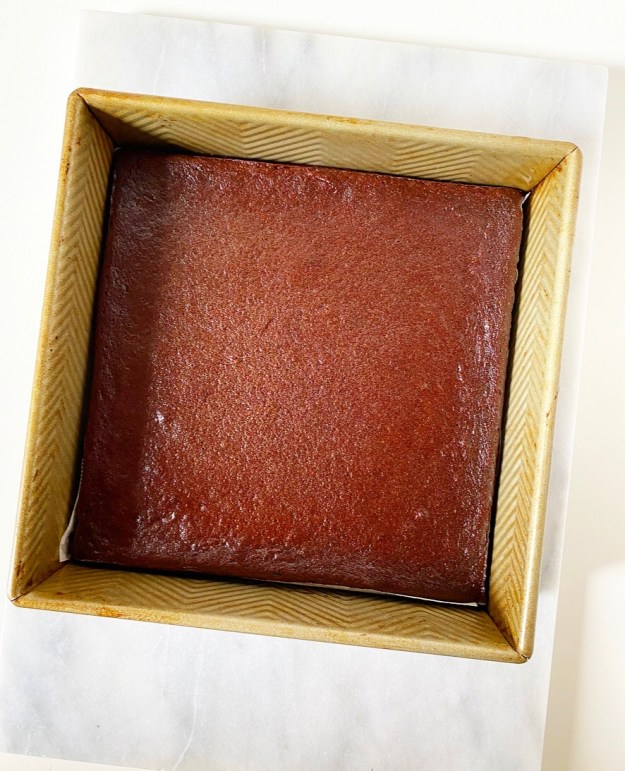 Chocolate Quinoa Cake bakes up in 30 minutes and is thin enough that it cools within an hour. I topped it off with a small batch of chocolate buttercream and dug into my stash of rainbow sprinkles for the occasion.
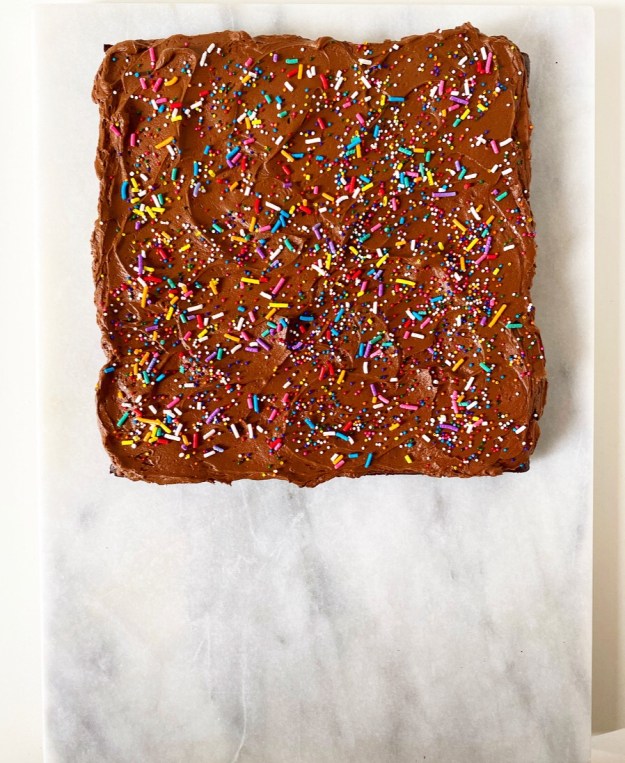 Oh yeah, that’s the stuff.
 As for quarantine substitutions:
 Whew! Okay. Now that you’re armed with everything you need to make a kickass gluten-free chocolate cake, go find something to celebrate. I promise you will.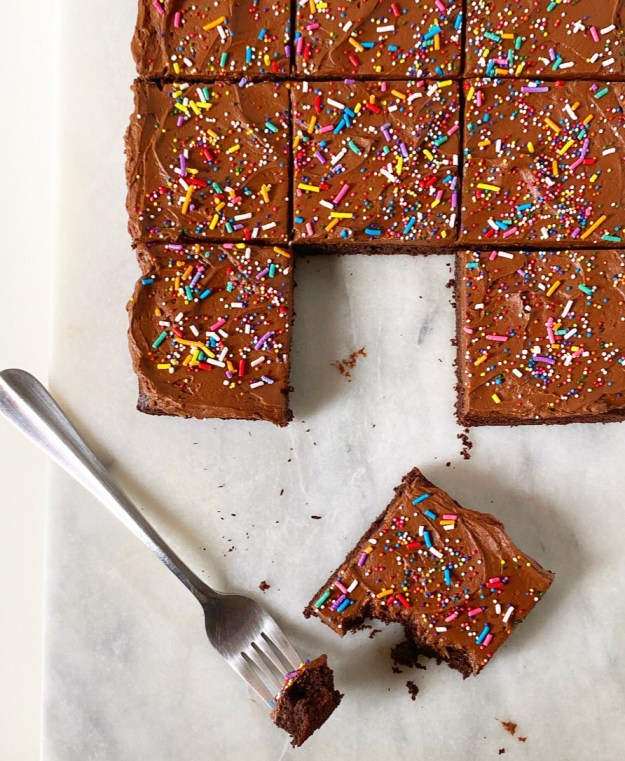
 I owe you an apology. The
  Sure, that cake is delicious—it’s cake!—but it’s not delicious enough to require four bowls, ample sifting, a whisk, a spatula, a mixer and whipped egg whites. Few things are.
 After being asked to make a few
  Simpler and better is exactly what you’ll find with this new, improved White Cake recipe. This rich, tender, fine-crumbed cake is a one-bowl endeavor, and while it does require a mixer, you don’t have to sift anything or whip egg whites. I’m calling it a huge win.
 This cake comes together differently than the others you’ll find on this site. Instead of the usual creaming method (creaming butter and sugar before adding eggs, dry ingredients and milk), this recipe is made using the reverse creaming method, which might be my new favorite way to make cakes. Let me walk you through the process.
 Start by combining flour, cornstarch, baking powder, salt and sugar in a large mixing bowl—the only mixing bowl you’ll need for this recipe. Give those a good stir with a whisk or a low mixer before adding all your softened butter.
 Next up, use your mixer to combine the two. This will take a few minutes and produce a rubbly, sandy-looking mixture. The purpose of doing this is to coat the flour with fat before adding the liquid ingredients. The butter creates a barrier that impedes gluten-development, producing a softer, more tender cake.

 And speaking of gluten-development, the last two steps are adding liquid ingredients (egg whites, extracts, and buttermilk), which are what will activate the gluten in the flour. Mix just until combined before dividing the batter into two pans and baking.
 Once the cake layers are cool, you may fill and frost them however you like. I kept it simple this time around with a white buttercream (just my vanilla buttercream with less vanilla) and went for the naked cake look.
 Ooooh. Ahhhhh.
 You’ll love this White Cake for its buttery vanilla-almond flavor, fine crumb, and did I mention it only requires one bowl?????!!!!!🙌😍💪🍰🎉
  It’s great on its own, but is also a wonderful blank slate for all sorts of applications. Feeling like
  Or maybe get brave and wild and do all three, because this White Cake is just that simple and just that good.


 I make a lot of cakes—a lot. In any given month, I make at least ten, plus any that are tested and posted on this blog. What can I say? I have friends who like to celebrate and like my cakes. I’m flattered.
 Of course, this means that making cake—something that once only brought joy—can sometimes be a slog. I don’t necessarily mind when baking feels like work (because it is my work), but I’d be lying if I said I couldn’t wait to come home and bake layers after a long day of blogging and personal cheffing. The joy understandably gets a little lost when I’m making a double batch of vanilla layers at 11pm on a Tuesday.
 But when inspiration strikes and I can be creative, it could be 4am and I’d be psyched to be baking. My roommate might not particularly like it, but I’d be in heaven.
 Such was the case last month when I made a cake for a
  And so that request for a strawberry element somehow meshed with vanilla and chocolate and became
  Y’all. Y’ALL. This cake. It is a thing. A real undertaking. A project best done over the course of two days. The most intricate cake work that’s ever been on this blog (aside from the
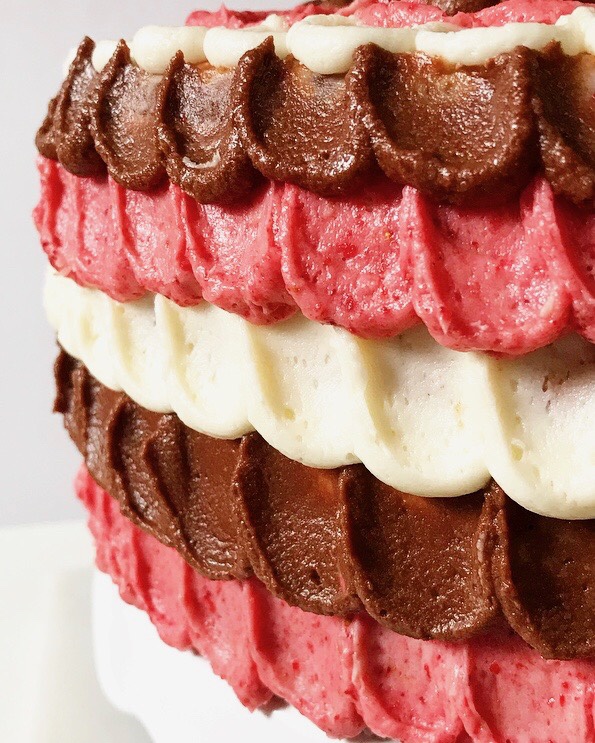
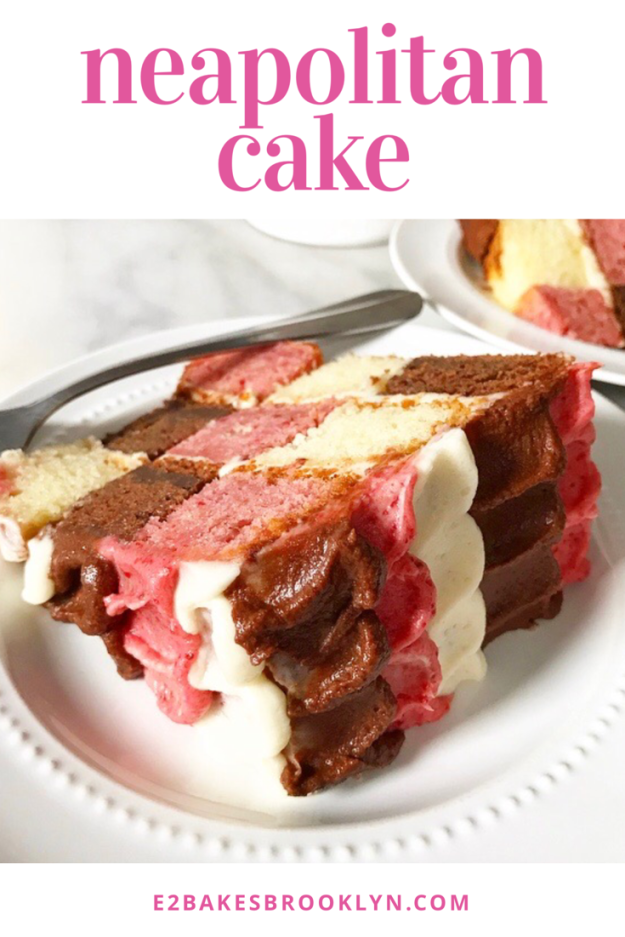
  But I am also completely obsessed with it. I mean, what’s not to love about this checkerboard chocolate, vanilla, and strawberry interior and the ruffled tricolor buttercream exterior? It’s the most fun!
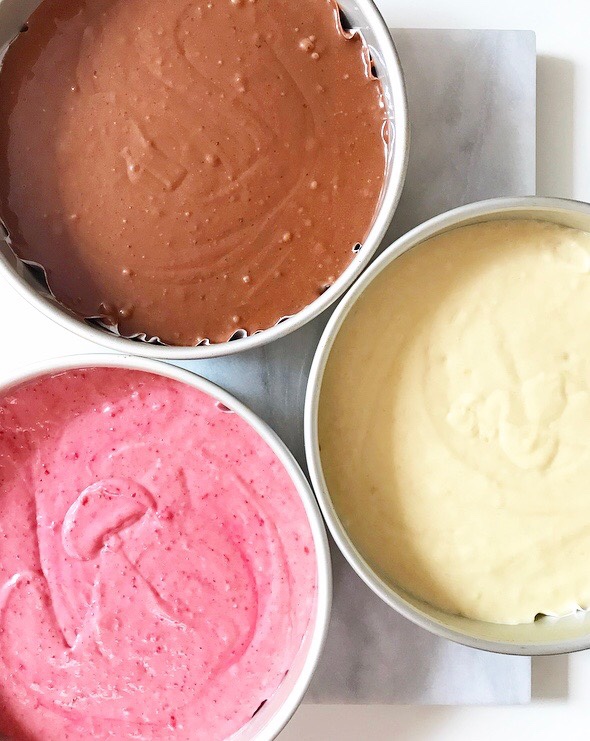 The cake layers are all made from one batter. Once it’s mixed together, it’s divided in thirds. One is left plain—that’s the vanilla layer. Another is spiked with freeze-dried strawberries, and the last with cocoa powder and melted chocolate.
 They’re baked, cooled, evened…
 …and then punched into rings and reassembled.
 And layered in a specific order with thin layers of vanilla buttercream.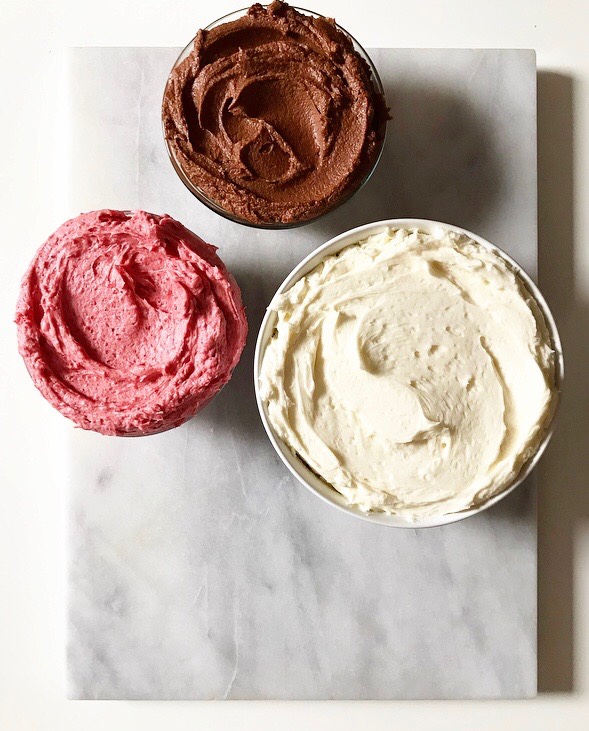
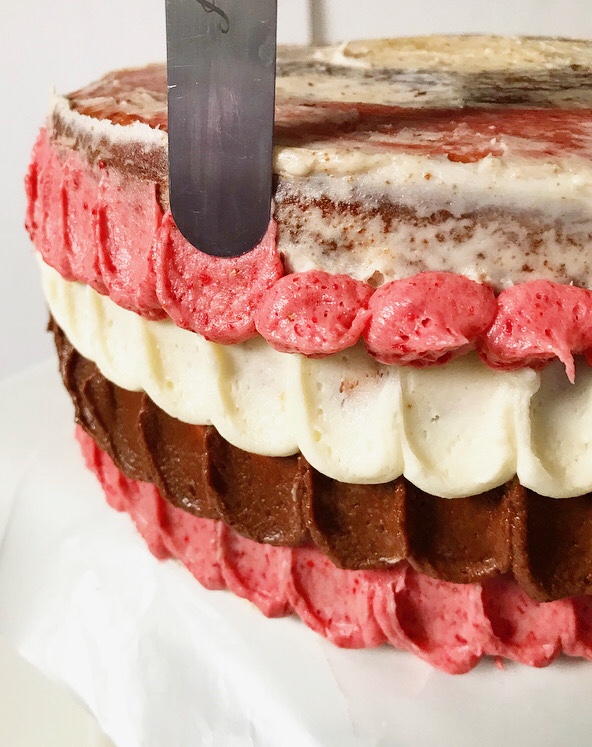


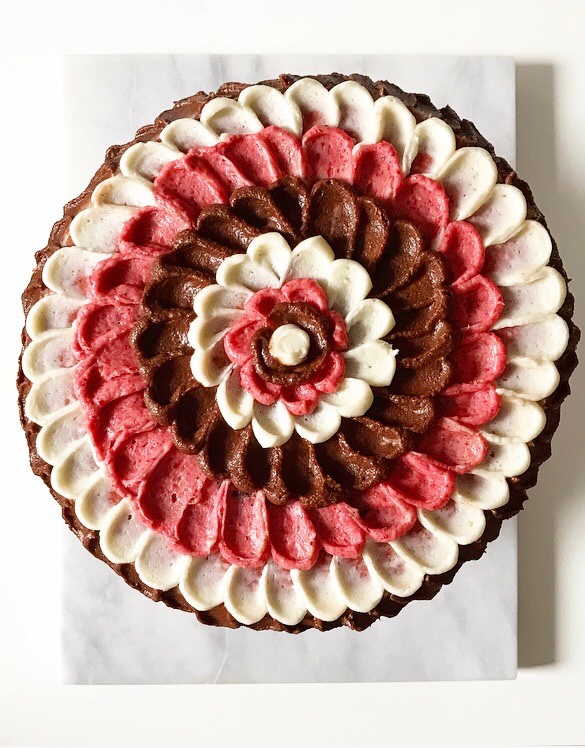 And then decorated in the most fun (and shockingly easy!) ruffle pattern. Or, you know, however you like.
 When all is said and done and sliced and served, all your friends’ minds will be blown at your Neapolitan Cake prowess. As they freaking should be.


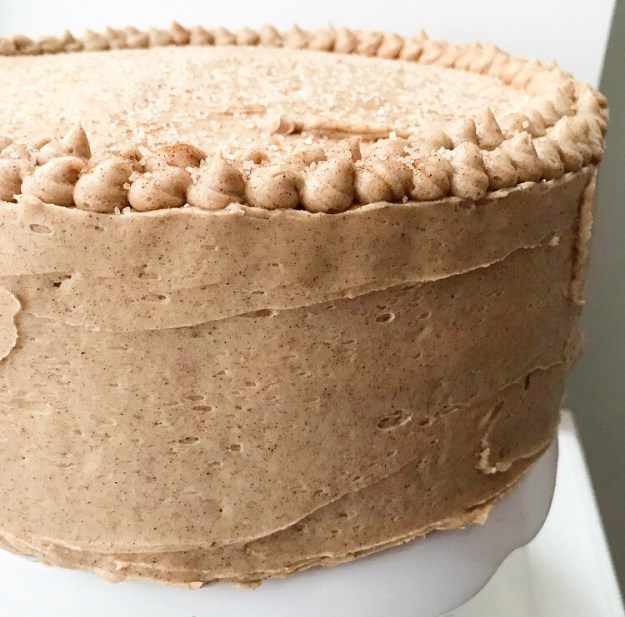 The official cake-count has now been brought up to sixteen since last Monday. Oy. But in keeping with this week’s theme of
 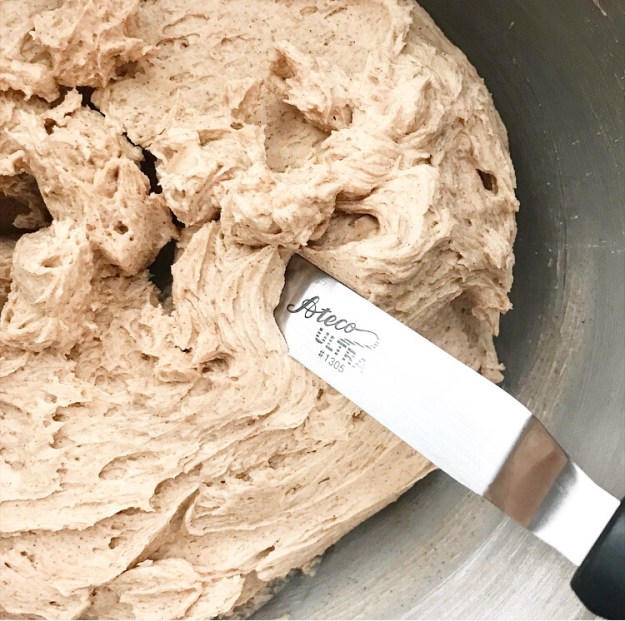 I did break my own step-by-step photos rule though. #sorrynotsorry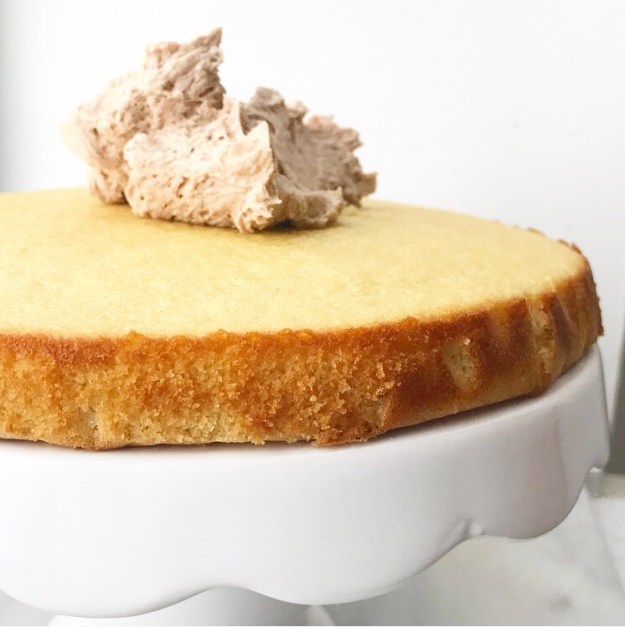
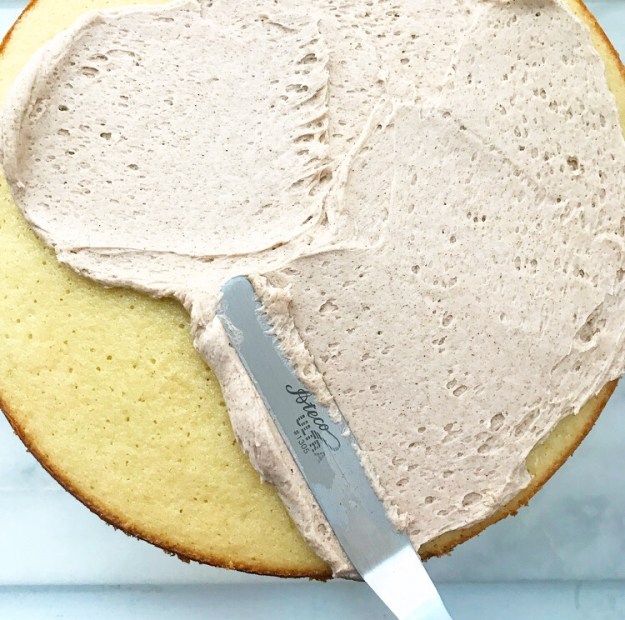 When cakes #14 & #15 were picked up on Monday afternoon, my client paused before driving off to say how much he loved a vanilla cake with cinnamon buttercream that I had made last month. While he had ordered the cake, he couldn’t decide which flavors he wanted, so he let me surprise him.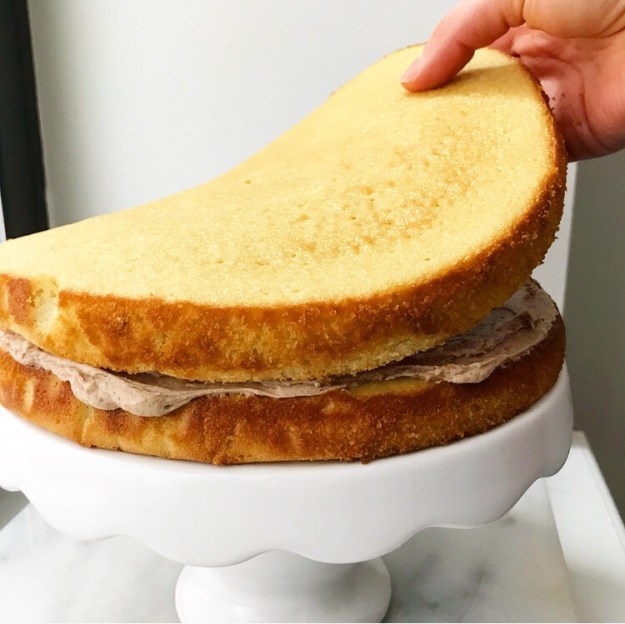
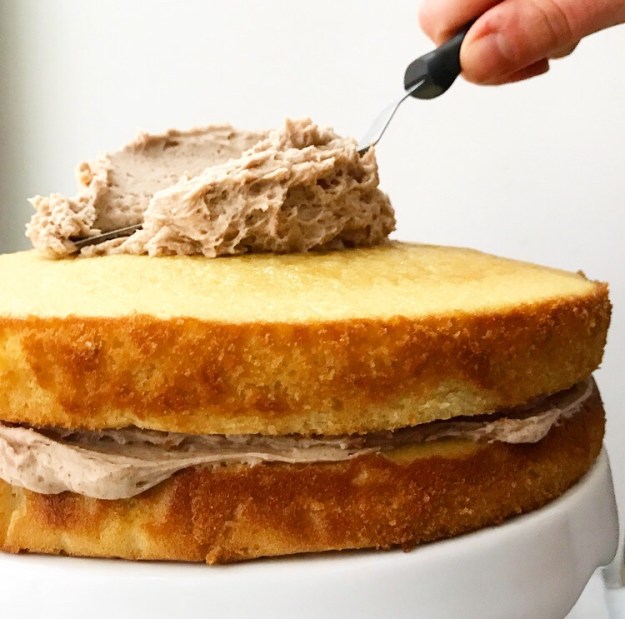 I could have gone in many directions:
 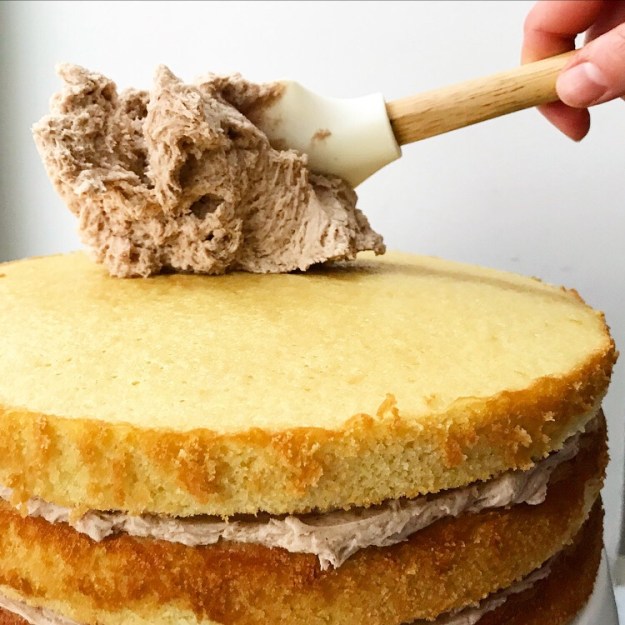 Now, I have never had someone ask for a cake with Cinnamon Buttercream. Not once. But every time I have put it on a cake, I get texts and emails like you wouldn’t believe. People love butter, sugar, cinnamon, and cream whipped until fluffy and slathered between layers of cake.
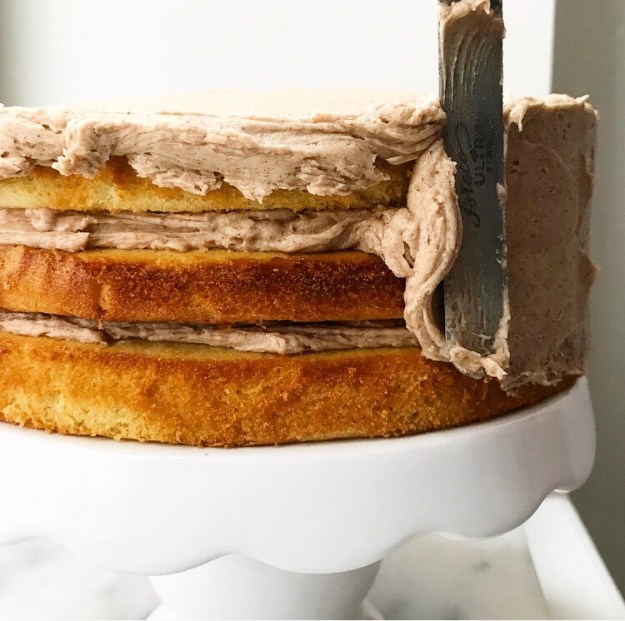 Do you know why?
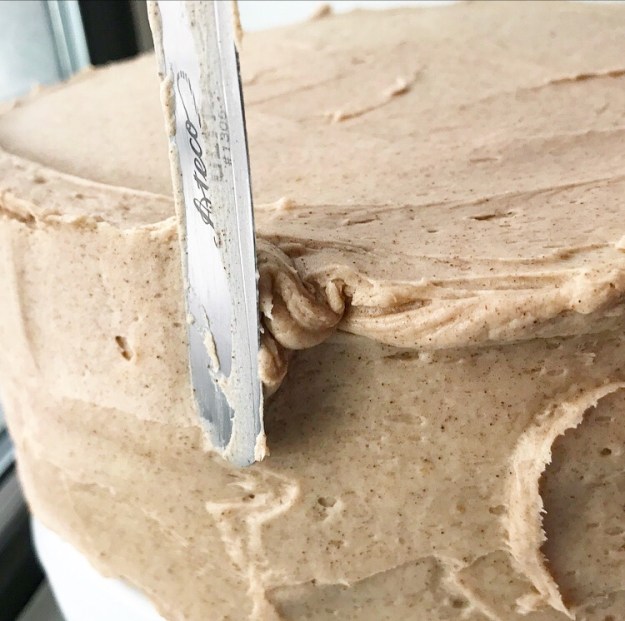 It’s because butter, sugar, cinnamon, and cream are freaking delicious!
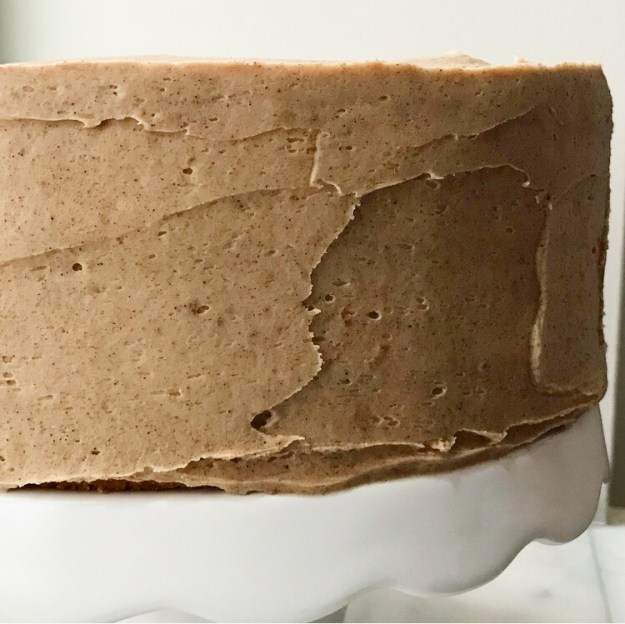 Also delicious? My buttery
 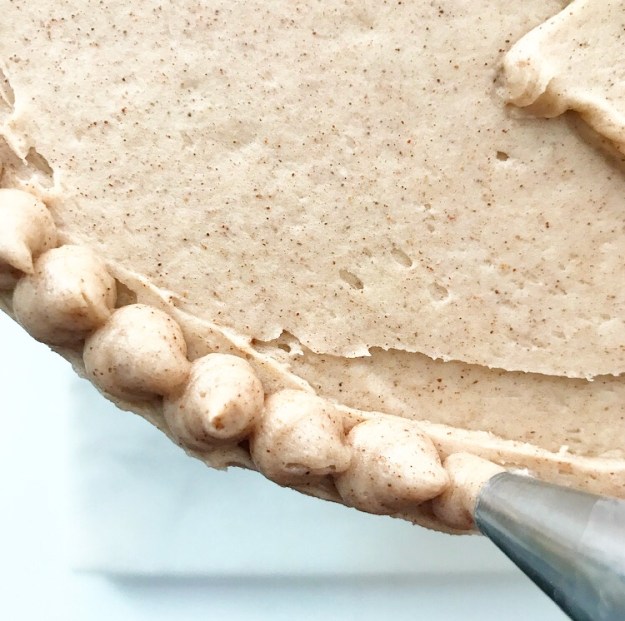 If you follow me on
 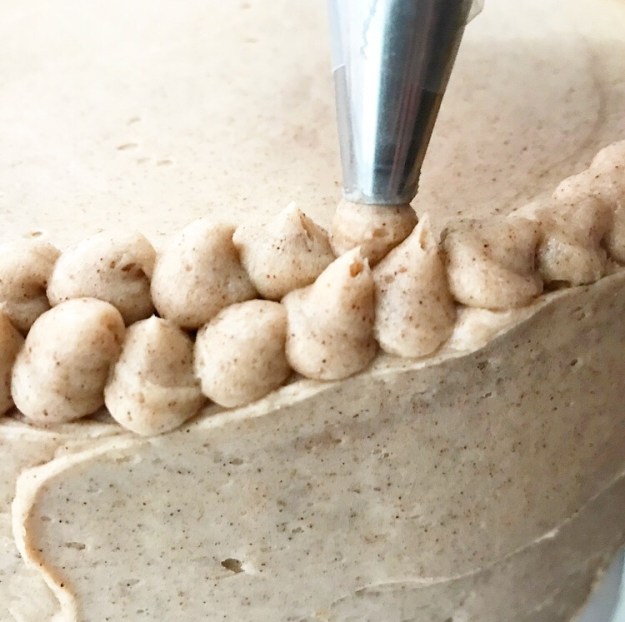 Or just keep a little bowl of Cinnamon Buttercream in the fridge and eat it with graham crackers. Not that I’d know anything about that.
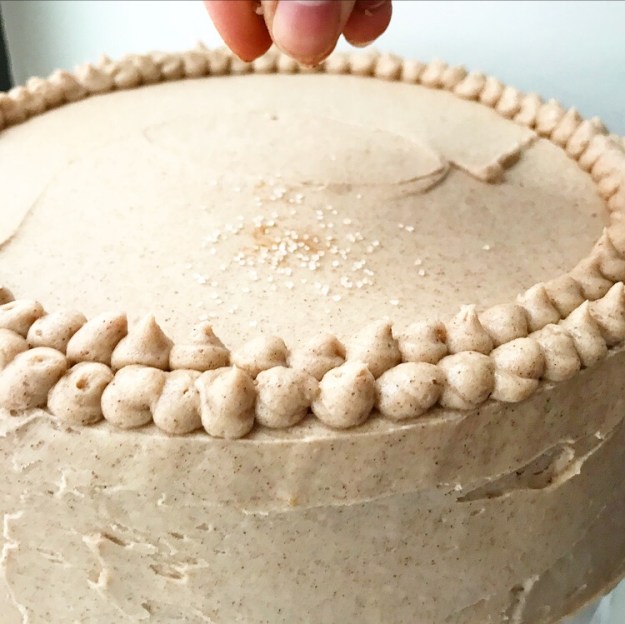 While this particular combination of cake and frosting is great on its own, a little extra flourish of cinnamon-sugar never hurts.
 There. Now it’s perfect.
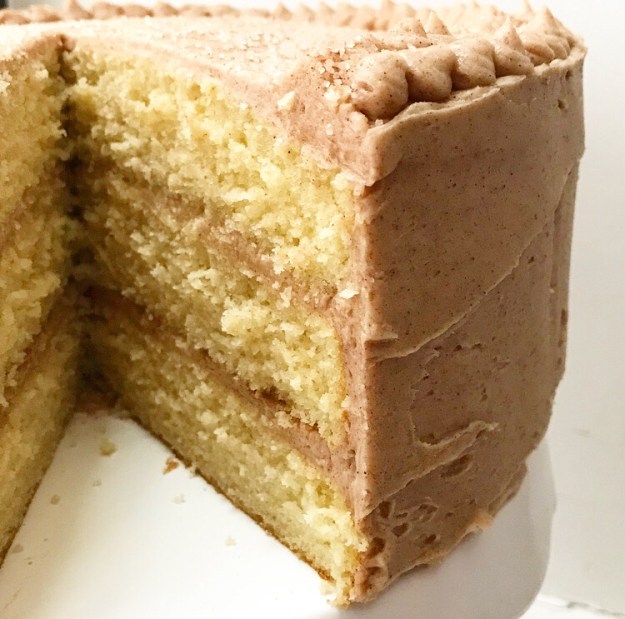 I think I’ll call this one Sweet Sixteen.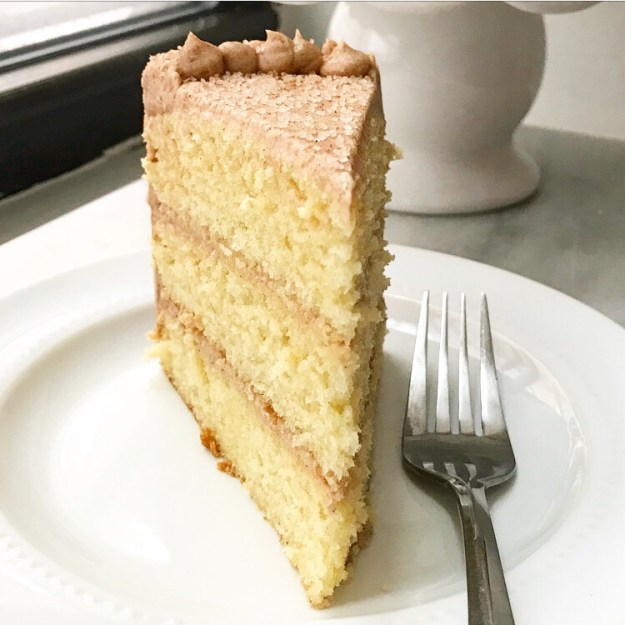
 e2 bakes brooklyn