 Aaaaand we’re back! As is my January blogging tradition, this month will be less about dessert and more about savory foods and weeknight meals—the “normal” stuff. One cannot live on holiday cookies alone (but lord knows I’ve tried).
To start us off, something I make all the time: eggs! Nary a week goes by when I don’t slap an egg on something and call it breakfast, lunch or dinner. In addition to being power-lifters in baking, eggs are an inexpensive, versatile, quick-cooking protein. I always have a couple dozen around!
Today, I’m going to walk you through how to make eggs five ways: scrambled, fried, poached, hard-boiled and soft-boiled. Why so many methods? Because I like options! Sometimes I want a delicate poached egg, other times a creamy hard-boiled egg is the ticket. It’s nice to know how to make ‘em both.
I have written all the instructions and proportions based on large eggs, which are what I keep for both baking and eating. If you are using medium or extra-large eggs, you may need to adjust some cook times. I’ve also written each method to reflect using only two eggs (what I usually eat), but the recipes can be multiplied unless stated otherwise.
While I know there are approximately 742 ways to scramble, fry, poach, and hard- and soft-boil eggs, these are the methods that have consistently worked for me. If you have tips or methods that work for you, please let me know in the comments or on social media! Oh, and let me know your favorite thing to throw an egg on! #putaneggonit am I right?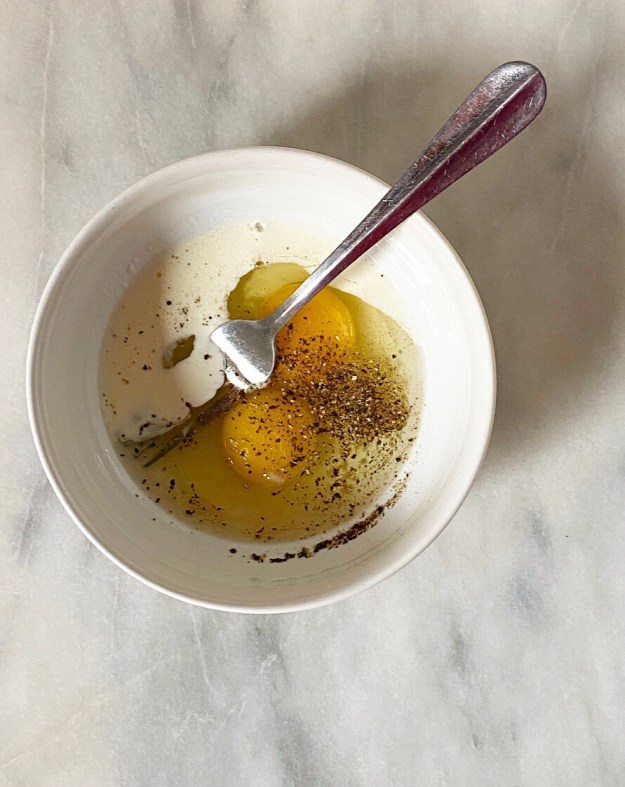

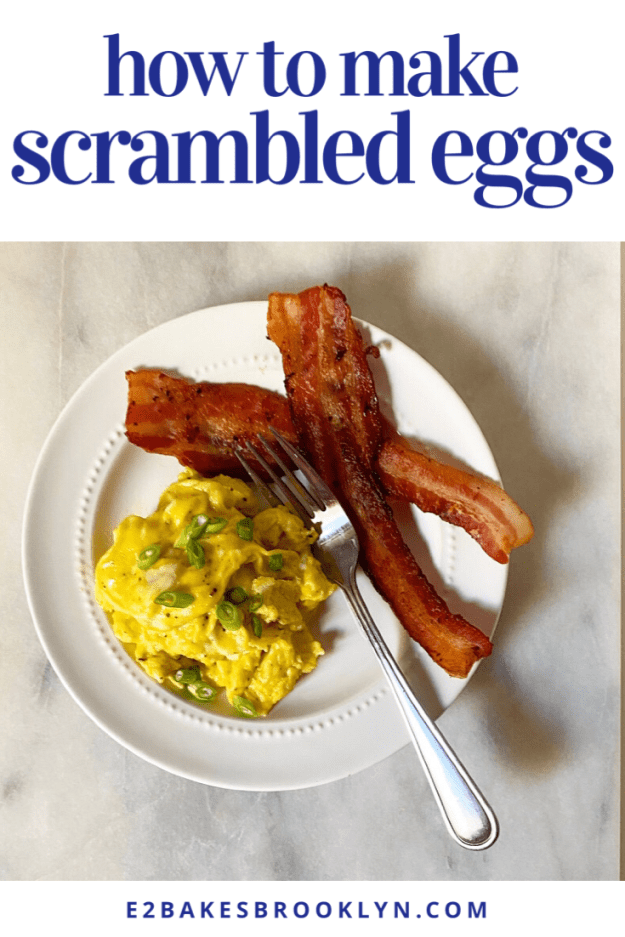
 Scrambled Eggs
What they are
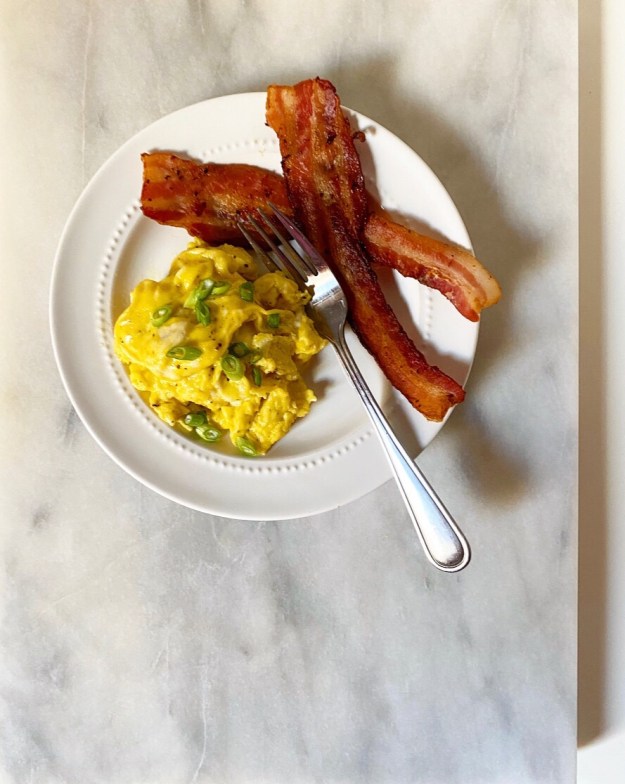
Eggs that have been beaten with cream, salt and pepper, until fully combined, then cooked low-and-slow, until fluffy, but not browned.
What you’ll need
2 large eggs
1 1/2 teaspoons heavy cream
pinch of salt (I use a scant 1/8 teaspoon fine sea salt)
a few grinds of black pepper
1 tablespoon butter, for cooking
How to make them
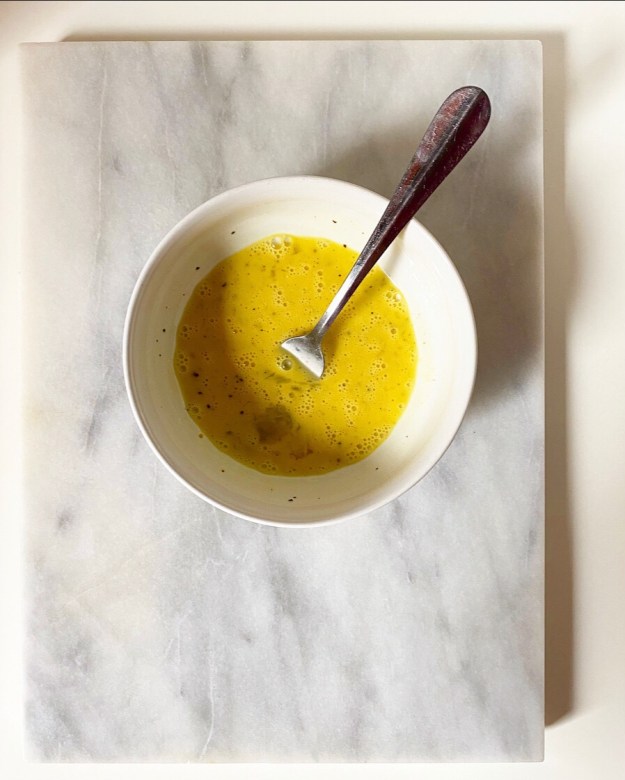
In a small mixing bowl, combine eggs, heavy cream, salt and pepper. Use a fork to whisk together until combined and even in color.
Heat a small-medium skillet over medium-low heat. Add butter and swirl to melt. It may foam a bit; just wait for any dramatic bubbling to subside.
Pour in eggs. Using a spatula, start at the outer edge of the pan and push the runny egg toward the center of the pan. Repeat this motion, moving your way around the pan over and over until large curds form. I recommend pulling the eggs off the heat when they still look a tiny bit underdone, so as not to overcook them. They will finish cooking off the heat (“carryover cooking”). Serve.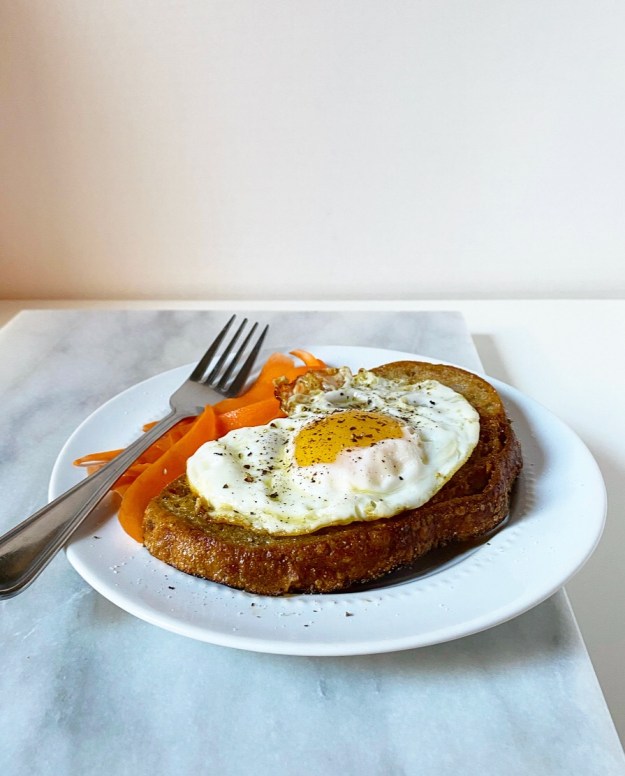
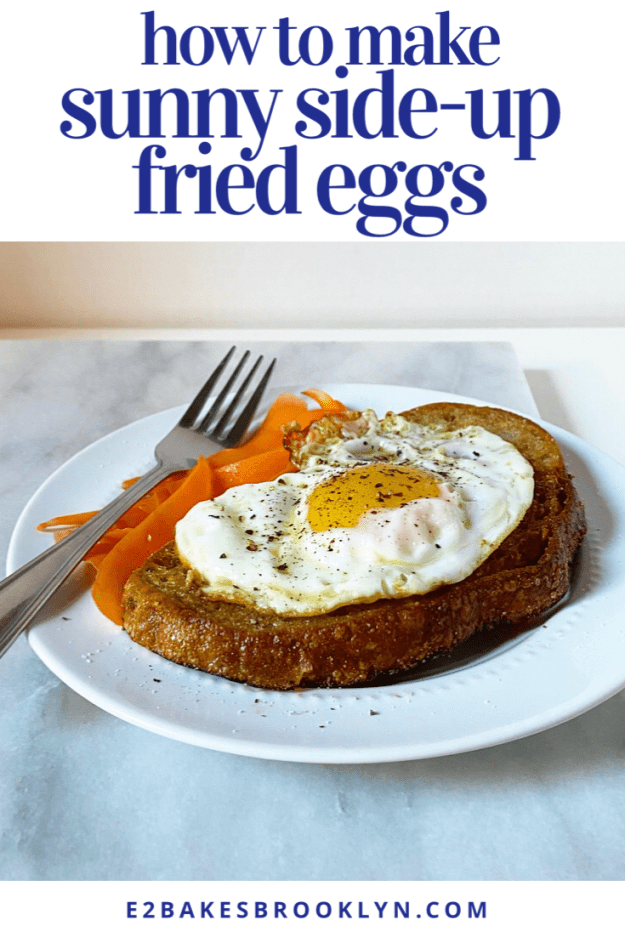
 Sunny Side-Up Fried Eggs
What they are
Eggs with yolks and whites still intact that have been quickly fried in oil (or butter, although I don’t care for the appearance of cooked milk solids on my fried eggs). The edges get lacy while the yolks stays runny and golden. They are called sunny side-up because the yolk resembles a bright golden sun.
For those concerned, there is no need to worry about the dreaded uncooked egg whites here—they’re basted with hot oil so that they set before the yolk becomes hard.
What you’ll need
2 large eggs
1 1/2 tablespoons oil (I prefer olive or canola oil)
salt and pepper, for serving
How to make them
Crack eggs into small bowls (one bowl per egg).
Heat oil in a medium skillet over medium heat, swirling to coat. Add eggs and let cook until whites are no longer transparent, but not set. They will sputter and pop quite a bit.
Use an oven mitt to lift/tilt the pan so that the hot oil collects at the edge of the pan, away from the eggs. Use a heatproof spoon to spoon oil over the eggs repeatedly until whites are set and the yolks are still jiggly. Edges should be turning golden.
Immediately remove eggs to plates and serve. I highly recommend garlic-rubbed toast as an accoutrement.
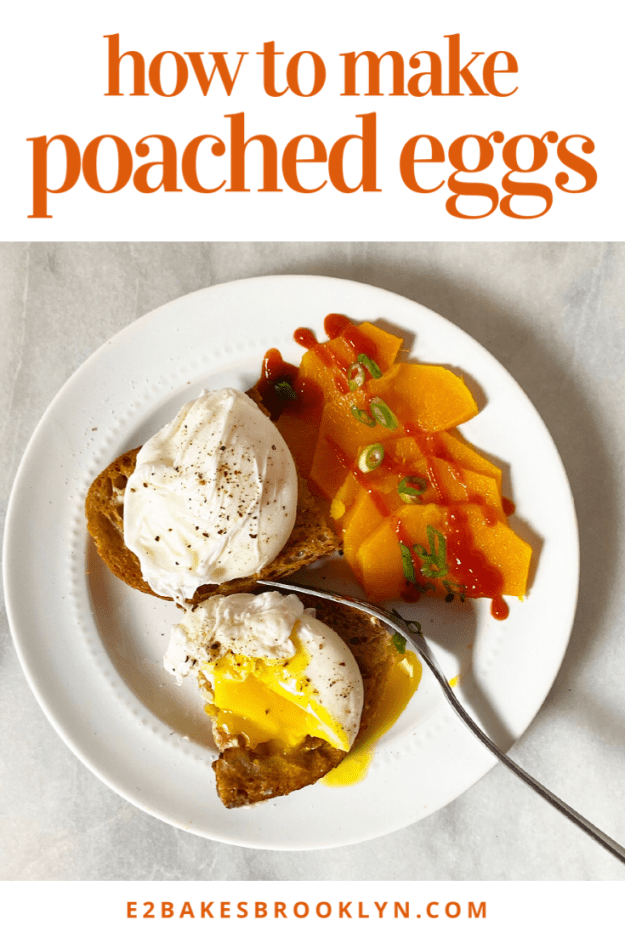
 Poached Eggs
What they are
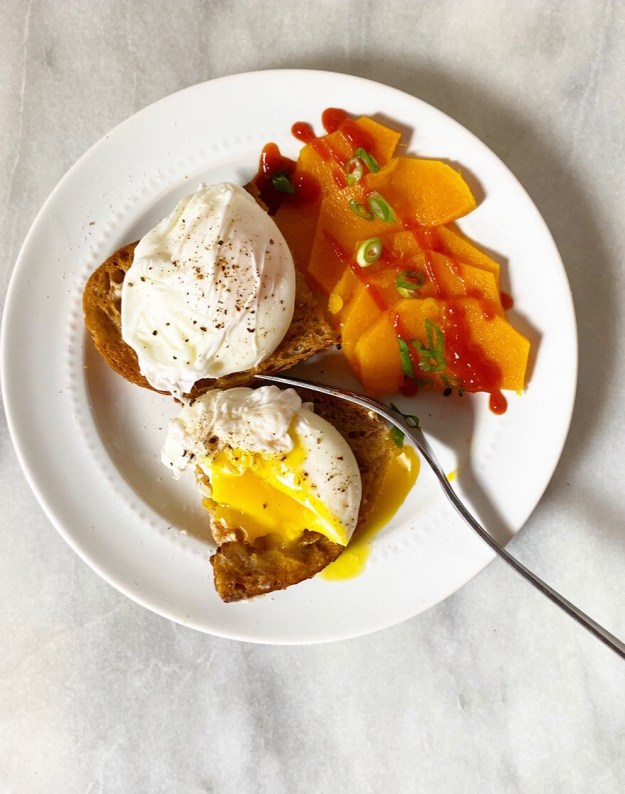
Eggs cooked in simmering (read: not boiling) water until the whites are set and the yolks are still runny, or otherwise cooked to your preference. Although it’s optional, I like to add a splash of vinegar to the water to help the whites set.
I do not recommend making more than 3 poached eggs at a time, as they are extremely time-sensitive. Nothing’s worse than chasing one around the pan with a slotted spoon, only to find that it’s over-cooked!
What you’ll need
water
2 large eggs
a splash (~1 teaspoon) white or apple cider vinegar (optional)
salt and pepper, for serving
How to make them
Fill a 4-quart pot 1/2-2/3 full of water and bring to a boil over high heat.
Crack egg(s) into small bowls (one bowl per egg). Line a small plate with paper towels.
Once water reaches a boil, reduce heat to medium or medium-low, so that it’s at a simmer. Add vinegar, if using.
Working quickly with one egg at a time, bring the bowl close to the surface of the water and pour it in. Immediately drag a slotted spoon under the egg to lift it slightly (this keeps it from sticking to the bottom and has the added benefit of helping the white wrap around the yolk in a pleasing way). Quickly repeat this process with remaining egg. Let simmer 3 minutes, until the whites are set but yolks are still runny. For harder cooked eggs, add 15-30 seconds to the cook time.
Use a slotted spoon to lift eggs out of the water and onto the paper towel-lined plate to drain. Remove eggs to serving plates and enjoy immediately.
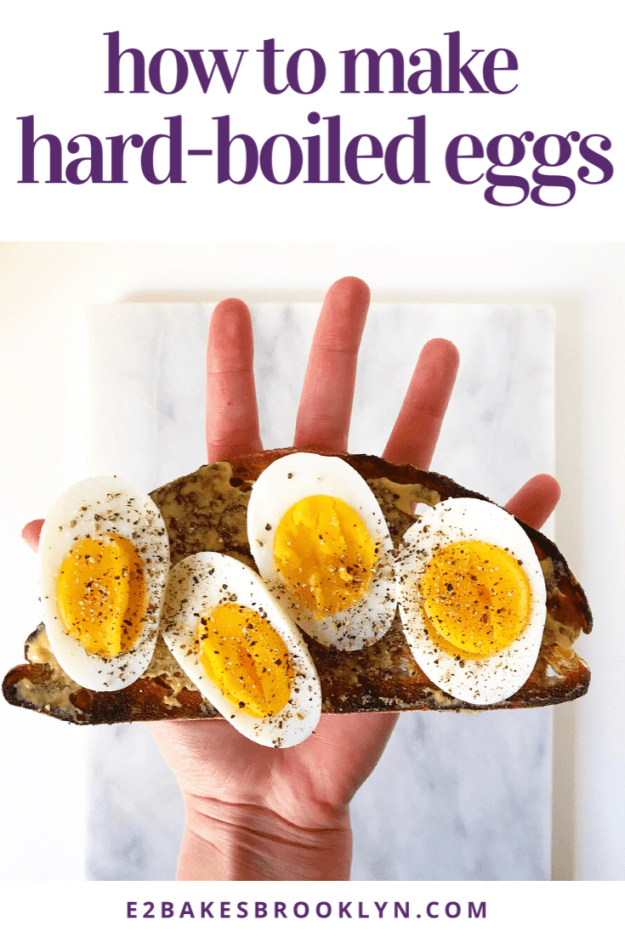
 Hard-Boiled Eggs
What they are
Eggs that have been cooked in their shells until both the whites and yolks are just set. No green-ringed yolks here! These can be made ahead and refrigerated in their shells for up to three days, so they’re great for on-the-go breakfasts or snacks, and making deviled eggs and egg salad, of course.
It’s as quick and easy to make twelve hard-boiled eggs as it is to make two. You can make as many as will fit in your pan.
What you’ll need
2-12 large eggs in their shells (based on need and pan space)
cold tap water
ice
How to make them
Place eggs in a single layer on the bottom of a deep pan. Add cold water to cover by about an inch. Place over high heat and bring to a rolling boil for 1 minute. Remove from heat, but let eggs sit in water for 9 minutes.
While eggs are still in the hot water, fill a bowl with cold water and add lots of ice. When the 9 minutes are up, use a spoon to lift eggs out of the hot water and into the ice bath. Let sit about 10 minutes, or until cooled.
To peel an egg, tap each narrow end of the egg shell on a hard surface, and then gently roll it on the surface to encourage cracking all the way around. Use your fingers to pick the shell away. Rinse with cold water, if needed. Enjoy.
Leftover eggs may be kept in their shells in the refrigerator for up to 3 days.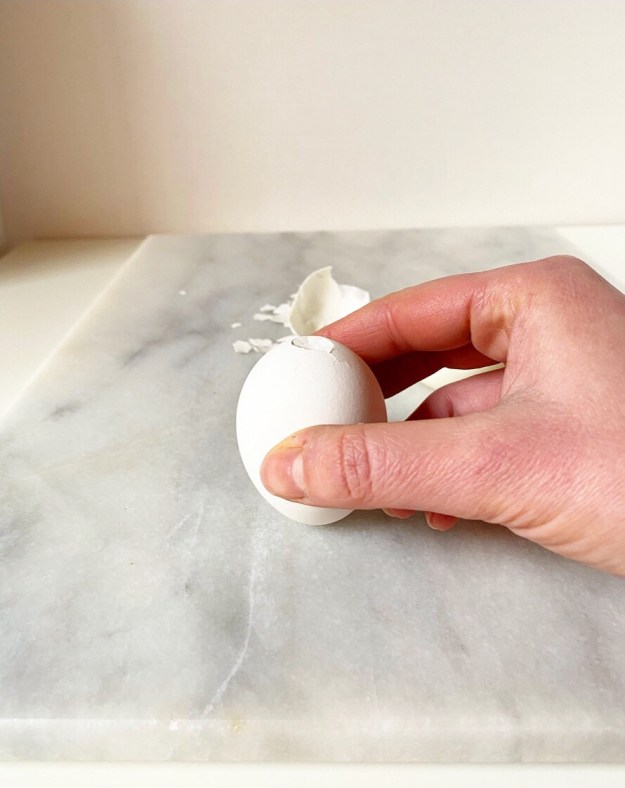

 Soft-Boiled Eggs
What they are
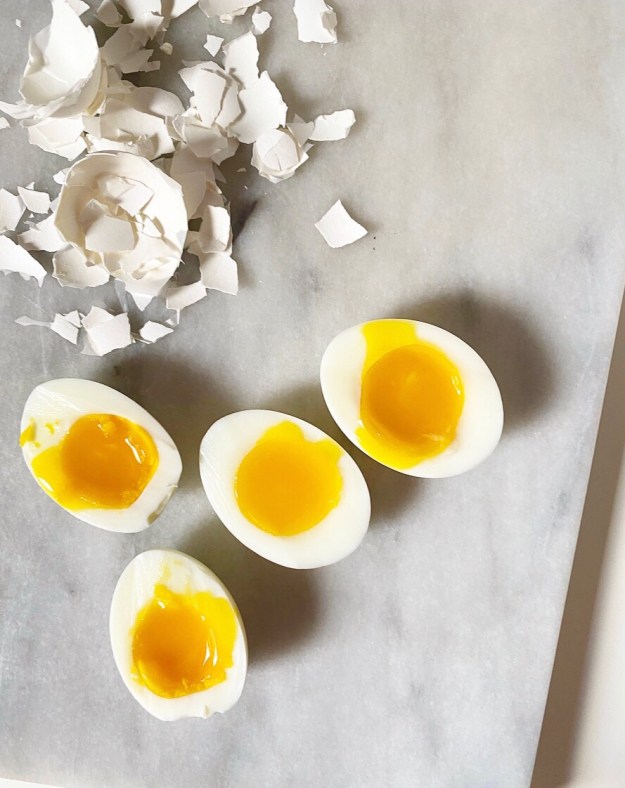
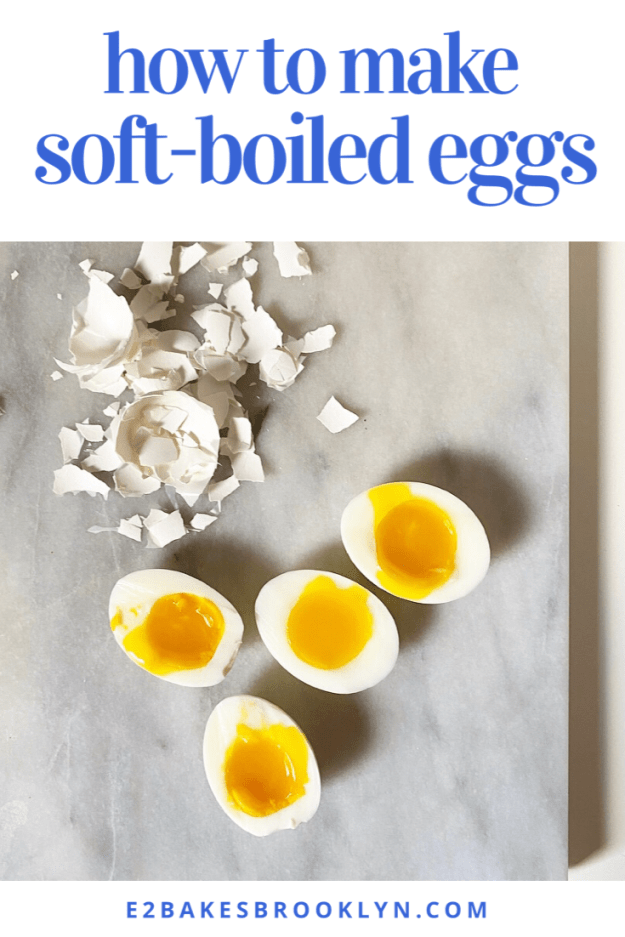
Eggs that have been cooked in their shells in boiling water until the whites are just set, but the yolks are jammy. These can be made ahead and refrigerated in their shells for up to three days. These are great on toast, in salads or even in soup (think borscht and ramen).
As with hard-boiled eggs, it’s as quick and easy to make twelve soft-boiled eggs as it is to make two. You can make as many as will fit in your pan.
What you’ll need
2-12 large eggs in their shells (based on need and pan space)
water
ice
How to make them
Fill a deep pan 1/3-1/2 way (so that it’s deep enough to cover an egg). Bring to a boil over high heat. Carefully add eggs and boil for 6.5 minutes.
While eggs are boiling, fill a bowl with cold water and add lots of ice. When the 6.5 minutes are up, use a spoon to quickly and carefully move eggs from hot water to ice bath. Let cool 5-10 minutes, or until you can handle them, before removing from ice bath.
To peel an egg, tap each narrow end of the egg shell on a hard surface, and then gently roll it on the surface to encourage cracking all the way around. Use your fingers to pick the shell away. Rinse with cold water, if needed. Enjoy.
Leftover eggs may be kept in their shells in the refrigerator for up to 3 days.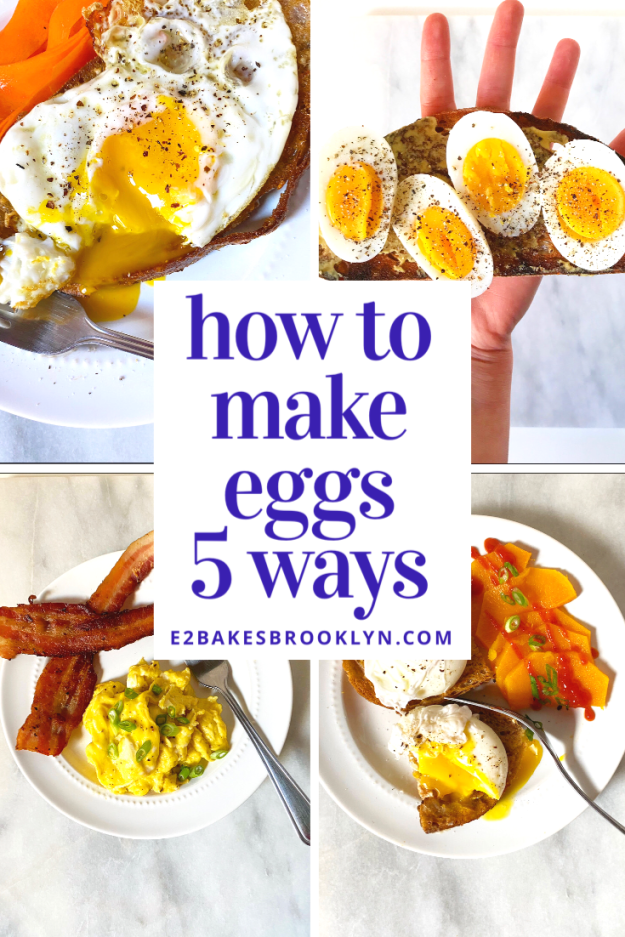
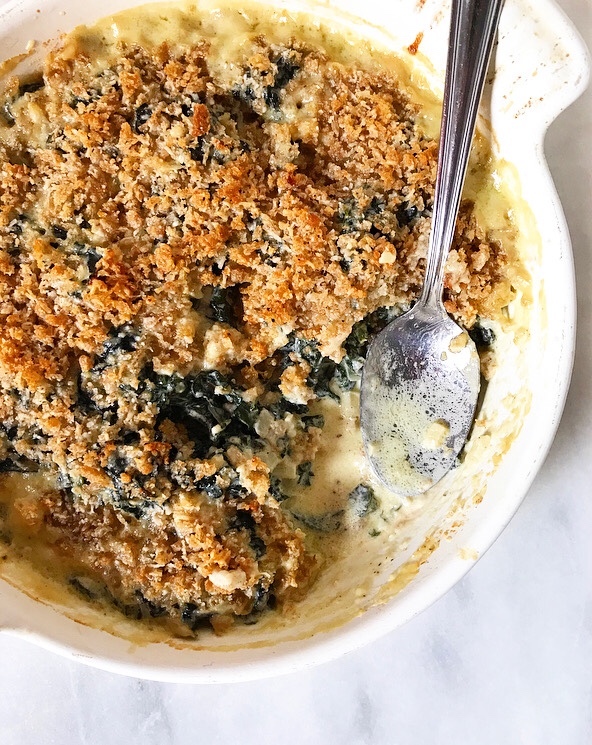 You may not be able to tell from the bevy of desserts I post every week, but I am a huge proponent of eating your greens. Almost every meal I make for myself involves a huge bed of arugula. Yes, for real.
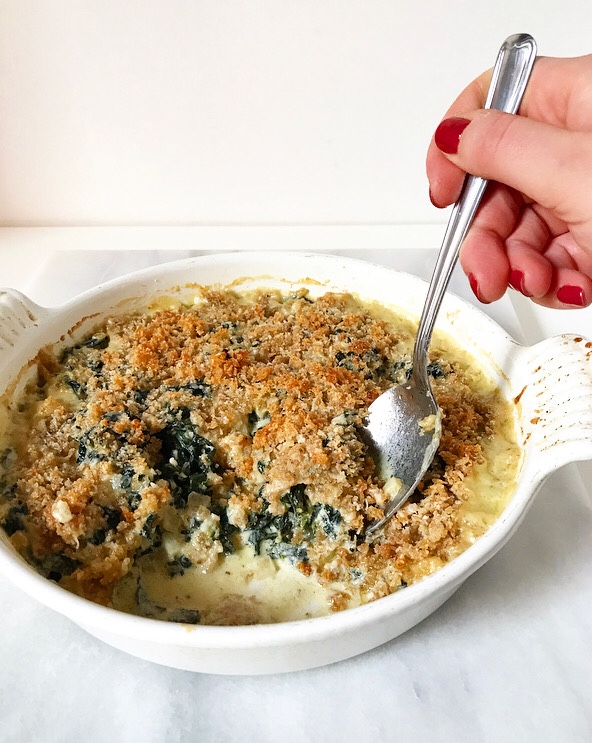
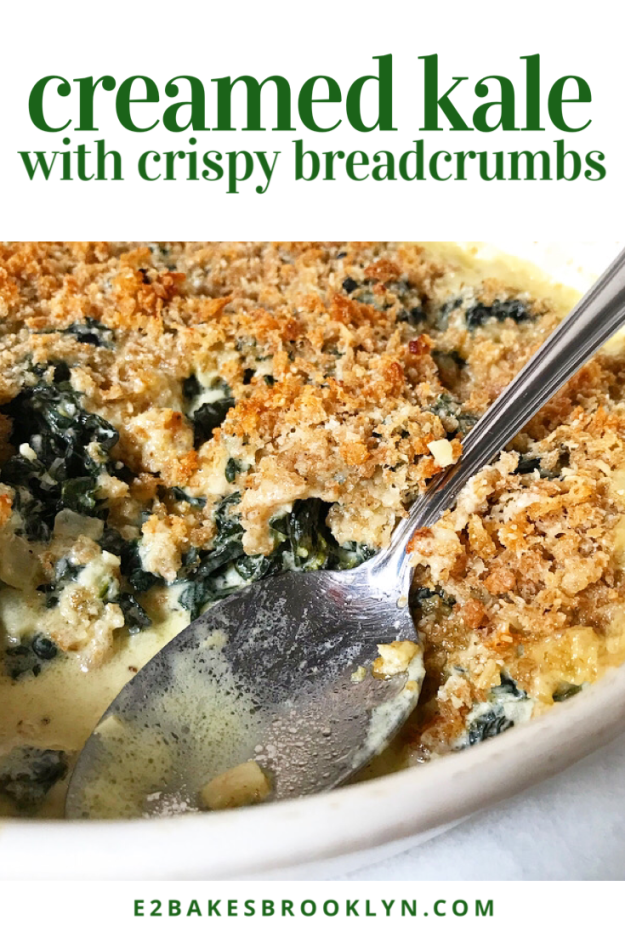
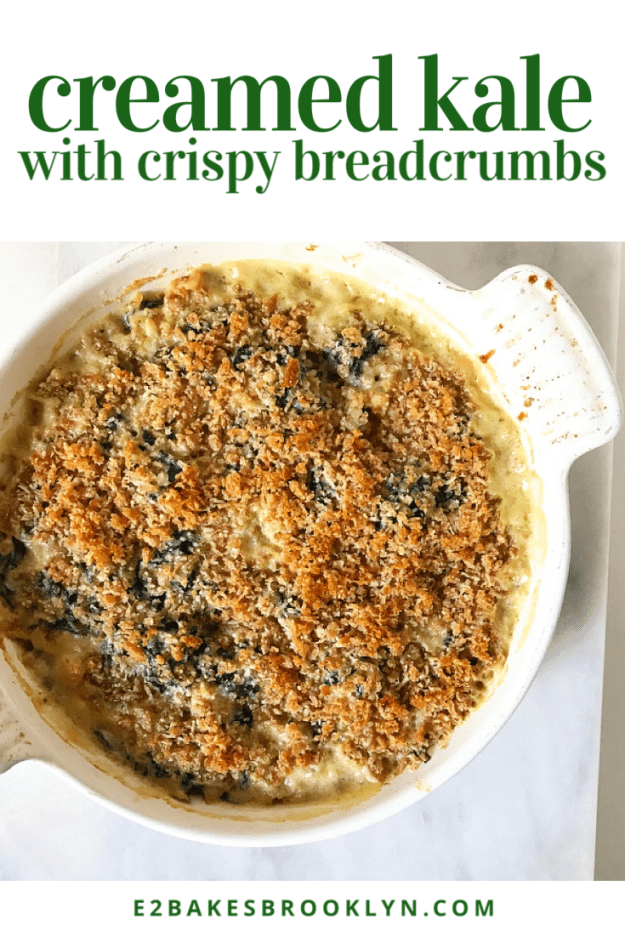
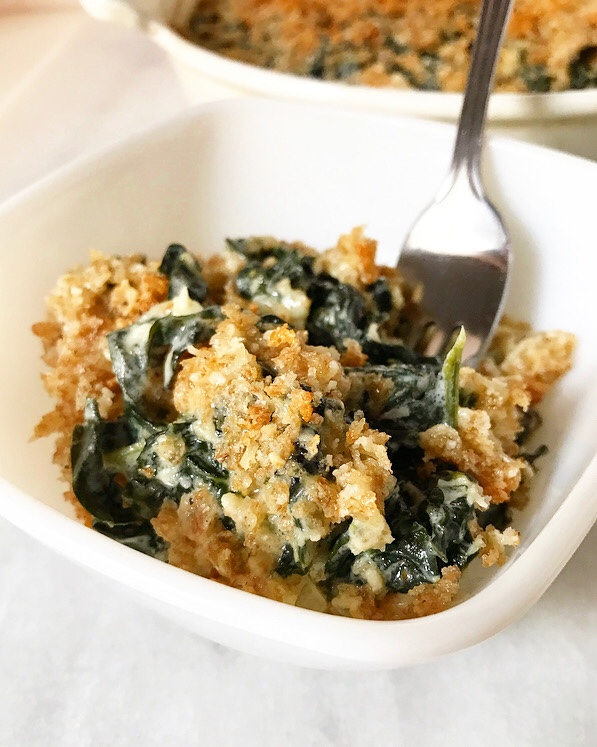 That said, on Thanksgiving, there are so many sides that leafy greens can get lost in the mix or left out entirely. To that, I counter this: Creamed Kale with Crispy Breadcrumbs. It’s the sort of “eat your greens” situation that is absolutely welcome sidled up to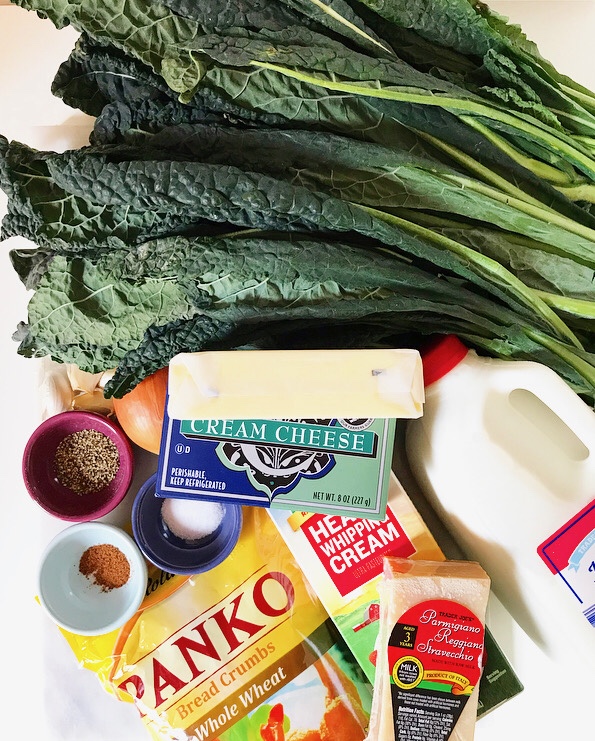
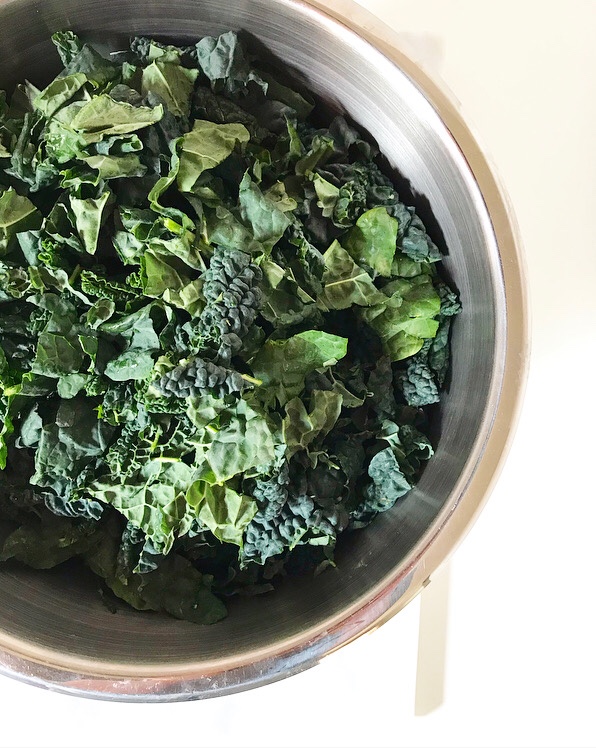
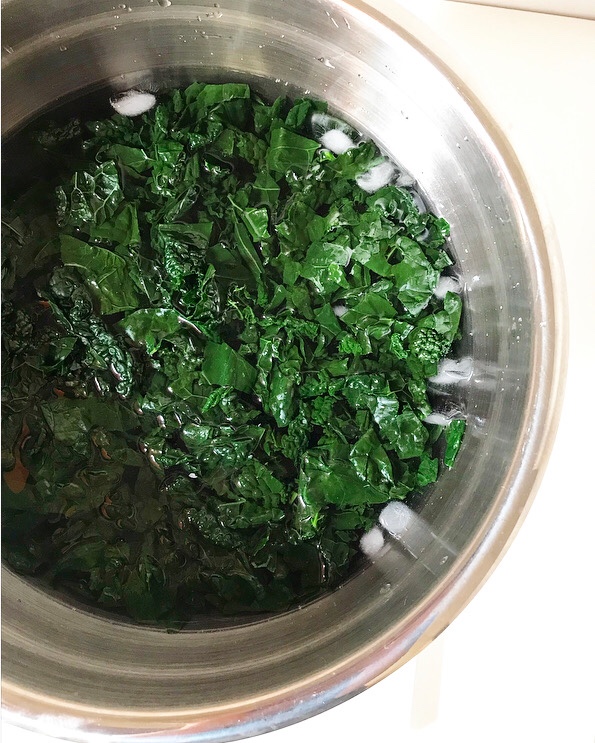
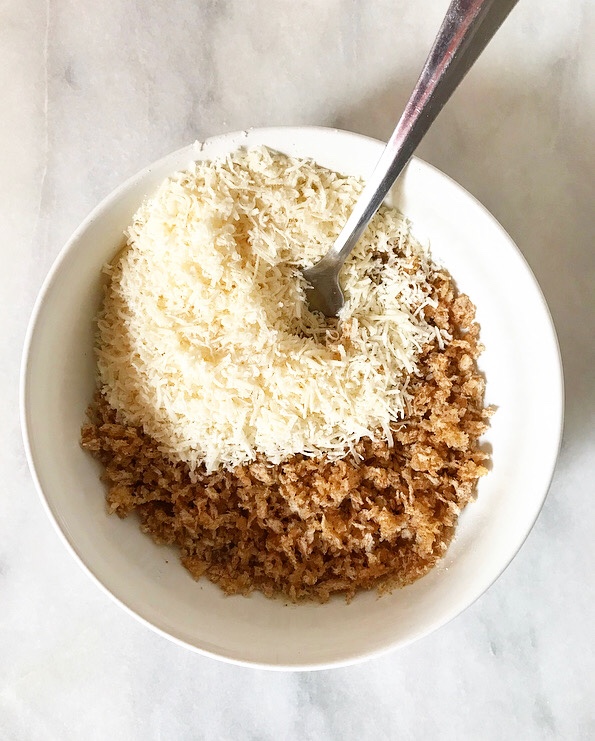
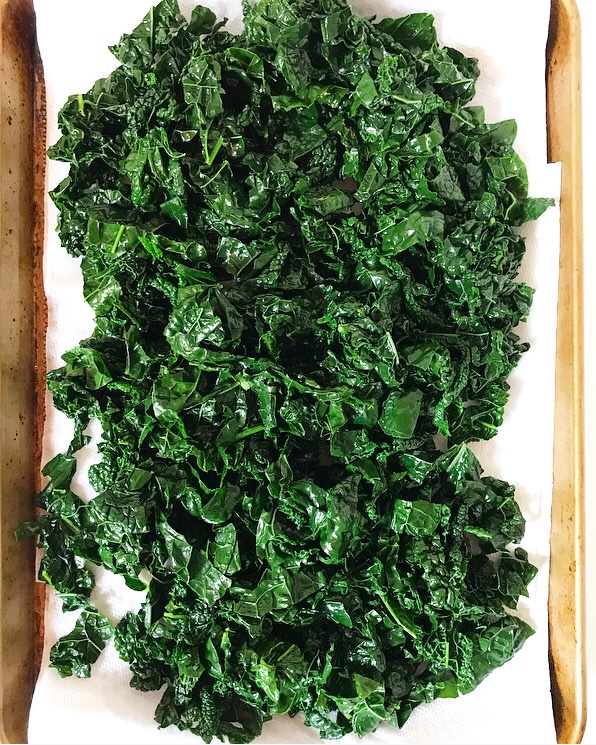 This is a vegetable side dish that stretches the meaning of the word “vegetable.” Yes, there is kale in there—a lot of it—but it’s coated in a sauce of butter, heavy cream, milk, cream cheese and parmesan, and topped with buttery breadcrumbs. Dietetic, this is not. On Thanksgiving, though, who cares? If there were ever a day for eating a creamy, cheesy, crispy-topped side and calling it a serving of vegetables, this is the one.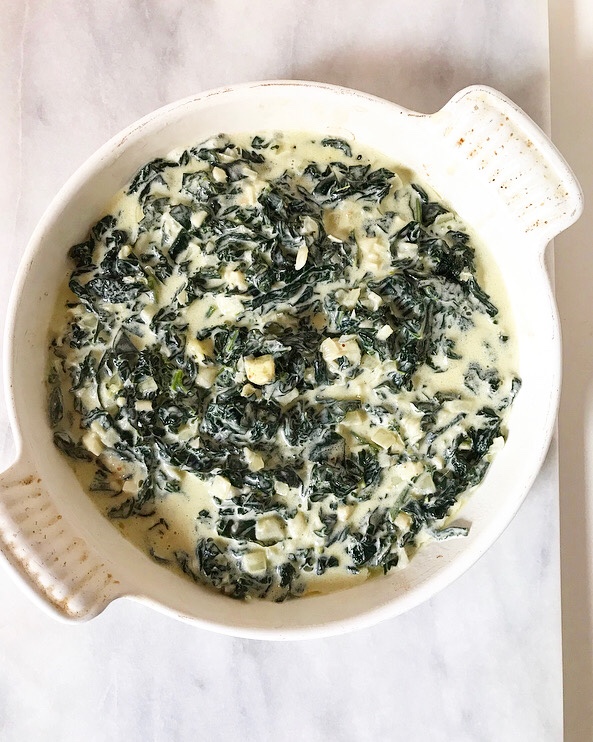
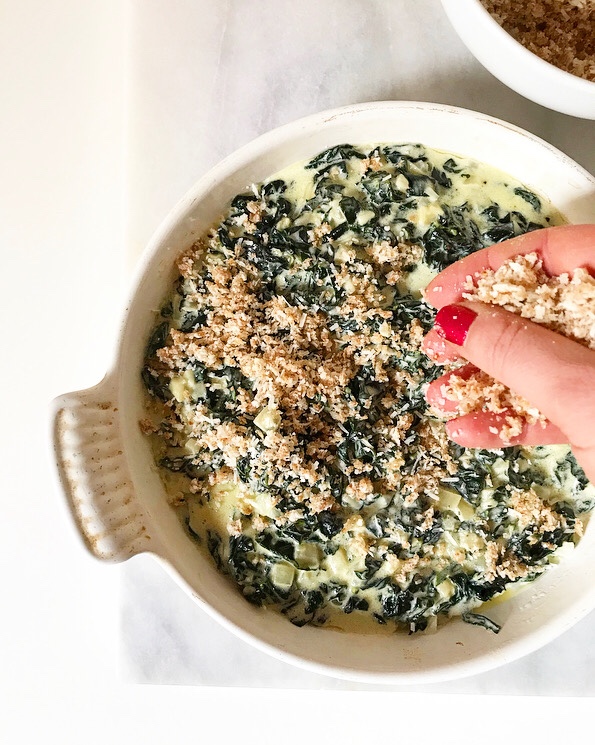
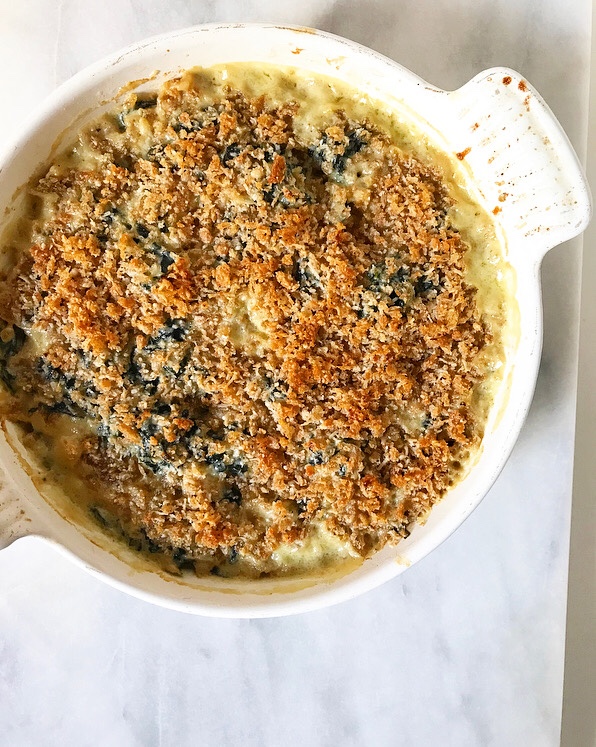 If you’re wondering why I used kale here instead of going for classic creamed spinach, the answer is simple: kale’s texture holds up. Even after the blanching, shocking, sautéing, saucing, and baking, it still has texture. It contrasts perfectly with the crispy breadcrumbs instead of getting lost in the cheesy sauce. And it’s pretty. And I just *like* kale.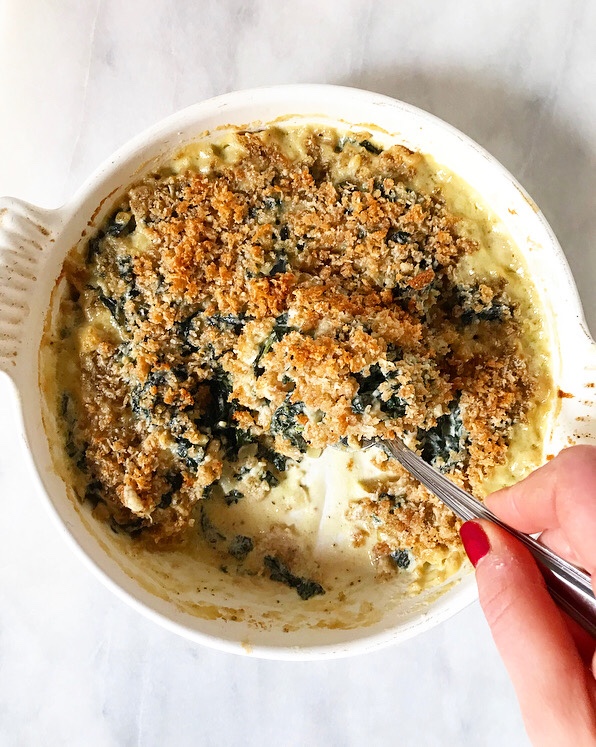
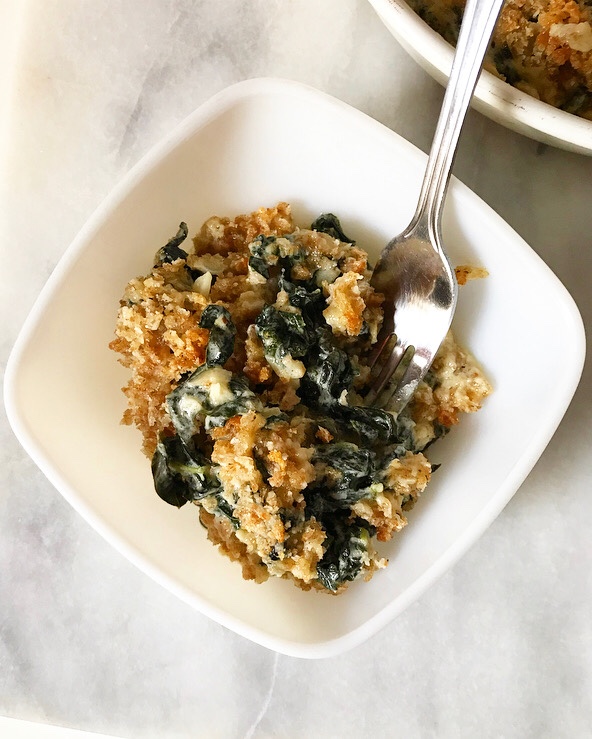 Now, I know that adding one more thing to your Thanksgiving menu is never something to be taken lightly. Time and energy are at a premium at the holidays! Luckily, Creamed Kale with Crispy Breadcrumbs is perfect for making ahead. You can stir together the creamed kale part of the equation a day or two ahead of time and refrigerate it. When you’re ready to serve, top it off with the breadcrumb mixture and bake until brown, bubbly, and so creamy and wonderful that even I—a person who has written repeatedly about
  Looking for something a little lighter? Try my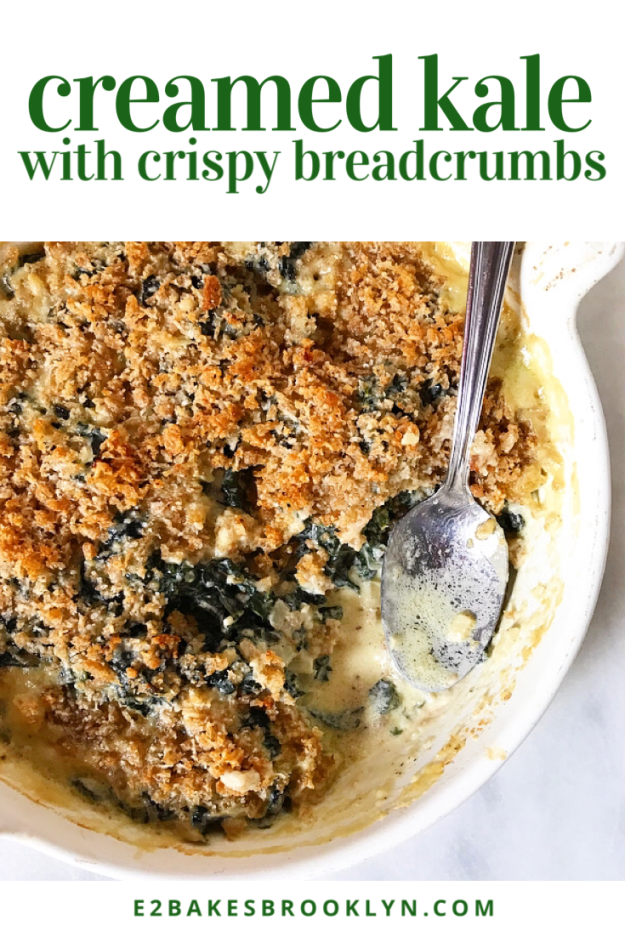
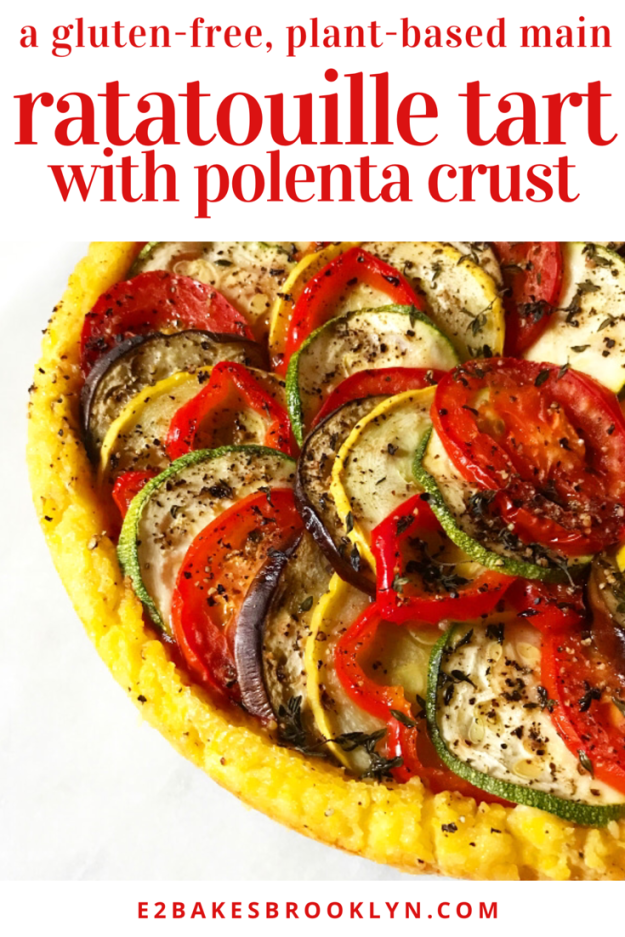
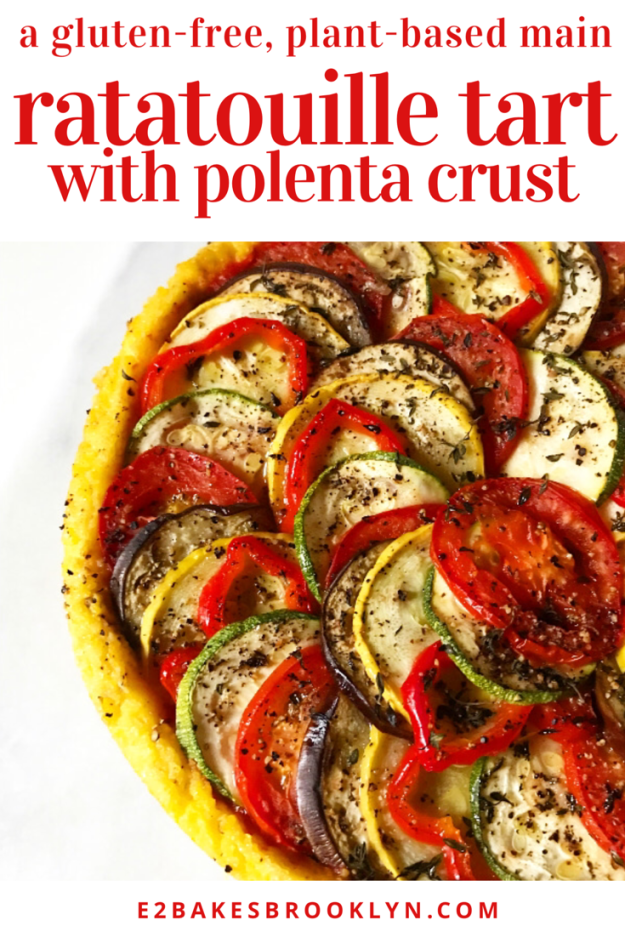
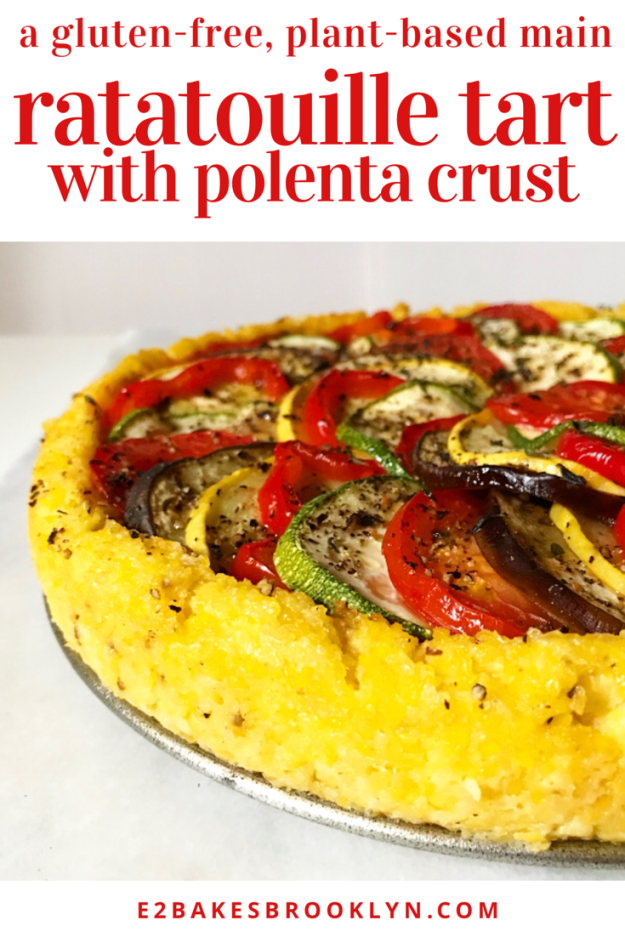
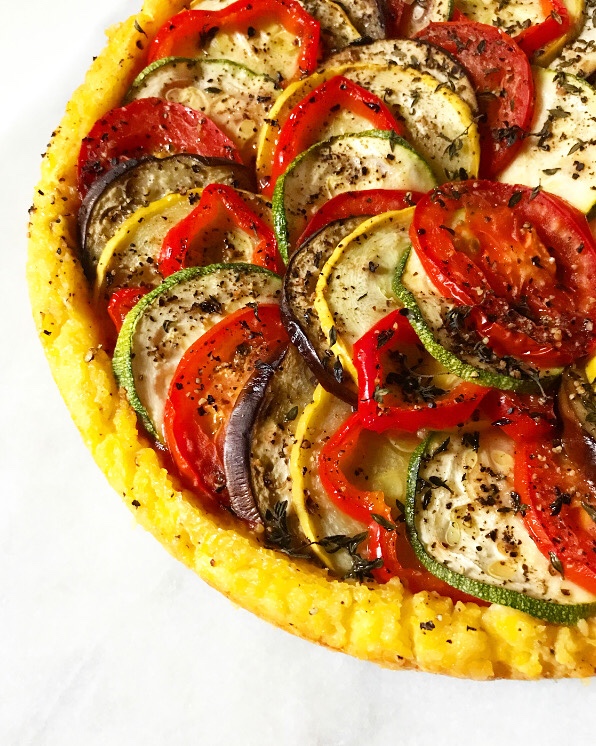 If you’re searching for a plant-based summer recipe that is as visually striking as it is delicious, look no further. This Ratatouille Tart with Polenta Crust combines two of my favorite things—simply-prepared vegetables and soft corn
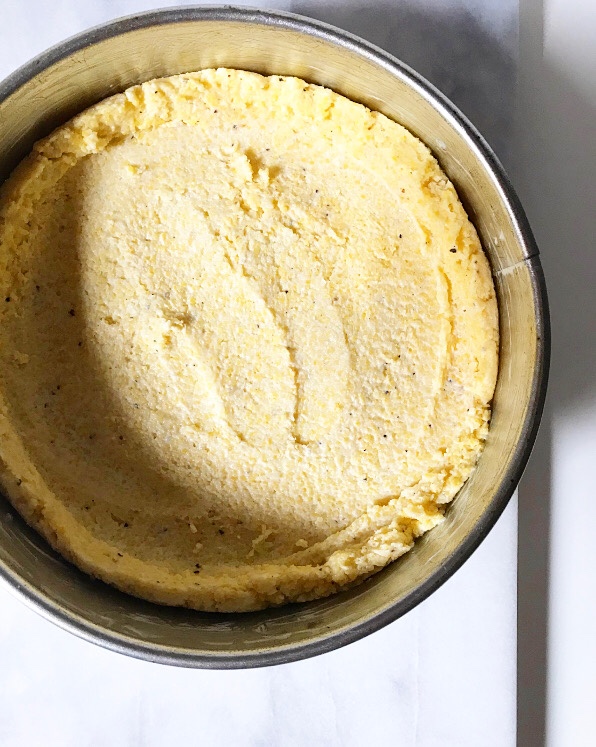 While this recipe takes some time to prepare, none of the steps are difficult and the results are more than worth the effort! You can make things easier for yourself by preparing the polenta and forming the crust a day ahead.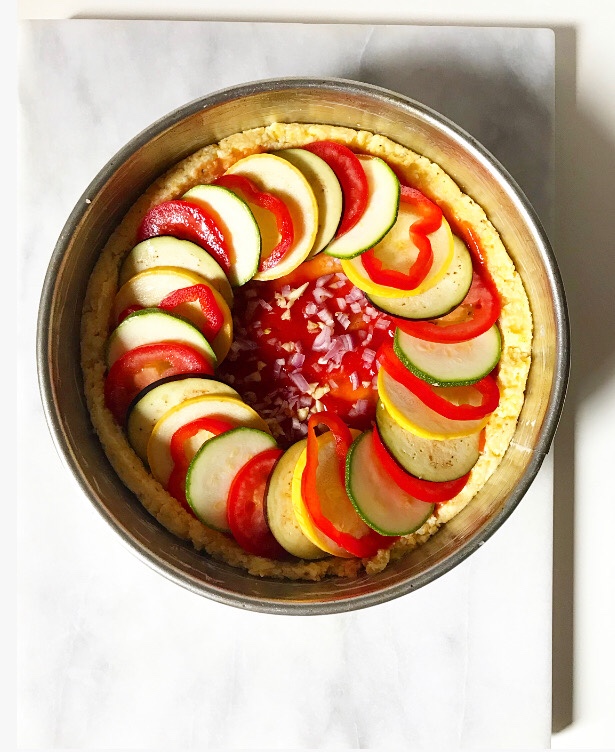
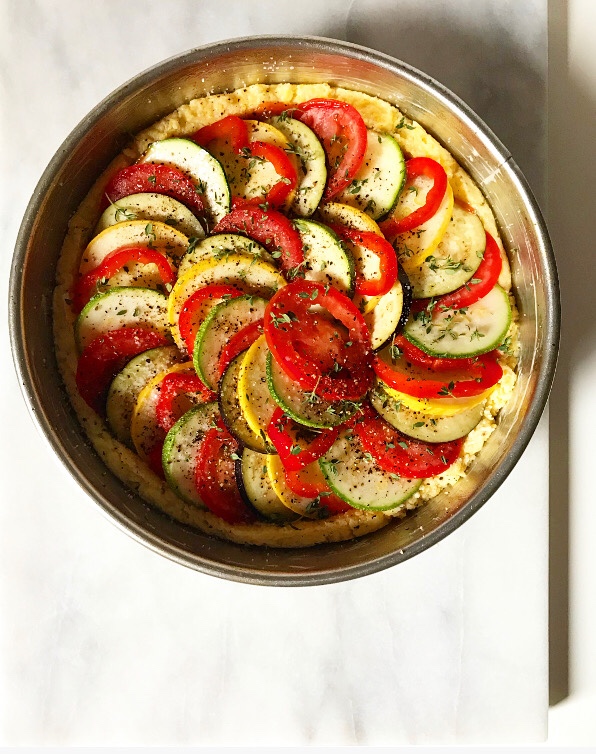 When you’re ready to bake, spread on some tomato sauce and slice up a bunch of summer produce. If you’re a little fancier than I am and have a mandoline, this would be a great time to use it.
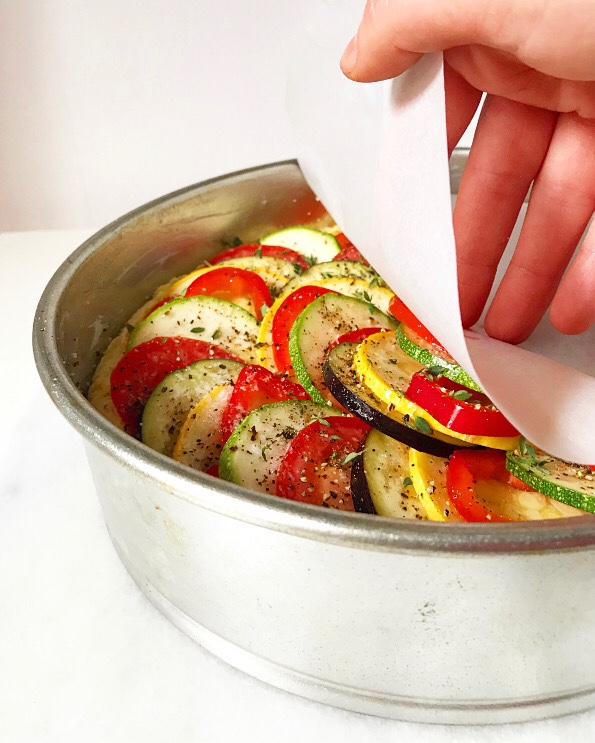 Assemble the tart by arranging the sliced vegetables in concentric circles and finishing them off with olive oil and fresh thyme. Cover the whole thing with a parchment round to ensure that everything cooks evenly. And then…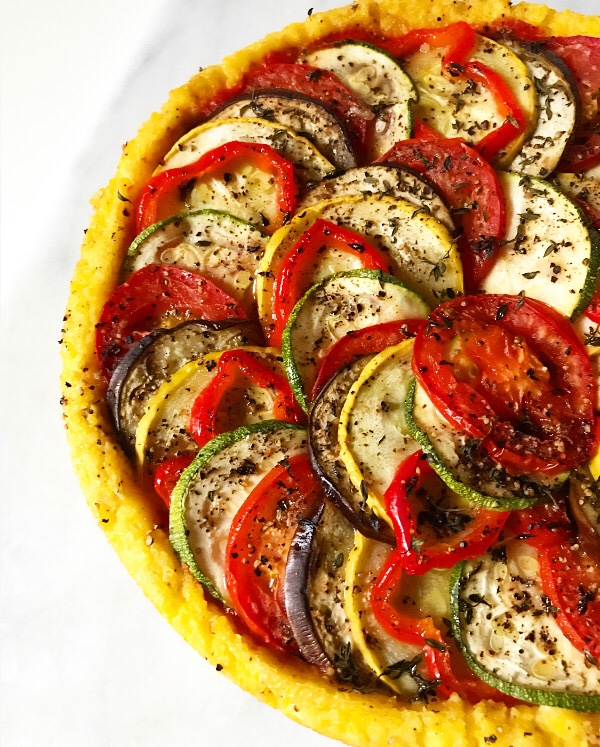
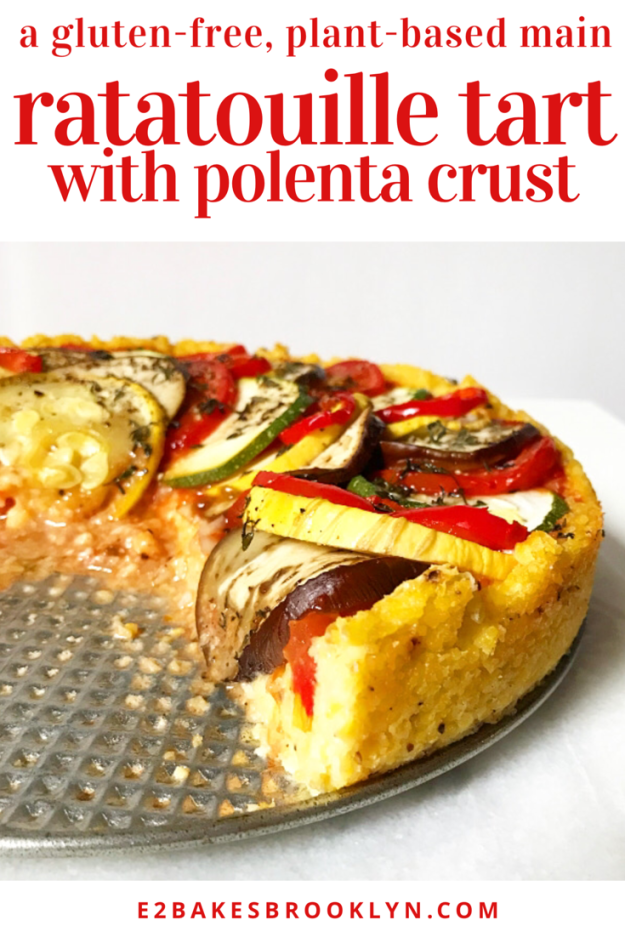
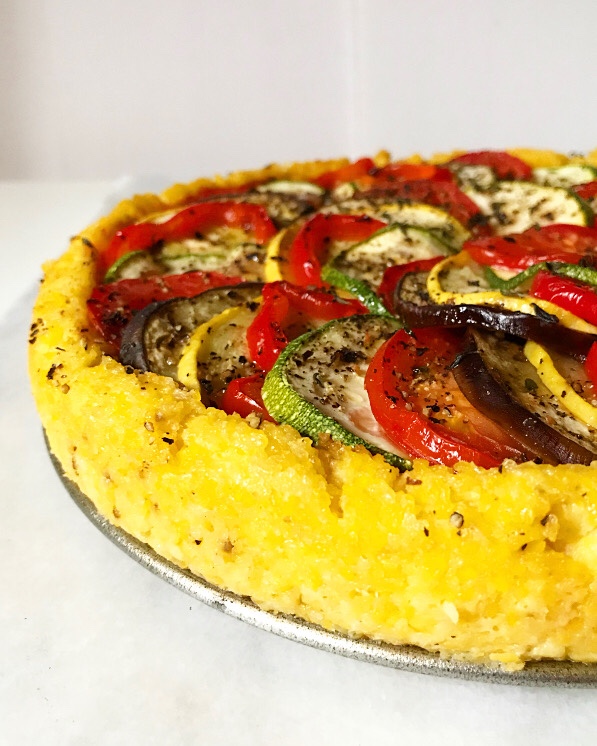 …well, let’s just say I’ll pray for you during the thirty minutes between baking and slicing. I promise it’ll be worth the wait. I mean, when are polenta and ratatouille not worth the wait?!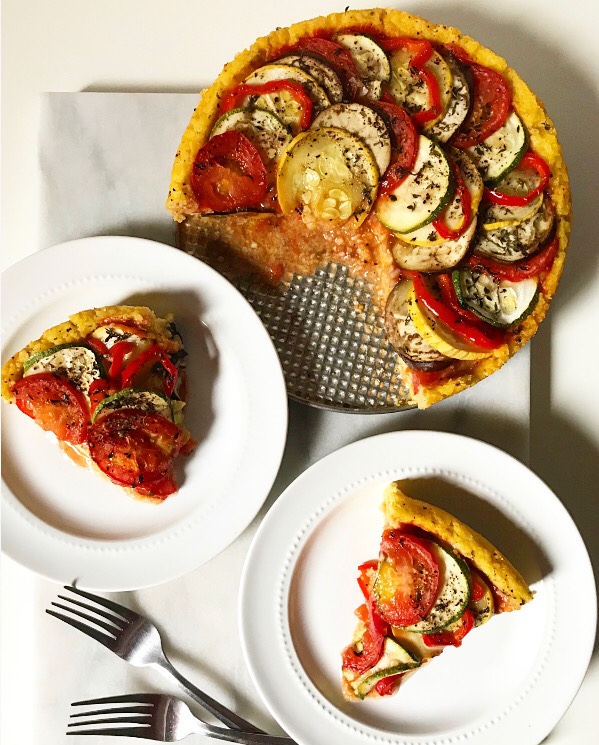
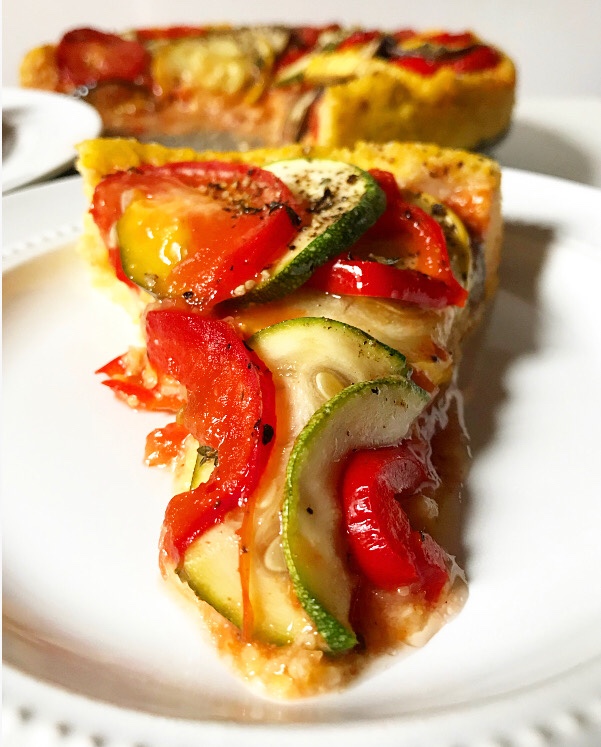 I love this tart when it’s fresh, but you should know that it slices particularly well at room temperature and cold, meaning this is a great make-ahead option. The tart pictured here was made on a Monday and reheated by the slice for lunches all week long.
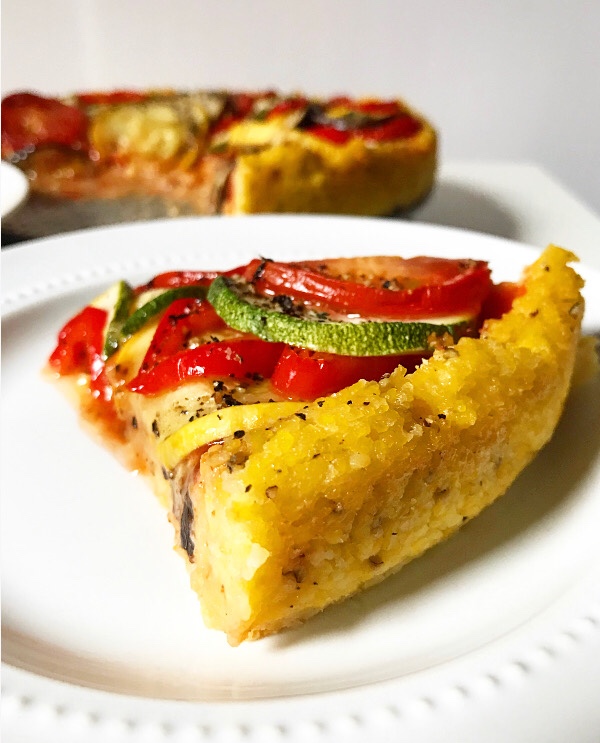 It was exactly as wonderful as it looks.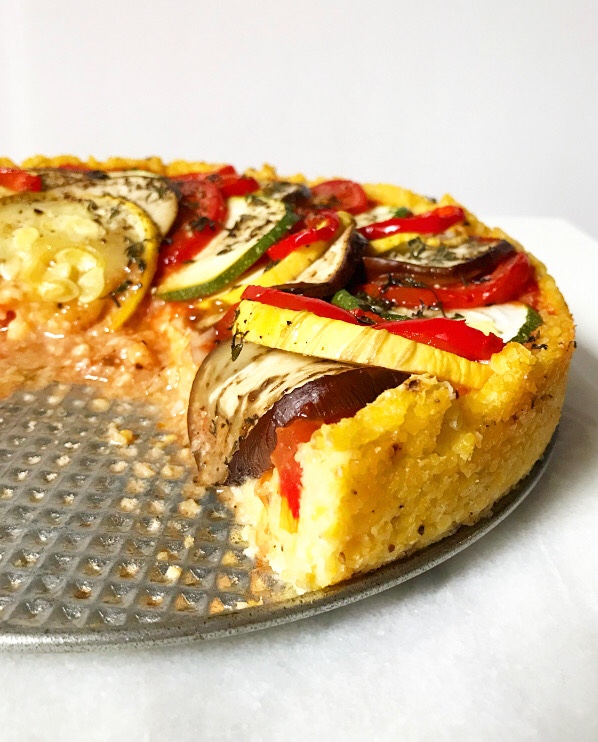
 When I first moved to New York and was in
  Unfortunately though, I’m not gifted with much else in that realm. I’m not confident enough to direct. I like to act, but was/am too timid to pursue it in any real way. My hearing is terrible, so sound is out. My arms aren’t strong enough to hold the boom mic for very long. Editing is just a “no.” The list of disqualifications goes on and on, save for one notable exception: I can cook. And so it was that the majority of my production course credits came from being craft services, a.k.a. the on-set caterer.
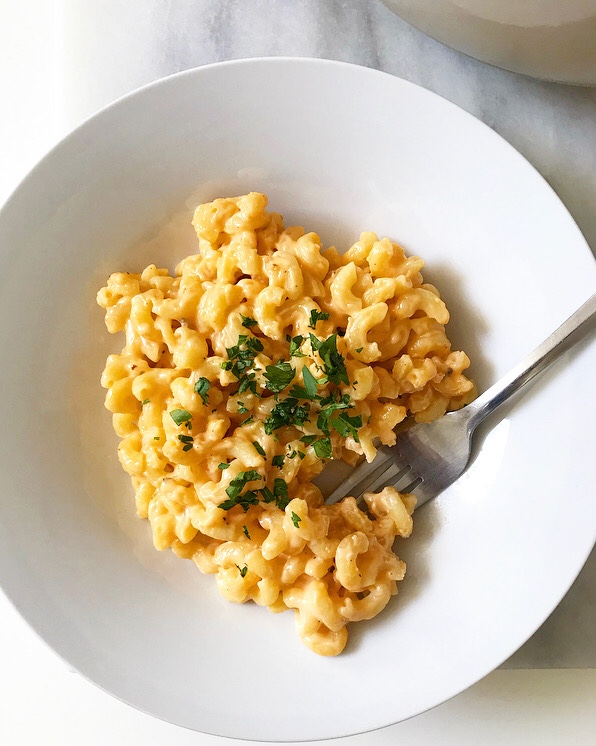
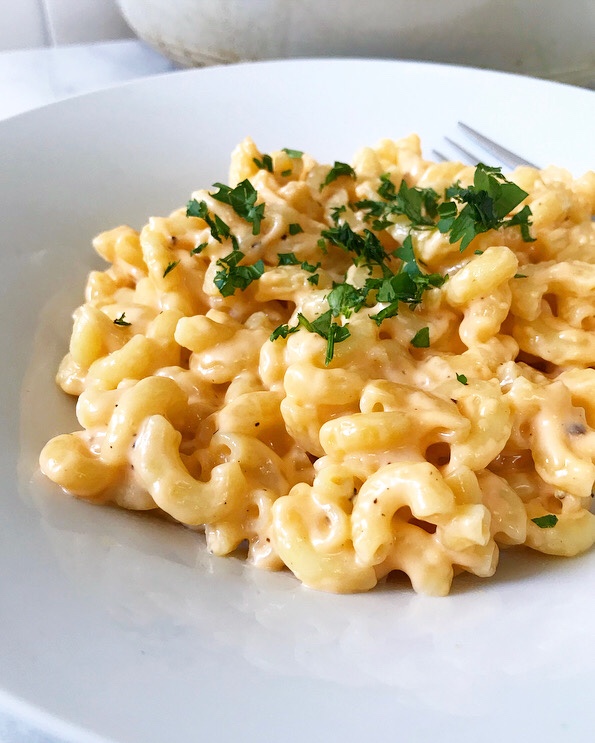
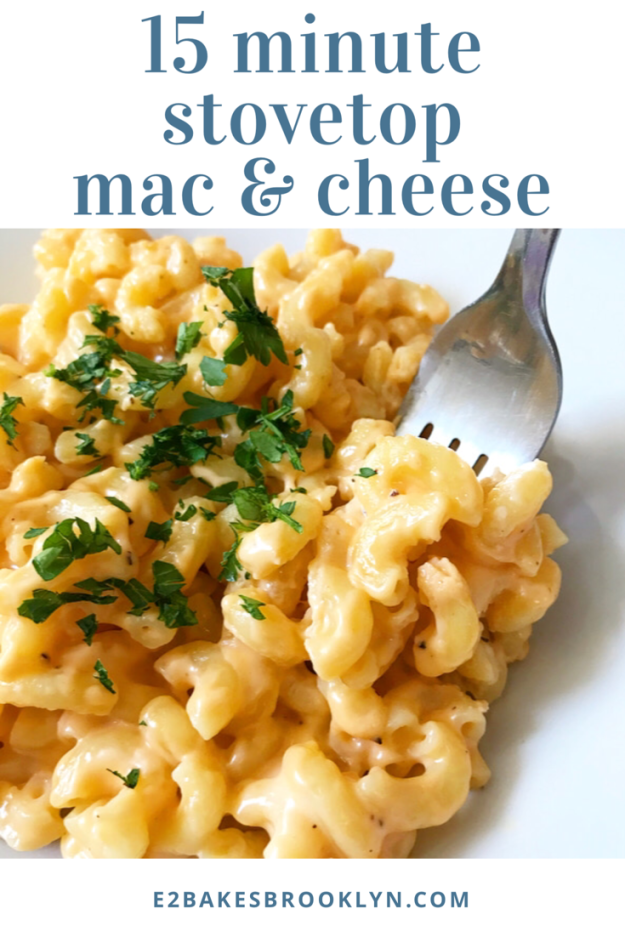
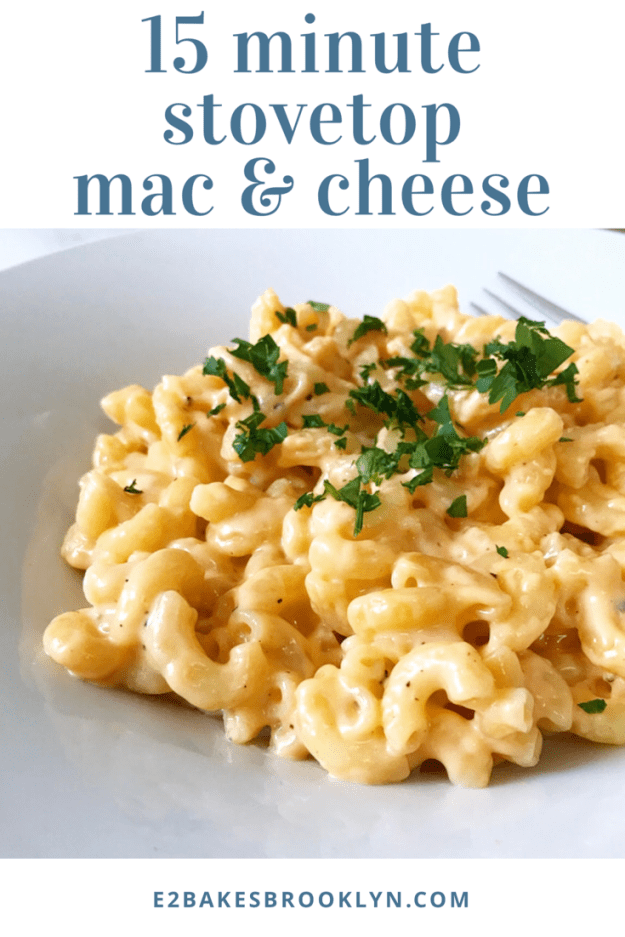
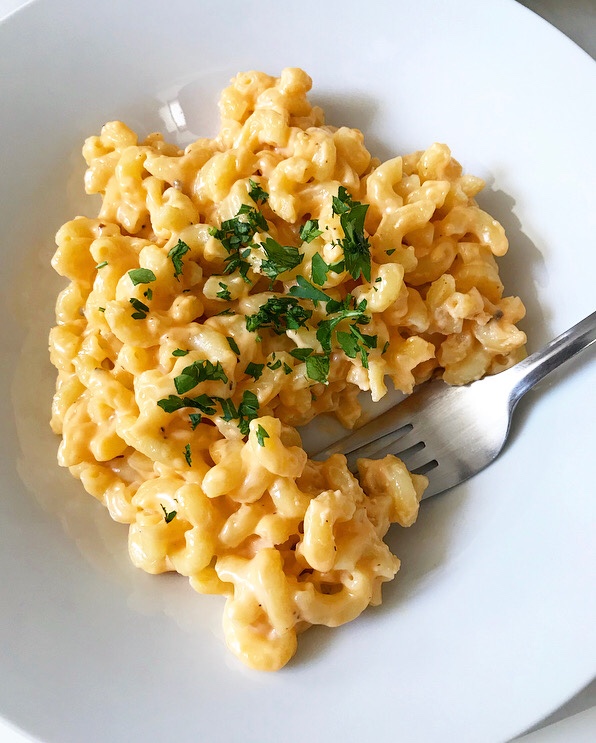 Now, being “crafty” for a student film isn’t the same as what you see when you spot film shoots on the streets of New York. Not even close. I didn’t have a truck or a crew; there was no oven or microwave. I was limited to what I could make in my Upper West Side apartment and transport in a cooler and what I could prepare on-set on a single electric burner. Oh, and it had to be cheap. Options were extremely limited—there were a lot of prepared salads and sandwiches—but my 15 Minute Stovetop Mac & Cheese was always a crowd pleaser.
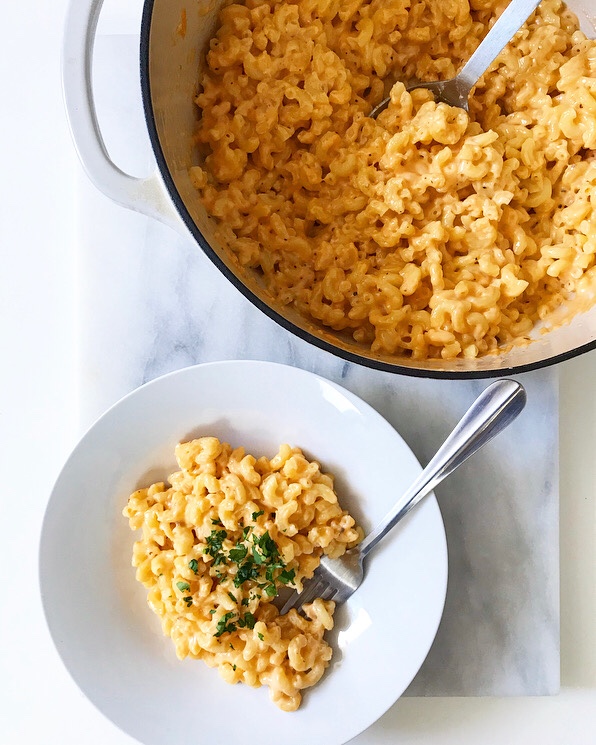 I mean, what’s not to love? This macaroni & cheese has all the cheesy flavor and creamy texture you want, but is less than half the work of most
 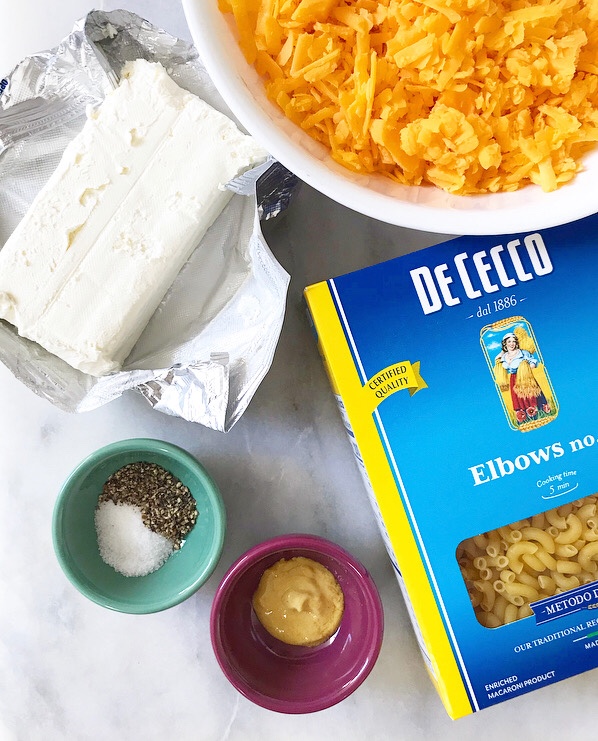 It also requires just six ingredients (seven, if you want to garnish with parsley) and two of them are salt and pepper. Whaaaaat. Since 15 Minute Stovetop Mac & Cheese is a from-scratch recipe, it will cost a few dollars more than the stuff in the blue box, but it’s also infinitely tastier. I’ll take real melted cheese over reconstituted powdered cheese any day. It’s not even a contest.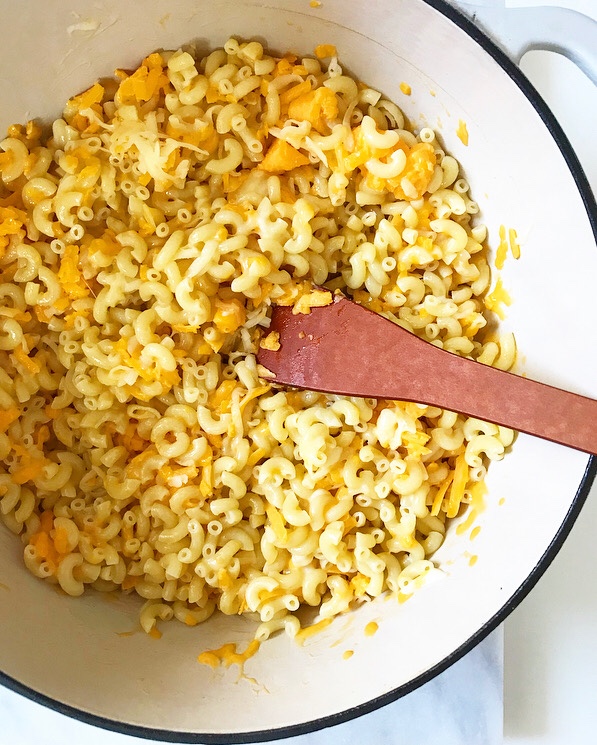
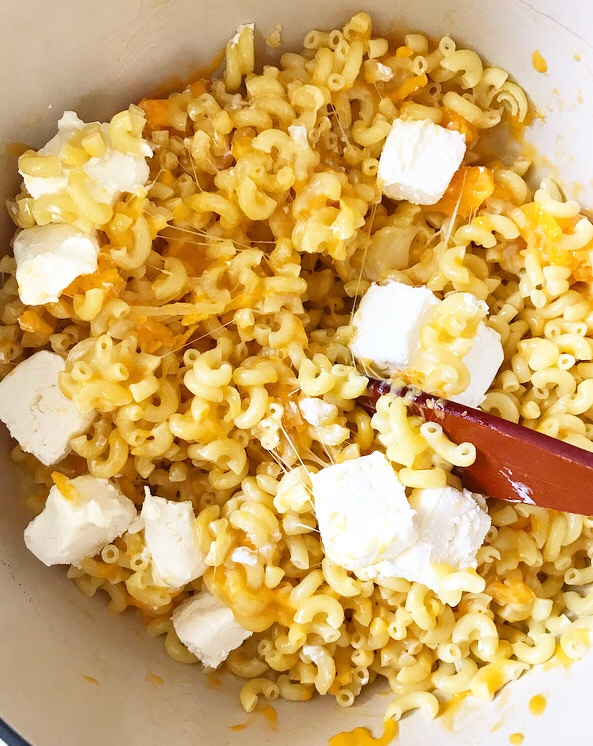
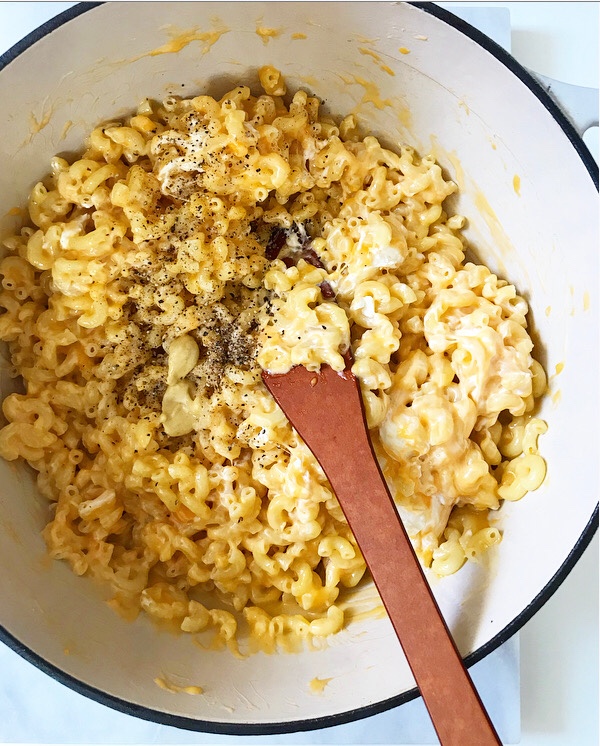
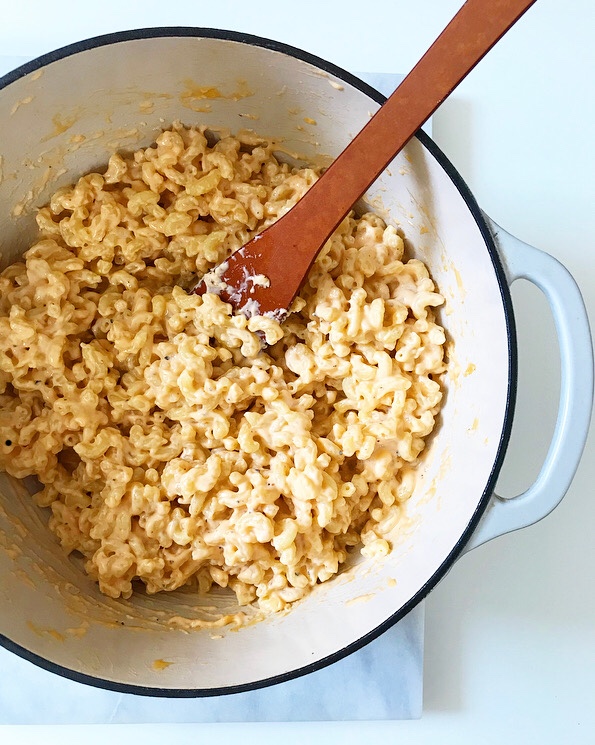 This recipe really does comes together in fifteen minutes, so it’s ideal for busy weeknights or filling a craving or feeding a bunch of student filmmakers on the fly.
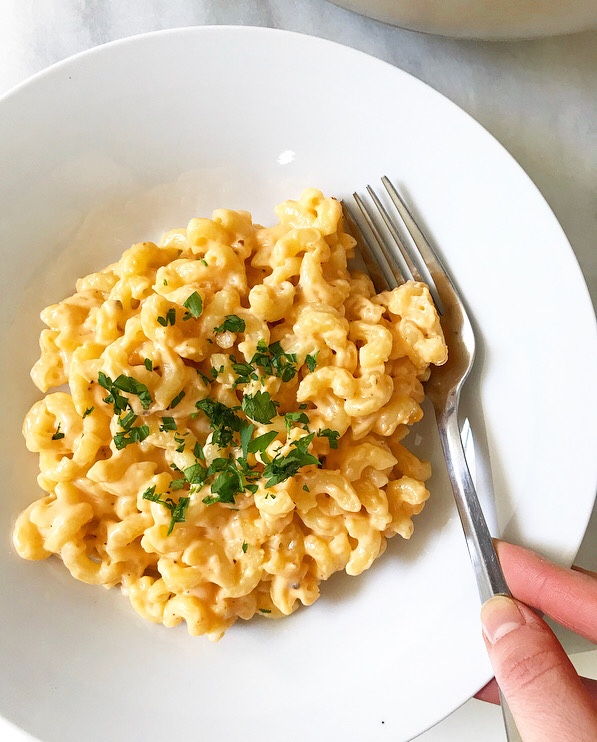 Right now, you’re just one pot, four steps, six ingredients, and fifteen minutes away from diving fork-first into a bowl of creamy, cheesy magic. What are you waiting for?!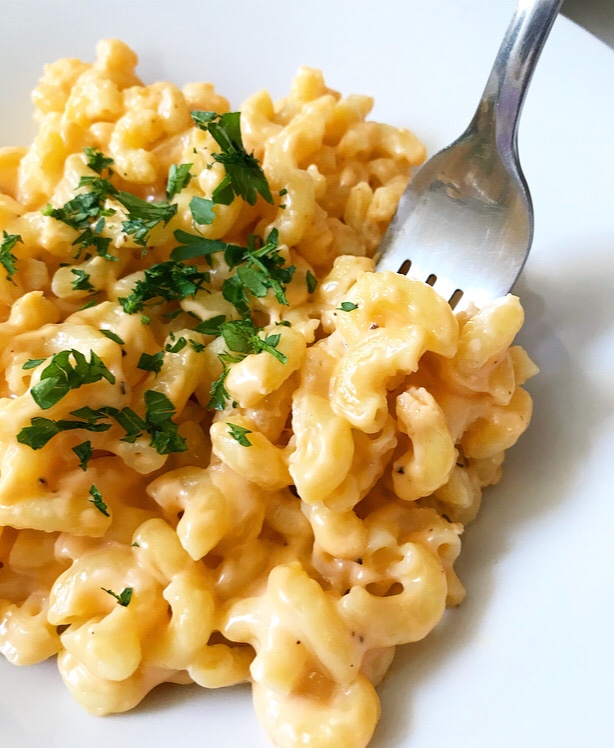
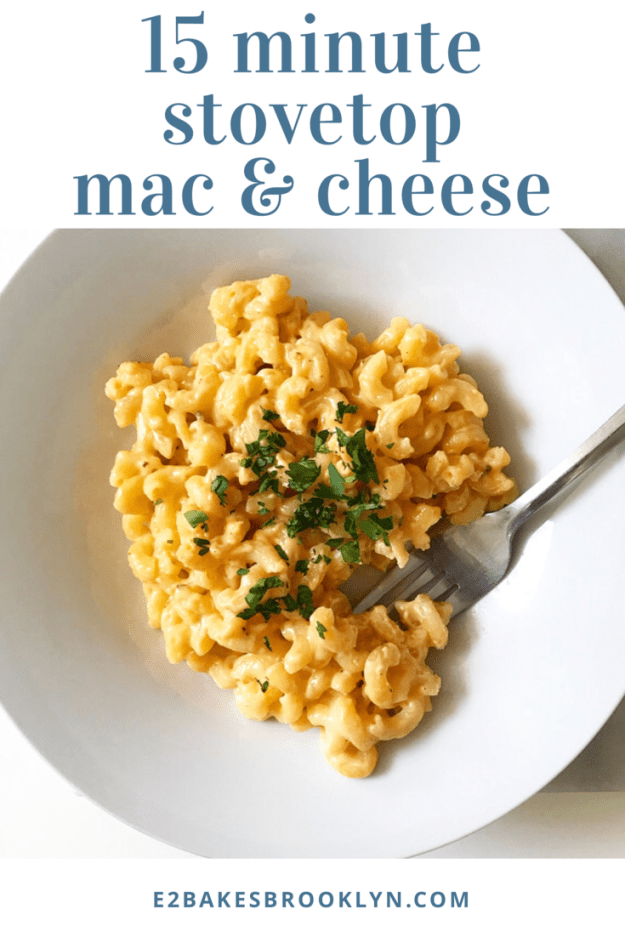
 For weeks, I have been eagerly waiting to share this recipe with you. I’d love to say that I feel this way with every single recipe in my
  So, what’s so special about this recipe? Well, for one, it’s a
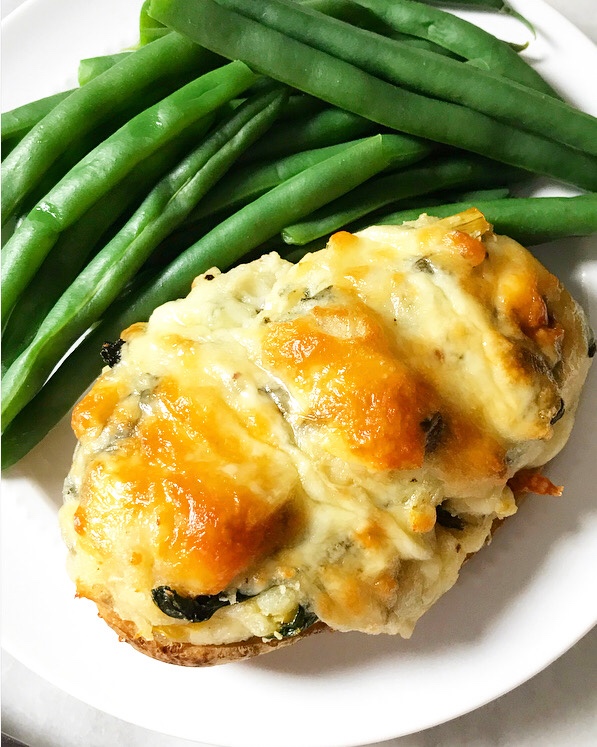
  These Spinach-Artichoke Twice-Baked Potatoes are so delicious, y’all. They’re soft and creamy on the inside and brown and crispy on the outside. Oh, and there’s melted cheese involved. And a serving of vegetables. Yesssss.
 If, by chance, you’ve never heard of or eaten a twice-baked potato…well, I’m sorry that you’ve been deprived for so long. Luckily, you can remedy that today! Let me give you a quick rundown.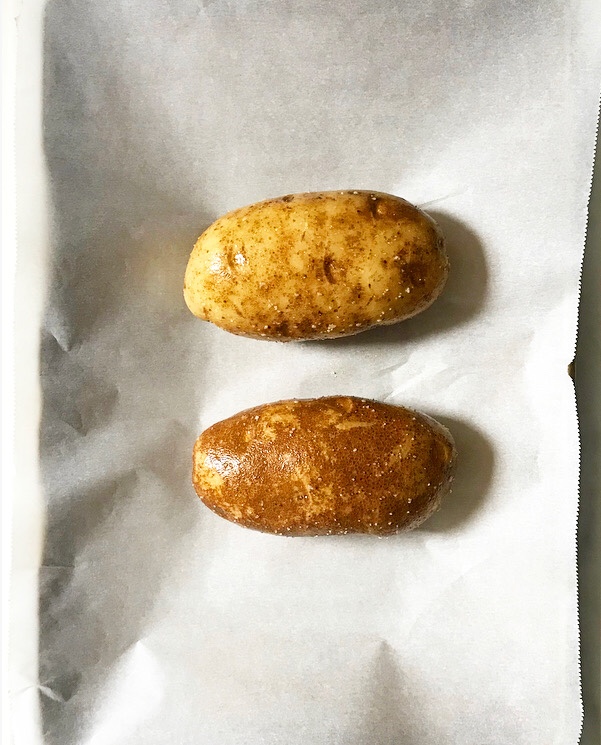

 As their name states, twice-baked potatoes are potatoes that have been baked two times. The first time, they are rubbed down with oil and salt and baked until tender.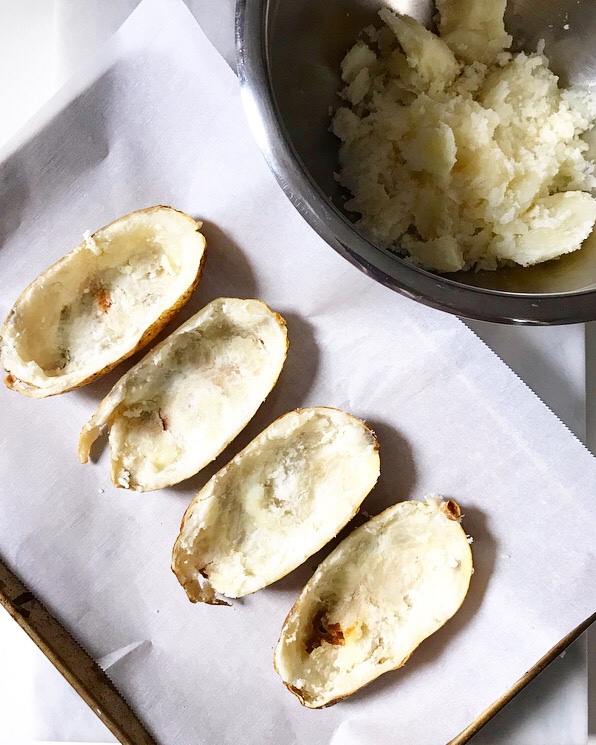
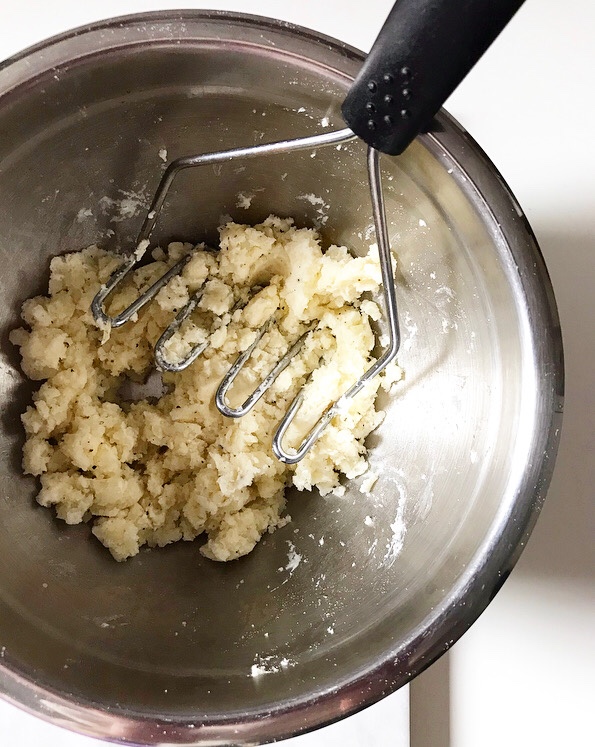 Next the potato innards are scooped out, leaving behind four potato skin “boats.” The potato flesh is mashed with other ingredients to create a filling.
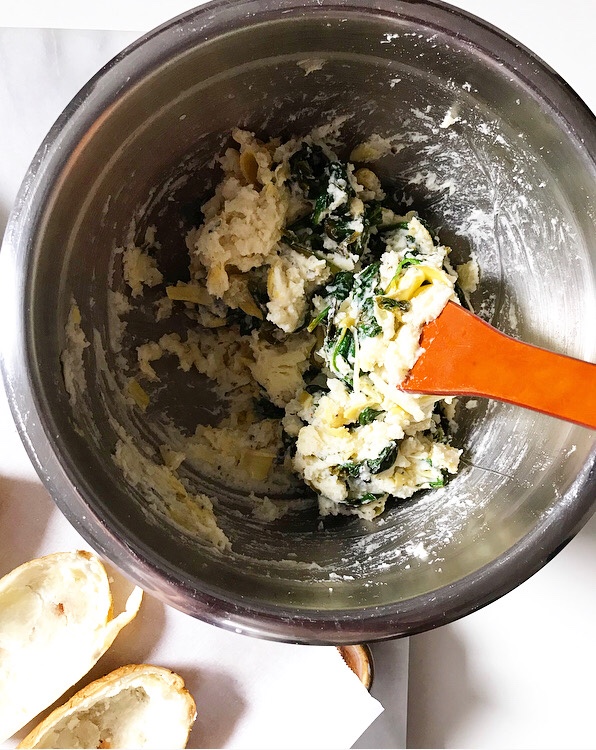 Traditionally, those include sour cream, bacon, cheddar, and scallions, but this recipe deviates from the norm in favor of lemony sautéed spinach, chopped artichoke hearts, butter, cream cheese, and monterey jack cheese. YUM.


 The filling is then spooned back into those potato skins, topped with more cheese, and baked a second time, until golden and a bit crispy ❤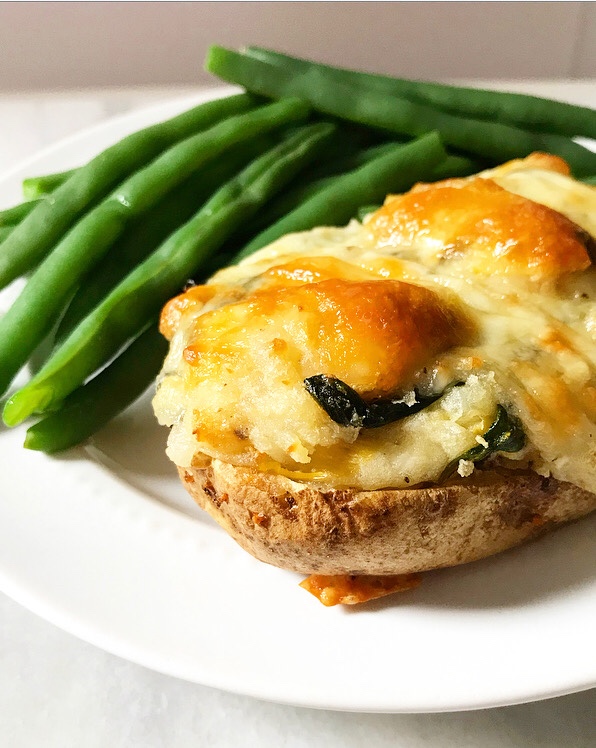
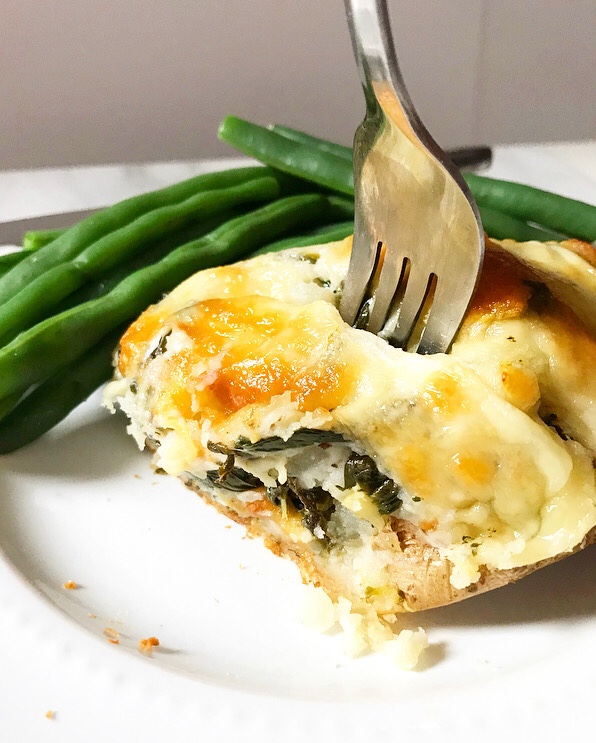 I prefer to serve Spinach-Artichoke Twice-Baked Potatoes as a main, but they also work well alongside chicken or pork. However you serve these potatoes though, they’re guaranteed to leave you wishing you’d doubled the batch.


 e2 bakes brooklyn