Category Archives: Entertaining

Carrot Cupcakes with Cream Cheese Frosting

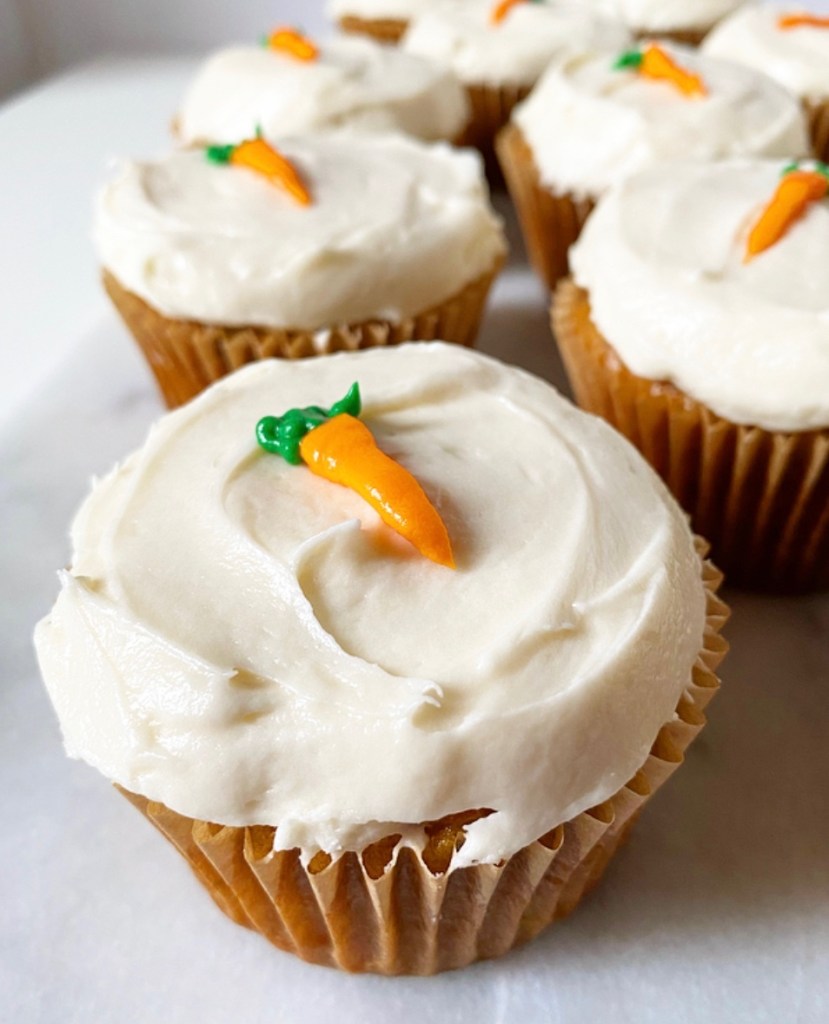
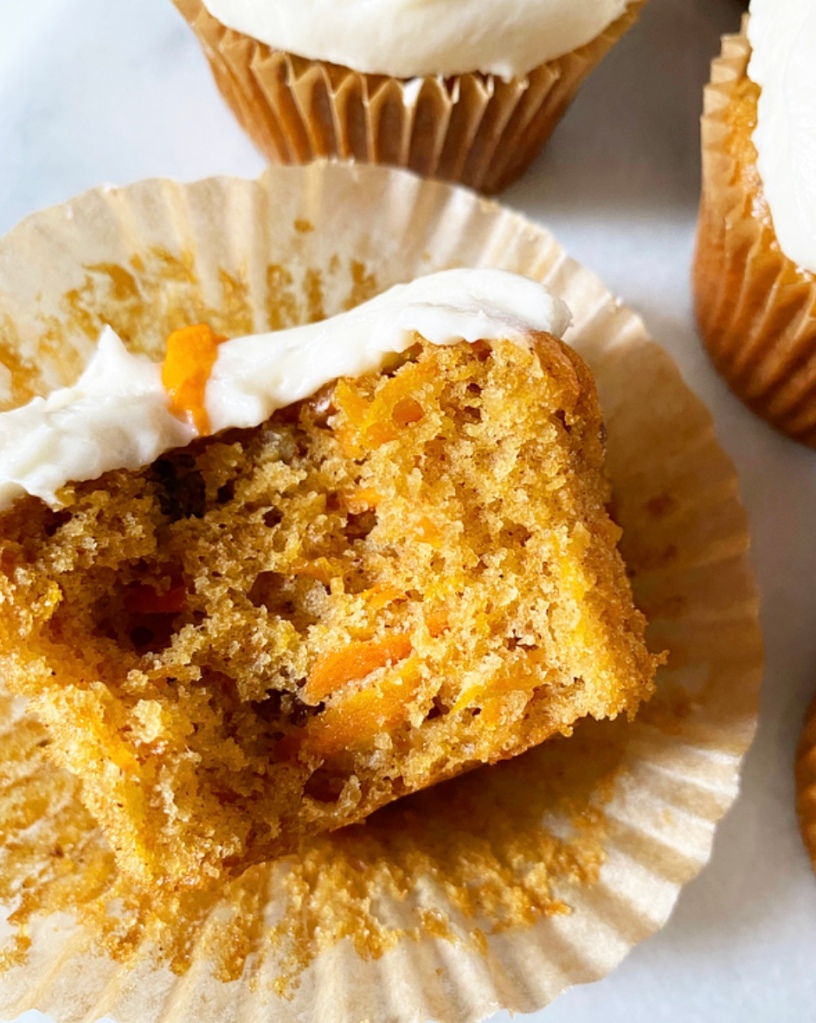
Truth be told, people probably ask me to make Carrot Cake more than anything else. It makes sense—I make damn good Carrot Cake. It’s super moist, flavored with brown sugar and spice, and filled to the brim with carrots, raisins, and nuts. I know there are about a million ways to make a Carrot Cake, but I swear mine’s the best.
Carrot Cupcakes with Cream Cheese Frosting​

That said, it’s nice to have alternatives for when I don’t feel like making a layer cake. I’ve made carrot cake blondies, vegan gluten-free carrot cake, carrot cake petit fours, and cream cheese carrot muffins that are honestly a masterpiece. I’ve been on a cupcake kick lately, so this year, I’m adding Carrot Cupcakes to my repertoire.
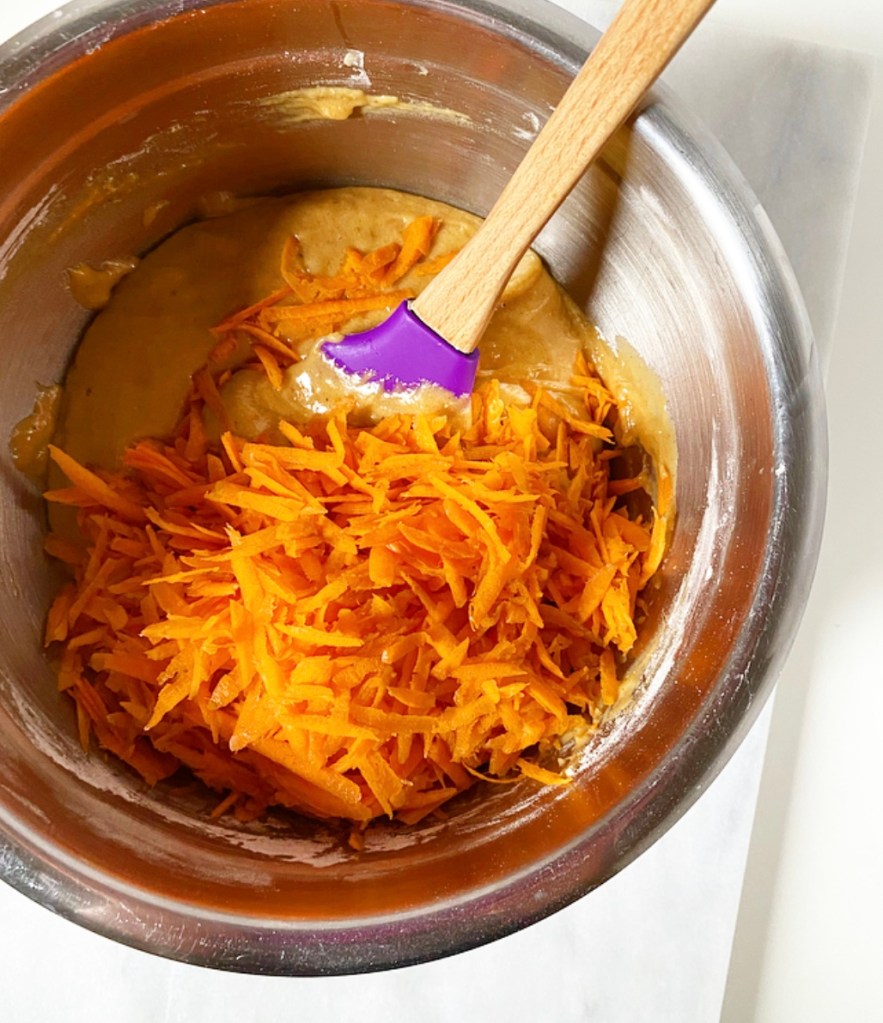
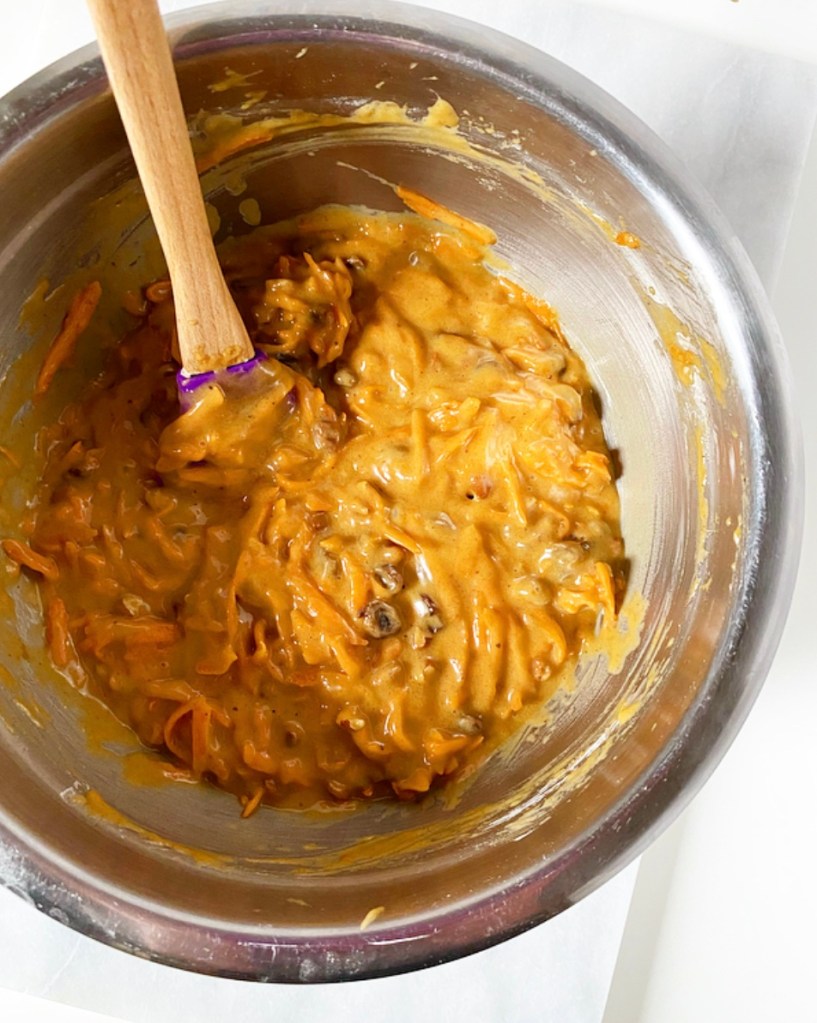
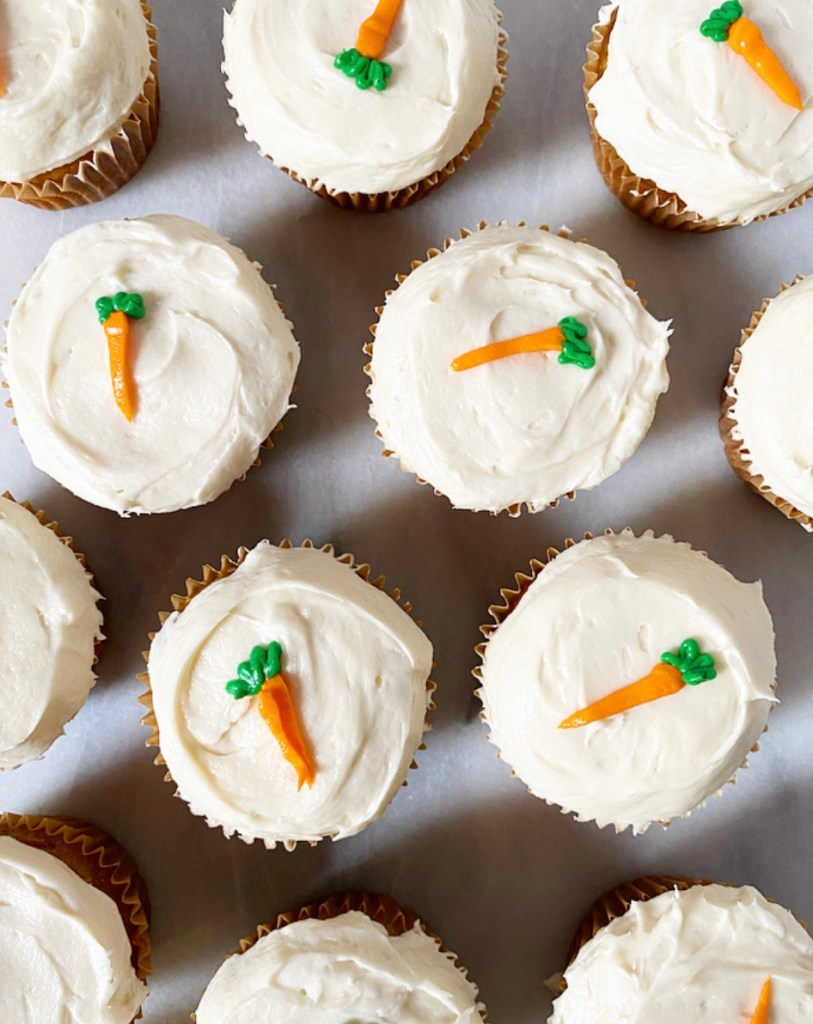
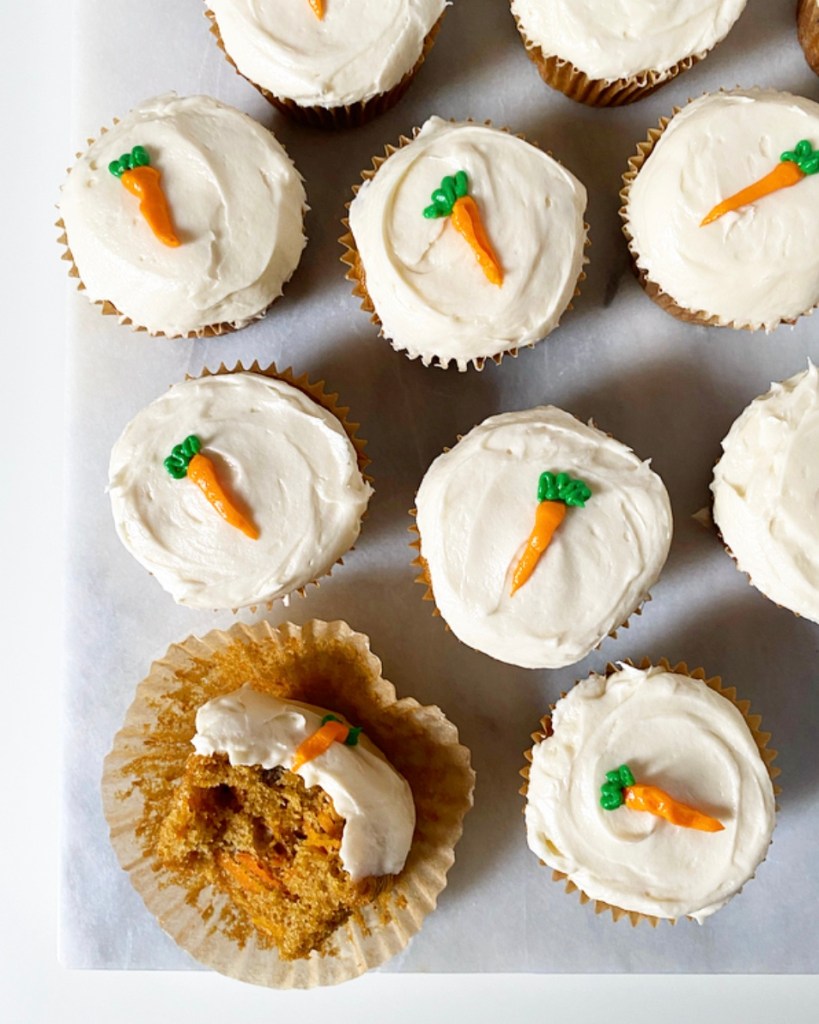
These little cakes have the perfect amount of spice, and are extra moist thanks to brown sugar, sour cream, and an abundance of shredded carrots. They bake up in twenty minutes and cool in under an hour. They’re finished with my best-ever cream cheese frosting and some sweet little piped carrots. You don’t have to put the carrots on top, but it seems kind of illegal not to, you know?!
Carrot Cupcakes with Cream Cheese Frosting​

I know Carrot Cake (er, cupcakes) is super popular for Easter, but I get requests for it all the time, so it’s a year-round thing as far as I’m concerned. Okay? Okay. Don’t let anyone tell you any differently.
Carrot Cupcakes with Cream Cheese Frosting​
Carrot Cupcakes with Cream Cheese Frosting
makes 16-18 cupcakes

Cupcake Batter:
1/3 cup chopped pecans or walnuts (optional)
~1/2 cup water, for raisins (optional)
1/3 cup raisins (optional)
1 3/4 cups all-purpose flour
1 1/2 teaspoons ground cinnamon
1 teaspoon ground ginger
1/2 teaspoon ground nutmeg
1 1/2 teaspoons baking powder
1/2 teaspoon baking soda
1/2 teaspoon Kosher or sea salt
1 cup light or dark brown sugar, packed
1/2 cup neutral-flavored oil (I use canola)
2 large eggs, room temperature
1/4 cup full-fat sour cream
1 1/2 teaspoons pure vanilla extract
3 cups freshly shredded carrots, not packed (about 3 medium carrots)

Cream Cheese Frosting:
8 ounces full-fat brick-style cream cheese, softened to room temperature
1 cup (2 sticks) unsalted butter, softened to room temperature
1 pound confectioner's sugar
pinch of Kosher or sea salt
2 teaspoons pure vanilla extract

For Decoration:
1/4 cup Cream Cheese Frosting (see above)
orange food coloring (or red and yellow)
green food coloring


Preheat oven to 350F. Line 16-18 cups in muffin/cupcake pans with liners. Set aside.

Toast the nuts. Place chopped pecans (or walnuts) on a dry rimmed baking sheet. Place in the oven and let toast until fragrant, about 5-7 minutes. Let cool completely.

Plump the raisins. Pour water into a small saucepan and bring to a boil. Remove from heat and stir in raisins. Let sit while you prepare the cake batter.

In a small-medium mixing bowl, whisk together flour, cinnamon, ginger, nutmeg, baking powder, baking soda, and salt.

In a large mixing bowl, whisk together brown sugar and oil. Mix in eggs one at a time, followed by sour cream and vanilla. Add dry ingredients in two installments, whisking just until combined. Scrape down the bowl as needed.

If using raisins, drain and discard soaking water.

Use a silicone spatula or wooden spoon to fold carrots into cake batter. Stir in raisins or nuts, if using.

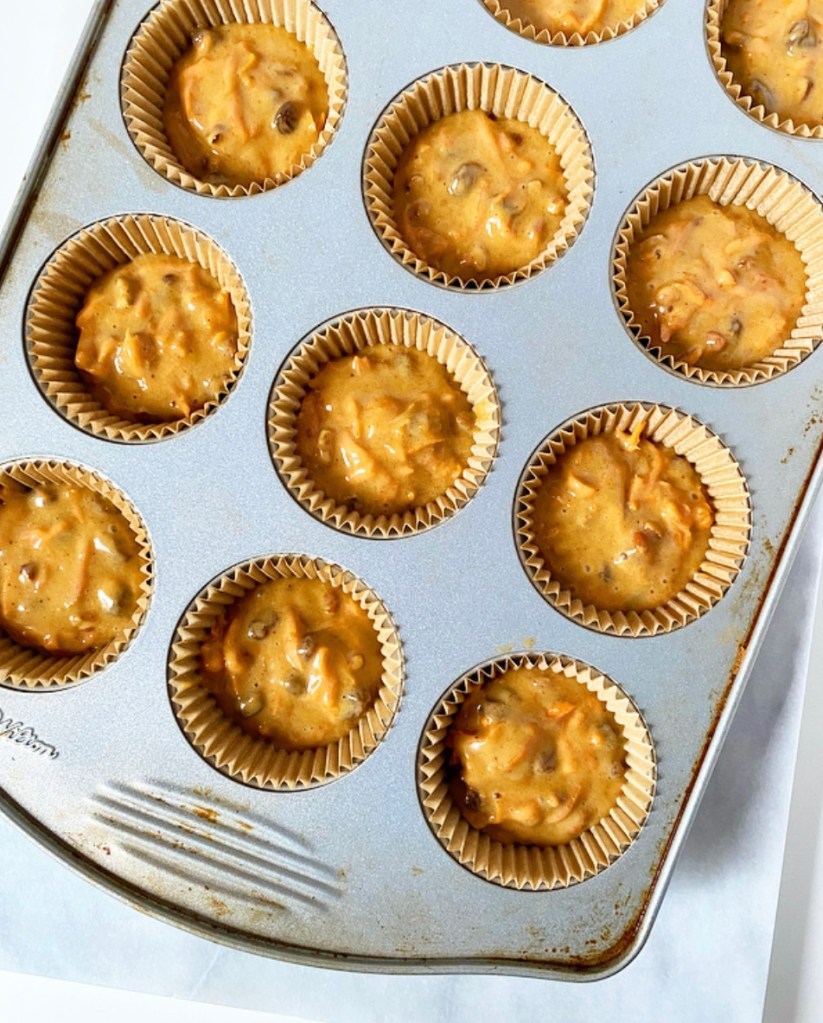
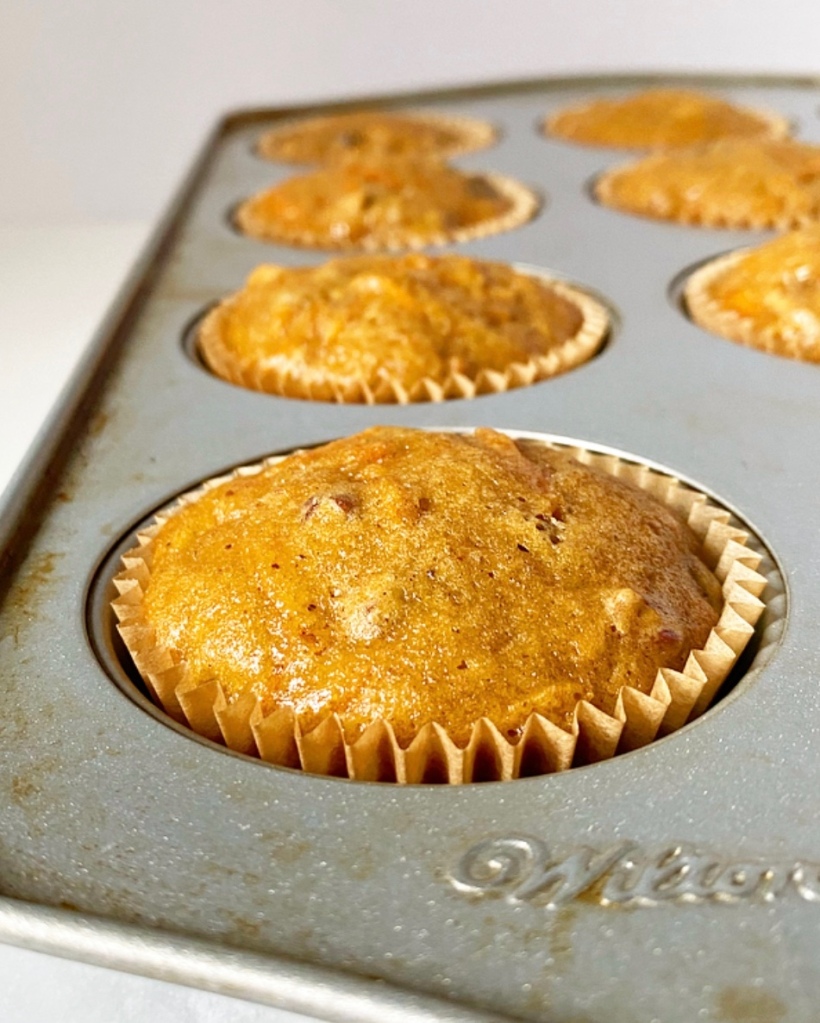
Scoop batter into prepared liners, filling them 1/2-2/3 full (about 2 generous tablespoons). Bake 20 minutes, until a toothpick inserted in the centers comes out clean.

Let cupcakes cool in the pan for about ten minutes before transferring to a rack to cool completely.

While the cupcakes are cooling, make the frosting. In a large mixing bowl, use an electric mixer to beat cream cheese and butter together until light and fluffy. Add confectioner's sugar and salt in two installments, until completely combined. Beat in vanilla. Once combined, beat on high for two additional minutes, until light and fluffy.

Frost cupcakes as desired, reserving 1/4 cup of frosting if you want to pipe carrots.

If piping carrots, divide frosting into two separate bowls, dying each with either orange or green food coloring. Put it into small piping bags, snip the tips, and create your carrots. Instructional video here.

Cupcakes will keep covered at room temperature for up to two days, or in the refrigerator for up to five.

Oven Fries (that are worth eating)

Oven Fries (that are worth eating)

I want to make it clear that I love frying things. I love it. Doughnuts, chicken, onion rings, fries—I want them all deep-fried to golden perfection. Not baked. Not. Baked. Because let’s be real, baked versions of things that are supposed to be fried are rarely worth eating. Like, if I want a doughnut, I don’t want what amounts to a muffin baked in a ring mold. And if I want fried chicken, I don’t want it “oven-fried.” Just give me the real deal, or don’t give it to me at all.

All that said, I had a little change of heart a few weeks ago while making dinner. I had an unallocated potato that needed using, and decided to try to make oven fries with the main goal of them not just being fry-shaped roasted potatoes. I wanted crisp, golden, fluffy-centered fries, but without the pot of hot oil. It seemed like an impossible goal at the time.

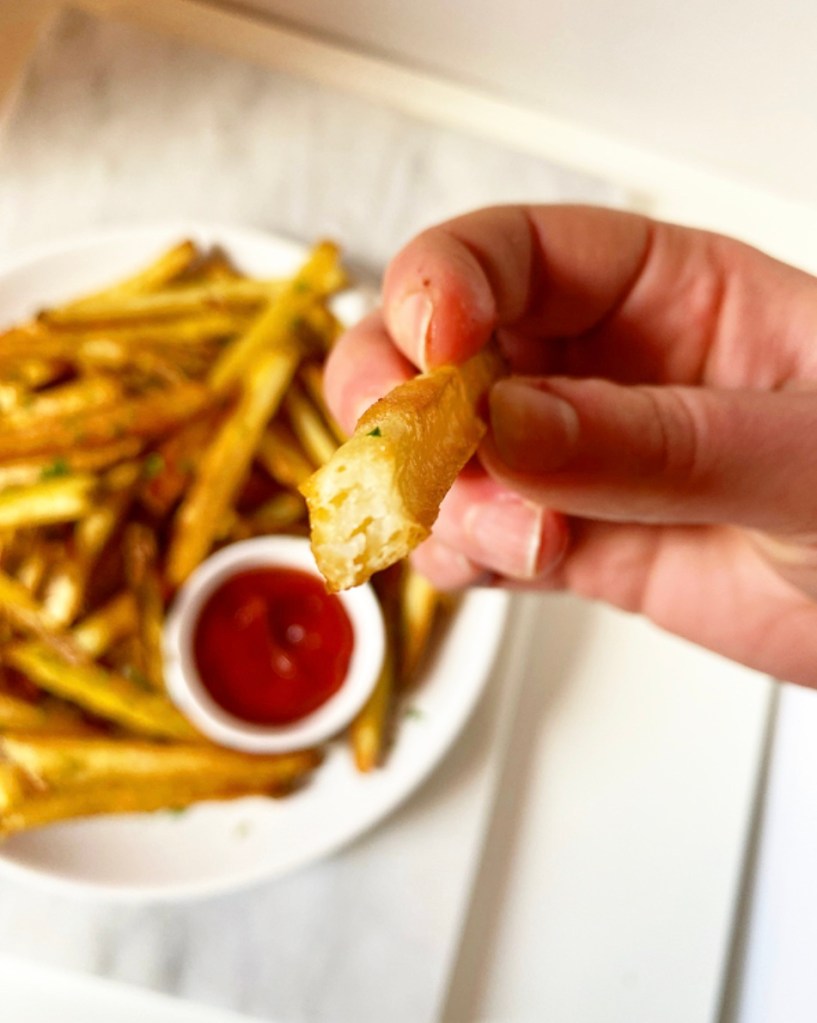
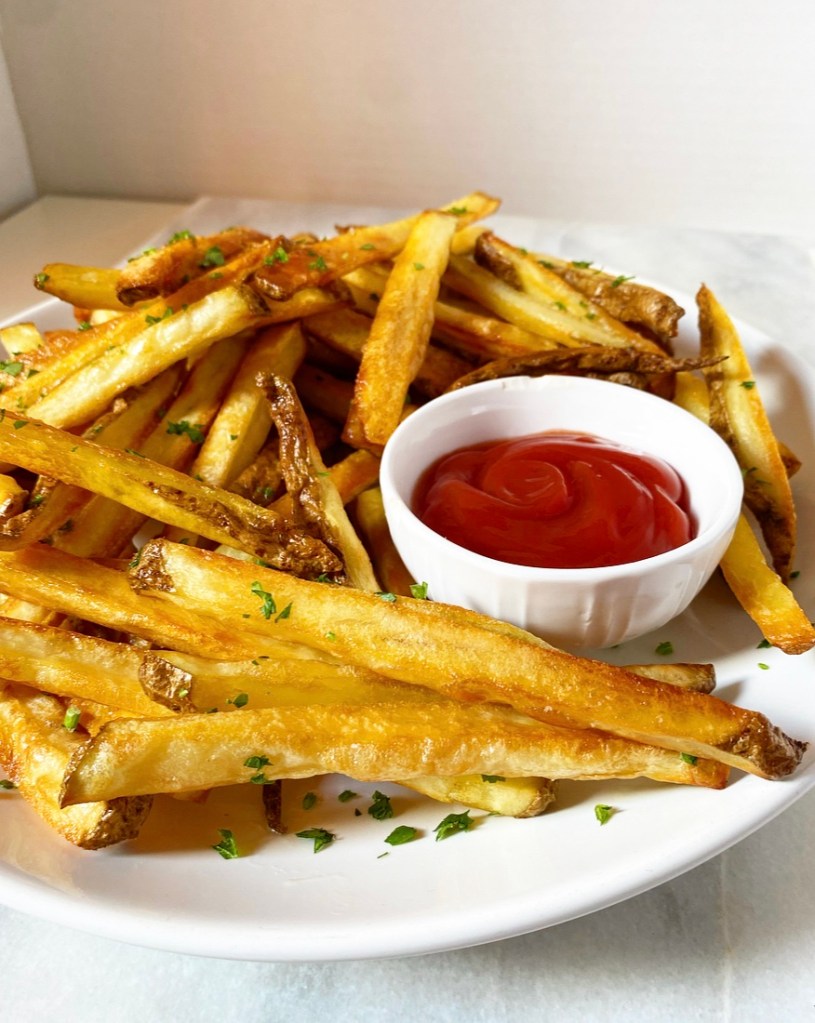
I am here to tell you that I achieved this goal. I achieved it in style. And now I feel so silly for being so adamantly opposed to Oven Fries for upwards of a decade. I’m just opposed to lousy oven fries, ya know? But these are anything but lousy. They’re crispy, salty, and bear little resemblance to any roasted potatoes I’ve come across (though that is fundamentally what they are, of course).

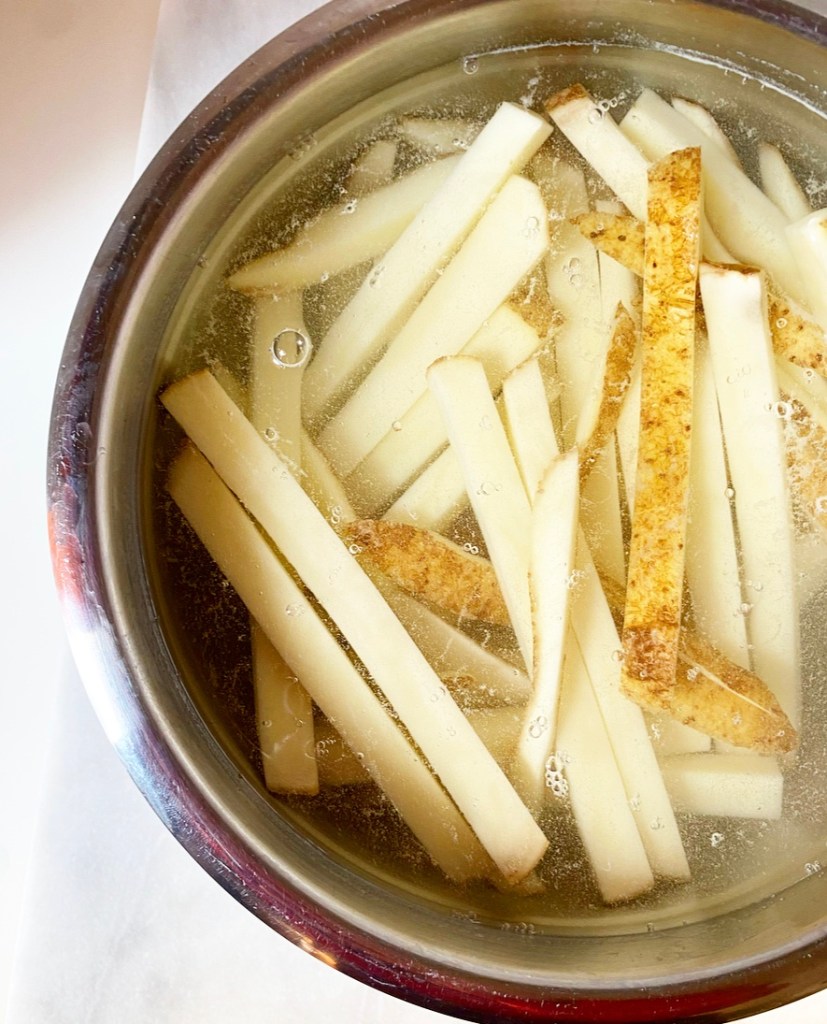
The secret to great Oven Fries is treating them as much like regular fries as possible. This means using classic, starchy russet potatoes and starting with a soak in cold water. I add some salt and baking soda to the water to help pull all the starches in the sliced potatoes to their surfaces. This leads to crispy outsides and fluffy insides every time.

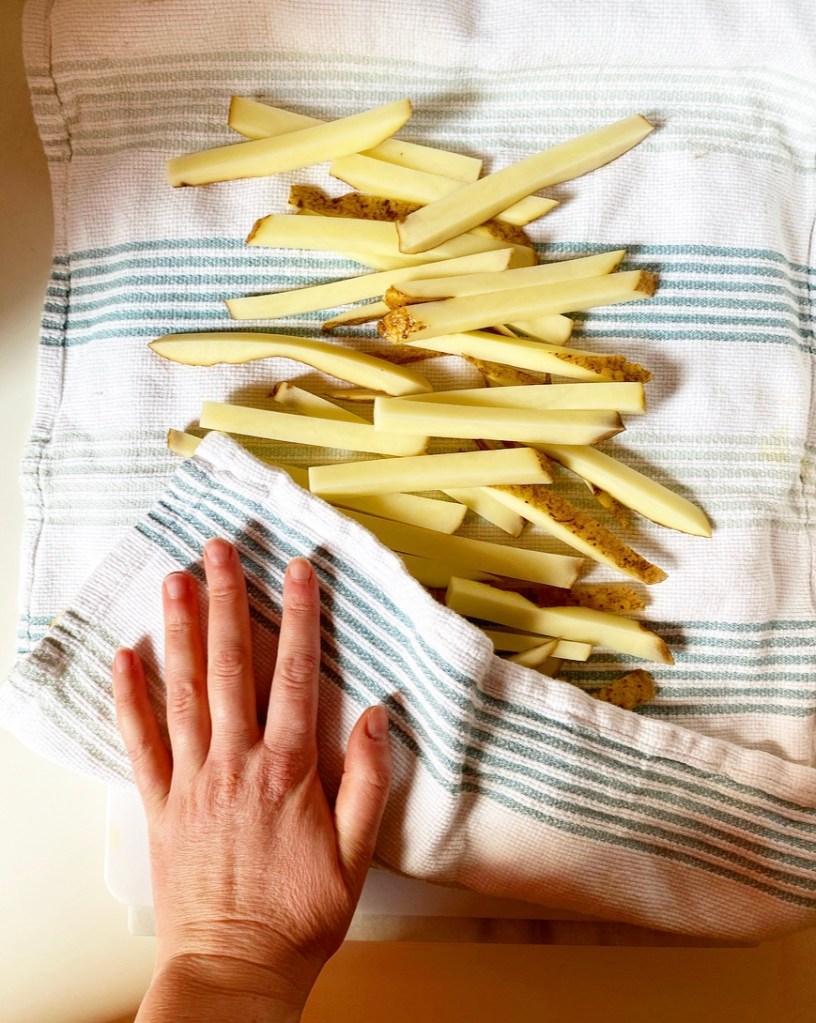
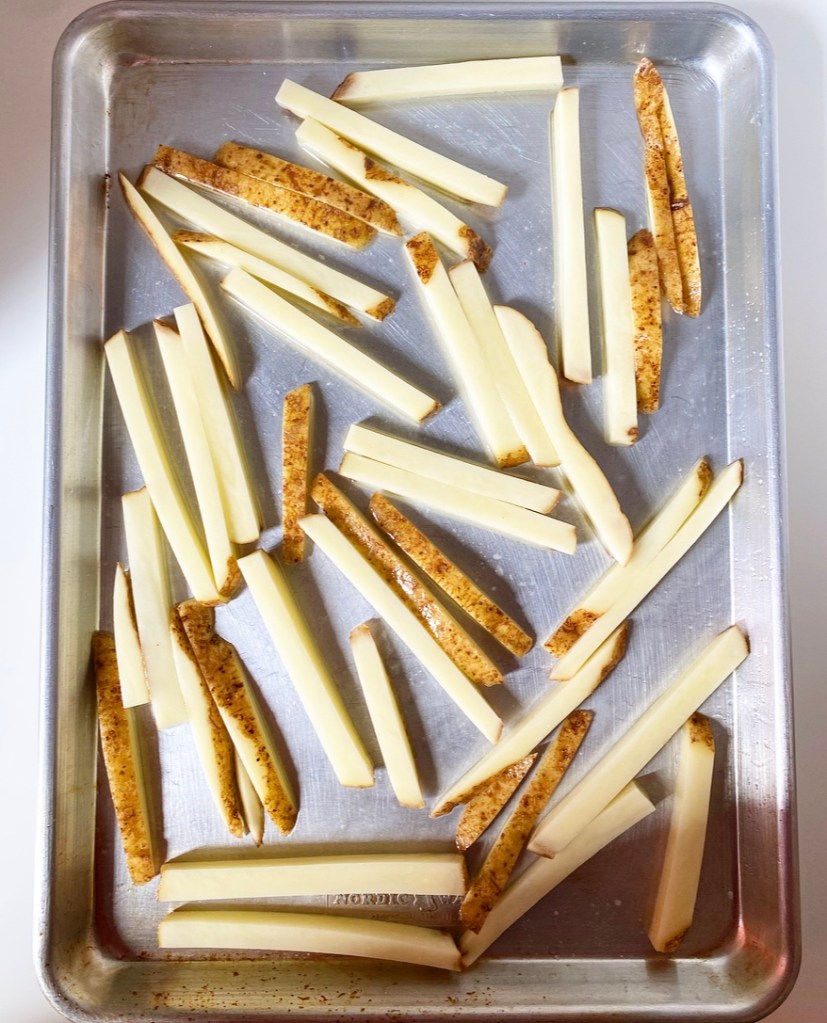
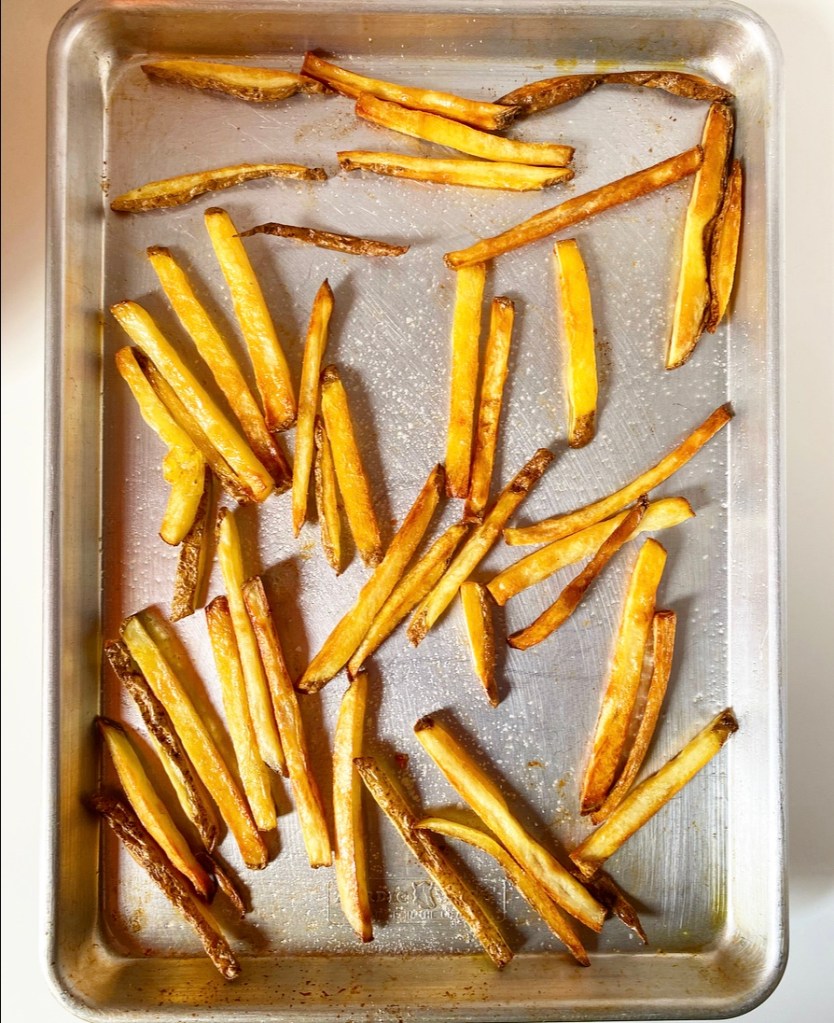
After soaking, make sure to pat your fries as dry as you can so they sear more than they steam. Toss them with about a tablespoon of oil per potato and a hefty pinch of salt, then spread them out on a couple of sheet pans and roast them high and fast, flipping when they’re golden on one side. Heads up that if you’re using dark (coated) pans, your fries will brown faster than they will on the aluminum pans I use.

Oven Fries (that are worth eating)

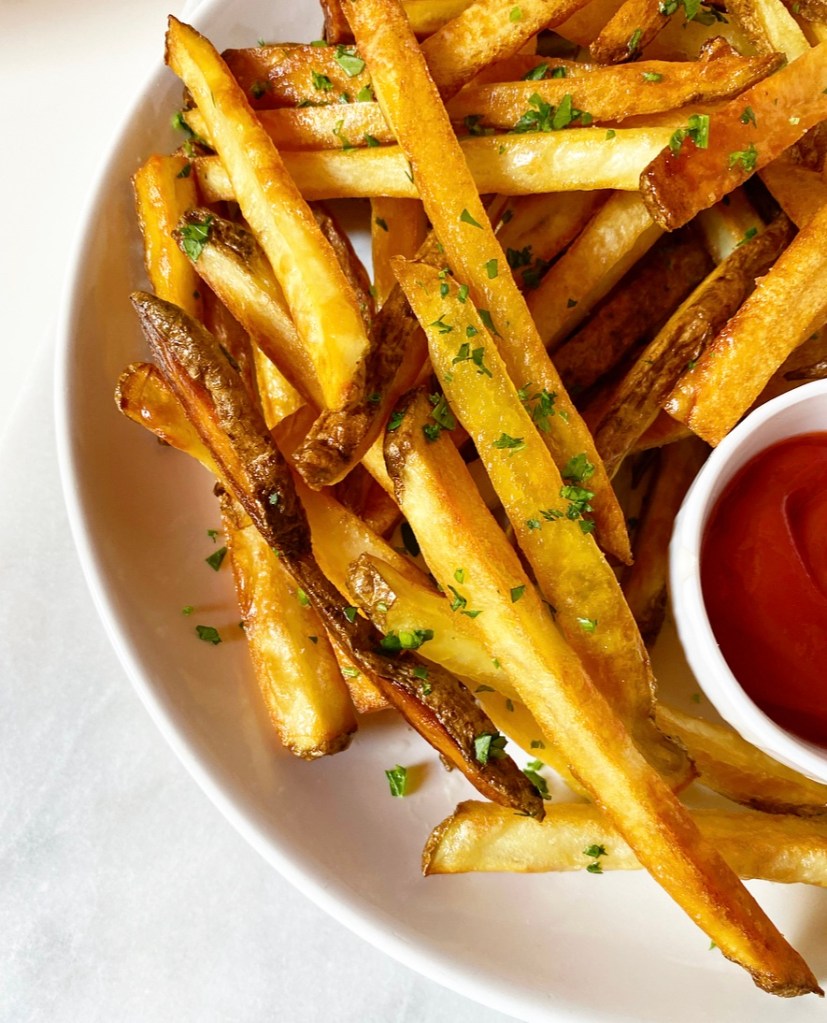
When your Oven Fries are done, make sure to hit them with another big pinch of salt for a little extra punch (and crunch!). You can also dust them with a favorite spice blend or scatter some crispy garlic over the top—however you like your fries. I’m a no-frills fry kind of human, so all I need is a little side of ketchup.

Oven Fries (that are worth eating)

Y’all, these are so good. Crispy, with soft centers and an irresistible golden brown color—not a masquerading plain roasted potato in the bunch. These are Oven Fries good enough to change even the staunchest fried food defender. Dare I say, they’re Oven Fries worth eating. Oven Fries…to love?

I’ll see myself out.

Oven Fries
makes 2 large or 3-4 small servings

2 large russet potatoes
cold water
1/2 teaspoon baking soda
Kosher or sea salt, to taste
2-3 tablespoons neutral oil (I used canola)
ketchup (or other dipping sauce), for serving

Scrub potatoes, and peel if desired. Transfer them to a cutting board. Use a large, sharp chef’s knife to slice potatoes into pieces approximately 1 centimeter thick.

Place all potato pieces in a medium mixing bowl, and add enough cold water to cover. For extra deep golden fries, add baking soda and 1/2 teaspoon salt to the water. Let potato pieces soak for 30 minutes.

Meanwhile, place the oven racks in central positions. Turn the oven to 450F.

Once 30 minutes have passed, drain water from potatoes. Dry potato pieces well with a clean kitchen towel.

Divide potatoes between two dry rimmed baking sheets. Drizzle each pan with 1-1 1/2 tablespoons oil. Season well with salt. Use your hands to toss all pieces to coat. Arrange potato pieces in a single layer with none touching each other.

Bake fries for 15 minutes. At this point, they should all be turning golden on the underside; if they’re not, let them bake another 5 minutes and check again. Use a spatula to flip them all over, then rearrange them into an even layer with none touching. Rotate the pans top-to-bottom and back-to-front. Bake 15-20 more minutes, or until golden to your liking.

Remove the fries from the oven and salt again, if desired.

Serve immediately with ketchup or other dipping sauce, if desired.

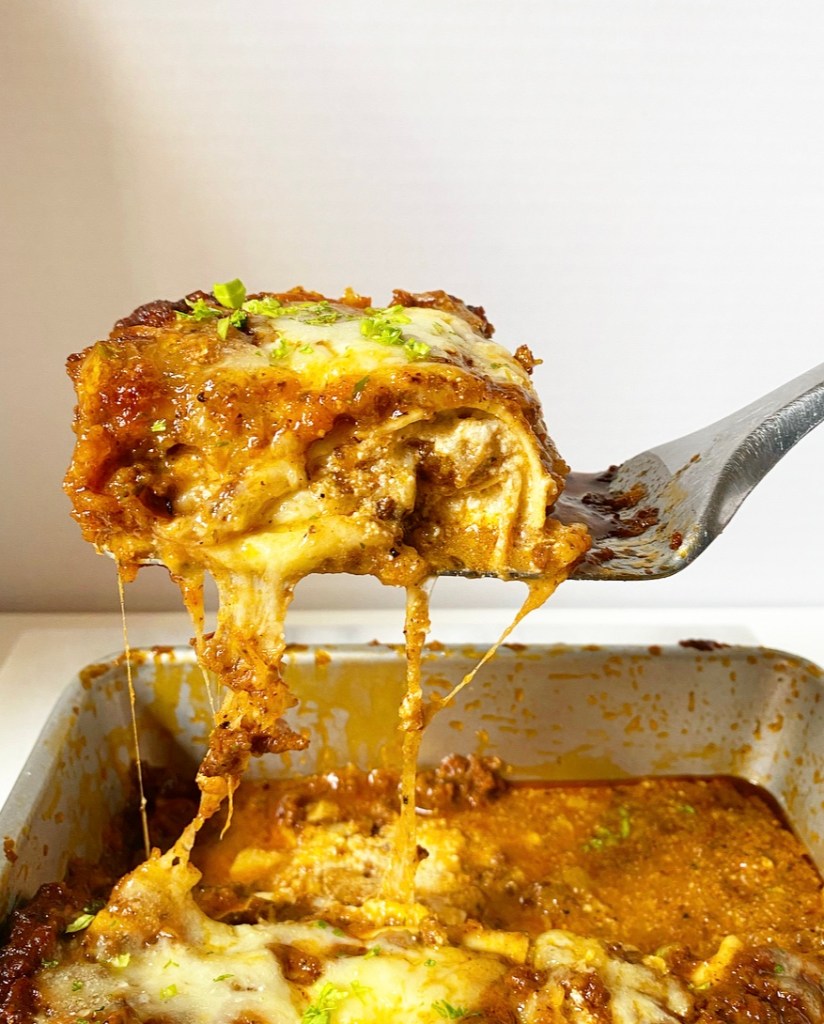
Lasagna a la Betsy

Lasagna a la Betsy​

Listen, I know that the internet is full of lasagna recipes. There’s everything from the jarred sauce and pre-shredded cheese kind to some that take three days and are lovingly layered with from-scratch bolognese, béchamel, and pasta made by hand. If you’re looking for a lasagna to suit your tastes, there’s a decent chance it’s out there…unless, of course, you were hoping to find mine.

I have been making lasagnas for people for years. Truthfully, if you ask nicely and pay for my ingredients, transportation, labor and time, I’ll come right to your house, tie on an apron, and fill your freezer with tightly-wrapped aluminum pans of layered bolognese, cheese, and pasta with an index card with baking instructions scotch taped on top. If, however, I’m out of your budget and you don’t want to have to interpret my handwriting, it’s your lucky day—Lasagna a la Betsy is finally on the blog.

Lasagna a la Betsy​

Now, what makes it “a la Betsy”? Well, half of everyone I know started calling me Betsy seven years ago, and while I introduce myself as “Liz” everywhere but Starbucks, I like that nickname whenever it suits me, which includes but isn’t limited to when I make lasagna. Also, this recipe is authentic to nothing—I am not trying to make this as lovingly as anyone’s Italian grandmother, I’m just trying to get dinner on the table today (and maybe sometime in a few weeks). But mostly, it’s a la Betsy because it’s what I like in my lasagna, and it’s made the way I like to make it. Period, end of story.

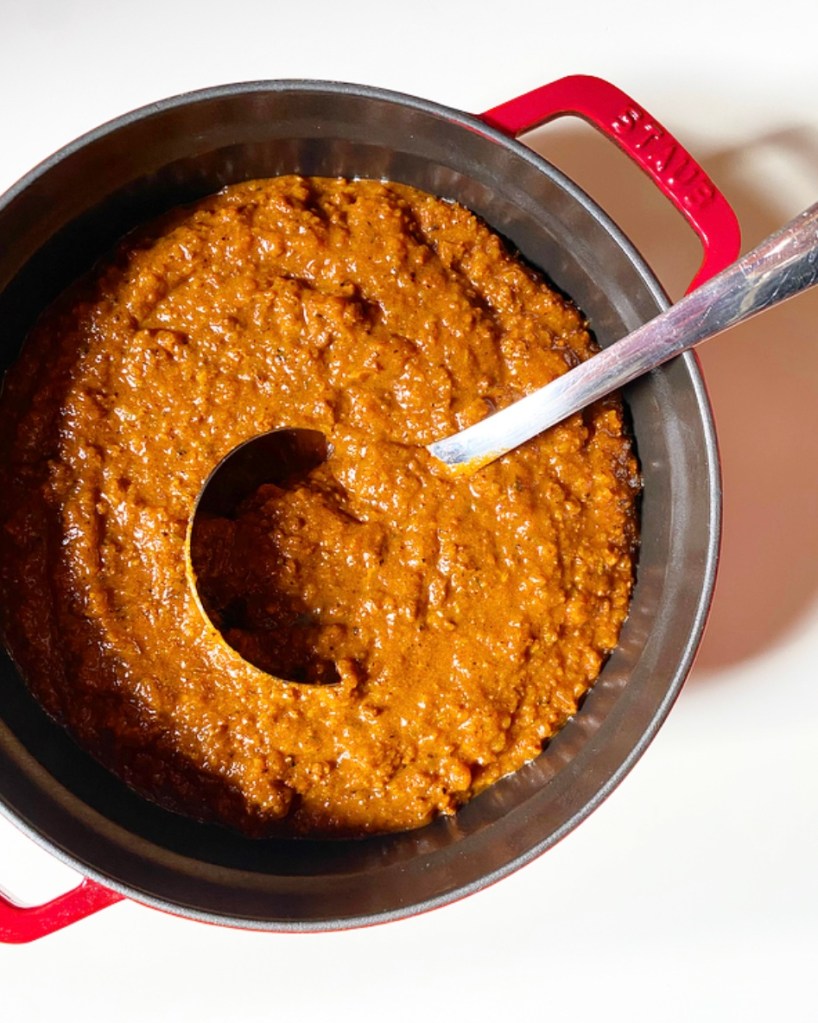
The “bones” of Lasagna a la Betsy are similar to many classic recipes. It starts with making my tried and true bolognese sauce from scratch. I usually do this a day ahead to split up the work, but it can be made the same day the lasagnas are assembled. It takes about three hours of browning and simmering beef, sausage, mushrooms and aromatics, but the results are meaty and rich and worth it all, I promise. Frankly, the sauce is the most time consuming part of this whole process; the rest is just layering. And oh, they are good layers.

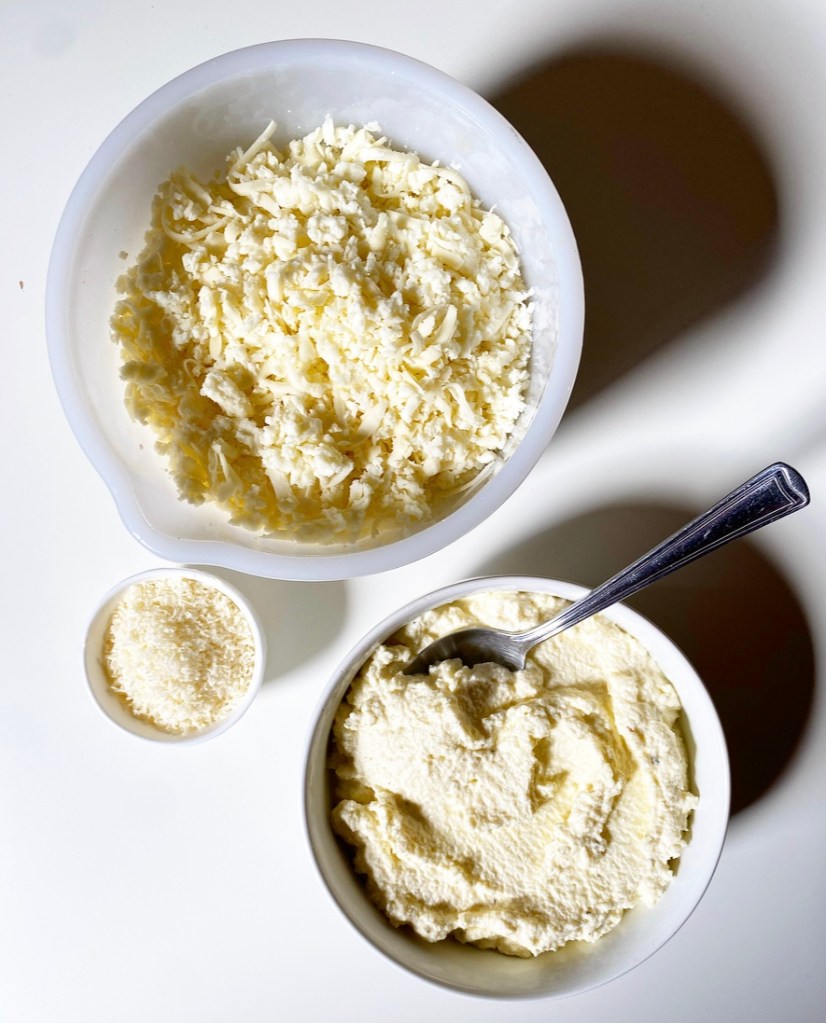
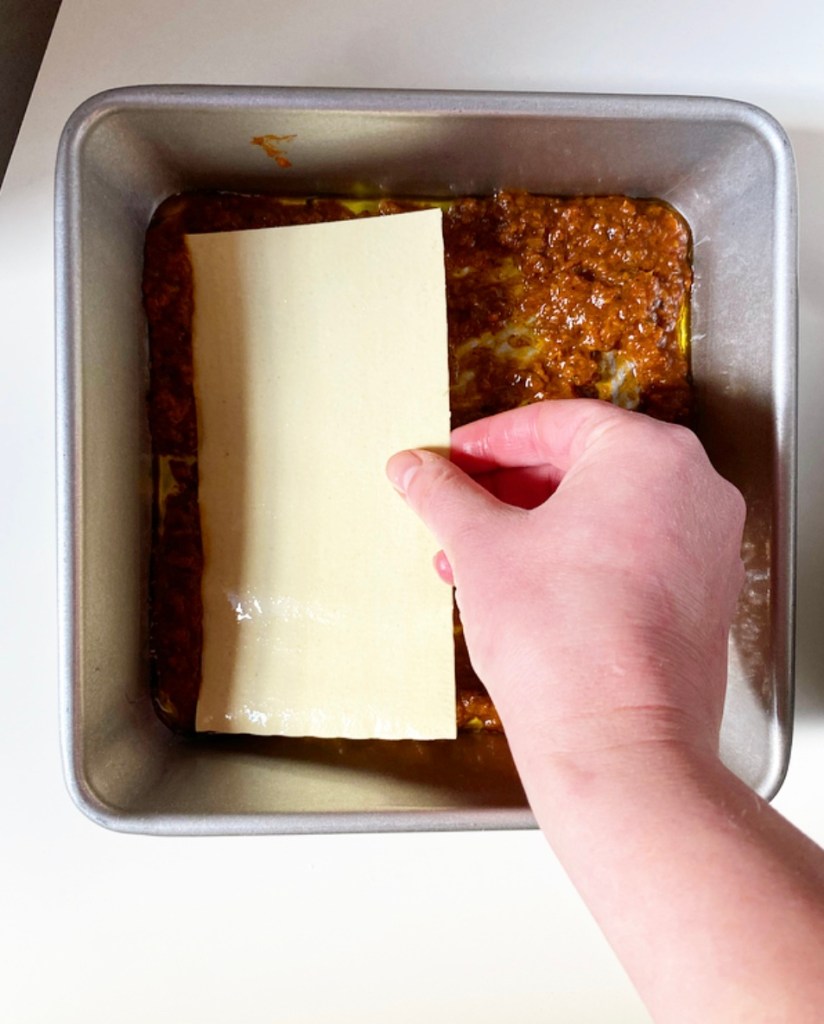
You know the stuff: shredded mozzarella, spoonfuls of parmesan-spiked ricotta, the bolognese, some no-boil noodles… Yeah, I use the no-boil noodles—they’re one of the only convenience ingredients that I will swear by. I’ve used the boil-yourself kind and they are delicious, but they can be finicky and take a while. I like saving myself a little stress. I mean, I already made the sauce from scratch. That said, use whichever noodles work for you.

Lasagna a la Betsy​

My personal favorite part of my lasagna recipe? It makes two! Unless you have a huge family or are having a party, you probably don’t need a 9×13” pan of lasagna, but two 8” square pans? One for now and one for the freezer? Yeah, that’ll work. Future you is going to be so happy you planned ahead. Current me is already pretty jazzed about it.

To that end, I’ve included instructions for baking lasagnas right away, as well and freezing and baking from frozen. Whichever path you choose, you’re in for a treat. Hot homemade lasagna (a la Betsy or otherwise) is always a treat.

Lasagna a la Betsy
makes two 8-inch square lasagnas (each 4-6 servings)

1 recipe Bolognese Sauce (about 9-10 cups)
16 ounces whole milk ricotta cheese
1 large egg
2 tablespoons olive oil + more for drizzling
pinch of ground nutmeg
a few grinds freshly cracked black pepper
1/4 teaspoon Kosher or sea salt
1 1/4 cups grated parmesan cheese, divided
1 1/2 pounds (24 ounces) shredded mozzarella (fresh, low-moisture whole milk, or a mix)
12 no-boil lasagna noodles
chopped parsley, for garnish (optional)

Make the bolognese sauce. Remove from heat and let cool for at least an hour before assembling lasagnas. Alternatively, make the sauce the day before and let it chill in the refrigerator overnight. It can be used cold.

Preheat the oven to 375F. Grease 2 8-inch square baking dishes. If using aluminum pans or freezing the lasagnas, line them with parchment.

In a small mixing bowl, whisk together ricotta, egg, 2 tablespoons of olive oil, nutmeg, pepper, and salt. Stir in 1 cup grated parmesan. Set aside.

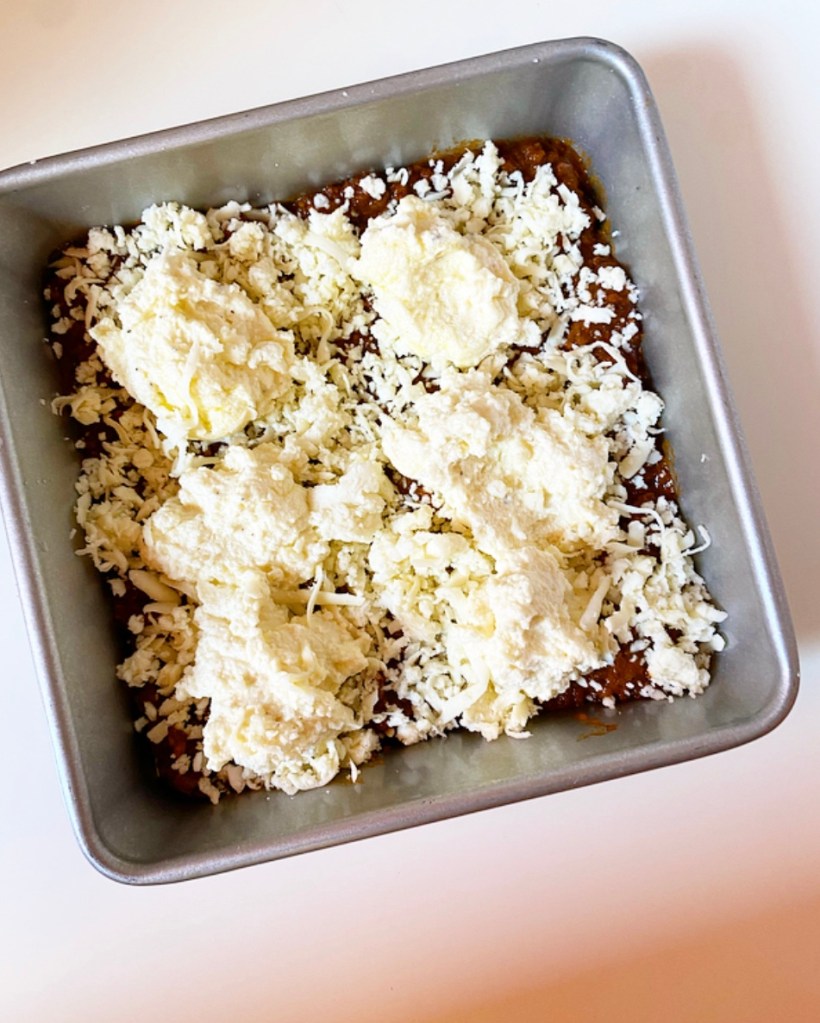
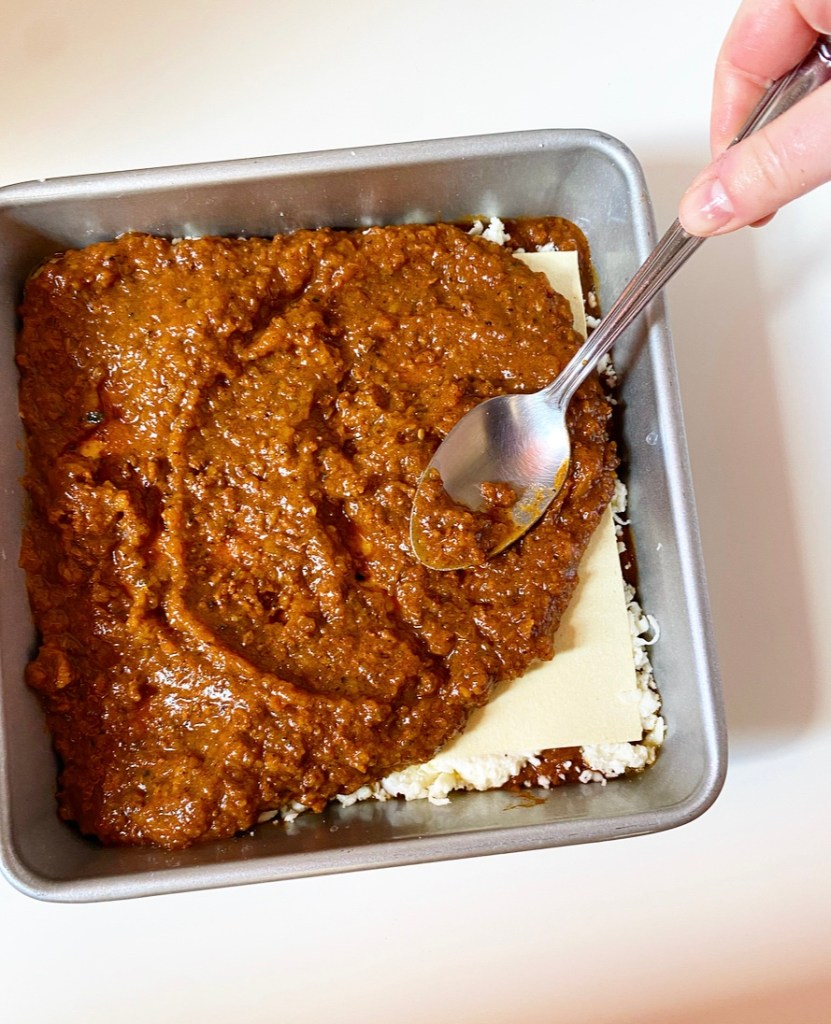
Assemble lasagnas. Spread 1/2 cup bolognese sauce in the bottom of one of the prepared pans. Top with 2 no-boil lasagna noodles (do not overlap them). Spread 1 cup of sauce over the top, then sprinkle on 1 cup of shredded mozzarella, and drop 1/4 of the ricotta mixture (about a heaping 1/3 cup) in spoonfuls over the top. Top with 2 more lasagna noodles, then another layer with 1 cup bolognese, 1 cup shredded mozzarella, and 1/4 of the ricotta mixture. Top with 2 more noodles, then 1 cup sauce. Sprinkle 1/2 cup shredded mozzarella over the top, followed by 2 tablespoons grated parmesan. Drizzle with a little olive oil.

Repeat layering process with remaining ingredients and prepare pan. Freeze any leftover bolognese (I usually have 1 1/2 cups leftover).

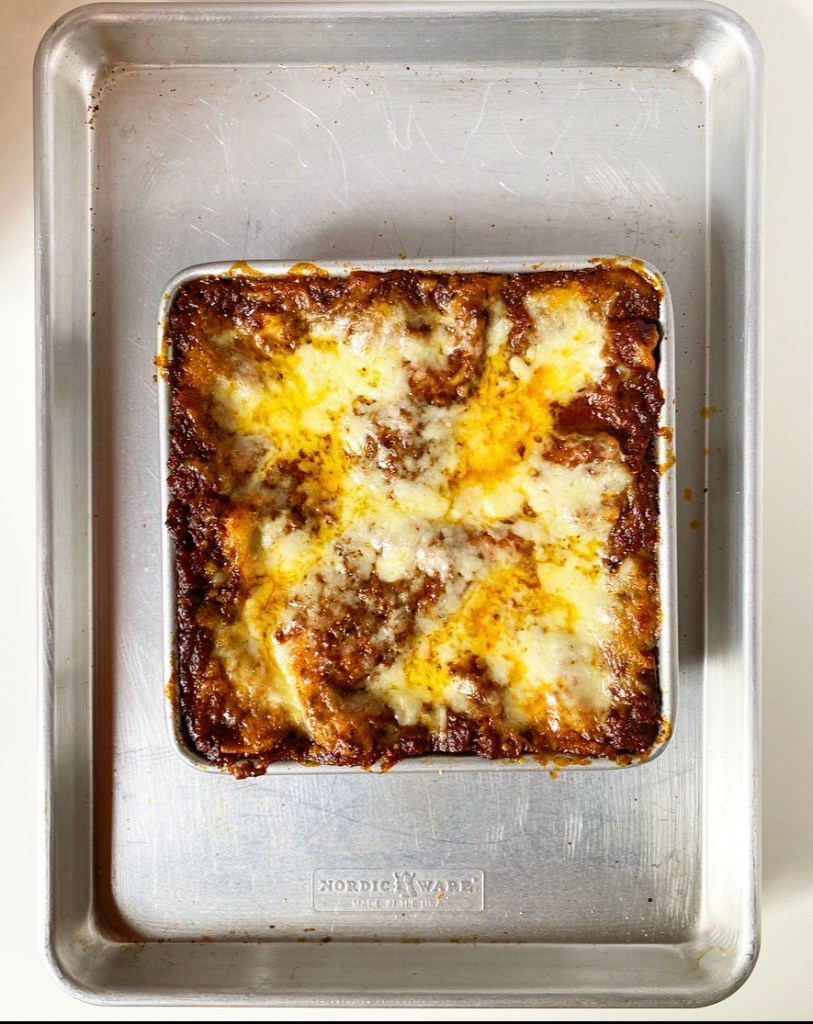
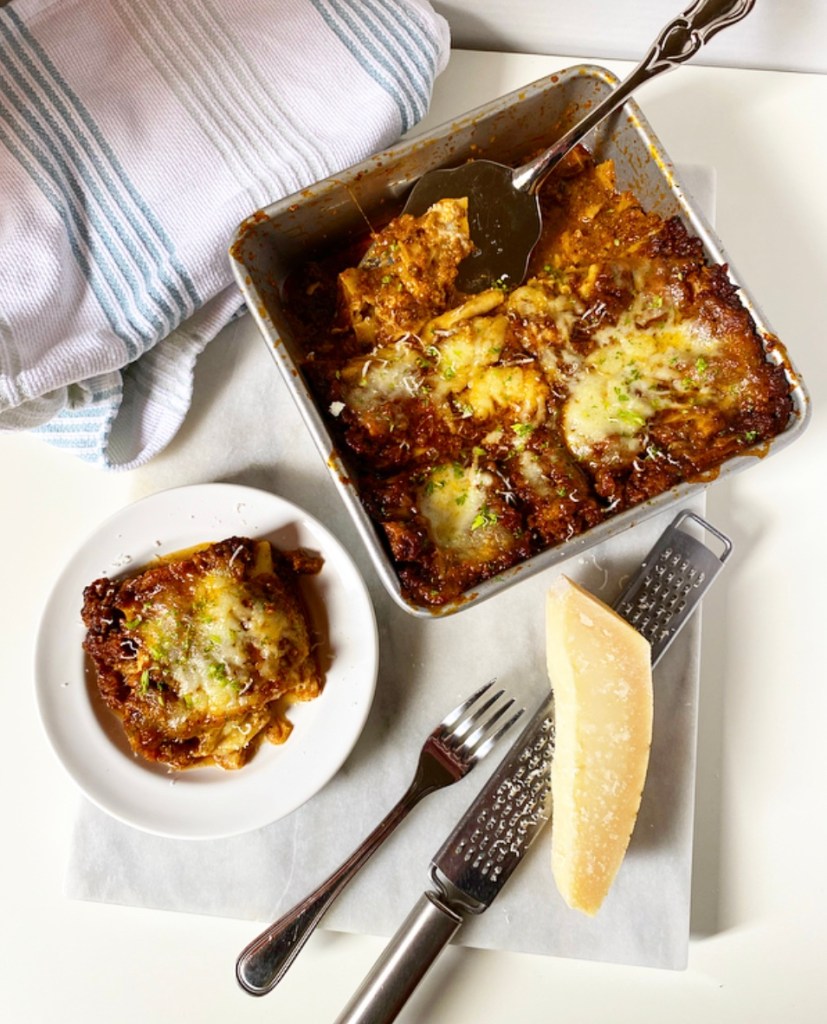
To bake lasagna immediately: cover with foil, making sure to tent it at the top so it doesn’t touch the cheese or sauce. Place the pan(s) on a sheet pan (to catch any mess). Bake 40 minutes. Remove foil and bake another 10-15 minutes, until browning in places and getting a little crispy at the edges. Let cool 15-30 minutes before slicing and serving. Garnish with parsley, if desired.

To freeze unbaked lasagna: cut a 7-inch square of parchment and lay it on the top of the lasagna. Triple-wrap the pan with plastic wrap. Wrap with foil. Freeze for up to one month.

To bake a lasagna from frozen: Preheat the oven to 350F. Remove frozen lasagna from the freezer. Remove and discard foil, plastic wrap, and parchment. Cover the pan with fresh foil, making sure to tent it at the top so it doesn’t touch the cheese or sauce. Place the pan(s) on a sheet pan (to catch any mess). Bake 75 minutes. Remove foil and bake another 10-15 minutes, until browning in places and getting a little crispy at the edges. Let cool 15-30 minutes before slicing and serving. Garnish with parsley, if desired.

Leftover lasagna will keep covered in the refrigerator for up to 5 days.

Peppermint Mocha Brownies

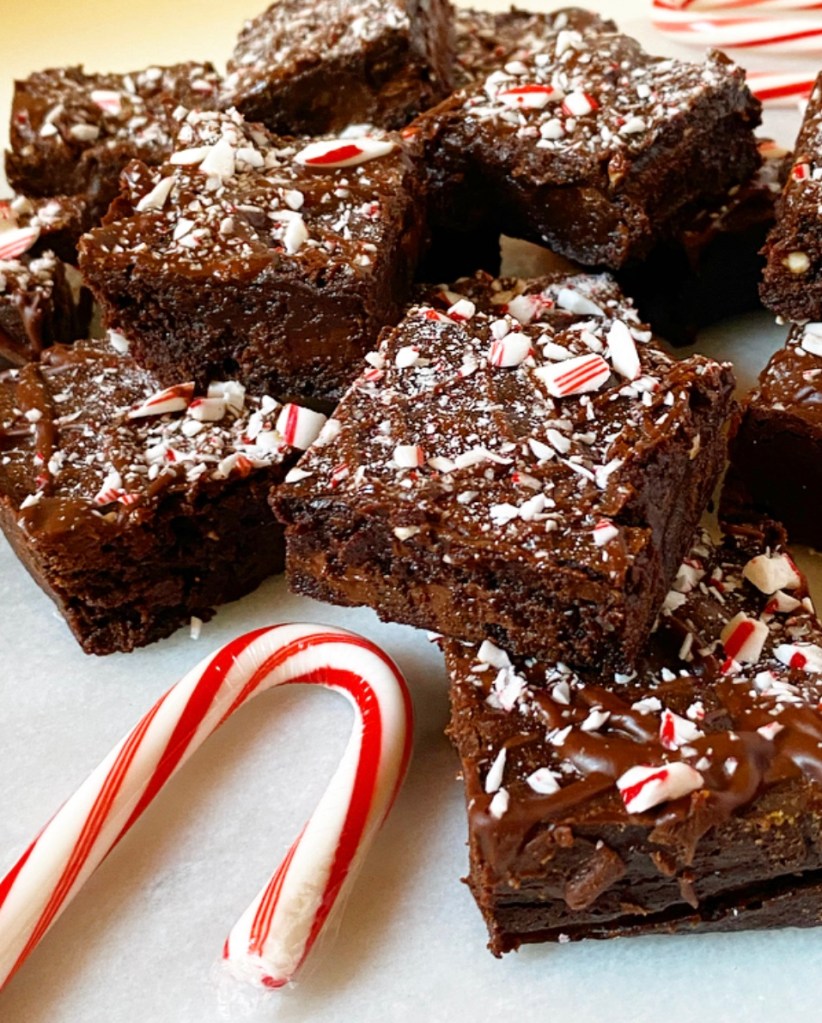
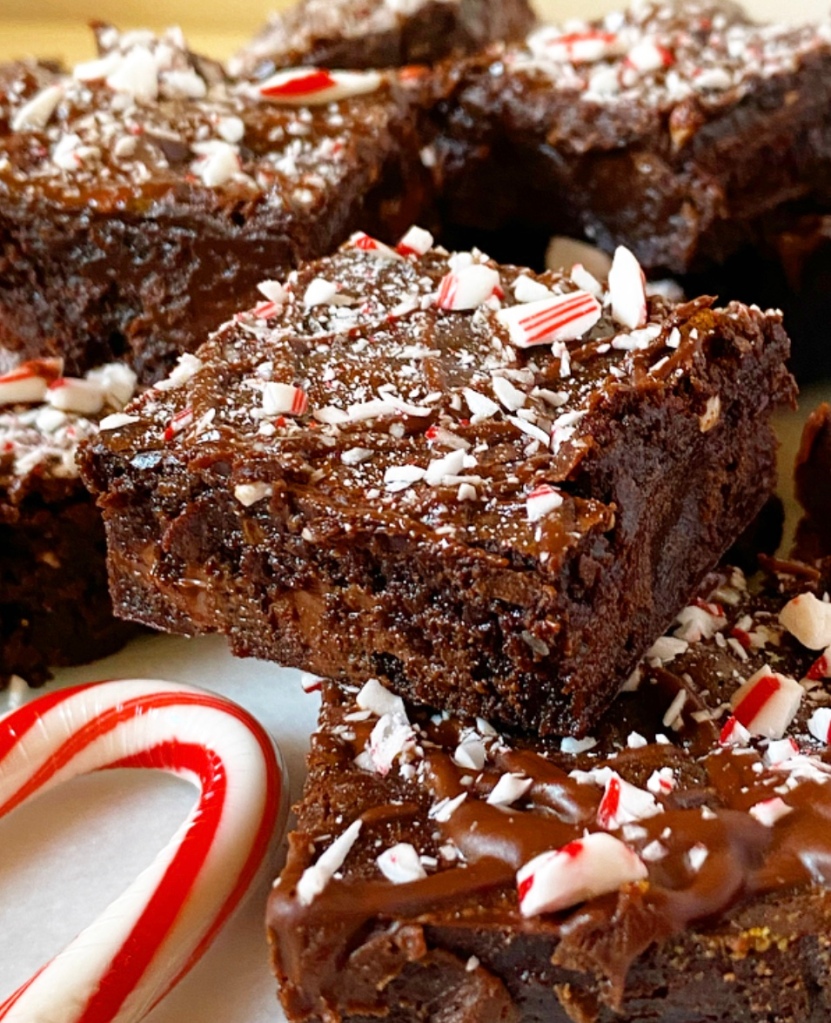
It’s a little late for a Christmas recipe, but frankly I can do whatever I want on this website. And what I want is a pan of Peppermint Mocha Brownies.

Peppermint Mocha Brownies

Made with my tried and true Cocoa Brownie base, these holiday treats come together super easily. Their already-deep chocolate flavor is punched up with semisweet chocolate chips, then accented with just enough peppermint extract and granulated espresso to evoke everyone’s holiday coffee shop fave.

Peppermint Mocha Brownies

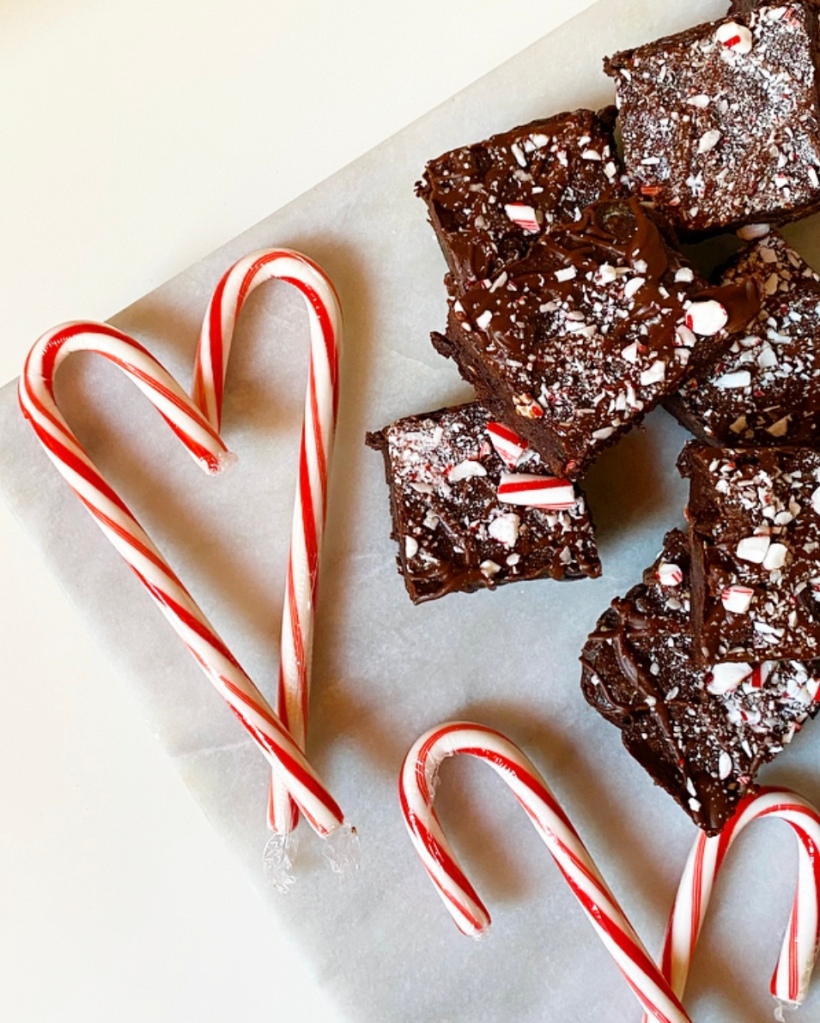
But flavor’s only half of the equation here—Peppermint Mocha Brownies have to look the part, too! These are drizzled with a melted mix of chocolate chips and butter, and sprinkled with as much crushed candy cane as your heart desires. (My heart desires a lot.)

Peppermint Mocha Brownies

Peppermint Mocha Brownies are rich and satisfying; a little square goes a long way. I, however, have no self control and cut these on the larger side. I regret nothing.

Merry Christmas! Happy Holidays! Whatever and wherever you’re celebrating, I hope you’re safe, warm, and with people you love.

Peppermint Mocha Brownies
adapted from Alice Medrich's Cocoa Brownies
makes one 8- or 9-inch square pan

10 tablespoons unsalted butter, cut into small pieces
3/4 cup granulated sugar
1/2 cup light or dark brown sugar, packed
3/4 cup + 2 tablespoons cocoa powder (natural or dutch process)
2 large eggs, cold
1 teaspoon pure vanilla extract
1/2 teaspoon peppermint extract (not mint extract)
1/2 cup all-purpose flour
2 teaspoons granulated espresso or coffee
1/2 teaspoon Kosher or sea salt
1/2 cup semisweet chocolate chips

For Garnish:
3 tablespoons semisweet chocolate chips
1 tablespoon unsalted butter
crushed candy canes or starlight peppermints

Preheat oven to 325F. Butter the inside of an 8- or 9-inch square pan. Line the bottom with parchment and butter again. Set aside.

In a small pot over medium-low heat, melt butter, granulated and brown sugars, and cocoa powder together, stirring frequently, until a thick, grainy mixture forms. Remove from heat and let mixture cool 5-7 minutes.

Add vanilla, peppermint extract, and eggs to the pot, and stir/whisk to combine. Add flour, granulated espresso, and salt, and stir/whisk to combine. Fold in semisweet chocolate chips. Transfer batter to prepared pan and spread to the edges. Tap the full pan on the counter a couple of times to release any air bubbles. Top with pecans, if desired.

Bake brownies 25-30 minutes, or until a toothpick inserted in the center comes out with only a few moist crumbs (not wet batter). Let cool completely in the pan on a rack.

Garnish the brownies. Combine chocolate chips and butter in a small microwave-safe bowl. Microwave in 30 second increments, stirring in between, until smooth. Use a fork to drizzle over brownies. Sprinkle with crushed candy canes.

Refrigerate brownies for 15-20 minutes, until chocolate sets.

Slide a knife around the edges of the pan before using parchment overhang to lift brownies onto a cutting board. Use a large, sharp chef’s knife to slice brownies into 16 or 25 pieces. Serve.

Leftovers will keep in an airtight container at room temperature for up to 4 days or in the refrigerator for up to a week.

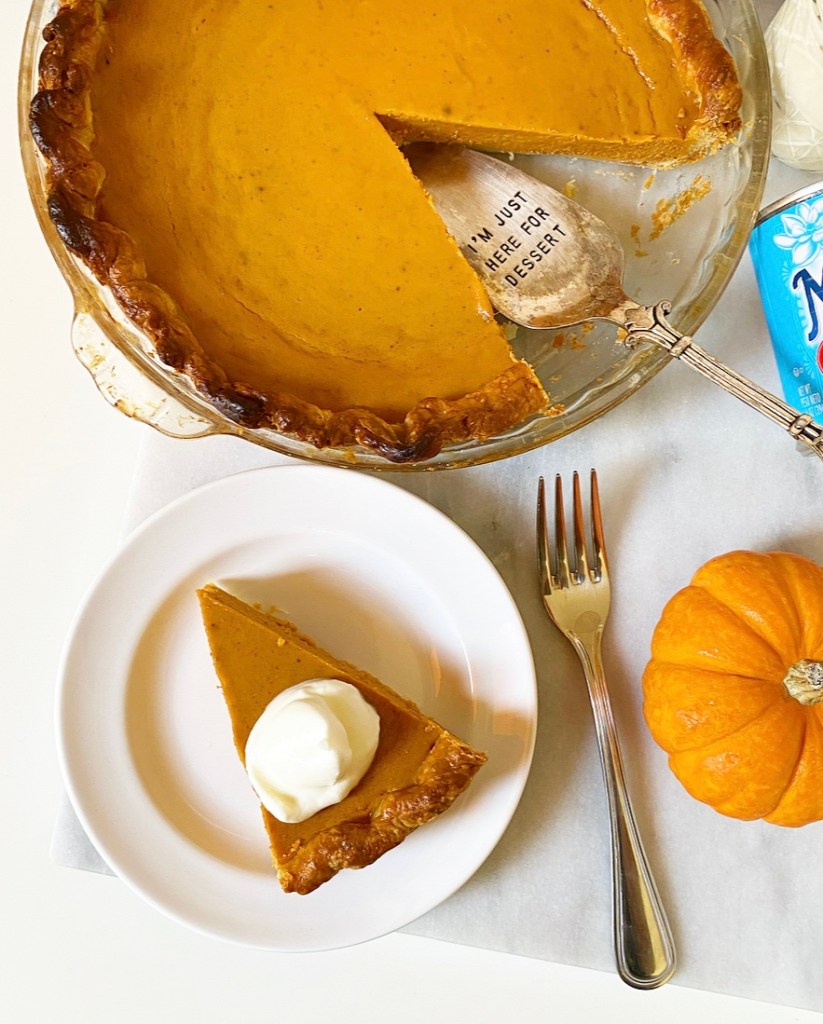
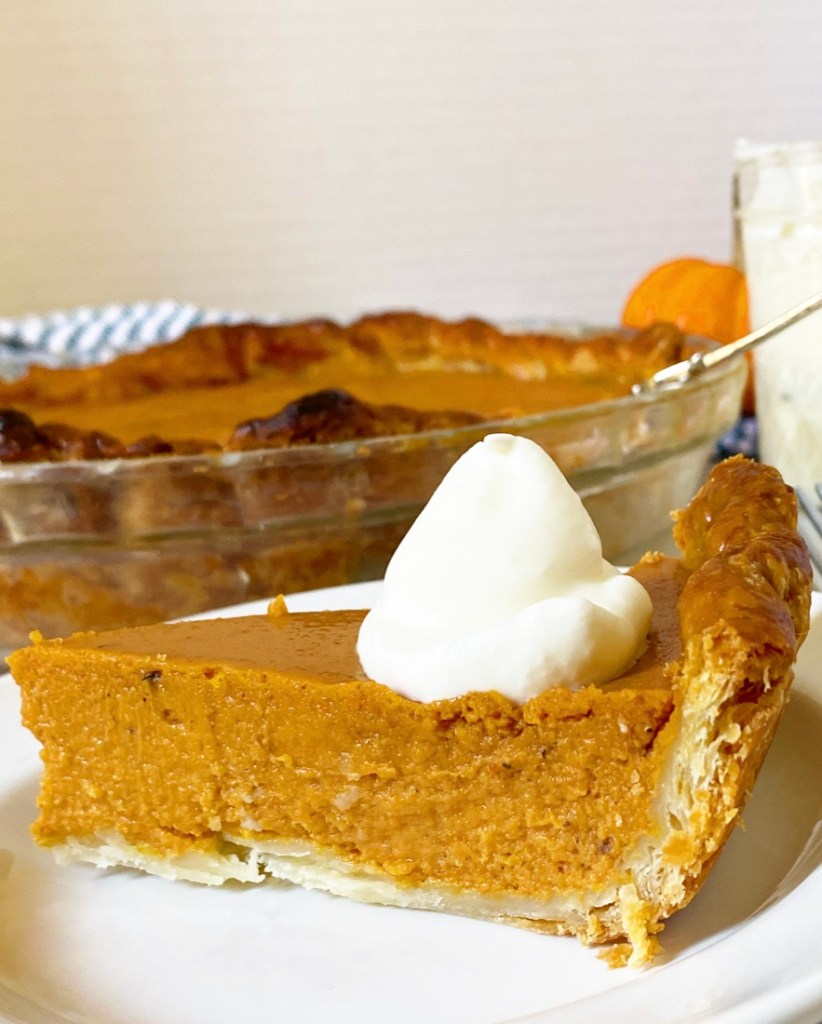
Sweetened Condensed Milk Pumpkin Pie

If you’ve spent any amount of time in the recipe development corner of the internet, you know that there are as many different ways to make pumpkin pie as there are stars in the sky.

Sweetened Condensed Milk Pumpkin Pie

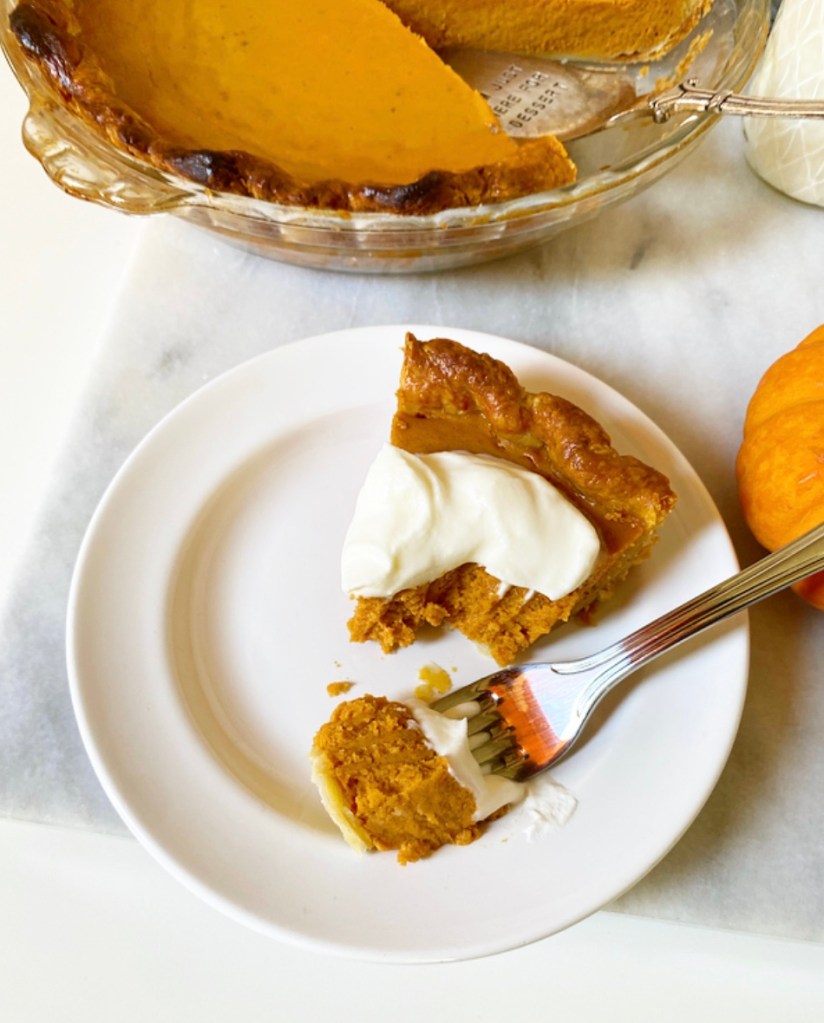
Okay, I may be exaggerating, but I’m not kidding when I say there are a *lot* of ways to make this classic Thanksgiving dessert. Until today, there were four on this site alone (1, 2, 3, 4), but now there are five. This one, made with one of my favorite ingredients, sweetened condensed milk, might just be my favorite. For now, at least.

Sweetened Condensed Milk Pumpkin Pie

You see, sweetened condensed milk can do it all. It sweetens, binds, and gives things and smooth, creamy texture. It carries the load in desserts from key lime pie to magic bars to no-churn ice cream. In short, it’s an incredible tool to have in your baking arsenal, especially if you’re in charge of making pie next week.

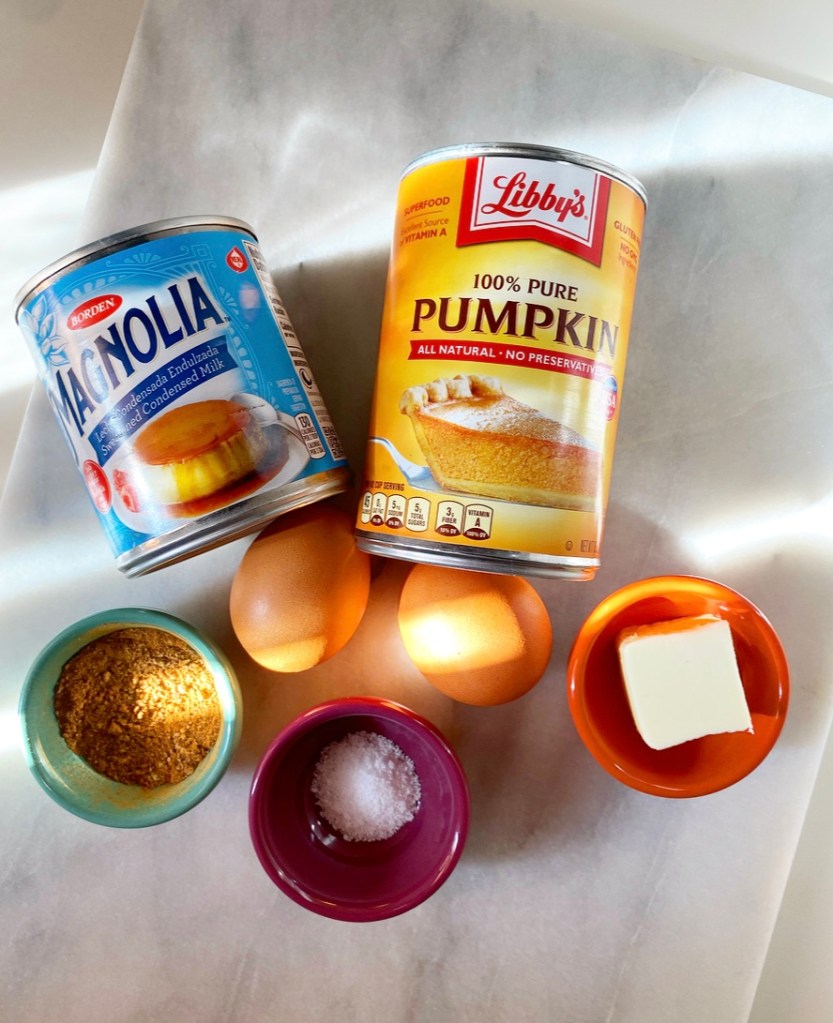
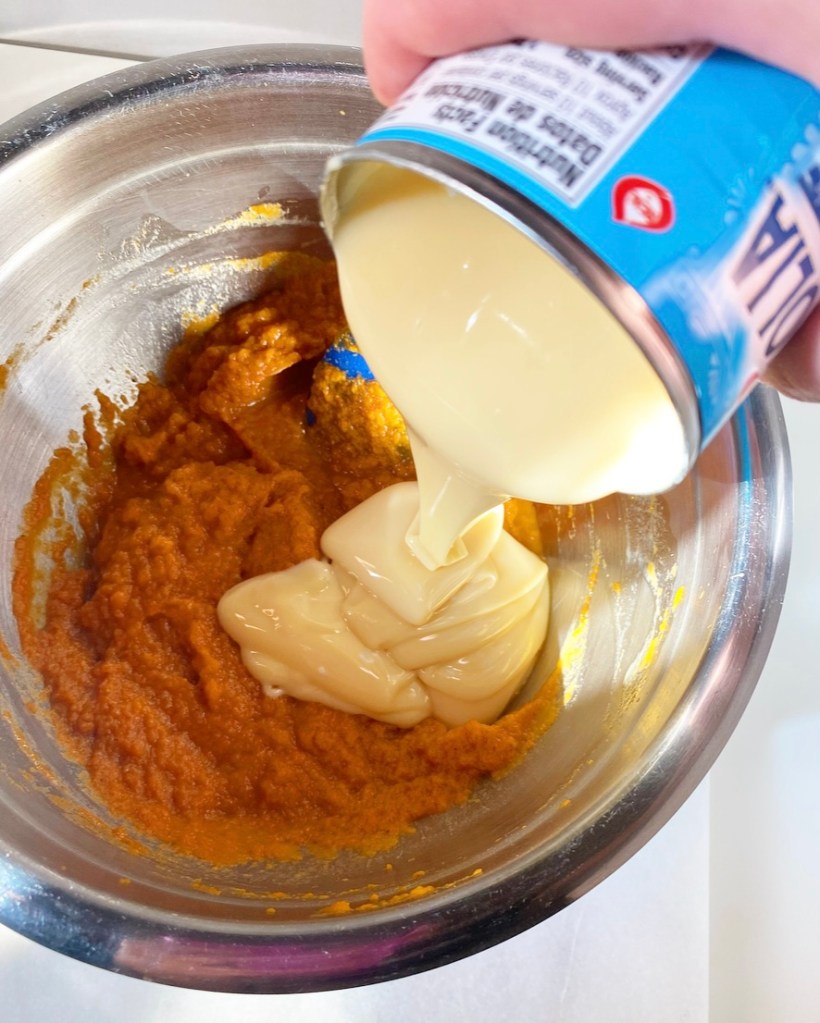
Sweetened condensed milk helps to sweeten and set this pumpkin pie filling, just like it does in my seasonal Pumpkin Spice Spread. It has the added benefit of cutting the list of ingredients a little shorter, too—a welcome shift anytime of year, but especially at the holidays.

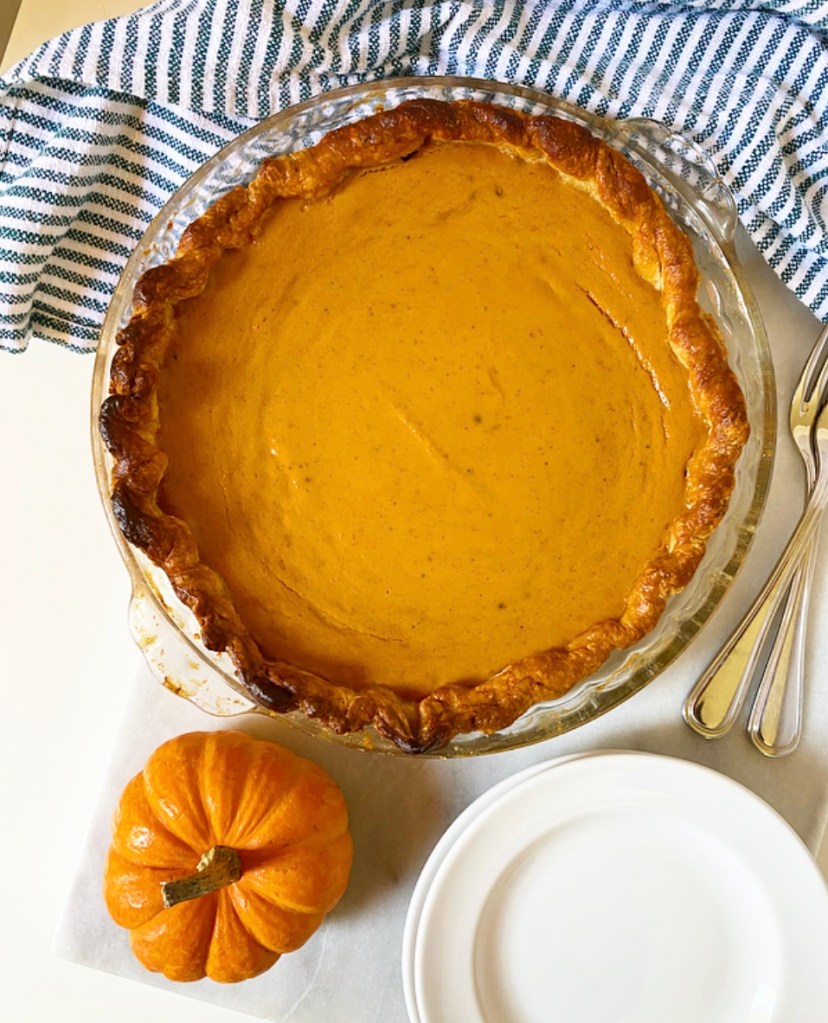
Here, sweetened condensed milk is mixed with all the usual pumpkin pie suspects—a can of pumpkin purée, pumpkin pie spice, salt, eggs, and a touch of butter—and poured into a par-baked crust before baking. You’ll notice that the oven temperature goes from 350F to 425F and then back to 350F before this pie is done; it seems like a lot, but if followed, I can promise you flaky crust and a perfectly smooth set center.

I like to make Sweetened Condensed Milk Pumpkin Pie a day ahead because I prefer my custard pies cold. That’s not the case for everyone though, so feel free to serve it at room temperature. Whichever you choose, don’t forget the whipped cream.

Sweetened Condensed Milk Pumpkin Pie
makes 1 pie

For the crust:
1/2 recipe All Butter Pie Dough or other good single crust recipe
pie weights (or dedicated dried beans or rice) for blind baking

Filling:
2 cups pure pumpkin purée (1 15-ounce can)
2 1/2 teaspoons pumpkin pie spice
1/2 teaspoon Kosher or sea salt
2 large eggs, room temperature
1 14-ounce can sweetened condensed milk (not fat free)
2 tablespoons butter, melted

For serving:
whipped cream

On a floured surface, roll out pie dough to a 12" diameter. Fit into a deep 9-inch pie plate and trim the overhang to 1/2-inch. Crimp the edges and freeze for 30 minutes or refrigerate for an hour.

Place an oven rack in the lowest position. Preheat oven to 350F.

Remove pie crust from the freezer. Prick the bottom several times with the tines of a fork. Line frozen crust with a big piece of parchment. Fill the center with pie weights (or dried beans or rice).

Place the prepared pie crust on a rimmed baking sheet and bake for 20-25 minutes, or until pie crust has “set” and is starting to turn golden in places, but is far from done. Use parchment to lift out pie weights. Return crust to the oven for 10 minutes, then set aside.

In a large mixing bowl, mix together pumpkin purée, pumpkin pie spice and salt. Whisk in eggs one at a time, followed by sweetened condensed milk and melted butter. Pour pie filling into prepared crust.

Make the egg wash. In a small bowl, use a fork to whisk together egg and water. Brush over exposed crust.

Bake the pie for 15 minutes, then turn the oven temperature to 350F for an additional 45-50 minutes, covering the crust with foil if it starts to get too brown. The pie is ready when the filling no longer jiggles, or when a toothpick inserted in the middle comes out clean.

Let pie cool completely on a rack. Cover and chill, if desired. Serve at room temperature or chilled with whipped cream. Pie will keep covered at room temperature for up to two days or in the refrigerator for up to four days.